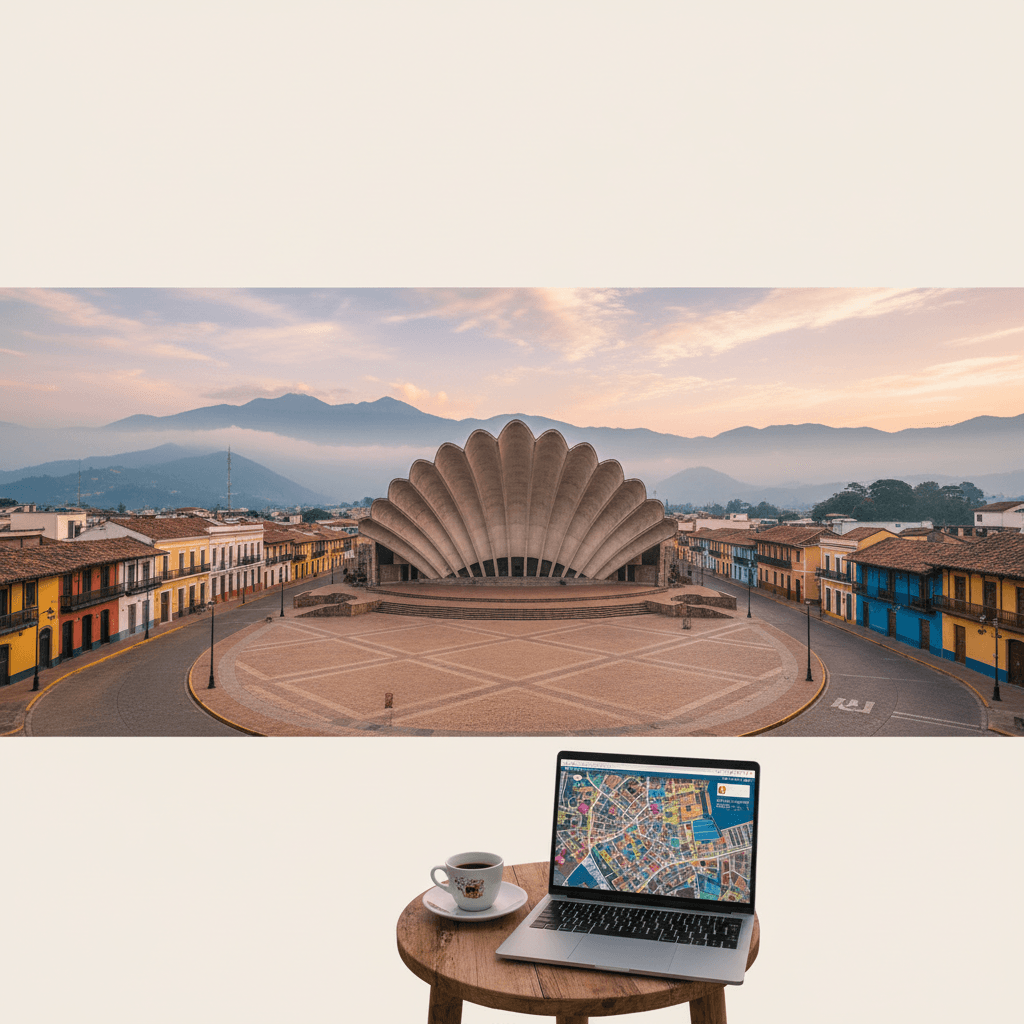
Ibagué
🇨🇴 Colombia
The Vibe: Colombia’s Musical Soul
If you’re burnt out on the "gringo trails" of Medellín or the humidity of Cartagena, Ibagué is the palate cleanser you didn’t know you needed. Known across the country as the Musical Capital of Colombia, this city doesn't just hold the title for show; it lives it through constant conservatories, public performances, and a deep-seated pride in its folk traditions. It isn't a city built for tourists, which is exactly why it works for a certain type of nomad. You’ll find a place that is unapologetically Colombian, where the locals are genuinely curious about why you’re there and will go out of their way to make sure you’re enjoying their home.
The atmosphere is noticeably slower than the chaotic energy of Bogotá. It’s a mid-sized mountain city sitting at about 1,285 meters, giving it a "tierra templada" climate. This means it’s warm enough for t-shirts during the day but cool enough to actually sleep at night without an AC unit rattling in your ear. It feels industrious but green, nestled against the foothills of the Central Cordillera with the Combeima Canyon practically in its backyard.
The Nomad Reality Check
Let’s be real about what to expect: you won’t find a digital nomad meetup every Tuesday night here. In fact, you might go a week without hearing another English speaker. For many, that’s the draw. It’s a city for "basing up," where you can actually get work done during the day and practice your Spanish at the local bakery in the afternoon. Most nomads who spend time here find that the lack of distractions is their favorite feature. You aren't constantly being pulled into $15 cocktail mixers; instead, you’re living a high-quality life for a fraction of what you’d pay in the States or Europe.
The city infrastructure is surprisingly modern. You’ll see sleek glass shopping malls and high-rise apartments popping up, particularly on the eastern side of town. It feels like a city on the rise, catching up to its larger neighbors while keeping its grit and character intact. It’s safe, walkable in the right pockets, and small enough that you can cross the entire urban area in about 20 minutes by Uber.
Who Is Ibagué For?
This isn't the place for the "party every night" crowd. While the nightlife at spots like El Tereque or the venues along 5th Avenue is high-energy, it’s a very local, group-oriented scene. You’ll want to bring a partner or be comfortable making friends with locals to really tap into the social life. It’s a dream spot for hikers, coffee lovers, and those who want to disappear into a "real" city for a month or two to save money and focus on a project.
- The "Authenticity" Factor: You are a resident here, not a tourist. People will treat you like a neighbor.
- The Nature Access: You can finish a Zoom call at 4:00 PM and be at the trailhead for a stunning mountain hike by 4:30 PM.
- The Cost: Your dollar or euro goes incredibly far. It’s one of the most affordable urban hubs in the country with 8th-ranked internet speeds to match.
The emotional experience of Ibagué is one of quiet discovery. It’s the satisfaction of finding a great espresso at Café Con Alma, the cool breeze coming off the mountains at sunset, and the realization that you’re experiencing a side of Colombia that most travelers completely overlook. It’s comfortable, it’s welcoming, and it’s remarkably easy to call home.
The Bottom Line on Ibagué's Budget
Ibagué is arguably one of the most affordable urban centers in Colombia. While popular hubs like Medellín have seen prices skyrocket due to the influx of remote workers, Ibagué remains firmly in the "budget friendly" category. You can live a comfortable, middle class lifestyle here for about $800 to $1,200 USD per month, depending on how much you splurge on modern apartments and dining out.
Most nomads find that their money goes about 30% to 40% further here than in Bogotá. It is the kind of place where you can stop checking your bank balance every time you order a coffee or take an Uber across town. You aren't paying a "gringo tax" here because the infrastructure for international tourism simply hasn't inflated the local economy yet.
Monthly Housing Costs
Rent will be your biggest variable, but even high end options are surprisingly cheap. Most expats recommend looking for furnished apartments in the eastern part of the city, specifically near the major shopping centers which serve as the modern heart of town.
- Studio or 1-Bedroom (Modern/Furnished): $450 to $650 USD per month.
- 3-Bedroom Apartment (Local Style/Unfurnished): $300 to $450 USD per month.
- Airbnb (Short term): Expect to pay $25 to $40 USD per night for a well located spot with decent Wi-Fi.
If you stay near Centro Comercial Estación or the Fountainbleu area, you'll pay a premium for the convenience and security, but it's usually worth it for the proximity to gyms and better grocery stores.
Food and Dining
Eating out is a highlight because the quality to price ratio is excellent. You can find a "Menu del Día" (a fixed price lunch with soup, main, and juice) for as little as $2.50 to $3 USD. Even at the nicer spots in the malls or along 5th Avenue, a dinner for two with drinks rarely exceeds $30 USD.
- Local Lunch: $3.50 to $5.00 USD
- Dinner at a Mid-range Restaurant: $10 to $15 USD per person
- Domestic Beer (Club Colombia): $1.20 to $2.00 USD
- Cappuccino at a Specialty Cafe: $1.50 to $2.50 USD
- Weekly Groceries: $40 to $60 USD for one person
Groceries are best bought at local markets for produce, while stores like Carulla or Éxito carry the imported goods you might miss from home. Stick to local brands and seasonal fruit like lulo and maracuya to keep your bill under $200 USD for the month.
Transport and Connectivity
Getting around Ibagué won't break the bank. The city is compact, so you'll rarely spend more than 20 minutes in a vehicle. Uber is the preferred way for nomads to get around safely and predictably. A typical ride across the city usually costs between $2 and $4 USD.
For your phone, a local SIM card with a generous data package from Claro or Tigo will cost around $10 to $15 USD per month. This is highly recommended as a backup for the home Wi-Fi, even though Ibagué has some of the faster fixed line speeds in the country.
Lifestyle and Entertainment
Since Ibagué is the "Musical Capital," you'll find plenty of free or low cost cultural events. Gym memberships at high end facilities like Bodytech usually run about $30 to $50 USD per month. If you're heading out to El Tereque or La Estación for a night of dancing, a bottle of aguardiente for the table will cost around $25 to $40 USD, which is usually split among a group of friends.
Weekend trips to nearby spots like Junta for hiking are very affordable. A bus ticket out of the city is just a few dollars, making nature access one of the most cost effective perks of living here.
The Modern Nomad Base: Near La Estación
If you're coming to Ibagué to actually get work done, this is where you want to be. The area surrounding the Centro Comercial La Estación on the eastern side of the city is the most practical hub for remote workers. It feels modern, safe, and puts everything you need within a ten minute walk.
Most nomads aim for the residential blocks near Avenida Guabinal or Calle 60. This corridor is often called the "Golden Mile" by locals because it's packed with the city's best infrastructure. You'll find three major malls here, dozens of air-conditioned cafes with decent table space, and the most reliable fiber optic lines in the city. It's the best spot to avoid the logistical headaches of older neighborhoods.
- The Vibe: Convenient, polished, and functional.
- Monthly Rent: Expect to pay between $450 and $650 USD for a modern one bedroom apartment or a high end Airbnb.
- Best for: Digital nomads who prioritize fast Wi-Fi and proximity to gyms and grocery stores.
The Upscale Expat Choice: Edificio Fontainebleau and Surroundings
For those looking for a more established residential feel, the area around the Fontainebleau building is a top pick. It's slightly more "neighborhoody" than the mall district but still keeps you close to the action. It's a favorite for long term stays because the streets are quieter and the apartments often come with better views of the surrounding green hills.
Living here gives you easy access to 5th Avenue, which is the main artery for the city's nightlife. You're close enough to grab a craft beer or head to a club like El Tereque, but far enough away that you won't hear the bass through your bedroom window on a Tuesday night. It's a balanced spot that feels more like a home than a temporary base.
- The Vibe: Relaxed, residential, and safe.
- Monthly Rent: Solid apartments usually range from $400 to $600 USD.
- Best for: Expats and slow travelers staying for three months or longer.
The Social Hub: Near 5th Avenue (Calle 37 to 42)
Solo travelers who want to be in the middle of the social scene should look at the blocks between Calle 37 and Calle 42, specifically near 5th Avenue. This is the heartbeat of Ibagué's nightlife. While the city isn't as loud as Medellín, this strip is where you'll find the most bars, small eateries, and younger crowds.
Staying here means you're never more than a few minutes from spots like Ukelele or La Tribu. The downside is the noise and the slightly more chaotic energy. It's not the place for someone who needs absolute silence for 7:00 AM Zoom calls, but it's perfect if you want to meet locals and practice your Spanish over a few drinks.
- The Vibe: Energetic, social, and a bit noisy.
- Monthly Rent: You can find older but spacious spots for $300 to $450 USD.
- Best for: Solo travelers and nightlife enthusiasts.
A Note on El Centro
You might be tempted to book a place in the historic Centro on the western side of the city. Most experienced nomads advise against this for a primary base. While it's great for a daytime walk to see the architecture or visit the Conservatory, it's quite far from the modern amenities and better dining options on the east side. It can also feel a bit deserted and sketchy after dark, so it's better to visit for the afternoon rather than live there.
Getting Around Between Neighborhoods
Ibagué is compact enough that you won't spend your life in traffic. An Uber or InDrive across town rarely takes more than 20 minutes and usually costs less than $3 or $4 USD. If you're staying in the Estación area, you'll find that most of your daily needs are walkable, though the tropical heat might make you appreciate a cheap cab ride during the afternoon peaks.
Connectivity and Speed
Ibagué isn't just a quiet mountain town; the infrastructure has matured significantly in recent years. Fiber optic connections are becoming the standard in modern apartment buildings, especially in the newer developments on the eastern side of the city.
Most nomads find that a standard home setup easily handles video calls and heavy uploads. You can expect average speeds between 50 Mbps and 100 Mbps in well equipped rentals. If you're planning to work from your Airbnb, always ask for a screenshot of a speed test before booking, as some older buildings in the Centro area still rely on aging copper lines.
Coworking Spaces
The coworking scene in Ibagué is smaller and more intimate than what you'll find in the big metros. It's less about networking events and more about getting your head down and working. Prices are significantly lower than in Bogota, making it a great spot if you're trying to keep your overhead down.
- Campus Cowork: This is a modern and professional space that caters to the local tech and creative community. It offers a reliable environment for those who need a dedicated desk and a quiet atmosphere to stay productive.
- Coworking Ibagué: Often favored by local entrepreneurs, this space offers flexible daily and monthly rates. It's a good place to meet locals who are actually building businesses in the Tolima region rather than just other travelers.
- Pricing: Expect to pay around $8 to $12 USD for a day pass, or roughly $120 to $150 USD for a full month of access.
The Cafe Office Culture
If you prefer the hum of a coffee shop, Ibagué shines. Since it's the heart of a coffee producing region, the quality of the brew is exceptional and the owners generally don't mind if you linger with a laptop for a few hours. Just remember to keep ordering and avoid the lunch rush.
- Café Con Alma: This is a favorite for many digital nomads. The Wi-Fi is reliable, the atmosphere is cozy, and the staff is used to seeing laptops. It's a great spot for deep work sessions in the morning.
- Café Dos Molinos: Located conveniently for those staying near the major malls, this spot has solid connectivity and plenty of power outlets. It's often filled with students and professionals, giving it a productive energy.
- Jus'so Café: Known for its incredible specialty coffee, this place is perfect for shorter work sprints or clearing out your inbox while enjoying some of the best beans in the city.
Mobile Data and SIM Cards
Don't rely solely on public Wi-Fi. Colombia's mobile data is incredibly cheap and 4G/LTE coverage is excellent throughout the city. You'll want a local SIM card as soon as you arrive to use Uber and navigate the city.
- Claro: They have the widest coverage. You can pick up a SIM card at any mall like La Estación. A 30 day package with plenty of data usually costs around $10 to $15 USD.
- Tigo or Movistar: These are great alternatives and often have better promotional deals for social media data. If you're staying in a high rise, Tigo often has better indoor penetration.
- eSIMs: If your phone supports it, Airalo works well here, but you'll pay a premium. It's much cheaper to get a physical SIM at a local shop using your passport for registration.
Safety Essentials
Ibagué is generally safer than the chaotic centers of Bogotá or Cali, but it still requires the standard Colombian "no dar papaya" mindset. This basically means don't give anyone an easy opportunity to take your things. Most nomads feel comfortable walking around during the day in neighborhoods like La Pola or near the Estación mall, but you should stick to Ubers after the sun goes down.
The eastern side of the city is where you'll likely spend most of your time. It's more modern and has a higher police presence around the shopping districts. The Centro area on the western side gets sketchy at night; it's fine for a daytime stroll to see the architecture, but it isn't the place to be wandering around with your laptop bag after 6:00 PM. Avoid the southern barrios entirely, as these are mostly residential areas where tourists and nomads have no real reason to go and are more prone to petty crime.
Phone snatching is the most common issue. If you're sitting at an outdoor cafe, keep your phone off the table. If you need to check your GPS while walking, step inside a shop or a lobby to do it. Locals are incredibly friendly and will often warn you if they see you being careless with your gear.
Healthcare & Medical Services
You'll find that medical care in Ibagué is surprisingly high quality for a mid sized city. It's a regional hub, so the hospitals here handle everything from routine checkups to specialized surgeries. Most expats and nomads head to Clínica Medicádiz or Clínica Asotrauma for urgent needs. Medicádiz, located in the newer part of the city, is often praised for its modern equipment and efficient service.
- Emergency Care: Clínica Medicádiz is the top choice for modern facilities.
- Pharmacies: Look for Droguería Alemana or Drogas La Rebaja. They are on almost every major corner and many offer 24 hour delivery via Rappi.
- Payment: Expect to pay out of pocket if you don't have local EPS insurance. A standard consultation usually costs between $30 and $50 USD.
For minor issues like a cold or a stomach bug, you can talk directly to a pharmacist. In Colombia, pharmacists have more leeway to recommend treatments than in the US or Europe. However, for anything serious, the private clinics are the way to go. English speaking doctors are rare here compared to Medellín, so have a translation app ready or bring a local friend if your Spanish is still in the "beginner" phase.
Staying Healthy
The tap water in Ibagué is technically treated, and many locals drink it without issues. However, most nomads stick to filtered water or buy large 5 liter jugs to avoid any "traveler's tummy" problems. The city sits at about 1,285 meters (4,200 feet), so while it isn't high enough to cause serious altitude sickness, you might feel a bit more winded than usual during your first few days of hiking in nearby Juntas.
If you need a gym to keep your routine, look for a Bodytech. There is a large one in La Estación mall that is clean, safe, and has all the modern equipment you'd expect back home. Monthly memberships usually run around $40 to $60 USD depending on the current promotion.
Making Your Way Around the Musical Capital
Ibagué is a refreshingly compact city where you won't spend half your life stuck in traffic like you might in Bogotá. Because the city is built along a valley, it has a somewhat linear layout that makes it fairly easy to get your bearings. Most nomads find they can handle the majority of their daily errands on foot, especially if they're based in the more modern eastern sectors.
Ride-Hailing and Taxis
While traditional yellow taxis are everywhere, most digital nomads and expats stick to Uber for a more seamless experience. It's reliable here and generally very affordable. A cross-town trip from the newer residential areas near Centro Comercial Estación to the older parts of town usually takes about 20 minutes and rarely costs more than a few dollars.
- Uber: The go-to for safety and fixed pricing. It's technically in a legal gray area in Colombia, so sitting in the front seat is a common local courtesy to keep things low-profile.
- Yellow Taxis: You can hail these on the street or use apps like Taxis Libres. Always make sure the driver turns on the meter, or "taxímetro," before you pull away.
- InDrive: This app is also popular in Ibagué. It allows you to negotiate the fare with the driver before they pick you up, which can sometimes save you a little extra on longer rides.
Public Bus System (Busetas)
The local bus system consists of small, colorful buses known as busetas. They don't have a rigid schedule, but they run frequently along the main avenues like Carrera 5. You'll see the destination or the main landmarks they pass written on placards in the windshield. A ride usually costs around 2,500 to 3,000 COP. It's a loud, authentic way to get around, but it can get crowded during peak morning and evening rush hours.
Cycling and Walking
The city's size is a huge plus for those who prefer to stay active. If you live near the Fountainbleu area or the shopping districts, you'll find that grocery stores, gyms, and cafes are often within a 10 to 15 minute walk. Ibagué is also becoming more bike-friendly. Locals use bicycles heavily for both commuting and exercise, and the city has been slowly expanding its network of dedicated bike lanes. Just be mindful of the afternoon sun; the heat can get intense, so most people do their walking or cycling in the early morning or late afternoon.
Getting Out of Town
When you need a break from the city, the Terminal de Transportes de Ibagué is your hub. From here, you can catch frequent buses to nearby nature spots. For example, if you're heading to Juntas for a weekend of hiking and fresh mountain air, you can catch a local bus that heads up the Combeima Canyon. These trips are cheap and give you access to some of the most stunning landscapes in the Tolima department within an hour of leaving the city center.
Top Tips for Transit
- Avoid the Centro at night: While the western downtown area is fine during business hours, it gets quiet and a bit sketchy after dark. Use a ride-hailing app to get door-to-door if you're visiting the historic center in the evening.
- Carry small change: If you plan on using the busetas, keep small coins and bills handy. Drivers won't always have change for large 50,000 COP notes.
- Watch the rain: When the tropical rain hits, traffic slows to a crawl and finding an available Uber can become a challenge. Always have a backup plan or a nearby cafe where you can wait out the downpour.
The Reality of the Language Gap
If you're coming from Medellín or Cartagena, the first thing you'll notice in Ibagué is that the "English safety net" completely disappears. This isn't a city that caters to international tourism, so English proficiency among locals is very low. You won't find many menus in English or staff at local tiendas who can navigate a conversation in anything other than Spanish.
Most nomads find this intimidating for the first 48 hours, but it's actually the city's greatest strength. It forces you into a "sink or swim" immersion that will improve your Spanish faster in a month than a year in a digital nomad hub. Locals are incredibly patient and genuinely curious about foreigners, so they'll usually wait for you to find the right words on your translation app without judgment.
Local Dialect and Nuance
The Spanish spoken in the Tolima department is generally clearer and slower than the rapid-fire slang you'll hear on the coast. It’s often cited as some of the easiest Spanish for learners to understand. However, you should get used to the formal "Usted" even among friends, which is a common trait in the Colombian interior. You'll also hear locals refer to themselves as "Tolimenses."
A few local terms will help you blend in. While "parce" is used throughout Colombia for "friend," in this region, you might hear people use "toche" in a variety of contexts, though it can sometimes be derogatory, so listen before you leap. When you're at a local bakery, ask for a "pan de bono" or "achiras," the famous local snacks, and you'll immediately win some points with the staff.
Communication Tools and Connectivity
Since you'll be relying heavily on translation and maps, your first stop should be getting a local SIM card. Don't rely on international roaming; it's too slow for the hilly terrain. Claro and Tigo are the two main heavyweights here. Most expats recommend Claro for Ibagué because it has the most consistent 4G coverage when you're heading out to places like Juntas for a hike.
- Prepaid Data: You can get a 30 day package with about 10GB to 15GB of data for roughly $10 to $15 USD (40,000 to 60,000 COP).
- Where to buy: Head to Centro Comercial La Estación. There are official carrier stores there where they'll register the SIM to your passport. Don't buy them off the street, as they often get blocked after a few days.
- WhatsApp is King: Like the rest of Colombia, every business transaction happens on WhatsApp. From booking a hair appointment to ordering "domicilios" (delivery), you’ll need a local number to stay in the loop.
Essential Phrases for Ibagué
Beyond your standard "hola" and "gracias," there are a few phrases that will make your daily life in the "Musical Capital" much smoother. Since you'll likely be using Uber or local taxis to get between the eastern malls and the western canyon areas, these are your bread and butter.
- "¿Me regala...?": This literally translates to "Will you gift me...?" but it's the standard, polite way to order anything. Use it for coffee, the bill, or a bus ticket.
- "¿Tiene WiFi? ¿Cuál es la clave?": You'll need this at spots like Café Con Alma. Even if they have a sign, the password changes often.
- "¿A qué horas cierra?": Ibagué has a slower pace, and many smaller shops in the Centro might close for a couple of hours mid afternoon.
- "La cuenta, por favor": Standard for the check. Don't expect them to bring it automatically; it's considered rude in Colombia to rush a guest.
If you're planning to stay for more than a couple of weeks, look for private tutors rather than formal schools. Since there aren't many language schools catering to foreigners yet, most nomads find success by posting in local Facebook groups or asking at Café Dos Molinos for students looking for a language exchange.
The Tropical Highland Balance
Ibagué sits at about 1,230 meters above sea level, which puts it in a sweet spot for weather. It's warmer than the chilly heights of Bogotá but significantly cooler and more comfortable than the sweltering Caribbean coast. Most nomads find the climate here nearly perfect for productivity, as you rarely need air conditioning during the day or heavy heating at night.
The average daily temperature usually hovers around 21°C to 28°C (70°F to 82°F). Mornings are crisp and clear, making it the best time to hit a cafe like Café Con Alma before the midday sun peaks. By the afternoon, it gets warm enough to break a sweat if you're walking uphill, but the humidity stays manageable compared to the lowlands.
Wet vs. Dry Seasons
Like much of the Colombian Andes, Ibagué doesn't have four seasons. Instead, it cycles through two rainy periods and two dry periods. If you're planning a stint here, understanding these cycles is the difference between enjoying the mountains and being stuck inside watching tropical downpours from your balcony.
- The Dry Windows (December to February & July to August): These are the peak times to visit. You'll get the most sunshine and the clearest views of the surrounding peaks. January is particularly popular because the skies are blue and the breeze keeps things fresh.
- The Rainy Windows (March to May & September to November): Expect heavy afternoon showers. These aren't usually day long drizzles, but rather intense bursts of rain that can turn streets into small streams for an hour. October and November are typically the wettest months of the year.
When to Go for the Best Experience
If you want the absolute best version of Ibagué, aim for late June or July. This coincides with the Festival Folclórico Colombiano. Since Ibagué is the musical capital of the country, the city transforms during this time. You'll see parades, traditional dance performances, and public concerts. Just keep in mind that accommodation prices can spike and the city gets much louder during the festivities.
For nomads who prefer peace and quiet, January and February are the gold standard. The weather is stable, the holiday crowds have thinned out, and the hiking trails in nearby Juntas are dry enough to navigate without sliding through calf deep mud. It's the ideal window for those who want to balance a 40 hour work week with weekend treks into the Combeima Canyon.
What to Pack
The locals in Ibagué tend to dress casually but neatly. Because the temperature drops once the sun goes down, you'll want a light jacket or a hoodie for evening walks to La Estación. During the day, light fabrics like linen or breathable cotton are your best friends.
Always carry a small, sturdy umbrella or a high quality rain shell, even if the sky looks clear in the morning. The mountain weather can shift in minutes. If you plan on exploring the higher altitudes of Los Nevados National Park on a weekend trip, you'll need actual cold weather gear, including thermals and a heavy coat, as temperatures near the glaciers can drop toward 0°C (32°F).
Getting Connected
Staying online in Ibagué is surprisingly easy. While it doesn't have the massive infrastructure of Medellín, it ranks as one of the fastest cities in Colombia for fixed line speeds. You'll find fiber optic in most modern apartment rentals near La Estación. For mobile data, grab a Claro or Tigo SIM card at any mall. A 30 day package with plenty of data usually runs around $10 to $15 USD. You just need your passport to register the chip at an official storefront.
If you need a change of scenery from your home office, head to Café Con Alma or Café Dos Molinos. These spots are favorites for the local remote work crowd because they actually have reliable Wi-Fi and won't kick you out for lingering over a second latte. The coworking scene is still small, but the city's cafes are filling that gap nicely for now.
Money and Budgeting
Your money goes significantly further here than in the coffee triangle or the big metros. You can live comfortably on a budget that would be considered "shoestring" elsewhere. A solid lunch special, or corrientazo, typically costs between $3 and $5 USD. If you're dining at the nicer spots in the eastern malls, expect to pay $10 to $15 USD for a full meal with drinks.
Cash is still king for small transactions, taxis, and street snacks. Use ATMs at major banks like Bancolombia or Davivienda located inside shopping centers for the best security. Many nomads use Wise or Revolut to withdraw pesos, as they offer better rates than traditional banks. Just keep some small bills on you, as many vendors struggle to change a 50,000 peso note.
Navigation and Safety
Ibagué is relatively compact. You can get almost anywhere in about 20 minutes. While the city is walkable in certain pockets, the hilly terrain and humidity might make you reach for a ride. Uber works well here and is generally preferred by expats for the price transparency and safety features. A cross town trip rarely exceeds $4 USD.
Safety is mostly about common sense. The city feels more like a large town than a chaotic metropolis, but you should still "no dar papaya," as the locals say. This means don't flash your latest iPhone on a dark street. Stick to the well lit areas around C.C. La Estación and Fontainbleu at night. The city center is fine during the day for errands, but it gets a bit sketchy after the shops close, so most nomads choose to live and hang out further east.
Language and Culture
Don't expect much English here. Since Ibagué isn't a major tourist trap, you'll need at least basic Spanish to get by at the supermarket or with a driver. The silver lining is that the locals are incredibly patient and friendly. They aren't "jaded" by overtourism yet, so they're often genuinely happy to chat with foreigners. It's a fantastic place to actually practice the language rather than falling back on English like you might in El Poblado.
Healthcare and Essentials
For any medical needs, the private clinics in Ibagué provide high quality care at a fraction of US or European prices. Pharmacies like Droguería Alemana or Cruz Verde are everywhere and can handle minor ailments or provide over the counter medications. If you have a major issue, the facilities are modern enough that you won't need to rush to Bogotá for treatment.
- Tap Water: While some locals drink it, most nomads stick to filtered or bottled water to be safe.
- Power Outlets: They use the same two prong Type A and B plugs as the US and Canada.
- Tipping: A 10% service charge is often added to restaurant bills; check for "propina voluntaria" before adding more.
Need visa and immigration info for Colombia?
🇨🇴 View Colombia Country GuideHidden Gem
Worth the effort