Hyderabad
🇮🇳 India
The City of Two Souls
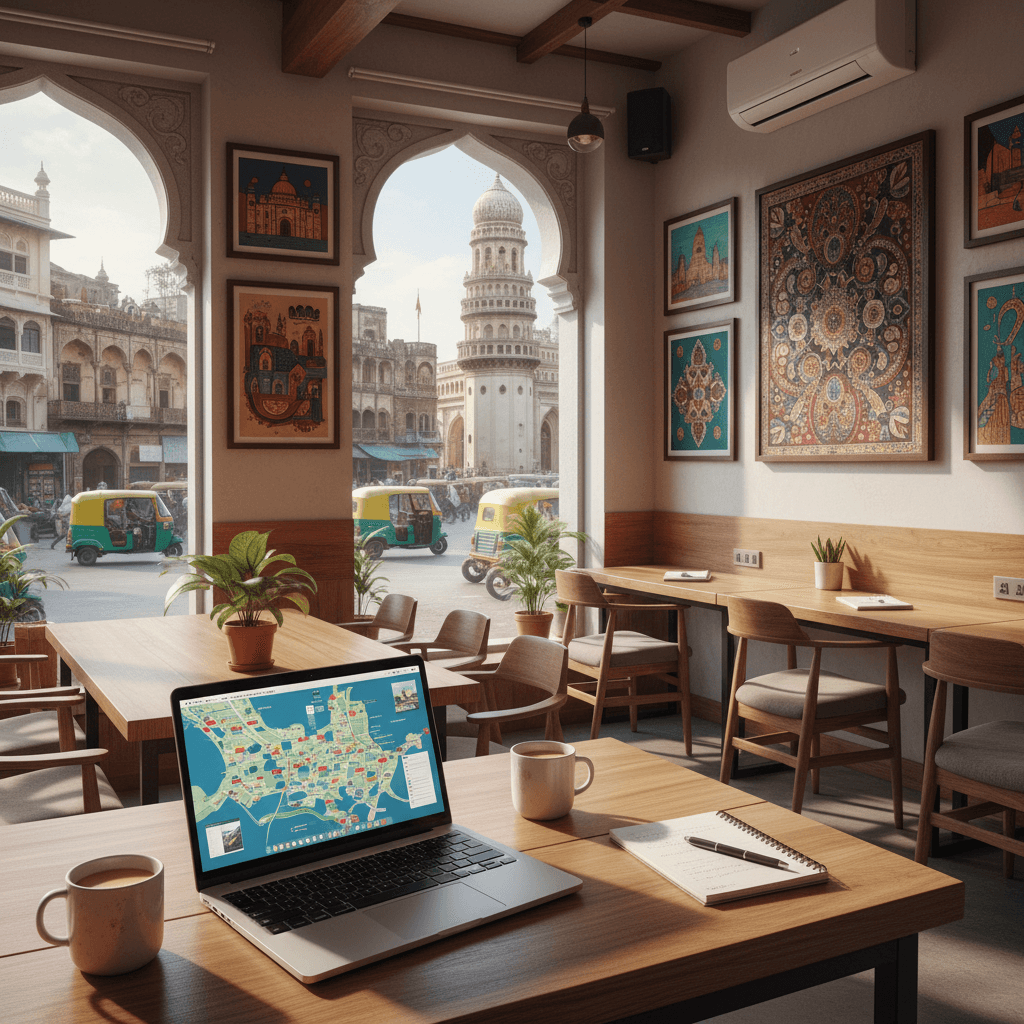
Hyderabad doesn't just sit at the crossroads of North and South India; it lives there. Most nomads arriving here expect a carbon copy of Bangalore's tech scene, but they quickly realize this place has a much deeper, more regal backbone. It is a city of two distinct souls. On one side, you have the historic core, where the smell of Irani chai and slow cooked biryani drifts through chaotic alleys. On the other, you have the high rise glass towers of Cyberabad, where the global tech elite builds the future.
The vibe here is noticeably slower and more gracious than in Mumbai or Delhi. Locals call it the Tehzeeb, a traditional sense of etiquette and hospitality that stems from the city's history under the Nizams. You'll feel it when a shopkeeper takes twenty minutes to explain the nuances of a pearl's luster or when a neighbor invites you in for a meal because you looked slightly lost. It’s a place where "hurry" is a relative term, even in the middle of a software sprint.
The Nomad Experience
Living here feels like a constant hack of the senses. You might spend your morning on a high speed fiber connection in a sleek office in HITEC City, then spend your evening haggling for spices near the Charminar. It is one of the few places in India where you can live a truly high end lifestyle on a modest budget. Expats often remark that their money goes twice as far here as it does in Singapore or London, especially when it comes to luxury housing and private transport.
The digital nomad community is growing, though it's more integrated into the local startup scene than in "bubble" destinations like Bali. You won't just be hanging out with other foreigners; you'll be rubbing shoulders with local entrepreneurs and engineers. This makes for a more authentic, albeit less "touristy," experience. You'll need to get used to the noise and the heat, but the sheer productivity you can achieve here is a major draw.
What to Expect Daily
- The Commute: Most nomads rely heavily on Uber or Ola. It's too hot to walk long distances, and the auto rickshaws are an adrenaline rush you'll only want occasionally.
- The Language: You can get by almost entirely on English. However, learning a few words of Telugu or the local Dakhini Urdu dialect will win you massive respect at the local markets.
- The Social Scene: It revolves around food. While there's a solid craft beer scene in Jubilee Hills, the real bonding happens over late night plates of food.
- Connectivity: Expect solid speeds. Most decent apartments and cafes offer 50 to 100 Mbps, which is plenty for video calls and heavy uploads.
The Emotional Landscape
Hyderabad can be overwhelming at first. The traffic is a sentient beast, and the summer sun is relentless. But there's a specific moment, usually around sunset when the call to prayer echoes over the Hussain Sagar Lake, where the city suddenly makes sense. It feels stable and grounded. Unlike other tech hubs that feel like they were built yesterday, Hyderabad knows exactly who it is. It’s a place that demands you slow down and savor the details, whether that’s a 150 Rupee cup of premium coffee or a 500 Rupee feast that feeds three people. You don't just visit Hyderabad; you let its heavy, scented air and rhythmic chaos settle into your bones.
The Bottom Line
Hyderabad is famously easy on the wallet, especially when you compare it to the skyrocketing prices in Bangalore or Mumbai. Most nomads find they can live a high quality life here for about $1,000 to $1,400 per month. This covers a nice apartment in a tech-heavy area, plenty of meals out, and a dedicated desk at a solid coworking space.
The local currency is the Indian Rupee (INR). While cash is still king in the older parts of town, you will use UPI apps like Google Pay or PhonePe for almost everything else. It is the standard for everything from high-end malls to the smallest coconut water stall.
Housing and Neighborhoods
Your biggest expense will be rent, and prices vary wildly depending on how close you want to be to the office parks. Expats and digital nomads usually gravitate toward the western side of the city.
- Banjara Hills and Jubilee Hills: These are the upscale spots. You are looking at $600 to $900 for a luxury one-bedroom or a serviced apartment. It is leafy, quiet, and home to the best cafes.
- Gachibowli and Kondapur: This is the heart of Cyberabad. It is more functional and modern. You can snag a modern flat here for $400 to $550. It is perfect if you want to walk to your coworking space.
- Madhapur: The middle ground. It is crowded but convenient. Expect to pay around $350 to $500 for a decent setup.
Eating and Drinking
Food is where Hyderabad really shines for your budget. You can eat like royalty without spending much. A massive plate of the world-famous Hyderabadi Biryani at a local staple like Paradise or Bawarchi will set you back about $4 to $7 and usually serves two people.
For a mid-range dinner at a trendy spot in Jubilee Hills, expect to pay around $15 to $25 for two people, including a couple of drinks. If you are cooking at home, local markets are incredibly cheap. A bag full of fresh produce rarely costs more than $5. Imported goods at supermarkets like Ratnadeep or Q-Mart carry a premium, so stick to local brands to keep costs down.
Workspaces and Connectivity
Since you are here to work, your "office" rent is a fixed cost. Most nomads recommend WeWork or 91springboard for reliable backup power and fast fiber. A hot desk usually goes for $120 to $180 per month. If you just need a spot for a day, daily passes usually range from $6 to $30 depending on the luxury level of the space.
Mobile data is some of the cheapest in the world. Grab an Airtel or Jio SIM card at the airport or a local shop. For about $8 a month, you will get more daily 4G or 5G data than you can actually use.
Getting Around
Do not bother driving here; the traffic is an experience you do not want to manage yourself. Most travelers rely on Uber or Ola. A 20 minute car ride usually costs between $3 and $5. For a faster, cheaper option, use the Uber Moto (bike taxi) or Rapido apps. These are great for zipping through gridlock for less than $1. The Hyderabad Metro is also clean, fast, and very affordable, with most fares under $0.75.
The Tech-Savvy Nomad: HITEC City and Kondapur
If you're in Hyderabad to work, you'll likely end up in the western corridor. HITEC City is the functional heart of the "Cyberabad" movement. It's packed with glass skyscrapers and high-end apartment complexes. Most nomads prefer this area because you can walk from your flat to a dozen different cafes without breaking a sweat. It feels less like traditional India and more like a global tech hub.
Kondapur sits right next door and offers a slightly more residential vibe while staying close to the action. You'll find plenty of "PG" (paying guest) accommodations here if you're on a budget, or modern serviced apartments for a more polished stay. This is where you'll find WeWork Rajapushpa Summit and 91springboard, two of the most reliable spots for high-speed fiber and networking. Expect to pay between INR 12,000 and 25,000 for a decent studio or shared apartment in these areas.
- Rent: $150 to $300 per month
- Vibe: Fast-paced, corporate, and convenient
- Top Spot: Sarath City Capital Mall for everything from groceries to movies
The Social Expat: Jubilee Hills and Banjara Hills
These are the city's "old money" neighborhoods. If your budget allows for a bit more luxury, these hilly districts offer tree-lined streets and the best social scene in the city. Most of the upscale bars, boutique gyms, and international restaurants are concentrated here. It's the place to be if you want to network with local entrepreneurs and the creative crowd over a craft beer.
Living here means you're central to everything. You can grab a gourmet sourdough toast at Roastery Coffee House in the morning and hit a rooftop lounge by evening. It's significantly more expensive than the tech suburbs, with rents often starting at INR 35,000 for a small flat, but the quality of life is arguably the highest in the city. It's less about coworking spaces here and more about working from aesthetic cafes with reliable Wi-Fi.
- Rent: $400 to $900 per month
- Vibe: Upscale, leafy, and trendy
- Top Spot: KBR Park for morning runs and fresh air
Families and Long-Termers: Gachibowli and Manikonda
For those traveling with a partner or family, Gachibowli is a solid choice. It's further out, which means more space for your money and gated communities with amenities like pools and private security. It’s also home to the Financial District, so the infrastructure is top-tier. The roads are wider, and it's generally quieter than the chaotic center of the city.
Manikonda is a rising favorite for those who want a "local" feel without sacrificing modern comforts. It’s more affordable than Jubilee Hills but offers better housing stock than the old city. You'll find plenty of supermarkets and international schools in this vicinity. A spacious three-bedroom apartment here can often be found for around INR 30,000 to 45,000, which is a steal compared to nearby Bangalore or Mumbai.
- Rent: $350 to $600 per month
- Vibe: Quiet, suburban, and spacious
- Top Spot: The many sports complexes and stadiums for weekend activities
The Solo Culturalist: Begumpet and Somajiguda
If you find the tech parks soul-crushing, Begumpet offers a more authentic Hyderabad experience. It’s an older, more established part of town that sits right in the middle of the city. It’s incredibly well-connected by the Metro, making it easy to zip over to the historic Charminar in the south or the malls in the west. Solo travelers often like this area because it feels lived-in and has a high density of street food and local markets.
The cost of living here is very reasonable. You can find older but large apartments for INR 18,000. While there aren't as many dedicated coworking hubs, the proximity to the Metro means you can reach a WeWork in 20 minutes. It's the best spot for someone who wants to spend their weekends exploring 400-year-old mosques and palaces rather than sitting in a mall.
- Rent: $200 to $400 per month
- Vibe: Authentic, central, and busy
- Top Spot: Hussain Sagar Lake for sunset walks
Connectivity and Speed
Hyderabad isn't just a tech hub by name; it's the backbone of India's IT infrastructure. You'll find that fiber optics are the standard here. Most high end apartments and dedicated workspaces offer speeds between 100 Mbps and 300 Mbps. Even mid range rentals usually come equipped with reliable broadband from providers like Act Fibernet or Airtel.
Mobile data is incredibly cheap and serves as a perfect backup. If you grab a local SIM, Jio or Airtel will give you 5G coverage across most of the city. You can get a daily data cap of 2GB for roughly INR 300 (USD 3.60) per month. It's common practice for nomads here to keep a mobile hotspot ready, just in case the occasional monsoon thunderstorm causes a brief power flicker.
Top Coworking Hubs
The coworking scene is concentrated in the western part of the city, specifically around HITEC City, Kondapur, and Gachibowli. This is where the infrastructure is most modern and the community is most active.
- WeWork Krishe Emerald: Located in Kondapur, this is the gold standard for international nomads. It has the familiar aesthetic you'd expect, great coffee, and very reliable backup power. A hot desk here starts around INR 8,000 to 12,000 (USD 95 to 145) per month.
- 91springboard: With locations in HITEC City and Jubilee Hills, these spaces have a more local, startup focused energy. They host frequent networking events and the community managers are great at making introductions. Day passes go for about INR 600 (USD 7).
- T-Hub: If you're into the deep tech or startup scene, you have to visit the world's largest innovation campus. While it's more of an incubator, they have areas for visiting professionals. It's a massive, futuristic building that feels like a city within a city.
- The Hive: Situated inside a mall in Madhapur, this is a great choice if you want easy access to food courts and cinemas right after your shift ends. Monthly desks run about INR 9,500 (USD 115).
Work Friendly Cafes
If you prefer a more relaxed vibe than a formal office, Hyderabad has a thriving cafe culture. Unlike the old city where cafes are for quick tea, the western suburbs have spots designed for long stays with a laptop.
Roastery Coffee House in Jubilee Hills is a favorite for many expats. It's set in a beautiful old bungalow with plenty of outdoor seating and excellent artisanal brews. Third Wave Coffee is another reliable chain found throughout the city; they have fast Wi-Fi, plenty of power outlets, and don't mind if you hang out for a few hours over a croissant. Expect to pay about INR 250 to 400 (USD 3 to 5) for a good meal and a coffee.
Practical Tips for Remote Work
Power outages used to be a headache, but most modern office buildings and upscale residential complexes now have 100 percent power backup. When you're booking an Airbnb or a long term rental, always ask if they have a "UPS" or "Power Backup" for the Wi-Fi router. It's a small detail that saves you from dropping out of a Zoom call during a surge.
Cybersecurity is something to keep in mind. While public Wi-Fi is available in malls and at the airport, it's often slow and requires an Indian phone number for an OTP. Stick to private networks at your coworking space or use a VPN if you're working from a local cafe. Most nomads find that once they have their home fiber and a local SIM set up, the internet in Hyderabad is as reliable as any major European or American city.
Staying Safe on the Streets
Hyderabad is widely regarded as one of the safer major metros in India, especially for solo travelers and digital nomads. The local culture is generally welcoming, and the presence of a massive international tech workforce means locals are used to seeing foreigners. You'll find that HITEC City, Gachibowli, and Jubilee Hills are active well into the night, making them feel secure even after dark.
Most nomads stick to ride-hailing apps like Uber or Ola rather than flagging down auto-rickshaws on the street. It’s safer, the price is fixed, and the GPS tracking provides peace of mind. If you do take an auto, ensure they use the meter or agree on a price before getting in. Petty theft like pickpocketing is rare but can happen in crowded spots like the Charminar markets. Keep your phone and wallet in your front pockets or a zipped bag in these high-traffic areas.
For women traveling solo, the city is relatively comfortable, though it’s smart to follow the local lead on dress codes in more traditional areas. While Western clothes are standard in the "Cyberabad" tech hubs, wearing a long tunic or loose clothing in the Old City helps avoid unwanted stares. The She Teams, a special wing of the Hyderabad Police dedicated to women's safety, are very active and can be reached by dialing 100 or using their dedicated app.
Healthcare and Hospitals
If you get sick, you're in good hands. Hyderabad is a major hub for medical tourism, so the private healthcare facilities are world-class. English is the primary language for all doctors and nursing staff. Most nomads prefer private hospitals over government ones because the wait times are shorter and the facilities are much more modern.
- Apollo Hospitals (Jubilee Hills): This is the flagship facility and the top choice for expats. They have a 24/7 emergency room and specialists for everything from tropical fevers to sports injuries.
- AIG Hospitals (Gachibowli): A massive, ultra-modern facility that is particularly famous for gastric and internal medicine issues, which is helpful if you catch a bout of "Delhi Belly."
- Care Hospitals: Another reliable chain with several locations across the city, including Banjara Hills and Hi-Tech City.
A standard consultation with a specialist at these hospitals usually costs between INR 800 and INR 1,500 (USD 10 to 18). If you just have a minor cold or need a quick prescription, you can use apps like Practo or Apollo 24/7 to book a video consultation for about INR 400 to 600.
Pharmacies and Water Safety
Pharmacies, or "Medical Stores," are on almost every street corner. Apollo Pharmacy and MedPlus are the two biggest chains. They are well-stocked with international brands, and you can often get basic medications over the counter that might require a prescription back home. For convenience, use the Tata 1mg app to have meds delivered to your Airbnb or apartment within a few hours.
The most common health issue for nomads is water-borne illness. Never drink tap water. Even locals rely on 20-liter purified water jugs or RO (Reverse Osmosis) filters. When dining out, stick to bottled water and ensure the seal is intact. Most high-end restaurants in Jubilee Hills use filtered water for their ice, but if you're eating street food near Begum Bazar, ask for "no ice" just to be safe.
Emergency Contacts
It's a good idea to keep these numbers saved in your phone as soon as you land. The response time for private ambulances is usually faster than the public ones.
- Police: 100
- Fire Department: 101
- Medical Emergencies (Public): 108
- Apollo Emergency Ambulance: 1066
Hyderabad is a massive city that spreads out further than you might expect. Getting from the tech hub of HITEC City to the historic Charminar can take anywhere from forty minutes to two hours depending on the legendary local traffic. Most nomads rely on a mix of the metro and ride-hailing apps to stay sane.
Ride-Hailing and Rickshaws
Uber and Ola are the gold standard here. You can book cars or auto-rickshaws directly through the apps, which saves you from the headache of haggling over fares. If you are traveling solo and want to beat the gridlock, use the bike taxi feature on Uber or Rapido. It is the fastest way to weave through stationary traffic during rush hour.
- Uber/Ola Auto: Usually INR 60 to 150 for short to medium trips.
- Uber Premier: Expect to pay INR 300 to 600 for longer cross-city journeys in air-conditioned comfort.
- Rapido (Bike Taxi): Often just INR 40 to 80 for quick hops between neighborhoods.
If you hail a rickshaw on the street, always insist on the meter. Most drivers will refuse and quote a flat price instead. If they do, just check your app for the "fair" price and use that as your bargaining baseline. Many locals just keep walking until they find a driver willing to be reasonable.
The Hyderabad Metro Rail
The Metro is a lifesaver for anyone living in areas like Jubilee Hills or Ameerpet who needs to get toward the IT corridors. It is clean, elevated, and most importantly, climate-controlled. The Red and Blue lines cover the most ground for digital nomads. It gets incredibly crowded during peak office hours, so try to travel between 11:00 AM and 4:00 PM if you want a seat.
- Tickets: You can buy single-trip tokens or use the Nebula smart card.
- Cost: Fares range from INR 10 to 60 depending on the distance.
- Pro Tip: Download the TSavaari app to check schedules and top up your card balance on the go.
Walking and Safety
Hyderabad is not a particularly walkable city in the traditional sense. Sidewalks are often non-existent or blocked by street vendors and parked bikes. However, neighborhoods like Banjara Hills and parts of Gachibowli are better for short strolls. Always keep an eye on the ground for uneven pavement and be assertive when crossing the street. The traffic won't stop for you; you have to find a gap and move steadily.
Public Buses
The TSRTC buses are everywhere and incredibly cheap, often costing less than INR 20 for a long ride. That said, they are usually packed to the rafters and the route maps can be confusing if you don't speak the local language. Unless you are on a very tight budget or feeling particularly adventurous, you will likely stick to the Metro and apps.
Car Rentals and Driving
Unless you have experience driving in chaotic Indian traffic, do not rent a car to drive yourself. The rules of the road are more like suggestions here. If you need a car for the whole day to visit sites like Golconda Fort or the Qutb Shahi Tombs, it is much better to book an "Uber Intercity" or a private driver for an 8-hour rental, which usually costs around INR 2,000 to 2,500.
The Linguistic Landscape
You will find that Hyderabad is one of the easiest cities in India to navigate if you only speak English. Because it is a massive global tech hub, English serves as the primary language for business, tech, and higher education. Most locals you will interact with in neighborhoods like HITEC City, Kondapur, and Gachibowli are fluent. You can easily order a coffee, negotiate a lease at a coworking space like 91springboard, or explain your dietary restrictions at a restaurant without a translator.
That said, the city has a fascinating dual identity. The local vernacular is a unique blend. While the state language is Telugu, Hyderabad is famous for Hyderabadi Urdu. It is a soulful, rhythmic dialect often called Deccani. You will hear it most often in the Old City near the Charminar. It is less formal than standard Urdu and full of character. Learning a few slang words will instantly endear you to the locals.
Key Phrases to Know
While you can get by with English, tossing in a few local words goes a long way in building rapport, especially with auto-rickshaw drivers or street food vendors. Here are a few essentials:
- Nakko: This is the most important word in the Hyderabadi vocabulary. it means a firm "no" or "I don't want it." It is incredibly useful for politely but firmly declining persistent street hawkers.
- Hau: The local way to say "yes." It is quick and informal.
- Baigan: Literally translates to "eggplant," but in Hyderabad, it is used as a slang filler for everything from frustration to disbelief. Use it sparingly, but recognize it when you hear it.
- Chalo: This means "let's go." You will use this every time you jump into an Uber or start a group outing.
- Namaskaram: The formal Telugu greeting. While "Hello" works fine, using this shows you have done your homework.
Communication Tools and Apps
Digital communication in Hyderabad runs almost entirely on WhatsApp. From your landlord and your local grocery delivery guy to the organizer of a weekend trek, everyone expects to reach you there. If you are trying to book a table at a popular spot like Over The Moon or checking the daily pass price at a workspace, just look for their WhatsApp number.
For navigating the city and overcoming any rare language gaps with drivers, rely on these apps:
- Google Maps: It is highly accurate here, even for small lanes in Jubilee Hills.
- Uber and Ola: These are the standard for transport. They remove the need to haggle over prices or explain directions in broken Telugu.
- Google Translate: Use the camera feature if you encounter a menu or sign written in the Telugu script, which can be difficult to decipher for Westerners.
Social Nuances
Hyderabadi people are famously polite and laid back. The "Tehzeeb" (etiquette) of the city means people usually speak softly and avoid direct confrontation. In professional settings, the communication style is Westernized, but in social circles, you might find people are more indirect. If someone says "see you in five minutes," they likely mean fifteen. It is part of the city's charm, so just roll with it. Most nomads find that a smile and a "Nakko, bhai" (No, brother) is the best way to handle almost any social friction.
The Seasonal Breakdown
Hyderabad doesn't really do "four seasons" in the traditional sense. Instead, you're looking at a cycle of intense heat, heavy rain, and a few months of near-perfect weather. Most nomads try to time their arrival for the window between late October and early March. During this time, the daytime highs hover around 28°C (82°F), and the evenings get cool enough that you might actually want a light hoodie while sitting on a rooftop in Jubilee Hills.
If you're here during the peak winter months of December and January, the weather is ideal for exploring the Golconda Fort or walking through the markets near Charminar without melting. It's the high season for a reason, so expect slightly higher prices for short-term rentals and more crowds at the popular cafes in Gachibowli.
Surviving the Summer Heat
From April to June, the city turns into an oven. Temperatures regularly climb past 40°C (104°F), and the dry heat can be draining if you aren't used to it. During these months, your life will revolve around air conditioning. Most nomads find that their electricity bills spike during this period because running an AC unit 24/7 becomes a necessity rather than a luxury.
If you find yourself in the city during the summer, plan your outdoor activities for very early in the morning or well after sunset. The silver lining is that the city's social scene doesn't slow down; it just moves indoors to the massive malls or the high-end coworking spaces in HITEC City where the cooling systems are top-notch.
The Monsoon Shift
The rains usually arrive in July and stick around through September. Unlike the misty drizzles you might find in Europe, Hyderabad gets proper tropical downpours. It brings a welcome drop in temperature, but it also brings logistical headaches. Traffic, which is already a challenge in areas like Madhapur, can become a standstill during a heavy storm.
Expats often recommend keeping a close eye on weather apps during this season before booking an Uber or Ola. If a big storm hits, prices for ride-hailing apps can double, and wait times can stretch to 30 minutes. On the plus side, the surrounding countryside turns incredibly green, making it a great time for weekend trips to the Ananthagiri Hills.
The Nomad Sweet Spot
If you want the best balance of lower prices and decent weather, aim for the shoulder months of October or November. The monsoon rains are tapering off, the intense summer heat is a memory, and the peak tourist influx hasn't fully hit yet. You'll find it easier to negotiate monthly rates at serviced apartments or coliving spaces before the winter rush begins.
- Best for outdoor work: November to February. These are the only months where sitting on a balcony with a laptop is actually comfortable.
- Best for budget: May to June. The heat keeps many travelers away, so you might find better deals on long-term stays.
- Worst for commuting: August and September. The rain can make the roads unpredictable and turn a 20-minute trip into an hour-long ordeal.
Regardless of when you visit, remember that Hyderabad sits on the Deccan Plateau at a moderate elevation of about 540 meters (1,770 feet), which contributes to cooler nights compared to coastal cities, especially during winter months, so pack accordingly. Most locals suggest staying hydrated with coconut water, which you can find on almost every street corner for about INR 40 to 60, a life-saver during those transition months when the humidity starts to climb.
Getting Around
Uber and Ola are the lifeblood of transportation here. Most nomads avoid the local buses because they're crowded and confusing, but the Hyderabad Metro is a godsend for bypassing the notorious traffic between HITEC City and the older parts of town. For a short hop, flag down an auto rickshaw. Just make sure they use the meter or agree on a price before you hop in; a 3 kilometer ride shouldn't cost more than INR 60 to 80.
Money and Connectivity
Cash is still useful for street food, but the city has gone digital. Most shops and cafes use UPI for payments. While as a foreigner you might struggle to set up UPI without a local bank account, carrying a debit card and some INR 500 notes will get you through. ATMs are everywhere, but stick to those attached to major banks like ICICI or HDFC to avoid skimming issues.
For data, grab a SIM card from Airtel or Jio as soon as you land. You can find kiosks at the airport, but you will need your passport and a passport sized photo. A monthly plan with 2GB of daily data usually costs less than INR 300. If you are working from a cafe, don't always count on their Wi-Fi. It is often spotty, so having a local SIM to tether from is a smart backup.
Health and Safety
Hyderabad is generally chill, but the traffic is the biggest physical risk you will face. Pedestrians do not have the right of way, so be aggressive when crossing. For healthcare, Apollo Hospitals and Continental Hospitals are the top choices for expats. They are world class facilities where English is the primary language. A standard GP consultation will set you back about INR 800 to 1,200.
Stick to bottled water, even for brushing your teeth if you have a sensitive stomach. Most high end apartments and coworking spaces have RO filtration systems, which are perfectly safe. If you are eating street food, look for places with a high turnover of local customers to ensure the ingredients are fresh.
Coworking and Community
If you need a reliable desk, check out WeWork in Kondapur or 91springboard in HITEC City. Day passes usually hover around INR 500 to 800, while a dedicated desk for the month stays in the INR 8,000 to 12,000 range. These spots are the best way to meet other remote workers and tech founders.
- Standard Coffee: INR 200 to 350 at a specialty cafe
- Local Beer: INR 250 to 450 at a pub in Jubilee Hills
- Gym Membership: INR 2,500 to 4,000 per month
- Laundry: INR 50 to 100 per kilogram for wash and fold
Cultural Etiquette
People here are incredibly friendly and often curious. Don't be surprised if locals ask you for a selfie or ask personal questions about your job and salary; it is usually just friendly interest rather than being intrusive. Dress is relatively casual in the tech hubs, but if you are heading into the Old City near Charminar, it is respectful to keep your shoulders and knees covered. A little bit of local etiquette goes a long way in making connections.
Need visa and immigration info for India?
🇮🇳 View India Country GuideNomad Haven
Your home away from home