Hulhumale
🇲🇻 Maldives
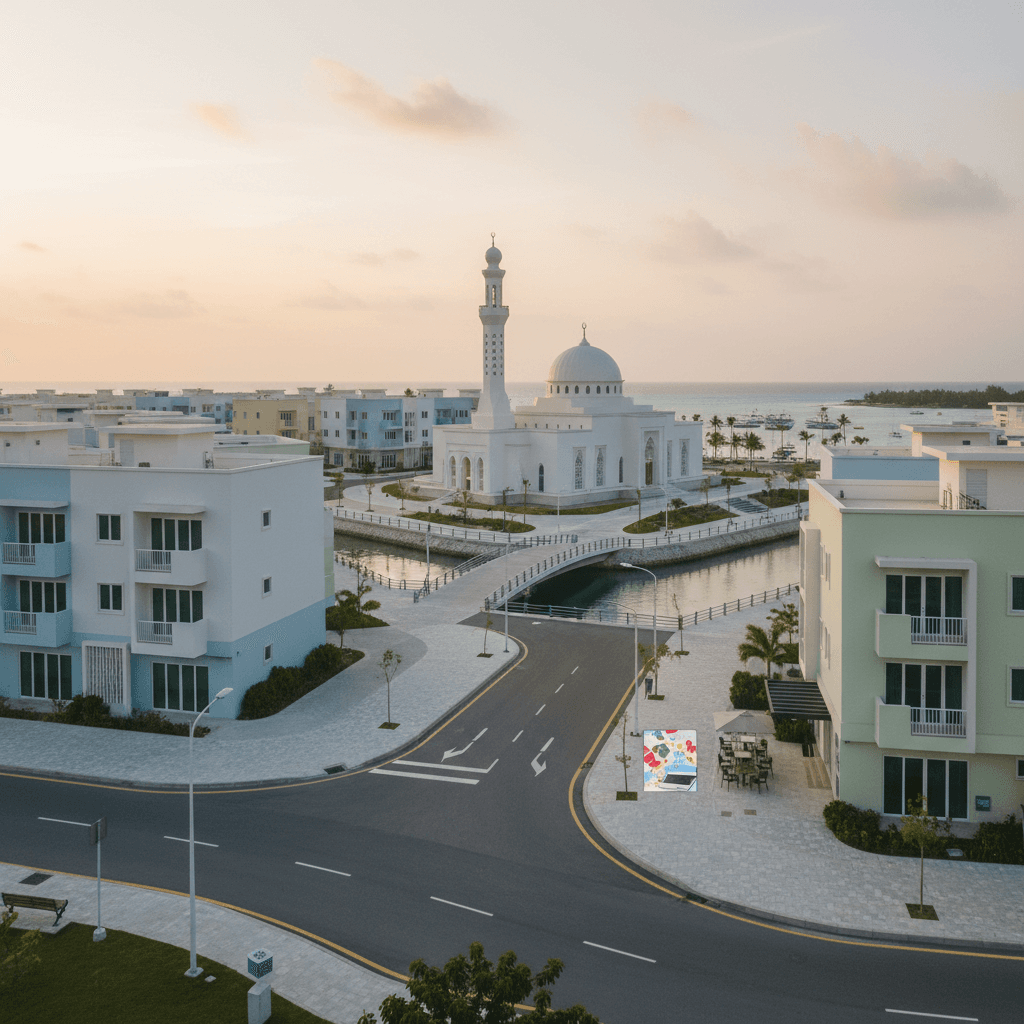
Hulhumalé feels like a Maldivian reset button. It’s a planned island, so you get wide roads, parks, long beaches and enough breathing room to remember what elbow space feels like, which is a nice change after the crush of Malé. The tradeoff is obvious, honestly: you’ll hear construction drills in Phase 2, smell sea salt mixed with exhaust and sometimes spend a morning waiting for decent internet to behave.
The mood is laid-back and slightly unfinished. Local families, office workers and a growing expat crowd share the same pavements, so you’ll hear Dhivehi, English, scooter engines and the call to prayer drifting over the blocks, then five minutes later you’re barefoot in sand with the airport basically around the corner. That contrast is the hook and it’s why most nomads either settle in quickly or decide the place feels too quiet.
Cost-wise, don’t expect bargain Asia. A solo month often lands around $1,379 with rent and a realistic budget looks like this:
- Budget: $1,000 to $1,500, basic studio, street food, simple transport
- Mid-range: $1,500 to $2,000, 1BR, mixed dining, more café workdays
- Comfortable: $2,000 to $2,500, newer 1BR, nicer meals, coworking membership
Phase 1 Central is the practical choice, with supermarkets, the hospital, schools and a lived-in neighborhood feel. Phase 1 Beachfront is better if you want cafés and a softer social scene, though rent jumps and it gets busier. Phase 2 has the modern towers and Central Park energy, but the unfinished edges can be maddening, weirdly, because one street looks polished and the next feels like a work site.
What living here feels like
- Internet: Good enough for most remote work, but peak-hour lag happens, so get Dhiraagu if you care about reliability
- Coworking: Coworksurf Hulhumalé and Hulhumalé Business Center are the main bets, cafés like Central Park Cafe work for lighter days
- Getting around: Very walkable, flat and easy to cycle, with cheap buses and Avas Ride for taxis
- Nightlife: Quiet, because this isn’t a party island, so after dark it’s beaches, food and maybe a nomad event
Safe streets, decent clinics and a five-minute hop to Velana International make daily life easy and that convenience matters more than people expect. Hulhumalé isn’t flashy and it doesn’t try to be, but if you want sea air, space and a place where work stops feeling like a grind the second you step outside, this island makes a solid case.
Hulhumalé isn’t cheap, but it’s still calmer on the wallet than island resorts or a lot of people expect. A solo nomad usually lands around $1,379 a month with rent included and that number shifts fast once you move from a basic studio to a newer 1BR in Phase 2, where the cranes, dust and unfinished sidewalks can be annoying, frankly.
Basic living can be done on $1,000 to $1,500 if you keep to street food, older apartments and the odd café day pass. Once you want a decent one-bedroom, mixed dining and a bit of comfort, you’re more in the $1,500 to $2,000 range and a nicer setup with modern finishes and more eating out pushes closer to $2,500. That’s the real cost.
Housing
- Phase 1 Central: $500 to $900 for a studio or 1BR, practical and a bit less shiny.
- Phase 2: $900 to $1,300, newer buildings, but you’ll hear construction noise and see half-finished corners.
- Phase 2 Waterfront: Highest rents, usually for people who want marina views and don’t mind paying for them.
Food prices are manageable if you don’t eat like a tourist every night. Street food and simple local meals hover around $6, a mid-range dinner for two runs about $33 and upscale places cost more, though the dining scene is still pretty limited compared with bigger capitals. Bean and Bites, Central Park Cafe and Rio Beach Cafe get repeat business because they’re reliable and the smell of grilled seafood and fried dough drifts out into the humid air.
- Street food: Around $6.
- Mid-range dinner for two: About $33.
- Coworking: $180 to $280 a month, with spaces like Coworksurf Hulhumalé and Hulhumalé Business Center.
- Transport: $40 to $80 a month if you’re using buses and the occasional taxi.
The internet is decent, not dazzling. Speeds average around 45 Mbps, which is fine for calls and normal remote work, though it can drag during busy hours and Dhiraagu tends to be the safer pick if you care about stability. SIM packs are cheap enough and cafés with day passes can save you from staying home while rain hits the roof in a noisy sheet.
One thing people miss in the budget is how much convenience costs. A taxi from the airport can be $10 to $15, the bus is much cheaper and if you want a bike or scooter rental, expect around $30 a month, which makes sense on Hulhumalé’s flat roads and wide lanes. Weirdly, the simple stuff adds up before the flashy stuff does.
Hulhumalé isn’t huge, so your neighborhood choice mostly comes down to noise, rent and how much unfinished concrete you can tolerate. Phase 1 feels lived-in and practical, Phase 2 feels newer but a bit raw, with construction dust, jackhammers and the occasional muddy shortcut. Not glamorous.
Nomads
- Best area: Phase 2 Neighborhoods 1 to 3
- Why: Newer towers, Central Park nearby, easier access to cafés and coworking spots
- Watch for: Construction noise, half-finished blocks, patchy internet in some buildings
Most nomads land here because the apartments are newer and the vibe is a little more cosmopolitan and honestly, that matters when you’re staring at a laptop all day. Coworksurf Hulhumalé is the main draw if you want beach access and events, while the Hulhumalé Business Center is cheaper and more no-nonsense, which, surprisingly, suits a lot of remote workers just fine.
Expats
- Best area: Phase 1 Central
- Why: Supermarkets, schools, the hospital and a steadier community feel
- Rent: Usually $500 to $900 for a studio or 1BR
Phase 1 Central is the safest bet if you’re staying longer than a month or two, because daily life is easy there, with groceries, pharmacies and the hospital close enough that you won’t be sweating over logistics. The streets are broader, the pace is calmer and you’ll hear more scooters than tourists, plus the smell of cooking oil and fish drifting out of small local spots in the evening.
Families
- Best area: Phase 1 Central
- Why: Schools, clinics, supermarkets and tree-lined streets
- Trade-off: Less modern than Phase 2, though still practical
Families usually prefer Phase 1 because it’s simply easier to live in, with wider pavements, less building-site chaos and enough everyday services that you’re not driving across the island for milk or medicine. It’s not fancy, but it works and that beats shiny-but-annoying every time.
Solo Travelers
- Best area: Phase 1 Beachfront
- Why: White sand, cafés, calm water and a social feel
- Rent: Higher than inland Phase 1
If you want beach walks before breakfast and an easier time meeting people, this is the one. You’ll get more foot traffic, more café chatter and more places to linger with a cold juice while the humid air hangs on your skin, though you’ll pay for the privilege and it gets busier than the inland blocks.
High-Budget Stays
- Best area: Phase 2 Waterfront
- Why: Marina views, luxury towers, walking paths
- Catch: It’s the priciest part of town
Skip the fantasy of cheap waterfront living here, because it doesn’t exist. Phase 2 Waterfront is for people who want polished lobbies, sea views and don’t mind paying a lot more for the cleaner finish, the quieter feel and the nicer walk home after dinner.
Hulhumalé’s internet is decent, not dreamy. Most remote workers get speeds of 100+ Mbps with fiber or mobile, which is enough for calls, docs and normal uploads, though speeds can sag when everyone’s online and the connection gets a bit sticky, honestly. Dhiraagu tends to be the safer pick if you want fewer random dropouts.
The coworking scene is small but usable and the better spots are close enough to the beach that you can hear the wind and, sometimes, scooters buzzing past on the road. Coworksurf Hulhumalé is the nicest all-round option if you want a proper desk, events and a beach-side setting, while the Hulhumalé Business Center is cheaper and more practical if you just need a place to plug in and work.
- Coworksurf Hulhumalé: About $18 per day or $280 per month, with beach access and events.
- Hulhumalé Business Center: About $12 per day or $180 per month, with meeting rooms and a more no-nonsense setup.
- Central Park Cafe: Day passes around $5 to $10, good WiFi and a solid fallback when you don’t feel like paying for a full coworking seat.
Cafés can work fine for a few hours, though you’ll want to test the WiFi before settling in, because a place that looks calm can still have a laggy connection and a blaring blender behind the counter. The smell of espresso, fried snacks and sea air does help, weirdly, but power cuts or slow afternoons can still throw off a workday.
If you’re staying more than a week, get a local SIM at the airport or a shop in town. Dhiraagu and Ooredoo both sell tourist packs and you can usually get something like 14GB for 7 days around $10, which is handy for backup hotspot use when the apartment internet acts up.
- Best SIM: Dhiraagu for reliability, Ooredoo as the other solid option.
- Typical tourist pack: $10 to $20 for 7 to 30 days.
- Backup strategy: Keep mobile data on hand, because home WiFi can be patchy during peak hours.
If fast, flawless internet is your dealbreaker, Hulhumalé will annoy you now and then. Still, it’s workable and for most nomads the mix of beach, cheap cafés and a few decent coworking spaces beats sitting in cramped Malé with more noise and less breathing room.
Hulhumalé feels safer than Malé and most days it really is. The streets are wide, the beaches are open and there’s a calmer suburban rhythm here, though construction zones in Phase 2 can feel sketchy after dark when the site lights go off and the only sound is wind, scooters and the occasional call to prayer.
Street crime is low, so you’re mostly dealing with everyday annoyances, not serious danger. Honestly, the bigger risks are careless traffic, unfinished sidewalks and wandering too close to active building sites at night, especially if you’re half-paying attention and your phone’s in your hand.
Where to Stay
- Phase 1 Central: Best for longer stays, it’s close to Hulhumalé Hospital, supermarkets, schools and the parts of town that feel settled rather than half-built.
- Phase 1 Beachfront: Good if you want cafés and sea air, though it’s busier and rent runs higher.
- Phase 2: Fine for newer towers and Central Park, but the construction noise can be maddening, especially in the morning.
Hulhumalé Hospital is the main place to know and it’s been upgraded with a bigger ER, more beds and modern equipment, so for a city this size, that’s a serious plus. Pharmacies are easy to find, doctors usually speak English well enough and if you need an ambulance, dial 102.
For routine stuff, you won’t need much planning, because basic healthcare access is straightforward and the island is small enough that getting to the hospital isn’t a drama. That said, don’t expect the kind of private-clinic network you’d find in bigger expat hubs, if something specialized comes up, you may end up heading to Malé or abroad.
Practical Safety Habits
- At night: Stick to lit streets and skip the unfinished blocks.
- Near the beach: Keep an eye on your things, especially around sunset when it gets crowded.
- Transport: Use Avas Ride or a taxi late, because empty stretches can feel oddly quiet.
- Dress: Modest clothing off the beach helps you blend in and avoids hassle.
Pharmacies, small clinics and convenience shops are scattered around Phase 1 and Phase 2, so cough medicine, sunscreen and basic first aid aren’t hard to get. The humidity sticks to your skin, rain drums on tin roofs and a minor cut can get irritated fast if you ignore it, so keep your daypack stocked and don’t be careless.
Overall, Hulhumalé is a pretty safe place to live or work and most nomads settle in quickly. The main rule is simple, avoid construction zones after dark, stay alert around traffic and don’t mistake a quiet island for a carefree one.
Hulhumalé is easy to get around, which, surprisingly, is one of the nicest things about living here. Phase 1 is flat, walkable and compact, so you can cross it in about 20 minutes on foot, with the usual soundtrack of scooter hum, bus brakes and the calls to prayer drifting over the warm air. Not cheap. Not hard either.
Most people just walk or bike for daily life, then grab a bus or taxi when the weather turns ugly, because the humidity can cling to you like wet fabric and the afternoon rain comes down hard on tin roofs. MTCC buses are the budget option at roughly $0.65 to $1.30 a ride and they run frequently enough for airport trips and quick runs into Malé, though you’ll still want to check timing instead of assuming it’ll be smooth. Honestly, that’s the tradeoff here, low friction, but not much glamour.
Best ways to move around
- Walking: Best for Phase 1, especially Central and the beachfront, where cafés, supermarkets and the hospital are all close enough to skip transport.
- Bikes and scooters: Flat roads make them a sensible choice, rentals run around $30 a month and they’re handy when you don’t want to sweat through a T-shirt before noon.
- Buses: Cheap and frequent, good for Malé or the airport, though they’re basic and you don’t always get much space.
- Taxis and vans: Use Avas Ride for upfront pricing, which takes some of the guesswork out, especially if you’re heading out late or carrying luggage.
For airport transfers, the bus is about $1.30 and takes around 25 minutes, while a taxi usually lands near $10 to $15 and gets you there in roughly 10 minutes, so the cab makes sense when you’re tired, dragging bags or trying to avoid another sweaty wait under the sun. The airport is only a few minutes away by car, which makes Hulhumalé feel practical in a way Malé doesn’t. Weirdly, that convenience matters more than nightlife here.
Area by area
- Phase 1 Central: Best for errands on foot, with the hospital, schools and supermarkets all nearby.
- Phase 1 Beachfront: Easy for beach walks and café hopping, though it gets busier and rents are higher.
- Phase 2: Better for newer buildings and wider roads, but construction noise and unfinished corners can be irritating, especially at night.
If you’re staying longer, get a local SIM from Dhiraagu or Ooredoo and use Avas Ride for the times when the sky opens up and the roads get slick. The whole island feels built for short, simple hops rather than long commutes, so if you like places where you can step outside, hear bikes on the road, smell grilled fish from a nearby café and be home again in ten minutes, Hulhumalé works. If you want a car-heavy city, this isn’t it.
Language in Hulhumalé is pretty straightforward and honestly, that’s one of the easier parts of living here. Dhivehi is the local language, but English gets you through most daily stuff, especially in cafés, supermarkets, clinics and anywhere that deals with foreigners.
You’ll hear Dhivehi on the street, in shops and around the call to prayer, with English slipping in at reception desks and in the newer apartment blocks. That mix feels normal here, though the accent and pace can be a little rough around the edges if you’re trying to sort out deliveries or housing by phone.
- Hello: Assalaamu alaikum
- Thank you: Shukuriyaa
- Yes: Aan
- No: Noon
Those four phrases go a long way. Use them with a smile and people warm up fast, which, surprisingly, helps more than perfect grammar ever will.
For remote workers, the practical side matters more. Internet is decent in a lot of places, with average speeds now over 100 Mbps in many areas thanks to fiber upgrades, but it can dip during busy hours and that’s when the frustration starts, because a video call that’s fine at noon can turn choppy by evening when the building’s full and everyone’s streaming or uploading.
Dhiraagu usually gets the nod for reliability, with Ooredoo a solid backup if you want a second SIM or a quick tourist package. Buy your SIM at the airport or in town, bring your passport and expect short data bundles that work well for a week or two, not forever.
If you need coworking, Coworksurf Hulhumalé is the best-known spot. It handles English well, is used to nomads and feels more useful than trying to squeeze a workday out of a noisy café with blender hum, clattering plates and air-con set way too cold.
- Coworksurf Hulhumalé: Beach access, events, about $18 a day or $280 a month
- Cafés: Central Park Cafe often works for $5 to $10 day use, if you don’t mind ordering food
Most expats don’t struggle with language here, they struggle with patience, especially when a landlord, driver or utility office gives you three different answers in one conversation. Still, if you keep things polite, speak clearly and lean on Google Translate when needed, you’ll get by without much drama.
Hulhumalé stays hot all year, with daytime temps usually sitting around 28 to 32°C, so you’re never packing for “cool” weather, just for more rain or less rain. Dry season runs December to April and that’s the sweet spot if you want blue skies, calmer seas and fewer afternoons where the air feels like wet cotton. Not cheap. Also, the humidity can be brutal.
If you’re choosing when to come, go between December and April. Those months are easier on your mood, your laundry and your beach plans and the streets feel nicer too, with less of that sticky, rain-damp smell hanging over Phase 1 and the beachfront. May through November gets muggy fast, then the afternoon showers roll in, sometimes hard enough that the sound on tin awnings drowns out traffic.
Best months: December to April, especially if you want beach time and fewer storms.
Worst stretch: May to November, when the heat clings and rain turns up often.
Rainiest month: November, which can bring around 6 inches of rain.
What the seasons actually feel like
- Dry season: Clearer mornings, calmer water, easier ferry rides and better odds of actually using the beach instead of just looking at it.
- Wet season: More showers, heavier humidity and that weirdly tired feeling you get after walking a few blocks in the sun.
- Shoulder months: May and November can be fine, but they’re a gamble, so don’t plan tight outdoor schedules around them.
Honestly, the weather matters less than people expect for day-to-day living, because Hulhumalé doesn’t have dramatic seasonal swings, but it does change how much you enjoy being outside and that matters here since you’ll be walking, riding buses or sitting at beach cafés more than you probably would in Malé. If you’re a remote worker, dry season is also nicer for the commute to Coworksurf Hulhumalé or a beachside lunch at Rio Beach Cafe, because you won’t arrive drenched and irritated.
One more thing, the sun is strong even on cloudy days, so bring reef-safe sunscreen, a hat and sandals that dry fast. The rain can come down fast, then vanish just as quickly and if you’re around Phase 2, the construction dust and sudden downpours make the streets feel gritty and a bit unfinished. That's Hulhumalé. Plan for heat, then enjoy the better months.
Hulhumale is easy to live in, but it does have a few quirks. The island’s wide roads, flat ground and beach paths make day-to-day life simple, then you hit the unfinished bits in Phase 2 and hear drill noise, dust and the occasional truck reversing at 7 a.m. Not ideal.
If you’re staying more than a week, sort out your SIM first. Dhiraagu and Ooredoo both work and airport counters are the easiest place to buy one, though you’ll need your passport, so don’t expect a five-minute handoff if the queue’s long.
- SIM cards: Budget $2 to $20 for starter packs, with tourist data bundles often around $10 to $20 for 7 to 30 days.
- Banking: ATMs are everywhere and Wise or a local card usually helps when your foreign card gets weirdly rejected at a shop.
- Internet: Coverage is decent for calls and normal remote work, but peak-hour slowdowns happen, honestly, especially in busier cafes and apartments.
Housing is the biggest decision. Phase 1 Central feels more settled, with supermarkets, the hospital and a neighborhood feel, while Phase 2 has newer buildings and better views but more construction noise, more dust and higher rents. A furnished one-bedroom in Phase 1 can land around $900 a month and that’s the version most long-stay nomads actually end up hunting for.
- Phase 1 Central: Best for long stays, quieter streets, easier errands.
- Phase 1 Beachfront: Better if you want sand, cafés and a social scene, but rent climbs.
- Phase 2: Good for newer flats and modern buildings, though unfinished pockets can feel grim.
Getting around is simple, which is half the appeal. You can walk across much of Phase 1 in about 20 minutes, take an MTCC bus for under a dollar or use Avas Ride if you don’t feel like sweating through a humid afternoon with salt in the air and traffic honking nearby.
For day trips, the ferry terminal makes Malé easy and local island or snorkeling tours are a straightforward add-on. Dress modestly away from the beach, cover shoulders and knees and skip public drinking and public affection, because local norms are taken seriously here and nobody’s impressed by tourists testing that line. Quiet rules. Respect them.
Need visa and immigration info for Maldives?
🇲🇻 View Maldives Country GuideHidden Gem
Worth the effort