Hualien City
🇹🇼 Taiwan
The Pacific Slowdown
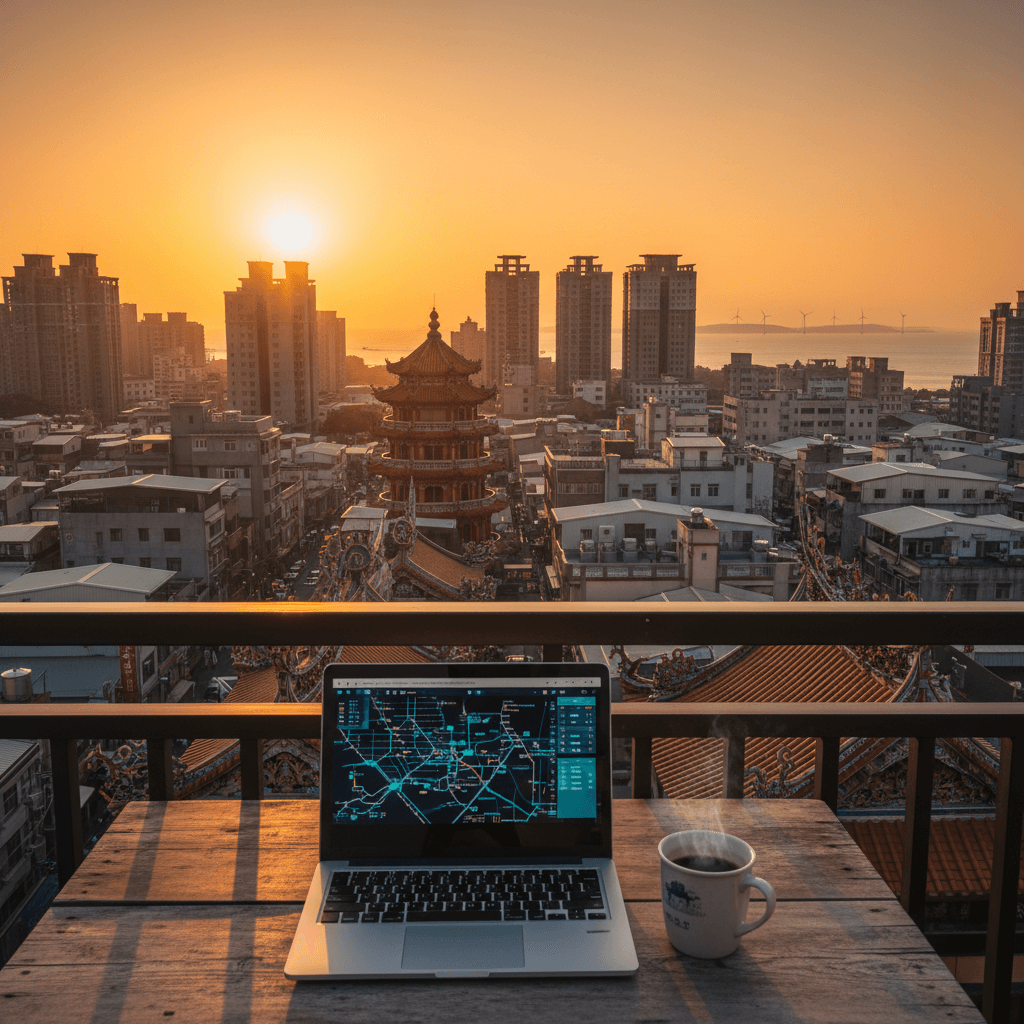
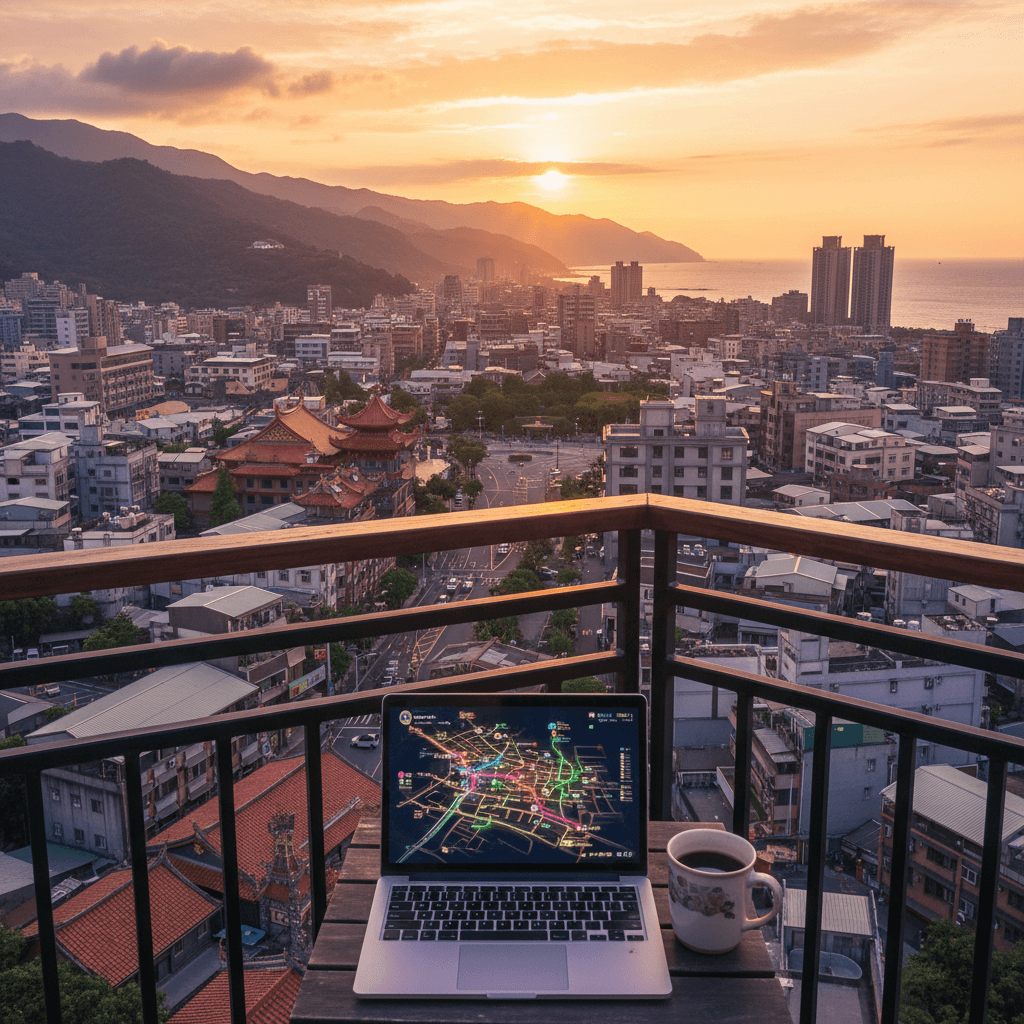
If Taipei is Taiwan's high-octane engine, Hualien is its deep, steady breath. Perched on the rugged east coast, this city trades skyscrapers for the dramatic marble cliffs of Taroko Gorge and neon lights for the vast, crashing blues of the Pacific. It is the largest county by area but feels like a series of interconnected coastal villages, where the pace of life slows down the moment you step off the express train from the capital.
Most nomads arrive in Hualien looking for a "work-cation" vibe that cities like Chiang Mai or Lisbon can't quite replicate. It is quiet. It is green. It is unpretentious. You won't find a massive community of influencers here; instead, you'll find a handful of focused remote workers who prefer a morning bike ride on the seaside promenade over a networking mixer.
The Daily Rhythm
Life here revolves around the outdoors. You'll see locals and expats alike heading toward the water or the mountains as soon as the laptop closes. The city is remarkably walkable and bike-friendly, with a 85/10 walkability score that makes running errands feel less like a chore and more like a stroll through a postcard. It’s the kind of place where you can grab a $3 bowl of wonton soup for lunch, work from a quiet cafe with 250+ Mbps speeds in the afternoon, and be at a trailhead or a beach by sunset.
The culture is authentically Taiwanese, flavored by a strong indigenous presence and a maritime heritage. While English isn't as widely spoken as it is in the north, the locals are famously patient. You'll spend your evenings at the Dongdamen Night Market, which is actually four markets stitched together, eating "coffin bread" and watching street performers under the salt air.
Reality Check: The Trade-offs
Hualien isn't for everyone. If your productivity depends on a high-energy social scene or a different coworking event every night, you might find the 3/10 nomad community rating a bit lonely. This is a "choose your own adventure" destination. You have to be comfortable being the only foreigner in the room, and you'll need to be proactive about making your own fun.
The nightlife is also famously mellow. Beyond the night market and a few low-key craft beer spots, the city goes to sleep early. It’s a trade-off most residents are happy to make in exchange for low crime, affordable rent, and the ability to breathe some of the cleanest air in East Asia.
What It Costs
Your bank account will definitely appreciate the move south. Hualien offers a high quality of life for a fraction of Taipei's prices. Most mid-range nomads find they can live very comfortably on about $1,884 per month, though budget-conscious travelers can easily squeeze that under $1,500 by sticking to local studios and street food.
- Studio Apartment: $300 to $400 per month for a basic, clean setup.
- Mid-range 1-Bedroom: $400 to $600 in the city center.
- Daily Scooter Rental: $12.66, which is the best way to explore the coastline.
- Street Food Meal: $2 to $5 for a filling dinner.
- Train to Taipei: around $18 USD for a two-hour ride back to the big city.
Ultimately, Hualien is for the nomad who has outgrown the party hubs and wants to see if they can actually live the "balanced" lifestyle everyone talks about. It's a place to get healthy, get focused, and remember what it's like to live next to the wild.
The Monthly Bottom Line
Living in Hualien feels like a breath of fresh air for your bank account, especially if you are transitioning from the high costs of Taipei or Western hubs. Most nomads find they can live comfortably here on roughly $1,100 USD per month. This figure covers a lifestyle that balances local street food with the occasional nice dinner and a comfortable private apartment.
You can certainly scale this down. If you stick to the budget tier, expect to spend between $1,200 and $1,500. This usually means renting a simple studio for $300 to $400 and eating primarily at local stalls where a filling meal costs just $2 to $5. On the flip side, if you want a premium one bedroom in a prime area for $600 to $800 and enjoy upscale dining frequently, your budget will likely crest $2,500.
Accommodation and Utilities
Housing is the biggest area of savings. While Taipei's market is notorious for tiny, expensive studios, Hualien offers more space for less money. Expats recommend looking for places near the city center to stay within walking distance of the best amenities. Keep in mind that while base costs for utilities are low, around $112, your electricity bill will fluctuate depending on how much you blast the air conditioning during the humid summer months.
- Studio Apartment: $300 to $400 per month
- One-Bedroom Apartment: $400 to $600 per month
- Prime Location One-Bedroom: $600 to $800+ per month
Eating and Socializing
Food is a highlight of life here. Groceries typically run about $331 a month if you like to cook, but many nomads find eating out so affordable they rarely use their kitchens. You'll likely spend around $122 a month on additional dining experiences outside of your daily staples.
The Dongdamen Night Market is the heart of the evening social scene. You can grab local favorites like coffin bread or shish kebabs for just a few dollars. If you prefer a sit down restaurant, a mid range meal usually lands between $6 and $12. For those nights when you want to splurge on high end seafood or international cuisine, expect to pay $12 to $25 per person.
Getting Around and Staying Connected
Hualien is remarkably walkable, which keeps transport costs near zero for daily errands. However, to really see the coast or head into the mountains, you'll want some wheels. Most travelers recommend renting a scooter; it is the most efficient way to navigate the area and costs about $12.66 per day. If you prefer the train, a trip to Taipei is roughly $13.74, while heading south to Kaohsiung costs about $10.15.
Work infrastructure is reliable and cheap. While the dedicated coworking scene is small, a membership will only set you back $50 to $100 a month. Most people just opt for the "work from cafe" lifestyle, as the coffee culture is strong and the internet is blazing fast, with median download speeds over 250 Mbps. Mobile data is equally affordable, and you can easily grab a local SIM or an Airalo eSIM to stay connected while exploring Taroko Gorge.
Sample Daily Expenses
- Coffee at a laptop friendly cafe: $3 to $5
- Street food lunch: $3
- Scooter rental (daily): $12.66
- Beer at a local spot: $3 to $5
- Entry to local attractions: Often free or under $5
For Digital Nomads and Remote Workers
If you're coming to Hualien with a laptop in tow, you'll want to plant yourself in the Central Business District, specifically the area surrounding the Hualien Old Railroad Pedestrian Area. This is the heartbeat of the city where the infrastructure is most reliable. You'll find the highest concentration of work-friendly cafes here, like Kohi Kotaku or Gioconda Coffee, which offer the stable WiFi and power outlets you need for a deep work session.
Living in the city center puts you within walking distance of the few coworking spots available. While the nomad community is small, being central means you're more likely to run into other remote workers at local haunts. Rent for a decent one-bedroom apartment in this prime zone typically ranges from $400 to $600 USD. You'll be close to the Zhongshan Road corridor, which is packed with banks, pharmacies, and tech shops if you need a quick gear replacement.
- Pros: Best internet speeds, highest walkability (rated 85/100), and easy access to "work cafes."
- Cons: Can feel a bit more "concrete" than the scenic outskirts.
- Budget: Expect to spend about $1,800 to $2,200 USD per month for a mid-range lifestyle.
For Families
Families usually gravitate toward the neighborhoods near Pacific Park (Beibin and Nanbin Park areas). These spots offer a great balance between urban convenience and open green space. Being near the Dongdamen Night Market is a huge plus for families because it’s not just about the food; there are plenty of carnival-style games and open areas for kids to run around without the stress of heavy traffic.
The streets here are wider, and the air feels a bit fresher coming off the ocean. You're also closer to the larger supermarkets, which is vital since carrying heavy groceries for a family can be a chore in the more cramped parts of the city. Look for modern apartment complexes along Haibin Road for views of the water and proximity to the seaside promenade.
- Vibe: Relaxed, coastal, and very safe for evening strolls.
- Key Perks: Close to the 1.8 km pedestrian trail and the city's best playgrounds.
- Transport: A car or scooter is recommended here to reach the bigger retail outlets.
For Solo Travelers and Backpackers
The area immediately surrounding Hualien Railway Station is the go-to for solo travelers. It’s the logistics hub of the city, making it incredibly easy to hop on a train to Taipei for $13.74 or catch a bus heading into Taroko Gorge. This neighborhood is dense with hostels and budget guesthouses where you can find a bed for $15 to $25 USD a night.
While it’s not the most "charming" part of town, it’s the most practical. You’ll find plenty of scooter rental shops here, with daily rates around $12.66, which is the gold standard for solo exploration. The food scene here is dominated by quick, cheap eats like Gongzheng Baozi (famous steamed buns) where a meal will only set you back about $3 to $5 USD.
- Rent: Studio apartments go for $300 to $400 USD if you're staying long-term.
- Convenience: Best access to public transit and inter-city links.
- Social Scene: This is where you'll find the highest density of other travelers to grab a beer with at night.
For Long-Term Expats
Expats who have settled in Hualien for the long haul often move slightly north toward the Meilun District. This is a more residential, upscale area located on a plateau overlooking the city. It’s quieter, has more trees, and hosts several government offices and the Hualien County Museum. It feels less like a tourist destination and more like a proper neighborhood.
The cost of living here is slightly higher for premium housing, but you get much more peace and quiet. Most expats here rely on scooters or cars, as it’s a bit of a trek to the main night markets. However, the local breakfast shops and small traditional markets offer a much more authentic slice of Taiwanese life than the downtown core.
- Vibe: Quiet, professional, and residential.
- Internet: Excellent fiber optic availability in newer buildings.
- Safety: Extremely high, with very low crime rates even by Taiwan's high standards.
Connectivity and Speeds
Hualien might feel like a sleepy coastal town, but its digital infrastructure is surprisingly robust. You aren't going to struggle with choppy Zoom calls here. The median download speeds around 250 Mbps. It is the kind of reliability that makes you forget you are sitting on the edge of the Pacific Ocean.
Mobile data in Taiwan is some of the best in the world. Most nomads pick up a local SIM card at the airport or use an eSIM through Airalo for immediate data. Since the city is a bit of a spread out base for exploring the outdoors, having a solid 5G signal while you are out at the beach or near the mountains is a huge plus. It is cheap, reliable, and covers almost the entire urban area.
Coworking Spaces and Work Culture
If you are looking for a massive, high energy coworking hub with daily networking events and free beer, Hualien isn't that place. The nomad community here is small, and the coworking scene is still finding its feet. That said, there are a few quiet spots where you can get deep work done without the distractions of a busy household.
- Coworking Memberships: Expect to pay between $50 and $100 per month for a dedicated desk or hot desking setup. These spaces are generally more functional than flashy.
- The Vibe: Because the community is tight knit, you will often see the same few faces. It is a "poor" networking environment if you want volume, but "excellent" if you want peace and quiet.
- Infrastructure: Even the smaller spaces offer the basics you need: ergonomic chairs, reliable power outlets, and that all important air conditioning during the humid summer months.
The Cafe Scene
Since the formal coworking scene is limited, many remote workers treat the city's cafes as their primary offices. Hualien has a strong coffee culture, and you will find plenty of spots that are work friendly. Most owners don't mind you staying for a few hours if you are buying coffee and a snack, though it is always polite to check for "no laptop" signs or time limits during busy weekend lunch rushes.
You can expect to pay about $3 to $6 for a high quality pour over or a latte. Many of these cafes have a "shabby chic" or minimalist aesthetic that makes for a great background for video calls. Look for spots near the Hualien Old Railroad Pedestrian Area, where the density of cool cafes is highest and the WiFi is generally stable.
Practical Tips for Working Remotely
Because the city is so walkable, you can easily bounce between your apartment, a cafe, and the night market without needing a car. However, if you plan on working from different spots throughout the day, nomads recommend renting a scooter for about $12.66 a day. It gives you the freedom to find those quieter cafes on the outskirts of town where you can work with a view of the mountains.
One thing to keep in mind is the power outlet situation. Taiwan uses the same Type A and B plugs as the United States and Canada. If you are coming from Europe or Australia, make sure you have your adapters sorted before you settle into a cafe for a four hour sprint. Most modern work cafes have power strips available, but having your own backup battery is never a bad idea when you are working on the go in Eastern Taiwan.
A Safe Haven on the East Coast
Hualien is one of those rare places where you can truly let your guard down. While Taipei is safe by global standards, Hualien feels even more relaxed. It has a low-key, small-town atmosphere where the biggest "danger" you’re likely to face is a scooter driver not seeing you or a sudden afternoon rainstorm. With very low crime rates, it ranks as one of the safest spots in Taiwan for solo travelers and digital nomads alike.
Walking around at night is perfectly fine. Most nomads feel comfortable exploring the city streets or the seaside promenade well after dark. The locals are generally helpful and honest; if you leave your laptop on a cafe table to use the restroom, it will almost certainly be there when you get back. Still, use common sense and keep your valuables secure like you would anywhere else.
Natural Hazards and Preparation
Since Hualien sits right on the edge of the Philippine Sea plate, earthquakes are a part of life here. You'll likely feel a few minor tremors if you stay for a month or two. Most buildings are engineered to handle them, but it is smart to download the Central Weather Administration (CWA) app for real-time alerts. It gives you a few seconds' warning before the shaking starts, which is enough time to get under a sturdy table.
The other thing to watch out for is the weather, especially if you're heading into Taroko Gorge. Heavy rains can cause rockfalls or landslides on the mountain roads. Always check the trail conditions on the National Park website before heading out, and avoid the mountains entirely during typhoon season or immediately after a large earthquake.
Healthcare Infrastructure
If you get sick or injured, you're in good hands. Taiwan’s healthcare system is world-class and surprisingly affordable. For most minor issues, you can walk into a local clinic without an appointment. You'll usually pay a local clinic fee around NT$500 (~$15 USD) for a consultation and basic medication.
For more serious matters, Hualien has several large, high-quality hospitals. Hualien Tzu Chi Hospital is the most prominent. It is a major teaching hospital with English-speaking staff and advanced medical equipment. Expats generally recommend it for anything requiring specialist care or emergency services.
- Emergency Number: Dial 119 for fire or ambulance; dial 110 for police.
- Pharmacies: Look for the green cross sign. Many pharmacists speak basic English and can provide over-the-counter meds for colds, allergies, or stomach issues.
- Payment: Most clinics and hospitals prefer cash, though larger hospitals like Tzu Chi usually accept major credit cards.
Staying Healthy as a Nomad
The tap water in Hualien is generally considered safe to drink after boiling, but most nomads prefer using filtered water dispensers found in almost every hostel, apartment building, or convenience store. You can also buy large 5L water jugs at PX Mart or Carrefour for a couple of dollars.
Air quality is significantly better here than in the industrial corridors of Western Taiwan. The "Pacific breeze" keeps the air fresh, making it a great spot for runners or cyclists. If you have specific prescriptions, bring a copy of your doctor's note, though many maintenance medications can be found at local pharmacies by showing the chemical name rather than the brand name.
The Freedom of Two Wheels
If you ask any long term resident how to truly see Hualien, they'll point you toward a scooter. While the city center is manageable on foot, the real magic of the east coast lies in the stretches of highway between the mountains and the Pacific. You can snag a scooter rental around $12-20 USD a day. It is the gold standard for nomads who want to hit a cafe in the morning and Taroko Gorge by 2:00 PM without waiting on a bus schedule.
For those who prefer a slower pace, Hualien is surprisingly bike friendly. The city has invested in solid cycling infrastructure, and the coastal bike paths offer some of the best views in Taiwan. It is flat, breezy, and a great way to get your errands done without burning fuel. Most hostels and guesthouses provide basic bikes for free, or you can find rentals near the train station.
Navigating the City Center
Inside the city limits, your own two feet are often all you need. Hualien is exceptionally walkable, especially around the Old Railroad Pedestrian Area and the blocks surrounding the Dongdamen Night Market. The streets are laid out logically, and unlike the chaotic sprawl of Taipei, the traffic here is relatively calm. Just keep an eye out for scooters on the sidewalks, a common quirk across all of Taiwan.
Public transit exists, but it is not the city's strongest suit. Local buses are functional for getting from point A to point B, but they don't run with the frequency you might expect in a major metro area. If you're relying on them, download a real time transit app to track arrivals, otherwise you might find yourself standing at a stop for twenty minutes wondering if the bus is coming at all.
Arrival and Regional Travel
Most nomads arrive via the Taiwan Railway (TRA). The express trains from Taipei are efficient and comfortable, whisking you down the coast in about 2 hours for roughly $13.74 USD. It is a popular route, so booking your tickets a few days in advance is a smart move, especially on weekends when half of Taipei heads south for a breather.
If you're coming from the south, the train from Kaohsiung takes a bit longer but is equally affordable at around $10.15 USD. Once you arrive at Hualien Station, you'll find plenty of taxis and rental shops immediately outside. For those moving in with heavy luggage, remember that Hualien doesn't have a subway system, so a quick taxi or Uber to your apartment is usually the best first move.
Practical Transport Tips
- Car Rentals: If you aren't comfortable on a scooter, cars are a viable option. Parking is much easier to find here than in the big cities, making it a stress free way to explore the wider Hualien County.
- Walking with Groceries: Since you'll likely be doing your own shopping to keep costs down, try to find a place near a major supermarket. Carrying heavy bags in the humidity can get old fast if you're more than ten minutes away.
- Ride Sharing: Uber operates in the area, but availability can be spotty late at night or during heavy rain. Local taxis are reliable and use meters, so you don't have to worry about haggling over the fare.
The Language Landscape
In Hualien, Mandarin Chinese is the primary language you'll hear on the streets. While English is common among the younger crowd and staff at boutique hotels, it isn't as widespread here as it is in Taipei. You'll find that most signage in the city center and at major transit hubs like the Hualien Railway Station includes English translations, but once you step into a local noodle shop or a smaller stall at the Dongdamen Night Market, things get a bit more interesting.
Expats living here often mention that while a language barrier exists, the locals are incredibly patient. They're used to tourists visiting Taroko Gorge and will often go out of their way to help you via translation apps or hand gestures. If you're planning to stay for more than a few weeks, learning some basic Mandarin phrases for ordering food or asking for directions will completely change your experience.
Digital Communication and Apps
Staying connected is rarely an issue. Taiwan has some of the most reliable mobile infrastructure in Asia. Most nomads pick up a local SIM card immediately upon arrival; providers like Chunghwa Telecom or Taiwan Mobile offer great coverage even as you head toward the mountains. For those who prefer a digital-first approach, Airalo eSIMs work perfectly here for data, though having a local number is helpful for certain delivery apps.
To get by day-to-day, a few apps are non-negotiable:
- Line: This is the king of communication in Taiwan. Everyone from your landlord to your local coffee shop owner will use Line to chat.
- Google Translate: The camera feature is a lifesaver for reading menus that don't have English subtitles.
- Google Maps: Highly accurate for bus schedules and finding those tucked-away cafes in the Old Railroad Pedestrian Area.
- Uber Eats or Foodpanda: These are the standard for food delivery, and the interfaces are easy enough to use even if you don't speak the language.
The Social Connection
The nomad community in Hualien is small, currently sitting at a 3/10 rating for community size. You won't find the massive digital nomad meetups that you'd see in Chiang Mai or Canggu. Instead, social life tends to revolve around shared interests like hiking, surfing, or the local cafe scene. Places like Gioconda Coffee or various work-friendly spots near the city center serve as unofficial hubs where you might run into other remote workers.
Because the English-speaking social circle is tight-knit, it's easy to make friends once you find an "in." Most travelers find that joining local Facebook groups or attending small events at guesthouses is the fastest way to meet people. Don't expect a wild nightlife scene here; Hualien is more about early morning hikes and quiet evenings by the Pacific than late-night clubbing.
The Local Nuance
Hualien is also home to a significant Indigenous population, particularly the Amis people. You might hear different languages or see unique cultural markers that differ from the west coast of Taiwan. This adds a layer of depth to the city that many expats find fascinating. While you don't need to speak these languages to get around, showing an interest in the local heritage goes a long way in building rapport with the community.
The Seasonal Rhythm
Hualien follows a subtropical pattern that dictates how much time you'll spend outdoors versus hunkered down in a cafe. Because the city sits right against the Pacific, the weather is more temperamental than in the sheltered western plains. Most nomads find the sweet spot for visiting is between October and December. During these months, the stifling humidity of summer breaks, and you're left with crisp, clear days that make scootering through Taroko Gorge a dream rather than a sweat-soaked endurance test.
Spring, specifically March to May, is also popular, though it comes with a higher chance of the "plum rains." If you don't mind a bit of drizzle, the temperatures are mild, hovering around 20°C to 25°C (68°F to 77°F). It is a fantastic time for hikers who want to tackle the trails before the summer heat makes physical exertion uncomfortable.
Summer: Heat and Typhoons
From June to September, Hualien gets hot. We're talking 30°C to 35°C (86°F to 95°F) with high humidity that makes 10 minutes of walking feel like an hour. This is peak season for domestic tourists, so expect prices for short term rentals to tick up and the night markets to get crowded.
The bigger concern during summer is typhoon season. Hualien is often the first point of contact for storms coming off the Pacific. While Taiwan's infrastructure is built to handle this, a direct hit can mean power outages and closed mountain roads for several days. If you're planning a stay during these months, keep a close eye on the weather apps and be prepared to stay indoors when the warnings go out.
Winter: The Quiet Season
Winter in Hualien, from January to February, is mild but damp. Temperatures rarely drop below 12°C (54°F), but the lack of central heating in most apartments means you'll feel the chill in your bones. It's the quietest time for the city, which is great if you want the Pacific coastline all to yourself. Just keep in mind that the Lunar New Year holiday usually falls in this window, causing a massive surge in domestic travel. During this week, train tickets from Taipei become nearly impossible to book, and many local shops close down for family time.
Best Times for Your Budget and Schedule
- Best for Outdoor Work: November. The air is dry, the sky is blue, and you can work from a seaside cafe without needing the AC on full blast.
- Most Expensive: July and August, plus the Lunar New Year week. Expect to pay a premium for any accommodation near the city center.
- Cheapest: Late February and March. The post-holiday slump often leads to better deals on monthly scooter rentals and guesthouse stays.
For those planning their stay around local events, the Indigenous Harvest Festivals usually happen between July and September. These are culturally significant and offer a deep look into the traditions of the Amis people, the largest indigenous group in the region. If you want to see Hualien at its most lively, aim for these dates, but book your "coffin bread" and accommodation well in advance.
Connectivity and Tech Setup
Hualien might feel like a sleepy coastal town, but the internet speeds tell a different story. You can expect median download speeds around 185 Mbps and uploads hitting 146 Mbps. With latency sitting at a crisp 7 ms, you won't have any issues with Zoom calls or heavy file uploads while the Pacific waves crash in the background.
For mobile data, don't rely on international roaming. Pick up a local SIM card at the airport or grab an eSIM from Airalo before you land. Taiwan has some of the most reliable and affordable data coverage in Asia, and it stays strong even as you head toward the foothills of the mountains. Most nomads find that a local data plan is more than enough to hotspot if their Airbnb WiFi ever flickers.
While the formal coworking scene is small, the cafe culture is solid. You'll find plenty of spots with reliable power outlets and "work-friendly" vibes. If you need a dedicated desk, look for local hubs in the city center, but many expats recommend just finding a quiet corner in a coffee shop near the Hualien Old Railroad Pedestrian Area. Expect to pay between $50 and $100 a month if you do find a dedicated coworking membership.
Getting Around the City
Hualien is incredibly walkable, especially in the central grid. Most of your daily errands, from grocery runs to hitting the night market, can be done on foot. However, to really see the area, you're going to want wheels. Public transit exists but it isn't the slick, high-frequency system you'll find in Taipei.
- Scooter Rental: This is the gold standard for Hualien life. It costs about $12.66 per day, though you can usually negotiate a better rate for a monthly rental. It's the only way to quickly get from your apartment to the trailheads or hidden beaches.
- Trains: The TRA train is your lifeline to the rest of the island. A ticket to Taipei takes about 2 hours and costs roughly $13.74. Book these in advance on weekends, as they sell out fast.
- Biking: The city is very bike-friendly. There are dedicated paths along the coast that make for a great sunset ride after you close your laptop.
Safety and Health
This is one of the safest places you'll ever live. Crime is remarkably low, and walking alone at night is common and safe. Most travelers feel comfortable wandering the backstreets of the city center at 2:00 AM without a second thought. The main thing to watch out for isn't people, it's the weather. Hualien is in a seismic zone, so don't be surprised by the occasional tremor, and keep an eye on the forecast during typhoon season.
For groceries, try to find a place within walking distance of a supermarket. Carrying heavy bags of local produce or water across town in the humidity gets old fast. If you're on a budget, stick to the Dongdamen Night Market for dinner. You can eat well for $2 to $5, and it's a great way to soak up the local energy since the traditional bar scene is pretty quiet here.
Budgeting Your Stay
Living here is significantly cheaper than Taipei, but you still get high-quality infrastructure. A mid-range lifestyle usually clocks in around $1,884 a month. If you're living like a local and sticking to studio apartments and street food, you can easily get that down to the $1,200 to $1,500 range.
- Studio Apartment: $300 to $400 per month.
- Mid-range 1-Bedroom: $400 to $600 per month.
- Street Food Meal: $2 to $5.
- Restaurant Dinner: $6 to $12.
Need visa and immigration info for Taiwan?
🇹🇼 View Taiwan Country GuideEasy Landing
Settle in, no stress
Monthly Budget Estimates
More cities in Taiwan
Zhubei
🇹🇼 Taiwan
Yilan City
🇹🇼 Taiwan
Hengchun
🇹🇼 Taiwan