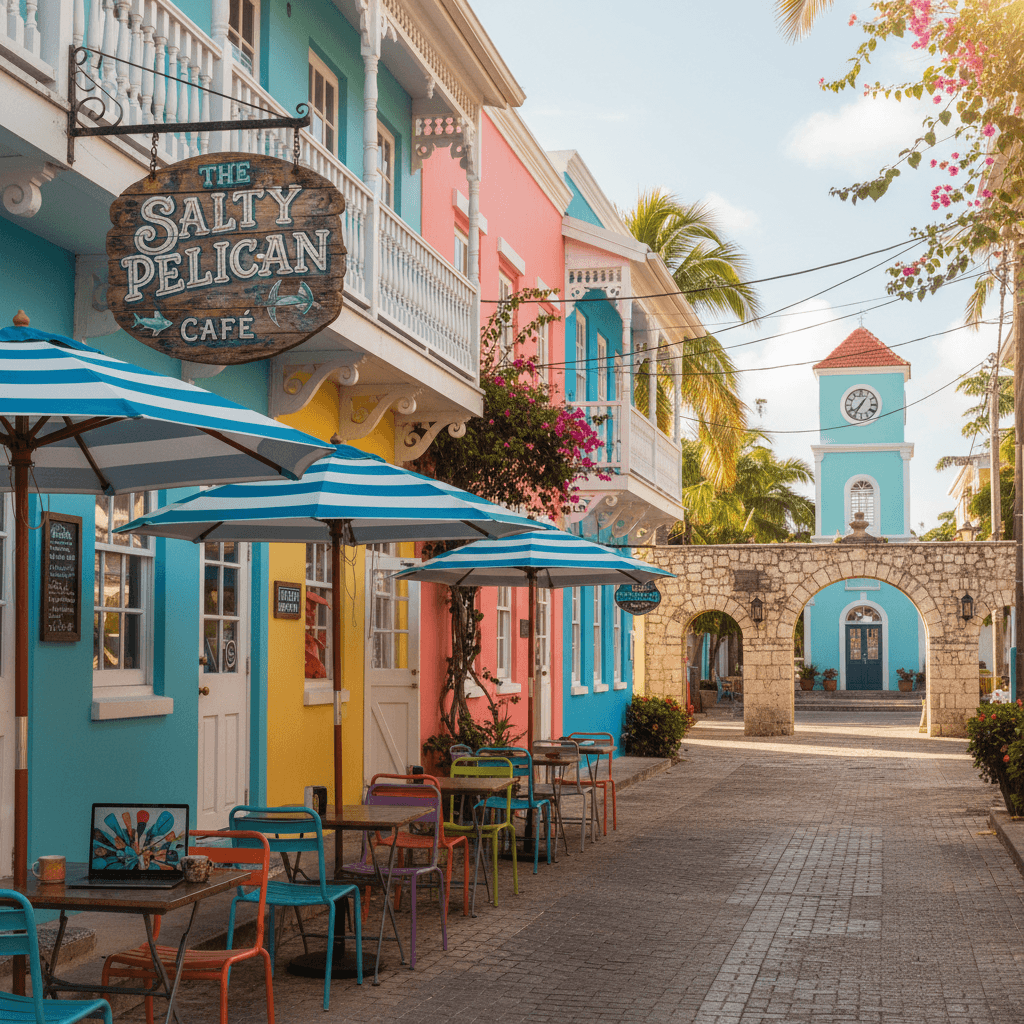
Holetown
🇧🇧 Barbados
Holetown sits on Barbados' west coast and it's, honestly, one of the more polished nomad bases in the Caribbean. The air smells like salt and frangipani, the roads are paved, the internet works and there's a Sandy Crest Medical Centre two minutes from the beach. That combination is rarer than it sounds.
The vibe here isn't frenetic. It's slow in a deliberate way, the kind of slow that feels earned rather than lazy, where afternoons stretch out over rum punches and the loudest thing on the street is a passing ZR van blasting soca. Most nomads find this either deeply restorative or quietly maddening, depending on their temperament.
What separates Holetown from other Caribbean spots is the infrastructure actually holds up. Fibre internet hits 400-700 Mbps, coworking at Spaces runs about $20 a day for a hot desk and the walkable core puts you within reach of Limegrove Lifestyle Centre, decent cafes and the beach without needing a car. That said, don't confuse "functional" with "affordable."
Not cheap. A realistic monthly budget starts around $1,500 if you're disciplined, eating street food, bussing everywhere and renting on the outskirts. Most nomads land closer to $2,500, it creeps up fast once you start eating out properly and grabbing rideshares. The tourist pricing is real, it's baked into everything from restaurant menus to furnished apartment listings.
Peak season, roughly December through April, brings crowds and higher prices, the Holetown Festival in February draws big local energy and is genuinely worth staying for, but the town does get noticeably more congested. Come June, things quiet down, turns out the rainy season scares off a lot of visitors, which is when you'll get better rates and a more local feel.
Expats describe a particular quality to life here that's hard to replicate elsewhere: the warmth is genuine, not performed for tourists. Locals greet strangers, the pace is respected rather than apologized for and the Bajan sense of humor is dry and sharp once you're in on it. It won't suit every nomad, frankly, but for those it clicks with, it clicks hard.
Holetown isn't cheap. A single person should budget around $1,463 a month including rent and that's not a worst-case figure, that's the realistic middle ground most nomads land on after their first month of actual spending.
Rent is the biggest variable. A 1-bedroom in central Holetown runs about $775 a month, you can find something on the outskirts for closer to $375, but then you're car-dependent and the savings evaporate fast. Furnished Airbnb and VRBO studios near the beach start around $1,000 and climb quickly, so most longer-stay nomads, turns out, do better hunting down a direct lease through local Facebook groups or Properstar.
Food costs depend almost entirely on how often you cook. Street food and fast-casual spots run $12 to $15 a meal, a mid-range lunch is around $12, a proper dinner for two at somewhere like Relish Epicurea will hit $100 without blinking. Groceries are honestly expensive by Caribbean standards because so much is imported, the smell of fresh produce at local markets is great, the price tags less so.
Transport adds up modestly if you're disciplined. The Transport Board bus is $1.75 a ride or about $57.50 for a monthly pass, Uber and Bolt work well for longer trips at roughly $19 for 8km and the walkable core of Holetown means you can skip taxis entirely for day-to-day errands. Internet via Digicel fibre runs $65 to $92 a month for 400 to 700 Mbps, which is solid, mobile data averages 46 Mbps down and handles video calls without drama.
Here's how the tiers break down in practice:
- Budget ($1,500/month): Outskirts studio, buses, street food, minimal extras
- Mid-range ($2,500/month): Central 1-bedroom, mixed dining, occasional rideshares
- Comfortable ($4,000+/month): Beachfront rental, upscale restaurants, car rental
Most nomads find the mid-range tier is where quality of life actually clicks. Go too budget and you're fighting the environment rather than enjoying it, the heat, the distances, the social scene all push you toward spending a bit more. Go comfortable and Holetown genuinely delivers, it's just not Southeast Asia.
Holetown itself is, honestly, the sweet spot for most people. It's walkable, the cafes are good, the beach is close and you're never far from a decent meal or a coworking desk. That said, the neighborhood you pick changes your experience dramatically, so it's worth thinking about who you are before you sign a lease.
Digital Nomads
Stay in central Holetown. You'll walk to Limegrove, grab coffee at The Green Monkey and be on the sand in ten minutes. A 1BR here runs around $775 a month, which isn't cheap, but you're paying for convenience and the tradeoff is real. The Spaces coworking day pass costs roughly $160, which stings, so most nomads end up working from cafes on weekdays and treating coworking as an occasional thing.
The tourist crowds in peak season are, frankly, a genuine annoyance. December through April, the streets fill up, prices creep higher and the relaxed pace you came for gets harder to find.
Expats Seeking Privacy
Porters and Mount Standfast, just north of town, attract expats who want upscale villas, quiet gardens and easy Holetown access without actually being in it. You'll need a car, there's no getting around that and the isolation can wear on you after a few weeks if you're social by nature. Still, for long-term renters who want space and calm, it's the right call.
Families
Paynes Bay, south of Holetown, is the family pick. The water's calm, the villas are well-maintained and you're ten minutes from Sandy Crest Medical Centre, which handles emergencies 24/7 with waits under 30 minutes. It's less walkable than central Holetown, costs are still high-end, but the beach quality is, turns out, noticeably better for kids than the town center stretch.
For families on a tighter budget, Speightstown to the north is quieter, cheaper and weirdly charming in its authenticity. Fewer amenities, longer drives, but the Bajan character feels more genuine than anything closer to the resort strip.
Solo Travelers
Central Holetown. Full stop. The social scene, the walkability, the proximity to expat Facebook groups and Nhome co-living, it all adds up. Studios start around $1,000 a month furnished, budget tier is doable at $1,500 if you eat street food and take the bus at $1.75 a ride.
Connectivity in Holetown is, honestly, better than most Caribbean destinations. Digicel's fixed fibre hits 400-700 Mbps for around BBD 130-185 per month (roughly $65-92 USD), which is plenty for video calls, large uploads and anything else you'd throw at it.
Mobile data is where things get interesting. Digicel's mobile network averages around 46 Mbps down, which is solid enough to use as a backup or primary connection, Flow's mobile, though, is painfully slow at around 2.5 Mbps down. Pick up a Digicel SIM at the airport or any local shop when you land, don't bother waiting until you've settled in. Prepaid data packages are straightforward and cheap.
Café WiFi is free and often fine for light browsing, but it's variable. Most nomads who've spent more than a week here say the same thing: use café WiFi for casual work, keep mobile data on standby for calls. The Green Monkey is a popular spot that genuinely supports remote workers, good atmosphere, decent signal, not too loud.
Coworking Options
- Spaces (Holetown): The main dedicated coworking option; hot-desk day passes run BBD 38-41 (around $19-20 USD), with high-speed WiFi and a proper work setup.
- Full-day passes at Spaces: BBD 319 (around $160 USD), which is, weirdly, steep for what's a fairly standard coworking setup.
- Nhome: A co-living space nearby with workspaces and pool access; worth checking if you want the social side bundled in.
- The Green Monkey café: Not a formal coworking space, but turns out it's one of the more reliable spots for a few focused hours with good coffee.
The daily rate at Spaces won't hurt if you use it occasionally, but at $160 for a single day pass, it adds up fast if you're there every day, budget that into your monthly costs before you commit to staying long-term.
One thing expats consistently flag: don't rely solely on accommodation WiFi, especially in short-term rentals. Quality varies a lot. Get your own Digicel SIM with a data plan on day one and treat it as your baseline, everything else is a bonus.
Holetown is, honestly, one of the safer places you'll land in the Caribbean. Petty theft happens, mostly around tourist-heavy spots like Limegrove Lifestyle Centre, so don't leave your laptop bag unattended at a beach bar. The core is fine day or night, it gets sketchier if you wander down unlit side streets after dark, so just don't.
For healthcare, Sandy Crest Medical Centre is the standout. It's a 24/7 Level IV trauma facility right in Holetown, GP visits run around USD $80-150 and wait times are genuinely short, most people are in and out in under 30 minutes. The place is spotless, turns out, which isn't something you take for granted everywhere in the region.
Emergencies beyond Sandy Crest's scope go to Queen Elizabeth Hospital (public) or Bayview Hospital (private). Ambulance is 511. Pharmacies are attached to most polyclinics and BDS-branded pharmacies are scattered around town, nothing hard to find.
Private health insurance isn't optional here, it's baked into the visa requirements if you're on the Welcome Stamp or SERP. Even outside those programs, the private clinic costs add up fast without coverage, a serious ER visit could run you several hundred dollars before you've even spoken to a specialist.
A few practical things expats consistently flag:
- Emergency number: 511 for ambulance, 211 for police
- Nearest 24/7 clinic: Sandy Crest Medical Centre, Holetown
- Private hospital: Bayview Hospital, south toward Bridgetown
- Public hospital: Queen Elizabeth Hospital, Bridgetown
- Pharmacies: Available at polyclinics and standalone BDS locations throughout town
- Insurance: Required for long-stay visas; get it sorted before you arrive
The sun is, weirdly, one of the bigger health hazards most nomads underestimate. That Caribbean UV is brutal and the breeze off the water tricks you into thinking you're cooler than you are. Sunscreen, shade between noon and 3pm and actual hydration matter more than they sound.
Overall? Holetown doesn't feel like a place where you're watching your back. It feels calm, the infrastructure works and medical help is genuinely close if you need it.
Getting around Holetown is, honestly, easier than most Caribbean destinations, but it does require a bit of planning depending on where you're staying and how far you're going.
The Transport Board buses are your cheapest option at $1.75 a ride or $57.50 for a monthly pass. They're reliable during the day, the routes cover Holetown well and you'll often find yourself packed in next to locals heading to work, reggae drifting from someone's phone. Don't expect them after dark, though and don't expect them to run on any schedule that respects your time.
For on-demand travel, Uber, Bolt and the local PickUP Barbados app all work here. An 8km ride runs around $19, which adds up fast if you're doing multiple trips a day, so most nomads mix apps with buses rather than relying on one or the other. Taxis without apps exist too, just agree on a price before you get in.
Holetown's core is walkable, that's the honest truth. Limegrove, the beach, most cafes and restaurants are close enough that you won't need transport at all on a typical day. But the moment you want to explore Paynes Bay to the south or head up to Speightstown, you'll want a car or a reliable app on your phone.
Bike and scooter rentals are available through Summer Sports if you want something in between. Weirdly, not many nomads bother, possibly because the roads are narrow and driving is on the left, which takes a day or two to stop feeling genuinely alarming.
For airport transfers, it's roughly 20km from Grantley Adams to Holetown. Fixed-price rides through apps or Courtesy Taxi run BBD 100 to 200, book it in advance so you're not negotiating in arrivals after a long flight.
- Public bus: $1.75/ride, $57.50/month pass, daytime only
- Rideshare (Uber/Bolt/PickUP): ~$19 per 8km trip
- Bike/scooter rental: Available via Summer Sports
- Airport transfer: BBD 100 to 200, book ahead
Car rental makes sense if you're staying longer than a couple of weeks and want real flexibility, just remember: left side of the road, always.
English is the official language and you won't have any trouble communicating in Holetown. Proficiency is high across the board, from hotel staff to market vendors to the guy fixing your scooter.
That said, Bajan Creole is, honestly, its own thing entirely and locals use it freely among themselves. It's not impenetrable, but it takes a few days to tune your ear. You'll hear "Wha gine on?" as a casual greeting, "Ga so" meaning go that way and "Cheese on bread!" which is basically an all-purpose exclamation of surprise or frustration. Nobody expects you to master it, but dropping a phrase or two goes over well, locals appreciate the effort far more than you'd expect.
The pace of conversation here is unhurried. Don't rush it. Bajan culture treats a proper greeting as non-negotiable, walking up and launching straight into a question without saying "good morning" first reads as rude and you'll notice the energy shift immediately if you do it.
A few practical notes:
- Greetings matter: Always open with "good morning," "good afternoon," or "good evening." This isn't optional social nicety, it's the baseline expectation.
- Dialect translation: Google Translate handles standard English to other languages fine, but it's weirdly useless for Bajan Creole nuances. Context and patience work better.
- Phone communication: WhatsApp is the dominant messaging platform here, most locals and landlords use it exclusively, so download it before you land.
- Accents in business settings: At Limegrove shops, Sandy Crest Medical Centre or any formal setting, you'll get clear, standard English with no adjustment needed on your part.
Expats who've been here a while say the biggest communication adjustment isn't vocabulary, it's tempo. Conversations meander, turns out that's by design. Trying to speed things along at a government office or local shop will get you nowhere fast, frankly it'll slow things down further.
Written signage, menus, legal documents and official communications are all in standard English. No translation apps needed for day-to-day life. The language barrier here is basically zero, the cultural one is small but real and worth paying attention to.
Holetown sits at a comfortable 75 to 85°F (24 to 29°C) year-round, which sounds perfect until you actually live through a October downpour. The temperature barely shifts, honestly, but the rain absolutely does.
There are two seasons worth knowing. The dry season runs December through April, with rainfall dropping to 30 to 60mm a month, low humidity and the kind of steady sunshine that makes the west coast feel almost unreasonably pleasant. This is peak tourist season, so beaches fill up, prices climb and Holetown's already-narrow streets get noticeably more crowded. The Holetown Festival in February lands right in the middle of it, which is either a bonus or an annoyance depending on your tolerance for crowds.
The rainy season runs June through November, with October being, turns out, the worst of it at around 178mm and roughly 15 rainy days that month. These aren't gentle showers either. Tropical downpours hit fast, dump hard and then clear off, leaving everything steaming and the air smelling like wet earth and salt. It's not miserable, but it's not what the postcards show.
Most nomads who've spent time here say the sweet spot is November through early December or late April into May. You're catching the shoulder seasons, prices are softer, crowds thin out and the weather is still largely cooperative. Expats who've settled in long-term barely notice the rainy season after the first year.
- Best months: December to April for dry weather; November or late April for fewer crowds and lower rates
- Wettest month: October, 178mm of rain across roughly 15 days
- Peak season: December to April, busiest beaches, highest accommodation prices
- Hurricane risk: Low but not zero; Barbados sits south of the main hurricane belt, though the broader June to November season still brings rough weather occasionally
The year-round warmth is genuinely nice, it's one of the few places where you won't pack a jacket and won't regret it. That said, the humidity in September and October clings to everything, your clothes, your laptop bag, your patience.
Come in February for the festival, come in November if you want the place to yourself.
Pick up a SIM at the airport before you leave the arrivals hall. Digicel is the move, honestly, with mobile speeds averaging around 46 Mbps down versus Flow's sluggish 2.5 Mbps. Prepaid data is cheap and easy to top up at most shops in Holetown.
US dollars are accepted almost everywhere, so you won't need to scramble for Barbadian currency constantly. ATMs are widespread and services like Wise work well for transfers, though the local exchange rate at ATMs is, turns out, often better than what you'd get at currency booths near the tourist strips.
Drive on the left. Full stop. Rental cars are available if you want one, but most people find the Transport Board buses perfectly workable for day-to-day life around Holetown, running at $1.75 a ride or about $57.50 for a monthly pass. For anything after dark or off the main road, grab an Uber, Bolt or use the PickUP Barbados app, fares are reasonable and drivers show up fast.
Sandy Crest Medical Centre is right in Holetown and handles genuine emergencies, GP visits run roughly $53 USD and wait times are short, which is weirdly reassuring when you're far from home. Private health insurance isn't optional if you're on a Welcome Stamp or SERP visa and frankly it's smart regardless. Pharmacies are easy to find near the polyclinic.
A few things expats wish someone had told them upfront:
- Budget honestly: $1,500/month gets you a basic outskirts studio and street food; $2,500 covers a central one-bedroom with mixed dining; $4,000+ is comfortable with a car and beachfront access.
- Apartments: Search Airbnb, VRBO and Properstar; Golden View in Sunset Crest comes up often as a solid mid-range option.
- Weather: December through April is dry and gorgeous; October is the wettest month and can feel relentless, plan around it.
- Pace: Barbadians are warm but don't rush for anyone, greeting people properly before launching into requests goes a long way.
- Day trips: Paynes Bay for calm swimming, Harrison's Cave inland and Shasa Cruises for a catamaran afternoon that's genuinely worth the splurge.
Holetown isn't cheap, don't let anyone tell you otherwise. But the infrastructure works, the healthcare is solid and the internet won't make you want to throw your laptop into the sea.
Need visa and immigration info for Barbados?
🇧🇧 View Barbados Country GuideEasy Landing
Settle in, no stress