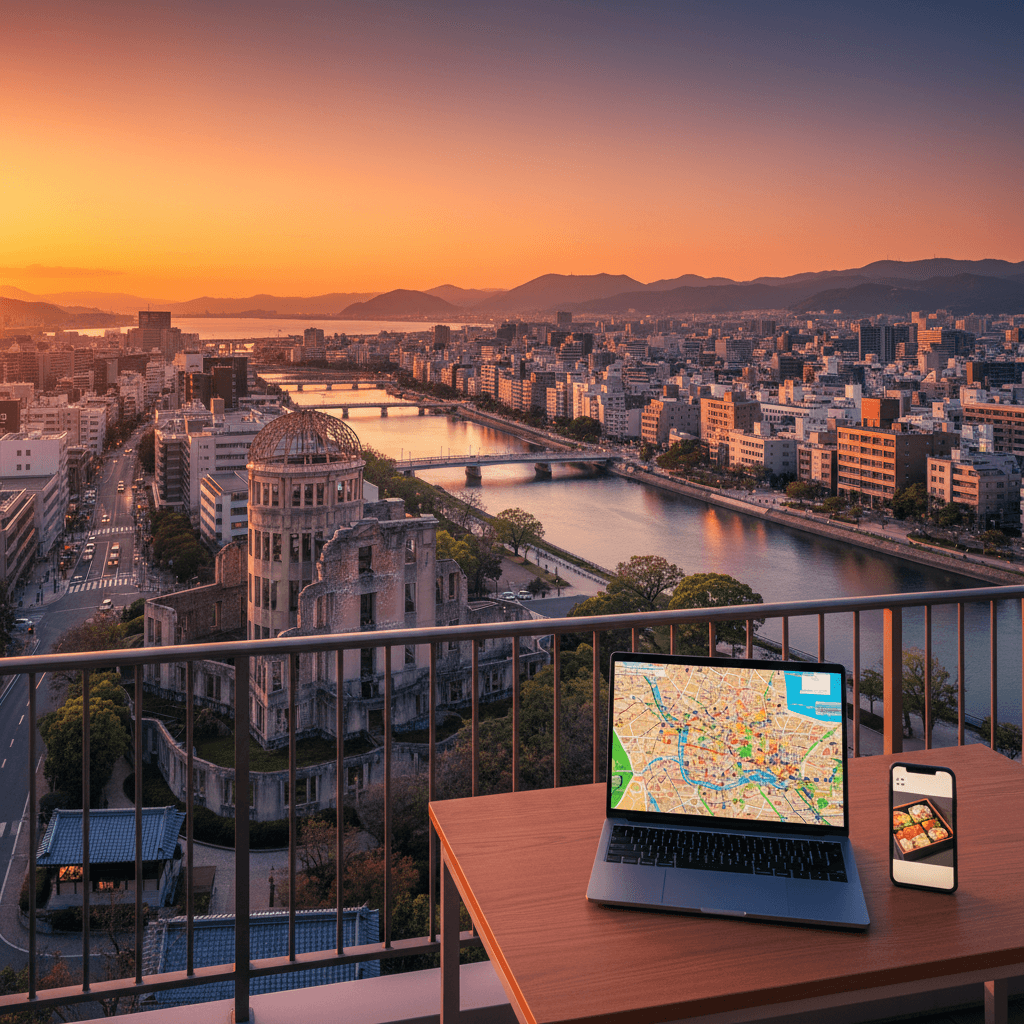
Hiroshima
🇯🇵 Japan
A City of Resilience and Waterways
Hiroshima doesn't feel like Tokyo or Osaka. While those cities can feel like a relentless sensory assault, Hiroshima has a spacious, breathing quality that immediately lowers your heart rate. It is a city defined by its six rivers, which fan out through the delta and create a landscape of wide boulevards and breezy promenades. You will find yourself walking along the Ota River at sunset, watching the lights of the vintage streetcars reflect off the water, and you will realize this place has a soul that most modern metropolises lost decades ago.
The vibe here is a mix of deep historical weight and a surprisingly modern, laid back social scene. People often come for the history, but they stay for the pace of life. It is small enough to navigate by bicycle, yet large enough to have a trendy downtown core packed with record bars and craft galleries. There is a quiet pride among the locals; they have rebuilt this city into a sanctuary of peace, and that intentionality shows in how clean, green, and welcoming the streets feel.
The Digital Nomad Pulse
For a long time, Hiroshima was a two day stop on a Japan rail pass. That is changing fast. The city is actively courting the remote work crowd, most notably through the Hiroshima Setouchi Nomad Fest. This event, which typically runs from mid October to early November, has put the region on the map for location independent professionals. It splits its time between urban networking in the city center and nature based work retreats on the nearby Setouchi Islands.
The community here is smaller and more tight knit than what you will find in Kyoto. Instead of competing for a seat at a crowded cafe, you are more likely to find a quiet corner in a riverside shop or a dedicated desk at a local hub. The $320 festival pass is a popular entry point for many, as it bundles coworking access and workshops, making it easy to plug into the local scene without much friction. Even outside of festival dates, the city feels like a functional base where you can actually get work done during the day and be hiking a mountain or eating world class soul food by 6:00 PM.
Life on the Delta
Living here means embracing the Hiroden, the city's iconic tram system. These vintage streetcars are the heartbeat of the city, rattling through the streets and connecting the modern shopping districts of Hondori to the quiet residential pockets. It is a tactile, nostalgic way to commute that reminds you to slow down. You will spend your weekends exploring Hiroshima Castle or taking the short ferry ride to Miyajima Island, but the real magic is in the daily routine: a morning run through the Peace Memorial Park or a late night bowl of Hiroshima style okonomiyaki in a cramped, steam filled stall.
The emotional experience of Hiroshima is one of contrast. You are constantly surrounded by reminders of the past, particularly the skeletal Atomic Bomb Dome, but the city isn't mournful. It is vibrant and forward looking. It is a place that rewards the slow traveler, the nomad who wants to stay for a month rather than a weekend. You will find that the "Hiroshima Hello" is real; locals are often more approachable and curious about visitors than in the larger hubs, making it one of the easiest places in Japan to feel like a neighbor rather than just a tourist.
- Best for: Nomads who prioritize outdoor space, history, and a slower daily rhythm.
- The Atmosphere: Calm, reflective, and remarkably green for a Japanese city.
- The Highlight: Working from a cafe overlooking the river before heading to a Hiroshima Toyo Carp baseball game.
The Hiroshima Price Point
Hiroshima hits a sweet spot that many digital nomads miss while they're busy fighting for space in Tokyo or Osaka. It's a major regional hub with all the infrastructure you'd expect, but the cost of living is noticeably lower than the big three Japanese cities. You're looking at a budget that feels manageable without needing to constantly check your bank app. While it isn't Southeast Asia cheap, your yen goes significantly further here when it comes to housing and dining out.
Most nomads find that a monthly budget of $1,600 to $2,200 allows for a very comfortable lifestyle. This includes a private apartment, eating out frequently, and taking weekend trips to places like Miyajima or the Setouchi islands. If you're willing to stay in a guesthouse or share a kitchen, you can easily shave $400 off that total.
Housing and Neighborhoods
Rent is where you'll see the biggest savings. Short term rentals for foreigners are increasingly available, though you'll pay a premium for "no-paperwork" furnished spots. If you're staying for a few months, look into monthly mansions or serviced apartments.
- Naka-ku (Downtown): This is the heart of the action near Hatchobori and Shareo. You'll pay more for the convenience of being walking distance to coworking spots. Expect to pay $700 to $900 for a modern studio.
- Minami-ku: Located near the main Hiroshima Station. It's great for frequent travelers and has some newer developments. Prices for a decent one bedroom hover around $600 to $750.
- Nishi-ku: A bit more residential and quiet but still connected by the vintage tram system. You can find older but spacious apartments here for $450 to $550.
Food and Drink
Eating in Hiroshima is a highlight, mostly because the local soul food is incredibly filling and affordable. You can't talk about the budget here without mentioning Okonomiyaki. A massive, layered savory pancake at a local shop will set you back about $8 to $12 and is a full meal on its own.
For daily life, a lunch set at a neighborhood cafe usually costs between $7 and $10. If you're cooking at home, local supermarkets like Fuji or MaxValu are reasonably priced, though fruit remains a luxury item in Japan. A typical grocery run for the week might cost $50 to $70 depending on how much imported cheese or wine you're craving. A pint of local craft beer at a bar downtown will usually run about $6 to $9, while a highball or a domestic draft is closer to $4.
Transport and Connectivity
The city is flat and very bike friendly, which is the best way to save money. Many residents rely on the "Hiroden" streetcars. A single trip is a flat 220 yen (about $1.50) regardless of the distance within the city center. If you're commuting daily, a monthly pass is around $60.
For digital nomads, the Hiroshima Setouchi Nomad Fest is a major draw. A festival pass costs $320, but it provides a massive amount of value by bundling coworking access and networking events. Outside of festival dates, a drop-in desk at a coworking space usually costs about $15 to $20 per day. High speed home internet is almost always included in "foreigner friendly" rentals, but if you have to set it up yourself, expect to pay around $35 a month for lightning fast fiber.
Example Monthly Budget
- Rent (Furnished Studio): $800
- Utilities and Internet: $120
- Food and Groceries: $550
- Transport (Bike and Trams): $50
- Entertainment and Socializing: $300
- Total: $1,820
The Digital Nomad Hub: Naka Ward (Downtown)
If you want to be in the middle of the action, Naka Ward is the place to plant your flag. This is the heart of the city where the vintage streetcars crisscross and the skyline feels the most modern. It is the primary base for the Hiroshima Setouchi Nomad Fest urban phase (dates vary annually, check current year), making it the easiest spot to find community and networking events.
Living here means you are walking distance from Hatchobori and Kamiyacho, the two main commercial districts. For work, you will find several flexible spots like ShakeHands or fabbit Hiroshima Station, which provide reliable high speed internet and a professional vibe. Most nomads find that while the rent is higher here, you save significantly on transportation because everything from grocery stores to bars is right outside your door.
- Approximate Monthly Rent: $550 to $850 for a furnished studio.
- Vibe: Fast paced, social, and very walkable.
- Best for: Networking and being near the nightlife in Nagarekawa.
The Expat Choice: Minami Ward
Expats who plan on staying for more than a few months often gravitate toward Minami Ward. It is home to Hiroshima Station, which is the gateway for the Shinkansen and local trains. This makes it incredibly convenient if your work requires travel to Osaka or Tokyo. The area around the station has seen massive redevelopment recently, offering sleek new apartment buildings and high end shopping malls.
The atmosphere is a bit more polished and less chaotic than the absolute center of Naka Ward. You will find a good mix of international residents here, and the proximity to the Enko River provides some great running paths for your morning routine. It is a practical choice for those who want a modern Japanese urban experience without the tourist crowds of the Peace Park area.
- Approximate Monthly Rent: $500 to $750 for a modern apartment.
- Vibe: Professional, convenient, and well connected.
- Best for: Long term stays and frequent regional travelers.
Families and Quiet Seekers: Nishi Ward
For those traveling with a family or anyone who needs a quiet environment to focus, Nishi Ward offers a more residential, suburban feel. It is just a short tram ride west of the city center. This area feels much more like a "real" Japanese neighborhood where you will see locals going about their daily lives, away from the main tourist trail.
You can find larger apartment layouts here for better prices than you would in the downtown core. The Koi neighborhood is a highlight, serving as a transit hub with plenty of local bakeries and small parks. It is also the right side of town for quick weekend escapes to Miyajima Island, as the ferry port is much closer to this end of the city.
- Approximate Monthly Rent: $450 to $700 for larger multi room units.
- Vibe: Peaceful, residential, and authentic.
- Best for: Families and those on a stricter budget.
The Solo Traveler Spot: Near Hiroshima Peace Memorial Park
Solo travelers usually prefer the area immediately surrounding the Peace Memorial Park. While technically part of Naka Ward, this specific pocket has a unique energy. It is filled with hostels, boutique guesthouses, and riverside cafes that are perfect for meeting other travelers. The Motoyasu River promenade is a great place to sit with a laptop or a book in the afternoons.
Since this is the most visited part of the city, English proficiency is much higher in the shops and restaurants here. You won't feel isolated, and there is always something to do, whether it is visiting Hiroshima Castle or grabbing a craft beer at a local taproom. It is the most "plug and play" neighborhood for someone arriving with no local contacts.
- Approximate Monthly Rent: $600 to $900 for short term rentals.
- Vibe: International, scenic, and historical.
- Best for: First timers and social solo travelers.
Connectivity in the City
Japan is famous for its high speed fiber optics, and Hiroshima is no exception. Most short term rentals and hotels provide speeds that comfortably handle video calls and heavy uploads. If you are out and about, the city offers free public Wi-Fi at major spots like the Peace Memorial Park and around the main streetcar stops, though it can be a bit spotty when the tourist crowds peak.
For a more reliable mobile setup, grab a local SIM card or a pocket Wi-Fi device at the airport or an electronics giant like Bic Camera near the station. Ubigi and Airalo are the go-to eSIM options for nomads who want to skip the physical card hassle. You can expect 5G coverage across nearly the entire downtown core, so tethering your phone is a perfectly viable backup plan.
Top Coworking Spots
Hiroshima has a surprisingly mature coworking scene that caters to both local startups and international remote workers. The vibe is generally professional but welcoming, and you won't find the same level of overcrowding that plagues Tokyo or Osaka spaces.
- ShakeHands: Located right in the heart of the city near the Hondori shopping arcade. It is a favorite for its casual atmosphere and affordable drop in rates. They have a "no reservation" policy for the open lounge, which is great for spontaneous work sessions. A full day pass usually runs around 2,000 yen, and they offer free flow coffee and tea.
- fabbit Hiroshima Station: This is the spot if you need a more corporate, high end environment. It is just a few minutes from the Shinkansen gates, making it ideal if you are just passing through. The desks are spacious, the chairs are ergonomic, and the internet is blistering fast. Expect to pay about 1,800 to 2,500 yen for a day pass.
The Cafe Culture
If you prefer the hum of a coffee shop, Hiroshima has plenty of work friendly cafes. Unlike Tokyo, where you might feel pressured to leave after an hour, many spots here are quite relaxed about laptop users as long as you aren't taking up a four person table during lunch rush.
Obscura Coffee Roasters in the Fukuromachi district is a local legend. The coffee is world class, and while it is more of a "quick task" spot than a place to camp out for eight hours, the atmosphere is inspiring. For longer sessions, Starbucks at the Edion Tsutaya Books is a nomad staple. It is massive, has plenty of power outlets, and you are surrounded by books and tech gadgets. It is one of the most productive environments in the city.
The Nomad Fest Factor
If you time your visit for October, the Hiroshima Setouchi Nomad Fest completely changes the game. During this window, the city transforms into a dedicated hub for remote workers. A festival pass, which costs around $320, grants you access to a network of coworking spaces and exclusive meetups. It is the best way to bypass the usual "lonely nomad" syndrome and jump straight into a community of like minded people. The festival also organizes trips to the nearby islands, where they set up remote work stations right by the water, proving that your office really can be anywhere.
Practical Logistics
Most dedicated coworking spaces are open from 9:00 AM to 6:00 PM or 8:00 PM. If you are a night owl working for a US or European company, you might struggle with physical office hours. In that case, your best bet is a high quality hotel with a dedicated desk or one of the 24 hour internet cafes like Kaiteki Net Cafe, though those are more for emergencies than daily professional use. Always carry a two prong power adapter; while many modern spaces have international friendly outlets, older buildings still use the standard Japanese ungrounded sockets.
Peace of Mind in the City of Peace
Japan is famous for its low crime rates, and Hiroshima is no exception. It’s the kind of place where you can walk home from a late night coworking session at 2:00 AM without a second thought. Most nomads find that the biggest safety concern isn't theft or violence, but rather staying aware of the vintage streetcars when crossing the tracks downtown.
Pickpocketing is virtually non-existent, even in crowded spots like the Peace Memorial Park or the Hondori shopping arcade. If you leave your laptop at a cafe table to grab another coffee, it will almost certainly be there when you get back. Still, use common sense. While it's safe, it's always better to be mindful of your belongings in high traffic tourist areas.
Navigating the Healthcare System
If you get a cold or need a prescription, the healthcare here is world class but can feel a bit bureaucratic. Most clinics don't require an appointment; you just walk in, take a number, and wait. You'll need to show your passport or Residence Card at the front desk. If you don't have Japanese National Health Insurance, expect to pay the full cost upfront. A standard consultation usually runs between 5,000 and 10,000 yen, which is actually quite reasonable compared to US prices.
English speaking doctors are available, though they aren't at every corner clinic. For a reliable English experience, many expats head to Hiroshima University Hospital in Minami-ku or the Hiroshima City Hiroshima Citizens Hospital near the castle. These larger facilities have better resources for translation and international insurance paperwork.
- Emergency Number: Dial 119 for an ambulance. Operators usually have access to English translators if you ask.
- Pharmacies: Look for the "Drug Store" signs like Wants or Matsumoto Kiyoshi. They carry basic over the counter meds, but for anything stronger, you'll need a script from a local doctor.
- Payment: While many hospitals are modernizing, some smaller clinics still only take cash. Always keep 20,000 yen on hand just in case of a medical emergency.
Natural Disaster Preparedness
Since Hiroshima is nestled between mountains and the sea, it’s prone to different types of natural events than Tokyo or Osaka. While earthquakes happen, they are less frequent here. The bigger concern is heavy rain during the tsuyu (rainy season) in June and July, which can lead to landslides in the hilly residential outskirts like Asaminami-ku.
The city is incredibly well prepared. You'll see evacuation maps posted in most public buildings and train stations. It’s a good idea to download the Safety Tips app, which is the official government app for disaster alerts in English. It provides real time info on weather warnings and evacuation orders based on your GPS location.
Water and Food Safety
You can drink the tap water everywhere in Hiroshima. It’s clean, safe, and tastes fine. Food hygiene standards are also incredibly high. You can eat raw seafood at the Okonomimura or grab a quick bento from a 7-Eleven with total confidence. If you have severe allergies, especially to shellfish or dashi (fish stock), carry a printed "allergy card" in Japanese. Cross contamination is common in traditional kitchens, and staff might not realize that "vegetarian" often still includes fish based broths.
Useful Health Resources
- Himawari: This is a search tool for finding medical institutions by language and specialty.
- Japan Helpline: A 24 hour non profit service that provides support for everything from medical emergencies to general stress.
- AMDA International Medical Information Center: They provide telephone translations and can help explain the Japanese medical system to foreigners.
Getting Around the City of Peace
Hiroshima is one of those rare Japanese cities where you can actually breathe. Unlike the claustrophobic subway systems of Tokyo, Hiroshima relies on an extensive network of vintage streetcars, known locally as Hiroden. These trams are the soul of the city; they're slow, charming, and remarkably efficient for getting between the major hubs like Hatchobori and the Peace Memorial Park. Most nomads find that the city's flat geography makes it one of the most walkable urban centers in the country.
The Hiroden Streetcar System
The streetcar system is your primary lifeline. It operates on a flat fare of 240 yen for trips within the city center [9], which makes it an affordable way to commute if you're staying a bit further out in residential areas like Ushita. If you're heading toward the Miyajima ferry, the fare increases based on distance, usually capping out around 270 yen. You can pay with any major IC card like Suica or Pasmo, or use the local MOBIRY digital ticket app if you prefer keeping everything on your phone.
- Line 2: This is the most popular route for expats and visitors, connecting Hiroshima Station directly to the Miyajima-guchi ferry terminal.
- Lines 1, 2, and 6: These are the workhorses that cut through the downtown business district and the Kamiyacho transit hub.
- Late Night: Trams generally stop running around 11:30 PM, so keep an eye on the clock if you're out for drinks in Nagarekawa.
Biking and Walking
If you want to live like a local, get a bike. The city is crisscrossed by six rivers, and the riverside prompts are perfectly paved for cycling. It's often faster to bike from the Danbara neighborhood to the city center than it is to wait for a bus. Most apartments come with a dedicated bike parking spot, but if you're just visiting, use the Peacecle bike-sharing service (check app for current rates).
Walking is equally viable. You can cross the entire downtown core on foot in about 25 to 30 minutes. The Hondori covered arcade is a pedestrian-only zone that keeps you dry on rainy days while you move between shops and coworking spots. It's a great way to stumble upon smaller cafes that don't show up on English-language maps.
Trains and Regional Travel
For trips outside the immediate downtown area, the JR lines are your best bet. The JR Sanyo Line is the fastest way to reach the outskirts or neighboring cities like Kure. If you're planning to attend the Setouchi Nomad Fest in October, you'll likely use a mix of JR trains and local ferries to reach the island venues. Ferry rides to Miyajima take about 10 minutes and cost 200 yen each way, plus a small 100 yen visitor tax.
Taxis and rideshares exist but they're pricey. A short ten minute ride will easily set you back 1,500 to 2,000 yen. Most nomads save taxis for emergencies or when they're hauling groceries back from the Costco near the baseball stadium. Stick to the trams and your own two feet to keep your daily transport budget under 500 yen.
The Language Gap
In Hiroshima, you'll find that English proficiency is a bit of a mixed bag. In the central areas around Hatchobori and the Peace Memorial Park, staff at major hotels and larger restaurants usually speak enough English to get you through a transaction. However, once you step into the smaller okonomiyaki stalls or head out to the residential streets of Minami-ku, the language barrier becomes much more real.
Most digital nomads find that while locals are incredibly patient and polite, they aren't necessarily fluent. You can't rely on English for complex tasks like setting up a local bank account or discussing specific lease terms. If you're staying for the Hiroshima Setouchi Nomad Fest, the event staff and fellow attendees will be your primary English speaking bubble, but outside of those circles, a little Japanese goes a long way.
Digital Tools for Daily Life
Since you won't always have a translator handy, your phone is your best friend. Google Translate with the camera feature is the gold standard for reading menus and grocery labels. For actual conversation, VoiceTra is a popular app developed by a Japanese research institute that often handles the specific nuances of the language better than other translators.
When you're out and about, don't expect everyone to understand "Where is the train station?" Instead, keep it simple. Pointing and saying the name of your destination followed by "desu ka" (is it?) usually does the trick. Most street signs and tram announcements are bilingual, so you won't get lost, but the social side of things requires a bit more effort.
Essential Phrases for Nomads
Even if your Japanese is non-existent, memorizing five or six key phrases will change how locals treat you. It shows you're making an effort to respect the culture rather than just passing through as a tourist. Use these daily:
- Sumimasen: Use this for "Excuse me" or "Sorry." It's the most versatile word in your kit.
- Onegaishimasu: Use this when asking for something, like "Kore (this), onegaishimasu."
- Arigato gozaimasu: The formal "Thank you." Use the full version to be polite to staff.
- Wi-Fi wa arimasu ka?: "Is there Wi-Fi?" You'll use this a lot in cafes.
- O-kaiteki, onegaishimasu: "Check, please."
- Eigo no menyu wa arimasu ka?: "Is there an English menu?"
Communication Etiquette
Communication in Hiroshima is about more than just words; it's about the "kuuki wo yomu" or reading the air. People here are generally quieter in public spaces. On the vintage trams or in coworking spaces, keep your voice low and avoid taking calls unless you're in a designated phone booth. If you need to take a Zoom meeting, make sure your space allows it, as some local cafes have strict "no laptop" or "no talking" policies during lunch hours.
When you're meeting local entrepreneurs or hosts, a small bow is the standard greeting. Handshakes aren't uncommon with foreigners, but letting the local lead the way is usually the safest bet. If you're lucky enough to be invited to a local Izakaya, remember that the "Kanpai" (toast) is the signal to start drinking, and it's polite to pour for others rather than just yourself.
Finding Your Community
If the language barrier feels isolating, look for international exchange hubs. The Hiroshima City International Hospital and various community centers often host language exchange nights. For a more professional setting, the Shake Hands coworking space in the city center is a known spot where English speaking locals and expats congregate. It's a great place to find people who can help you navigate the more confusing parts of living in the city, like figuring out the trash sorting rules or finding a reliable dentist.
The Seasonal Sweet Spots
Hiroshima is at its most welcoming during the shoulder seasons. October and November are arguably the gold standard for digital nomads. The humidity of the Japanese summer finally breaks, replaced by crisp air and the famous autumn foliage that turns the Shukkeien Garden into a sea of red and gold. This timing also aligns with the Hiroshima Setouchi Nomad Fest, which runs from October 11 to November 1. It is the best window to find a community of remote workers without the oppressive heat of July.
Spring, specifically late March to mid-April, is the other peak window. This is cherry blossom season. While the Peace Memorial Park becomes crowded, the sight of thousands of sakura trees reflecting in the Motoyasu River is hard to beat. You will pay a premium for short term rentals during this time, so book your monthly stay at least three to four months in advance if you plan to be there for the blooms.
Surviving the Extremes
If you are planning to visit in July or August, be prepared for intense humidity. Temperatures frequently climb above 32 degrees Celsius (90 degrees Fahrenheit), but the "real feel" is much higher due to the moisture coming off the Seto Inland Sea. Most nomads find themselves hopping between air conditioned coworking spaces like ShakeHands or the public library during the day, saving their outdoor exploration for after sunset when the riverside cafes become more bearable.
Winter in Hiroshima is cold but manageable. Unlike Hokkaido or the Japan Alps, you won't see massive snow drifts in the city center, though a light dusting on the Atomic Bomb Dome is common in January. It is a dry cold, which makes it a great time for those who prefer fewer crowds at popular spots like Miyajima Island. Plus, winter is oyster season, a local staple that tastes best between December and February.
Planning Around the Crowds
Beyond the weather, you need to watch the Japanese calendar. Golden Week, which falls at the end of April and beginning of May, sees a massive surge in domestic tourism. Prices for hotels and Airbnbs can double or triple, and the Shinkansen trains will be packed. Unless you enjoy navigating sea of people, it is a good time to hunker down in a quiet neighborhood like Danbara or take a break from the city entirely.
August 6th is the Peace Memorial Ceremony. It is a deeply significant and busy day for the city. While it is a moving experience to be present for the lantern floating ceremony in the evening, the area around the Peace Park will be extremely crowded. If you want a quieter, more productive work environment, consider scheduling your deep work days away from the city center during this week.
- Best for Networking: October (Nomad Fest season)
- Best for Scenery: April (Cherry blossoms) and November (Autumn leaves)
- Most Affordable: January and February (Off-peak rates)
- Highest Humidity: July and August
Monthly Breakdown
For those planning a long term stay, here is what to expect on the ground:
- March to May: Mild and pleasant. Expect highs of 15 to 23 degrees Celsius. Perfect for working from outdoor terraces.
- June: Tsuyu, or the rainy season. It is damp and grey. Invest in a good umbrella and plan for indoor activities.
- July to September: Hot, humid, and the tail end of typhoon season. Keep an eye on weather apps for tropical storm warnings in late August.
- October to December: Clear skies and cooling temperatures. This is the most stable weather of the year for hiking and island hopping.
- January to February: Crisp and chilly. Highs hover around 9 degrees Celsius. Great for visiting the local onsens (hot springs).
Getting Connected and Setting Up
Hiroshima is a city that feels surprisingly manageable compared to the sprawl of Tokyo or Osaka. For your data needs, don't rely on finding free Wi-Fi at every cafe. Most nomads grab a Ubigi or Airalo eSIM before landing. If you prefer a physical SIM, the Bic Camera near Hiroshima Station has English speaking staff who can set you up with a IIJmio or Sakura Mobile plan. Expect to pay around 3,500 to 5,000 yen per month for a decent data bucket.
The city is a pioneer for remote work in Japan, especially with the Hiroshima Setouchi Nomad Fest taking place from October 18 to November 5, 2025. A festival pass costs $320 and serves as a golden ticket to the local community, granting access to coworking spaces and networking events. Outside of festival dates, ShakeHands in the downtown area is a reliable coworking hub with high speed internet and a drop-in rate of about 2,000 yen per day.
Navigating the Streets
The vintage streetcars, known as Hiroden, are the soul of the city. They are charming but slow. For a flat fee of about 220 yen, you can get almost anywhere in the center. If you're staying for more than a few days, buy an ICOCA or PASMO card at any station. You can tap these on buses, trams, and at convenience stores. Most of the downtown sights are walkable, but locals often prefer cycling. You'll see Peacecle bike share docks everywhere; it's an easy way to zip between the Peace Memorial Park and your favorite coffee shop.
Cost of Living and Budgeting
Hiroshima is significantly more affordable than Japan's larger hubs. You can find a comfortable studio apartment or a high end hostel bed without draining your savings. While cash is still king in smaller ramen shops, most major retailers and "konbini" like 7-Eleven or Lawson accept credit cards and IC cards.
- Monthly Rent (Central Studio): 55,000 to 85,000 yen
- Lunch Set (Okonomiyaki): 900 to 1,300 yen
- Coffee at a Specialty Cafe: 500 to 700 yen
- Monthly Transport Pass: 9,000 to 12,000 yen
Language and Manners
You can get by with English in the tourist heavy areas around the Atomic Bomb Dome, but learning a few phrases in Japanese goes a long way. The local dialect, Hiroshima-ben, is famous for being a bit "rougher" and more direct than the polite Japanese you hear in Kyoto. Don't be intimidated; the locals are some of the friendliest people in the country. Just remember the basics: always take your shoes off when entering a home or certain traditional restaurants, and never tip. Tipping is often seen as confusing or even slightly rude.
Health and Safety
This is one of the safest cities in the world. Walking home alone at 2:00 AM is a non issue for most people. If you do get sick, Hiroshima City Hospital has some English support. It's smart to have your insurance details ready, as most clinics expect payment upfront. For over the counter needs, look for the Wants or Kokumin drugstores; they carry everything from cold medicine to high quality Japanese skincare.
Best Times to Visit
Spring and autumn are the sweet spots. April brings the cherry blossoms, while October and November offer crisp air and stunning red maples, particularly if you take the ferry over to Miyajima Island. Summers are notoriously humid and hot, with temperatures often climbing above 32 degrees Celsius in August. If you're here in the winter, it's chilly but rarely see heavy snow, making it a great time for quiet museum visits and hot bowls of oysters, a local winter specialty.
Need visa and immigration info for Japan?
🇯🇵 View Japan Country GuideNomad Haven
Your home away from home