Hermanus
🇿🇦 South Africa
Hermanus doesn't try to be a digital nomad hub. That's honestly what makes it work. While other remote-work destinations hustle for your attention with coworking events and networking brunches, this small coastal town on the Western Cape just gets on with it and you either fall into its rhythm or you don't.
The pace here is slow in a way that feels earned rather than lazy. You wake up to the smell of salt air and, depending on the season, the distant sound of whale calls echoing off the cliffs. The famous cliff path runs right through the heart of town and most mornings you'll share it with dog walkers, retirees and the occasional seal hauled out on the rocks below. It's a genuinely strange and beautiful place to open a laptop.
The vibe skews older and more settled than your typical nomad hotspot. Expats here tend to be long-termers, people who came for a few months and quietly stopped leaving, which means the social fabric is tighter and, weirdly, easier to plug into than in bigger cities. Locals are warm, English is everywhere and Afrikaans gives the place a distinct texture that Cape Town's cosmopolitan polish doesn't quite have.
Cape Town is 90 minutes away by car, which solves most of the "small town isolation" problem. When you need a proper hospital, a visa appointment or just a decent concert, it's close enough. Still, don't underestimate the quieter months. Between April and May, before whale season kicks off in June, Hermanus can feel genuinely sleepy, some restaurants cut their hours, foot traffic drops and the social scene shrinks noticeably.
The tradeoffs are real. There's almost no local job market, so if your remote income dries up, there's no safety net here. Petty theft has crept up during tourist peaks, you shouldn't leave anything visible in a parked car, full stop. Private healthcare is expensive and the public hospital is limited.
But for remote workers with stable income, the math is hard to argue with. Rent, food and a decent life cost a fraction of what you'd spend in Europe or the US, the scenery is, frankly, absurd and the June to December whale season turns the whole town into something you genuinely can't find anywhere else on earth.
Hermanus isn't cheap, but it's not brutal either. Most nomads land somewhere between 25,000 and 35,000 ZAR a month for a comfortable setup, though you can stretch things down to 15,000-20,000 ZAR if you're disciplined about it.
Rent is, honestly, the biggest variable. A studio or one-bedroom in Onrus or Sandbaai runs 6,500-8,500 ZAR, which is decent for a coastal town with that kind of scenery. Central Westcliff and Eastcliff push closer to 9,000 ZAR, sometimes more and you're paying for the ocean views and the walkability, not just the square footage. Expect landlords to want proof of income upfront, it's standard here.
Food costs are manageable if you cook. Milk runs about 17 ZAR a liter, chicken around 90 ZAR per kilo and the local markets are genuinely good. Eating out daily adds up fast, a sit-down meal for two at a mid-range spot like Harbour Rock lands around 450-720 ZAR for three courses, street food and quick lunches run 180-300 ZAR. Seafood is fresh and worth spending on.
Utilities for an 85m² place average around 2,288 ZAR a month, home internet sits at roughly 933 ZAR, turns out that's competitive for South Africa. Mobile data from Vodacom or MTN costs about 1,000 ZAR for a 10GB+ plan, which most nomads use as a backup rather than a primary connection.
Transport is where things get annoying. There's no real public transit, so you're either renting a car, relying on Bolt or Uber or walking. Petrol is around 24 ZAR a liter, taxis start at 20 ZAR. Budget around 2,000-3,000 ZAR a month for getting around, more if you're driving to Cape Town regularly.
Here's a rough monthly breakdown by lifestyle:
- Budget (solo): 15,000-20,000 ZAR, shared housing, cooking most meals, minimal extras
- Mid-range: 25,000-35,000 ZAR, private one-bedroom, dining out a few times a week, occasional day trips
- Comfortable: 40,000+ ZAR, better-located flat, eating out freely, car rental included
Private healthcare costs are, frankly, the thing expats complain about most. There's no cheap fix there, budget for it or get solid travel insurance before you arrive.
Westcliff is, honestly, where most nomads end up and for good reason. It sits right on the coastal path, whale spouts visible from your window during season, the smell of salt air cutting through even on overcast mornings. Rent runs around 9,000 ZAR for a one-bedroom, it's pricier than anywhere else in town, but the access to restaurants like Harbour Rock and the sheer walkability of the area makes it hard to argue against.
Eastcliff is the quieter sibling. Tree-lined streets, easy walk to the CBD, beach access without the full tourist circus. Traffic gets annoying on peak weekends, that's the main complaint you'll hear, but day-to-day it's calm and genuinely livable.
For Digital Nomads
Westcliff is the pick. You're close to co.unity (the only real coworking space in town, open 8am to 4:30pm at 1,890 ZAR per month for a dedicated desk), cafes with reliable WiFi and enough foot traffic that you won't feel completely isolated during the quieter winter months when Hermanus, turns out, gets very quiet indeed.
For Expats
Eastcliff suits long-term settlers well, the neighborhood has a homely, settled feel that Westcliff's tourist foot traffic doesn't. Northcliff is worth considering too, it's family-oriented, genuinely community-driven and noticeably calmer, though you'll need a car because it's a real schlep from the center on foot.
For Families
Northcliff. Full stop. It's quieter, greener and the community feel is weirdly strong for a town this size. Schools and nature are close, the pace is slower and you're not tripping over whale-watching tourists every other weekend. Rent is softer here too, which adds up over a year.
For Solo Travelers
Onrus and Sandbaai sit just outside the main town and offer the most affordable rents in the area, 6,500 to 8,500 ZAR for a studio, with beaches that are frankly better than the ones closer to the CBD. Nightlife is minimal, don't come here expecting much after 9pm. But if you want to actually hear the ocean from your desk and keep costs down, these two suburbs deliver in a way the center doesn't.
- Westcliff rent: ~9,000 ZAR/month
- Eastcliff/Northcliff rent: 7,500 to 9,000 ZAR/month
- Onrus/Sandbaai rent: 6,500 to 8,500 ZAR/month
Hermanus isn't a digital nomad hub, it's a small coastal town that happens to work surprisingly well for remote workers if you set things up right. The infrastructure is, honestly, better than you'd expect for a town this size, though you'll want to sort your connection before assuming the cafe wifi will cut it for a video call.
Home internet runs around 933 ZAR a month and typically delivers 60+ Mbps, which is solid enough for most remote work. Vodacom and MTN both have coverage here; a 10GB+ SIM plan runs about 1,000 ZAR a month and makes a decent backup when load shedding kills your router, which it will, eventually.
For dedicated coworking, there's really one option worth knowing: co.unity is open Monday to Friday 8:00 – 16:30 and Saturday 8:00 – 12:00. It's a small, quiet space, nothing flashy, but the focused atmosphere is genuinely useful when your Airbnb gets noisy with whale-watching tourists rolling through.
The cafe scene is, turns out, a legitimate option for lighter work days. A few spots around the CBD and Westcliff have reliable enough connections for async tasks, the smell of fresh coffee and salt air coming off the ocean makes for a pretty tolerable office and most owners don't rush you out. Just don't plan a client call from one, the ambient noise and inconsistent speeds will betray you at the worst moment.
Load shedding is the honest frustration here. South Africa's rolling power cuts can knock out your connection mid-afternoon with no warning, so most experienced nomads pick accommodation with a backup generator or UPS system and keep mobile data loaded as a fallback. It's annoying, not catastrophic, but you'd be naive to ignore it.
- Home internet: 60+ Mbps, ~933 ZAR/month
- co.unity hours: Monday to Friday 8:00 – 16:30 and Saturday 8:00 – 12:00
- Mobile data: Vodacom or MTN, ~1,000 ZAR/month for 10GB+
Bottom line: co.unity is your anchor, cafes fill the gaps and a loaded SIM keeps you sane on bad power days.
Hermanus is, honestly, safer than most South African cities, but that doesn't mean you switch your brain off. Petty theft and opportunistic burglaries tick up during peak tourist season, particularly around the CBD fringes after dark, don't leave anything visible in a parked car. The good news: crime dropped roughly 12.5% in early 2026 compared to the same period in 2025, so the trend's moving in the right direction.
Stick to well-lit areas at night, keep your phone out of sight on the cliff paths when it's quiet and you'll find day-to-day life feels genuinely relaxed. Most nomads who've spent time here say the vibe is far less tense than Cape Town, it's a small town and people notice strangers, which cuts both ways.
Emergency Contacts
- Police: 10111
- Ambulance/Fire: 10177
- Nearest hospital: Overberg District Hospital, Hermanus (public)
Healthcare is where things get complicated. The public hospital covers emergencies, but expats and nomads almost universally go private for anything beyond a bandage and private care costs add up fast. A GP consultation runs 800 to 1,200 ZAR out of pocket, specialist visits climb higher. Travel insurance with solid medical coverage isn't optional here, it's the one thing you don't want to find out you skipped.
For minor stuff, Clicks Pharmacy on Main Road and Hermanus Pharmacy at 145 Main Road handle prescriptions and over-the-counter needs without fuss. Turns out the pharmacy staff are weirdly helpful for first-pass advice on common ailments, saves you a clinic visit for anything minor.
Practical Safety Habits
- Cars: Never leave bags, laptops or even charging cables visible
- After dark: Avoid the outer CBD edges and unlit coastal paths alone
- Tourist peaks: December to February sees the highest opportunistic theft; stay alert in crowded markets
- Insurance: Get a policy that covers private hospital admission; public facilities are stretched thin
The overall picture is manageable. Hermanus isn't a place that'll make you anxious walking to a café, the salt air smells clean, the streets feel quiet most mornings. Just don't get complacent and sort your health cover before you land.
Hermanus doesn't have much in the way of public transport. That's just the reality. If you're planning a long stay, having access to a car makes life significantly easier, though most nomads find they can get by without one if they're based in Westcliff or Eastcliff and keep their day-to-day fairly local.
Bolt and Uber both operate here and they're, honestly, more reliable than you'd expect for a town this size. Fares are reasonable for short hops around the CBD, though surge pricing kicks in during peak whale season when visitor numbers spike and drivers know it. Don't count on a car arriving in under five minutes during busy weekends.
The cliff paths and CBD are genuinely walkable, the smell of salt air and fynbos following you most of the way. If you're staying centrally, you can reach most restaurants, the market and the waterfront on foot without any real effort. Onrus and Sandbaai are a different story, they're quieter and cheaper, but you'll need wheels to get anywhere with any regularity.
For getting to Cape Town, turns out the shuttle is the cleanest option. Hermanus Shuttle runs transfers to Cape Town International, which is the nearest major airport, roughly 1.5 hours away depending on traffic on the N2. Petrol sits around 24 ZAR per litre if you're renting or buying locally.
Bike and scooter rentals are available through local shops and for exploring the coastal paths or popping into town for coffee, they're frankly hard to beat. Just don't expect dedicated cycling infrastructure, you're sharing road space with taxis and tourists who aren't always paying attention.
- Ride-hailing: Bolt and Uber, both available, fares start around 20 ZAR
- Airport transfers: Hermanus Shuttle to Cape Town International (roughly 1.5 hrs)
- Petrol: 24 ZAR per litre
- Bikes and scooters: Available locally, good for cliff paths and short errands
- Walkability: High in Westcliff and Eastcliff; low in outer suburbs
Bottom line: rent a car if you can, it opens up the Hemel-en-Aarde wine valley, day trips to Cape Town and the kind of spontaneous coastal drives that make living here feel worthwhile. Without one, you'll manage, you just won't roam far.
English works just fine in Hermanus. Locals, shop owners, restaurant staff and anyone you'd deal with day-to-day are comfortable speaking it, so you won't hit many walls as an anglophone nomad or expat.
That said, Afrikaans is the dominant home language for most long-term residents and you'll hear it constantly, in the bakery queue, at the bottle store, drifting from a neighbor's braai on a Saturday afternoon. It's not aggressive or exclusionary, it's just the texture of the place. Learning a handful of Afrikaans words goes a long way toward being seen as something other than a tourist passing through.
isiXhosa is also spoken here, particularly among workers in hospitality and domestic services. You'll hear the distinctive click consonants in passing conversations, it's honestly one of those sounds that stays with you. Nobody expects you to speak it, but a simple Molo (hello, singular) or Enkosi (thank you) lands surprisingly well.
A few phrases worth knowing:
- Afrikaans "Dankie": Thank you. Pronounced "dun-kee," used constantly.
- Afrikaans "Lekker": Good, nice, great. You'll start using it without noticing.
- isiXhosa "Molo": Hello (to one person).
- isiXhosa "Enkosi": Thank you. Locals genuinely appreciate the effort.
Google Translate handles both Afrikaans and isiXhosa, turns out the Afrikaans translation is quite reliable, the isiXhosa less so for anything nuanced. Download both language packs offline before you arrive, mobile data in outer neighborhoods like Onrus can be patchy.
Communication style here is unhurried, frankly more unhurried than most nomads expect. Don't read slowness as rudeness, it's just Hermanus operating at its own pace. Pushing back or showing impatience won't speed anything up, it'll just make the interaction awkward for everyone.
WhatsApp is, weirdly, the primary communication channel for almost everything: landlords, local service providers, coworking spaces, even some restaurants take reservations via message. Get a local SIM from Vodacom or MTN early on, it'll make daily life noticeably smoother from day one.
Hermanus has a Mediterranean climate, which sounds idyllic until you realize that "Mediterranean" in this corner of South Africa means genuinely unpredictable wind off the Atlantic and winters that are, honestly, wetter and grayer than most travel blogs let on. That said, the summers are real and they're good.
December through March is the sweet spot. Temperatures sit between 16 and 25°C (60-77°F), rain is almost nonexistent (think one day a month) and the smell of sunscreen and salt air follows you everywhere along the cliff paths. Most nomads who've spent time here say this is when the town feels most alive, though "alive" is relative for a place this size.
June through August is a different story. Temperatures drop to 11-20°C (52-68°F), rain comes in sideways and some weeks you'll hear nothing but wind rattling the windows and the occasional foghorn. It's not brutal, it's just damp and slow and if you're someone who needs sunshine to function, you'll feel it.
Monthly Snapshot
- January: Avg high 25°C, roughly 1 rain day
- April: Avg high 22°C, rain picking up
- July: Avg high 18°C, up to 11 rain days
- October: Avg high 20°C, transitional, winds ease
Here's the wrinkle most people don't plan for: whale season runs June through December, which overlaps almost entirely with the coldest, rainiest months. Southern right whales breach close enough to shore that you don't need binoculars, turns out the Walker Bay cliffs are one of the best land-based viewing spots on the planet. So if whale watching is your reason for coming, you're trading warm weather for it, that's the deal.
September and October are, weirdly, the most underrated months to visit. The worst of the rain has passed, whale activity is still strong, tourist crowds haven't peaked and the fynbos on the hillsides smells incredible after months of winter moisture. Accommodation is easier to find, prices soften a little and the town feels like it belongs to the people who actually live there.
Avoid the peak Christmas-to-New-Year window if you can. Hermanus fills up fast, prices jump and the normally quiet coastal paths get genuinely crowded.
Get your SIM card sorted before anything else. Vodacom and MTN are the two reliable networks here; a 10GB+ data plan runs around R1,000 a month and you'll find both at shops along Main Road. Don't bother hunting for a local bank account right away; most nomads just use Wise for transfers and FNB or Standard Bank's apps for day-to-day spending and that setup, honestly, handles everything without the paperwork headache of opening a local account.
Finding a flat is straightforward if you use Property24 and search specifically in Onrus or Sandbaai for the cheaper end, where studios start around R6,500 a month. Westcliff and Eastcliff will cost you more, closer to R9,000, but you're paying for the cliff path outside your door and the smell of salt air that comes with it. Book longer stays upfront, landlords here respond better to a three-month commitment than a month-to-month inquiry.
Getting around without a car is, turns out, more doable than it looks on a map. Bolt and Uber both operate reliably in town, taxis start at R20 and the CBD and cliff walks are genuinely walkable on dry days. For airport runs to Cape Town International, Hermanus Shuttle handles transfers directly, so you're not scrambling for a ride on departure day.
A few safety habits matter here. Petty theft picks up during peak whale season, don't leave anything visible in a parked car, not even a bag on the back seat. Evenings on the CBD fringes are where most opportunistic stuff happens, stick to well-lit areas and you'll be fine. Emergency number is 10111 for police; the nearest full hospital is Overberg District, private clinics are better but the bills are genuinely steep.
For day trips, Cape Town is 1.5 hours by car and worth the drive regularly. Hemel-en-Aarde Valley is twenty minutes out and one of the better wine regions in the Western Cape, easy for a slow afternoon.
- SIM cards: Vodacom or MTN, R1,000/month for 10GB+
- Apartment search: Property24, filter by Onrus for budget options
- Airport transfers: Hermanus Shuttle, book in advance
- Emergency: Police 10111, pharmacy at Clicks on Main Road
- Banking: Wise for transfers, FNB or Standard Bank apps locally
Need visa and immigration info for South Africa?
🇿🇦 View South Africa Country GuideEasy Landing
Settle in, no stress
Monthly Budget Estimates
More cities in South Africa
Knysna
🇿🇦 South Africa
Stellenbosch
🇿🇦 South Africa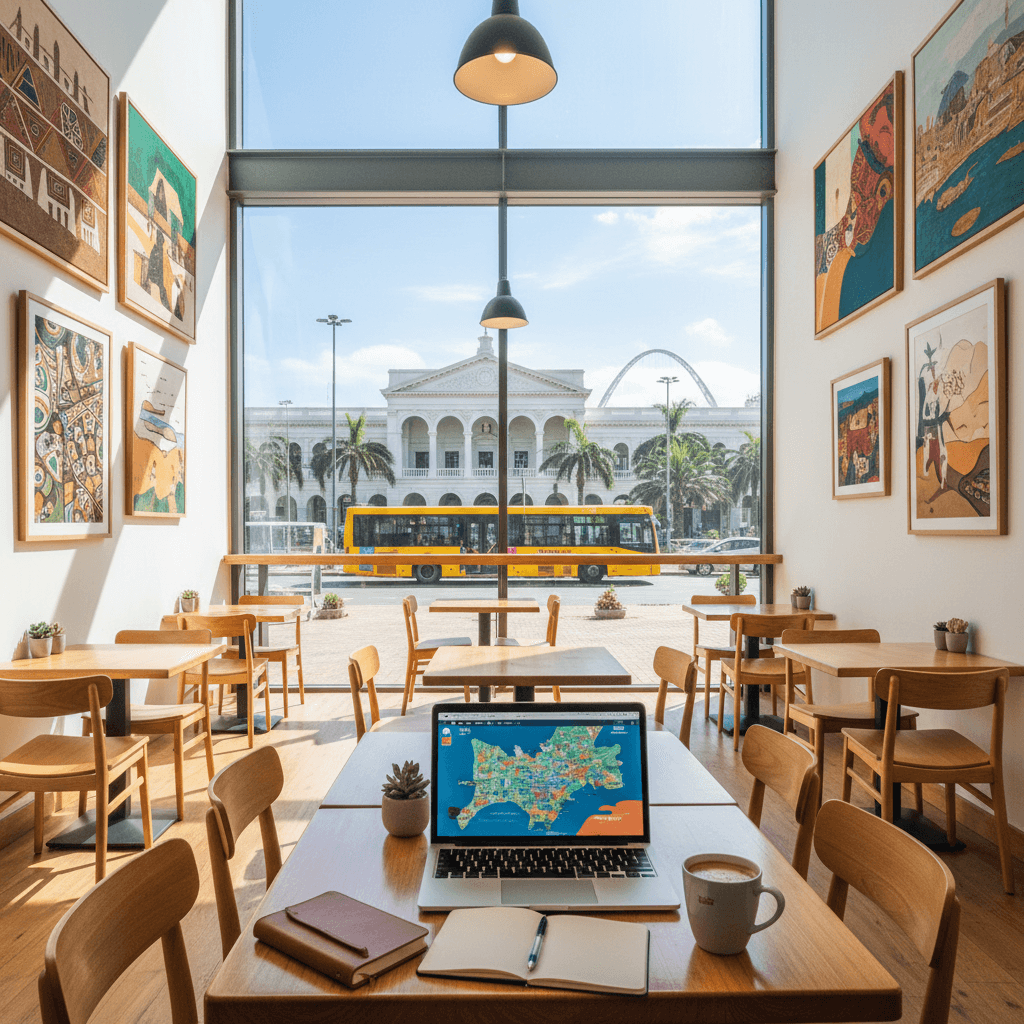
Durban
🇿🇦 South Africa