Hangzhou
🇨🇳 China
The Silicon Valley of the South Meets Ancient Waters
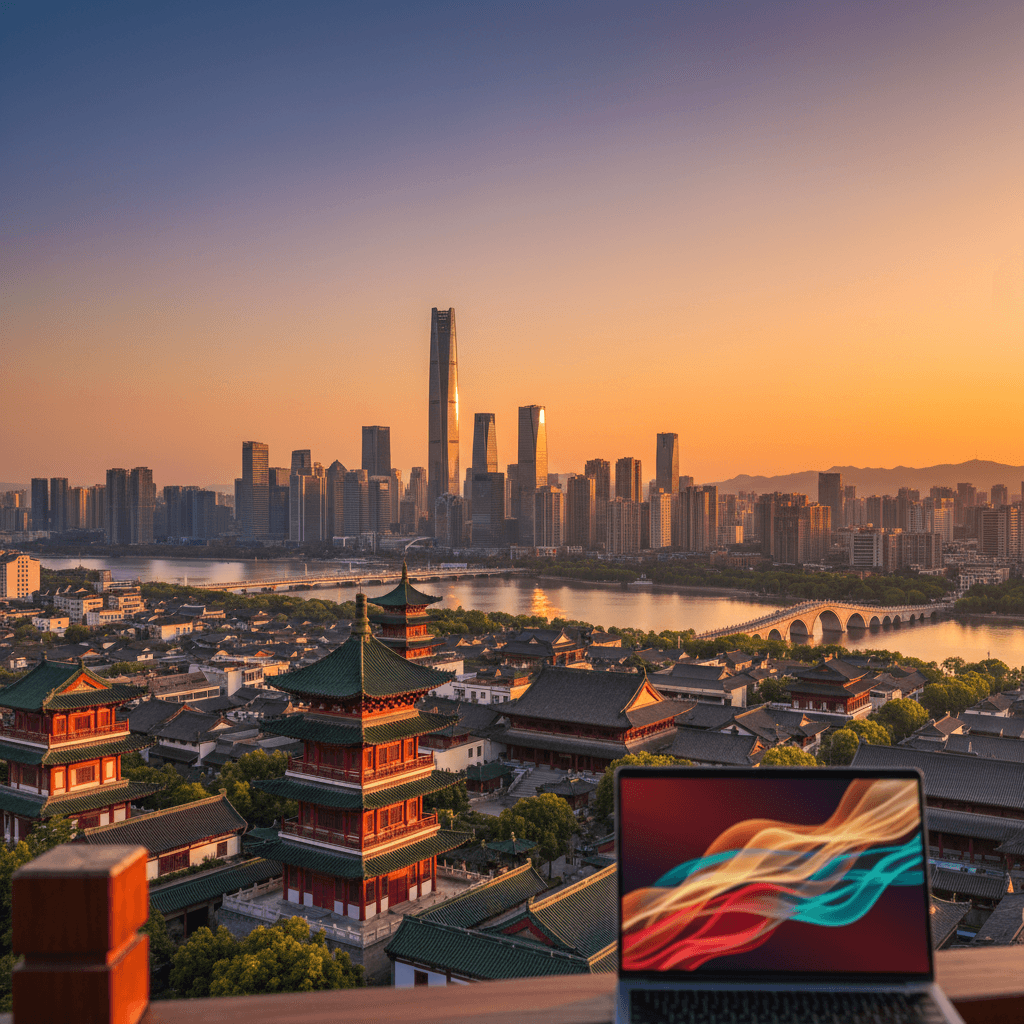
Hangzhou is a city that lives in two timelines simultaneously. On one hand, it's the high tech heart of China, the headquarters of Alibaba, and a place where you can pay for a single grape with a facial scan. On the other, it's a mist covered landscape of pagodas and willow trees that has inspired poets for over a thousand years. For a nomad, this creates a unique friction. You might spend your morning troubleshooting code in a sleek glass tower in Binjiang and your afternoon sipping Longjing tea overlooking West Lake.
Most travelers find that Hangzhou feels significantly more breathable than the frantic pace of Shanghai or the political weight of Beijing. There's a certain softness here, partly due to the massive amount of green space and the humidity that keeps the city perpetually lush. It's a place that values the "slow life" despite being a global engine for e-commerce. You'll see retirees practicing tai chi in the parks right next to twenty-somethings wearing the latest streetwear and carrying high end laptops.
The Digital Nomad Reality
While Hangzhou isn't a traditional nomad hub like Chiang Mai or Canggu, it's rapidly becoming the go-to alternative for those who want China's infrastructure without the sensory overload of a Tier 1 megacity. The vibe is decidedly "new money meets old soul." The city is wealthy, polished, and incredibly safe, but it requires a bit of a learning curve. You won't find a massive English speaking nomad community on every street corner, but the local tech scene is welcoming if you're willing to use translation apps and dive into the local ecosystem.
- The Tech Edge: The city is almost entirely cashless. You'll live your life through Alipay and WeChat, from unlocking shared bikes to ordering Waimai (delivery) at 2:00 AM.
- The Nature Factor: Having a UNESCO World Heritage site like West Lake in the center of the city means you're never more than a short metro ride away from a hike or a boat ride.
- The Startup Energy: There's a palpable sense of ambition. People here are building things, and that energy is infectious if you're working on your own projects.
What It Truly Feels Like
Waking up in Hangzhou usually involves a thick layer of morning mist and the scent of osmanthus flowers if you're there in the fall. The city feels expensive in its presentation but remains surprisingly affordable for those earning USD or Euros. You can get a world class meal for $15 or a bowl of street noodles for $3. The metro system is a marvel of modern engineering, clean and silent, whisking you across the city's 12 lines for less than a dollar.
The real magic happens in the transition zones. Places like Hefang Jie offer a glimpse into the Ming and Qing dynasties with their traditional pharmacies and tea houses, while just a few blocks away, the Wulin Lu night market pulses with neon lights and modern fashion. It's a city of layers. You'll find yourself working from a minimalist cafe in Gongshu one day and a rural co-working retreat like Digital Nomad Anji (DNA) in the nearby bamboo forests the next.
Living here means embracing the Great Firewall. You'll need a solid VPN (or two) to stay connected to the outside world, but once that's sorted, the city opens up. It's a destination for the "grown up" nomad who wants efficiency, safety, and a deep sense of history without sacrificing the comforts of a high tech society. It's not just a place to work; it's a place to witness the future of urban living while staying rooted in a very beautiful past.
The Price of Innovation and Tradition
Hangzhou occupies a sweet spot in the Chinese economy. It is the headquarters of Alibaba and a massive tech hub, yet it remains significantly more affordable than the skyrocketing prices of Shanghai or Beijing. You can live a comfortable, middle class life here for anywhere between $1,025 and $3,593 per month. Where you land on that scale depends entirely on your appetite for western imports and how close you want to be to the West Lake shoreline.
Most nomads find that $1,800 a month provides a very high quality of life, covering a modern apartment, daily dining out, and plenty of weekend trips. The city uses digital payments for everything through Alipay and WeChat Pay, so you will rarely touch physical cash. Just keep in mind that while the cost of living is lower than in the West, the "foreigner tax" exists in the form of imported groceries and western style bars, which can drain your budget quickly if you aren't careful.
Monthly Budget Breakdown
- Studio Apartment (Modern/Central): $600 to $1,100
- Local Meals: $4 to $8 per person
- Western Dinner with Drinks: $25 to $45 per person
- Monthly Metro Pass: $30 to $50 (depending on distance)
- Coworking Desk: $150 to $250
- High Speed Internet & VPN: $40 to $60
Housing by Neighborhood
Rent is your biggest variable. If you want to be in the heart of the action, look at Xiacheng or Gongshu. These areas are dense, urban, and put you near the best shopping and nightlife. If you prefer the tech scene, Binjiang is the place to be, though it feels a bit more corporate and sterile.
Xihu (West Lake District)
- Vibe: Scenic, touristy, and prestigious.
- Monthly Rent: $900 to $1,500 for a decent one bedroom.
- Pros: You can walk to the lake and the best tea houses in the city.
- Cons: Highest prices in the city and constant crowds on weekends.
Binjiang (The Tech Hub)
- Vibe: Modern high rises, wide roads, and lots of young professionals.
- Monthly Rent: $700 to $1,100 for a luxury studio.
- Pros: High quality apartments and proximity to coworking spaces like Digital Nomad Anji (DNA) connections.
- Cons: Lacks the historic charm of the older districts.
Gongshu (The Canal District)
- Vibe: A mix of old Hangzhou and new development along the Grand Canal.
- Monthly Rent: $550 to $900 for a comfortable flat.
- Pros: Great local food prices and a more authentic residential feel.
- Cons: A bit further from the main expat bars and Western hubs.
Eating and Drinking
If you eat like a local, you will save a fortune. A bowl of Pian Er Chuan noodles or a plate of Longjing shrimp at a neighborhood spot will only set you back about 30 to 50 RMB ($4 to $7). Street food at markets like Wulin Lu is even cheaper, with snacks ranging from 10 to 20 RMB.
Coffee is the one thing that might surprise you. A latte at a specialty shop usually costs $4 to $6, which is often more than the price of a full lunch. Alcohol is similarly priced; a local Tsingtao is cheap at $2, but a craft cocktail in a Xiacheng lounge will easily hit $12 to $15.
Transport and Utilities
The metro system is world class and incredibly cheap. Most rides cost less than $1. Didi, the local version of Uber, is also very affordable. A 20 minute cross town ride rarely exceeds $6 or $7. Utilities like electricity and water are manageable, usually totaling around $50 to $80 a month, though your AC bill will spike during the humid summer months of July and August.
For Digital Nomads: Xihu (West Lake District)
If you are moving to Hangzhou, you probably want to be near the water. Xihu is the soul of the city, and while it is the main tourist draw, the backstreets offer a surprisingly quiet life for remote workers. Most nomads look for apartments in the Gudang or Cuiyuan sub-districts to stay close to the action without paying lakeside premiums.
You will spend your afternoons at Costa Coffee on Beishan Road or ducking into the smaller teahouses in Manjuelong village. The internet speeds here fluctuate between 2 and 11 Mbps, so you will definitely need a reliable roaming SIM or a robust VPN to get through the Great Firewall. It is the best spot if you want to walk out of your door and be at the National Tea Museum or the botanical gardens within ten minutes.
- Estimated Rent: $700 to $1,100 for a modern studio.
- Vibe: Traditional, scenic, and walkable.
- Best Coworking: WeWork in central Hangzhou.
For Expats and Tech Professionals: Binjiang
Located south of the Qiantang River, Binjiang is the Silicon Valley of China. It is home to the Alibaba campus and NetEase, meaning the infrastructure is top tier and the crowd is young, tech savvy, and international. This is where you go if you want high rise apartments with floor to ceiling windows and gym access.
Living here feels a bit like living in the future. The Star Avenue shopping mall is the local hub for western food and craft beer. While it lacks the historic charm of the West Lake area, the metro connections are excellent; you can jump on Line 1 or Line 6 and be across the river in twenty minutes. It is the most practical choice for anyone staying long term who needs a reliable, modern lifestyle.
- Estimated Rent: $850 to $1,400 for a luxury one bedroom.
- Vibe: Corporate, high tech, and polished.
- Local Hangout: Seesaw or local craft beer spots.
For Families: Gongshu
Gongshu is situated at the northern end of the Grand Canal and offers a much slower pace of life. It is popular with families because of the parks and the Xiaohe Straight Street area, which is full of preserved Qing Dynasty architecture but renovated with clean, modern amenities. There is plenty of space for kids to run around away from the heavy traffic of the city center.
The neighborhood feels more authentic and less rushed. You will find plenty of local markets and family run noodle shops where a meal costs less than $5. It is also home to several international schools and bilingual kindergartens, making the transition easier for those moving with children. The Canal Museum and the surrounding plazas are great for weekend strolls.
- Estimated Rent: $1,200 to $2,000 for a three bedroom apartment.
- Vibe: Residential, historic, and family oriented.
- Key Landmark: Gongchen Bridge.
For Solo Travelers and Short Termers: Shangcheng
If you are only in town for a month or two, Shangcheng is the place to be. It encompasses the Hefang Street historic area and the main Hangzhou Railway Station. You are right in the thick of the city's history, surrounded by street food vendors selling stinky tofu and green tea cakes. Everything you need is within walking distance, from the Wulin Lu night market to the high end boutiques at Hubin 77.
Solo travelers love this area because it is impossible to feel lonely. The hostels and boutique hotels around Nanshan Road are social hubs where you can meet other travelers. You are also perfectly positioned to use the extensive metro network with 12 lines covering 516km to explore the rest of the city for just a few yuan per trip.
- Estimated Rent: $600 to $900 for a modest apartment or serviced room.
- Vibe: Energetic, historic, and very convenient.
- Must Visit: Southern Song Imperial Street for evening walks.
The Connectivity Reality
Working from Hangzhou feels like living in the future, but with a massive asterisk. This is the headquarters of Alibaba and Ant Group, so the infrastructure is elite. You can pay for a coffee, unlock a shared bike, and book a doctor's appointment through Alipay or WeChat without ever touching a physical wallet. However, the Great Firewall is a constant companion. You simply cannot work here without a reliable, paid VPN service. Most nomads recommend having at least two different providers installed before you land, as one will inevitably go down during a sensitive meeting.
Home internet speeds vary wildly. While some modern high rises boast fiber optics reaching 300 Mbps, the average speed for international traffic usually hovers between 2 Mbps and 11 Mbps due to the filtering process. If you're doing heavy video editing or frequent Zoom calls with the US or Europe, you'll need to rely on high end coworking spaces or 5G tethering, which is surprisingly stable and fast across the city.
Top Coworking Spots
Hangzhou doesn't have a massive "Western style" nomad scene yet, but the local startup culture is intense. You'll find plenty of spaces filled with local entrepreneurs working 996 schedules (9am to 9pm, 6 days a week).
- WeWork (Yan'an Road): Located in the heart of the Gongshu district, this is the most reliable bet for international travelers. The community staff usually speaks some English, and the desks are ergonomic. Expect to pay around $180 to $250 for a monthly hot desk.
- Digital Nomad Anji (DNA): If the city noise gets too much, many nomads take the short trip to Hengshan Village. It's a dedicated co-living and coworking hub designed specifically for the remote crowd. It's much cheaper than the city center and offers a built in social life that can be hard to find in Hangzhou's corporate districts.
The Cafe Culture Alternative
If you prefer the "laptop and a latte" lifestyle, Hangzhou is a dream. The area around West Lake and the Liangzhu district is packed with aesthetic cafes. Unlike some cities where laptop use is discouraged, many Hangzhou cafes expect students and freelancers to linger for hours.
- Metal Hands: Located in the more artistic pockets of the city, it offers great lighting and a steady Wi-Fi signal, though it gets crowded on weekends.
- Starbucks Reserve (Hubin): It's predictable, but the multi story flagship near the lake has some of the most consistent high speed internet in the city and plenty of international crowds.
Mobile Data and Logistics
Getting a SIM card is your first priority. Head to a China Unicom or China Mobile flagship store with your passport. A decent data plan with 40GB to 100GB of data will cost you roughly $15 to $30 per month. Make sure your phone supports the local bands, as 5G coverage in Hangzhou is among the best in the world.
One pro tip for staying connected: download Baidu Maps or Amap. Google Maps is useless here, even with a VPN, as the locations are often offset by several hundred meters. Learning to navigate the local app ecosystem is just as important as finding a fast Wi-Fi signal.
Personal Safety and the Tech Shield
Hangzhou is consistently ranked as one of the safest cities in China. Since it is the headquarters of Alibaba and a massive tech hub, the city is blanketed with advanced security infrastructure. You can walk through most neighborhoods at 3:00 AM without a second thought. Street crime like muggings or violent theft is incredibly rare here, as the heavy presence of surveillance cameras acts as a massive deterrent.
The biggest safety concern you'll actually face is the traffic. Delivery scooters are everywhere and they often zip onto sidewalks or go the wrong way down one way streets. They are almost silent because they're all electric, so keep your ears open and look both ways even on a sidewalk. If you're biking, stick to the designated green lanes near West Lake to stay out of the way of aggressive bus drivers.
Scams are less common than in Shanghai or Beijing, but they still happen around the main tourist hubs like Hefang Street. If a friendly "student" approaches you to practice English and invites you to a traditional tea ceremony or an art gallery, politely decline. These often end with you being handed a bill for $200 or more for basic tea. Stick to established tea houses where prices are clearly listed on a menu.
Healthcare Infrastructure
If you get sick, you'll find that Hangzhou has some of the best medical facilities in Zhejiang province. The system is divided between public hospitals and private international clinics. Public hospitals are efficient but can feel overwhelming if you don't speak Mandarin, as the registration process involves a lot of queuing and specific apps like Alipay.
Most expats and nomads head to the international departments of major hospitals. These sections offer English speaking staff and a much more streamlined experience, though you'll pay a premium for the convenience. It's common for a standard consultation at an international clinic to cost between $80 and $150 before any tests or medication.
- Zhejiang University International Hospital: This is the gold standard for high end care in the city. They have a dedicated VIP wing with staff who speak excellent English.
- Sir Run Run Shaw Hospital: Located in the Jianggan district, this hospital was the first in China to be accredited by Western standards. It is the go-to for many foreigners living in the city.
- Hangzhou United Family Clinic: A private option that feels more like a Western doctor's office. It's great for routine checkups or minor issues, but it's significantly more expensive than the public options.
Pharmacies and Prescriptions
Local pharmacies are everywhere, usually marked by a green cross. You can find basic over the counter meds easily, but many brands will be local Chinese versions. If you have specific maintenance medications, bring a six month supply with you. While you can often find equivalents, the chemical names might differ and you'll need a local doctor to write a new prescription.
For quick fixes like painkillers or cold medicine, you can actually order them directly through the Meituan or Ele.me apps. A delivery driver will usually drop them at your door within 30 minutes. Just be sure to have a translation app ready to read the dosage instructions on the packaging.
Emergency Basics
Keep these numbers programmed into your phone just in case. Note that operators might not always speak English, so having a local friend or your hotel's address written in Chinese is a smart move. Most nomads also keep their insurance provider's international hotline on a physical card in their wallet.
- Police: 110
- Ambulance: 120
- Fire Department: 119
Tap water in Hangzhou is not drinkable. Even locals boil it before use, but most nomads just stick to bottled water or high quality filters. You can get 5 gallon jugs delivered to your apartment for about $3 to $5 per bottle, which is the most sustainable way to stay hydrated if you're staying for more than a month.
The Metro System
Hangzhou has transformed its transit network at a breakneck pace. Since opening in 2012, the metro has expanded into a massive 12 line system that ranks as the 10th longest on the planet. It is the cleanest, most efficient way to dodge the city's notorious rush hour traffic. Most nomads stick to Line 1 for hitting the main hubs like the East Railway Station and the Hubin shopping district near the lake.
Fares are incredibly cheap, usually ranging from 2 RMB to 9 RMB ($0.30 to $1.25) depending on the distance. You won't need to fumble with paper tickets or even a physical transport card. Just download the Alipay app, head to the Transport section, and activate the Hangzhou Metro QR code. You just scan your phone at the turnstile and the fare is deducted automatically. It works seamlessly and saves you from standing in line at kiosks.
Ride Hailing and Taxis
While traditional blue taxis are still around, Didi is the undisputed king here. It is the local equivalent of Uber and it's integrated directly into the Alipay and WeChat apps. Most expats use the "Premier" or "Express" options for a reliable ride. A 20 minute cross town trip typically costs between 25 RMB and 45 RMB ($3.50 to $6.30).
If you're heading to the West Lake area on a weekend, be prepared for a bit of a wait. Traffic around the scenic spots can get gridlocked, and drivers sometimes avoid those zones during peak hours. If you're in a rush, look for the "Luxe" option in Didi; it costs more, but the drivers are more likely to accept the fare during busy times.
The Two Wheel Culture
Hangzhou is the birthplace of modern bike sharing. You'll see thousands of red public bikes and colorful private ones from HelloBike or Meituan scattered on every corner. They are perfect for that "last mile" trek from the metro station to your coworking space. You can unlock these using the same apps you use for everything else. A ride usually costs about 1.5 RMB for 30 minutes.
For those staying longer than a month, buying a used electric scooter is a popular move. They are silent, fast, and let you zip through the dedicated bike lanes that line almost every major road. Just make sure your apartment or office has a designated charging point, as bringing batteries indoors is strictly prohibited in most buildings for safety reasons.
Walking the West Lake
Despite the high tech transit, the heart of Hangzhou is best experienced on foot. The perimeter of West Lake is roughly 15 kilometers. While the metro gets you close, it doesn't actually run under the lake or through the most scenic parks. You'll end up walking a lot. Comfortable shoes aren't just a suggestion; they are a requirement if you want to explore the tea plantations in Longjing Village or the temples tucked into the hills.
Intercity High Speed Rail
One of the biggest perks of living in Hangzhou is the access to the rest of China. The Hangzhou East Railway Station is a futuristic hub that feels more like a world class airport. You can hop on a bullet train and be in the center of Shanghai in about 45 to 60 minutes for roughly 73 RMB ($10). There are hundreds of these trains every day, making day trips or weekend getaways incredibly easy. Just remember to bring your passport, as you'll need it to enter the station and board the train.
- Metro Start Price: 2 RMB
- Average Didi Trip: 35 RMB
- Bike Share: 1.5 RMB
- Train to Shanghai: 73 RMB
Hangzhou is a city where the future of tech meets ancient tradition, and the language situation reflects that exact split. While it is the global headquarters for Alibaba, you shouldn't expect everyone you meet to be fluent in English. In the high tech districts like Binjiang or around Zhejiang University, you will find younger locals and tech workers who can hold a conversation. However, for daily life in the local markets or when dealing with property agents, you are going to rely heavily on your smartphone.
The Digital Survival Kit
In Hangzhou, your phone is more than a communication device; it is your translator, your wallet, and your map. You need to download Pleco immediately. It is the gold standard for Chinese dictionaries and works offline, which is a lifesaver when your connection drops. For real time translation, Baidu Translate often outperforms other western apps because it is optimized for local dialects and slang.
The most important tool in your arsenal is WeChat. It has a built in translation feature for text messages. If you are messaging a landlord or a local colleague, you can long press their Chinese text and hit translate. Most nomads find this is the only way they can effectively manage logistics like water deliveries or apartment repairs.
Navigating the Language Gap
Standard Mandarin (Putonghua) is the primary language, though long time residents often speak the local Hangzhou dialect among themselves. If you are staying near West Lake or in the Gongshu district, hotel staff and upscale restaurant servers will usually speak enough English to get you through a meal. If you venture into the smaller noodle shops or wet markets, pointing and using hand gestures is perfectly acceptable and expected.
- Translation Apps: Use Baidu Translate or Waygo for signs and menus.
- Language Learning: If you want to study, look for classes near the Yuquan Campus of Zhejiang University.
- Business Etiquette: In professional settings, having a digital business card on WeChat is more common than physical cards.
Communication Logistics
Connectivity is the backbone of life here. You will want a local SIM card from China Mobile or China Unicom as soon as you arrive. You can find kiosks at the Xiaoshan International Airport or at major hubs like Hefang Jie. Expect to pay around 100 to 200 RMB for a decent data package. You will need your passport to register the card.
The elephant in the room is the Great Firewall. To access your usual work tools like Slack, Google Workspace, or Instagram, you need a high quality VPN. Most expats in Hangzhou recommend having at least two different VPN services installed before you land. Local internet averages 50-100 Mbps domestic, but VPN throttles to 10-20 Mbps for international.
Practical Tips for Daily Interaction
When taking a taxi or a Didi (the local version of Uber), do not assume the driver can read Romanized addresses (Pinyin). Always have your destination written in Chinese characters on your phone. You can usually find these on the Apple Maps or Amap listings for the location. If you get stuck, younger people are generally very helpful and will often use their own translation apps to help you find your way. It is a polite culture, and a little effort to say "Ni hao" (hello) or "Xie xie" (thank you) goes a long way in building rapport with the locals.
The Four Seasons of the Lake
Hangzhou is famously beautiful, but it's a city of extremes when it comes to the thermometer. It sits in a subtropical monsoon zone, which means you get four very distinct seasons. If you're planning a stint here, your timing will completely dictate your quality of life. Most nomads aim for the "Golden Windows" in spring and autumn to avoid the legendary humidity of the summer months.
Spring, running from March to May, is arguably the peak time to arrive. This is when the Longjing tea terraces are at their most brilliant green and the peach blossoms around West Lake start to pop. Temperatures usually hover between 15°C and 25°C (59°F to 77°F). It is perfect for working from outdoor cafes, but keep in mind this is also the busiest tourist season. Prices for short term rentals can spike during the Qingming Festival in early April.
Autumn, specifically September through November, is the runner up for best arrival window. The air clears up, the humidity drops, and the city smells like sweet osmanthus flowers. You'll get crisp shirts-and-light-jacket weather with averages around 20°C (68°F). It is the best time for cycling around the tech hubs in Binjiang or taking the high speed rail to nearby water towns without breaking a sweat.
The Survival Guide for Summer and Winter
Summer in Hangzhou is no joke. From June to August, the city turns into a "furnace." Temperatures frequently climb above 35°C (95°F), and the humidity makes it feel significantly hotter. You will find yourself hopping from one air conditioned mall to another. June also brings the "Plum Rain" season, a period of persistent, heavy drizzle that can make the city feel damp for weeks. If you are here during this time, make sure your apartment has a high quality AC unit and a dehumidifier.
Winter, from December to February, is short but surprisingly biting. Even though it rarely stays below freezing for long, the damp cold seeps into your bones because many older buildings lack central heating. Most locals and expats rely on electric heaters and heavy down jackets. On the bright side, seeing the Broken Bridge at West Lake covered in a light dusting of snow is a bucket list experience for many travelers, and the city is much quieter during these months.
Key Dates and Travel Logistics
When planning your arrival, there are two major holiday blocks you should generally try to avoid for travel, as the city becomes incredibly crowded and prices for everything double.
- Golden Week (October 1st to 7th): National Day celebrations bring millions of domestic tourists to the West Lake area. Transport is a headache and coworking spaces might have limited hours.
- Chinese New Year (Late January or February): The city actually empties out as people head to their hometowns. While it is quiet, many smaller restaurants and shops will close for at least a week.
- The Tea Harvest (Late March): If you want to see the action in the hills of Longjing, this is the time, but book your accommodation well in advance.
For the best balance of cost and comfort, try arriving in late October. The summer crowds have vanished, the weather is stable for exploring the different districts, and you'll have an easier time negotiating a mid term lease before the winter chill sets in. Most nomads find that a three month stay starting in September or March allows them to see the city's best side without dealing with the harshest weather shifts.
Connectivity and the Firewall
Living in Hangzhou means dealing with the Great Firewall. You cannot access Google, Slack, or Instagram without a reliable VPN. Most nomads here set up two different VPN providers before they even land, as one will inevitably go down during a sensitive meeting. If you are serious about remote work, look into getting a Shadowsocks or Astrill subscription. Local internet speeds generally hover between 2 and 11 Mbps, which is fine for emails but can be a headache for heavy video editing or large uploads.
Money and Payments
Cash is basically a relic here. You will need Alipay or WeChat Pay for everything from a 3 RMB bottle of water to your monthly rent. Most expats link their international Visa or Mastercard to Alipay's TourPass or the updated international version of the app. It works for about 95 percent of transactions. For banking, ICBC or Bank of China are the most common choices if you have a long term residence permit, but the paperwork is famously tedious. Expect to spend a full afternoon at the bank branch if you are opening a local account.
Language and Local Life
English levels in Hangzhou are higher than in rural China but lower than in Shanghai. You will get by in high end malls around Wulin Lu, but the aunties at the wet markets won't speak a word of English. Download Pleco for translation and Baidu Maps for navigation; Google Maps is notoriously inaccurate in China. Learning basic phrases for "check please" (mǎidān) and "no cilantro" (bùyào xiāngcài) will save you a lot of daily stress.
Getting Around
The metro system is world class and exceptionally clean. It is now the 10th longest network on the planet, so you can reach almost any corner of the city for under 8 RMB. For shorter trips, use the HelloBike or Meituan apps to unlock the blue or yellow share bikes parked on every corner. If you need a car, Didi is the local version of Uber and it is integrated directly into the Alipay app. A 20 minute ride across town usually costs around 25 to 40 RMB.
Health and Safety
Hangzhou is incredibly safe, even late at night. Petty crime is rare because of the sheer density of security cameras. For healthcare, expats usually head to the Zhejiang University International Hospital or Sir Run Run Shaw Hospital. These facilities have international departments where doctors speak English. A standard consultation might cost 300 to 500 RMB out of pocket, so having international health insurance is a smart move for anything more serious than a cold.
Nomad Community and Workspaces
While Hangzhou is a tech giant, the nomad scene is more spread out than in places like Bali. Most people work from high end cafes in Binjiang or the Xihu district. If you want a dedicated community, Digital Nomad Anji (DNA) is a short trip away in Hengshan Village. It is a purpose built space where you can find other remote workers and escape the city humidity. Within the city, WeWork locations near East Railway Station are popular hubs for those who need a professional desk and reliable coffee.
Weather Realities
The weather is a major factor in your planning. Summers are notoriously "oven like" with high humidity and temperatures regularly hitting 38 Celsius. Conversely, winters are damp and bone chilling because many older buildings lack central heating. The best times to visit are March to May and September to November. During these months, the air is crisp and the tea plantations around the city are at their most beautiful.
Need visa and immigration info for China?
🇨🇳 View China Country GuideHidden Gem
Worth the effort