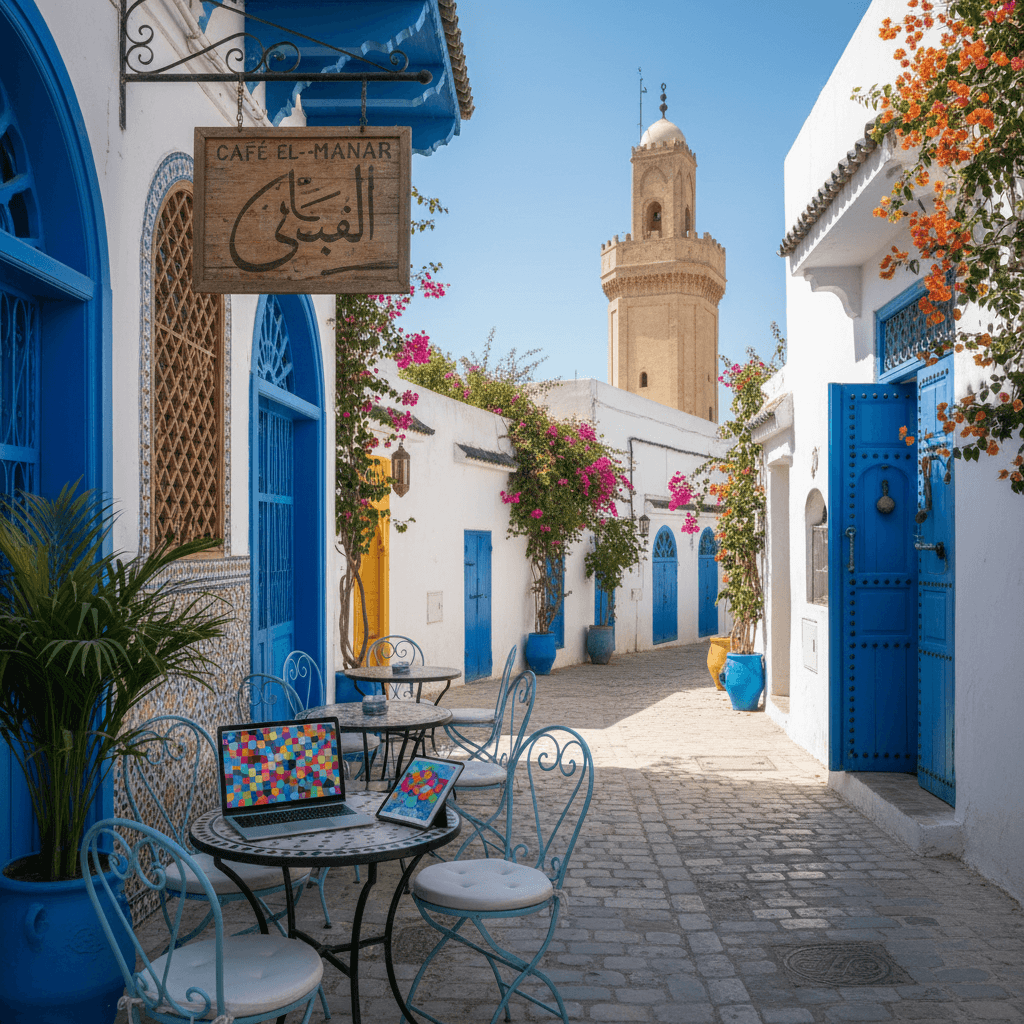
Hammamet
🇹🇳 Tunisia
The Hammamet Vibe: Slow Living by the Gulf
If you're tired of the frantic pace in hubs like Lisbon or Bali, Hammamet is your deep breath. It’s Tunisia’s original coastal retreat, far more relaxed than Tunis but more grounded than the sterile resort strips you’ll find elsewhere in the Mediterranean. The town has a dual personality: one half is a historic, white-washed village draped in jasmine, and the other is a modern, spa-centric hub dedicated to the art of doing very little.
Nomads usually land here for the balance. You can spend your morning on a 4G+ connection at a beachside cafe, your afternoon at a thalassotherapy center getting a salt scrub, and your evening at a rooftop BBQ. It doesn’t feel like a "hustle" city. It feels like a place where you actually use your passport to live, not just to work from a different desk.
What Makes It Different?
Most nomad destinations are either high-tech jungles or remote villages with zero infrastructure. Hammamet sits in the sweet spot. It’s the spa and golf capital of North Africa, meaning the "basics" here include several world-class golf courses, including Citrus Golf with multiple 18-hole layouts and world-class wellness centers. You aren't just getting by; you're living a high-end lifestyle for roughly $1,389 a month.
The community is smaller and more tight-knit than in the capital. You’ll likely find yourself at Nomad Residence, where the local nomad scene actually intersects. Instead of just passing other foreigners in a coworking space, people here tend to bond over weekend trips to Roman ruins or sunset drinks in the Medina. It’s a welcoming, unpretentious environment where locals actually want to get to know you.
The Neighborhood Breakdown
- The Medina: This is the historic heart. It’s perfect if you want to wake up to the sound of the sea and the smell of fresh bread. It’s walkable and incredibly cheap for food, though the internet can be spotty behind those thick stone walls.
- Yasmine Hammamet: This is the "new" town. It’s polished, features a massive waterpark, and boasts a marina. It’s pricier and feels more like a vacation zone, making it a favorite for expats with families who want security and modern amenities.
- The North Coast/Nomad Hub: This is where the remote work magic happens. You’ll find better WiFi, more contemporary apartments, and easy access to the beach clubs. It’s the best area for solo nomads looking to stay productive.
Living Costs & Practicalities
Your money goes a long way here, especially compared to European coastal towns. Local SIM cards from Ooredoo or Orange are a steal, usually costing between $5 and $10 for a massive 20GB to 30GB data plan. This is vital because while home WiFi averages around 13 Mbps, the 4G+ network is surprisingly snappy for video calls.
- Housing: A solid 1-bedroom near the beach runs between $500 and $800. If you’re on a budget, look toward the Medina edges for spots around $300.
- Dining: You can grab a local tagine or couscous for $3 to $6. Even a nice mid-range dinner with a view rarely tops $15.
- Transport: Taxis are the way to go. A typical cross-town trip is only $5 to $10. If you’re staying long-term, a scooter rental for $100 a month gives you total freedom.
The Reality Check
It isn’t all sunshine and jasmine. The internet isn't going to break any speed records, so if your job requires uploading massive 4K video files daily, you might struggle. Language can also be a hurdle; while English is fine in the resorts, knowing some French or basic Tunisian Arabic phrases like "Shukran" (thank you) will change how locals treat you.
The best time to be here is April through June or September through October. The weather is a perfect 20°C to 28°C, avoiding the sweltering 35°C heat of July and the rainy dampness of January. If you can handle the slower pace, you'll find a quality of life here that's hard to match for the price.
The Bottom Line
Hammamet sits in a sweet spot for nomads who want Mediterranean views without the skyrocketing prices of Italy or Greece. You can live comfortably here for around $1,389 a month. While that is roughly double what you would spend in inland Tunis, the trade off is immediate beach access and a much higher concentration of English speaking expats and modern amenities.
Tunisia uses the Dinar, and while cash is still king in the medina, you will get by fine with Wise or Revolut at most supermarkets and larger hotels. Just keep some small bills for taxis and street food vendors who rarely have change for large notes.
Monthly Housing Estimates
Rent is your biggest variable. If you want to be in the heart of the action or overlooking the water, expect to pay a premium. Many remote workers gravitate toward the Nomad Residence area for the built in community and reliable infrastructure.
- Budget Tier: $300 to $500. This usually gets you a studio on the outskirts or near the edges of the Medina. It is authentic, but you might sacrifice some modern insulation or quiet.
- Mid Range Tier: $500 to $800. This is the sweet spot for a modern 1BR in central areas or near the popular beach strips.
- Comfortable Tier: $800+. At this price, you are looking at luxury apartments in Yasmine Hammamet or high end resort rentals with pool access and security.
Food and Dining
Eating out is remarkably affordable if you stick to local spots. A massive plate of couscous or a spicy tagine at a neighborhood joint will only set you back about $3 to $6. If you are grabbing a quick fricassé (a savory Tunisian donut) or a sandwich from a street stall, you can eat for under $3.
Mid range restaurants in the tourist zones usually charge between $8 and $15 for a full meal with a drink. If you are celebrating at an upscale resort in Yasmine Hammamet, expect European prices starting around $20 to $40 per person. For groceries, local markets are incredibly cheap for produce, but imported goods like specific cheeses or spirits carry a heavy tax.
Connectivity and Workspace
Budget about $100 to $200 a month for professional workspace if you aren't working from your rental. Nomad Residence is the go to hub here, offering co-living packages that include high speed internet for around $300 a month. Most local cafes are happy to let you linger for the price of a $2 coffee, though the Wi-Fi can be hit or miss.
Reliable mobile data is a must. Most nomads pick up a SIM card from Ooredoo or Orange immediately upon arrival. You can get a massive 20GB to 30GB data plan for just $6 to $11, which is perfect for using your phone as a hotspot when the cafe Wi-Fi fails.
Transportation and Extras
Hammamet is relatively walkable in the specific tourist pockets, but you will need wheels to get between the Medina and Yasmine Hammamet. Taxis are the standard; a cross town trip usually costs between $5 and $10. If you prefer more freedom, you can rent a scooter for roughly $100 a month, which is the preferred way for long term residents to beat the summer traffic.
- Public Bus: $0.50 per ride. It is cheap but can be crowded and confusing for newcomers.
- Gym Membership: $30 to $50 a month depending on the resort facilities.
- Beer/Wine: $3 to $5 in a local bar; significantly more in high end hotels.
Digital Nomads: The Emerging Hub
If you're coming to Hammamet to work, you'll likely gravitate toward the area surrounding Nomad Residence. This isn't just a building; it's the center of the town's growing remote work scene. Located within walking distance of the beach and local cafes, this neighborhood provides the social infrastructure that's otherwise hard to find in Tunisia. It's the best spot to find reliable 4G+ coverage and fellow travelers for beach BBQs or rooftop sundowners.
- Rent: $500 to $800 for a modern apartment or hybrid co-living setup.
- Coworking: Shared spaces cost between $100 and $200 monthly, though many nomads stick to laptop-friendly cafes for the price of a $2 coffee.
- Vibe: Community-focused, active, and surprisingly social for a smaller coastal town.
Expats and Long-Term Residents: Central Comfort
Expats usually look for a balance between local life and modern amenities, often settling in the residential pockets near the Beachfront Resort zones and golf courses. These areas are quieter and feel more secure than the dense center. You're close enough to the 12+ golf courses and high-end thalassotherapy spas to make the most of the city's "spa capital" reputation while maintaining a private, comfortable home base.
- Rent: Expect to pay $800+ for high-end villas or serviced apartments.
- Transport: Most residents here rent a scooter for about $100 a month or rely on official taxis, which usually cost around $5 to $10 per trip.
- Vibe: Relaxed, upscale, and slightly detached from the tourist crowds.
Families: Yasmine Hammamet
For those traveling with kids, Yasmine Hammamet is the most logical choice. It's a purpose-built resort district that's much more polished than the historic core. It houses the major waterparks, themed attractions, and wide, stroller-friendly promenades. While it's more expensive and definitely more tourist-heavy, the convenience of having international dining and entertainment within a short walk is a major plus for parents.
- Rent: $800 to $1,200 for larger, family-sized rentals during the peak season.
- Dining: Mid-range restaurants here run about $15 per person, while upscale resort dinners can hit $40.
- Vibe: High-energy, safe, and packed with amenities like the marina and theme parks.
Solo Travelers: The Old Medina
If you want to wake up to the sound of the call to prayer and the smell of fresh bread, the Medina of Hammamet is where you belong. This historic core is a maze of whitewashed walls and blue doors. It's the most walkable part of the city and puts you right in the thick of Tunisian culture. It's perfect for a short-term immersive stay, though the lack of dedicated office spaces means you'll be working from your kitchen table or a local terrace.
- Rent: Budget options on the Medina edges can be found for $300 to $500.
- Food: This is the land of $3 tagines and $2 street food snacks.
- Vibe: Authentic, crowded, and visually stunning, but watch out for the typical tourist hustle in the markets.
Most travelers find that moving between these areas is easy enough by taxi, but choosing your base dictates your daily quality of life. For a stay longer than a month, the Nomad Residence area offers the best balance of price, speed, and social life for anyone carrying a laptop.
Getting Connected in Hammamet
Hammamet isn't a high speed tech hub like Seoul or Lisbon, but it's surprisingly reliable for those who can work with moderate bandwidth. You'll find an average fixed broadband speeds around 15-20 Mbps. While that won't win any awards, it's steady enough for Zoom calls and standard cloud work. Most nomads rely on 4G+ mobile data as a backup or even a primary source, as cellular coverage across the tourist zones is excellent.
For your phone, skip the international roaming and grab a local SIM immediately. Ooredoo and Orange are the two heavy hitters. You can find kiosks at the airport or small shops throughout the city. Expect to pay between €5 and €10 for a generous data package of 20GB to 30GB. It's cheap, fast, and the easiest way to stay tethered while you're working from a beachside cafe.
Coworking Spaces and Community
The star of the show here is Nomad Residence. It's more than just a desk; it's a hybrid co-living and coworking hub that has single handedly put Hammamet on the digital nomad map. They offer the fastest WiFi in town and host regular community events like rooftop drinks and Sunday brunches. If you're looking for a built in social life, this is where you'll find it. Monthly rates for the coworking facilities generally hover around $100 to $200, though many people opt for the full co-living package starting at $300.
Outside of dedicated spaces, the cafe culture is your best friend. In the Medina or near the beach, you can easily park yourself at a table with a $2 coffee for a few hours. Just check the signal before you order. The vibe is generally laid back, and most owners won't mind you working as long as you're a paying customer. Many nomads find the atmosphere in the Medina cafes perfect for deep work, though the noise levels can spike during the afternoon rush.
Remote Work Logistics
Tunisia offers visa-free/visa-on-arrival entry for up to 90 days for many nationalities, extendable; check official sources for long-stay options like residence permits. For banking, most expats use Wise or Revolut to handle international transfers and avoid the hefty fees at local ATMs, which are plentiful in the Yasmine Hammamet and Medina areas.
- Ooredoo/Orange SIM: Best for 4G+ reliability and cheap data.
- Nomad Residence: The primary hub for community and high speed fiber.
- Medina Cafes: Great for a change of scenery and cheap caffeine.
Digital Nomad Infrastructure Costs
- Shared Coworking Desk: $100 to $200 per month.
- Co-living Suite: $300+ per month including utilities and internet.
- Mobile Data: $5 to $10 for 30GB.
- Coffee/Work Cafe: $2 to $4 per session.
If you're a developer or video editor who needs massive upload speeds, you might find the average fixed broadband speeds around 15-20 Mbps frustrating. However, for writers, marketers, and general consultants, the infrastructure is more than enough. The trade off is a work life balance that's hard to beat, where you can close your laptop at 5:00 PM and be on a golden beach five minutes later.
Staying Safe in Hammamet
Hammamet is widely considered one of the safest spots in North Africa for foreigners. The atmosphere is significantly more relaxed than the frantic energy of Tunis, and the heavy presence of tourism means local authorities prioritize security in key zones. You'll feel perfectly comfortable walking through Yasmine Hammamet or the Medina during the day, though it's always smart to stay aware of your surroundings in crowded market areas where petty pickpocketing can happen.
Most nomads find that sticking to established tourist corridors is the best way to avoid hassle. While the residential outskirts are generally fine, they lack the lighting and security patrols found near the resorts. If you're exploring the Medina, expect some high pressure sales tactics from shop owners. A polite but firm "Non, merci" or "Shukran" (thank you) is usually enough to move on without issue.
Solo travelers, particularly women, often report a positive experience, though it's common to receive unwanted attention or catcalls in less westernized areas. Dressing a bit more modestly when you aren't on the sand helps blend in. Most expats recommend using official taxis rather than trying to figure out local bus routes after dark, as they are affordable and generally reliable. If you're heading out for the night, stick to the well lit areas of the marina.
Healthcare Infrastructure
For minor issues, Tunisia’s pharmacy system is excellent. You'll find a pharmacie on nearly every major street, marked by a green neon cross. Pharmacists here are highly trained, often speak French and some English, and can prescribe treatments for common nomad ailments like "Tunis tummy" or heat exhaustion without a doctor's visit.
If you need more serious medical attention, Hammamet has several private clinics that cater to the expat and medical tourism crowd. These facilities are clean, modern, and far more efficient than public hospitals. For specialized care or major emergencies, most residents head to Tunis, which is about 65km away and home to the country's top private hospitals. The standard of care in these private Tunis facilities is high, often comparable to southern Europe but at a fraction of the price.
- Police Emergency: Dial 190
- Ambulance/Medical Emergency: Dial 198
- Common Prescription Costs: Most basic antibiotics or painkillers cost between $5 and $15.
- Doctor Consultation: A private GP visit typically runs between $20 and $40.
Practical Health Tips
Don't drink the tap water. While it's generally fine for brushing your teeth, the mineral content can be tough on your stomach if you aren't used to it. Stick to bottled water, which is cheap and available at every "hanout" (small corner shop) for less than $1.
The Mediterranean sun is deceptively strong, especially with the sea breeze. Expats recommend buying high SPF sunscreen before you arrive, as imported brands can be surprisingly expensive in local shops, often costing $25 or more for a small bottle. If you're staying long term, ensure your health insurance covers private medical evacuation to Tunis or Europe, just for peace of mind.
Getting Around Hammamet
Hammamet is a tale of two halves, and how you move between them depends on whether you're chasing the historic charm of the Medina or the modern resort life in Yasmine Hammamet. While the city isn't the most walkable urban center in North Africa, its compact tourist zones are easy enough to manage once you know the local rhythm.
Taxis and Ride-Hailing
Yellow taxis are the lifeblood of transport here. You'll find them everywhere, and they're incredibly affordable for short hops. Most trips within the city center or between the Medina and the beach resorts will cost you between $5 and $10. Always ensure the driver turns on the meter, or "compteur," to avoid the "tourist price" negotiation at the end of the ride.
- Base fare: Usually starts around $3.
- Availability: High in central areas, but can get sparse in residential outskirts after dark.
- Apps: While global giants like Uber aren't active here, local ride-hailing is still in its infancy. Most nomads rely on waving down official taxis or asking their accommodation to call a trusted driver.
Public Transport and Louages
For those living on a budget, the public bus system connects Hammamet to Tunis, which is about 65km away. A single ride is a steal at roughly $0.50. If you're heading out of town, look for the "louage" stations. These are white minivans with colored stripes that act as shared taxis. They don't have a set schedule; they simply depart when full. It's the most authentic and cheapest way to reach the capital in about an hour.
Two-Wheeled Freedom
If you're staying for a month or more, renting a scooter is a game-changer. It gives you the freedom to scout out quieter beaches away from the hotel strips without haggling with drivers every day. You can generally find scooter rentals for around $100 per month. Just be mindful that local driving can be a bit "creative," so keep your wits about you on the main coastal roads.
Walking and Micromobility
The Medina is strictly a pedestrian affair. Its narrow, winding alleys are best explored on foot, and you'll find plenty of cheap eats and cafes tucked away where cars can't reach. Yasmine Hammamet also has a long, paved promenade that's perfect for a sunset stroll or a morning run. Outside of these pockets, however, walkability drops off significantly. Sidewalks can be uneven or non-existent in newer neighborhoods, so stick to the beach strips for your daily steps.
Airport Transfers
Most nomads arrive via Tunis-Carthage Airport. Since there's no direct train, you have three main options to get to your desk in Hammamet:
- Private Transfer: Often arranged through spots like Nomad Residence, costing about $40 to $50 for a door-to-door service.
- Airport Taxi: Available 24/7 outside the terminal, though prices are higher than standard city taxis.
- Shuttle Services: Some larger resorts in Yasmine Hammamet offer scheduled pick-ups, which are worth checking if you're staying in that area.
Monthly Transport Budget
If you're a typical digital nomad who works from home or a local cafe and heads out for dinner a few times a week, expect the following costs:
- Budget Tier: $20 (using mainly buses and walking).
- Mid-Range Tier: $60 to $80 (regular taxis and occasional louage trips).
- Comfort Tier: $100+ (monthly scooter rental or frequent private transfers).
The Linguistic Mix
In Hammamet, you will find yourself navigating a fascinating linguistic cocktail. The primary language is Tunisian Arabic, known locally as Derja. It is quite different from Modern Standard Arabic, as it incorporates a heavy dose of borrowed words from French, Italian, and Berber. Most nomads find that while the local dialect sounds complex, Tunisians are incredibly patient and appreciative when you try to use even a few words of it.
French is the unofficial second language of the country. It is taught in schools from a young age and is the standard for administration, business, and many restaurant menus. If you have a decent grasp of French, you will find life in Hammamet significantly easier. It serves as the bridge for everything from negotiating a taxi fare to talking through a lease with a local landlord.
English Proficiency and Growth
English proficiency is moderate but growing rapidly, especially among the younger generation and the staff at the Nomad Residence or the upscale resorts in Yasmine Hammamet. In tourist-heavy areas, you can get by with English for basic transactions, but it is less common once you wander deep into the residential parts of the Medina or local markets.
Digital nomads often report that while the language barrier exists, the local culture is extremely welcoming. You will likely spend a lot of time using hand gestures and translation apps in smaller shops. If you plan to stay for a few months, learning the basics of French or Tunisian Arabic will transform your experience from a tourist to a community member.
Communication Tools and Connectivity
Reliable communication starts with a local SIM card. Don't rely on your home roaming plan; it will be prohibitively expensive. You can pick up a SIM from Ooredoo or Orange right at the airport or at various kiosks in town. Expect to pay between $10 to $15 for 20-30GB monthly/30-day tourist data plans. This is usually enough for daily navigation and messaging, though you will want to rely on the 13 Mbps Wi-Fi at your accommodation for heavy uploads.
For day-to-day interactions, download Google Translate and make sure to download the French and Arabic packs for offline use. The camera feature is particularly helpful for translating menus that aren't available in English. For messaging, WhatsApp is the standard for communicating with landlords, tour guides, and new friends you meet at beach BBQs.
Essential Phrases to Know
While most locals in the service industry speak multiple languages, lead with these Tunisian Arabic phrases to build immediate rapport:
- As-salaam alaikum: The standard greeting (literally "peace be upon you").
- Shukran: Thank you.
- Labess: How are you? or I am fine.
- Blesh: No, or none (useful when declining street offers).
- Kam?: How much?
- Mshii: Let's go.
Social Etiquette and Non-Verbal Cues
Communication in Tunisia is often about more than just words. It is a high-context culture where hospitality is a point of pride. Greetings are often long and involve asking about one's health and family. If you are invited for tea in the Medina, it is polite to accept, even if you only stay for a few minutes.
Expats recommend being mindful of volume and tone in public spaces. While Hammamet is a relaxed beach town, it remains a conservative society at its core. Dressing modestly when you are away from the beach and using a respectful tone with elders will go a long way in how you are received by the local community. If you are ever unsure of what to say, a hand over the heart after saying "Shukran" is a universal sign of sincere gratitude in Tunisia.
The Sweet Spot: Shoulder Season
If you want the perfect balance of swim-ready water and a comfortable workspace, aim for April through June or September through October. During these months, temperatures hover between 20°C and 28°C. It's warm enough to spend your lunch break at the beach but cool enough that your laptop won't overheat while you're working from a terrace at Nomad Residence.
Expats generally prefer the autumn months. The Mediterranean has been soaking up the sun all year, making the water significantly warmer in September than it is in May. Plus, the summer crowds thin out, giving you more breathing room in the Medina and better chances of snagging the best WiFi-adjacent seats in local cafes.
The Summer Sizzle (July and August)
July and August are intense. Temperatures frequently climb to 30°C or 35°C, and the humidity can make it feel even heavier. This is peak tourist season, meaning Yasmine Hammamet becomes packed with vacationers and prices for short-term rentals often spike. If you aren't a fan of high heat or crowded beaches, this is the time to head north or find a place with very reliable air conditioning.
Most nomads who stay through the summer shift their schedules. They get their deep work done early in the morning and retreat to the thalassotherapy spas or hotel pools during the afternoon heat. Evening life is when the city truly wakes up; the air cools down, and the social scene in the resort zones stays lively well past midnight.
Winter: The Quiet Retreat
From November to March, Hammamet enters its rainy season. It's never truly freezing, with averages staying around 15°C, but the dampness can make it feel chillier than the thermostat suggests. Many of the seasonal beach bars close down, and the town takes on a much more local, quiet character.
This is the best time for budget-conscious travelers. You can often negotiate long-term stays in high-end apartments for a fraction of the summer price. Just keep in mind that Tunisian homes aren't always built with central heating, so you might want to pack a few extra layers for those cool January nights. It's a great period for focusing on big projects without the distraction of beach parties.
A Quick Look at the Seasons
- Spring (April to June): Incredible wildflowers, mild weather, and moderate prices. Ideal for hiking and exploring ruins.
- Summer (July to August): Hot and busy. Great for nightlife and swimming, but prepare for 35°C days and higher costs.
- Autumn (September to October): The local favorite. Warm water, fewer tourists, and perfect 25°C afternoons.
- Winter (November to March): Cool and rainy. Best for deep work and saving money on rent, with averages near 15°C.
Whenever you decide to visit, keep an eye on the lunar calendar for Ramadan. Dates shift every year, and while Hammamet remains welcoming, many local cafes and restaurants outside the main resort areas may close or change their hours during daylight. It's a unique cultural experience, but it requires a bit more planning for your mid-day coffee fix.
Staying Connected and Productive
Internet speeds in Hammamet generally hover around 13 Mbps. While that is fine for emails and standard video calls, power users should rely on 4G+ mobile data, which is surprisingly reliable. Most nomads pick up a SIM card from Ooredoo or Orange at the airport or in the town center. You can usually get a heavy data plan of 20 to 30GB for about €5 to €10.
For a dedicated workspace, Nomad Residence is the go-to hub. It functions as a hybrid co-living and coworking space where you can find the most stable WiFi in town. Expect to pay around $300 a month for memberships that often include community events. If you prefer a more casual vibe, the local cafe culture is welcoming to laptops, provided you keep the coffee flowing.
Money and Visas
Tunisia offers up to 90-day visa-free stays for many nationalities, with options for extensions or residence permits for longer stays. You will need to provide proof of income and a valid passport to qualify. For daily spending, ATMs are easy to find near the Medina and in Yasmine Hammamet. Expats usually stick to Wise or Revolut to keep exchange fees low, though many local shops and markets still operate strictly on cash.
Safety and Local Etiquette
Hammamet is widely considered one of the safest spots in Tunisia. The tourist zones and beach strips are well monitored and welcoming. Stick to official taxis or hotel transfers when moving between neighborhoods, especially at night. While the beach areas are relaxed, it is respectful to dress more modestly when you are exploring the historic Medina or residential areas. A simple greeting of As-salaam alaikum goes a long way with the locals.
Getting Around
The city is not particularly walkable outside of the immediate Medina or beachfront strips. Most people rely on official yellow taxis for short trips, which usually cost a $3 base fee plus about $0.50 per kilometer. If you are coming from Tunis-Carthage Airport, a taxi or private shuttle will cost between $40 and $50 for the hour-long drive. For those staying long term, renting a scooter for roughly $100 a month is a popular way to bypass the bus system.
Health and Emergencies
Pharmacies are plentiful and well stocked for minor issues. For anything serious, most expats head to the major hospitals in Tunis, which is about 65km away. Keep these emergency numbers handy just in case:
- Police: 190
- Ambulance: 198
Cost of Living Breakdown
Living here is significantly cheaper than the northern Mediterranean coast, though slightly pricier than Tunis. A typical nomad budget looks like this:
Budget Tier
- Rent: $300 to $500 for a studio on the Medina edges.
- Meals: $2 to $5 for street food like tagines or lablabi.
- Transport: $0.50 per ride on public buses.
Mid-Range Tier
- Rent: $500 to $800 for central or beachside apartments.
- Meals: $8 to $15 at sit-down restaurants in the Medina.
- Coworking: $100 to $200 for shared desk space.
Comfortable Tier
- Rent: $800+ for luxury villas or resort-style living in Yasmine Hammamet.
- Meals: $20 to $40 for upscale hotel dining.
- Transport: $100 per month for a private scooter rental.
When to Visit
The best weather window is April through June or September through October. During these months, temperatures stay between 20°C and 28°C. Avoid July and August if you hate the heat, as it frequently climbs above 35°C, and skip January if you want to avoid the rainy season.
Need visa and immigration info for Tunisia?
🇹🇳 View Tunisia Country GuideHidden Gem
Worth the effort