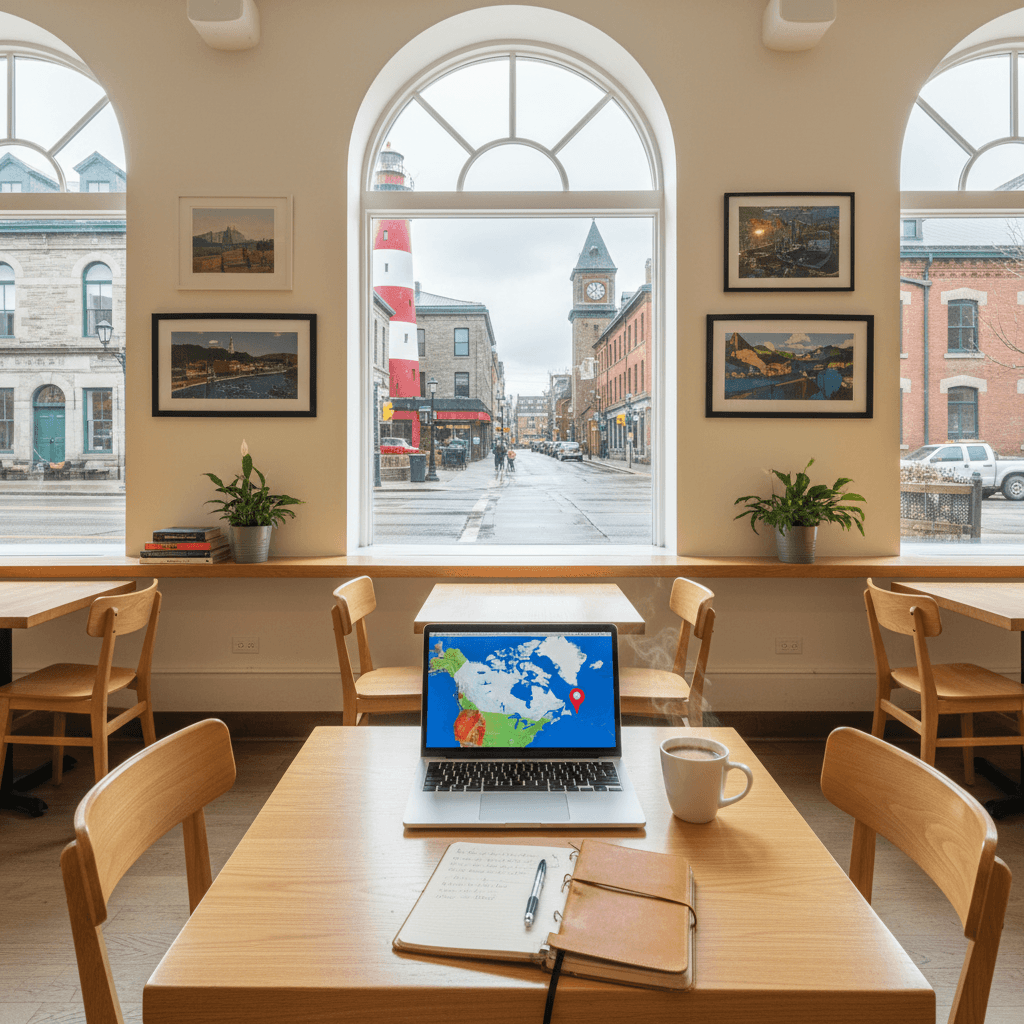
Halifax
🇨🇦 Canada
Halifax feels calm before it feels cool. The waterfront boardwalk, the salty wind, the gulls screaming over the harbor, it all gives the city a Maritime rhythm that’s slower than Toronto or Montreal and frankly, that’s why a lot of nomads stick around.
The upside is real, internet is fast, people are easy to talk to and downtown is walkable enough that you can work, grab coffee and be back at your laptop without touching a car. The downside? Housing bites hard, winter drags on and the nomad crowd is smaller than you might expect, so don’t come here hoping for nonstop coworking buzz.
Day to day, Halifax feels friendly in a plainspoken way. Baristas remember your order, strangers will chat in line and there’s a community-minded streak that makes the city feel less anonymous, though the damp cold in February can get into your bones and stay there.
Where Nomads Tend to Land
- South End: Best for easy downtown access, parks like Point Pleasant and historic homes, but you’ll pay for it and older houses can be a money pit.
- North End: Good for solo travelers who want cafes, a social feel and quick trips to Halifax Commons, though it’s a bit grittier and noisier.
- Clayton Park: Cheaper and more suburban, with bigger spaces and practical shopping, but the commute gets annoying during rush hour.
- Fairmount: Quiet, leafy and settled, which suits expats who want calm nights more than bar-hopping.
Cost-wise, Halifax isn’t cheap for a city this size. A studio or one-bedroom usually runs about $1,513 to $1,841 a month citywide, downtown or the South End can push past $2,200 and a basic nomad budget lands around $2,800 if you keep things tight, then climbs fast once you want a nicer apartment and a few dinners out.
The practical setup is solid, honestly. Bell and Eastlink connections are quick, 5G holds up downtown and places like The Hub, Regus, Shft and Workspace Bayers Lake give you real options, while HFXGO, the ferry and the airport bus make getting around easy enough that you can skip a car unless you’re leaving the city often.
Safety feels decent overall, though some downtown blocks get rough at night and you’ll notice visible addiction and homelessness in certain areas. The food scene leans seafood and pub-heavy, with lobster, craft beer and a few newer spots shaking things up, so Halifax can be quiet some nights, then suddenly loud with music, clinking glasses and the smell of fried fish drifting out onto the street.
Halifax isn’t cheap and the rent bites first. A basic single-person budget starts around $2,800 a month and if you want a decent one-bedroom near downtown, you’ll quickly feel the squeeze, especially in South End or the core where old houses, drafts and glossy listing photos somehow command premium prices.
Most nomads who stay a while end up doing the same math: rent, transit, groceries, then whatever’s left for coffee, beer and the occasional ferry ride. The city has a slower Maritime rhythm, but your bank account won’t always get that memo.
Typical Monthly Costs
- Studio or 1BR rent: about $1,513 to $1,841 citywide
- City-centre 1BR: around $2,102, with central spots often climbing past $2,200
- Outside the core: about $1,683 and Clayton Park can feel a bit kinder at roughly $1,600
- Coworking: The Hub hot desk is about $215 a month
- Transport: $90 monthly bus pass or $3 for a one-way ride
- Meal out: $25 for something inexpensive, $85 for two at a mid-range spot
Food prices are manageable if you cook, though seafood dinners and downtown pints add up fast and honestly, Halifax is the kind of place where a “quick lunch” can turn into a $25 tab without much effort. Groceries are generally less brutal than rent, which, weirdly, is the opposite of how people expect a smaller city to behave.
Where People Tend to Land
- South End: Best for expats and nomads who want downtown access, but it’s pricey and many homes need work
- North End: Best for solo travelers who want cafes, Halifax Commons and a social feel, though there’s some urban grit
- Clayton Park: Best for families or anyone wanting more space, but rush hour commutes can be annoying
- Fairmount: Best for quieter streets and mid-century homes, though nightlife is limited
Internet is solid, which matters when you’re paying Halifax rent and trying to justify it to yourself. Major providers like Bell and Eastlink offer high-speed fiber connections, cafes support laptop work and the coworking scene, turns out, is decent for a city this size, even if the nomad crowd feels smaller than in Montreal or Toronto.
If you’re budgeting carefully, aim for the low end only if you’ve found a deal on housing. Comfortable here usually means $4,500+ a month and once winter hits, with cold rain tapping the windows and wind off the harbor cutting through your coat, you’ll be glad you didn’t cut every corner.
Halifax doesn’t really do loud, glossy neighborhoods. It does walkable streets, salty air off the harbor and winter sidewalks that can feel gritty and mean when the wind cuts through your coat. The tradeoff is simple, it’s pricey and the best area depends on how much noise, commute and rent you can tolerate.
Nomads
- South End: Best for quick access to downtown, the waterfront and quieter residential streets, though rent can jump past $2,200 for a decent 1BR and older homes often need work.
- North End: Better for cafe-hopping and a more social feel, with places like Cafe Lara nearby and easy access to Halifax Commons, but there’s a rougher edge in spots, honestly.
If you want to work from home and still feel plugged into the city, these are the two neighborhoods most nomads circle first. South End is polished and expensive, North End is more casual and weirdly easier to meet people in, especially if you like independent coffee shops, bike lanes and a bit of street noise under your laptop fan.
Expats
- South End: Best if you want prestige, parks like Point Pleasant and easy access to schools and downtown offices.
- Fairmount: Quieter and more residential, with mid-century homes, shopping nearby and less nightlife, which, surprisingly, is exactly why some expats like it.
Expats usually pick South End if budget isn’t the main issue, then settle into the rhythm of short walks, old houses and ferry or bus connections that actually make sense. Fairmount is calmer and that calm matters when the rain is pounding windows and the downtown crowds feel like too much after work.
Families
- Clayton Park: Best for bigger homes, suburban breathing room and practical city access, though rush hour can drag.
- South End: Still popular with families who want parks and top schools, but the rent is brutal and older homes can come with drafty corners and repair headaches.
Clayton Park is the sensible pick if you want space without leaving Halifax behind. It’s cheaper than the South End, around $1,600 for some rentals and you’ll get more square footage, though the commute can feel tedious when Bedford Highway snarls up and the bus is late again.
Solo Travelers
- North End: Best for meeting people, grabbing cheap lunches and staying near the action without being stuck in full-on downtown chaos.
- Downtown edge of South End: Good if you want to be close to bars, coworking at The Hub and the boardwalk, but it’s not cheap.
Solo travelers tend to do best in the North End because it’s easy to build a routine there, coffee, groceries, a walk to the Commons, then a beer somewhere noisy later. Downtown and South End are convenient, sure, but the rent bites hard and after a few weeks you’ll notice how expensive every casual lunch, grocery run and taxi ride can get.
Halifax internet is, honestly, better than a lot of people expect for a smaller coastal city. Bell and Eastlink connections are generally reliable for remote work, with speeds typically in the 60-100+ Mbps range depending on location and plan, and downtown 5G often lands in the 200 to 400 Mbps range, so video calls usually work fine unless your building has awful wiring or the wind has knocked something loose on the waterfront.
The coworking scene is small but decent and the main tradeoff is price. The Hub is the name most nomads mention first, with hot desks around $215 a month, while Regus gives you more corporate polish, plus flexible access plans that start cheaper if you just need a few days here and there. Shft and Workspace Bayers Lake are the other options people keep in their back pocket.
Not cheap. Not dead either. Cafes still matter here and Halifax has a working cafe culture where laptops are normal, though the best spots get noisy fast, with grinders whining, mugs clinking and that damp coffee smell hanging in the air after a rainy walk in from Spring Garden or the North End.
Best areas for working remotely
- South End: Best for easy downtown access, especially if you want parks, older homes and a short walk to meetings, but rents are painful and the housing stock can be fussy.
- North End: Better for a social feel, local cafes like Cafe Lara and a slightly grittier edge, which some solo nomads love and others hate.
- Clayton Park: Cheaper and more practical, with bigger spaces and less rent shock, though commuting in rush hour can be annoying.
- Fairmount: Quiet, residential and decent if you want sleep and groceries nearby, but you won’t find much nightlife.
For internet on the go, a Bell or Telus SIM runs about $24 for 10GB and monthly plans around $58 are common, with eSIMs available if you’d rather skip a store visit. Frankly, that’s handy because Halifax winters are the kind that make you want to stay inside, listen to the rain hit the windows and stop thinking about walking anywhere.
If you’re budgeting, a basic solo setup can start near $2,800 a month, but once you want a nicer apartment and coworking membership, $3,500 disappears fast and $4,500+ feels more realistic for comfort. The city center is pricier, especially South End and downtown, so most nomads who stay longer either compromise on space or move a little outward and accept the bus ride.
Safety & Healthcare
Halifax feels pretty safe overall, especially around the waterfront, the South End and the better-lit parts of downtown. Still, the city’s downtown core has a few streets that get sketchy after dark, with visible drug use, homelessness and that uneasy, empty-at-2-a.m. feeling, so trust your gut and don’t linger when the sidewalks go quiet.
For women and LGBTQ+ travelers, the vibe is generally welcoming and most nomads say they feel fine walking alone in the day. At night, though, use the same street sense you’d use anywhere, because a few blocks can change fast and honestly, Halifax’s wind, darkness and sparse foot traffic make some corners feel harsher than they are.
What to know
- Emergency: Call 911 for police, fire or an ambulance.
- Family doctor: Register through 811, the wait can be annoying.
- Clinic access: Shoppers Drug Mart #138 on Joseph Howe has walk-in style services.
- Health coverage: New arrivals usually need the MSI card setup first.
Healthcare is solid once you’re in the system, but getting a family doctor can take patience and that bureaucracy, frankly, drags. Pharmacies are everywhere, so for basic stuff like flu meds, wound care or a sore throat, you won’t be stranded and the big branches often smell like coffee, aspirin and floor cleaner under harsh fluorescent lights.
Where to be careful
- Downtown late at night: Be alert on quieter blocks.
- Unlit side streets: Avoid wandering when the bars empty out.
- Transit stops after hours: Stick to busier, well-lit areas.
The good news is that you can keep things simple. Use main streets, take rideshares if you’re tired and don’t cut through half-lit lots when the salt air is cold and the harbour wind is biting your face, because that’s when a small issue feels bigger than it should.
Most nomads settle into a normal routine, coffee shop in the day, seawall walk at lunch, then home before the streets thin out. That’s the rhythm here and it works, just don’t get lazy about the late-night corners.
Halifax is easy to get around, but it won’t feel slick like Toronto or Montreal. The center is compact, the waterfront is walkable and the buses do a decent job if you’re patient, though winter slush and wind off the harbor can make a simple trip feel longer than it should.
Walking: This is the best way to handle downtown, the waterfront boardwalk, Spring Garden and most of the South End. You’ll hear gulls, bus brakes and the odd construction jackhammer and honestly, that’s half the city’s soundtrack.
Transit: Halifax Transit buses and ferries run through the HFXGO app, a one-way ride is about $3 and a monthly pass is roughly $90. Routes can be slow during rush hour, especially if you’re coming from Clayton Park or farther out, so leave buffer time unless you enjoy standing in damp wind, checking your phone and watching one bus after another bunch up.
- Bus pass: About $90 monthly
- One-way fare: About $3
- Airport bus: Regional Express 320, about $4.75 to downtown
- Airport taxi: Fixed fare around $64 to downtown
Rideshares: Uber and taxis are handy for late nights or bad weather and a short trip of around 3 km can run about $4, which sounds cheap until surge pricing kicks in. The cars are useful, though the app can feel like a lifesaver on icy nights when the sidewalks are basically a skating rink.
Bike and e-bike: Cycling works best in warmer months, not deep winter and you’ll see more people on e-bikes downtown than you might expect. The terrain isn’t brutal, but Halifax has plenty of hills, so your legs will know it by the end of the day.
Where nomads actually stay
- South End: Best for walking to downtown and the universities, but it’s pricey, often around $2,200+ for a one-bedroom
- North End: Good cafes and a social feel, though the streets can feel gritty in spots
- Clayton Park: Cheaper and more suburban, but commute times bite during rush hour
If you’re working remotely, plan your life around a few anchors, your apartment, one coworking space and the bus routes that actually show up. The city’s size works in your favor, turns out, because once you know the main corridors, Halifax feels less like a maze and more like a place you can cross without drama.
Halifax is English-first, plain and simple. You won’t be wrangling French menus or bureaucratic translation headaches and most people speak clearly, even if the Maritime accent gets a bit chewy around the edges, with the odd “right wicked” tossed in for emphasis.
That said, locals can talk fast when they’re relaxed and a few Cape Bretonisms or old-school Maritime turns of phrase may leave you blinking for a second, honestly. Google Translate barely gets a workout here, but it’s handy if you’re tired, cold and trying to decipher a handwritten note or a pharmacy label.
For day-to-day life, communication is easy. In cafes, coworking spaces like The Hub and downtown shops, people are used to transplants, students and remote workers asking dumb questions, so you’ll usually get a patient answer, sometimes with a little chat about the weather, the rent or the ferry.
What to expect
- Main language: English everywhere, from leases to doctor visits.
- Local flavor: Maritime slang pops up, especially in casual conversation.
- Barrier level: Low, unless you’re thrown by slang or a heavy accent.
- Best backup: Use Google Translate for forms, menus or the occasional confused pharmacy run.
People are generally friendly, but they’re not fake-friendly, which, surprisingly, makes conversations easier. If you need help, ask directly, keep it short and don’t expect the overexplained Toronto-style customer service script, because Halifax tends to be more low-key, more practical and a little rough around the edges.
One thing to watch, especially if you’re new in town, is that small talk can run long. Cashiers, baristas and neighbors may want to talk about the wind off the harbour, the smell of wet pavement after a downpour or why February feels like it lasts six months, so don’t rush it if you want to fit in.
Useful communication tips
- Be direct: People prefer clear, plain requests.
- Keep your pace relaxed: Rushing can feel rude.
- Learn a few local terms: It helps in casual settings.
- Use text and email: For rentals, appointments and admin, written communication goes smoother.
If you’re dealing with landlords, service providers or healthcare staff, written English matters more than polish. Halifax paperwork can still be annoyingly slow, but at least you’re not fighting a language barrier while you wait for a reply that should’ve taken two days and somehow took nine.
Halifax feels best from June through September, when the air sits around 20 to 22°C and you can actually enjoy the waterfront without your jacket turning into a damp paper towel. The city has a humid continental thing going on, so summer is mild, spring arrives late and winter hangs around like an uninvited guest. Not cheap. Not tropical either.
August is usually the warmest month and that’s when the boardwalk gets noisy with gulls, buskers and the slap of ferry wake against the harbor. July tends to be the driest stretch, which, surprisingly, makes it a smart window for day trips to Peggy's Cove or longer drives toward the Cabot Trail. If you want patios, walkable evenings and the least amount of weather whining, this is your slot.
Best Time by Travel Style
- For outdoor time: June to September, especially July and August.
- For lower stress: Late spring or early fall, when crowds thin out.
- For budget hunters: Shoulder seasons can be easier on housing and flights.
- For winter lovers: Only if you really like cold rain, icy sidewalks and grey skies.
December through March is the rough patch. February is the coldest month, around 0°C, but the real annoyance is the damp, the kind that seeps into your shoes and sticks to your skin, then makes every sidewalk feel slick and half-frozen. Rain also piles up in late fall and early winter, with December getting the most, so expect wet coats, fogged glasses and a lot of waiting for buses in the wind.
What to Expect Seasonally
- Summer: Mild, walkable and alive around the waterfront.
- Fall: Good weather, crisp air and fewer tourists.
- Winter: Cold, damp and honestly pretty draining.
- Spring: Slow to warm up, with lots of grey days.
If you’re coming as a digital nomad, plan around weather first and rent second, because Halifax housing is pricey year-round and winter cabin fever gets old fast. South End and downtown keep you close to cafes, coworking spots like The Hub and the boardwalk, but you’ll pay for it, while places like Clayton Park are cheaper and a bit more practical when the snow turns to slush. The city is walkable, yes, though in January that walk can feel like a dare.
My take? Aim for late June or early September. You’ll get decent temperatures, a friendlier waterfront and far less misery than the wet, freezing months that make Halifax feel smaller than it's. Weirdly, that’s when the city makes the most sense.
Halifax moves at a calmer clip than Toronto or Vancouver, which is nice until you hit the housing market. It’s a pretty safe city overall, the waterfront smells like salt and fry oil in summer and people will chat with you in line, on the bus, anywhere.
Money first. A basic single or studio usually lands around $2,800 a month if you’re keeping it lean and decent central one-bedrooms can push past $2,100, so don’t arrive assuming East Coast rent means cheap rent. Not cheap. South End and downtown are the priciest, Clayton Park is easier on the wallet and a furnished short-term place through Airbnb can be the least painful way to land while you hunt.
Where nomads tend to land
- South End: Best if you want to walk to downtown, Point Pleasant and good schools, but the older homes and higher rents can sting.
- North End: More social, more cafes, more character and yes, a bit more grit around the edges.
- Clayton Park: Quieter and cheaper, with a suburban feel, though rush hour can be annoying.
- Fairmount: Calm streets, mid-century houses, fewer late-night options.
Internet is, honestly, one of Halifax’s best surprises. Bell and Eastlink usually give you speeds that feel modern, coworking is solid and places like The Hub and Regus make remote work painless if your apartment has thin walls, which, surprisingly, happens a lot. Cafes here do support laptop culture, just buy something, because nobody likes a freeloading glow-stick at noon.
SIMs and payments are easy. Pick up Bell or Telus at the airport or a mall, expect around $24 for 10GB and keep a card handy because cash really isn’t king here. Wise works well, ATMs usually spit out CAD 100 bills and you’ll tip 15 percent without making it a moral debate.
- Coworking: The Hub hot desk is about $215 a month, Regus can work for day access if you just need a desk.
- Transport: Halifax Transit is decent, the monthly pass is about $90 and HFXGO makes planning less painful.
- Airport ride: The 320 bus is cheap, taxis run a fixed fare to downtown and Uber’s there when it’s raining sideways.
- Healthcare: Register for MSI early, then use 811 if you need a family doctor or clinic advice.
For time off, go to Peggy’s Cove, not the airport parking lot of souvenir shops some people call sightseeing. Day trips are easy, the wind can be sharp and metallic off the harbor and if you stay through winter, pack for damp cold that gets into your bones and stays there.
Need visa and immigration info for Canada?
🇨🇦 View Canada Country GuideEasy Landing
Settle in, no stress