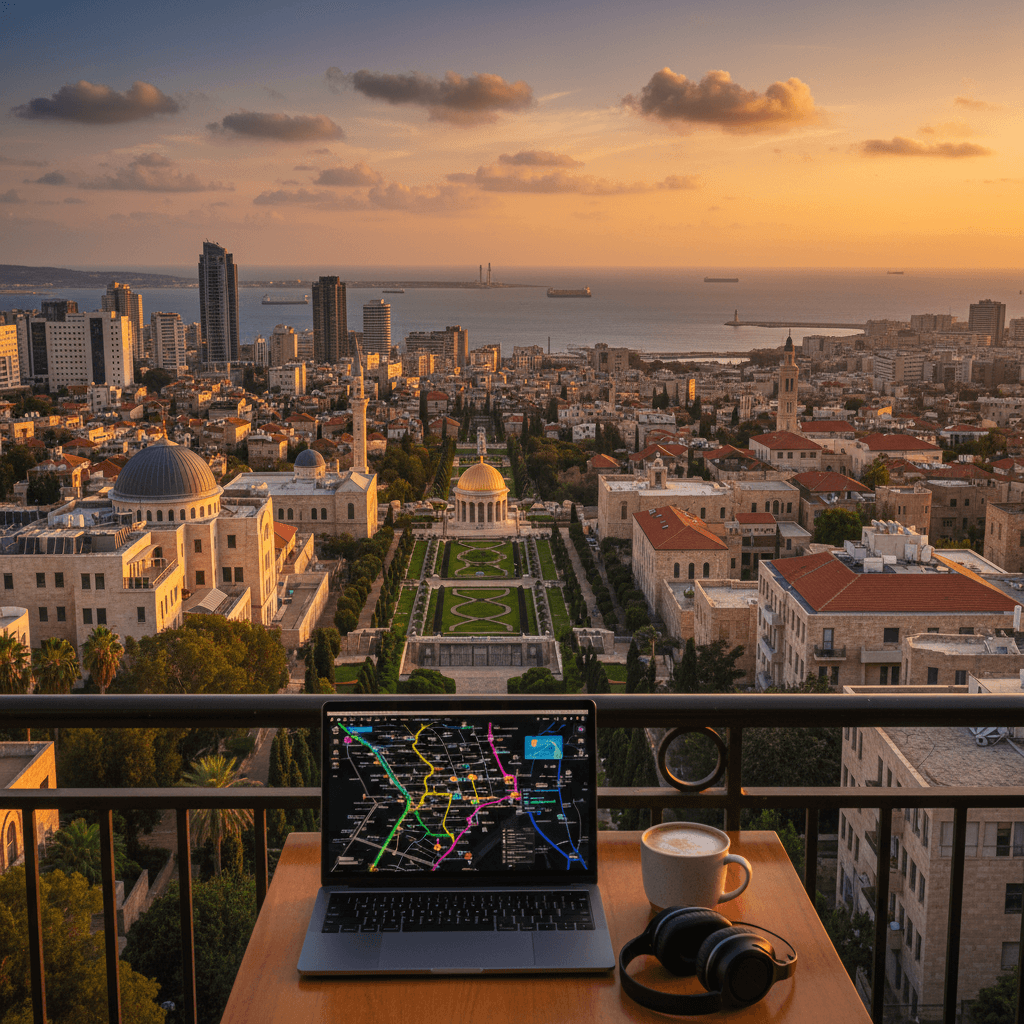
Haifa
🇮🇱 Israel
The Middle Ground with a View
If Tel Aviv is the hyperactive younger sibling who never sleeps, Haifa is the thoughtful, slightly more bohemian older sister who knows exactly where to find the best hummus and the quietest workspace. Built into the slopes of Mount Carmel, this city offers a rare Mediterranean trifecta: mountain air, sea breezes, and a tech scene that rivals the big players down south. It feels grounded. You'll notice it in the way the Jewish and Arab communities share the streets and the way the pace slows down just enough to actually enjoy your morning espresso.
Nomads usually land here when they want the Israeli startup energy without the eye watering prices of Tel Aviv. It is a city of layers, literally and figuratively. You can spend your morning working from a high tech hub near the Technion, your afternoon wandering the manicured terraces of the Bahai Gardens, and your evening drinking craft beer in the German Colony. It is less about the "see and be seen" party culture and more about meaningful networking and a balanced lifestyle.
The Financial Reality
Living here isn't exactly cheap compared to Southeast Asia, but your shekels go much further than they would in central Israel. Most nomads find that a monthly budget of $2,500 allows for a very comfortable lifestyle, including a private apartment and frequent dining out. If you are willing to live like a local student in a shared flat, you can scrape by on $1,000, though that is pushing it in today's economy.
- Budget Tier (~$1,000): Shared housing in Hadar for around $600, sticking to street food like $7 falafel, and using the bus system.
- Mid-range (~$2,500): A private 1BR in the German Colony or lower city for $1,000, regular cafe work sessions, and a dedicated coworking desk.
- Comfortable ($3,500+): Upscale living in the Carmel Center for $1,500+, nightly restaurant dinners, and all the bells and whistles of a modern gym and private transport.
Where to Plant Your Laptop
Choosing a neighborhood in Haifa is mostly a question of how much you like hills. The city is divided by elevation, and your choice will dictate your daily cardio. Most remote workers gravitate toward these three spots:
German Colony
- The Vibe: The heart of the nomad scene. It is scenic, historic, and packed with stone buildings and cafes.
- Pros: Extremely walkable, close to the train station, and home to the best nightlife.
- Cons: It is a tourism magnet, so expect higher prices and occasional crowds.
Hadar
- The Vibe: Gritty, authentic, and central. This is where the real city life happens.
- Pros: The most affordable rentals and the best street food markets. Great transport links.
- Cons: It can feel a bit chaotic and lacks the polished beauty of the upper mountain.
Carmel Center
- The Vibe: Leafy, quiet, and upscale. This is where families and established expats hang out.
- Pros: Incredible views of the bay and a much cooler breeze during the humid summer.
- Cons: You will be reliant on the Carmelit (the underground funicular) or buses to get anywhere else.
Connectivity and Workflow
You won't have to worry about the internet. Haifa is a tech city, and the speeds reflect that. Expect average downloads around 407 Mbps, which is more than enough for 4K streaming or heavy dev work. Most cafes in the German Colony are nomad friendly, though it is polite to keep your stay to a few hours if they are busy.
For a dedicated setup, coworking spaces start around 1,489 ILS (about $400) per month. If you need a local SIM, expats recommend grabbing an eSIM from Holafly or a local prepaid card from Partner or Cellcom for cheap, reliable data. The city is also surprisingly well connected by rail; the train has free WiFi and can zip you to Tel Aviv in about an hour if you need a change of scenery.
The Social Fabric
Connecting with people is easier here than in many European cities. The "Haifa bubble" is real; people are generally approachable and proud of their city's reputation for coexistence. You'll find a mix of international students from the Technion, tech workers, and a growing expat community. English is widely spoken, especially among the younger crowd, but learning a few words of Hebrew or Arabic will earn you some serious respect at the local market.
One thing to keep in mind is Shabbat. From Friday sunset to Saturday sunset, the city slows down significantly. While Haifa is more "open" than Jerusalem during this time, public transport is limited, and many shops close. Use it like the locals do: as a mandatory excuse to head to the beach or hike the trails of Mount Carmel.
The Reality of Your Wallet in Haifa
Haifa is often described as the laid back cousin to Tel Aviv, and your bank account will certainly feel the difference. While it's not exactly a budget destination by global standards, you'll find your Shekels stretch much further here than in the center of the country. Expect a monthly burn rate of around $2,500 USD for a comfortable mid range lifestyle that includes a private apartment and regular outings.
If you're willing to live like a local student in the Hadar neighborhood, you can scrape by on $1,000 USD a month, but that involves shared housing and a heavy reliance on $7 USD falafel pita. On the flip side, if you want a furnished short term rental in the German Colony with all the bells and whistles, your monthly costs can easily climb north of $3,500 USD.
Breaking Down the Budget
- Housing: Long term 1BR apartments in central areas usually run around $1,000 USD. Short term nomad rentals are significantly pricier, often hitting $3,200 USD for fully managed spaces.
- Food and Drink: A casual meal at a cafe costs about $20 USD, while a high end dinner will run you $50 USD or more. Most nomads spend roughly $580 USD a month on groceries from local markets.
- Connectivity and Work: A dedicated desk at a coworking space averages 1,489 ILS (about $400 USD) per month. Mobile data is cheap and fast; grabbing an eSIM from Holafly or a local SIM from Partner is the standard move.
- Transport: Monthly bus and light rail passes cost around $100 USD. Use the Gett app for rideshares when the hills of the Carmel get too steep to walk.
Where to Plant Your Laptop
The German Colony is the undisputed hub for expats and solo travelers. It's walkable and packed with historic architecture and cafes with solid WiFi. You'll pay a premium for the location, but the proximity to the beach and the nightlife on Ben Gurion Street makes it worth the extra cash.
Hadar is the choice for those who want to be in the thick of the city's commercial energy. It's grittier and busier than the upscale areas, but the rent is lower and the street food options are endless. It's the best spot for finding a cheap SIM card or a quick repair for your tech.
Carmel Center sits at the top of the mountain and offers the best views in the city. It's quiet, residential, and pricier, with 1BR apartments starting at $1,500 USD. It's a bit of a trek from the main nomad action, but the air is cooler and the vibe is much more relaxed.
Practical Spending Tips
Most nomads recommend using Wise or Payoneer to manage funds and avoid the steep fees at local bank branches. When it comes to finding an apartment, skip the expensive international agencies and check Yad2 or local Facebook groups, though you might need Google Translate to navigate the listings.
Keep in mind that Shabbat (from Friday evening to Saturday evening) changes the economic flow of the city. Most public transport stops and many shops close down, so you'll want to stock up on groceries or budget for the few restaurants that stay open in the multicultural districts. The internet here is blazing fast, often hitting 400 Mbps, so you won't need to spend extra on premium data packages just to get your work done.
Haifa isn't just a single vibe; it's a vertical city where your experience changes based on how far up the mountain you live. Unlike the flat, frantic energy of Tel Aviv, Haifa feels like a series of interconnected villages. You'll find that where you unpack your bags depends heavily on whether you're here to grind at a laptop, raise a family, or just soak in the Mediterranean sun.
For Digital Nomads: The German Colony & Hadar
If you want to be in the thick of it, the German Colony (Moshava Hagermanit) is the undisputed home base for the remote work crowd. It sits at the foot of the Bahai Gardens, where 19th-century stone houses have been converted into some of the city's best cafes. Nomads frequent this area because the Wi-Fi is reliable and the "work from anywhere" culture is deeply ingrained. You can expect to pay around $1,000 for a long-term studio, though short-term furnished rentals can spike toward $3,200. It's lively, a bit touristy, and perfect for those who want nightlife right outside their door.
For those on a tighter budget or looking for a more "authentic" urban grit, Hadar is the move. It's the city's commercial heart, filled with street food stalls selling $5 falafel and massive open-air markets. It's busier and lacks the manicured beauty of the Colony, but it’s the best place to find affordable rooms and easy bus connections to the rest of the city. Many younger travelers prefer the raw energy here, and it's where you'll find the most diverse mix of people.
- German Colony Rent: $1,000 to $3,200 depending on lease length
- Hadar Rent: Generally 20-30% cheaper than the Colony
- Vibe: Social, walkable, and high-energy
For Expats & Long-Termers: Carmel Center
Expats who plan to stay for a year or more often gravitate toward Carmel Center (Merkaz HaCarmel). Situated at the top of the ridge, this neighborhood feels like a different world. It’s cooler, greener, and offers those famous panoramic views of the bay. The pace is significantly slower here; it's less about the hustle and more about boutique shopping and quiet dinners.
Living here requires a bit more "climb," both literally and financially. Rent for a decent one-bedroom usually starts at $1,500. While it's upscale, it isn't isolated. You'll find plenty of English-speaking professionals and a high standard of living. Just keep in mind that the hills make walking a workout, so you'll likely rely on the Carmelit (the underground funicular) or apps like Gett to get around.
- Carmel Center Rent: $1,500+
- Best for: People who value quiet nights and sea views
- Transport: Hilly terrain; better for those with cars or using ride-shares
For Families: Upper Carmel & Denya
Families moving to Haifa almost exclusively look at the upper elevations. These neighborhoods are residential, safe, and close to the city's best schools and parks. Denya is the most prestigious, known for large villas and quiet streets, though it's quite far from the downtown action. Most expat families find a happy medium in the quieter pockets of the Carmel area, where playgrounds are plentiful and the air is cleaner than the port-adjacent lower city.
- Pros: High safety ratings, proximity to Rambam Medical Center, and great schools
- Cons: Pricier groceries and a lack of "walkable" nightlife
- Monthly Budget: Families should plan for $3,500+ to live comfortably
For Solo Travelers: Downtown (Haifa Tahtit)
If you're traveling solo and want to meet people quickly, the Downtown area near the port is undergoing a massive revival. It’s become a hub for the startup scene and the Technion crowd. You'll find coworking spaces like those near the university starting around 1,489 ILS (roughly $400) per month. The social scene here is built around bars and late-night eateries, making it easy to strike up a conversation with locals or other international travelers over a craft beer.
- Social Scene: High concentration of students and tech workers
- Connectivity: Best access to the central train station for day trips to Tel Aviv or Akko
- Language: Very high English proficiency in this district
Connectivity and Speed
You won't have to worry about the "spinning wheel of death" here. Haifa's internet infrastructure is surprisingly robust, often outperforming its bigger sibling, Tel Aviv. Local speeds are among Israel's top fixed broadband rankings (global top 15), making it a dream for anyone handling 4K video uploads or constant Zoom calls. Most apartments come equipped with high speed fiber optics, and the power grid is reliable enough that you won't need to scout for "power outage backup" cafes.
Staying connected on the move is just as easy. The city's public transport system, including the trains and buses, usually provides free WiFi that actually works. For mobile data, most nomads skip the airport kiosks and grab an eSIM from Holafly or a local physical SIM from Partner or Cellcom. Data is cheap and 5G coverage is widespread throughout the urban areas, so you can tether your laptop at a park without much fuss.
Coworking Spaces
While Haifa doesn't have the sheer volume of coworking hubs you'll find in Tel Aviv, the quality is high and the vibe is far more focused. Expect to pay around 1,489 ILS (roughly $400 USD) per month for a dedicated desk. These spaces are often filled with engineers from the Technion or researchers from the local tech parks, giving the rooms a serious, intellectual energy.
- The Technion Area: This is the heart of the city's innovation. You'll find several smaller, boutique hubs here that cater to the startup crowd. It's the best place to network if you're in the tech or biotech sectors.
- Downtown/Hadar: These areas are seeing a rise in shared offices that cater to creatives and independent freelancers. They tend to be more affordable and are surrounded by the city's best street food.
- The German Colony: While more famous for its tourism, you'll find flexible workspaces here that allow you to jump from a morning meeting to a walk near the Bahai Gardens in minutes.
Cafe Culture and Remote Work
If you prefer the hum of a coffee shop over a sterile office, the German Colony and Hadar are your best bets. Haifa has a very strong "laptop culture," and most baristas won't bat an eye if you settle in for a few hours, provided you keep the coffee flowing. The cafes along Ben Gurion Avenue offer some of the best views in the city, though they can get a bit loud with tourists during the weekends.
For a quieter atmosphere, head up the hill to the Carmel Center. The cafes here are tucked away in more residential, leafier streets. They offer a peaceful environment for deep work, though keep in mind that prices for a latte or a sandwich will be slightly higher in this upscale neighborhood. Just remember that many local spots close or have limited hours from Friday sunset to Saturday sunset for Shabbat, so plan your deadlines accordingly.
Practical Tips for Nomads
Setting up your home office in Haifa is straightforward. Most short term rentals found on platforms like Yad2 or local Facebook groups include utilities and high speed internet in the price, which usually sits around $3,266 USD for a fully furnished nomad ready apartment. If you're staying longer, you can find unfurnished spots in Hadar for closer to $1,000 USD, but you'll need to set up the router yourself.
- Best for Video Calls: Private booths in coworking spaces near the Technion.
- Best for Casual Admin: Cafes in the German Colony with outdoor seating.
- Reliability: 9/10. Outages are rare and the infrastructure is modern.
- Cost: Mid range. It's cheaper than Tel Aviv but more expensive than Eastern European nomad hubs.
Haifa is widely regarded as one of Israel's most inclusive and stable cities. While Tel Aviv gets the headlines for its party scene, Haifa is where people go for a grounded, multicultural experience. It has a long history of Jewish and Arab communities living side by side, which contributes to a generally peaceful and respectful atmosphere that most nomads find refreshing.
Personal Safety and Local Vibes
You'll likely feel very safe walking around the German Colony or Hadar at night. The city doesn't have specific "no-go" zones, though general urban common sense applies. Keep an eye on your belongings in crowded markets, but violent crime is remarkably low.
Expats often mention that the biggest "danger" in Haifa is the terrain. The city is built on Mount Carmel, and the steep slopes can be a workout. If you're staying in the Carmel Center, be prepared for winding roads and plenty of stairs. If you ever feel lost or need help, locals are usually happy to assist in English, especially around the university areas and tech hubs.
Emergency Contacts
It is best to save these numbers in your phone as soon as you land. The operators are used to dealing with international residents and usually speak English well.
- Police: Dial 100
- Ambulance (Magen David Adom): Dial 101
- Fire Department: Dial 102
Tier-One Healthcare
Israel's healthcare system is world class, and Haifa is a major medical hub for the north of the country. If you have a serious issue, Rambam Medical Center is the primary facility. It is a massive, highly advanced teaching hospital located near the Bat Galim neighborhood. For less urgent matters, Bnai Zion and Carmel Medical Center are also excellent options.
Most digital nomads use private travel insurance like SafetyWing or World Nomads. If you need a routine checkup or a prescription, look for a "Kupat Holim" (health fund) clinic. Pharmacies are everywhere, with Super-Pharm being the most common chain. You can find almost any over the counter medication there, and the pharmacists are highly trained and can often give advice for minor ailments.
Health Tips for Nomads
- Tap Water: The water in Haifa is perfectly safe to drink. It might taste a bit "hard" due to mineral content, so many locals use a Brita filter, but you don't need to rely on bottled water.
- Sun Protection: The Mediterranean sun is brutal from May to September. Even if there is a breeze, you will burn quickly. Wear SPF 30+ if you are walking the Bahai Gardens or hanging out at the beach.
- Pharmacies: Be aware that many pharmacies close early on Friday afternoon for Shabbat and don't reopen until Saturday evening or Sunday morning. Plan your refills accordingly.
- Stay Hydrated: If you are hiking the trails around the Technion or Mount Carmel, carry more water than you think you need. The humidity in the summer can lead to dehydration faster than you'd expect.
Overall, the peace of mind you get in Haifa is a major draw. Between the high density of doctors per capita and the community oriented policing, it's a city where you can focus on your work without constantly looking over your shoulder.
The Vertical Challenge
Haifa is built on the slopes of Mount Carmel, which means your choice of transport depends entirely on your altitude. The city is laid out in tiers. If you are staying in the German Colony or Hadar, you can get around plenty on foot. However, if you are heading up to the Carmel Center for dinner or a meeting, you will quickly realize that Haifa is not flat. Most nomads find that while the views are better from the top, the walk up is a workout you might want to skip in the summer humidity.
Public Transit and the Carmelit
The city has one of the most unique transit systems in Israel. The Carmelit is an underground funicular railway that acts like a vertical subway. It is the fastest way to travel between the lower city and the ridge of Mount Carmel, hitting six stations including Paris Square and Gan HaEm. It saves you a massive climb and is a favorite for locals commuting from the residential heights to the tech hubs below.
For everything else, the bus network is extensive and reliable. Most buses and trains come equipped with free WiFi, making it easy to catch up on Slack while moving between neighborhoods. You will want to download Moovit or Google Maps to track arrival times in real time. Keep in mind that Haifa is one of the few places in Israel where some public transport continues to run on Shabbat (Friday evening through Saturday), though the schedule is significantly reduced compared to weekdays.
Apps and Ridesharing
If you are running late for a coworking session or the weather is too hot for the bus, Gett is the go to app for hailing taxis. It works just like Uber or Lyft; you see the price upfront and pay through the app. While standard Uber exists in Israel, it mostly functions as a taxi hailing service rather than private cars. Expect to pay around $15 to $25 for a cross city trip depending on traffic and the time of day.
Cycling and Scooters
Electric scooters and bikes have taken over the flatter parts of the city. You will see them scattered around the German Colony and the port area. They are perfect for ziping along the coast or through the lower city streets. Just be cautious; the hills in the upper neighborhoods are too steep for most rental scooters to handle comfortably, and you will likely end up walking the bike up the incline.
Regional Travel
Haifa is a major railway hub, making it a perfect base for exploring the north or heading into Tel Aviv. The train journey to Tel Aviv takes about an hour and costs roughly $8 to $10. The trains are comfortable, air conditioned, and usually have reliable power outlets. If you are arriving from overseas, the train from Ben Gurion Airport takes about 90 minutes and drops you right in the center of the city at the Haifa Center HaShmona station.
Practical Transport Costs
- Monthly Transport Pass: Approximately $60 to $100 depending on the zones covered.
- Single Bus Fare: Around $1.60.
- Gett Taxi (Short Trip): Between $10 and $15.
- Train to Tel Aviv: Roughly $9 one way.
Most expats recommend getting a Rav-Kav card immediately. This is a green smartcard you can load with credit to use on all buses, trains, and even the Carmelit. You can top it up using an app on your phone, so you never have to worry about carrying cash for the driver.
Getting by with English and Local Tongues
You won't have much trouble communicating in Haifa. While Hebrew and Arabic are the official languages, English is widely spoken, especially in the areas where you'll likely spend your time. If you're hanging out in the German Colony or working from a cafe near the Technion, you'll find that most locals, shopkeepers, and fellow remote workers speak English with a high level of proficiency.
The city's unique demographic mix means you'll hear a symphony of languages on the street. It's a true multicultural hub where Hebrew and Arabic coexist naturally. Because of the large Russian-speaking immigrant population, you'll also hear plenty of Russian in neighborhoods like Hadar. This linguistic diversity makes the city feel approachable; locals are used to people from all over the world and are generally patient if you're struggling to find the right word.
Useful Phrases and Social Etiquette
Even though English gets you far, tossing out a few Hebrew or Arabic words goes a long way in building rapport. Most nomads quickly pick up Shalom (Hello/Peace) and Toda (Thanks). In Arabic, Marhaba (Hello) and Shukran (Thank you) are equally appreciated. It's common to hear these used interchangeably in Haifa's mixed neighborhoods.
One thing to keep in mind is the shift during Shabbat. From Friday sunset to Saturday sunset, the city slows down. While Haifa is more lenient than Jerusalem, public transport becomes limited and many businesses close. Understanding this rhythm is part of "speaking the local language" of the city. You'll want to plan your grocery shopping and travel accordingly so you aren't caught off guard.
Tech and Tools for Communication
For everything else, technology fills the gaps. Most digital nomads rely on Google Translate for reading menus in smaller spots or deciphering signs in residential areas. The app's camera feature is particularly handy for scanning labels at the supermarket. For getting around, Gett is the go-to app for rideshares, and it operates entirely in English, so you don't have to worry about explaining your destination to a driver.
Staying connected is cheap and easy. You can grab an eSIM from Holafly before you land, or pick up a local SIM from providers like Partner or Cellcom. Data is incredibly affordable here, and since Haifa's internet speeds are impressive, with Israel's fixed broadband ranking among the world's top 15, you'll never be out of touch. Whether you're on a Zoom call from a cafe or using WhatsApp, which is the primary way everyone here communicates, you'll find the infrastructure supports a seamless remote work lifestyle.
The Social Context
Communication in Haifa is direct but friendly. Don't be surprised if a conversation with a barista turns into a networking opportunity. The startup scene is closely tied to the universities, and the "intellectual energy" travelers often mention isn't just a vibe; it's a reality. People are generally curious about why you've chosen Haifa over Tel Aviv, and being a digital nomad often serves as a great conversation starter in the local coworking spaces and cafes.
- Primary Languages: Hebrew, Arabic
- Common Second Languages: English, Russian
- Essential Apps: WhatsApp, Google Translate, Gett
- English Proficiency: High in tourist and academic hubs
The Mediterranean Sweet Spot
Haifa is a bit of a weather anomaly in Israel. Because it sits on the slopes of Mount Carmel, you get a refreshing breeze that Tel Aviv often lacks. The climate is classic Mediterranean, staying between 10°C and 25°C (50°F to 77°F) most of the year. It rarely gets bone-chillingly cold, but the humidity in the peak of summer can be a reality check if you aren't prepared for it.
Most nomads find that the city feels most alive when the air is crisp and the sun is out but not punishing. You'll see the cafes in the German Colony spill out onto the sidewalks, and the hikeable stairs connecting the lower city to the Carmel Center become much more manageable when you aren't sweating through your shirt.
Peak Season: Spring and Fall
If you want the absolute best conditions for working from a terrace or exploring the Bahai Gardens, aim for March through May or September through October. These shoulder seasons are the goldilocks zones. The temperatures hover in the low 20s°C (70s°F), and the rainfall is minimal.
Spring is particularly stunning because the Carmel mountain range turns a deep green after the winter rains. It is the best time for weekend trips to the nearby Druze villages or local beaches like Bat Galim before the summer crowds arrive. Fall is equally pleasant, though you should keep an eye on the Jewish High Holidays, as many businesses close and public transport pauses for days at a time during this period.
The Summer Sizzle (July and August)
Summer in Haifa is intense. While the mountain elevation helps a little, July and August bring high humidity and temperatures that frequently climb above 30°C (86°F). If you are a fan of the beach and don't mind a bit of a sweat, you'll love it, but for those who need to stay productive, air conditioning becomes your best friend.
Expats recommend sticking to indoor coworking spaces or the air-conditioned malls during the afternoon heat. This is also when the city feels most crowded with domestic tourists, so expect higher prices for short-term rentals and busier restaurants in the German Colony.
The Rainy Season (November to February)
Winter isn't harsh, but it is wet. Haifa receives most of its annual rainfall between November and February. When it rains here, it usually pours, sometimes turning the steep streets into temporary streams. Temperatures rarely drop below 10°C (50°F), so you won't need a heavy parka, but a solid waterproof jacket and an umbrella are mandatory.
The upside to a Haifa winter is the "Holiday of Holidays" in December. Since the city is a hub for Jewish, Christian, and Muslim communities, the German Colony lights up with decorations for Hanukkah, Christmas, and Ramadan. It is a cozy, festive time to be in the city, provided you don't mind the occasional grey sky.
Seasonal Planning Checklist
- Best for Outdoor Work: April, May, and October. The WiFi reaches the patios, and the weather is perfect.
- Cheapest Accommodation: January and February. You can often negotiate better rates on monthly stays when the tourist flux dies down.
- Busiest Times: August and late September. Jewish holidays and summer break mean fully booked hotels and lively, loud nights.
- Packing Tip: Layers are your friend. Even in the summer, the breeze at the top of the Carmel Center can feel cool once the sun goes down.
Living Costs and Budgeting
Haifa is generally more affordable than Tel Aviv, but you still need to plan your budget carefully. A $2,500 USD monthly budget puts you in the sweet spot for a comfortable mid-range lifestyle. This covers a nice one-bedroom apartment, frequent cafe visits, and a few nights out in the German Colony.
If you're watching your pennies, you can get by on about $1,000 USD by sharing a flat in Hadar and sticking to local street food. On the flip side, luxury living with a high-end furnished rental and upscale dining will easily push you past $3,500 USD a month.
- Housing: Expect to pay around $1,000 USD for a long-term studio. Short-term nomad rentals are much pricier, sometimes reaching $3,200 USD for fully serviced units.
- Food: A quick falafel or shawarma lunch costs $5 to $10 USD. A dinner for two at a mid-range spot usually lands around $40 to $50 USD.
- Coworking: Dedicated desks start at roughly 1,489 ILS ($400 USD) per month.
The Neighborhood Breakdown
German Colony is the go-to for most nomads. It's the heart of the social scene with restored stone buildings and a massive selection of cafes. It's walkable and close to the beach, though you'll pay a premium for the location and deal with some weekend noise.
Hadar is the gritty, commercial soul of the city. It's where you'll find the best market prices and a more authentic, lived-in feel. It's well-connected by bus, though it lacks the scenic polish of the upper neighborhoods.
Carmel Center sits at the top of the mountain. It's quiet, green, and offers incredible views of the bay. Expats with families often land here for the safety and slower pace, but keep in mind that the hilly terrain makes walking a workout. You'll rely on the Carmelit underground funicular or buses to get down to the action.
Internet and Remote Work
You won't have to worry about connectivity here. Haifa's speeds are impressive, often averaging 407 Mbps download. Most cafes in the German Colony are friendly to laptop users, and the power grid is rock solid. For a more professional setup, look for coworking spaces near the Technion university where the tech crowd hangs out.
Pick up a local SIM from Partner or Cellcom for the best data rates. If you want to hit the ground running, an eSIM from Holafly works well. For banking, most nomads use Wise or Payoneer to avoid high local bank fees.
Getting Around
The public transport system is excellent. Buses and trains come equipped with free WiFi, and the train ride to the airport takes about 30 to 60 minutes. For quick trips, download Gett; it's the standard ride-hailing app in Israel. While the German Colony is flat and walkable, you'll want to use the bus or a scooter for anything involving the Carmel mountain slopes.
Cultural Nuances
The most important thing to remember is Shabbat. From Friday sunset to Saturday sunset, much of the city slows down. While Haifa is more flexible than Jerusalem, many shops close and public transport is limited. It's a great time to head to the beach or enjoy a long lunch in the multicultural restaurants that stay open.
English is widely spoken, especially among the younger crowd and in tech circles. However, learning a few Hebrew words like Shalom (hello/peace) and Toda (thanks) goes a long way with the locals. The vibe is relaxed, but people are direct; don't take the blunt communication style personally.
Safety and Health
Haifa is consistently rated as one of the safer cities for expats. You can walk most areas at night without worry, though staying aware of your surroundings is always smart. If you need medical care, Rambam Medical Center is a world-class facility located right in the city. For emergencies, dial 101 for an ambulance or 102 for police.
Need visa and immigration info for Israel?
🇮🇱 View Israel Country GuideNomad Haven
Your home away from home