Guatapé
🇨🇴 Colombia
The Zócalo Aesthetic and Lakeside Serenity
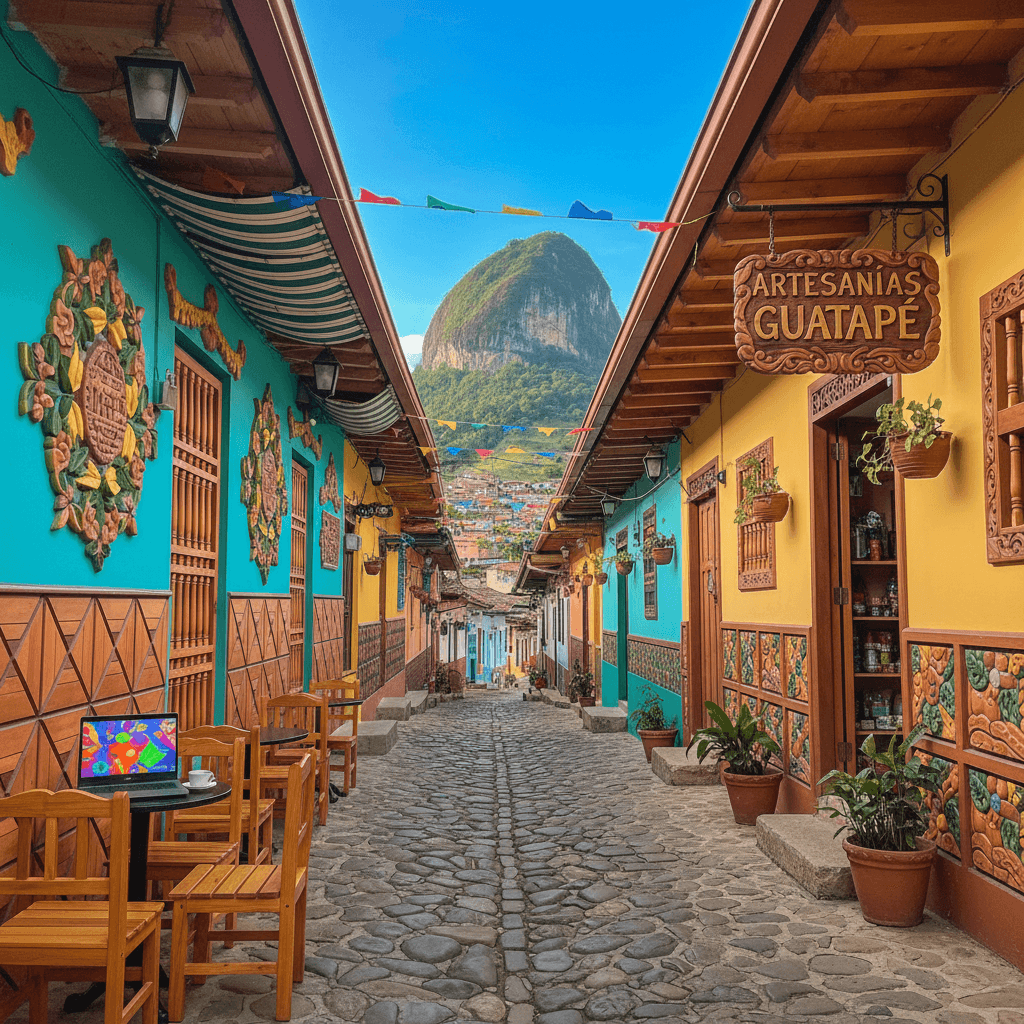
Guatapé is arguably the most colorful town in the world, but for the digital nomad, it represents something deeper: a chance to downshift. Located just 2 hours east of Medellín, this lakeside village feels like the city's quiet, artistic lungs. While Medellín is all about high-energy networking and rooftop bars, Guatapé is defined by its zócalos, the hand-painted bas-relief panels decorating the base of every building. These carvings tell stories of local history, from bread-making to farming, turning a simple walk to get coffee into a gallery tour.
The vibe here is dictated by the water. The massive, winding reservoir creates a landscape of emerald peninsulas that keeps the air fresh and the pace slow. You'll find yourself working from a lakeside cafe in the morning and taking a boat tour or a kayak out by 3:00 PM. It is a place where the work-life balance isn't just a goal; it's the default setting. Most nomads find that while the town is small, the visual stimulation and the mountain air make it an incredible spot for a "deep work" retreat.
The Rhythm of the Town
Living here means navigating two distinct personalities. From Monday to Thursday, the town is a peaceful sanctuary. You can grab a table at a cafe in the Parque Principal, enjoy fiber-optic Wi-Fi, and hear nothing but the sound of distant tuk-tuks. The evenings are quiet, perfect for those who prefer a glass of wine by the lake over a crowded club. It's the kind of place where you actually get to know the person making your coffee.
The personality shifts on the weekends. Day-trippers from Medellín flood the streets to climb El Peñol Rock, a massive 740-step monolith that offers the best views in Colombia. During these peaks, the town center gets loud and touristy. Smart nomads use the weekends to head further out onto the water or simply hunker down in a guesthouse. If you stay for more than 2 or 3 nights, you'll see the town breathe, watching the crowds vanish on Sunday evening and leaving the cobblestones to the locals and the long-termers.
The Nomad Reality Check
Guatapé isn't a place for everyone to plant roots for six months. The infrastructure is charming but limited. You won't find dedicated coworking spaces like Selina or WeWork here yet; instead, you'll be relying on the growing number of "work-friendly" cafes and hotels like The Boato Hotel. Most travelers recommend using Guatapé as a 1 to 2 week "productivity sprint" location rather than a permanent base. It's where you go to finish a project, not to build a massive professional network.
The emotional experience of being in Guatapé is one of intense color and quiet reflection. There is a specific kind of magic in watching the sunset over the reservoir after a day of emails. It feels tucked away from the "real world," even though a 20,000 COP bus ride can have you back in the heart of a metropolis in a couple of hours. It’s the ultimate Colombian "reset" button.
What It Costs
While prices are slightly higher than rural Colombia due to its popularity, it remains an affordable retreat compared to North American or European standards. Expect to pay a bit of a premium for lakeside views, but the local lifestyle remains very accessible.
- Budget Lifestyle (~$800 to $1,200 USD/mo): You can find a basic studio in the town center for about 1,500,000 to 2,500,000 COP. Stick to street food like empanadas for 5,000 COP and use the free Wi-Fi in the main square.
- Mid-range Lifestyle (~$1,500 to $2,000 USD/mo): A nice 1-bedroom near the Malecón (waterfront) runs around 2,500,000 to 4,000,000 COP. You'll eat at sit-down cafes for 30,000 COP per meal and take frequent tuk-tuks, which cost about 10,000 COP per trip.
- Comfortable Lifestyle (~$2,500+ USD/mo): High-end lakeside villas or boutique hotels can exceed 4,000,000 COP. This budget covers private boat tours, upscale dining at waterfront restaurants, and private transfers to Medellín for 100,000 COP or more.
Keep in mind that cash is still king for small vendors and tuk-tuk drivers. While bigger restaurants take cards, the local ATMs can sometimes run out of bills during holiday weekends, so it's wise to keep a stash of pesos on hand.
The Price of Paradise
Guatapé is often treated as a budget friendly retreat from the higher prices of Medellín. While it's a small town, the heavy influx of weekend tourism means prices can fluctuate. You'll generally find your money goes further here, especially if you're staying for a few weeks rather than a few days. Most nomads find they can live comfortably on $1,200 to $1,800 USD per month, depending on how close they want to be to the water.
Cash is still king in these cobblestone streets. While larger hotels and upscale restaurants on the Malecón might take cards, the local fruit vendors, tuk-tuk drivers, and small cafes usually won't. There are ATMs in the Parque Principal, but they frequently run out of cash or have long lines on Sundays when the crowds arrive. It's smart to carry a few hundred thousand pesos on you at all times.
Monthly Budget Tiers
The Budget Nomad
- Estimated Cost: $800 to $1,200 USD per month
- Housing: A simple studio in the town center or a room in a guesthouse near the reservoir will cost between 1,500,000 and 2,500,000 COP (roughly $375 to $625 USD).
- Food: Sticking to street food like empanadas or a traditional bandeja paisa for lunch keeps costs low. Expect to pay 5,000 to 10,000 COP ($1.25 to $2.50 USD) for a quick meal.
- Transport: Mostly walking, with the occasional 10,000 COP ($2.50 USD) tuk-tuk ride to the base of El Peñol.
The Mid-Range Professional
- Estimated Cost: $1,500 to $2,000 USD per month
- Housing: A one bedroom apartment near the lake or the Malecón usually runs 2,500,000 to 4,000,000 COP ($625 to $1,000 USD). These often come with better Wi-Fi and updated kitchens.
- Food: Eating at mid-range cafes or waterfront spots will cost 20,000 to 40,000 COP ($5 to $10 USD) per sitting.
- Transport: Regular tuk-tuk use and perhaps a weekly bike rental for 100,000 COP ($25 USD) to explore the surrounding hills.
The Comfortable Expat
- Estimated Cost: $2,500+ USD per month
- Housing: High end lakeside hotels or private villas like The Boato Hotel start at 4,000,000 COP ($1,000+ USD) and can go much higher for premium reservoir views.
- Food: Fine dining at upscale waterfront restaurants can easily top 50,000 COP ($12.50+ USD) per meal.
- Transport: Frequent private transfers to Medellín, which cost around 100,000 COP or more each way.
Daily Expenses and Logistics
Getting around is simple because the town is so compact. If you're heading to the Rock, a tuk-tuk is the standard way to go, costing about 10,000 COP each way. For those making the trek back to the city, the bus to Medellín is affordable at 20,000 to 25,000 COP for a round trip. It's a two hour journey, so many nomads use it as an opportunity to stock up on specialty items they can't find in the local shops.
For your digital setup, skip the expensive international roaming. Expats recommend getting an eSIM like Holafly for instant data, or a local Claro or Tigo SIM card if you plan to stay longer. Data plans are surprisingly cheap and the 4G coverage is strong enough to handle video calls, even when you're working from a cafe overlooking the zócalos. Just remember that while the Wi-Fi is generally reliable, the occasional mountain thunderstorm can cause brief outages, so having a backup hotspot is a smart move.
For Solo Travelers and Remote Workers: Town Center (Parque Principal)
If you want to be in the heart of the action, the Town Center is your best bet. This is where you'll find the iconic zócalos, those colorful bas-relief panels that decorate every building. Most nomads choose this area because it's the most walkable part of town, putting you steps away from the best coffee shops and reliable Wi-Fi. While it gets crowded with day-trippers from Medellín on Saturdays and Sundays, the vibe shifts completely on weekday evenings when the locals reclaim the cobblestone streets.
- The Vibe: High-energy during the day, serene and traditional at night.
- Monthly Rent: Expect to pay between 1,500,000 and 2,500,000 COP for a studio or a room in a well-located guesthouse.
- Best For: Networking with other travelers and easy access to "laptop-friendly" cafes like those tucked away near the main square.
For Expats and Couples: The Waterfront (Malecón)
The Malecón area runs along the edge of the reservoir and offers a more open, breezy feel than the narrow streets of the center. This is the preferred spot for expats who plan to stay for a few weeks and want a view to wake up to. You're still only a five-minute walk from the town's amenities, but you get the benefit of the lake breeze and easier access to recreation. It’s common to see people starting their mornings with a walk along the water or a quick kayak session before hopping on a Zoom call.
- The Vibe: Relaxed, scenic, and slightly more upscale than the town interior.
- Monthly Rent: Mid-range apartments here typically run between 2,500,000 and 4,000,000 COP.
- Pro Tip: Afternoon noise can pick up near the boat docks, so look for a place a block or two back from the primary pier if you need a quiet workspace.
For Active Travelers and Nature Seekers: Near El Peñol Rock
While technically a few kilometers outside the main town, the area surrounding the massive El Peñol Rock is its own distinct hub. It is much more spread out and rural, making it perfect if your priority is hiking and fitness rather than social nightlife. You'll be within walking distance of the 740 steps to the summit, though you'll need to rely on 10,000 COP tuk-tuk rides to get into Guatapé for groceries or a wider variety of restaurants.
- The Vibe: Rugged and quiet, dominated by the presence of the monolith.
- Monthly Rent: Prices vary wildly here because of the many luxury "glamping" sites, but long-term rentals are often comparable to the town center.
- Consideration: Wi-Fi can be hit or miss in the more remote fincas, so always ask for a speed test before booking a stay here.
For Digital Nomads: Strategic Neighborhood Tips
Guatapé doesn't have formal coworking spaces yet, so your "neighborhood" choice really dictates your office. Most nomads find that staying near the Parque Principal is the most productive move because you can hop between cafes if the power flickers or a specific spot gets too noisy. If you're looking for a "work-cation" vibe, the The Boato Hotel or similar lakeside properties offer the most stable infrastructure for those with a higher budget, often exceeding 4,000,000 COP per month. Remember that cash is king in all these neighborhoods; while your Airbnb might be paid online, the local tiendas and tuk-tuk drivers rarely accept cards.
Connectivity and Speed
You won't find the lightning fast fiber speeds of Medellin's El Poblado here, but Guatapé has come a long way. Most guesthouses and hotels now offer reliable Wi-Fi that handles standard video calls and heavy browser tabs without much fuss. 4G and LTE coverage is surprisingly solid throughout the town center and along the Malecón, making it easy to tether your phone if the local router decides to take a siesta.
Most nomads find that the internet is stable enough for a few days of deep work, though it can get spotty during heavy tropical rainstorms. If your job requires 100Mbps symmetrical speeds for massive file uploads, you might find the infrastructure a bit limiting for a long term stay. For most, it's the perfect spot for a "workcation" where you knock out emails in the morning and hit the lake by 2:00 PM.
Coworking and Cafe Culture
Don't come looking for a WeWork or a dedicated coworking hub with ergonomic chairs and soundproof phone booths. Guatapé doesn't have any formal coworking spaces yet. Instead, the local working culture revolves around its colorful cafes and lakeside balconies. You'll be sharing space with travelers and locals, so bring some noise-canceling headphones if you have a meeting.
- Parque Principal Cafes: The streets surrounding the main square are packed with coffee shops. Most have free Wi-Fi for customers, though they expect you to order more than just one tinto if you're staying for three hours.
- Lakeside Hotels: Spots like The Boato Hotel or various boutique guesthouses near the water often have the most consistent signals. They usually welcome digital nomads who buy lunch or a few rounds of coffee.
- Focused Session Strategy: Travelers often recommend doing your heavy lifting early in the morning. By 11:00 AM, day-trippers from Medellin start to arrive, and the noise levels in the town center definitely pick up.
Data and SIM Cards
Setting up your mobile data is straightforward, but you should handle it before you get too deep into the countryside. While you can find local SIM cards in small shops around the square, the registration process in Colombia can be a headache for foreigners. Many nomads now opt for Holafly or similar eSIM providers for instant activation and unlimited data, which saves you from hunting down a physical store that's actually open.
If you prefer a local provider, Claro and Tigo have the best reach in this region. Expect to pay around 40,000 to 60,000 COP (roughly $10 to $15 USD) for a monthly prepaid plan with a generous data allowance. Just remember to bring your passport if you're buying a physical SIM in town, as they'll need it for the mandatory registration.
Remote Work Logistics
Power outages aren't frequent, but they happen. Because Guatapé is a small town, a fallen tree on the road from Medellin can sometimes knock out a line for a few hours. It’s a good idea to keep your laptop fully charged and have a backup data plan on your phone. If you're planning on staying for more than a week, ask your host specifically for a Speedtest screenshot before you book, as some older colonial buildings have thick stone walls that eat Wi-Fi signals for breakfast.
For those who absolutely need a professional office environment, your best bet is to treat Guatapé as a weekend or mid-week retreat and head back to Medellin for your heavy meeting days. The two hour bus ride is cheap, usually around 20,000 to 25,000 COP round trip, making it easy to toggle between the quiet lake life and the high speed hubs of the city.
Personal Safety and General Vibe
Guatapé is widely considered one of the safest destinations in Colombia for digital nomads and solo travelers. The atmosphere is remarkably relaxed compared to the high-energy streets of Medellín or the grit of Bogotá. Because the town's economy relies so heavily on tourism, there is a strong local interest in keeping the environment peaceful and secure.
Most travelers feel comfortable walking through the Parque Principal or along the malecón well into the evening. Violent crime is rare here, but petty theft can happen if you're careless. Keep an eye on your phone and laptop when working from open-air cafes, especially during the crowded weekend rush when thousands of day-trippers arrive from the city. Stick to the well-lit main streets and the colorful residential alleys decorated with zócalos, as these are generally very safe.
If you're heading out to El Peñol Rock, use a licensed tuk-tuk for the 10,000 COP ride rather than walking along the highway shoulder, which can be narrow and busy with traffic. While the town is sleepy at night, nomads recommend avoiding isolated trails around the reservoir after dark just to be safe. If you need emergency assistance, the national emergency number is 123.
Healthcare Access and Pharmacies
Healthcare in Guatapé is basic. You'll find several small pharmacies (droguerías) around the town square that can help with minor ailments like altitude headaches, stomach issues, or sun exposure from a day on the lake. Pharmacists in Colombia are often highly trained and can provide over-the-counter advice for simple infections or first-aid needs.
For anything serious, you'll need to make the 2-hour trip back to Medellín. Medellín is home to some of the best hospitals in Latin America, such as Hospital Pablo Tobón Uribe or Fundación Valle del Lili. Expats living in the region typically maintain private health insurance and keep a "Medellín fund" for private transfers in case of a medical emergency, as the local clinics aren't equipped for complex procedures or specialized imaging.
- Emergency Number: 123
- Primary Hospital Hub: Medellín (2 hours away)
- Local Care: Limited to basic clinics and pharmacies
- Traveler Tip: Always carry a physical copy of your insurance card and keep some cash (pesos) on hand for immediate pharmacy needs, as smaller shops might not take cards.
Practical Wellness Tips
The biggest health risks in Guatapé are actually the sun and the water. Even if it feels breezy and cool by the reservoir, the Andean sun at this altitude is intense. Wear high-SPF sunscreen when climbing the 740 steps of the rock or spending the afternoon on a boat tour.
While tap water in Medellín is generally safe to drink, many nomads in Guatapé prefer to stick to bottled or filtered water to avoid "traveler's tummy." Most guesthouses and higher-end hotels like The Boato Hotel provide filtered water stations for guests. If you're staying for a week or more, it's worth buying the large 5-liter jugs from a local tienda to save money and reduce plastic waste.
Finally, be mindful of the "weekend burnout." The town transforms from a quiet retreat into a loud, crowded party hub on Saturdays and Sundays. If you're sensitive to noise or crowds, use the weekends for focused work inside your accommodation or plan your outdoor adventures for Tuesday through Thursday when the streets are yours.
Navigating the Streets and the Lake
Guatapé is small enough that your own two feet are your primary mode of transport. The town center is a compact grid of cobblestone streets where you can wander from the Parque Principal to the waterfront malecón in under ten minutes. Most nomads find the walkability one of the town's biggest draws, though the steep hills and humidity can be a bit draining if you're out exploring for several hours at a time.
For trips that require a bit more speed or distance, the local tuk-tuks are the iconic way to get around. These colorful three wheeled taxis are everywhere and perfect for the 10 to 15 minute ride out to El Peñol Rock. You can expect to pay around 10,000 COP (roughly $2.50 USD) for a one way trip from the town center to the base of the rock. They're also handy if you're staying in a guesthouse further along the reservoir and don't want to lug groceries up the inclines.
- Tuk-tuks: Best for quick trips to the Rock or moving luggage. Standard fare is 10,000 COP.
- Walking: Ideal for the town center and malecón. Wear shoes with good grip for the slippery cobblestones.
- Bicycles: Some guesthouses offer rentals for about 25,000 COP per day, though the hilly terrain makes this a workout.
The Reservoir and Beyond
Since the town sits on the edge of a massive man-made lake, some of your "getting around" might actually happen on the water. Boat tours and private launches depart regularly from the malecón. If you're staying at a lakeside property like The Boato Hotel, you might even find yourself commuting into town via a quick boat shuttle rather than a car.
Public transit within the town is non-existent because it's simply not needed. However, for regional travel, the local bus station is your lifeline. It's located right near the entrance to town. Buses to and from Medellín run frequently, usually every 30 to 60 minutes, and the ride takes about 2 hours. Tickets generally cost between 20,000 and 25,000 COP for a round trip.
Logistics for the Digital Nomad
While you won't find Uber or specialized ride-sharing apps operating reliably within Guatapé, the local tuk-tuk drivers are organized and plentiful. For the return trip to Medellín, many expats recommend booking a private transfer if you have a lot of gear or want to avoid the winding mountain roads in a crowded bus. These private rides typically start around 100,000 COP.
A quick tip for the weekends: the town gets incredibly crowded with day-trippers from Medellín. Traffic on the main road leading into Guatapé can crawl, so if you're planning to head back to the city or catch a flight, give yourself at least an extra hour of buffer time. Most travelers suggest arriving or departing on a Tuesday or Wednesday to avoid the worst of the congestion.
- Medellín Bus: 20,000 to 25,000 COP, departs from the local terminal.
- Private Transfer: 100,000+ COP, best for comfort and airport runs.
- Boat Taxis: Prices vary by distance, usually negotiated at the docks.
Cash is still king for transport here. While some larger hotels and restaurants might take cards, tuk-tuk drivers and bus ticket windows almost exclusively deal in pesos. Make sure to hit an ATM in the Parque Principal before you head out for the day, as machines can occasionally run out of cash during the busy holiday season in January and February.
The Local Linguistic Landscape
In Guatapé, Spanish is the undisputed king. Unlike the more international bubble of Medellín's El Poblado, this is a traditional Antioquian town where the local Paisa dialect shapes every interaction. You'll hear the characteristic "vos" instead of "tú" and a melodic, sing-song accent that's generally clear but can be fast when locals get excited about a game of tejo or a football match.
Don't expect much English once you step off the main tourist malecón. While hotel receptionists and some staff at high-end spots like The Boato Hotel speak English, the shopkeepers, tuk-tuk drivers, and street food vendors usually don't. Most nomads find that a "survival" level of Spanish is necessary to get by comfortably. If you're staying for more than a few days, learning a few local phrases will go a long way in building rapport with the people who live there.
Communication Essentials for Nomads
Because you'll likely be negotiating tuk-tuk rates or ordering specific dishes at the local bandeja paisa spots, having a translation app ready is a smart move. Travelers often say that Google Translate with an offline Spanish pack downloaded is a lifesaver, especially when wandering the cobblestone streets where cell signals can occasionally dip between the colorful buildings.
- Tuk-tuk Negotiations: Standard rides to El Peñol Rock should cost around 10,000 COP. Confirm the price in Spanish before you hop in to avoid the "tourist tax."
- Ordering Food: Many menus in the smaller cafes around Parque Principal are Spanish-only. Look for the "Menu del Día" for a cheap, filling lunch.
- Social Etiquette: Greetings are a big deal here. A polite "Buenos días" or "Buenas tardes" when entering a shop is expected and appreciated.
Connectivity and Staying Online
For digital nomads, communication isn't just about speaking; it's about staying connected. While Guatapé is small, the infrastructure for remote work is surprisingly decent. Most guesthouses and cafes now offer fiber-optic Wi-Fi that handles video calls without much fuss. However, you shouldn't rely solely on cafe Wi-Fi if you have a high-stakes meeting.
Expats recommend setting up your mobile data immediately upon arrival in Colombia. While you can get local SIM cards from providers like Claro or Tigo in Medellín, many nomads prefer the convenience of an eSIM. It allows you to skip the physical store visit and stay connected the moment your bus rolls into town.
- Holafly: A popular choice for those who want unlimited data without the hassle of local registration. It’s perfect for short-term retreats of 2 to 5 days.
- Local SIMs: If you're staying longer, a local SIM is cheaper, but you'll need your passport for registration. Data packages are very affordable, often costing less than $10 USD for a month of generous usage.
- Signal Strength: 4G and LTE are widespread throughout the town center and near the reservoir. You might see a drop in speed if you head deep into the surrounding hills or out on a boat in the middle of the lake.
Key Local Phrases to Know
To make your stay smoother, keep these Paisa staples in your back pocket. They help you sound less like a tourist and more like a temporary resident.
- ¿Qué más?: A very common way to say "How's it going?" or "What's up?"
- ¡Listo!: You'll hear this constantly. It means "Okay," "Done," or "Understood."
- La cuenta, por favor: Essential for when you're finishing up work at a cafe and need the bill.
- ¿Aceptan tarjeta?: Useful because many small vendors and tuk-tuks are cash-only. Always ask before you order if you're low on pesos.
Most travelers find the people of Guatapé to be incredibly patient and helpful. Even if your Spanish is rusty, a smile and a genuine attempt at the local tongue will open doors. It's a place where the pace of life encourages actual conversation rather than just transactional exchanges.
The Sweet Spot: Spring-Like Temps
Guatapé sits at an elevation of about 1,890 meters [1], which keeps things comfortably cool compared to the tropical heat of the Colombian coast. You can expect a perpetual spring climate where daytime highs hover around 23°C (73°F) and nights dip to a crisp 13°C (55°F). It is the kind of weather where you will want a light sweater for your morning coffee on the balcony and a t-shirt by noon.
Most nomads find the midday sun surprisingly strong due to the altitude, so do not let the cool breeze fool you while you are climbing the 740 steps of El Peñol Rock. If you are planning a deep-work session in a local cafe, the natural ventilation usually suffices; very few places in town use or need air conditioning.
Dry vs. Rainy Seasons
While Colombia does not have traditional seasons, it follows a cycle of dry and rainy periods. The driest window typically runs from December through March, with a secondary dry spell in July and August. These months are arguably the best time for outdoor enthusiasts who want to spend their afternoons kayaking the reservoir or hiking without getting caught in a downpour.
The rainiest months usually fall in April, May, October, and November. During these times, you will often see bright, sunny mornings followed by heavy, predictable afternoon showers. It is actually a great setup for productivity; you can explore the colorful zócalos in the morning and settle into a focused work block while the rain hits the cobblestones outside. Just remember that the town is much more prone to power flickers or Wi-Fi drops during heavy lightning storms.
Timing Your Visit: Midweek is King
The most important factor for your visit isn't the rain, it is the crowd. Guatapé is a massive weekend destination for residents of Medellín. From Saturday morning to Sunday evening, the quiet town transforms. Prices for tuk-tuks can stay firm at 10,000 COP, but the wait times for restaurants and the lines at the Rock grow significantly.
- The Midweek Advantage: Arrive on a Tuesday or Wednesday. You will have the Malecón almost to yourself, and the local cafes are much quieter for taking video calls.
- Peak Season: The busiest time of year is December through January, coinciding with the Colombian holidays. If you visit then, book your accommodation weeks in advance, as lakeside guesthouses fill up fast.
- Public Holidays: Keep an eye on the calendar for "Puentes" (holiday Mondays). These long weekends see a huge influx of domestic tourists, making the 2-hour bus ride from Medellín much longer due to traffic.
What to Pack
Because the weather is so consistent, your packing list is straightforward. Travelers recommend a "layers" approach to handle the temperature swings between the sunny waterfront and the chilly evenings. Make sure to bring:
- A sturdy pair of sneakers for the cobblestones and the climb up El Peñol.
- A light, packable rain jacket for those sudden Andean afternoon showers.
- Sunscreen and a hat, as the high-altitude sun is intense even on cloudy days.
- A comfortable hoodie or light jacket for evening dinners by the lake.
If you are looking for that perfect balance of clear skies and manageable crowds, aim for late January or February. The holiday rush has died down, but the sun is still out in full force, making the reservoir water look its best for those inevitable photos of the sunken valley.
Connectivity and Remote Work
While Guatapé doesn't have a dedicated coworking hub like Medellín, the town has seen a significant upgrade in infrastructure recently. Most guesthouses and hotels now offer reliable fiber optic connections or high speed 4G/LTE that can handle video calls without much fuss. If you're looking for a change of scenery, nomads usually head to the local cafes around the Parque Principal or the waterfront malecón. These spots are generally quiet on weekdays, making them perfect for deep work sessions with a view of the reservoir.
For your phone, don't rely on roaming. Most travelers find that an eSIM like Holafly is the easiest way to stay connected immediately upon arrival. If you're staying longer, picking up a local SIM from providers like Claro or Tigo in Medellín before you head out is the most cost effective move, as data packages are very affordable in Colombia.
Budgeting for Your Stay
Guatapé is generally more affordable than Medellín for long term stays, but it can get pricey if you stick to the tourist heavy waterfront. Prices are quoted in Colombian Pesos (COP), and you should definitely carry cash. Many small vendors and tuk-tuk drivers don't accept cards, and the few ATMs in town have been known to run out of money during busy holiday weekends.
Estimated Monthly Costs
- Budget: $800 to $1,200 USD. A studio in the town center runs between 1,500,000 and 2,500,000 COP. You'll eat mostly at local spots where a bandeja paisa or street food costs 5,000 to 10,000 COP.
- Mid-range: $1,500 to $2,000 USD. This gets you a nice one bedroom near the lake for 2,500,000 to 4,000,000 COP. You can afford frequent meals at nicer cafes, which typically cost 20,000 to 40,000 COP.
- Comfortable: $2,500+ USD. High end living at places like The Boato Hotel or private lakeside villas starts at 4,000,000 COP and goes up quickly. Upscale waterfront dining usually starts at 50,000 COP per plate.
Getting Around and Staying Safe
The town itself is incredibly walkable. You can cross the main center in about 20 minutes. For trips to El Peñol Rock, grab a colorful tuk-tuk for about 10,000 COP each way. If you're coming from Medellín, the bus from Terminal del Norte is the most common route, costing roughly 20,000 to 25,000 COP for a round trip. For more comfort, private transfers are available but will set you back 100,000 COP or more.
Safety is rarely a major concern here. The vibe is much more relaxed than the big city, and most nomads feel perfectly comfortable walking the cobblestone streets at night. Stick to the main, well lit areas and keep an eye on your belongings in crowded spots like the summit of the Rock or the busy weekend markets. If you have a medical emergency, dial 123. There are basic pharmacies in town for minor issues, but for anything serious, you'll need to take the two hour trip back to the high quality hospitals in Medellín.
Timing Your Visit
The biggest tip from expats is to avoid weekends if you actually want to get work done. From Friday afternoon through Sunday, the town transforms into a playground for day trippers from Medellín. Prices for accommodation can spike, and the quiet cafes become loud and crowded. If you can, plan your "office days" for Monday through Thursday and use the weekends to disappear into the surrounding hills or out onto the water.
Need visa and immigration info for Colombia?
🇨🇴 View Colombia Country GuideHidden Gem
Worth the effort