Guangzhou
🇨🇳 China
The South’s Commercial Soul
Guangzhou is the engine room of Southern China, a massive metropolis of over 15 million people that feels significantly more grounded than the sterile glass of Shanghai or the political weight of Beijing. While it's a global trade hub, it manages to maintain a humid, tropical grit that keeps it from feeling like just another corporate jungle. For nomads, the draw is the balance of high-tech convenience and a cost of living that sits comfortably around $1,445 per month, making it one of the most affordable tier-one cities in Asia.
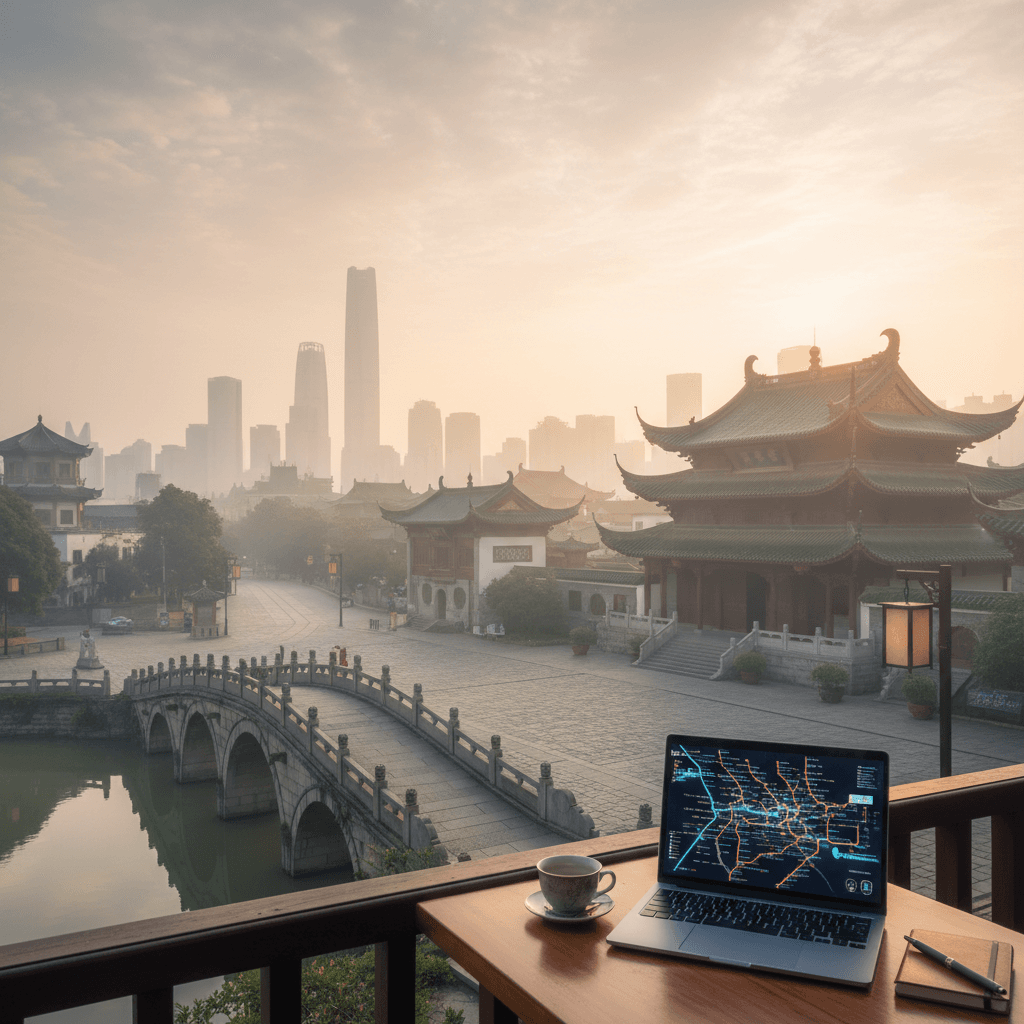
The city has a split personality that works in your favor. In the morning, you might be sipping tea in a centuries-old dim sum parlor in Liwan, surrounded by retirees and the scent of jasmine. By afternoon, you’re likely working from a high-rise cafe in Tianhe, looking out over a skyline that feels like a scene from a sci-fi movie. It’s fast-paced during business hours, but the local Cantonese culture prioritizes food and family, which keeps the atmosphere from becoming too cold or clinical.
The Daily Grind and the Great Firewall
Living here means embracing a fully digital life. You’ll rarely touch physical cash; everything from your morning congee to your DiDi ride is paid for through WeChat Pay or Alipay. Most nomads find that setting up these apps is the first real hurdle, but once you’ve linked your card, the city opens up. The internet situation is the main "nomad tax" you’ll pay. While speeds average around 7 Mbps, you’ll need a robust VPN strategy to access your usual toolkit. It’s a minor friction point that becomes second nature after a week.
Networking happens naturally in the malls and coworking hubs of the Tianhe Commercial Area. It’s the highest concentration of shopping and office space in the city, and it’s where most expats and remote workers congregate. If you prefer a slower burn, the Yongqingfang area offers a more historic, low-density vibe where you can work from renovated traditional buildings near the Bruce Lee ancestral home.
What Your Budget Looks Like
Your money goes surprisingly far here compared to other global hubs. While luxury is available, the mid-range lifestyle is where Guangzhou really shines.
- Housing: A modern studio in central Tianhe typically runs between $700 and $1,000. If you’re willing to commute from the outskirts, you can find solid options for $400 to $600.
- Dining: You can eat like a king on a budget. Street food and basic dim sum spots cost $2 to $5 per meal. Even a mid-range dinner in Shangxiajiu usually stays under $15.
- Transport: The metro is world-class and incredibly cheap, often under $0.50 per trip. Monthly transport budgets rarely exceed $30 unless you’re relying heavily on taxis.
Climate and Timing
The weather is a major factor in the Guangzhou experience. From May to September, the humidity is intense and temperatures frequently climb above 30°C. It’s a tropical heat that can be draining if you aren't used to it. Most travelers recommend the window from October to December as the sweet spot. The air clears up, the temperatures drop to a mild 20-28°C, and the city becomes much more walkable. If you’re here in the summer, you’ll spend most of your time hopping between air-conditioned "supertalls" like CITIC Plaza and the Guangzhou CTF Finance Centre.
Ultimately, Guangzhou isn't a city that tries to impress you with tourist traps. It’s a place that invites you to join its rhythm. It’s about the clatter of tea cups, the neon glow of the Canton Tower at night, and the sheer efficiency of a city that never stops moving. It feels like the future, but it still tastes like tradition.
The Bottom Line
Guangzhou is often the secret weapon for nomads who want the high speed infrastructure of China without the eye watering price tags of Shanghai or Beijing. You can live a very comfortable life here for about $1,445 a month. While it is a massive commercial engine, the cost of daily existence remains surprisingly grounded, especially if you lean into the local Cantonese lifestyle.
Most expats find that their biggest variable is rent. If you are looking to stay in the thick of the action, you will be spending more, but the efficiency of the metro means you can live a few stops out and save hundreds without sacrificing your social life.
Monthly Budget Tiers
Your lifestyle in the southern capital generally falls into one of three buckets. Most remote workers find the mid range tier provides the best balance of modern amenities and local flavor.
The Budget Nomad (Under $1,000)
- Housing: Usually a studio or shared apartment on the outskirts of Tianhe or in older parts of Liwan for $400 to $600.
- Food: Sticking to legendary street food stalls and hole in the wall dim sum spots where a meal costs $2 to $5.
- Work: Utilizing the city's massive library system or laptop friendly cafes where a coffee is your only "rent."
- Transport: Exclusively using the metro and public buses for about $20 to $30 a month.
The Mid Range Professional ($1,000 to $1,500)
- Housing: A modern 1BR in central Tianhe or near the CBD, typically running $700 to $1,000.
- Food: A mix of local favorites and mid range sit down restaurants in areas like Shangxiajiu, averaging $10 to $15 per dinner.
- Work: A dedicated desk at a local coworking hub for $150 to $250 a month.
- Transport: Frequent use of the DiDi app for private rides, totaling around $50 monthly.
The High End Expat ($1,500+)
- Housing: Luxury high rise living in the heart of the business district or Huacheng Square, often $1,200 and up.
- Food: Frequent stops at upscale Cantonese banquet halls or international fusion spots where meals start at $30.
- Work: Premium coworking memberships with networking events and private offices for $300 or more.
- Transport: Relying on taxis and the city's new robotaxi services like Pony.ai for around $100 a month.
Key Practicalities
The city runs on WeChat Pay and Alipay. You will find it difficult to spend money without these apps linked to your bank card. Cash is technically accepted but can be a hassle for change in smaller shops. Most travelers recommend setting up these payment methods the moment you land to avoid friction at the checkout counter.
Internet is another "hidden" cost. While basic 7 Mbps speeds are common, you will need a high quality VPN to access the global web. Budget about $10 to $15 a month for a reliable service that can bypass the Great Firewall. Without it, your productivity will hit a wall quickly.
For groceries, locals swear by the wet markets for the freshest produce at the lowest prices. If you prefer Western comforts, supermarkets in the basement of Tianhe malls carry imported goods, though you will pay a significant premium for things like cheese, wine, and coffee beans. A gallon of milk or a box of imported cereal can easily cost double what you would pay back home.
For Digital Nomads: Tianhe District (CBD)
If you want to be in the thick of the action, Tianhe is your base. It is the commercial heart of the city, packed with skyscrapers, massive malls like Taikoo Hui, and the most reliable infrastructure for remote work. Most nomads find the convenience of having everything within a ten minute walk worth the higher price tag. You will find plenty of other remote workers in the cafes around Shipaiqiao or tucked into the modern coworking hubs near the IFC tower.
- Average Rent: $700 to $1,000 for a modern studio; $1,200+ for luxury high-rises.
- Coworking: Expect to pay $150 to $250 monthly for a desk, though many nomads just camp out in high-end coffee shops for the price of a latte.
- The Vibe: Fast-paced, sleek, and very international. It is the easiest place to live if your Mandarin is shaky.
For Expats and Professionals: Zhujiang New Town
Located within the broader Tianhe area, Zhujiang New Town is where the city shows off. It is home to the Huacheng Square area and iconic landmarks like the Guangzhou CTF Finance Centre. Expats recommend this neighborhood for its high-end gyms, international grocery stores, and proximity to the Pearl River. While it feels a bit more "corporate" and less walkable than older districts, the skyline views at night are unmatched.
- Average Rent: Generally starts at $1,100 and goes up quickly.
- Transport: Central hub for the metro and the best spot to catch a Pony.ai or WeRide robotaxi if you want to test out the local tech.
- Social Life: This is the epicenter for nightlife, with plenty of rooftop bars overlooking the Canton Tower where you can network with the international crowd.
For Solo Travelers and Culture Seekers: Liwan (Yongqingfang)
If the glass and steel of the CBD feel too sterile, head west to Liwan. This is the "Old Guangzhou" people fall in love with. The Yongqingfang area has been beautifully revitalized, blending traditional Cantonese alleyways with trendy boutiques and galleries. It is much more affordable than Tianhe and offers a slower, more authentic pace of life. You can spend your mornings eating $2 dim sum and your afternoons exploring the former home of Bruce Lee.
- Average Rent: $400 to $600 for a character-filled apartment or a renovated guesthouse.
- Food Scene: Incredible street food around Shangxiajiu Pedestrian Street. You can eat like a king for $10 to $15 a day.
- The Vibe: Historic, leafy, and deeply cultural. It is perfect for those who want to practice their Cantonese and live among locals.
For Families: Ersha Island and Panyu
Families often look toward Ersha Island for its green spaces and quiet streets, though it is one of the most expensive pockets in the city. A more budget-friendly alternative is the northern part of Panyu. While it is further south, the metro connection to the center is fast. It is closer to major attractions like the Chimelong Safari Park and offers larger, modern apartment complexes that give you more square footage for your money.
- Average Rent: $800 to $1,300 for a multi-bedroom family apartment in Panyu.
- Environment: Lower density, less noise pollution, and better access to international schools.
- Practicality: You will definitely want to have DiDi and WeChat Pay set up here, as you will be relying on rideshares more than those living in the walkable city center.
Connectivity and the Great Firewall
Working from Guangzhou requires a specific digital survival kit. While the city is a global manufacturing hub, the internet speeds for international traffic can be frustratingly inconsistent. The internet in Guangzhou averages 50-100 Mbps download, though international traffic via VPN may vary. This is fine for emails but can be shaky for high definition video calls depending on your routing. The biggest hurdle is the Great Firewall. To access Google, Slack, or Instagram, you must have a reliable VPN installed and tested before you land in China. Most experienced nomads recommend having at least two different providers as backups.
For mobile data, skip the international roaming and pick up a local SIM card at Guangzhou Baiyun International Airport or a China Unicom shop in Tianhe. You'll need your passport for registration. Once you have a local number, your first priority is setting up WeChat Pay or Alipay. The city is almost entirely cashless; from high end malls to tiny dumpling stalls in Shangxiajiu, everyone expects a QR code scan. You can now link most international credit cards to these apps, which makes life significantly easier than it was a few years ago.
Top Coworking Hubs
Most of the professional remote work scene is concentrated in the Tianhe District. This is the city's commercial heart where you'll find the highest density of English speaking staff and reliable power outlets. While specific brands change, the area around Tiyu Xilu and Linhe Zhong Road is the gold standard for workspace quality.
- WeWork locations in Tianhe (check current listings): These are the most reliable options for nomads who need a familiar environment. Expect to pay around $200 to $300 per month for a hot desk. The community events here are great for meeting expats and local entrepreneurs.
- Atlas or similar in Agile Centre (verify current status): This is a more premium, "executive" style space. It is quieter than other options and popular with people in the tech and finance sectors. Day passes usually hover around $25 to $30.
- Bee+ in areas like Zhujiang New Town: This local favorite is known for having a more creative, social vibe. They often have "unlimited coffee and soda" bars and social lounges that feel more like a club than an office.
The Cafe Culture Alternative
If you prefer a more relaxed environment, Guangzhou has a thriving specialty coffee scene that is surprisingly work friendly. In the historic Yongqingfang area, you can find renovated traditional houses turned into quiet cafes. However, for a full day of "deep work," stick to the modern shops in Zhujiang New Town.
- Neighborhood Coffee: Small but mighty, these spots are great for a quick hour of emails. Just don't expect to camp out all day with a laptop.
- Starbucks Reserve (various Tianhe locations): It sounds basic, but in Guangzhou, these are often massive, multi story hubs with excellent Wi-Fi and plenty of power outlets. They are the "safe bet" for many travelers.
- Tree Coffee: A local gem often cited by expats for its quiet atmosphere and decent table space.
Work-Life Logistics
The cost of staying connected is relatively low. A solid mobile data plan will set you back about $5 to $15 per month. If you are renting a modern studio in Tianhe for about $800, high speed home fiber is usually included or can be added for a small fee. Just remember that even with the fastest fiber, your connection to the "outside" web still depends entirely on the quality of your VPN. Most nomads find that working during the local night hours (when the rest of the world is awake) can sometimes result in better international speeds.
Stay Smart, Stay Safe
Guangzhou is one of those massive cities where you can wander for hours and rarely feel a sense of unease. It holds a reputation as one of the safer urban centers in China, especially in the newer, well lit districts like Tianhe. While it doesn't have specific "no go" zones, the sheer density of people means you should keep your wits about you in crowded spots like the Shangxiajiu Pedestrian Street or the sprawling electronics markets. Pickpockets are rare but not nonexistent in these high traffic areas.
Most nomads find that the biggest "safety" hurdle isn't crime, it's the digital wall. You'll need a reliable VPN to access your usual apps, but for day to day life, your phone is your lifeline. Expats recommend keeping a portable power bank on you at all times. If your phone dies, you lose your ability to pay for things via WeChat Pay or call a DiDi, which can leave you stranded in a neighborhood where English isn't widely spoken.
- Police (110): Use this for any immediate safety concerns or theft.
- Ambulance (120): The standard number for medical emergencies.
- Night Safety: Solo travelers generally report feeling safe walking at night, though sticking to main roads in the Huacheng Square area is the standard move.
Healthcare for Expats and Nomads
If you get a stomach bug or need a prescription, the healthcare system is efficient but can be intimidating if you don't speak Mandarin. Most expats head straight to the international wings of major hospitals. These departments usually have English speaking staff and more familiar western style service, though you'll pay a premium for the convenience. In the Tianhe District, you'll find the highest concentration of modern clinics that cater to the international community.
For minor issues, local pharmacies are everywhere. You can usually find what you need by using a translation app like Pleco to show the pharmacist the specific ingredient or symptom. Just keep in mind that many local clinics might require payment upfront via WeChat or Alipay before you see a doctor, so ensure your digital wallet is topped up.
Medical Costs and Insurance
Healthcare costs vary wildly depending on where you go. A visit to a local public hospital might only cost you $10 to $20 for a consultation, but the wait times are long and the experience is chaotic. International clinics are much more comfortable but can easily run $100 to $200 just for an initial checkup. Most long term nomads carry international health insurance to cover these costs and any potential medical evacuations.
- Public Hospitals: Low cost, high volume, very little English.
- International Clinics: High cost, English speaking doctors, appointments required.
- Pharmacies: Widely available for over the counter meds; look for the green cross or "Pharmacy" signs.
Environmental Health
The heat is a genuine health factor here. From May to September, temperatures frequently stay above 30°C with oppressive humidity. Dehydration and heat exhaustion are common for newcomers who try to walk too much during midday. Drink plenty of bottled water, stay in the shade, and make use of the air conditioned Metro system. Air quality has improved significantly over the years, but if you have sensitive lungs, it's worth checking the AQI levels during the drier winter months when smog can occasionally linger.
The Metro: Your Lifeblood
Guangzhou's metro system is arguably one of the best in the world. It is clean, efficient, and almost entirely bilingual. If you're staying in Tianhe or near Huacheng Square, you'll rarely need anything else. Most trips cost around $0.50, and you can expect to spend roughly $20 to $30 a month if you're commuting to coworking spaces daily.
Forget paper tickets. Grab a Yang Cheng Tong card as soon as you arrive, or better yet, set up the transport QR code within Alipay or WeChat Pay. This allows you to simply scan your phone at the turnstile. Most nomads find the metro is the only way to beat the notorious rush hour traffic in the city center.
Ride-Hailing and the Robotaxi Revolution
When the metro isn't an option, DiDi is the go-to app. It's the Chinese equivalent of Uber and it's incredibly affordable. A 20 minute cross-town ride usually sets you back about $5 to $8. You'll need a local SIM card and a linked payment account to use it effectively, but once you're set up, the English interface makes it seamless.
If you're feeling adventurous, Guangzhou is a testing ground for the future. In specific districts, you can hail robotaxis from companies like Pony.ai and WeRide. While they currently operate in restricted zones and sometimes require a local number to book, they're a glimpse into the city's tech-forward identity. Expect to pay a bit more for the novelty, with monthly transport budgets for heavy DiDi and taxi users hitting around $100.
Walking and Micromobility
Guangzhou is a tale of two cities when it comes to walkability. The historic quarters like Yongqingfang and the Shangxiajiu Pedestrian Street are made for wandering. These areas are low-density and packed with street food stalls, making them perfect for a slow Saturday. However, the newer business districts around the CTF Finance Centre are dominated by supertalls and wide boulevards that can feel a bit daunting on foot.
For those "last mile" trips, shared bikes are everywhere. You'll see rows of yellow and blue bicycles parked near every metro exit. Use your Alipay or Meituan app to unlock them for a few cents. It's a lifesaver when the humidity kicks in and that ten minute walk to your favorite cafe feels like a marathon.
Arriving and Departing
Guangzhou Baiyun International Airport is your main gateway. It's well connected to the city center via Metro Line 3. The journey takes about 45 to 60 minutes and is the most reliable way to reach Tianhe. If you have heavy luggage, a taxi or DiDi from the airport will cost significantly more but offers door-to-door service, which is a relief after a long-haul flight.
For regional travel, the high-speed rail is king. You can reach Hong Kong or Shenzhen in under an hour from Guangzhou South Railway Station. It makes the city a perfect base for nomads who want to explore the rest of the Pearl River Delta without dealing with airport security every weekend.
A Quick Transport Cheat Sheet
- Metro Trip: Approximately $0.50 (3-5 CNY)
- Monthly Metro Pass: Around $30
- DiDi Ride (City Center): $4 to $10
- Airport to Tianhe (Metro): Under $2
- Essential Apps: Alipay (for Metro/Bike), DiDi (for rides), Apple Maps or Amap (for navigation)
The Dual Language Reality
In Guangzhou, you're stepping into a city with a split linguistic personality. While Mandarin is the official tongue of business and government, Cantonese is the soul of the streets. It's the language of dim sum houses and the older neighborhoods like Yongqingfang. You don't need to be fluent in either to survive, but showing up with zero linguistic prep will make your life significantly harder once you step away from the luxury malls of Tianhe.
English proficiency is hit or miss. In high end hotels or the westernized cafes around Huacheng Square, you'll find staff who speak decent English. However, your DiDi driver, the auntie selling you baozi, and the person fixing your laptop almost certainly won't. Most nomads find that a mix of translation apps and frantic gesturing becomes their primary mode of communication during the first few weeks.
The Digital Survival Kit
Your smartphone is your most important translator. Don't even think about landing at Baiyun International Airport without these tools preinstalled:
- Pleco: This is the gold standard for Chinese dictionaries. It works offline, which is a lifesaver when your data drops out.
- Google Translate: You must download the Chinese language pack for offline use. The camera feature is vital for deciphering menus at local spots in Shangxiajiu where there are no pictures.
- WeChat: It's more than a chat app; it's the city's operating system. You'll use it to message landlords, join expat groups, and pay for everything from metro rides to street food.
The Great Firewall Factor
Communication isn't just about what you say, it's about how your data moves. The internet in Guangzhou averages around 7 Mbps, but the real hurdle is the Great Firewall. To access Slack, Gmail, or Instagram, you'll need a reliable VPN. Expats recommend setting up at least two different VPN providers before you enter China, as the websites to download them are often blocked once you're inside the country.
For local connectivity, grab a China Unicom or China Mobile SIM card immediately. You can find kiosks at the airport, but the shops in the city often have better deals. Expect to pay around $5 to $15 for a solid monthly data plan. You'll need your passport to register the card, so keep it handy.
Key Phrases for the Daily Grind
While everyone understands Mandarin, using a few Cantonese words in the historic districts will earn you massive respect. Here are the basics to get you through a day in the city:
- Nǐ hǎo (Mandarin) / Néih hóu (Cantonese): Hello. Use this for everyone.
- Duōshǎo qián?: How much? Essential for the electronics markets.
- Tīng bù dǒng: I don't understand. You'll use this a lot when people try to chat with you on the metro.
- Mái dān: Check, please. Use this in restaurants.
- Xièxie (Mandarin) / M̀h'gōi (Cantonese): Thank you. In Guangzhou, use "M̀h'gōi" when someone provides a service, like pouring your tea.
Social Nuances and Etiquette
Communication here is often indirect. If a landlord says something is "a bit inconvenient," they're usually saying no. It's also a very cashless society. You'll see QR codes everywhere. Linking your foreign Visa or Mastercard to WeChat Pay or Alipay is the first thing you should do after getting your local SIM. It saves you the awkwardness of trying to use large cash bills that many small vendors can't make change for.
If you're looking to meet other English speakers, head to the coworking hubs in Tianhe or join WeChat groups dedicated to the Guangzhou expat community. These groups are the primary way people share info on everything from the best coffee shops to current visa regulations. Most nomads find that the community is very welcoming to newcomers who are clearly trying to adapt to the local rhythm.
The Sweet Spot: October to December
If you're planning your stint in Guangzhou, aim for the window between October and December. This is when the city finally sheds its oppressive summer coat. You'll get clear skies and temperatures hovering between 20°C and 28°C. It's the perfect climate for walking through the historic alleys of Yongqingfang or grabbing an outdoor table for dim sum without breaking a sweat.
Most nomads find this period ideal because the humidity drops significantly. You can actually enjoy the skyline views from Huacheng Square or take a long stroll along the Pearl River. It’s the time of year when the city feels most liveable, and you won't be constantly ducking into malls just for the air conditioning.
The Cool Down: January to March
Winter in Southern China is mild compared to Beijing, but it’s damp. Expect highs of 18°C to 22°C. While it rarely gets truly cold, the lack of central heating in many older apartments can make 12°C feel much chillier than you'd expect. Pack a light jacket and some layers. This is a dry season, so you won't deal with much rain, making it a solid backup choice if you missed the autumn window.
The Humidity Hike: April to June
Spring is a bit of a gamble. The mercury starts climbing toward 32°C, and the rainy season begins to kick in. You'll notice the air getting thicker. If you’re sensitive to humidity, this is when the "sauna" effect starts to take hold. It's a great time to lean into the indoor coworking culture in the Tianhe district, where the AC is always blasting.
The Survival Zone: July to September
Unless you’re a true heat seeker, you might want to head north or find a beach elsewhere during these months. This is the peak of the tropical summer. Temperatures frequently stay above 32°C, often hitting 35°C with nearly 100% humidity. Afternoon thunderstorms are a daily occurrence. If you are here, you'll likely spend your days moving between your climate controlled studio and the nearest metro station.
Planning Around the Calendar
Beyond the weather, keep an eye on the Chinese holiday schedule. Traveling during Golden Week (early October) or Lunar New Year (January or February) can be a logistical headache. Prices for short term rentals on platforms like Airbnb often spike, and the metro system, which is usually efficient, becomes incredibly crowded.
- Best for outdoor work: November. The breeze is perfect and the rain is gone.
- Best for budget: June and July. You might find better deals on housing because of the heat.
- Worst for walking: August. The combination of torrential rain and high heat makes exploring on foot a chore.
Expats generally recommend syncing your arrival with the Canton Fair dates if you're here for networking, but be warned that hotel and apartment prices in areas like Tianhe will double or triple during those weeks in April and October. For a standard digital nomad stay, arriving in late October gives you the best balance of comfortable weather and stable pricing.
Connectivity and Digital Essentials
Living in Guangzhou as a nomad requires a specific digital toolkit. You won't get far without WeChat and Alipay. These aren't just messaging apps; they are your wallet, your metro pass, and your way to order food. Most expats recommend linking your international Visa or Mastercard to these apps before you even land. It makes the transition to China's cashless society much smoother.
The internet situation is the biggest hurdle for most remote workers. With average speeds around 7 Mbps, it isn't the fastest in Asia, but it's functional. You absolutely need a reliable VPN (or two) to access Google, Slack, or Instagram. Set these up on all your devices before crossing the border, as downloading them once you're inside the Great Firewall is a massive headache.
For mobile data, grab a local SIM card at Guangzhou Baiyun International Airport or a China Unicom shop in Tianhe. You'll need your passport for registration. Data plans are surprisingly cheap, usually costing under $15 for more than enough monthly data to tether in a pinch.
Money and Cost of Living
Guangzhou is significantly more affordable than Shanghai or Beijing, which is why it's climbing the ranks for budget conscious nomads. You can live comfortably here for about $1,445 per month. Here is how the monthly budget typically breaks down:
- Budget Tier (Under $1,000): You'll likely stay on the outskirts of Tianhe with rent around $400 to $600. You'll eat mostly street food and dim sum for $2 to $5 a meal and rely entirely on the metro.
- Mid-Range ($1,000 to $1,500): This gets you a central studio in Tianhe for $700 to $1,000. You can mix in nicer meals at Shangxiajiu for $15 and take the occasional DiDi.
- Comfortable (Over $1,500): You're looking at luxury high-rises for $1,200+, upscale Cantonese dining, and frequent taxi or robotaxi rides.
Getting Around the City
The metro system is world class. It's clean, cheap at about $0.50 per trip, and has English signage everywhere. Pick up a Yang Cheng Tong card at any station; you can use it for the subway, buses, and even some convenience stores. If you prefer the surface, DiDi is the local equivalent of Uber and works seamlessly through its English interface.
For a glimpse into the future, look for Pony.ai or WeRide robotaxis. They operate in specific zones and are a favorite talking point among tech focused expats. If you're staying in historic areas like Yongqingfang, the streets are surprisingly walkable, though the humidity might make you regret a long stroll between May and September.
Health and Language
Cantonese is the soul of the city, but almost everyone understands Mandarin. English is rare outside of high-end hotels and the Tianhe business district. Download Pleco for translation and try to learn basic phrases like "Duoshao qian?" (How much?). It goes a long way in the local markets.
If you get sick, head to the international clinics in Tianhe. They have English speaking staff and modern equipment. For emergencies, dial 110 for police or 120 for an ambulance. Pharmacies are on almost every corner, but use a translation app to explain your symptoms to the pharmacist.
Timing Your Stay
Weather dictates the quality of life here. The best window to visit is October through April. The air is dry and the temperatures hover between 18°C and 28°C. Avoid July and August if you can; the combination of 35°C heat and extreme tropical humidity makes it difficult to do anything outdoors without melting.
Keep an eye on visa policies too. While many nomads use business or tourist visas, there are increasing opportunities for 30 day visa free entries depending on your nationality. Always check the latest entry requirements a few weeks before your flight.
Need visa and immigration info for China?
🇨🇳 View China Country GuideHidden Gem
Worth the effort