Guanajuato City
🇲🇽 Mexico
The Vibe: Europe Meets the Mexican Highlands
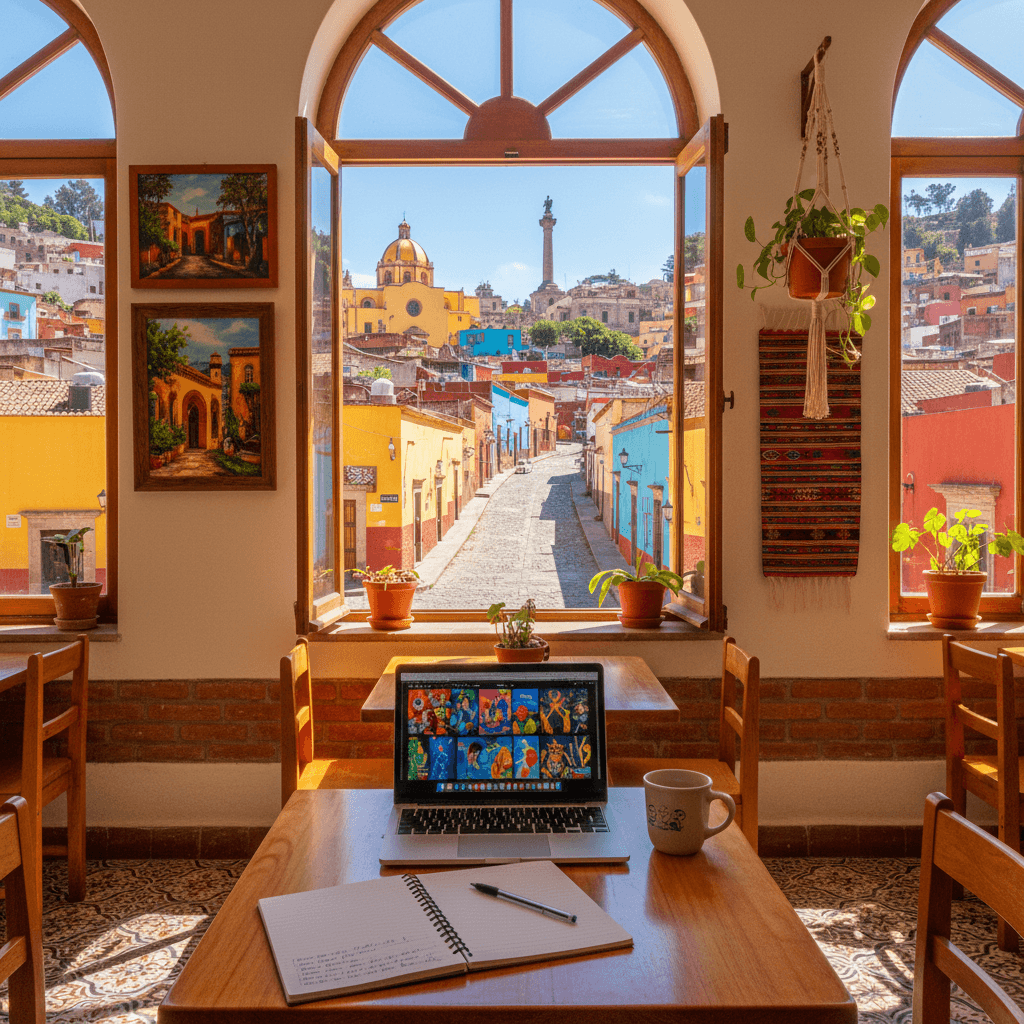
Guanajuato City feels like a secret that's just starting to get out. While nearby San Miguel de Allende draws the retirees and the luxury crowds, Guanajuato belongs to the students, the artists, and a growing circle of nomads looking for something more grounded. It is a UNESCO World Heritage Site that swaps wide boulevards for a dizzying maze of narrow alleys, steep staircases, and a subterranean network of tunnels that keeps most car traffic out of sight. The result is one of the most pedestrian-friendly environments in North America, provided your calves can handle the hills.
The personality here is defined by color and sound. You will see buildings painted in every shade of the rainbow stacked vertically up the canyon walls. Because of the massive university presence, the energy stays youthful and slightly rebellious. You won't find the polished, "resort" feel of other Mexican hubs; instead, you get street murals, spontaneous Callejoneadas (musical walking tours), and a pace of life that is decidedly slower than Mexico City. It is a place where you'll likely spend your afternoons on a rooftop terrace with a $2 USD beer, watching the sun hit the yellow walls of the Basílica de Nuestra Señora.
The Nomad Reality
Living here is significantly more affordable than in the capital or the coast, with costs often running 30% to 50% lower than Mexico City. Most digital nomads find they can live comfortably on $1,200 to $1,500 USD per month, which covers a nice apartment in the center and plenty of dining out. If you are on a tighter budget, $800 USD is doable if you stick to street food and local markets.
The infrastructure is catching up to the demand. You can expect average internet speeds around 60 Mbps, which is plenty for Zoom calls and heavy uploads. However, the cafe culture is a bit different here. While there are plenty of beautiful spots, many local cafes have limited power outlets. You'll need to be strategic about charging your gear before heading out to work. For a reliable setup, nomads often head to the Starbucks in the downtown core, which has multiple rooms and strong signal, or dedicated community spaces where you can get three hours of unlimited WiFi and coffee for just 25 MXN ($1.25 USD).
Where to Plant Your Roots
For most remote workers, Centro Histórico is the only place to be. Living near Plaza de la Paz or Teatro Juárez puts you in the middle of the action. You will be steps away from the best coffee shops, bars, and markets. The trade-off is the noise; the center is lively well into the night. If you need total silence, look for apartments on the higher slopes or the quieter edges of the district, though keep in mind that "quiet" in Guanajuato is a relative term.
- Budget Lifestyle: ~$800 USD per month. Covers a basic studio, local bus fare, and eating at mercados.
- Mid-Range Lifestyle: ~$1,200 to $1,500 USD per month. Covers a 1-bedroom in the center, frequent cafe visits, and regular restaurant meals.
- Comfortable Lifestyle: ~$2,000+ USD per month. Covers a premium Airbnb with a view, daily dining out, and private transport.
Practical Logistics
The city is safe, especially in the high-traffic areas around the main plazas. Because the center is so walkable, you'll rarely need a car. When you do need to go further, Uber and taxis are incredibly cheap. For staying connected, travelers recommend picking up a "pay as you go" SIM card from a local shop. The apps for topping up data can be a little clunky, but locals are usually happy to help you navigate the menus.
One thing to prepare for is the language barrier. Unlike the coastal tourist traps, English proficiency is relatively low here outside of the main nomad-friendly cafes. Carrying cash is also a must; while the city is modernizing, many of the best local spots and markets don't accept cards. Embracing these small hurdles is part of the charm. It’s a city that rewards those who want to immerse themselves rather than just pass through.
The Price of Authenticity
Living in Guanajuato feels like a financial breath of fresh air, especially if you're coming from the inflated markets of Mexico City or Puerto Vallarta. Most nomads find their pesos stretch 30% to 50% further here. It’s one of those rare places where you can maintain a high quality of life on a modest budget without feeling like you're constantly cutting corners.
While the city's popularity is growing, it remains remarkably grounded. You aren't paying a "nomad tax" yet. Local prices for everything from a morning espresso to a cross-town Uber stay consistently low, allowing you to focus more on the experience and less on the spreadsheet.
Monthly Budget Tiers
- The Lean Nomad (~$800): This covers a basic studio apartment slightly outside the immediate center, a heavy reliance on the city's incredible street food, and work sessions at local cafes rather than dedicated offices.
- The Mid-Range Professional (~$1,200 to $1,500): This is the sweet spot for most. It gets you a charming one-bedroom in the Centro Histórico, daily meals at mid-range restaurants, and a regular spot at a coworking space.
- The High-Comfort Resident ($2,000+): At this level, you're looking at upscale Airbnb lofts with panoramic views, frequent fine dining, and private transport whenever you don't feel like tackling the city's famous hills.
Housing and Neighborhoods
The Centro Histórico is where you want to be for the most immersive experience. Prices are highest near Plaza de la Paz and Teatro Juárez, but the convenience is unbeatable. If you're staying long-term, look for apartments on the edges of the center to find more space for your money.
- Short-term Studios: You'll find plenty of options on platforms like Novad or Airbnb, though booking a month in advance is smart during festival seasons.
- The Hill Factor: Keep in mind that "affordable" often means a steeper climb. The higher up the mountainside you go, the lower the rent usually drops.
Dining and Groceries
Eating out is often more tempting than cooking. Street food is ubiquitous and very cheap, while a meal at a mid-range cafe won't break the bank. Most restaurants in Guanajuato still cater primarily to locals and students, keeping prices realistic.
- Casual Meal: Expect to pay a fraction of what you'd spend in San Miguel de Allende for a similar quality dinner.
- Groceries: Local markets are your best friend for produce. Stick to cash, as many smaller vendors don't accept cards.
- Coffee and Beer: A latte or a local cerveza is consistently affordable, making the city's many rooftop bars a regular haunt for remote workers.
Connectivity and Coworking
The cost of "office space" here is one of the city's best perks. While the nomad scene is still developing, the available spaces are incredibly budget-friendly. You'll find community-managed spots that offer flexible packages designed for people who don't need a full monthly commitment.
- Coworking Rates: Some spaces offer three hours of unlimited WiFi plus coffee or tea for just 25 MXN ($1.25 USD). It’s hard to find a better deal in North America.
- Mobile Data: Grab a "pay as you go" SIM card from a local shop. The top-up apps can be a bit clunky, but the data is cheap and reliable for navigating the winding alleys.
- Cafe Culture: Starbucks in the downtown area is a reliable fallback with strong WiFi and plenty of seating, though local rooftop cafes offer better views if you have a charged battery.
Transportation
Guanajuato is a pedestrian's dream, so your transport costs might actually hit zero on some days. When you do need a lift, the options are very affordable. Public buses and taxis are the standard, but Uber is also available for a more seamless experience.
- Transit: Short rides across town via rideshare or taxi are very low cost.
- Walking: Most of your daily needs in the Centro are within a 15-minute walk, provided you don't mind a few staircases.
- Airport Transfers: Budget for a taxi or Uber when heading to Del Bajío International (BJX), as it's the most convenient way to manage luggage through the tunnels.
The Pulse of the City: Nomads and Creative Workers
If you're coming to Guanajuato to work, you'll want to be in the Centro Histórico. This is the heart of the action near Plaza de la Paz and Teatro Juárez. It's where the university energy meets the cafe culture. Most nomads gravitate here because you can walk to everything, and it's the only area where you'll find reliable work setups like the Starbucks downtown, which has multiple rooms and strong WiFi.
Living in Centro means you're steps away from rooftop cafes where a coffee and three hours of unlimited internet will only set you back about 25 MXN ($1.25 USD). It's steep, hilly, and full of stairs, so your legs will get a workout. While the nomad scene is still growing compared to nearby San Miguel de Allende, you'll find your people in Facebook groups like Guanajuato TQM or Guana What.
- Monthly Rent: $600 to $1,200 for a central 1BR Airbnb.
- Vibe: High energy, historic, and very social.
- Best for: Networking, evening mezcals, and being in the middle of festivals.
Settling In: Long-Term Expats
Expats who plan to stay for six months or more often look at the quieter edges of the Centro or neighborhoods slightly up the hill from the main plazas. These areas offer more authentic "barrio" vibes and lower price points while keeping you within a 10 or 15 minute walk of the theater. You'll get more space for your money, often with private terraces overlooking the colorful valley.
The cost of living here is a major draw, often 30% to 50% cheaper than Mexico City. You'll need to carry cash for almost everything and brush up on your Spanish, as English isn't widely spoken once you leave the tourist cafes. Most long termers use the local "pay as you go" SIM cards and top up data through apps to stay connected on the move.
- Monthly Rent: $400 to $800 for traditional apartments.
- Vibe: Local, residential, and quiet at night.
- Best for: Cultural immersion and those on a $1,200 monthly budget.
Space and Safety: Families
Families usually prefer the outskirts of the city center or the newer residential pockets where the terrain is a bit flatter. The tunnels and narrow alleys of the core are charming but can be a nightmare with a stroller. Look for rentals near the larger parks or on the flatter stretches leading out of town where you can easily catch an Uber or a $1.00 taxi ride.
Safety is a highlight in Guanajuato, especially in the well lit areas around the major plazas. Families often feel comfortable walking around in the evenings when the streets are full of performers and locals. For groceries and household needs, you'll likely head to the larger markets or supermarkets on the edge of town, as the small shops in Centro have limited stock.
- Monthly Rent: $800 to $1,500 for larger multi bedroom homes.
- Vibe: Secure, calm, and spacious.
- Best for: Stability and avoiding the late night noise of the student bars.
Independence and Atmosphere: Solo Travelers
For solo travelers, staying as close to Plaza de la Paz as possible is the best move. It's the safest way to navigate the city at night since the streets are always busy with people. You won't feel isolated, and it's easy to meet others at the various game nights or live music sets in the local bars. The walkability is a huge plus, you can explore the underground tunnels and street murals without ever needing a car.
If you're on a tight budget, you can live here for around $800 a month by sticking to street food and basic studio rentals. Solo travelers often recommend the rooftop cafes for a sunset drink, just remember to bring a jacket because the highland air gets chilly as soon as the sun drops, usually hovering between 15°C and 25°C (59°F to 77°F) during the day.
- Monthly Rent: $350 to $600 for a small studio or shared space.
- Vibe: Adventurous, artistic, and walkable.
- Best for: Photography buffs and budget conscious explorers.
Connectivity in the Highlands
Guanajuato City might look like a colonial time capsule, but the infrastructure handles remote work surprisingly well. You can expect average speeds around 60 Mbps across the city [4][6], which is plenty for Zoom calls and uploading large files. Most nomads find the fiber optic connections in Centro Histórico quite reliable, though the thick stone walls of historic buildings can sometimes act as a natural Faraday cage. It is a good idea to check the signal strength in every room before committing to a long term Airbnb.
For mobile data, travelers recommend picking up a "pay as you go" SIM card from a local Telcel or AT&T store. The apps for topping up data can be a bit finicky for non Spanish speakers, but the local shopkeepers are usually happy to help you navigate the interface. Data is cheap, making it easy to use your phone as a hotspot if your apartment WiFi hits a rare snag.
Coworking Spaces and Community
While the nomad scene is still developing compared to Mexico City, the coworking options are unique and incredibly affordable. You won't find many corporate, glass walled offices here. Instead, the community managed spaces offer a more authentic, social vibe.
- Community Workspaces: Several spots in the center offer flexible packages. You can often find deals like 3 hours of unlimited WiFi plus coffee or tea for just 25 MXN ($1.25 USD). It is one of the best values for remote workers in North America.
- The Social Scene: Because the community is smaller, it's easier to make genuine connections. Expats and long term travelers often congregate through Facebook groups like Guanajuato TQM and Guana What to organize meetups or share tips on the best desks in town.
Work Friendly Cafes and Rooftops
If you prefer the "cafe office" lifestyle, Guanajuato delivers with some of the best views in Mexico. The city is famous for its rooftop culture. Working from a terrace overlooking the colorful hills of Centro is a highlight of the experience, though you should always bring a fully charged laptop. Outlets are notoriously scarce on the rooftops, and many smaller cafes are cash only.
- Starbucks (Downtown): It sounds basic, but the Starbucks near Teatro Juárez is a nomad favorite for a reason. It has comfortable chairs, multiple rooms for privacy, and some of the most consistent WiFi and outlet access in the city. It's the "old reliable" when you have a deadline.
- Rooftop Cafes: Areas around Plaza de la Paz are packed with cafes. They are perfect for light admin work or emails, but the bright sun and lack of plugs mean they aren't ideal for an eight hour shift.
- University District: Since Guanajuato is a major university town, the cafes near the main campus are accustomed to students lingering over laptops. These spots usually have a high energy, academic vibe that is great for productivity.
Practical Workflow Tips
The hilly terrain means you probably won't want to commute between your apartment and a coworking space multiple times a day. Most nomads plan their day in blocks, heading into Centro for a few hours of deep work and staying there for lunch or social events. Since English proficiency is lower here than in nearby San Miguel de Allende, having a translation app ready for your SIM card setup or technical issues is a lifesaver.
Overall, the city offers a "work hard, play hard" balance that feels earned. After a morning of calls, you can step out into a UNESCO World Heritage Site and find a meal for a few dollars, which is why this city is quickly climbing the ranks for budget conscious remote workers.
Street Smarts and Local Vibes
Guanajuato City feels refreshingly secure compared to the chaotic energy of Mexico City or the grit of some border towns. Most nomads find the Centro Histórico remarkably safe, even after the sun goes down. Because the city is built on a university population and a heavy stream of domestic tourism, the central plazas like Plaza de la Paz and the area around Teatro Juárez stay active late into the night. This constant "eyes on the street" presence makes solo evening walks to a rooftop bar or a late night taco stand feel comfortable.
The city's unique geography is its best security feature but also its biggest challenge. The narrow, winding alleys (callejones) are charming, but they can get disorienting. Travelers often recommend sticking to well lit, high traffic paths when heading back to your rental at night. While violent crime targeting foreigners is rare here, petty theft can happen in crowded spots. Keep your phone tucked away while walking through the tunnels or busy markets, and you'll likely avoid any issues.
If you're looking for a home base, expats recommend staying near the central plazas. Isolated spots on the far edges of the hills might offer great views, but they can feel a bit too lonely when you're walking home uphill in the dark. Use Uber if you're staying further out; it's affordable, tracked, and generally preferred over hailing random cabs late at night.
Healthcare and Pharmacies
You won't find a massive, English speaking mega-hospital in the heart of the historic center, but the healthcare infrastructure is solid for everyday needs. For minor ailments, look for a Farmacia Similares or Farmacia del Ahorro. These are everywhere and often have a small doctor's office attached where you can get a consultation for about 50 to 100 MXN ($2.50 to $5.00 USD). It's a lifesaver for things like sinus infections or the inevitable "Moctezuma's Revenge."
- Emergency Services: Dial 911 for any immediate police, fire, or medical emergencies.
- Payment: Most local clinics and pharmacies are cash-only operations. Always keep a few hundred pesos on hand for medical surprises.
- Specialized Care: For serious procedures or English speaking specialists, many nomads take the short 1.5 hour trip to San Miguel de Allende or León, which have larger private hospitals.
Staying Healthy as a Nomad
The biggest health hurdle in Guanajuato isn't the local clinics; it's the altitude and the incline. The city sits at over 6,500 feet, and the verticality of the streets is no joke. Give yourself a few days to acclimate before trying to hike up to the Pípila statue, and stay hydrated. Speaking of hydration, never drink the tap water. Most long term rentals provide large 20 liter water jugs (garrafones), and you can buy small bottles at any OXXO for a few pesos.
For those with mobility issues, the "pedestrian-friendly" label comes with a caveat. The city is a maze of stairs and uneven cobblestones. It's a fantastic workout for your glutes, but it's tough on the ankles. Wear sturdy shoes and take it slow. If you need a break from the thin air, the local buses are a cheap way to bypass the steepest climbs for just a few pesos.
Safety Checklist
- Connectivity: Pick up a Telcel SIM card at a local shop. Having data for Google Maps is the best way to avoid getting lost in the subterranean tunnels.
- Social Groups: Join the Guanajuato TQM or Guana What Facebook groups. They're great resources for asking about specific neighborhoods or finding recommended local doctors.
- Cash is King: While some upscale spots near the university take cards, most pharmacies and clinics expect cash. Use ATMs located inside banks for the best security.
The Pedestrian Experience
Guanajuato is a city built for feet, not for cars. Most nomads find the best way to get around is simply walking through the Callejones, the narrow, winding alleys that define the historic center. Because the city is built into a ravine, you will encounter plenty of steep staircases and hilly terrain. It is a daily workout that keeps the community active, but you should pack comfortable shoes with good grip for the cobblestones.
The city's unique layout includes a network of underground tunnels originally built for flood control. Today, these tunnels divert most vehicular traffic away from the surface, leaving the Centro Histórico remarkably quiet and pedestrian friendly. If you are staying near Plaza de la Paz or Teatro Juárez, you can reach almost any cafe, market, or bar within a ten minute walk.
Public Transport and Taxis
When your legs need a break or you are carrying groceries, the local buses are an incredibly cheap way to navigate. These small buses, often called camiones, run frequently and cost only a few pesos. They are a great way to reach neighborhoods further out from the center or to get up the steeper hills without breaking a sweat. Just look for the destination painted on the windshield.
For more direct routes, taxis and rideshares are widely available. Uber operates in the city and is generally the preferred choice for nomads because the pricing is transparent and you can track your route. If you opt for a traditional green taxi, make sure to agree on the price before you get in, as they do not use meters. Most short trips across town will cost you very little, usually staying well under $5 USD.
Arriving and Departing
If you are flying in, you will land at Del Bajío International Airport (BJX). It is located about 30 minutes away from the city center. The most seamless way to reach your Airbnb is to book an Uber or grab a registered airport taxi. Expect to pay around 400 to 500 MXN ($20 to $25 USD) for the trip. If you are coming from nearby San Miguel de Allende or Mexico City, the Primera Plus bus line is the gold standard for comfort, featuring reclining seats and reliable WiFi.
Practical Transit Tips
- Cash is King: You will need small change for the city buses and most taxis. Drivers rarely have change for large bills like 500 MXN.
- The Funicular: For a shortcut to the Pípila monument for those iconic sunset views, take the funicular located behind Teatro Juárez. It saves you a long uphill climb.
- Connectivity: Travelers recommend picking up a local SIM card at an OXXO or a Telcel store. Having Google Maps is helpful for navigating the maze like alleys, though the high walls can sometimes make the GPS signal jumpy.
- Avoid Driving: Unless you are planning long road trips to other states, do not rent a car. Parking in the center is nearly impossible, and the narrow streets are a nightmare for anyone unfamiliar with the local flow.
While the hills might leave you winded for the first few days, the lack of heavy traffic and the beauty of the colonial architecture make Guanajuato one of the most pleasant cities in Mexico to explore on foot. Just take it slow, follow the sound of the street performers, and let yourself get a little lost in the tunnels.
The Language Gap
In Guanajuato, Spanish is the undisputed king. Unlike coastal hubs like Playa del Carmen or the more Americanized San Miguel de Allende nearby, English proficiency here remains quite low. You'll find that staff at international chains like the Starbucks in the Centro or high-end hotels might speak some English, but your average street food vendor, taxi driver, or landlord likely won't.
Most nomads find this lack of English to be a double-edged sword. It can be a hurdle when you're trying to explain a specific dietary restriction or negotiating a long term rental, but it's also the reason the city feels so authentic. You aren't living in a tourist bubble here; you're immersed in a real Mexican university town. If you're looking to actually improve your Spanish, there isn't a better classroom in the country.
Getting by Day-to-Day
You don't need to be fluent to survive, but you'll definitely want a translation app downloaded and ready for offline use. Digital nomads often rely on Google Translate or DeepL for more complex interactions, especially when dealing with bureaucratic tasks like setting up a local SIM card. Travelers often say that while the local cell phone apps for topping up data can be confusing and are entirely in Spanish, the locals are incredibly patient and will usually help you navigate the interface if you ask nicely.
Because the city is a UNESCO World Heritage Site with a heavy student population, people are used to seeing outsiders, even if they don't speak their language. A simple "Gracias" or "Disculpe" goes a long way. If you're planning to stay for more than a month, consider enrolling in a local language school or finding a conversation partner through the Guanajuato TQM or Guana What Facebook groups. It's the fastest way to break into the social scene.
Communication Essentials
- Connectivity: Pick up a local SIM card at any OXXO or Telcel store. It's much cheaper than roaming, and having a local number makes it easier to use apps like Uber or WhatsApp, which is how most local business is conducted.
- Cash is Language: Many smaller spots don't take cards, so knowing your numbers in Spanish is vital for quick transactions. A coffee and three hours of WiFi at a coworking space might only cost you 25 MXN, but you'll need to be able to understand the total when it's spoken aloud.
- Digital Tools: Use the camera feature on translation apps to read menus at traditional cantinas or signs in the winding underground tunnels.
Social Nuances
The vibe in Guanajuato is laid-back and polite. When entering a small shop or a cafe, it's customary to greet people with a "Buenos días" or "Buenas tardes." Skipping this can come off as slightly rude. Even if your Spanish is limited to a few phrases, making the effort typically results in much warmer service. Expats recommend learning the "survival Spanish" basics before you land, specifically terms related to directions, as the hilly terrain and narrow alleys can be a maze for the uninitiated.
The High-Altitude Sweet Spot
Guanajuato sits at roughly 6,500 feet in the central highlands, which means you can ditch the humidity and oppressive heat found on the coasts. The climate here is often described as a perpetual spring, though that description glosses over the fact that it can get surprisingly chilly once the sun drops behind the mountains. You'll want to pack layers; a light down jacket or a thick hoodie is standard attire for evenings spent on a rooftop bar.
The best window for a visit falls between November and May. During these months, the sky stays a crisp, deep blue and rain is almost non-existent. It's the ideal time for walking the steep alleys of the Centro Histórico without worrying about a sudden downpour turning the cobblestones into a slide. February and March are particularly pleasant, with daytime highs hovering around 24°C (75°F) and nights cool enough for a comfortable sleep without needing air conditioning.
The Rainy Season Reality
From June through September, the afternoon rains arrive. It usually doesn't rain all day; instead, you'll get intense, short bursts in the late afternoon or evening. This is when the surrounding hills turn a brilliant green, but it can make the city's famous tunnels and narrow "callejones" a bit damp. If you're planning to work from one of the many outdoor cafes, you'll need to keep an eye on the clouds and be ready to move indoors by 4:00 PM.
When the City Peaks
If you're looking for peace and quiet, avoid October. This is when the Festival Internacional Cervantino takes over. It's one of Latin America's most significant arts festivals, and while the energy is incredible, the city becomes packed, prices for short-term rentals skyrocket, and the narrow streets feel even tighter. Most long-term nomads either lean into the chaos or take a three-week trip elsewhere during this time.
For those looking for a balance of good weather and local culture without the Cervantino crowds, November is a top choice. The Día de los Muertos celebrations here are authentic and visually stunning, especially around the university and the local cemeteries, and the weather is reliably dry.
A Quick Seasonal Breakdown
- Dry Season (November to May): Blue skies, low humidity, and the best time for rooftop coworking. Expect highs of 22°C to 27°C (72°F to 80°F) and lows of 7°C to 10°C (45°F to 50°F).
- Rainy Season (June to October): Lush green landscapes but daily afternoon showers. Temperatures stay mild, rarely exceeding 26°C (79°F).
- Peak Festival Season (October): High energy, high prices, and massive crowds. Book your Airbnb at least six months in advance if you plan to be here for Cervantino.
- Winter (December to January): Sunny days but cold nights. Many historic buildings lack central heating, so check if your host provides a space heater or extra blankets.
Most travelers find that April and May are the warmest months, sometimes reaching 30°C (86°F). While that's not extreme, the high altitude makes the sun feel much stronger than the thermometer suggests. Sunscreen is a daily requirement here, even if you're just ducking out for a quick 25 MXN ($1.25 USD) coffee at a local cafe.
Making the Move: Costs and Logistics
Living in Guanajuato is a breath of fresh air for your wallet, especially if you are transitioning from Mexico City or Puerto Vallarta. Most nomads find they can live comfortably on $1,200 to $1,500 USD per month, though those on a strict budget can get by on roughly $800 USD if they stick to street food and local markets. Expect your daily expenses to be 30% to 50% lower than in Mexico's larger hubs.
- Housing: A studio or one bedroom in the Centro Histórico is the standard choice for remote workers. Short term rentals on platforms like Airbnb or Novad are the easiest way to secure a spot before you arrive.
- Coworking: Dedicated spaces are still emerging, but you can find community managed spots offering 3 hours of unlimited WiFi and coffee for just 25 MXN (about $1.25 USD).
- Connectivity: Average speeds hover around 60 Mbps. While this is plenty for Zoom calls, older buildings with thick stone walls can be signal killers, so always ask for a speed test before signing a lease.
The Best Neighborhoods for Nomads
The Centro Histórico is the heart of the action. Living near Plaza de la Paz or Teatro Juárez puts you within walking distance of the best cafes and nightlife. It is safe, social, and has a university energy that keeps the area feeling young. The trade off is the terrain; Guanajuato is built on steep hills, so expect plenty of stairs and narrow alleys.
For families or those who want a break from the noise, look toward the quieter edges of the center. You will get more space for your money, though you might rely more on the local Uber drivers or the very affordable green buses to get into the thick of things.
Staying Connected and Getting Around
Guanajuato is a pedestrian's dream, but your calves will feel the workout. The city is famous for its underground tunnels and "callejones" (narrow alleys), which make it easy to traverse on foot. When you need to go further, Uber and local taxis are reliable and cheap. If you are flying in, the Del Bajío International Airport (BJX) is the closest entry point; grab a taxi or Uber from there to reach the city center.
For your phone, pick up a "pay as you go" SIM card at a local convenience store. The apps for topping up data can be a bit clunky, but locals are usually happy to help you navigate the menus. Just remember that while the WiFi is generally solid in cafes, outlets are surprisingly rare. Charge your laptop fully before heading to a rooftop cafe.
Daily Life and Local Manners
Cash is still king here. While some upscale spots and the downtown Starbucks take cards, you will need pesos for street food, small markets, and many cafes. Keep a stash of small bills on you at all times. Regarding the language, English proficiency is lower here than in San Miguel de Allende. You will want a translation app and a few basic Spanish phrases to navigate daily interactions, though the locals are incredibly patient and welcoming.
To find your tribe, join Facebook groups like Guanajuato TQM or Guana What. These are the best spots to find out about local meetups, game nights, or festivals. The nomad scene is growing but still intimate, so it is easy to make friends if you frequent the same rooftop spots or community coworking events.
Health and Safety
The city center is generally very safe, even after dark, thanks to the constant foot traffic around the main plazas. Stick to well lit areas and avoid isolated spots far from the center late at night. For healthcare, pharmacies are everywhere and can handle minor ailments. For anything serious, 911 is the standard emergency number, but most expats recommend having private travel insurance that covers medical evacuations if needed.
Need visa and immigration info for Mexico?
🇲🇽 View Mexico Country GuideHidden Gem
Worth the effort