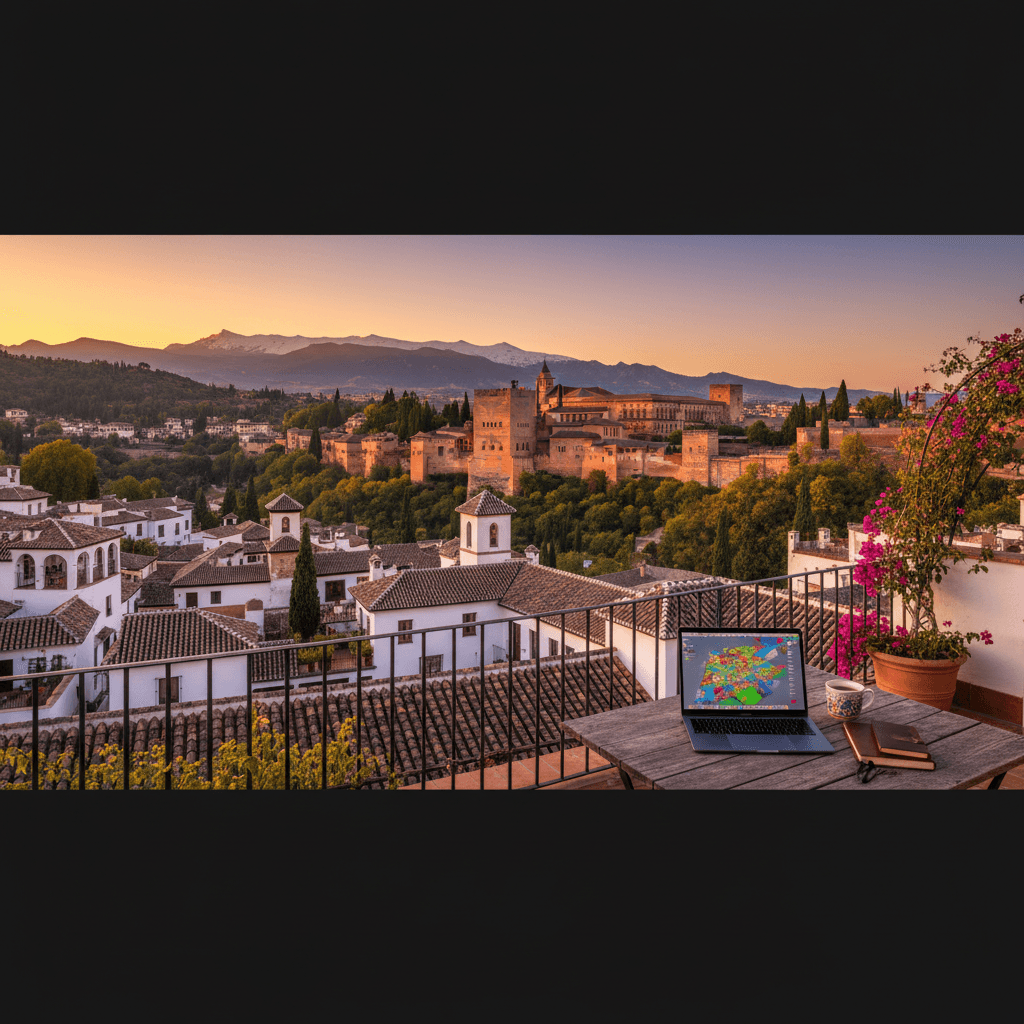
Granada
🇪🇸 Spain
Granada feels older and looser than most Spanish city bases. The Alhambra sits above everything like a constant reminder of who ruled here, while the university keeps the streets noisy with students, cheap drinks and late dinners, so the pace stays relaxed without getting sleepy.
It’s a place people either click with fast or they don’t. The hills can be annoying, honestly, especially if you’re carrying groceries up toward Realejo or Albaicín, but the payoff is views, tapas bars and that dry evening air that smells faintly of dust, grilled meat and jasmine after sunset.
Cost of living is still decent, though it’s not the ultra-cheap bargain some nomads expect. A single person usually lands around €1,500 to €2,000 on a lean setup, €2,000 to €3,000 for a comfortable routine and more if you want nicer rent, more dining out and private health cover.
Typical monthly setup
- Budget: About €1,500 to €2,000, with rent around €500 outside the center, basic groceries, a transport pass and a modest coworking membership.
- Mid-range: Around €2,000 to €3,000, with a €700 central flat, more meals out, better coffee habits and a hot desk a few days a week.
- Comfortable: €3,000+, especially if you want a nicer apartment, more leisure spending and private healthcare.
Centro and Realejo are the sweet spots for many nomads, because you can walk almost everywhere and still be near bars, cafés and coworking. Albaicín has the best views and the most atmosphere, but the cobbles and steep climbs get old fast, while Zaidín is cheaper, more local and a bit less interesting if you want a social routine.
The internet is, weirdly, better than the city’s reputation suggests, with reliable fiber in most central areas and solid speeds for calls and uploads. Coworking options like ANDA Cowork and FreeSoul are popular, cafés will usually let you linger if you buy something and the social scene does most of the work for you, because Granada still runs on tapas, repeat faces and late-night chat rather than slick networking events.
Safe overall, but don’t get lazy about it. The center feels fine at night, though some outer areas are better avoided after dark and the hilly streets, packed buses and noisy scooters can make the city feel more chaotic than it actually is.
What makes Granada different is the mix: Moorish stone, student noise and a strong local rhythm that never fully bends to tourism. It’s not polished. That’s the point.
Granada feels affordable at first glance, then the little costs stack up. A single nomad usually lands somewhere between €1,500 and €3,000 a month, depending on how central you live, how often you eat out and whether you want a coworking desk or just a decent café with WiFi.
Not cheap. Still manageable.
Typical Monthly Budget
- Budget: €1,500 to €2,000, with about €500 rent outside the center, €200 for groceries, €35 for transport and roughly €100 for coworking.
- Mid-range: €2,000 to €3,000, usually around €700 for a one-bedroom in the center, €350 for food and dining, €20 for mobile and about €150 for coworking.
- Comfortable: €3,000+, especially if you want a bigger flat, more dinners out, private health coverage and a bit of breathing room for weekend trips.
Rent by Area
- Centro: €650 to €850 for a studio or 1BR, walkable and lively, but pricier and noisier, with scooter engines and late-night chatter floating up from the streets.
- Realejo: Similar pricing to Centro, sometimes a touch lower, with older buildings, steep lanes and a strong expat presence near the Alhambra.
- Zaidín: €500 to €750, more local and practical, less pretty, honestly, but easier on the wallet.
- Genil: Also good for more space, especially if you want a calmer residential feel and don’t mind being farther from the main social action.
Food costs are pretty friendly if you stay disciplined, though tapas can wreck that plan fast. A cheap meal runs about €13, a mid-range dinner for two is around €37 and fast food is about €9, with coffee, beer and those extra plates of fried things adding up in ways that feel harmless until the card statement arrives.
Daily Costs
- Transport: €35 for a monthly pass and the center is walkable enough that many people barely use it.
- Coworking: About €125 to €326 a month, with spots like ANDA Cowork and FreeSoul charging less for part-time or hot-desk access.
- Mobile data: Around €10 for 50GB on budget plans, which, surprisingly, is enough for most remote workers if you’re not burning through video calls all day.
The city’s hilly streets can make cheap life feel expensive in another way, your legs will tell you after a week in Realejo or Albaicín. Even so, Granada is still one of the better-value cities in southern Spain, especially if you pick your neighborhood carefully and don’t fall into tourist-priced cafés near the obvious sights.
Nomads
For most remote workers, Realejo is the sweet spot. You’re close to the Alhambra, tapas bars are right there and the old buildings have usually been updated enough that you won’t be fighting ancient wiring every week, though the hills and tight streets can get old fast.
Centro is easier if you want a flatter, more social base and the walk home after dinner is simple, not a calf workout. Granada’s center feels alive without being frantic, you’ll hear bus brakes, clinking glasses and the occasional scooter buzzing past late at night.
Expats
Centro and Realejo draw the most long-stay expats because life is simple there, with coworking spaces, cafés and a decent chance of hearing English in the right places. ANDA Cowork and FreeSoul are the names people actually mention and honestly, that matters when you’re trying to settle in fast.
- Centro: Walkable, lively, pricier, with studio and 1BR rents around €650 to €850.
- Realejo: Historic, social, close to the Alhambra, but those hills bite.
- Albaicín: Gorgeous views and a stronger local feel, though the steep lanes can be a pain in summer heat.
If you want everyday comfort, stick near the center and use the GranadaBus app when your feet need a break. The city is affordable by Spanish standards, but rent in the nicest areas adds up quickly and monthly costs can jump once you factor in coworking, dinners and the odd taxi home.
Families
Genil and Beiro make more sense for families than the postcard neighborhoods. You get more space, a quieter feel and less of the late-night noise that bounces off stone streets in the old center, which, surprisingly, can be a real quality-of-life issue.
- Genil: Residential, calmer, better for larger apartments and a less hectic routine.
- Beiro: Practical, family-friendly and easier for school runs and daily errands.
- Zaidín: Cheaper, local and solid if you’re watching rent, with 1BRs often around €500 to €750.
Zaidín isn’t pretty in the same way as Realejo, but it’s lived-in, cheaper and less exhausting. That matters. Families who need supermarkets, bus links and a place where kids can sleep through the night usually end up happier there than in the steep, tourist-heavy center.
Solo Travelers
Centro is the easiest call if you’re on your own, because you can wander into tapas bars, meet people fast and get back to your place without thinking too hard. It’s pricier, yes, but the social payoff is real, especially around Calle Pedro Antonio de Alarcón and the bars spilling noise onto the pavement.
If you want more character, Realejo is the better bet, with tapas at La Buena Vida, late drinks and a more lived-in feel than the tourist core. Avoid the outskirts after dark, especially rougher pockets like Almanjáyar or Norte and keep the center as your base, it’ll make Granada much easier to enjoy.
Internet & Coworking
Granada’s internet is better than a lot of people expect. Fiber reaches most neighborhoods and speeds of 24 to 181 Mbps are common, so Zoom calls usually hold up fine in Centro, Realejo and Zaidín, though apartment-to-apartment quality can still be annoyingly uneven, honestly.
The coworking scene is small but decent and the city’s student energy helps. ANDA Cowork is the name you’ll hear most, with prices around €125 a month, while FreeSoul has day passes at €14 and full-time plans around €165, which, surprisingly, makes it one of the more practical options if you’re not settling in for the long haul.
- ANDA Cowork: About €125 per month, solid for regular desk work.
- FreeSoul: €14 day pass, €130 part-time, €165 full-time.
- Cocoroco: Good backup option if you want a different crowd.
- AFS: Another workable space, especially if you just need a desk and wifi.
Most nomads also work from cafés and Granada has enough of them to make that viable. Coffee shops around Centro and Pedro Antonio de Alarcón tend to be more laptop-friendly than the tapas bars near the Alhambra and the air often smells like espresso, frying oil and wet stone after rain, which beats staring at a blank apartment wall all day.
SIM service is easy to sort out. Orange tends to be the cheapest straightforward choice, with around €10 for 50GB, while Movistar and Vodafone are the safer bets if you care about 5G coverage and fewer dead spots on the edges of town, especially if you’re working from a place with patchy building walls and ancient plumbing that seems to eat signal for breakfast.
- Orange: Around €10 for 50GB.
- Movistar: Better coverage, pricier.
- Vodafone: Another strong 5G option.
If you need a no-nonsense setup, get a SIM, test the wifi before signing any lease and stick to neighborhoods with modern buildings. Realejo is nice but hilly, Centro is convenient but noisier and in summer the heat hangs in the streets so hard you’ll want a place with good cooling, not just pretty tiles and a view.
Granada feels calm on the surface, then a little chaotic in the old streets and that mix is part of the charm. Overall, it’s a safe city, especially in Centro, Realejo and around the main student areas, where you’ll hear scooters, tapas chatter and the occasional tourist dragging a suitcase over cobblestones. Still, don’t get lazy after dark, because petty theft happens and the rougher edges of town, especially Almanjáyar, Chana and parts of Norte, deserve more caution.
Most nomads stay central and don’t think twice about walking home late, but I’d still keep your phone out of sight and avoid empty side streets after midnight, honestly. Granada isn’t the kind of place where you’re constantly on edge, it’s more the kind where a quiet street can feel fine until you notice you’re the only one there. That’s when common sense matters.
Healthcare is solid here, with Virgen de las Nieves and San Cecilio handling everything from routine care to real emergencies and expats often say the standard feels close to what they’re used to in the US or Western Europe. Pharmacies are everywhere, the green cross signs glow on nearly every block and you can usually sort out minor stuff fast, which, surprisingly, makes day-to-day life much easier.
Safety
- Best areas: Centro, Realejo and most of the student-heavy central streets.
- Be careful: Almanjáyar, Chana and Norte after dark, especially if the streets feel empty.
- Common issue: Petty theft, not violent crime, so keep bags zipped and phones tucked away.
- Emergency number: 112 for police, fire and medical help.
Healthcare
- Main hospitals: Virgen de las Nieves and San Cecilio.
- Pharmacies: Easy to find and many keep long opening hours.
- Private insurance: Popular with long-stay nomads, often around €120 a month for basic coverage.
- Language: English isn’t universal, so a translation app helps, especially outside tourist zones.
If you need care, go straight to a pharmacy first for minor issues or head to a hospital if it’s serious, because the system works best when you don’t waste time guessing. The air in winter can feel damp and cold on the tile floors, summer heat sticks to your skin and nobody wants to be doing admin while sick, so keep your passport details, insurance info and address written down somewhere easy to grab.
Granada is easy to live in, but it’s not flat. The center is compact and very walkable, so you’ll rack up steps fast between coffee, errands and a tapas crawl, then find yourself cursing the hills in Albaicín or Realejo with a grocery bag digging into your wrist. Street noise is part of the deal, too, buses hiss, scooters buzz and late-night chatter carries through narrow streets.
Most nomads skip cars entirely. Parking is a headache, traffic in the center feels absurd for a city this size and honestly, you won’t need four wheels unless you’re doing regular day trips or hauling gear.
Public Transport
- Bus fare: about €1.40 per ride.
- Monthly pass: around €35.
- App: GranadaBus is the one to have on your phone.
- Metro: limited, useful only on some routes.
The bus network does the job for most daily movement and it’s cheap enough that you won’t resent using it, though schedules can feel a bit loose if you’re used to bigger-city precision. The metro exists, but it’s not the hero here, it’s more of a supporting act.
Walking, Bikes and Scooters
- Walking: best for Centro, Realejo and parts of Albaicín.
- Bikes: workable, but the hills are brutal.
- Scooters: handy for quick hops, less fun on rough streets.
Walking is still the smartest way around town, because half the charm is getting lost between tiled courtyards, tiny bars and the smell of frying oil drifting out of doorways. Turnouts can be weirdly steep, though, so if your place is high up in Albaicín, expect a workout every time you come home.
Getting To and From the Airport
- Transfer time: around 20 minutes.
- Typical cost: €20 to €30 by bus or taxi.
- Best move: take a taxi if you’ve got luggage.
Airport access is straightforward, which, surprisingly, saves you from a lot of Spanish-city annoyance. If you land late, pay the taxi and stop overthinking it, dragging a suitcase through Granada’s old streets at night isn’t fun, especially when the pavement is uneven and your arms are already tired.
Best Areas for Getting Around
- Centro: easiest for walking, nightlife and transit.
- Realejo: great location, but the hills bite.
- Zaidín: flatter and cheaper, though less central.
- Albaicín: beautiful, but only if you don’t mind climbing.
If you want the smoothest daily life, live in Centro or parts of Realejo and keep your apartment hunt focused there. Zaidín makes sense if you care more about price than atmosphere and Albaicín is lovely if you’re fine with aching calves and a slower pace every time you head out.
Granada runs on Spanish, plain and simple. You’ll hear a lot of Andalusian clipped speech in cafés, on buses and at the tapas bars around Calle Pedro Antonio de Alarcón and while a few people in Centro or near coworking spaces speak decent English, don’t expect it everywhere. Honestly, a friendly “Hola” gets you farther than perfect grammar.
The day-to-day stuff is manageable if you keep a translation app open, because menus, rental chats and pharmacy counters can turn into a scramble fast, especially when someone answers at full speed with a mouthful of Granada slang. Google Translate helps, but so does learning the basics and weirdly enough, locals usually warm up once you try.
- Hola: hello
- Por favor: please
- Gracias: thanks
- ¿Habla inglés?: do you speak English?
- Buenas: a casual all-day greeting
English is more common in tourist-heavy parts of Centro, Realejo and coworking spaces like ANDA Cowork or FreeSoul, where staff are used to digital nomads and the whole exchange feels smoother. Outside those bubbles, though, you’ll often get Spanish only and that’s where things slow down, especially with housing agents, utility setup or anything involving paperwork, which, surprisingly, can still be done with patience and gestures.
For living here, a little Spanish saves money and hassle. You’ll need it for landlords, bus drivers and some smaller bars where the bartender is juggling plates, laughing with regulars and shouting orders over the clatter of glasses and if you can ask for a bill or explain a problem yourself, you’ll avoid the “tourist rate” energy that pops up fast in more informal settings.
The communication vibe is pretty relaxed once you get used to it, but people can sound direct and that isn’t rudeness. It’s just Granada, fast, warm, a bit dry and usually honest, so don’t wait for polished English if you need help, ask clearly, speak slowly and keep your phone ready.
Granada’s weather is pretty simple to read and that’s part of the charm. Summers are hot, dry and often brutal in the afternoon, while winters can feel cold enough to make you appreciate thick socks, stone floors and a good café. July often sits around 31°C, January around 10°C and November can bring the kind of rain that drums on rooftops and makes the Albaicín streets slick and annoying.
May through October is the sweet spot for most nomads, because you get warm evenings, blue skies and long tapas runs without the miserable winter damp. July and August are a different story, honestly, especially if you’re stuck in a top-floor flat with weak air-con, the heat lingers late, the air feels dusty and even a short walk up the hills can leave you sweating through your shirt.
Winter isn’t terrible, but it’s cooler than people expect. January and February are the months that catch newcomers off guard, with chilly mornings, gray skies and a kind of wet cold that creeps into your bones, especially in older apartments with tiled floors and thin heating.
Best times to visit
- May to June: Best balance of warmth, daylight and manageable crowds.
- September to October: Still warm, less intense than midsummer and better for working from cafés or walking to Realejo after sunset.
- July to August: Hot, quiet and a bit punishing unless you like slow afternoons and blasting fans.
- January to February: Cheapest-feeling season in the city, but cold and sometimes rainy, so plan for indoor time.
If you’re staying longer, the shoulder seasons make the most sense. You’ll still get late dinners on terraces, but without the sticky heat or the winter drizzle and that matters when you’re bouncing between coworking spaces like ANDA Cowork or FreeSoul, then heading out for tapas at Pedro Antonio de Alarcón.
Spring can be especially good, because the city smells like orange blossoms and damp earth after rain and the mountain air from Sierra Nevada keeps evenings crisp. Autumn is easier on the wallet and the nerves, less tourist pressure, fewer sweaty climbs up to Albaicín and honestly, that’s when Granada feels most livable.
Granada feels easy to like, but it isn’t effortless. The center is walkable, the tapas are cheap and the student energy keeps things moving, yet the hills in Albaicín and Realejo will have your calves complaining by week two.
Most nomads end up spending €1,500 to €2,000 a month if they keep rent outside the center, cook at home and work from a cheaper desk or cafe. Go for Centro or Realejo and the budget jumps fast, because a one-bedroom can run €650 to €850 and then lunch, coffee and a few nights out start adding up in a city where a plate of something simple can still smell like garlic, olive oil and fried batter drifting out of a bar door.
For a smoother setup, use these areas:
- Centro: Best for walkability, nightlife and getting things done without a scooter or taxi.
- Realejo: Good if you want tapas bars and a more historic feel, though the streets are steep and narrow.
- Albaicín: Gorgeous views, more character, less convenience, honestly and the climbs get old.
- Zaidín: Better for tighter budgets, with more local life and fewer tourists.
WiFi is usually fine, with fiber in most neighborhoods and speeds that can handle calls, uploads and regular remote work. If you want a dedicated desk, ANDA Cowork and FreeSoul are the names people keep repeating and FreeSoul’s day pass is handy when you just need a backup plan, not a long commitment.
Get a local SIM early. Orange is a common choice, Movistar and Vodafone have strong 5G coverage and airport or shop pickup is easy enough that there’s no real reason to wait around relying on patchy hotel internet.
Safety is decent, but don’t get lazy. The center feels fine at night, though areas like Almanjáyar, Chana and Norte can be sketchier after dark and if you’re crossing the city late, trust your instincts and keep your phone tucked away.
Healthcare is solid, pharmacies are everywhere and 112 is the emergency number to remember. That helps. For banking, most nomads use N26, Revolut or Wise, because local admin can be slow and the less you have to mess with Spanish bureaucracy, the better.
Daily life runs on Spanish timing, so dinner at 10pm isn’t strange, tapas often come with your drink and people greet each other with a quick “buenas” more often than a formal hello. It’s relaxed, but not sleepy and the sound of scooters, clinking glasses and late-night chatter hangs in the air long after sunset.
Need visa and immigration info for Spain?
🇪🇸 View Spain Country GuideEasy Landing
Settle in, no stress