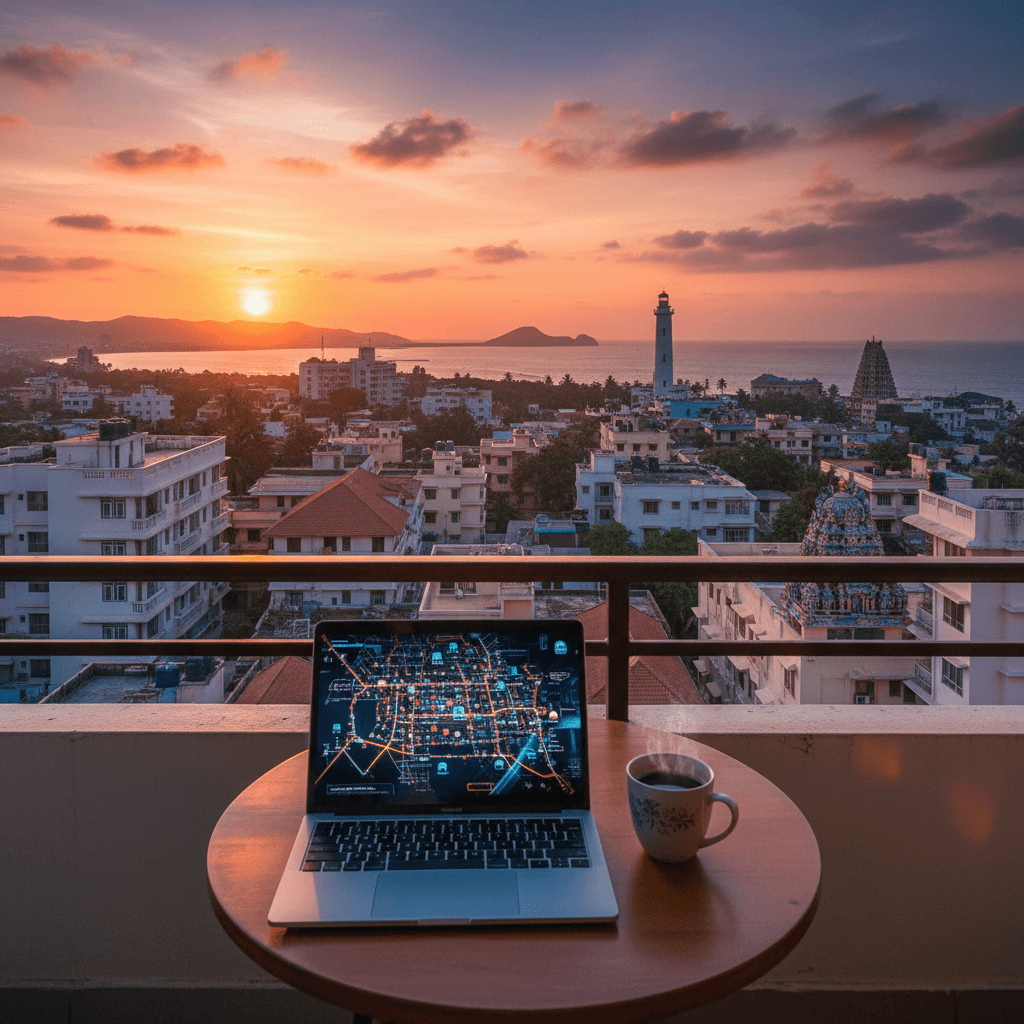
Goa (Panaji/North Goa)
🇮🇳 India
Goa isn't your typical Indian experience. It's a slow-motion collision of Portuguese colonial history and tropical beach life that feels more like a Mediterranean village lost in the jungle than a standard tech hub. In Panaji and North Goa, the air smells like sea salt and wood-fired ovens, and the day is dictated by the heat rather than the clock. You'll find yourself working from a 17th-century villa in the morning and joining a drum circle on the sand by sunset.
What sets this place apart is the friction between its rural charm and a growing nomad infrastructure. It is one of the few places where you can find high-end speakeasies and artisanal markets sitting right next to ancient temples and cashew groves. Nomads are drawn here for the affordability and the community, which is a mix of yoga practitioners, tech entrepreneurs, and artists. However, it requires a certain level of patience. You have to embrace the occasional power cut and the reality that things move at "Goan time," which is to say, they'll happen when they happen.
The Cost of Living
Living here is remarkably easy on the wallet, especially if you move away from the immediate beachfront. Most nomads find they can live comfortably on $700 to $1000 per month, while those on a tighter budget can get by on $400 to $600 by sticking to local bhaji pav stands and basic studios.
- Budget Tier ($400 to $600): Includes a basic studio for $250, local street food for $150, a scooter rental for $60, and a basic coworking membership for $50.
- Mid-range Tier ($700 to $1000): Covers a 1-bedroom apartment for $400, a mix of cafe and home dining for $250, rideshare apps for $50, and a premium coworking spot for $80.
- Comfortable Tier ($1200+): Upscale housing in Panaji for $600, premium dining and cocktails for $400, and private car transfers.
Where to Plant Your Flag
Choosing a neighborhood depends on whether you value stability or the party scene. Panaji (Panjim) is the top choice for serious work. It's walkable, filled with Indo-Portuguese architecture, and has the most reliable power and internet in the state. Expats and families tend to settle here for the urban amenities and the proximity to the international airport.
Anjuna in North Goa is the heartbeat of the nomad scene. It’s where you’ll find the famous markets, the best coworking growth, and a constant stream of networking events. The downside is the noise and the occasional "dodgy" Wi-Fi. If you want something quieter, Palolem in the south is beautiful but lacks the strong community and infrastructure found in the north.
Work and Connectivity
The tech scene is centered around spaces like Goa Coworking, where monthly memberships run between $50 and $100. While fiber internet in cafes averages 50 to 97 Mbps, it’s not always consistent. Experienced travelers recommend carrying a backup dongle or using a local Airtel or Vodafone SIM, which costs only $1 to $2. Use Wise or Revolut for banking, as ATMs are everywhere but exchange rates at local counters can be steep.
The Practical Side
Getting around is best done on two wheels. A scooter rental costs about $60 a month and gives you the freedom to explore the backroads. For longer trips, use Uber or Ola, which are reliable and cheap. Safety is generally high, though it's smart to avoid isolated beaches at night and keep an eye on your belongings in crowded markets.
The weather is a major factor. The sweet spot is November to March, when the air is dry and the temperature sits around 30°C (86°F). April to June gets incredibly humid, and the monsoon from June to September brings heavy rains that can shut down many beach shacks and outdoor events. If you can handle the heat, the shoulder months of October and April offer the best balance of lower prices and smaller crowds.
The Price of Paradise
Living the Goan dream is remarkably affordable for most remote workers, but your final bill depends heavily on whether you crave the urban stability of Panaji or the beachside chaos of Anjuna. On average, nomads find they can live well on $501 USD per month. If you are sticking to a strict budget, you can scrape by on $400 to $600 by opting for basic studios and living off local street food. Mid-range lifestyles usually land between $700 and $1,000, while those seeking premium villas and high-end dining should budget $1,200 or more.
Monthly Budget Tiers
- Budget ($400 to $600): This covers a basic studio for around $250, local meals at $150, a monthly scooter rental for $60, and a basic coworking seat for $50.
- Mid-Range ($700 to $1,000): Expect a nicer 1BR apartment for $400, a mix of cafe and home-cooked meals for $250, frequent rideshare apps for $50, and a premium coworking membership for $80.
- Comfortable ($1,200+): This tier buys you a luxury 1BR or villa for $600, upscale dining and cocktails for $400, and private car transfers.
Housing and Neighborhoods
Rent is your biggest variable. Panaji is the favorite for long-term stays because it offers better infrastructure and fewer power cuts. A 1BR here typically costs between $200 and $400. If you prefer being steps from the sand in North Goa areas like Anjuna, prices climb to $300 to $600 for similar quality.
Expats usually recommend looking for housing via Facebook groups like Goa Digital Nomads rather than relying solely on Airbnb, which carries a significant markup. Most rentals require a deposit, though these are often negotiable for stays of three months or longer.
Food and Drink
You can eat like a king here without breaking the bank. A local bhaji pav from a street stall will only set you back $1 to $2. For a proper sit-down meal, a Goan fish thali at a mid-range spot usually costs between $5 and $10. If you frequent the upscale speakeasies or international fusion restaurants in Assagao, expect to pay $15 or more per person.
Connectivity and Working
While the cost of working is low, the "frustration tax" can be high. Coworking spaces like Goa Coworking cost between $50 and $100 monthly and are worth every penny for the backup generators. Power cuts happen at least twice a week, so most nomads consider a local SIM from Airtel or Vodafone for $1 or $2 a mandatory backup. Fiber speeds range from 49 to 97 Mbps, but consistency is never guaranteed outside of dedicated workspaces.
Transport and Practicalities
The most efficient way to get around is on two wheels. A monthly scooter rental costs about $60 (roughly 5,000 INR), which gives you the freedom to skip the unreliable public buses. For longer trips or airport runs to Dabolim, nomads use apps like Uber or Ola, which are cheap and reliable. A private transfer from the airport to North Goa usually costs around $20. For daily expenses, travelers often use Wise or Revolut to withdraw cash from local ATMs, as many smaller shops and markets still prefer physical currency over cards.
For Digital Nomads: Anjuna and Assagao
If you want to be at the heart of the community, North Goa is where you'll land. Anjuna is the traditional hub for nomads who crave a mix of beach life and networking. You'll find a growing number of coworking spaces like Goa Coworking, where monthly memberships run between $50 and $100. The vibe here is social, with drum circles and artisanal markets providing a backdrop to your workday.
Assagao, just inland from the coast, has become the trendy alternative. It's quieter than the beachfront but packed with high-end cafes and villas. Most nomads here rely on fiber internet in their rentals, though power cuts happen roughly twice a week, so keeping a charged power bank and an Airtel SIM for hotspotting is a standard move. Expect to pay $300 to $600 for a decent studio or one bedroom apartment in these areas.
- Rent: $300 to $600 per month
- Coworking: $50 to $100 per month
- Best for: Networking, beach parties, and cafe culture
For Expats and Long-Termers: Panaji (Panjim)
Panaji is the state capital and the best choice if you need stability over sunsets. It feels more like a lived-in city than a seasonal resort. Expats often prefer it because the infrastructure is more reliable; you'll deal with fewer internet outages and better access to grocery stores and hospitals. The Indo-Portuguese architecture in the Fontainhas neighborhood adds a European charm that most other Indian cities lack.
Living here puts you close to urban amenities while keeping the beach within a 20 minute scooter ride. It is walkable, which is a rare luxury in Goa. While it's busier than the coastal villages, the trade-off is better Wi-Fi speeds that can reach up to 97 Mbps. You can find basic apartments for $200 to $400, making it one of the most affordable ways to live comfortably in the region.
- Rent: $200 to $400 per month
- Vibe: Historic, urban, and authentic
- Advantage: Fast fiber internet and fewer power issues
For Families: Porvorim and Siolim
Families usually drift toward Porvorim or Siolim to escape the late-night noise of the party strips. Porvorim is located on the highway between Panaji and the northern beaches, offering a suburban feel with larger houses and proximity to international schools. It's a practical home base where you can find modern 2-bedroom apartments for $500 to $800.
Siolim sits further north and acts as a gateway to the quieter beaches like Ashwem. It's popular with families who want a garden and a bit of space but still want to be within a 15 minute drive of the action. It feels more rural and lush, though you'll definitely need to rent a scooter for $60 a month or use ride-hailing apps to get around, as public transport is slow and infrequent.
- Rent: $500 to $800 for larger units
- Transport: Scooter rentals are essential at $60 per month
- Vibe: Residential, green, and quiet
For Solo Travelers: Arambol and Mandrem
Solo travelers looking for a more "alternative" scene often head to the far north. Arambol is famous for its yoga retreats, paragliding, and jive bars. It’s the most budget-friendly part of North Goa, with basic guesthouses and street food like bhaji pav costing only $1 or $2. It’s easy to meet people here through pottery classes or sunset gatherings on the beach.
Mandrem is the slightly more upscale neighbor, offering a middle ground between the chaos of Arambol and the luxury of Assagao. It's a great spot for solo nomads who want to focus on wellness. While the internet can be dodgy in these northern reaches, the abundance of work-friendly cafes with decent Wi-Fi makes it manageable for those with flexible schedules.
- Meals: $1 to $2 for street food; $5 to $10 for a fish thali
- Vibe: Wellness-focused, hippie-chic, and social
- Budget: Total monthly spend around $400 to $600
Staying connected in Goa is a bit of a balancing act. While the digital infrastructure has improved drastically over the last few years, the reality on the ground still requires a backup plan. Most cafes and guesthouses in Panaji and North Goa now offer fiber connections with speeds ranging from 49 to 97 Mbps, but reliability is the real hurdle.
Power cuts are part of the Goan experience, often happening at least twice a week. Most professional coworking spaces have power backups, but your neighborhood cafe likely won't. Local nomads suggest carrying a portable power bank and a local SIM card to tether when the Wi-Fi drops. Grab an Airtel or Vodafone SIM for about $1 to $2 at the airport or in Panaji; the 5G coverage is surprisingly robust in urban pockets and helps bridge the gap during outages.
Top Coworking Spots
- 91Springboard Panjim: This is a well-established hub for serious work. It’s known for hosting meetups and has a solid community vibe. Monthly hot desks usually run between $50 and $100.
- NomadGao (Anjuna & Assagao): If you want to be closer to the beach, these locations are popular with the solo traveler crowd. They focus heavily on community building and provide the most stable internet in the North.
- Clay (Anjuna): A beautiful old heritage house turned into a workspace. It’s a favorite for those who want a quiet garden setting rather than a sterile office environment.
Work-Friendly Cafes
If you prefer the cafe hopping lifestyle, Panaji is your best bet for stability. The capital has a more "business as usual" feel compared to the beach towns. In North Goa, head to Anjuna or Assagao. Cafes here are accustomed to nomads spending four hours on a laptop over a single coffee, though it’s polite to keep ordering small bites if you’re staying all day.
Expect to pay around $5 to $10 for a solid lunch and coffee at these spots. Many nomads frequent G-Shot Coffee Roastery or Artjuna for the high-speed Wi-Fi and the chance to network with other remote workers. Just keep in mind that during the peak season from November to March, these places get loud and crowded, making focused calls a challenge.
Data & Connectivity Essentials
- Average Speed: Expect 50 Mbps on average, though fiber can hit 100 Mbps in Panaji.
- Mobile Data: Very cheap. 1.5GB to 2GB of daily data will cost you less than $5 for a monthly plan.
- Reliability Tip: Always ask your Airbnb host for a screenshot of a speed test and confirm if they have a "power backup" or "inverter" before booking.
- Community: Join the Goa Digital Nomads Facebook group. It is the best place to find short-term desk rentals or troubleshoot local internet issues.
Most expats prefer living in Panaji for the consistent infrastructure, while those seeking a social scene stick to Anjuna. If you’re heading to South Goa, be warned: the internet in Palolem is notoriously "dodgy." It’s great for a weekend unplugged, but risky for a Monday morning Zoom marathon.
Safety & Security
Goa is widely considered one of the safest regions in India for remote workers. The atmosphere in Panaji and the northern beach belt is remarkably relaxed, with a local culture that is used to international visitors. Most nomads feel comfortable walking through the colorful streets of Fontainhas or the main drags of Anjuna during the day without a second thought.
While violent crime is rare, petty theft can happen in crowded areas. Expats generally suggest keeping a close eye on your belongings at popular spots like the Anjuna Flea Market or during sunset at Vagator Beach. If you are heading into the water, don't leave your phone or wallet unattended on your towel; it is better to use a waterproof pouch or leave valuables at your accommodation.
Solo travelers should exercise standard caution at night. While the nightlife is a major draw, it is best to avoid walking alone on isolated, unlit stretches of beach after dark. If you are out late at a beach shack or a club, use ride hailing apps like Uber or Ola rather than walking back to your villa. If you encounter any trouble, the local emergency number for police is 100.
Healthcare Infrastructure
If you get sick or need a routine checkup, Panaji is your best bet for high quality medical care. The city houses several reputable private hospitals that are well equipped to handle everything from tropical fevers to minor surgeries. Facilities like Manipal Hospital are frequently recommended by the expat community for their English speaking staff and modern equipment.
In North Goa, you will find plenty of smaller clinics and well stocked pharmacies. Most pharmacists can provide over the counter remedies for common travel ailments like "Delhi Belly" or heat exhaustion. For more serious emergencies, the dedicated ambulance service can be reached by dialing 108.
Medical costs are generally affordable compared to Western standards, but bills can add up if you require private specialized care. Most long term nomads opt for a policy like SafetyWing, which costs around $56 for 4 weeks, to cover unexpected accidents or illnesses while working from the coast.
Staying Healthy and Hydrated
The biggest health hurdles for nomads usually involve the climate and the water. The Goan sun is intense, especially between November and March. Dehydration is a common reason for clinic visits, so keep a reusable bottle with you. Never drink the tap water; stick to filtered water provided by your coworking space or buy large 20 liter jugs for your apartment to minimize plastic waste.
When it comes to food, the street stalls in Panaji are tempting and often delicious, but let your stomach acclimate for a few days before diving into the bhaji pav. If a place has a high turnover and a crowd of locals, it is usually a safe bet. For those with sensitive systems, the many health focused cafes in Assagao and Anjuna offer organic, "nomad safe" menus that prioritize hygiene.
Emergency Contact List
- Police: 100
- Ambulance: 108
- Fire: 101
- Women's Helpline: 1091
Recommended Facilities
- Manipal Hospital (Panaji): Full service private hospital with international standards.
- Healthway Hospital (Old Goa): Modern facility often used for specialist consultations.
- Wellness Pharmacies: Found on nearly every main street in North Goa for quick supplies.
The Two-Wheel Standard
In Panaji and the North Goa beach belt, your mobility is defined by the humble scooter. While most of India relies on rickshaws, the Goan landscape is best navigated on two wheels. You can rent a reliable Honda Activa for roughly $60 (₹5000) per month, which gives you the freedom to hop between Anjuna’s cafes and the quiet backstreets of Assagao without haggling over every trip.
For those who aren't comfortable on a bike, ride-hailing apps are your best friend. Uber and Ola operate in the region, providing a transparent alternative to the sometimes aggressive local taxi unions. Travelers often recommend using GoaMiles, the state-backed app, which is particularly useful for airport runs and longer distances where private drivers might otherwise overcharge.
Public Transit and Walking
Panaji is the most walkable part of the state. Its colonial Fontainhas district and riverside promenades are easy to explore on foot. Outside the city, however, walking becomes a challenge due to narrow roads and a lack of sidewalks. Public buses are available and incredibly cheap, often costing just a few cents, but they're slow and frequently crowded. They work well if you're on a strict budget and aren't in a rush to join a Zoom call.
Airport Transfers
Dabolim Airport is the main gateway, and getting to your base in Panaji or North Goa requires a bit of planning. A private transfer booked through services like GetYourGuide or Viator typically costs around $20. Prepaid taxi counters are available at the arrivals hall, though nomads often find it easier to arrange a pickup through their guesthouse or a ride-sharing app to avoid the queue. Expect a 45 to 60 minute drive to reach the heart of Panaji.
Logistics and Costs
Transport costs remain one of the most affordable parts of living here. Whether you're hiring a private car for a day trip to the Bhagwan Mahavir Wildlife Sanctuary or just scooting to a coworking space, the overhead is low. Here is what you can expect to spend on various modes of transport:
- Scooter Rental: Approximately $60 per month or $4 to $6 per day for short-term use.
- Private Airport Transfer: Around $20 for a one-way trip to North Goa.
- Ride-Hailing Apps: Short trips within Panaji or between beach towns usually range from $3 to $8 depending on the distance.
- Local Bus: Less than $1 for most routes, though schedules are informal.
Expats recommend keeping a digital copy of your international driving permit on your phone, as police checkpoints are common on the roads leading into Anjuna and Vagator. If you're staying for several months, investing in a good helmet is a smart move, as the ones provided by rental shops are often basic. Stick to the main roads after dark, as street lighting can be inconsistent in the more rural stretches of North Goa.
Language & Communication
You won't have much trouble getting your point across in Panaji or the beach towns of North Goa. English is the lingua franca of the nomad scene and is widely spoken by locals in the tourism, hospitality, and service industries. Whether you're negotiating a monthly rate for a scooter in Anjuna or ordering a fish thali in a Panaji backstreet, English will usually get the job done.
The local language is Konkani, and while you don't need it to survive, learning a few words goes a long way with the community. You'll also hear plenty of Hindi, especially with domestic tourists and workers from other states. Because of Goa's unique history, you might still spot Portuguese signage in neighborhoods like Fontainhas, though the language itself is mostly spoken by the older generation today.
Key Phrases to Know
- Namaskar: A respectful hello or greeting.
- Kitne paise?: How much? (Useful for markets).
- Dev barem koru: Thank you in Konkani.
- Pao: Bread (a Portuguese legacy you'll see on every menu).
Most nomads rely on Google Translate for reading signs or menus in more rural areas, but the high English proficiency in Panaji makes it one of the easiest places in India to settle into. If you're heading into the smaller villages of the hinterlands, communication might get a bit more gestural, but people are generally patient and helpful.
Staying Connected
While language is easy, the technical side of communication can be a bit more temperamental. Mobile data is your best friend here. Most expats recommend picking up a local SIM card immediately to avoid relying on spotty cafe Wi-Fi. Airtel and Vodafone (Vi) are the most reliable providers in the North, and you can grab a SIM for about $1 to $2 (₹100-200) at the airport or in town shops.
For a more seamless setup, many nomads use eSIM apps like Airalo or Holafly before they land, though local physical SIMs usually offer better data rates for long-term stays. If you're planning to work from a villa in Anjuna or Assagao, ask the landlord for a speed test specifically on fiber optic lines. Speeds can hit 50 to 100 Mbps, but the frequent power cuts (averaging twice a week) mean you should always have a charged power bank and a mobile hotspot ready as a backup.
Digital Communities
The real "language" of Goa is spoken in the community groups. To find out where the best drum circles are or which cafe actually has working internet during a monsoon storm, you’ll want to join the local digital hubs. The popular Goa Digital Nomads Facebook group is the gold standard for finding housing and gear. For more professional networking, the Goa Coworking Community hosts bi-monthly meetups that are great for skipping the small talk and meeting people who are actually building businesses in the tropics.
Choosing Your Season
Timing your stay in Goa is the difference between a productive, sun-soaked retreat and being stuck indoors during a tropical deluge. While the state is technically open year-round, the rhythm of the nomad community shifts drastically with the clouds.
The Peak Season: November to March
This is when Goa is at its most alive. The weather is spectacular, with clear blue skies and temperatures hovering between 25°C and 32°C. The humidity drops, making the afternoons manageable and the evenings perfectly cool for a scooter ride to a beach bar in Anjuna.
Most nomads aim for this window because every coworking space, yoga studio, and artisanal market is in full swing. You'll find the most networking events and drum circles during these months. The downside? Prices for 1BR apartments in Panaji and beach shacks in the north hit their highest point, and the tourist crowds can get overwhelming in December and January.
- Weather: Dry, sunny, and breezy.
- Vibe: High energy, maximum networking, fully operational infrastructure.
- Cost: Expect to pay the "peak" premium on short-term rentals.
The Shoulder Seasons: April to June & October
If you want the perks of the peak season without the inflated price tags, the shoulder months are your best bet. April and May are the hottest months, with temperatures climbing to 35°C. It gets sticky, so you'll definitely want a rental with reliable air conditioning and a desk at a place like Goa Coworking where the climate control is consistent.
October is the "post-monsoon" sweet spot. The landscape is incredibly lush and green from the rains, but the storms have mostly cleared out. Most cafes and seasonal businesses begin reopening their doors this month. It's a great time to snag a long-term deal on a house before the November rush arrives.
- Weather: Humid and hot (April to June) or fresh and green (October).
- Vibe: Relaxed, fewer tourists, more locals and long-term expats.
- Cost: Mid-range; great for negotiating monthly scooter rentals or villa rates.
The Monsoon: June to September
The monsoon is a polarizing time for digital nomads. From June through September, Goa receives heavy, persistent rainfall. Many beach shacks literally tear down their structures for the season, and the sea becomes too rough for swimming. Temperatures stay around 28°C to 30°C, but the humidity is intense.
Nomads who stay through the rains usually congregate in Panaji rather than the beach towns. The city's infrastructure handles the weather better, and you'll face fewer of the power cuts that plague North Goa during storms. It's a quiet, introspective time, perfect for deep work or creative projects, but be prepared for "Goa slow" to get even slower. You'll need a solid backup data plan like an Airtel or Vodafone SIM, as fiber lines can occasionally go down during heavy winds.
- Weather: Heavy rain, high humidity, frequent thunderstorms.
- Vibe: Quiet, isolated, and very green.
- Cost: Lowest of the year; you can find luxury villas for a fraction of their winter price.
Seasonal Quick Guide
- Best for Beach Life: December to February.
- Best for Budgeting: June to August.
- Best for Productivity: October and November.
- Highest Temperatures: May (up to 35°C).
- Lowest Temperatures: January (down to 20°C at night).
Connectivity and Workspace
Internet in Goa is a game of two halves. While fiber optic speeds in Panaji and North Goa hubs like Anjuna can reach 50 to 100 Mbps, reliability is the real hurdle. Power cuts happen roughly twice a week, so most nomads treat a local SIM card as their lifeline. Grab an Airtel or Vodafone SIM for about $2 at the airport or a local shop; it's the only way to stay online when the grid blinks out.
For a stable setup, skip the hotel Wi-Fi and head to dedicated spaces. Goa Coworking is a popular anchor for the community, with monthly desk rates ranging from $50 to $100. If you prefer a cafe vibe, the North Goa beach belt is packed with work-friendly spots that swap corporate desks for artisanal coffee and high-speed routers. The Goa Digital Nomads Facebook group is the best place to find current pop-up meetups and tech events.
Cost of Living
Living in paradise won't break the bank, but your lifestyle choices dictate the final bill. Most nomads find a comfortable middle ground at around $700 to $1,000 per month.
Common Monthly Expenses:
- Budget Tier ($400 to $600): Expect a basic studio for $250, eating local street food like bhaji pav for $1 or $2, and a $60 scooter rental.
- Mid-Range Tier ($700 to $1,000): This covers a one-bedroom apartment for $400, a mix of Goan fish thalis and cafe meals, plus a coworking membership.
- Comfortable Tier ($1,200+): You'll get a premium apartment for $600, frequent upscale dining at speakeasies, and private car transfers.
Getting Around
The local transport scene is dominated by the scooter. Renting a bike for about $60 a month (roughly 5,000 rupees) gives you the freedom to hop between Anjuna and Panaji without haggling. For longer distances or late nights, use Uber or Ola; they're reliable and save you the "tourist tax" often found with street taxis.
If you're arriving at Dabolim Airport, a private pickup usually costs around $20. While Panaji itself is fairly walkable and has some bike lanes, the rest of Goa requires wheels. Public buses are incredibly cheap, but they're slow and better suited for a cultural experience than a timed commute.
Safety and Health
Goa is generally safe and laid-back, though petty theft can happen in crowded markets. Expats recommend avoiding isolated beach stretches alone after dark. For medical needs, Panaji has the best facilities; pharmacies are everywhere and well-stocked. In an emergency, dial 100 for police or 108 for an ambulance. Most nomads use SafetyWing for insurance, which costs about $56 for four weeks.
Best Times to Visit
Timing your stay is everything. The sweet spot is April to June or September to October. You'll get sunny days and cooler nights without the crushing peak-season crowds.
- November to March: Peak dry season. Perfect weather (25 to 32°C) but prices spike and beaches get packed.
- June to September: Monsoon season. Expect heavy rain and many beach shacks to close down. It's lush and green, but tough for digital work.
- October: Post-monsoon. The humidity lingers, but the landscape is stunning and the crowds haven't arrived yet.
Local Etiquette
Goa is more liberal than many parts of India, but respect still goes a long way. Dress modestly when visiting temples or churches. While English is the primary language for business and tourism, learning a few Konkani or Hindi phrases like Namaskar (hello) or Kitne paise? (how much?) earns immediate respect. For payments, Wise and Revolut work well at ATMs, though it's always smart to carry some cash for small vendors and markets.
Need visa and immigration info for India?
🇮🇳 View India Country GuideEasy Landing
Settle in, no stress
Monthly Budget Estimates
More cities in India
Dehradun
🇮🇳 India
Thiruvananthapuram
🇮🇳 India
Rishikesh
🇮🇳 India