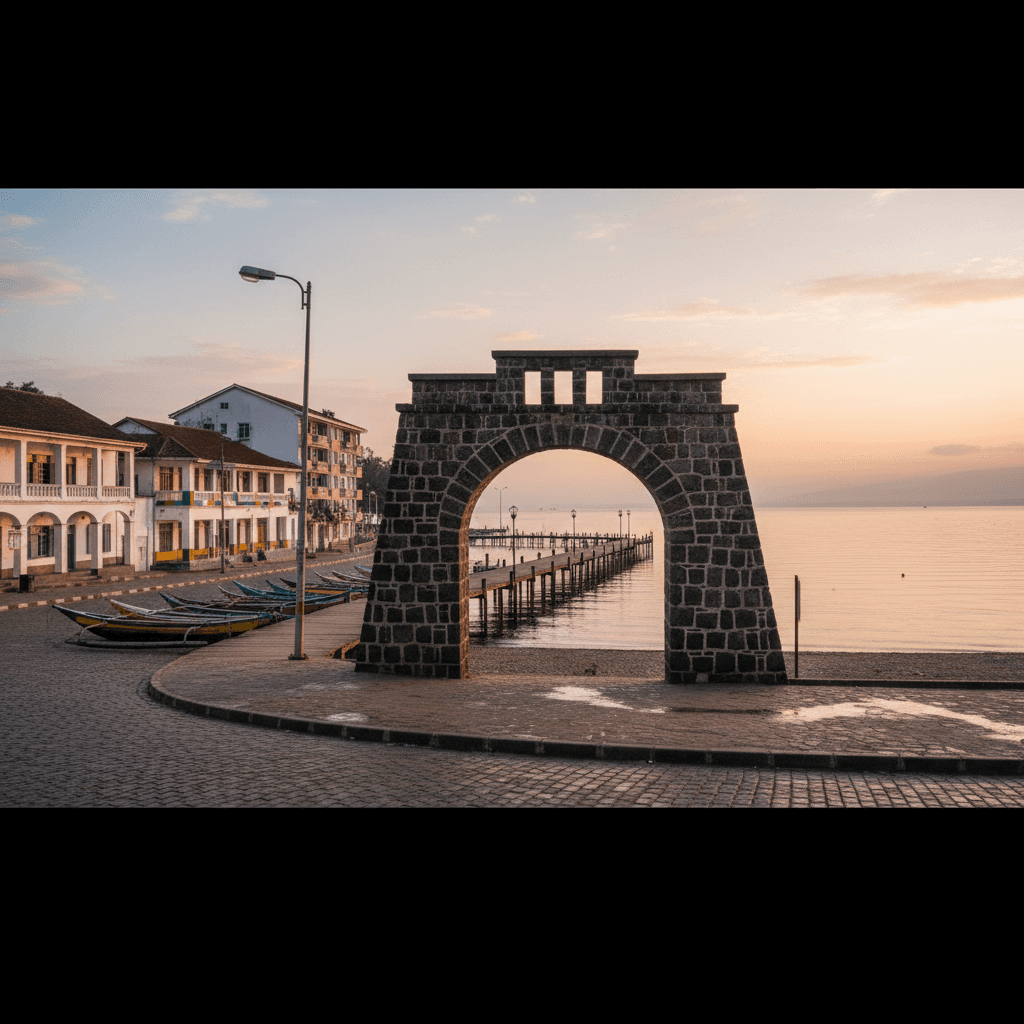
Gisenyi
🇷🇼 Rwanda
Gisenyi or Rubavu if you’re using the local name, feels like Rwanda exhaling. The town sits on Lake Kivu with a slow, easy rhythm and honestly, that pace is half the point, because it’s calmer than Kigali, cheaper than most lakefront places and close enough to the DRC border that the mood can shift fast if you wander the wrong way.
The vibe is laid-back but not sleepy. You’ll hear moto engines buzzing past, market sellers calling out in Kinyarwanda and rain tapping hard on tin roofs during the wet months, while the lake air brings in a damp, earthy smell that sticks to your clothes by afternoon.
What nomads like: low prices, lake views, fresh fish, warm locals and a softer pace than the capital. What gets old fast: patchy public WiFi, limited coworking and the fact that border caution isn’t just a footnote here, it changes how people move around town.
Central Gisenyi is where most people start. It’s walkable, close to the lakefront and packed with restaurants, small shops and the kind of casual evening energy that makes it easy to linger over a beer or a plate of brochettes.
Where to base yourself
- Central Gisenyi: Best for lake access, cafes and being able to walk around without relying on motos for every errand.
- Rubavu outskirts: Quieter, usually cheaper and better if you want less noise and a bit more breathing room, though you’ll trade that for longer rides into town.
- Resort strip near Lake Kivu: Scenic and comfortable, but prices jump quickly and some places feel more touristy than local.
Budget-wise, Gisenyi is friendly on the wallet. A solo monthly budget of around $400 can work if you keep housing simple, eat local and use motos sparingly, while a more comfortable setup with a lakeview apartment, cafe meals and the occasional nicer dinner lands closer to $900.
Food is straightforward and good. Street brochettes are cheap, lake fish shows up often and places like Saba Lounge give you a more polished meal without Kigali-level pricing, though the nightlife stays mellow, so don’t expect big late-night energy or a packed party scene.
Internet is the real compromise. Mobile data usually beats public WiFi and most nomads end up treating MTN or Airtel as backup and primary connection at the same time, because cafe WiFi can be weirdly unreliable when you actually need to send files.
Gisenyi is cheap, honestly cheap. A one-person monthly budget lands around $396 with rent or about $290 before rent, so you can live well here without burning through savings, especially if you stick to local food, motos and modest housing near the center.
Housing is the biggest swing. A studio or 1BR in central areas often runs $45 to $91 a month, which sounds almost absurd until you see the tradeoff, older buildings, basic finishes and the occasional cold tile floor that makes mornings feel sharper than they should.
Food stays manageable if you eat like a local. Brochettes and street snacks can be around $2.75, while a mid-range dinner for two sits near $15 and lakeside places like Saba Lounge push prices up a bit, though the fresh fish and lake breeze make the bill sting less.
Typical Monthly Budget
- Budget: Around $400, shared housing, street food, motos and not much room for extras.
- Mid-range: Around $600, a central 1BR, cafe meals and the odd taxi when the rain starts hammering tin roofs.
- Comfortable: Around $900, lakeview apartment, nicer dining and a bit of coworking or hotel-lobby work.
Transport is cheap, but motos are the default and they can feel sketchy if you’re not used to them. Local buses are dirt cheap at about $0.10 a ride, still most expats end up using motorbike taxis and you’ll want a helmet because the traffic can be noisy, fast and frankly a little careless.
Common Monthly Costs
- Utilities: About $32, though power and water can feel basic in older places.
- Internet: Around $19 for home service, public WiFi is hit-or-miss and your phone hotspot will save you more than once.
- Transport: Roughly $36, depending on how often you hop between the lakefront, the market and the outskirts.
If you want the best value, look in central Gisenyi for convenience or the Rubavu outskirts for quieter streets and lower rent. Resort zones near Lake Kivu are prettier, weirdly enough they’re also the easiest place to overspend, because the views seduce you into paying tourist prices for every coffee and dinner.
Nomads
Stick to central Gisenyi if you want lake views, quick access to cafes and a walkable routine, because that’s where most short-term stays feel easiest. It’s not polished, honestly and the market noise can start early, with motos buzzing past and vendors calling out over the smell of grilled brochettes and lake air.
Best fit: Lakefront apartments near the main road and resort strip. Rent: roughly $45 to $91 for a studio or 1BR in the center, though nicer spots near the water climb fast and the quiet you pay for can be worth it if you’re working odd hours.
- Why here: walkable, scenic, easy to grab food
- Watch out for: border caution zones, louder streets, patchy public WiFi
- Good backup: MTN or Airtel data, because café internet can be, weirdly, fine one day and awful the next
Expats
Rubavu outskirts make more sense if you’re staying longer and want less noise, more space and a calmer pace after work. The tradeoff is simple, you’ll lose some convenience, then end up relying on motos or local buses for almost everything, which gets old in the rain.
Best fit: neighborhoods just outside the lakefront strip. Budget: around $400 a month keeps things tight but manageable, while $600 gives you a more comfortable setup with better housing and fewer daily compromises.
- Pros: quieter streets, cheaper housing, less tourist churn
- Cons: fewer restaurants, longer commutes, not much nightlife
- Tip: ask local agents and Facebook groups first, because listings move through word of mouth fast
Families
Families usually do better away from the lakefront resort strip, since that area gets busier, pricier and a bit less practical for day-to-day life. Outskirts in Rubavu feel more settled, with fewer crowds and less of the constant moto horn soundtrack, though amenities are thinner and you’ll need patience for school runs and errands.
Best fit: quieter residential pockets outside central Gisenyi. Health care: Gisenyi District Hospital handles basic care at subsidized rates, but supplies can run short, so keep a pharmacy list handy and don’t wait around for perfect service.
- Safer bet: stay farther from the DRC border area
- Daily reality: cheap transport, limited infrastructure, simple routines
- Good for: slower living, lake access, less social noise
Solo Travelers
If you’re on your own, central Gisenyi is the easiest place to land, because you can walk to food, the lake and casual hangouts without spending half your day on transport. Saba Lounge and the nearby lakefront spots are where people actually linger, with fresh fish, cold drinks and the low hum of conversation drifting out after sunset.
Best fit: central lakefront, but not right on the busiest market streets. Nightlife: low-key, so don’t expect a party scene and if you’re moving around after dark, use a moto app or a trusted driver instead of winging it.
- Best for: easy socializing, short stays, sunset walks
- Skip: isolated border-edge streets and places with no backup internet
- Practical move: book somewhere with generator power or reliable mobile data, because outages happen
Gisenyi’s internet is decent on paper and annoying in practice. Fiber can run about $19 a month and then a café WiFi password turns out to mean little when the router’s acting up and the place is full of chatter, cutlery and lake breeze coming off the terrace.
That’s why most nomads here lean on mobile data. MTN and Airtel both sell cheap bundles and a local SIM from the airport is the move, honestly, because public WiFi can drop right when you’re sending a file or joining a call. Hotspots from your phone are the safest backup and they’re often faster than the café connection anyway.
Where people actually work
- Cafes: Hit-or-miss, but workable for emails, light admin and a quiet morning if you get there early.
- Hotel and resort lobbies: Better for laptop sessions, usually calmer, though you’ll be paying for coffee or lunch.
- Your apartment: The best option for calls, deep work and anything sensitive, because you control the connection.
There isn’t a real coworking scene in Gisenyi, which is the biggest drag for digital nomads who like structure. You won’t find a stack of dedicated desks, meeting rooms or a polished community calendar, so people improvise and weirdly, that’s part of the rhythm here. If you need a proper workspace every day, Kigali still beats Gisenyi by a mile.
For most stays, I’d keep it simple, stay near the lakefront or central Gisenyi, test the WiFi before you pay for a second coffee and keep your hotspot ready. The town is quiet enough for focused work, but the connection can wobble at the worst moment and when it rains hard, you’ll hear it drum on the roof while your upload stalls at 87 percent.
Practical setup
- Best backup: MTN or Airtel mobile data.
- Best for calls: Your apartment or a hotel lobby.
- Best mindset: Don’t expect coworking polish, plan for flexibility instead.
If your work depends on stable internet every single day, Gisenyi can feel a little makeshift. If you just need solid bandwidth, lake views and a slower pace, it works and it works without the Kigali price tag.
Gisenyi feels relaxed, but don’t let the lakefront calm fool you. The town is generally safe for daytime wandering, still Rubavu District sits close to the DRC border, so border-zone caution isn’t paranoia, it’s common sense.
Most nomads stay in central Gisenyi or around the lakeside hotels and do fine, though locals will tell you to skip the border roads near NR11 and NR2 if you don’t need to be there. After dark, the streets get quiet, the moto engines thin out and the occasional market noise gives way to frogs, lake wind and a few dogs barking in the distance.
Where to be careful
- Border areas: Avoid wandering near the DRC border, especially if you don’t know the area well.
- Late-night travel: Use a trusted moto or taxi after dark, street crossings can feel messy and poorly lit.
- Moto rides: Wear a helmet, even for short hops, because rider habits can be reckless, frankly.
- Cash handling: Keep your phone and wallet tucked away in busy market areas, petty theft isn’t rampant, but it happens.
Healthcare is workable, not fancy. Gisenyi District Hospital offers subsidized treatment and can handle basic needs, but supplies run short and the system feels strained, so for anything serious you’ll likely want referral care in Kigali or across the border if you’ve planned for that.
Pharmacies are easy to find around town, which is handy when you need rehydration salts, antibiotics or just a cleaner place to buy basics than a clinic queue. Emergency services use 112 and if you’re biking or taking motos often, save that number before you need it, because fumbling around with mobile data while someone’s hurt is a headache nobody needs.
Practical health prep
- Bring insurance: Make sure it covers Rwanda and evacuation, because local care can only go so far.
- Carry a basic kit: Pack painkillers, antihistamines, diarrhea meds and mosquito repellent.
- Use bottled or treated water: Don’t gamble if your stomach’s already upset.
- Get checked early: If something feels off, go the same day, waiting here can turn a small issue into a miserable one.
For everyday life, Gisenyi is pretty forgiving and honestly that’s why a lot of people like it. Just keep your guard up near the border, ride smart on motos and don’t assume the calm lakefront means every corner is equally low-key.
Getting around Gisenyi is simple on paper and a little messy in practice. Motos rule the streets, local buses are dirt cheap and the lakeside core is walkable, though the roads can turn noisy fast with honking, dust and the smell of exhaust after a rainstorm. Not fancy. Still, it works.
Motos and taxis
- Motos: The default ride, fast, cheap and everywhere.
- Apps: Limited ride-hailing apps may be available, check locally.
- Safety: Wear a helmet and agree on the fare first, because helmetless rides and vague pricing are where things get annoying.
- Taxi transfers: Airport or longer hops usually run about $15, which is handy when you don’t want to bargain in the heat.
Most nomads use motos for short trips across town, then switch to taxis when they’re carrying luggage or heading out at night. The rides are quick, sometimes a little wild and you’ll feel every pothole through your spine, but they’re still the easiest way to move around without wasting half the day.
Buses, walking, bikes
- Local buses: Very cheap, around $0.10 a ticket.
- Walking: Good in the lakeside center, especially near hotels, cafés and the market.
- Bikes: Possible for leisure rides and a few tours rent them out.
- Best for: Short errands, waterfront strolls and slow afternoons when the humidity isn’t crushing you.
Central Gisenyi is compact enough that you can walk to a lot of places, but the outskirts stretch things out and a simple coffee run can become a sweaty commute if your apartment’s a bit inland. Bike rentals are useful for the Congo Nile Trail side of town, though traffic around market hours gets chaotic, with minibuses stopping where they feel like it.
What nomads usually do
Most expats keep one phone loaded with MTN or Airtel data, then pair it with motos for daily movement, because relying on public WiFi and perfect schedules in Gisenyi will drive you mad. The sweet spot is living near the lakefront or in central Rubavu, then using rides sparingly so you’re not constantly stuck negotiating fares in the sun.
Honestly, that’s the tradeoff here. Gisenyi isn’t built for slick transport, but if you keep things simple, use reputable moto apps when you can and don’t wander too close to the border zone without a reason, getting around stays cheap and manageable.
Language & Communication
Kinyarwanda is the default in Gisenyi, French still gets you by with older shopkeepers and in a few hotels and English is patchier than people expect. Don’t assume every receptionist, taxi rider or market seller speaks it well, because in the lakefront center you’ll hear a mix of Kinyarwanda chatter, French and the occasional English phrase, then out by the markets it drops off fast. Muraho and Murakose go a long way, honestly and locals usually warm up once you make the effort.
The practical phrase to keep ready is “Uvuga icyongereza?” because it saves time when someone’s English is limited, weirdly polite and they’re trying hard to help anyway. Use Google Translate offline before you leave your apartment, since signal can be uneven and you won’t want to stand there in the humidity tapping your phone while a moto idles next to you.
- Hello: Muraho
- Thank you: Murakose
- Do you speak English?: Uvuga icyongereza?
Public communication is pretty straightforward, though the way people talk face to face matters a lot. Greet first, shake hands when appropriate, keep your tone calm and don’t rush into business talk before the small pleasantries, because that feels rude here and it can make a simple errand drag on longer than it should.
At markets and with moto drivers, numbers, gestures and cash talk louder than perfect grammar and honestly that’s fine. If you need directions, ask twice, then confirm the landmark, because “near the lake” can mean several different turns, dusty side streets or a stretch of road with loud generators humming in the background.
Phone and data help a lot, but they’re a backup, not a guarantee. SIM cards from MTN or Airtel are cheap enough to buy on arrival and most nomads keep mobile data on because public WiFi can be flaky, especially in cafes where the espresso machine hisses and the connection drops right when you need it.
- Best backup: Mobile data on MTN or Airtel
- Best habit: Download offline maps and translation
- Best rule: Confirm details in writing when possible
One more thing, keep your communication direct but polite. People in Gisenyi are usually friendly and patient, still they respond best when you’re clear about what you need, whether that’s a room, a taxi or directions to the lakeshore before the afternoon rain starts tapping on the tin roofs.
Gisenyi stays warm year-round, usually sitting between 22 and 28°C and the lake keeps the air humid enough that your clothes can feel damp by noon. Mornings are nicer. By afternoon, the heat and exhaust on the main roads start to cling. For most nomads, the sweet spot is dry season, especially June to September, then again December to February, when you get clearer lake views, easier moto rides and fewer of those hard, sudden downpours that drum on tin roofs.
The rainy seasons, March to May and September to November, can be a pain if you’re trying to work from cafes or move around a lot, because the streets get slick and the weather shifts fast, frankly, one minute it’s bright, the next you’re stuck under an awning listening to rain hammer the pavement. April is the roughest month for wet weather and August can still get surprisingly rainy in parts of the region, so don’t assume “Rwanda” means dry and easy just because the map looks small.
Best months
- June to September: Best overall, dry, breezy and easiest for lakefront walks, boat trips and day outings toward the Congo Nile Trail.
- December to February: Another strong window, warm but manageable, with less mud and better visibility across Lake Kivu.
- March to May: Wet and sticky, good only if you don’t mind being soaked, delayed and a bit housebound.
If you want the cleanest mix of weather and comfort, go in July or August, then stay near the lakefront or central Rubavu where you can walk to dinner and hear the evening chatter without fighting mud. Airy mornings, fish grilling by the shore, motos buzzing past and that wet-earth smell after a storm, that’s the version of Gisenyi people remember. The border area can be sensitive, so some travelers stick to the central and lakeside zones and avoid wandering too close to the DRC crossing unless they’ve got a reason.
For working remotely, dry months are easier because public WiFi can already be shaky without adding thunderstorms to the mix. Bring a local SIM, plan for hot afternoons and don’t expect perfect weather or perfect infrastructure, because honestly, Gisenyi’s charm is in the slowdown, not in polished convenience.
Gisenyi feels calm in a way Kigali doesn’t, with lake air, motorbike engines and the smell of grilled brochettes drifting off the waterfront. Bring a little patience, because the town runs on a slower clock and honestly, that’s part of the appeal.
Start with a local SIM. Buy an MTN or Airtel card at the airport or in town for about $5 with data, because public WiFi can be patchy and cafe connections sometimes die right when you need them most, which, surprisingly, happens a lot near the lakefront.
Money is straightforward. Mobile money services like MTN MoMo are common, ATMs are around and cash still helps for motos, market snacks and those little expenses that pop up when you’re sweating through the midday heat.
Where to stay
- Central lakefront: Best for walking to restaurants and the water, but it’s noisier and closer to the border area.
- Rubavu outskirts: Quieter, cheaper and a better bet if you want sleep without market noise and honking.
- Near resort hotels: More scenic, but rents climb fast and you’ll pay for the view.
For housing, most nomads start on Facebook groups or through local agents, then check the place in person because photos can be wildly optimistic. The floor tiles are often cold, the walls can be thin and if you’re near the lake, rain sounds can get loud enough to keep you up.
Getting around
- Motos: Cheap and everywhere, but wear the helmet and don’t get lazy about safety.
- Local buses: Dirt cheap at about $0.10, though they’re slow and packed.
- Taxis and transfers: Better for airport runs or late nights, especially if you’re hauling bags.
Ride-hailing apps are limited here, so don’t expect Uber-style convenience. Motos are the default and if traffic is messy, the ride can feel like a blast of exhaust, dust and sudden braking, so keep your elbows tucked in and your phone zipped away.
Social etiquette is simple, but people notice when you ignore it. Greet with a handshake, take off your shoes indoors and skip public affection, because that’ll draw stares fast and in a town this small, everyone seems to know everyone.
If you want to get out of town, day trips with Go Gisenyi Tours are a solid option, especially for the Congo Nile Trail. Don’t try to wing border-area plans without checking local conditions first, that’s where the mood shifts from laid-back to very serious, very quickly.
Frequently asked questions
How much does it cost to live in Gisenyi as a digital nomad?
How much is rent in central Gisenyi?
Is the internet good enough for remote work in Gisenyi?
Are there coworking spaces in Gisenyi?
Is Gisenyi safe for digital nomads?
Where should I stay in Gisenyi as a solo traveler?
What healthcare is available in Gisenyi?
Need visa and immigration info for Rwanda?
🇷🇼 View Rwanda Country GuideHidden Gem
Worth the effort