Girona
🇪🇸 Spain
The Medieval Slow-Burn
If Barcelona is a high-speed chase, Girona is a long, sun-drenched lunch. It is a city that trades frantic energy for a refined, medieval aesthetic and a pace of life that actually lets you breathe. Most nomads arrive for the history but stay because the city feels like a private club where everyone is invited. It is compact, impossibly walkable, and carries an air of quiet confidence that you won't find in the larger Spanish hubs.
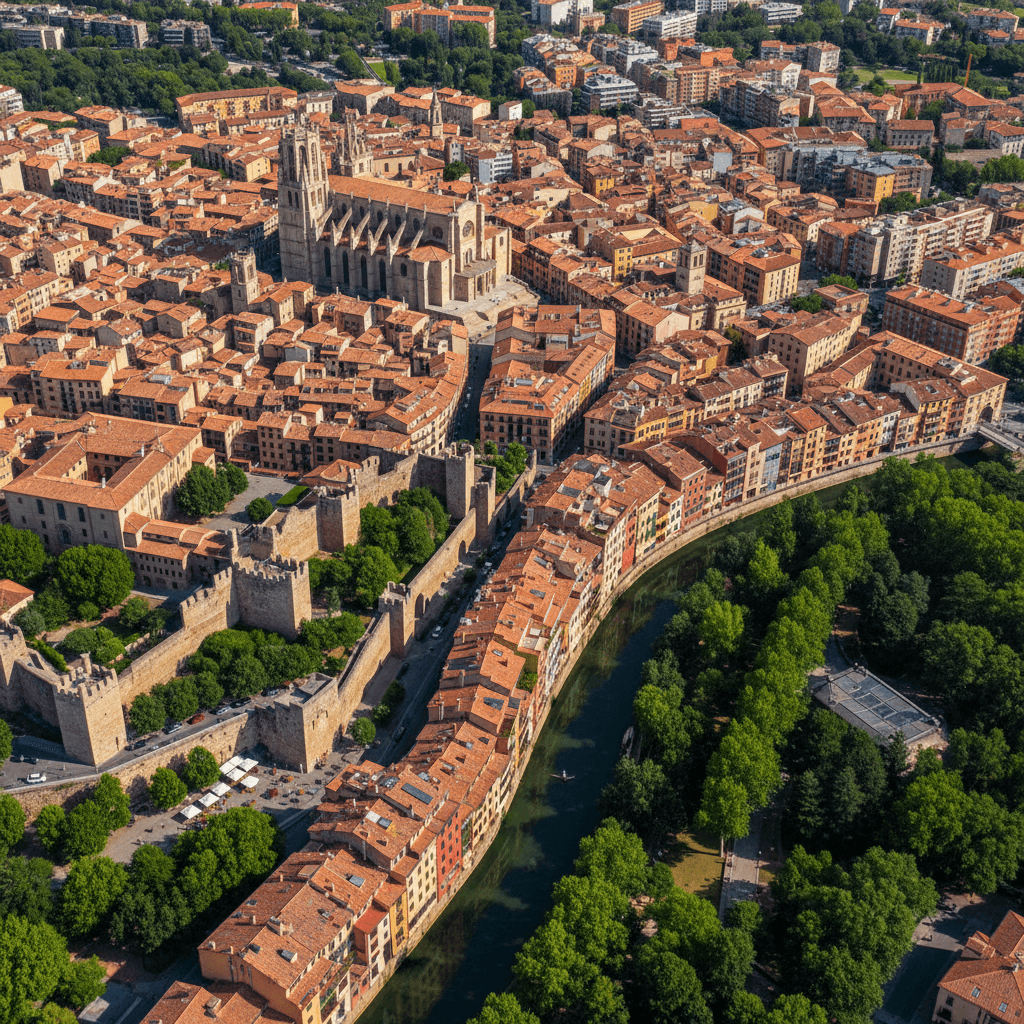
The vibe here is defined by the Onyar River, where the famous hanging houses in shades of ochre and red reflect in the water. It is a place where your morning commute is a stroll across a bridge designed by Gustave Eiffel and your "office" is a 1,000-year-old stone plaza. While it lacks the 24/7 roar of a metropolis, it makes up for it with a sophisticated dining scene and a deep-rooted sense of Catalan identity that feels authentic rather than performative.
The Nomad Experience
Living here feels like a well-kept secret. You’ll find a growing community of remote workers who have swapped the chaos of bigger cities for Girona's 100 Mbps fiber speeds and its proximity to both the Pyrenees and the Costa Brava. It is a town of cyclists, foodies, and people who value a high quality of life over a packed social calendar. You won't find a massive clubbing scene, but the evening vermouth culture is world-class.
- The Social Scene: It is intimate and cafe-centric. Most nomads meet up at places like La Fabrica or Espresso Mafia, which serve as the unofficial headquarters for the international crowd.
- The Language: While Spanish is everywhere, Catalan is the heart of the city. Learning a few words like "Bon dia" or "Gràcies" goes a long way with the locals.
- Connectivity: You are only 38 minutes from Barcelona by high-speed train (the AVE), making it easy to dip into the big city for a meeting or a night out and return to Girona's peace by midnight.
Cost of Living Breakdown
Girona is significantly more affordable than Madrid or Barcelona, though it isn't "cheap" by Southern Spanish standards. You are paying for a premium location and a very high safety rating. Most single nomads find they can live a very comfortable life on a budget of €2,200 to €2,800 per month.
Housing & Rent
- Studio or 1BR in the Center: Expect to pay between €900 and €1,200. Prices have risen as the city's popularity grows, especially in the historic Barri Vell.
- Eixample (Modern Area): You can find more spacious, modern apartments here for €800 to €1,000. It is less "charming" but much quieter and better for long-term stays.
- Utilities: Budget around €120 to €150 for electricity, water, and high-speed internet.
Food & Dining
- Daily Menu (Menú del Día): A high-quality three-course lunch with wine usually costs between €12 and €18.
- Coffee: A solid flat white at a specialty cafe will run you €2.50 to €3.50.
- Groceries: A weekly shop for one person at local markets or supermarkets like Mercadona typically costs €50 to €70.
Work & Transport
- Coworking: Monthly hot desks generally range from €150 to €250. Many nomads prefer the "cafe-hopping" route because the city center is so dense with laptop-friendly spots.
- Getting Around: The city is small enough that you'll rarely need the bus. If you do, a single ride is about €1.50, but your primary transport will be your own two feet or a rented bicycle.
- Data: An eSIM from a provider like Saily is the easiest way to get moving, with 5GB plans starting around $9.99.
The emotional pull of Girona is its "human scale." Everything you need is within a twenty-minute walk. It’s a city that encourages you to look up from your screen and appreciate the grit of the medieval walls or the smell of fresh bread from a local fleca. For the nomad who wants to actually live in Spain rather than just visit it, Girona is the gold standard.
The Price of Living Well
Girona is that rare European city where you can live a high quality life without the aggressive price tag of Barcelona or Madrid. Most nomads find their money goes about 15 to 20 percent further here than in the Catalan capital. It’s a place where a mid-range budget doesn't just get you by, it buys you a lifestyle filled with daily cafe stops and weekend trips to the Costa Brava.
For a single remote worker, a comfortable monthly budget sits between €2,000 and €2,800. If you're living lean, you can make it work on €1,500, but you'll likely be staying further from the Onyar River and cooking most of your meals at home.
Housing and Neighborhoods
Rent is your biggest variable. The market isn't as saturated as larger hubs, but the secret is definitely out. Expats recommend looking in the Eixample for better value and modern layouts, while those who want the medieval dream stick to Barri Vell (the Old Town).
- Barri Vell (Historic Center): Expect to pay €900 to €1,200 for a one bedroom apartment. It's walkable and atmospheric, but short term stays are pricier due to tourist demand.
- Eixample: A 15 minute walk from the center, you'll find larger flats for €800 to €1,000. It’s quieter and feels more like a local neighborhood.
- Outskirts: Studio options can drop to €600 or €700, but you’ll trade away that effortless walkability.
Food and Dining
Girona is a culinary heavyweight, but you don't have to eat at Michelin starred spots to enjoy it. The Menu del Dia (menu of the day) is your best friend here. For €12 to €18, you can get a three course lunch including wine or water. It’s the standard way to eat for locals and nomads alike.
- Groceries: A single person usually spends about €300 to €400 a month at markets like Mercat del Lleó.
- Casual Meal: A quick tapas lunch or street food runs €8 to €12.
- Mid-range Dinner: A nice sit down meal with drinks will cost about €25 to €40 per person.
- Coffee: A cafe amb llet (coffee with milk) is roughly €1.80 to €2.50.
Connectivity and Workspace
Since you're likely working while you're here, factor in the cost of a desk. While many nomads work from cafes in the center, dedicated coworking spaces provide the stability needed for heavy Zoom schedules. You can expect to pay €15 to €20 for a day pass or €150 to €250 for a monthly hot desk.
For data, skip the roaming charges. Most travelers use Saily for eSIMs, with 5GB plans starting around $9.99. If you're staying longer, a local physical SIM from a provider like Movistar or Orange is even cheaper.
Transport and Extras
Girona is so compact that you’ll rarely need a bus. Most people walk everywhere. If you do need to head out of town or to the airport, the costs are manageable. A monthly transport pass is about €35, while a single bus ride is under €2.00. Taxis from the Girona-Costa Brava Airport into the city center usually cost between €20 and €30.
If you're eyeing the Spain Digital Nomad Visa, remember the financial requirement. You'll need to prove a monthly income of at least €2,849 (updated for 2026 SMI) to qualify. While you can live in Girona for much less, that’s the government's benchmark for residency.
The Historic Center (Barri Vell)
For solo travelers and short-term nomads, there is really only one place to be. Living in the Barri Vell, specifically around the Jewish Quarter (El Call), puts you inside a medieval postcard. You are steps away from the Onyar River and those iconic hanging houses. It is the most walkable part of the city, though the cobblestones will give your sneakers a workout.
- Vibe: Immersive, historic, and social. You will find the highest concentration of cafes with solid 100 Mbps WiFi here.
- Rent: Expect to pay a premium for the charm. Studio or 1BR apartments typically run between €900 and €1,200 per month for mid-range stays.
- Pros: You won't need a car or even a bus pass. Everything from the cathedral to the best tapas bars is within a ten minute walk.
- Cons: It gets crowded with day-trippers from Barcelona, and the narrow stone streets can feel a bit dark in the winter months.
Eixample and Modern Girona
If you are an expat looking for a long-term base, head south of the historic core into Eixample. This is where the locals actually live. The streets are wider, the apartments are newer, and the prices are more grounded. It feels less like a museum and more like a functional European city.
- Vibe: Practical, residential, and spacious. It is the best spot to find a modern apartment with an elevator and actual insulation.
- Rent: You can find 1BR units for €800 to €1,000, often with more square footage than what you would get in the old town.
- Pros: Closer to the train station for quick trips to Barcelona. It is also quieter at night since you are away from the tourist bars.
- Cons: It lacks that "medieval magic" and can feel a bit generic compared to the stone arches of the Barri Vell.
Devesa and Sant Ponç
Families often gravitate toward the areas near Parc de la Devesa. Having Spain's largest urban park in your backyard is a massive win when you have kids who need to run around. The area is flat, easy to navigate with a stroller, and much calmer than the city center.
- Vibe: Green, quiet, and family-oriented. You will see plenty of locals jogging or hitting the weekly markets.
- Rent: Larger 2BR or 3BR apartments generally start around €1,200, depending on how close you are to the park entrance.
- Pros: Incredible access to green space and outdoor markets. It is very safe, even by Girona's already high standards.
- Cons: It is a bit of a hike to the main social hubs, so you might find yourself using the Girocleta bike-share or local buses more often.
The Nomad Lifestyle Setup
Regardless of which neighborhood you pick, getting set up is straightforward. Most nomads use Idealista or Fotocasa to scout long-term rentals, though you will likely need to show proof of income or your Digital Nomad Visa (requires ~€2,849/month in 2026 per SMI adjustment). For connectivity, skip the physical stores and grab an eSIM through Saily; you can get 5GB for about $9.99 to tide you over until your home fiber is installed.
Since the city is so compact, your "neighborhood" choice is more about the view from your window than accessibility. You can walk from the quietest residential street in Eixample to a coworking space in the center in under 20 minutes. Most residents spend about €30 to €40 a month on a transport pass, but you will likely find that your own two feet are your most reliable way to get around.
Connectivity Infrastructure
You won't have to worry about dropping off a Zoom call while working from a medieval stone plaza. Girona's infrastructure is surprisingly robust for its size, with average fiber optic speeds clocking in around 100 Mbps. Most modern apartments in the Eixample district or renovated flats in the Barri Vell come standard with high speed internet that handles heavy uploads without a hitch.
For mobile data, skip the hassle of finding a physical shop and grab an eSIM before you land. Local providers like Movistar or Orange offer reliable 5G coverage throughout the city center, which is plenty for navigating the winding alleys of the Jewish Quarter.
Coworking Spaces
While Girona doesn't have the sheer volume of spaces you'll find in Barcelona, the community here is tight knit and professional. Most spots offer a mix of daily passes for passing travelers and monthly memberships for those settling in for a season.
- Typical Day Pass: Expect to pay between €15 and €20.
- Monthly Hot Desk: Prices usually range from €150 to €250.
- Fixed Desk: High end setups with 24/7 access often go for €300+.
Most nomads gravitate toward the areas near the Onyar River. These spaces often double as community hubs where you can meet other remote workers over a coffee. The vibe is generally quieter and more focused than the frantic energy of big city hubs, making it a favorite for developers and writers who need deep work sessions.
Cafe Culture and Remote Work
The "laptop on the table" culture is well accepted in Girona, provided you're respectful of the lunch rush. In the historic center, you'll find plenty of cafes with reliable, free WiFi where you can post up for a few hours. The local etiquette is to buy a coffee or a small snack every ninety minutes or so.
Expats often recommend the cafes lining the Plaça de la Independència for an afternoon session. The outdoor seating is great for people watching, but the indoor areas usually have better access to power outlets. If you need a more library like atmosphere, the public study spaces near the university are reliable, though they can get crowded during exam seasons.
Practical Tips for Remote Workers
- Power Outlets: Spain uses Type F plugs. If your gear is from the US or UK, bring a sturdy adapter that won't wiggle out of the wall.
- The Siesta Factor: While coworking spaces stay open, some smaller local cafes might close or shift their service between 2:00 PM and 5:00 PM. Plan your deep work blocks accordingly.
- Public WiFi: The city offers some public hotspots, but they're better for checking a map than sending large files. Stick to your coworking space or a secure VPN for actual work.
- Digital Nomad Visa: If you're planning to stay long term, remember the Spanish nomad visa requires a documented income of at least €2,849 per month (2026 requirement).
Overall, Girona is a top tier choice if you want the reliability of a modern office in a setting that feels centuries old. It's the kind of place where you can finish a project at 5:00 PM and be hiking in the Gavarres mountains or sipping wine by the river ten minutes later.
A Peaceful Safe Haven
One of the biggest draws for nomads moving from high-stress hubs like London or New York to Girona is the immediate sense of relief. The city is exceptionally safe, even by Spanish standards, which are already quite high. You can walk through the winding stone alleys of El Call or along the Onyar River at 2:00 AM without looking over your shoulder. Violent crime is almost non-existent here, and the community is tight-knit enough that people generally look out for one another.
While the risk is low, petty theft like pickpocketing can happen in the most tourist-heavy areas during the peak summer months. Most expats suggest keeping an eye on your phone and wallet when you are hanging out at the busy cafes in Placa de la Independencia. Beyond that, there aren't really any "no-go" zones or dangerous neighborhoods to avoid. Whether you are staying in the historic center or the newer Eixample district, you'll find the streets well-lit and populated with locals and families late into the evening.
Navigating the Healthcare System
Spain's healthcare system is consistently ranked among the best in the world, and Girona is no exception. If you are here on the Digital Nomad Visa, you'll likely be required to maintain private health insurance for your first year, but many long-term residents eventually transition into the public system, known as the CatSalut in Catalonia. The care is high-quality, though the public system can sometimes have longer wait times for non-emergency specialists.
For immediate needs, you'll want to look for a CAP (Centre d'Atencio Primaria). These are local primary care centers found in every neighborhood. If you have an emergency, Hospital Universitari de Girona Doctor Josep Trueta is the main facility in the city. It is a large, modern teaching hospital equipped to handle anything serious. Most doctors and staff in the city speak at least some English, though having a translation app or a basic grasp of Spanish or Catalan will make your visit much smoother.
Pharmacies and Everyday Care
You won't have to go far to find a farmacia. They are easily identified by their bright, blinking green neon crosses. In Spain, pharmacists are highly trained and can often give medical advice or suggest over-the-counter treatments for minor ailments like coughs, skin rashes, or allergies, saving you a trip to the doctor.
- Emergency Number: Dial 112 for police, fire, or ambulance services. It is a toll-free call and operators usually speak English.
- Pharmacy Hours: Most are open from 9:00 AM to 8:00 PM, but there is always at least one Farmacia de Guardia (duty pharmacy) open 24 hours a day on a rotating schedule. You can find the schedule posted on the door of any pharmacy.
- Private Insurance: Popular providers for nomads include Sanitas, Adeslas, or Cigna. Expect to pay between €50 and €100 per month for a comprehensive plan with no copays.
- Water Safety: The tap water in Girona is perfectly safe to drink, though many locals prefer the taste of bottled or filtered water due to the high mineral content.
Overall, the health and safety landscape in Girona is one of its strongest selling points. It provides a "soft landing" for those who want the amenities of a modern European city without the grit or safety concerns often found in larger metropolitan areas. You can focus on your work and your weekend trips to the Costa Brava without worrying about much else.
Foot Power and the Historic Core
Girona is one of those rare cities where your own two feet are your most reliable asset. The city center is incredibly compact, meaning you can walk from the colorful houses of the Onyar River to the winding alleys of the Jewish Quarter in about ten minutes. Most nomads choose to live in the Barri Vell (Old Town) specifically because it eliminates the need for a commute. The streets are narrow, medieval, and largely pedestrianized, making a morning walk to a cafe feel more like a stroll through a film set than a trek to the office.
Public Transit and the Girocleta
When you need to venture beyond the medieval walls, the local bus network is reliable and easy to use. While most travelers won't need it daily, it's the best way to reach the Eixample district or the outer shopping hubs. A single ride costs around €1.50 to €2.00, but if you're staying for a month or more, grab a multi-trip card or a monthly pass for roughly €30 to €40 to save some cash.
For a more local experience, look into the Girocleta. It's the city's public bike-sharing system. You'll see the red and white stations scattered all over town. It's designed for residents, but expats staying long-term swear by it for quick hops across the Onyar.
Regional Connections
Girona's location is a massive perk for anyone who wants to explore Catalonia without owning a car. The high-speed AVE train is a game changer; it can whisk you into Barcelona in just 38 minutes. It's perfect for a night out or a meeting in the big city when Girona's quieter pace feels a bit too slow. For more budget-friendly trips, the regional MD (Media Distancia) trains take about 70 to 90 minutes but cost significantly less.
- Train to Barcelona: Approximately €15 to €30 for high-speed; roughly €8 to €12 for regional.
- Bus to Costa Brava: Seasonal routes run frequently to beach towns like Palafrugell or Tossa de Mar for under €15.
- Ride-hailing: While Uber and Bolt have a presence in Spain, they can be hit-or-miss in Girona. Local taxi apps or the Cabify app are usually more dependable here.
Airport Transfers
Getting to and from Girona-Costa Brava Airport (GRO) is straightforward. It's located about 12 kilometers outside the city. A taxi or a ride-hailing service will get you to the center in 15 to 20 minutes, costing between €20 and €30 depending on the time of day. Most nomads opt for the airport bus, which timed with flight arrivals and departures. It drops you off at the main Girona bus station, right next to the train station, for about €3.00. If you're flying into Barcelona-El Prat (BCN), you can take a direct bus or a train with a transfer at Barcelona Sants, which usually takes about two hours total.
The Linguistic Landscape
In Girona, you'll find yourself at the heart of Catalan identity. While you might be used to hearing Spanish in other parts of the country, Catalan is the primary language used in schools, government offices, and daily life here. It isn't just a dialect of Spanish; it's a distinct Romance language that sounds like a beautiful mix of Spanish and French. Most locals are bilingual and will switch to Spanish (Castilian) without a second thought if they see you're struggling, but starting with a Catalan greeting goes a long way in building rapport.
For digital nomads, the English proficiency level is generally good, especially among the younger demographic and within the tech and tourism sectors. You won't have much trouble ordering a flat white or setting up your workstation in a central cafe. However, as you move toward the residential Eixample district or smaller local shops, English becomes less common. Most expats find that while they can survive with English, they need at least basic Spanish or Catalan to truly integrate into the local social scene.
Practical Communication Tips
- Digital Tools: Download the offline Spanish and Catalan packs for Google Translate before you arrive. The camera feature is a lifesaver for translating menus that are often printed only in Catalan.
- Language Exchanges: If you want to practice, look for "Intercambios" at local bars in the Barri Vell. These are informal meetups where you can trade English practice for Catalan or Spanish tips over a glass of Empordà wine.
- The "Catalan First" Approach: Even if you aren't fluent, using "Bon dia" (Good morning) instead of "Buenos días" shows you respect the local heritage. Most nomads find the locals are much warmer when you acknowledge their primary language.
Connectivity and Staying Online
Staying connected in Girona is seamless, with average WiFi speeds hovering around 100 Mbps. Most apartments in the city center and Eixample are equipped with high speed fiber optics, making video calls to the US or UK a breeze. If you're working from cafes, the "Cultura del Cafè" is strong here, and many spots in the historic center offer free public WiFi for customers.
For mobile data, don't rely on roaming fees from your home country. Expats recommend picking up a local SIM or an eSIM to keep costs down. You can get an eSIM through apps like Saily for as little as $3.99 for 1GB/7 days (confirm current pricing on Saily) or $9.99 for 5GB (valid for 30 days). If you're staying long term and want a physical SIM, local providers like Movistar or Orange offer competitive prepaid plans, but you'll usually need your passport to register the card.
Essential Phrasebook
While most people will understand your Spanish, these Catalan basics will help you navigate the city like a local:
- Bon dia: Good morning
- Bona tarda: Good afternoon
- Gràcies: Thank you
- Si us plau: Please
- Adeu: Goodbye
- El compte, si us plau: The bill, please
- Parles anglès?: Do you speak English?
If you're planning to stay for the 2025 or 2026 season, consider enrolling in a short course at the Consorci per a la Normalització Lingüística. They often offer free or very low cost Catalan classes for newcomers, which is a fantastic way to meet other expats and show the community you're serious about making Girona your home.
Mediterranean Rhythm and Seasonal Shifts
Girona enjoys a classic Mediterranean climate that feels like a softer version of Barcelona. You'll get plenty of sunshine, but because it sits slightly inland and closer to the Pyrenees, the seasonal shifts are more distinct. Most nomads find the weather here creates a perfect "slow living" environment, where your workday is dictated by the light rather than a ticking clock.
Winters from December to February are mild but crisp. Daytime highs usually hover between 10°C and 15°C, though it can dip toward freezing at night. It isn't a "beach winter" by any means, but it's rarely bone-chilling. You'll want a decent coat for morning coffee runs in the Jewish Quarter, but by midday, the sun usually warms the stone plazas enough to sit outside comfortably.
Summers from June to August are warm and energetic, with temperatures regularly hitting 25°C to 30°C. While it gets hot, it lacks the stifling humidity found in coastal cities. This is the peak season for cyclists and outdoor enthusiasts who use Girona as a base. If you aren't a fan of heat, ensure your apartment rental in the Eixample or the Old Town has thick stone walls or modern AC, as August can occasionally feel heavy.
The Sweet Spots: When to Arrive
If you have the flexibility, aim for the shoulder seasons. May, June, and September are the undisputed champions for remote work. During these months, you’ll enjoy temperatures around 20°C to 25°C and very little rain. It’s the best time to take your laptop to a terrace in Plaça de la Independència without breaking a sweat or needing a heater.
- Spring (April to June): The city feels fresh and alive. This is when the famous "Temps de Flors" flower festival happens in May, turning the medieval center into an open-air garden.
- Autumn (September to October): The crowds thin out, but the water at the nearby Costa Brava beaches is still warm enough for a weekend dip.
- The Rainy Season: Expect the most rainfall between October and March. It’s rarely a constant deluge, but you’ll see monthly averages of 50mm to 80mm. These are the "cozy" months where the local cafe culture really shines.
Strategic Planning for Your Stay
Most travelers and long-term expats suggest avoiding January if you're looking for a lively atmosphere. It’s the coolest and quietest month, and some smaller shops take a breather after the holidays. However, if you're on a budget, this is when you'll find the most competitive rates on mid-term housing platforms like Idealista or Airbnb.
For those looking to maximize their social life, arriving in late August sets you up perfectly for the autumn transition. You'll catch the tail end of the summer energy and be settled in just as the local nomad community ramps up its fall meetups. No matter when you come, the air is clean, the sky is often a piercing blue, and the weather rarely stands in the way of a good workday.
Connectivity and Tech Setup
You won't have to hunt for high speed internet here. Girona averages 100 Mbps, and the infrastructure is rock solid. Most cafes in the historic center are nomad friendly, though it's polite to stick to the larger spots if you're planning a long session. For a dedicated desk, expect to pay between €10 and €20 for a day pass, or roughly €100 to €300 for a monthly membership at local coworking hubs.
Skip the hassle of finding a physical store and grab an eSIM before you land. You can get 1GB for a week for about $3.99 or a 5GB 30 day plan for $9.99. If you prefer a local physical SIM, Movistar and Orange have the best coverage in the region. For banking, most expats stick with Wise or Revolut to avoid the high fees and bureaucracy of traditional Spanish banks.
Budgeting for 2025-2026
Girona is significantly more affordable than Barcelona, but prices are creeping up as more remote workers discover its charm. A single nomad can live comfortably on €2,000 to €2,800 per month, while those on a tighter budget can make it work for around €1,500.
- Studio or 1BR Apartment: Expect to pay €800-€1,100 depending on location (check Idealista 2026).
- Daily Meals: A casual lunch menu (menú del día) usually runs €12 to €18. Street food or quick bites are around €5 to €8.
- Transportation: A monthly bus pass is roughly €30 to €40, though the city is so compact you'll rarely need it.
Getting Around and Staying Safe
The city is a dream for walkers. You can cross the entire historic center in twenty minutes. If you're heading further out, use the local bus system or apps like Uber and Bolt. For quick trips, look for bike or scooter sharing apps, which are becoming the standard for locals and expats alike. If you're flying in, the Girona-Costa Brava Airport is only 15 to 30 minutes away by bus or taxi, costing between €15 and €25.
Safety is rarely an issue. Girona is famously secure, even late at night. There aren't really any "no-go" zones, though you should still use common sense in crowded tourist spots like the Jewish Quarter. If you have a medical emergency, dial 112. Spain's healthcare is top tier, and you'll find a "farmacia" on almost every major corner for minor ailments.
Language and Local Etiquette
While Spanish is spoken by everyone, Catalan is the primary language and the heart of local identity. Learning a few phrases like "Bon dia" (good morning) or "Gràcies" (thanks) goes a long way with the locals. English is widely understood in the tech and tourism sectors, but having Google Translate with an offline Spanish pack is a smart move for navigating smaller shops or government offices.
Respect the local rhythm. The siesta is still a thing here; many smaller shops close between 2:00 PM and 5:00 PM. Dinner starts late, usually after 8:00 PM. If you're planning to stay long term, the Spanish Digital Nomad Visa requires a monthly income of at least €2,849 (2026 updated per Royal Decree 126/2026). You can apply through the UGE for a permit that lasts up to three years.
Need visa and immigration info for Spain?
🇪🇸 View Spain Country GuideEasy Landing
Settle in, no stress