Ghent
🇧🇪 Belgium
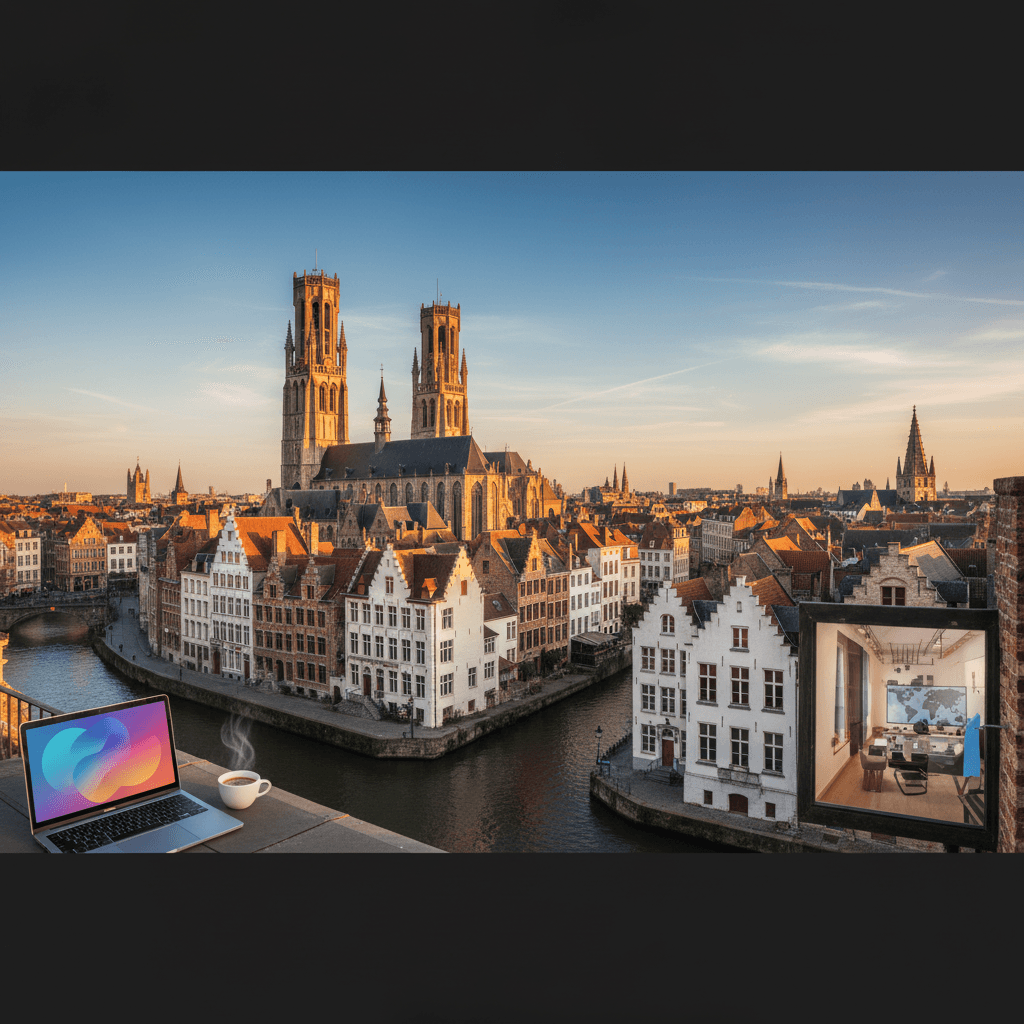
Ghent doesn't try to impress you. That's, honestly, a big part of why it works so well. While Bruges polishes itself for tourists and Brussels runs on bureaucratic caffeine, Ghent just gets on with being itself: medieval towers reflected in canal water, the smell of frites drifting from a frietkot on a grey afternoon, students on bikes cutting through narrow cobblestone lanes with zero regard for anyone's personal space.
It's a genuinely lived-in city and you feel that within about an hour of arriving. The Gravensteen Castle sits in the middle of the city like it belongs there, because it does and the Graslei waterfront draws crowds without feeling like a theme park. Most nomads who come for a month end up staying three.
The pace is moderate by day and surprisingly calm by night, outside the Overpoort student strip, which gets loud and a little chaotic on weekends. Twenty percent of Ghent's population are students, so the energy skews young and creative without tipping into insufferable. There's a real arts community here, independent cafes where people actually work and an expat scene through InterNations that doesn't feel forced.
The downsides are real, though. The rain is persistent, not dramatic, just a constant grey drizzle that clings to everything from November through March. Pack layers, waterproof shoes and make peace with it early. Bike traffic, turns out, is its own ecosystem and pedestrians are firmly at the bottom of the food chain.
Compared to other mid-sized European cities chasing the nomad crowd, Ghent is weirdly unpretentious about the whole thing. It's not optimized for remote workers, it just happens to be good for them because it's walkable, affordable relative to Amsterdam or Paris and genuinely interesting to move through every day.
The neighborhoods split cleanly by vibe:
- Historic Center (Graslei/Korenlei): Best for first-timers; walkable, safe, pricier at €900+ rent but close to everything.
- Patershol: Quiet lanes, great restaurants, the cozy end of the spectrum.
- University District: Affordable, lively, noisy at night but full of creative energy.
- Citadelpark area: Quieter, greener, better for families or long-stay expats.
Ghent rewards the curious, not the checklist traveler. Come with time to spare.
Ghent won't drain your bank account the way Brussels does, but it's not cheap either. A single person living reasonably well should budget €1,200 to €1,800 a month and that range matters depending on whether you're sharing a flat or renting solo, cooking most nights or eating out regularly.
Rent is the biggest variable. Studios and one-bedrooms in the historic center run €800 to €1,200 and honestly, the cheaper end of that's increasingly hard to find. Go a few tram stops out and you're looking at €660 to €1,000, which is where most long-stay nomads and expats end up landing, especially in neighborhoods like the University District where the energy's good and the cafes are thick on the ground.
Food is where Ghent actually rewards you. A paper cone of frites from a frietkot costs €5, a proper sit-down lunch in Patershol runs around €20 per person, you can eat well without burning through your budget if you're not chasing Michelin stars every night. Groceries for a single person come in around €250 a month.
Here's a realistic breakdown by how you want to live:
- Budget (€1,200/month): Shared room at €400 to €650, groceries, no coworking, cooking most meals, using your legs and a transit pass.
- Mid-range (€1,500/month): One-bedroom outside the center around €800, a transit pass, occasional restaurant meals, skipping the gym.
- Comfortable (€1,800+/month): City center one-bedroom at €900 or more, coworking space, fitness membership around €30, eating out a few times a week.
Coworking, turns out, adds up faster than people expect. Spaces like Bur'eau run around €368 a month for a dedicated desk, UR Zone is closer to €300. Drop-in days at most spots cost €21 to €35. If you're only there a few days a week, the math doesn't always work in your favor, so many nomads just rotate between cafes with solid WiFi and book a coworking day pass when they need a proper desk.
Transport's a minor line item. A De Lijn monthly Omnipas pass for adults costs €416 as of April 2025, Bolt covers ride-hailing when you need it and the center is walkable enough that some people skip the pass entirely. Weirdly, the bike rental scene is more chaotic than it should be for a city this size, so factor in patience if you go that route.
Ghent's neighborhoods are genuinely distinct from each other, so where you land matters more than most cities this size. The historic center is walkable and safe, the student quarter is cheap and loud, the residential pockets are calm and local. Pick wrong and you'll spend your whole trip tram-hopping.
For Digital Nomads
The Historic Center (Graslei/Korenlei) is the default choice and honestly, it earns it. You're within walking distance of everything: cafes with reliable WiFi, coworking at Bur'eau or No18 Ampla House and that particular smell of canal water and fresh waffles that hits every morning. While you should verify current studio prices for the center specifically, you're paying for zero-commute convenience.
Patershol is the better call if you want charm without the tourist foot traffic. Narrow cobblestone lanes, candlelit restaurants, a genuinely cozy vibe that makes a Tuesday feel intentional, the trade-off is those same cobblestones get genuinely treacherous when wet. Most nomads who stay more than a month end up here.
For Expats
The University District and Arts Quarter runs cheap and creative, studios outside the center from around €660 to €800, good bike access and enough cafe density that you're never far from a working spot. It's noisy at night, don't expect early bedtimes on weekends, but the InterNations crowd tends to cluster here for meetups.
Macharius-Heirnis is, turns out, one of the better long-stay options for expats who want a local neighborhood feel without paying center prices. It's residential and mixed, parks nearby, less English spoken than the center, which is either a feature or a problem depending on your Flemish confidence.
For Families
Citadelpark is the quietest option, green space, the Museum of Fine Arts nearby and a pace that doesn't feel frantic. It's weirdly underrated for families specifically because it sits far enough from student nightlife zones that evenings are actually calm.
For Solo Travelers
Stay in the Historic Center or Patershol. Solo travelers often say Ghent's center is walkable enough that you don't need a transit strategy at all, just good shoes and a rain jacket, because it will rain.
Ghent's internet infrastructure is, honestly, solid. Fixed broadband averages 60Mbps+ on unlimited plans running €34 to €63 a month and most cafes in the University District and Patershol have reliable free WiFi that's genuinely usable for video calls, not just casual browsing.
The coworking scene is smaller than Brussels but well-curated, it doesn't feel like an afterthought here. Most nomads who stay longer than a week end up at one of a handful of real options rather than cafe-hopping indefinitely, because the cafe WiFi, turns out, gets inconsistent during peak hours when students flood in around noon.
Top spaces worth knowing:
- Bur'eau: Popular with freelancers; verify current pricing directly with Bur'eau or note pricing as of last update date. Good light, quiet atmosphere.
- Spaces Zuiderpoort: Corporate-leaning but well-equipped, with hourly options. Best for calls that need a professional backdrop.
- No18 Ampla House: Smaller, more creative vibe; roughly €21/hour. Weirdly good for focus work despite the relaxed setup.
- UR Zone: Budget pick at around €300/month. No frills, but the internet's fast and it doesn't fill up.
For mobile data, Proximus and Orange are the strongest 5G networks in Ghent. Both sell SIMs at airport counters and city stores, setup takes maybe twenty minutes. If you're only passing through for a few weeks, a Nomad eSIM runs €9 to €20 for 3 to 20GB over 30 days and you can activate it before landing, which saves the inevitable sim-card-shop detour on arrival day.
One thing to flag: coworking costs add up fast. Budget nomads often skip dedicated spaces entirely and lean on library reading rooms near the university, which are free, open to the public and surprisingly quiet on weekday mornings. Not glamorous, but the WiFi holds up and nobody's going to upsell you a coffee.
The honest summary is that Ghent works well for remote work, it's not a city where you'll fight bad infrastructure or dead zones. The main friction is cost, not connectivity, so set your budget before you start browsing desk memberships.
Ghent has low crime rates, with a level of crime rated 27.24 on Numbeo's scale, which puts it comfortably in the "generally fine" category for most travelers. Violent crime is low, honestly lower than most cities its size, but pickpocketing happens, particularly around Gent-Sint-Pieters station, busy festivals and the main market squares where crowds bunch up and distraction is easy.
Late at night, the calculus shifts a bit. Overpoort gets genuinely chaotic on weekends, it's a student strip and the drunk-at-2am energy is exactly what you'd expect, so solo travelers should stay alert rather than relaxed. Dampoort and Brugse Poort are edgier after dark too, not dangerous by any dramatic measure, but they're not where you want to be wandering quiet canal streets with your laptop bag.
The center, Patershol and the University District are fine at night. Use your instincts.
For healthcare, Ghent punches well above its weight. UZ Gent is a major university hospital with high-quality care and English-speaking staff, expats consistently say it's one of the better hospital experiences they've had in Europe. EU citizens with an EHIC card are covered for emergency treatment; everyone else should carry travel insurance because Belgian healthcare costs, turns out, add up fast without it.
- Emergency (ambulance/fire): 112
- Medical emergency: 100
- Police: 101
- On-call GP (after hours): 1733
- Emergency dentist: 0903 39969
- Pharmacy locator: Pharmacie.be or call 09 001 0500
Pharmacies are well stocked and easy to find throughout the center. For non-urgent GP visits, walk-in appointments are possible but booking ahead is smarter, same-day slots disappear quickly in a city with 70,000 students competing for them.
The biggest actual annoyance isn't crime. It's bikes. Cyclists move fast, they don't slow down for pedestrians stepping off curbs and weirdly the near-miss is almost a rite of passage in Ghent. Pay attention when crossing bike lanes, especially on wet cobblestones where both you and the cyclist have less control than either of you wants.
Overall, Ghent's a low-stress city to navigate safely. Just don't be careless with your belongings in crowds and you'll be fine.
Ghent's center is, honestly, small enough to walk almost everywhere. The historic core from Gravensteen to Graslei takes maybe 20 minutes on foot and most cafes, coworking spots and lunch places are within that same radius. Don't underestimate how much you'll rely on your feet here.
When walking isn't enough, De Lijn trams and buses cover the city well. A single ride costs €3, a monthly Omnipas pass for adults (24-64) runs €416 as of April 2025 and you manage everything through the De Lijn app. Tram 1 and Tram 4 are the workhorses most nomads use daily, connecting Sint-Pieters station to the center in about 10 minutes.
Bikes are popular, they're everywhere and they're also a genuine hazard if you're not paying attention. Cyclists don't slow down for pedestrians on shared paths and the cobblestones in Patershol get slick when it rains (which is often). Rentals run €10 to €20 a day, it's a fun way to explore but don't expect a relaxing Sunday-cycle vibe on weekday mornings.
For ride-hailing, Bolt is the default. Uber barely operates here, Bolt is cheaper and actually shows up and most expats use it for late nights or airport runs when they're hauling luggage.
Getting to and from the airports takes some planning:
- Brussels Zaventem (BRU): Train to Gent-Sint-Pieters, roughly 30 to 45 minutes, costs €10 to €20 depending on timing. Then tram to the center.
- Brussels Charleroi (CRL): Budget airlines use this one; expect a bus connection that adds significant time. Not ideal.
- Antwerp and Bruges: Both under an hour by train, €10 to €15, easy day trips from Sint-Pieters.
Gent-Sint-Pieters is, turns out, your main transit hub for everything. Trains to Brussels run frequently and take around 30 minutes, so working from Ghent while making occasional Brussels meetings is genuinely doable.
One thing travelers consistently get wrong: assuming scooter-share apps work the same here as in bigger European capitals. Coverage is patchy, weirdly inconsistent depending on the week and you can't rely on them for anything time-sensitive. Stick to trams, Bolt or your own two feet and Ghent moves at exactly the pace you want it to.
Dutch is Ghent's official language, Flemish Dutch specifically and locals take quiet pride in that. Don't panic though. English proficiency here is, honestly, some of the highest you'll find in continental Europe, especially among the student population that makes up roughly 20% of the city.
In practice, you won't struggle. Cafes, coworking spaces, shops near the historic center, anyone under 40 working in hospitality or tech, they'll switch to English without hesitation and without making you feel like an inconvenience about it. The university district is particularly easy, you can go full days without needing a word of Dutch.
Where it gets trickier is in government offices, older residential neighborhoods like Macharius-Heirnis or when dealing with landlords through listings on Immoweb. Bureaucratic Dutch, turns out, doesn't bend easily to hand gestures and goodwill. If you're sorting out a longer-term rental or any kind of official paperwork, bring a Dutch-speaking friend or lean hard on Google Translate's camera function, it's genuinely useful for documents.
A few phrases go a long way, not because you need them to survive, but because Ghentenaars notice the effort and warm up noticeably when you try.
- Goedemorgen: Good morning
- Dank je / Dank u wel: Thanks / Thank you (informal vs. formal)
- Alstublieft: Please or "here you go" when handing something over
- Spreken jullie Engels?: Do you speak English?
- Hoeveel kost dit?: How much does this cost?
One thing worth knowing: Belgians are weirdly sensitive about the Dutch versus Flemish distinction. Don't call the language "Dutch" to a local's face if you can help it, call it Flemish. It's the same language with regional differences, but the identity piece matters here and getting it wrong reads as careless rather than ignorant.
French exists in Belgium but it's not Ghent's world. Don't default to French assuming it'll land better than English, it frankly won't and in some corners of the city it'll get you a cooler reception than stumbling through a few words of Dutch would.
Google Translate handles Dutch well. DeepL is, honestly, sharper for longer texts if you're decoding a lease or a formal letter.
Ghent has a maritime climate, which means mild but genuinely grey and wet for a good chunk of the year. Summers are pleasant, winters are cold and damp and the rain doesn't really ask permission before showing up in any season. Pack layers. Pack a rain jacket. Pack both.
Summer (June to August) is the sweet spot, with temperatures sitting around 22 to 23°C and noticeably fewer rainy days than the rest of the year. The city, honestly, feels completely different in July when students are gone, the canals catch actual sunlight and cafe terraces fill up by noon. It's warm without being oppressive, you can walk everywhere comfortably and the evenings stay light until nearly 10pm.
May and September are, turns out, the best months for nomads specifically. Crowds are thinner than peak summer, prices are slightly easier and the weather still cooperates most days, temperatures range from 14 to 20°C and rain is manageable rather than relentless.
Autumn slides in fast. October brings that particular damp chill that settles into cobblestones and old canal buildings, you'll feel it through your shoes on a morning walk. November is frankly miserable for anyone who needs daylight to function. Grey skies, persistent drizzle, darkness by 4:30pm. It's not dangerous, just genuinely dreary.
Winter (November through February) bottoms out around 2 to 3°C, with January being the rainiest month of the year at around 21 wet days. The city doesn't shut down, there's a solid Christmas market scene and cozy brown cafes everywhere, but if you're choosing Ghent as a base for remote work, this isn't the season to do it unless you're fine with spending most of your time indoors.
Spring starts recovering in March but weirdly stays unpredictable through April. Warm one day, cold and sideways rain the next.
- Best months to visit: May, June, July, August, September
- Shoulder season: April, October (cheaper, less reliable weather)
- Avoid if possible: November through February
- Average summer high: 22 to 23°C
- Average winter low: 2 to 3°C
- Rainiest month: January, around 21 wet days
Most long-term nomads time a Ghent stay for late spring or early summer, it's the version of the city that earns its reputation.
Get your SIM sorted before you leave the airport. Orange, Proximus and Base all have stores at Brussels Zaventem and any of them will serve you fine for 5G coverage in Ghent. If you'd rather skip the queue, a Nomad eSIM runs €9 to €20 for 3 to 20GB over 30 days, you buy it online before you fly and activate it on arrival.
For banking, don't bother trying to set up a Belgian account right away, it's honestly more paperwork than it's worth for short stays. Wise and Revolut both work seamlessly at ATMs across the city and most cafes and coworking spaces accept contactless without blinking. Cash is still handy for frietkots and market stalls, so keep a small amount on you.
Apartment hunting runs through Immoweb.be, search postcode 9000 for Ghent listings and filter by your budget. Expect landlords to want proof of income and, turns out, a Belgian guarantor if you're not an EU resident, which complicates things for non-EU nomads on short-term stays. Furnished short-term lets on Spotahome or direct Facebook expat groups are, frankly, the easier route for anything under three months.
A few customs worth knowing before you put your foot in it:
- Tipping: Service is included in the bill; rounding up is appreciated but nobody expects 15 percent.
- Bikes: Yield to cyclists on dedicated lanes, they won't slow down for you and they won't apologize either.
- Directness: Ghentenaars are blunt. Don't read it as rudeness, it's just how conversations work here.
- Sundays: Genuinely quiet. Most smaller shops close, so stock up Saturday if you're self-catering.
Day trips are easy and cheap. Bruges is 25 minutes by train and costs around €10 return, Antwerp is about 50 minutes for €15. Both are worth a half-day, weirdly neither will make you like Ghent any less by comparison.
Pack a proper rain jacket, not a light shell. The wet season drags from November through February and the damp here is the kind that gets into your coat by 9am, it's not dramatic cold, just relentless grey. May through September is when the city actually opens up and that's when most nomads find the work-life balance clicks into place.
Need visa and immigration info for Belgium?
🇧🇪 View Belgium Country GuideEasy Landing
Settle in, no stress