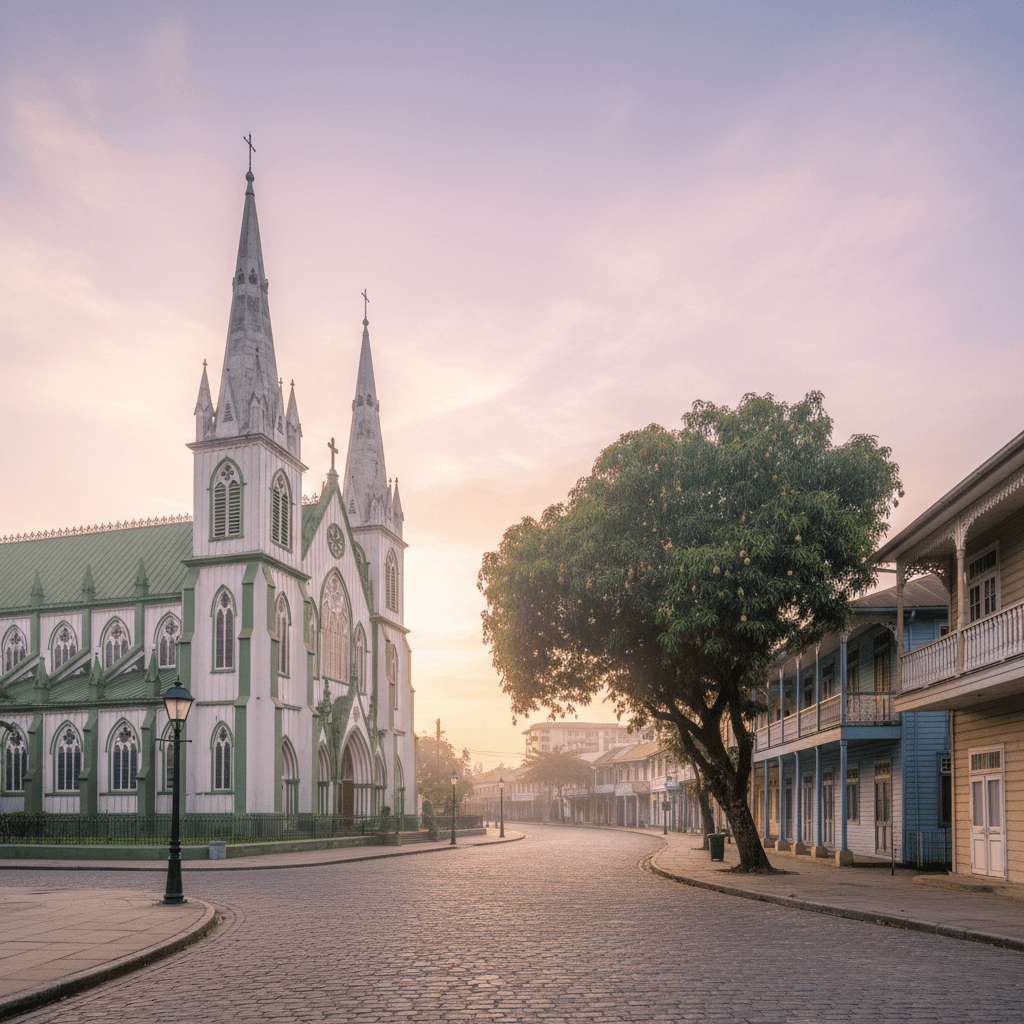
Georgetown
🇬🇾 Guyana
The South American Frontier with a Caribbean Soul
Georgetown doesn't feel like the polished nomad hubs of Southeast Asia or the well-trodden paths of Europe. It’s a raw, high-energy capital where the wild spirit of the South American frontier slams right into a laid-back Caribbean rhythm. Known as the "Garden City of the Caribbean," it’s a place of striking contrasts. You’ll see historic wooden colonial architecture and the massive, chaotic Stabroek Market standing alongside the shiny, fast-paced infrastructure of a modern oil-boom capital.
The vibe here is social and surprisingly intimate. Unlike massive digital nomad cities where you're just another face in a sea of laptops, Georgetown has a tight-knit community. Expats and remote workers often find themselves rubbing shoulders with industry professionals and locals in a city that feels like it’s waking up to its own potential. It’s loud, it’s colorful, and yes, it can be a bit disorderly, but that’s exactly what gives it such a distinct personality.
What to Expect on the Ground
Living here means embracing a bit of "organized chaos." The English-speaking environment makes life incredibly easy for North Americans and Europeans, but the infrastructure is still catching up to the city's recent wealth. While the "oil boom" energy has brought new life to the city, it has also sent prices climbing, especially for real estate and electricity. You’ll experience a city that is rapidly modernizing while still dealing with frequent power outages and aging drainage systems.
- The Draw: A unique cultural blend you won't find anywhere else, easy communication, and a front-row seat to a country in the middle of a massive economic transformation.
- The Challenge: High electricity costs, which can range from $150 to $400 a month, and a traffic situation that requires a lot of patience.
- Safety: It’s a city where you need your wits about you. Stick to well-lit areas and established neighborhoods, especially after dark.
The Daily Cost of Living
The days of Guyana being a "budget" secret are fading as international interest grows. While you can still get by on a modest budget if you eat local and live simply, most nomads looking for a comfortable lifestyle should plan for a mid-range spend between $1,582 and $2,048 per month.
- Housing: Expect to pay anywhere from $1,200 to $1,800 for a one-bedroom in the city center. Prices have surged nearly 300% since 2020.
- Dining: A minimum monthly grocery bill for someone cooking at home is around $190, but social nomads usually spend $250 to $600 including meals out at spots like the Hard Rock Cafe.
- Connectivity: Reliable internet is becoming the norm, with fixed broadband averaging 100+ Mbps with top providers exceeding 125 Mbps. A solid plan will run you $50 to $100.
Finding Your Neighborhood
Where you plant your flag matters. Most expats gravitate toward Prashad Nagar or Campbellville. These are established middle and upper-class sectors that offer a sense of community and better accessibility to services. If you prefer being near the action, the waterfront areas of Subryanville and Kitty are the places to be. These neighborhoods are close to the seawall and the city's best nightlife, though they can get a bit noisy when the sun goes down and the music starts pumping at spots like The Edge.
Ultimately, Georgetown is for the traveler who is bored with the "standard" nomad circuit. It’s for people who want to explore the Amazonian interior on the weekends and spend their workdays in a city that feels like it’s on the verge of something huge. It isn't always easy, but it is never boring.
Georgetown is currently riding a massive economic wave driven by its oil boom, and that shift is reflected clearly in the local price tags. While it used to be a budget friendly Caribbean secret, the influx of international professionals has pushed costs upward, particularly in the housing sector. You can still live here for less than in Miami or London, but you will need to budget carefully for housing and electricity.
The Monthly Breakdown
Most digital nomads find that a mid range budget of $1,600 to $2,050 provides a comfortable lifestyle. This covers a decent apartment, a mix of local markets and dining out, and your basic utility needs. If you are looking for a more high end experience with frequent upscale dinners and a premium apartment in a neighborhood like Prashad Nagar, expect your monthly burn to sit between $2,300 and $3,500.
For those on a strict budget, it is possible to get by on $1,000 to $1,700. This requires sticking to local markets like Stabroek, cooking almost all your meals at home, and being very conservative with your air conditioning usage.
Housing and Neighborhoods
The rental market has seen the most dramatic shift, with some areas seeing a 300% increase in rates over the last few years. Finding a 1 bedroom apartment in the city center now typically costs between $1,200 and $1,800 per month.
- Prashad Nagar and Campbellville: These are the professional hubs. They are safe, well located, and popular with expats, though you will pay a premium to live here.
- Subryanville and Kitty: These waterfront areas are perfect for younger nomads. You are close to the seawall and nightlife spots like The Edge. It is a mix of classic colonial wooden homes and brand new builds.
Utilities and Connectivity
Electricity is the "gotcha" expense in Guyana. It is among the most expensive in the Caribbean, and the grid can be unreliable. Most expats budget $150 to $400 per month for power, especially if running A/C. Many modern buildings now include backup generators to handle frequent outages.
- Internet: A solid connection from providers like E-Networks will cost between $50 and $100. Speeds average around 73 Mbps, which is plenty for video calls.
- Coworking: If your home internet fails, Co-Work Guyana is the gold standard. It feels like a modern office you would find in Berlin or Austin and offers the reliable backup power you need for important meetings.
- Water: Relatively cheap, usually ranging from $15 to $30.
Food and Daily Life
Your grocery bill will depend heavily on your diet. If you buy local produce and fish, you can keep your monthly food spend around $190 to $250. If you rely on imported goods from the US or Europe, expect that number to double quickly.
- Local Meals: Street food and small local cookshops are affordable and delicious.
- Dining Out: A night at the Hard Rock Cafe or mid range spots will feel similar to North American pricing.
- Transport: Budget $40 to $300 depending on how much you use taxis. Traffic is notoriously hectic, so many nomads prefer to live within walking distance of their favorite cafes or coworking spots.
- Mobile Data: A local SIM card with a decent data plan usually runs $15 to $30.
Overall, Georgetown offers a unique frontier energy for those willing to pay a bit more for infrastructure. It is no longer a "cheap" destination, but for the community and the access to South American nature, many find the price tag well worth it.
For the Social Nomad: Subryanville and Kitty
If you want to be where the action is, these two adjacent neighborhoods along the Atlantic coast are your best bet. This is the heart of Georgetown's social scene, where the Atlantic breeze hits the Seawall and the city's nightlife wakes up. You'll find a mix of classic colonial wooden houses and new, modern apartment builds catering to the recent influx of international workers.
- The Vibe: Energetic, coastal, and a bit loud on the weekends. It's the most walkable area for grabbing a drink or meeting other remote workers.
- Rent: Expect to pay between $1,200 and $1,800 for a decent one bedroom. Prices have jumped significantly lately, so don't be surprised if "budget" options are hard to find here.
- Hotspots: You're close to The Edge for late night drinks and the Hard Rock Cafe for a familiar workspace.
Most nomads choose this area because it cuts down on the need for taxis. You can finish a deep work session and be at a seaside bar in five minutes. Just keep in mind that the proximity to the Seawall means more noise from weekend crowds and passing traffic.
For the Long-Term Expat: Prashad Nagar and Campbellville
Expats and professionals moving to Guyana for the long haul usually head straight for these inland residential pockets. These neighborhoods feel more established and "suburban" in the best way possible. They are middle and upper class sectors known for being quieter and having a stronger sense of community than the waterfront.
- The Vibe: Polished, residential, and green. It's where you'll find backyard gardens and neighborly waves rather than neon lights.
- Rent: Prices are competitive and often match the waterfront, ranging from $1,300 to $2,000 for high quality builds.
- Connectivity: This is a prime area for E-Networks fiber installations, with speeds often hitting 73 Mbps or higher.
Living here means you'll likely need a reliable driver or a car of your own. While the streets are better lit than other parts of town, Georgetown's traffic is notoriously hectic, and commuting from these neighborhoods during peak hours requires some patience.
For Families and High-End Professionals: Bel Air Park
If your budget allows for a "comfortable" tier lifestyle, Bel Air Park is the gold standard. It's one of the most prestigious addresses in the city, offering larger homes and better security. It's a favorite for those working in the booming oil sector or diplomatic circles.
- The Vibe: Exclusive and secure. The streets are wider and the infrastructure feels a bit more reliable, though power outages still happen everywhere in the city.
- Rent: High end rentals here can easily exceed $3,000 per month.
- Amenities: Easy access to international schools and the Botanical Gardens for weekend outings.
For the Solo Traveler on a Budget: Central Georgetown
If you're looking to keep your monthly burn closer to the $1,500 mark, you'll need to look at smaller guest houses or older apartments closer to the city center. This puts you near Stabroek Market and the historic colonial core. It's the best way to soak up the "Garden City" history, but it comes with trade offs.
- The Vibe: Raw, historic, and busy. You'll see the beautiful wooden architecture Georgetown is famous for, alongside the grit of a rapidly growing capital.
- Safety: Be cautious here at night. Some alleys are poorly lit, and it's generally recommended to use taxis after dark rather than walking solo.
- Workspace: You'll be near Co-Work Guyana, which is the premier spot for reliable WiFi and backup generators when the local grid fails.
Regardless of where you land, the "oil boom" has changed the math for everyone. A monthly food budget of $600 is standard if you're eating out, and electricity can swing from $150 to $400 depending on how much you run the AC. Most expats recommend joining the Guyana Expats or Georgetown Digital Nomads Facebook groups before signing a lease, as word of mouth is still the best way to find a fair deal.
Connectivity Realities
Georgetown is currently in the middle of a massive digital overhaul. While the city used to be a dead zone for reliable remote work, the arrival of extensive fiber optic backbones has changed the game. You can now expect fixed broadband speeds averaging over 100 Mbps, with providers like E-Networks offering up to 350 Mbps or more.
The main hurdle isn't the speed; it's the stability of the power grid. Guyana has some of the highest electricity costs in the Caribbean, and frequent outages are part of daily life. If you're planning to work from an Airbnb or a local apartment, you absolutely need to confirm if the building has a backup generator. Without one, your $50 to $100 monthly internet investment won't mean much when the lights go out mid-Zoom call.
Coworking Spaces
For those who need a guaranteed "office" feel, the options are growing but still concentrated in the city center. The community here is tight-knit, so you won't find the massive, anonymous coworking warehouses common in Bali or Medellin.
- Co-Work Guyana: This is the gold standard for the city. It feels like a modern office you'd find in Austin or Berlin, featuring video conferencing suites and, most importantly, rock-solid backup power. It's the go-to spot for professionals who can't afford a dropped connection.
- The Edge: While more of a social hub, it's a popular spot for nomads to congregate for lighter tasks or afternoon emails before transitioning into late-night drinks.
- Hard Rock Cafe: A reliable fallback for a few hours of work with decent WiFi and familiar amenities.
Mobile Data & SIM Cards
Don't rely solely on coffee shop WiFi. Getting a local SIM is the first thing most nomads do upon arrival. E-Networks is the heavy hitter here, offering mobile speeds that often hover around 33 Mbps, which is plenty for hotspots during a power flicker. Expect to pay between $15 and $30 per month for a solid data plan.
Most travelers recommend keeping a dual-SIM setup if you're traveling outside Georgetown. While the capital is getting up to speed, the "frontier energy" of the rest of the country means signal strength drops off quickly once you leave the grid.
Cafe Culture and Community
The "nomad trail" in Guyana is still being blazed, which means the people you meet in these spaces are usually well-connected and helpful. There isn't a massive networking scene yet, but the Georgetown Digital Nomads Facebook group (with over 500 members) is the best place to find out which cafes are currently laptop-friendly or to organize a meetup.
Working from cafes is becoming more common in neighborhoods like Subryanville and Kitty, but always keep an eye on your gear. While the waterfront areas are popular for their social vibe, nomad veterans suggest staying aware of your surroundings, especially in less-populated or poorly lit spots. Most find that sticking to established hubs during the day and moving in groups at night is the best way to balance productivity with safety.
Staying Safe in the Garden City
Georgetown is currently riding a massive economic wave, and while that brings a lot of energy, it also highlights the gap between the shiny new developments and the aging infrastructure. Most nomads find the city manageable if they follow the same common sense rules they would use in any major South American or Caribbean hub. The vibe is generally friendly, but the city has its rougher edges, particularly in areas with poorly lit alleys and high poverty levels.
To keep things low stress, the expat community generally sticks to established neighborhoods. Prashad Nagar and Campbellville are the go to spots for professionals and families because they feel more secure and residential. If you want to be closer to the action, Subryanville and Kitty are popular, though they can get noisy with the nightlife crowd. Travelers often say that walking alone at night isn't the best move, even in "good" areas; it is always better to call a taxi or use a reputable car service after the sun goes down.
Street crime like petty theft does happen, so keep your tech tucked away when you are out in crowded spots like Stabroek Market. The oil boom has brought a lot of new money into the city, which can sometimes make expats a target for opportunistic crime. Staying aware of your surroundings and not flashing expensive jewelry or cameras goes a long way here.
Healthcare and Medical Resources
If you need medical attention, the quality of care can vary quite a bit. For anything serious, most expats and digital nomads head to private facilities in Georgetown rather than public ones. These private hospitals generally offer a higher standard of care and shorter wait times, though you will be expected to pay upfront or show proof of premium international insurance.
- Private Care: Facilities like St. Joseph Mercy Hospital or Davis Memorial are common choices for the international community.
- Pharmacies: You will find plenty of pharmacies scattered throughout the city center, but it is smart to bring a backup supply of any specific prescription medications you need.
- Emergency Support: The U.S. Embassy in Georgetown is a vital resource. They maintain updated lists of local doctors and medical providers who speak English and are accustomed to treating foreign nationals.
One thing to keep in mind is that while Georgetown has the best medical facilities in the country, resources get very thin once you head into the interior or rural regions. If you are planning a trip to see the rainforest or waterfalls, make sure your travel insurance includes medical evacuation coverage. It is one of those things you hope you never need, but you will be glad you have it if a situation arises in the bush.
Practical Wellness Tips
The tropical climate is no joke. The heat and humidity are constant, so staying hydrated is a full time job. Most nomads recommend sticking to bottled or filtered water rather than drinking straight from the tap. Also, because of the coastal geography and drainage canals, mosquitoes can be a nuisance. Using repellent and staying in places with good screens or air conditioning will save you a lot of grief.
If you find yourself in a pinch or just need the latest safety updates, joining the Georgetown Digital Nomads or Guyana Expats groups on Facebook is a smart move. The members are usually quick to share info on everything from which streets to avoid after a heavy rain to which private clinics have the shortest wait times for a checkup.
The Reality of the Road
Moving through Georgetown is an exercise in patience and sensory overload. The city was originally laid out on a logical grid, but the recent oil boom has flooded the streets with more vehicles than the infrastructure was ever designed to handle. You will find that traffic is often described as hectic, especially during the morning and late afternoon peaks. Road conditions within the city are generally paved, but once you venture toward the outskirts, things get bumpy and unpredictable quickly.
Most nomads and expats find that transportation costs have climbed significantly over the last few years. While you might have budgeted for a cheap South American experience, the reality in 2025 is that getting around safely and reliably can cost anywhere from $40 to $300 per month depending on how often you leave your neighborhood.
Taxis and Ride-Hailing
Taxis are the primary way for expats to get around, especially after dark. Because many alleys and side streets are poorly lit, walking long distances at night isn't recommended. You won't find the massive global ride-hailing apps here. Instead, locals and long-term residents rely on local taxi services and smaller, homegrown apps. It is always better to call a reputable dispatch service rather than hailing a car on the street.
- Standard City Fares: Most short hops within central neighborhoods like Prashad Nagar or Campbellville stay within a reasonable range, but prices aren't always fixed.
- Safety Tip: Always confirm the price with the driver before the wheels start turning.
- Availability: Taxis are plentiful near major hubs like Stabroek Market and the larger hotels, but they can become scarce during heavy tropical rainstorms.
The Minibus Experience
For those on a tighter budget, the colorful minibuses are the lifeblood of Georgetown. They run on set routes and are definitely the most affordable way to travel, though they aren't for the faint of heart. Drivers are known for their speed and for packing as many people as possible into the van. It is a loud, social, and very Guyanese way to travel. If you are carrying expensive tech gear or a laptop, most expats suggest sticking to private taxis for the added security and air conditioning.
Walking and Micromobility
In neighborhoods like Subryanville and Kitty, you can enjoy some decent walkability, especially if you are heading toward the seawall for a breeze. The grid layout makes navigation simple enough. However, the heat and the lack of consistent sidewalk maintenance make long treks difficult. While you might see some scooters or bicycles, they aren't widely recommended for newcomers. The chaotic traffic patterns and the aggressive nature of minibus drivers make two-wheeled travel a risky endeavor for the uninitiated.
Airport Transfers
Getting to and from the airport requires a bit of planning. If you are booking through a tour operator or a high-end hotel, expect to pay around $190 for a package that includes return transfers and lunch. If you handle the booking yourself directly with local transport or airlines, you can often find one-way options for about $145. Most flights depart around 1 pm and return near 5 pm, so time your transit to the airport carefully to avoid the midday congestion.
Navigating the Neighborhoods
Your transport experience will depend heavily on where you plant your flag. If you stay in central hubs like Prashad Nagar or Campbellville, you are well-located for quick commutes to professional meetings. If you choose the waterfront areas like Subryanville, you'll be within walking distance of nightlife spots like The Edge, but you will still need a car or taxi to get to the main business districts or the Botanical Gardens.
The English Advantage
One of the biggest draws for nomads landing in Georgetown is the lack of a language barrier. Guyana is the only South American nation where English is the official language, which makes every interaction from negotiating a lease in Prashad Nagar to ordering a cook up rice at Stabroek Market incredibly straightforward. You won't need a translation app to navigate government offices or read the local news.
While the official documents and signage are in Standard English, the soul of the city speaks Guyanese Creole. It's an English based creole with influences from African, Indian, and Dutch languages. It's fast, rhythmic, and incredibly expressive. Most locals switch effortlessly between "proper" English and Creole depending on who they're talking to. You'll pick up the cadence quickly, but don't be surprised if you need to ask someone to slow down during a heated debate at a rum shop or a busy market stall.
Communication Styles & Social Etiquette
People here are generally warm and social. The city has a small town feel despite its "oil boom" energy, and the expat community is tight knit. When you're walking through neighborhoods like Campbellville or Subryanville, a simple "good morning" or "good afternoon" goes a long way. It’s a polite society where acknowledging people is expected, and jumping straight into business without a quick greeting can come across as slightly abrasive.
In professional settings, like the Co-Work Guyana office or networking events at The Edge, communication is direct but friendly. Since the influx of international workers, the business culture has become a hybrid of Caribbean chill and high stakes corporate energy. You'll find that locals are very open to chatting about the city's rapid changes, though it's best to listen more than you talk when topics like politics or the economy come up.
Staying Connected
Staying online is the lifeline for any remote worker, and Guyana is currently undergoing a massive digital overhaul. You aren't stuck with 2G speeds anymore. Most nomads find that the infrastructure is catching up quickly to the demand, though you still need a backup plan for the occasional power outage.
- Mobile Providers: E-Networks is the current favorite for many expats. They offer competitive mobile data speeds that average around 33 Mbps, which is plenty for Slack, emails, and the occasional video call on the go.
- Home Internet: If you're renting a long term spot, look for fiber optic connections. Speeds can range from 20 Mbps to 125 Mbps. Expect to pay anywhere from $50 to $100 per month for a reliable home setup.
- The Coworking Safety Net: Because electricity can be hit or miss, places like Co-Work Guyana are popular because they provide stable backup power. It's a common move for nomads to head there when the local grid decides to take a break.
Practical Tips for New Arrivals
If you're looking to meet people, join the Georgetown Digital Nomads Facebook group. As an active Facebook group with hundreds of members, it's the best place to ask about the best SIM card deals or find out which cafes have the most reliable backup generators. Most social coordination happens via WhatsApp, so make sure you have it installed as soon as you get your local number. It is the primary way everyone from your landlord to your taxi driver will communicate with you.
Expect to pay about $15 to $30 a month for a decent mobile data plan. While public Wi-Fi isn't exactly everywhere yet, the growing cafe culture in areas like Kitty means you're never too far from a signal. Just remember that in a city where the "oil frontier" meets Caribbean vibes, a face to face conversation is still the most effective way to get things done.
The Two Seasons of the Garden City
Georgetown doesn't do the traditional four seasons. Instead, life here is dictated by the tropical cycle of wet and dry. Because the city sits about six feet below sea level at high tide, protected by a massive sea wall, the rain isn't just a weather event; it's a defining feature of the local rhythm. You'll quickly learn that the sky can go from a brilliant, piercing blue to a torrential downpour in minutes.
The city experiences two distinct rainy seasons: May to mid-August and November to January. During these months, the humidity spikes and the "Garden City" greenery goes into overdrive. While it rarely rains all day, the downpours are intense. If you're planning to move here during these windows, invest in high quality waterproof gear and expect some disruptions to local transit. The streets in neighborhoods like Kitty and Subryanville can occasionally see localized flooding during particularly heavy tropical storms.
When to Book Your Flight
The sweet spot for digital nomads and expats is the primary dry season, which runs from late August through October, or the secondary dry window from February to April. These months offer the most predictable weather for exploring the Stabroek Market or taking evening walks along the sea wall without getting soaked.
Expats generally recommend the February to April window as the absolute best time to arrive. The air is slightly fresher, the breeze off the Atlantic is consistent, and it aligns with several major cultural events. It’s the perfect climate for working from the outdoor patio at The Edge or grabbing a coffee before heading into Co-Work Guyana.
Temperature and Humidity Realities
Expect a steady thermostat. Temperatures in Georgetown hover between 75°F (24°C) and 87°F (31°C) year round. It sounds pleasant, but the humidity is the real factor here. It often stays above 70%, which can make a $150 to $400 monthly electricity bill for air conditioning feel like a necessary investment rather than a luxury.
- Hottest Months: September and October often feel the most intense because the breeze can die down.
- Coolest Months: January and February offer slightly milder nights, occasionally dipping to a comfortable 73°F.
- The Atlantic Breeze: Being a coastal city is a massive perk. Neighborhoods closer to the water, like Subryanville, benefit from the "northeast trade winds" that make the heat much more manageable than it is further inland.
The "Oil Boom" Calendar
Beyond the weather, you should consider the local business calendar. Georgetown is currently transformed by its oil boom energy. This means that during peak "dry" months, hotels and high end rentals in Prashad Nagar and Campbellville fill up fast with consultants and contractors. If you're looking for a mid range apartment in the $1,200 to $1,800 range, try to start your search at least a month before the peak dry season begins to avoid the steepest competition.
Travelers often say that the best way to experience the city's social vibe is to time your visit with Mashramani in February. It’s a massive celebration of Guyana becoming a republic, featuring street parades and music. The weather is usually perfect for outdoor festivities, and it's the easiest time to meet people in the local and expat communities.
Connectivity and Workspaces
Guyana is currently undergoing a massive digital overhaul, which is great news if you're trying to run a business from your laptop. You can expect fixed broadband speeds to average around 73 Mbps, though some providers like E-Networks can push that up to 125 Mbps if you're willing to pay for it. Mobile data is decent too, usually hovering around 23 to 33 Mbps.
For a guaranteed stable connection, head to Co-Work Guyana. It's the gold standard in the city, offering high speed WiFi and, perhaps more importantly, backup power systems. Since electricity outages are a frequent headache in Georgetown, having a workspace with a generator is the difference between meeting a deadline and a total blackout. For more casual sessions, nomads often frequent the Hard Rock Cafe or The Edge to catch up on emails before the social scene kicks off.
Budgeting for the Oil Boom
The local economy is moving fast, and prices are following suit. Rent has seen a massive 300% increase since 2020, so don't expect the bargain basement prices of five years ago. Here's how the monthly numbers usually shake out:
- The Budget Tier ($1,000 to $1,700): This assumes you're cooking at home, sticking to basic utilities, and skipping the pricey expat bars.
- The Mid-Range Tier ($1,582 to $2,048): This is the sweet spot for most nomads. It covers a mix of local markets and dining out, plus a comfortable apartment.
- The Executive Tier ($2,300 to $3,500): If you want a modern condo with high-end amenities and frequent restaurant visits, this is your range.
Keep a close eye on your electricity bill. Rates are among the highest in the Caribbean, and running the AC 24/7 can easily set you back $150 to $400 a month. Most expats recommend budgeting at least $190 for groceries if you're shopping at local spots like Stabroek Market.
Navigating the City
Georgetown is laid out on a grid, which makes it easy to understand, but the traffic is notoriously hectic. While you might see scooters or bicycles, most long term residents advise against them due to the aggressive driving culture and rough road conditions. Taxis are the standard way to get around, though you should agree on the fare before the wheels start turning.
For neighborhood living, Prashad Nagar and Campbellville are the top picks for professionals and families. They're well located and feel like established communities. If you prefer being near the nightlife and the seawall, look into Subryanville or Kitty. Just be aware that these waterfront areas get a bit rowdy after dark.
Health and Safety
The city has a "frontier" energy that's exciting but requires some common sense. Stick to well lit areas and avoid alleys in the evenings, as infrastructure can be patchy in certain zones. For any serious medical needs or administrative help, the U.S. Embassy in Georgetown is the primary resource for travelers and expats. It's always smart to check their current guidance for healthcare facilities and emergency contacts before you arrive.
Finding Your Community
The nomad scene here isn't a massive hub like Medellin or Bali, but it's tight knit and welcoming. The Georgetown Digital Nomads Facebook group has over 500 members and is the best place to ask about current apartment leads or weekend trips. For socializing, the Guyana Expats group is also active and hosts regular meetups. You'll find that because the community is smaller, it's much easier to make genuine connections quickly.
Need visa and immigration info for Guyana?
🇬🇾 View Guyana Country GuideEasy Landing
Settle in, no stress