Gadong
🇧🇳 Brunei
The Pulse of Gadong
If the capital, Bandar Seri Begawan, is the dignified soul of Brunei, then Gadong is its caffeine-fueled engine. It is the most commercialized slice of the country, where the quiet, conservative rhythm of Bruneian life meets a more frantic, consumer-driven energy. For a nomad, this is likely where you will spend the bulk of your time. It is less about monuments and more about the practicalities of modern life: air-conditioned malls, rows of shophouses, and a food scene that stays awake long after the rest of the country has tucked itself in.
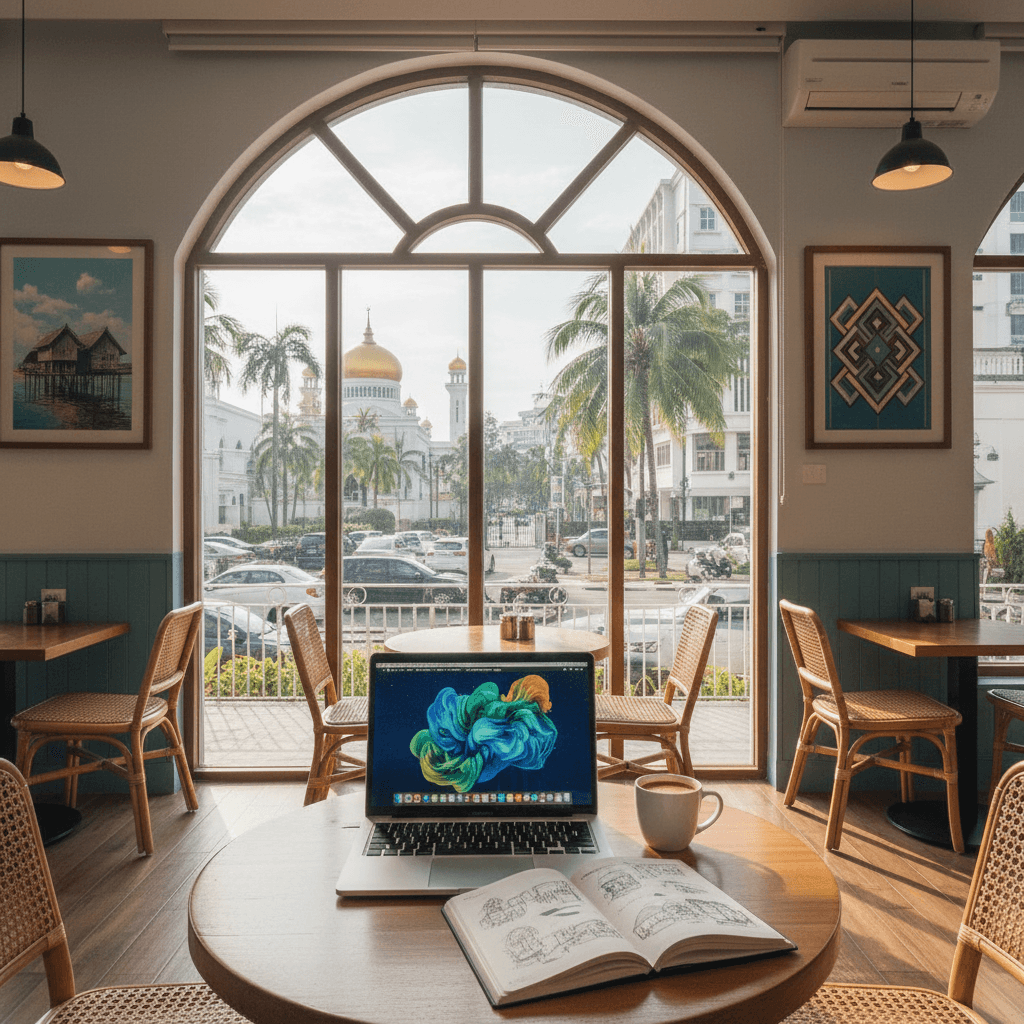
The vibe here is suburban but dense. You do not get the skyscraper skyline of Singapore or the chaotic sprawl of Bangkok. Instead, Gadong feels like a series of interconnected hubs where people gather to escape the humidity. It is a place of contrasts, where high-end SUVs park outside humble street food stalls. You will feel the weight of tradition in the modest dress and the call to prayer echoing across the parking lots, but you will also find a growing community of young locals and expats huddled over laptops in specialty coffee shops.
The Nomad Reality
Living in Gadong requires a shift in expectations. This is not a party town. Alcohol is not sold publicly, and the nightlife revolves entirely around food and social conversation. Most nomads find that the trade-off is a high level of safety and a remarkably stress-free environment. You can walk around at night without a second thought, and the locals are famously polite, even if they are a bit reserved at first. It is a destination for the "deep work" phase of your journey, where you trade distractions for focus.
The infrastructure is reliable but has its quirks. While you will find everything you need at The Mall Gadong, from electronics to groceries, the digital side of things requires some patience. You will want to head straight to the Progresif store to get sorted with a local SIM card, as relying on hotel Wi-Fi can be a gamble. Most expats recommend the larger data packages to tether when the local speeds dip below the 10 Mbps average.
Neighborhood Snapshots
While Gadong is technically a district, it functions as a collection of micro-neighborhoods that each serve a different purpose for your daily routine.
- Central Gadong: This is the heart of the action. It is dominated by The Mall and the Rizqun International Hotel. It is the best place for errands, banking, and finding a variety of quick meals. It is loud and busy, but it is the most walkable part of the area.
- Kampong Pengkalan Gadong: Just a short distance from the main commercial strip, this area feels more residential. It is where you will find more traditional housing options and a slightly slower pace of life while still being minutes away from the shops.
- Batu Bersurat: Technically an adjacent commercial area, this is where the "cool" Gadong lives. It is packed with newer cafes, boutique gyms, and better dining options. If you are looking for a place to work from a cafe for three hours, you will likely end up here.
What It Costs
Brunei is not as cheap as neighboring Malaysia or Indonesia, but it is far more affordable than Singapore. You are looking at a monthly burn rate of approximately $1,560 to live comfortably. This covers a decent apartment, plenty of meals out, and your transport costs. Since public transit is limited, most nomads factor in the cost of ride-sharing apps like Dart to get around, which adds up but remains manageable.
The emotional experience of Gadong is one of quiet productivity. It is a place where you can disappear into the background. There is a specific kind of peace that comes with the Gadong evening, specifically at the Gadong Night Market. Watching the smoke rise from the satay grills while the sun sets provides a sense of belonging that more "touristy" cities often lack. You aren't just a visitor here; you are part of the daily furniture of the neighborhood.
The Bottom Line
Living in Gadong puts you in the commercial heart of Brunei, which means you're paying a slight premium for convenience compared to the quieter residential outskirts. Most digital nomads find they can live comfortably here on a budget of roughly $1,560 per month. This covers a mid-range lifestyle that includes a decent apartment, plenty of dining out, and the inevitable cost of private transport, as Brunei isn't exactly a walking-friendly destination.
The currency is the Brunei Dollar (BND), which is pegged 1:1 with the Singapore Dollar. This makes budgeting predictable, though it also means Gadong is significantly more expensive than neighboring Malaysian hubs like Miri or Kota Kinabalu. You'll get more for your money here than in Singapore, but you won't find the rock-bottom prices of Thailand or Vietnam.
Accommodation and Utilities
Rent will be your biggest overhead. Since Gadong is a suburban center with high demand, prices stay relatively firm. Most expats look for serviced apartments or modern condos near The Mall to stay close to the action. If you're looking for a one-bedroom apartment in a modern building, expect to pay between $700 and $900 per month. If you move further out toward Berakas or the quieter parts of Bandar Seri Begawan, those prices can drop by 20%.
- One-bedroom apartment: $750 to $950
- Utilities (Electricity, Water, Trash): $40 to $60
- Mobile Data: Progresif offers tourist plans that are much cheaper than eSIMs; expect to pay about $15 to $25 for a solid data package.
Eating and Drinking
Dining is where you can really control your burn rate. Gadong is famous for its night market, the Pasar Malam Gadong, where you can eat like a king for less than $5. A stick of satay or a portion of nasi katok usually costs just $1. If you prefer air-conditioned cafes or mid-range restaurants in the shopping complexes, a meal will typically run you between $10 and $15.
It's important to remember that Brunei is a dry country. There are no bars or nightclubs, and alcohol isn't sold publicly. This lack of a "nightlife tax" actually saves nomads a significant amount of money compared to cities like Bangkok or Bali, where social drinking can easily double your daily spend.
Getting Around
Public transport is limited, so most long-term visitors rely on the Dart app, which is Brunei's version of Uber or Grab. A short trip within Gadong usually costs around $5, while a ride into the center of Bandar Seri Begawan might cost $8 to $10. If you're staying for several months, many expats recommend renting a small car, which can cost about $400 to $500 per month, but it saves you the headache of waiting for rides in the tropical heat.
Digital Nomad Essentials
Connectivity is a bit of a mixed bag. Home fiber is reliable but can be pricey to set up for short stays. Most nomads rely on coworking spaces or cafe hopping. While internet speeds average around 10 Mbps, which is on the slower side for heavy video editing, it's generally sufficient for standard Zoom calls and cloud work.
- Coworking hot desk: $15 to $25 per day
- Coffee at a cafe: $4 to $6
- Gym membership: $50 to $80 per month
Overall, Gadong offers a stable, safe, and relatively affordable base for those who want a slower pace of life without the chaos of larger Southeast Asian capitals. It's a "what you see is what you get" kind of place where your biggest expenses are fixed and predictable.
For the Hyper-Productive Nomad
If you're in Gadong to get work done, you want to stay as close to The Mall as possible. This is the heartbeat of the district. Staying within a three block radius of the mall means you're never more than five minutes away from a dependable caffeine fix or a fresh SIM card. Nomads usually congregate around the Progresif store here to handle their data needs, as it's often more reliable than the spotty Wi-Fi found in older guesthouses.
While Brunei doesn't have a massive coworking culture yet, the area around The Mall acts as a de facto office. You will find people tucked away in cafes with their laptops, though you should expect average speeds of 9 to 10 Mbps. It is not the place for heavy video editing, but it's perfect for emails and light admin. Living here puts you in the center of the action, making it easy to hop between your apartment and the few air-conditioned spaces where work actually happens.
- Estimated Monthly Rent: $800 to $1,200 for a serviced apartment.
- Connectivity: Best in the city, but still modest by global standards.
- Vibe: Fast paced for Brunei, convenient, and commercial.
For Long-Term Expats
Expats who are settling in for more than a few months often drift toward the quieter residential pockets bordering Bandar Seri Begawan. These areas offer a bit more breathing room than the commercial core of Gadong. You'll find larger apartment complexes here that cater to foreign workers and those on employment sponsorship. It is a more suburban feel where you'll likely need a car or a dedicated ride-hailing app to get around comfortably.
Since the total cost of living sits around $1,562 per month, many expats choose this area to get better value for their money. You'll find larger kitchens and more modern amenities compared to the older builds in the city center. It's the kind of place where you can actually host a dinner party or have a quiet night in away from the mall crowds.
- Estimated Monthly Rent: $900 to $1,500 for a multi-bedroom unit.
- Atmosphere: Residential, quiet, and family-oriented.
- Proximity: 10 minute drive to the Gadong night market.
For Families
Families usually look for the greenest fringes of the Gadong area. Brunei is exceptionally safe, so the main priority for parents is usually space and proximity to international schools. The outskirts of Gadong provide a suburban buffer that feels secure and predictable. You won't find much in the way of a nightlife scene here, which suits most families just fine.
The local parks and the ease of access to grocery stores like Hua Ho make daily life manageable. Most families find that the higher price point for a house or a large condo is worth it for the peace of mind. Since public transport is limited, living in these family-friendly pockets requires a vehicle, but the roads are well-maintained and traffic is rarely an issue outside of peak school-run hours.
- Schooling: Close to several private and international options.
- Safety: Extremely high; one of the safest regions in Southeast Asia.
- Space: Mostly detached houses or large, modern condos.
For Solo Travelers and Budget Seekers
If you're traveling solo and watching your wallet, look for guesthouses near the Gadong Night Market (Pasar Malam Gadong). This is the best way to keep your food costs down while staying in the thick of the local culture. You can grab a full meal for just a few dollars, which helps offset the relatively high cost of accommodation in Brunei.
Solo travelers often prefer this area because it's the most walkable part of the district. You can wander the market, hit the shops, and find a few local spots to meet people without needing a taxi for every trip. While there isn't a "backpacker" scene in the traditional sense, this is where you're most likely to run into other travelers over a plate of $1 grilled chicken or a cup of teh tarik.
- Food Costs: Very low if you stick to the night market.
- Social Life: Centered around food and evening strolls.
- Transport: Most walkable area in the district.
Connectivity Realities
Brunei doesn't usually top the list for high speed digital hubs, and Gadong is a bit of a mixed bag when it comes to staying online. You'll find that the infrastructure is reliable, but the speeds aren't going to win any races. Average home and cafe connections hover around 9 Mbps to 10 Mbps. If your work involves heavy video editing or massive file uploads, you'll need to be patient. For standard emails, Slack, and the occasional Zoom call, it gets the job done without too much drama.
Most nomads find that relying on mobile data is the smartest move for a stable backup. You can pick up a local SIM card easily at the Progresif store inside The Mall Gadong. It's much more affordable than using a travel eSIM, especially if you need more than a few gigs. They offer prepaid plans that are straightforward to set up, just bring your passport. If you prefer the convenience of an eSIM, be prepared to pay a premium, with prices often starting around $50 for 5GB.
Where to Work
Dedicated coworking spaces in Gadong are limited, so most remote workers end up adopting the local cafe culture. The neighborhood is the commercial heart of the city, meaning you're never more than a few minutes from a caffeine fix and a power outlet. The Coffee Bean & Tea Leaf and Starbucks in the Gadong central area are the most popular spots for a nomadic afternoon. They have decent air conditioning, which is a lifesaver in the Brunei heat, and the staff are generally relaxed about people staying for a couple of hours.
For a more local feel, check out Roasted Sip. It's a favorite among the creative crowd and offers a much better cup of coffee than the big chains. The atmosphere is conducive to focused work, though it can get crowded during the lunch rush. If you need a proper office environment, you might have to look toward Bandar Seri Begawan for more formal business centers, but Gadong remains the most convenient base for a "laptop and latte" lifestyle.
Digital Nomad Essentials
- Average Internet Speed: 9 to 10 Mbps
- Best Local SIM: Progresif (Available at The Mall Gadong)
- Mobile Data Cost: Significantly cheaper than eSIMs for 1GB+ packages
- Work Friendly Cafes: Roasted Sip, Starbucks, and The Coffee Bean & Tea Leaf
- Power Outlets: Type G (three pin UK style) is the standard
One thing to keep in mind is that Brunei's internet can occasionally experience outages during heavy tropical storms. It's always a good idea to have your local SIM hotspot ready to go. While the speeds might feel like a throwback to a decade ago, the lack of distractions and the quiet pace of life in Gadong can actually help your productivity. Just don't expect to be streaming 4K video while you work.
Logistically, the area is very manageable. Since most of the cafes and shops are concentrated around the mall and the nearby shophouses, you can easily hop between different spots if the Wi-Fi at one place is acting up. Most expats recommend keeping a few different data packages active if you have critical meetings, as the local networks can vary in strength depending on which building you're sitting in.
A Safe Haven in Southeast Asia
Gadong is arguably one of the safest places you could choose to set up your laptop. Brunei consistently ranks as one of the most secure nations in the region, and Gadong, being the primary commercial hub, feels incredibly secure even late at night. You won't find the aggressive scams or petty pickpocketing common in other regional hubs. Most nomads feel comfortable walking between the Gadong Night Market and their accommodation with high end gear in their bags without a second thought.
The local culture is deeply rooted in Malay Islamic values, which translates to a very respectful and law abiding atmosphere. While you should always use common sense, the risk of violent crime is statistically negligible. The most "dangerous" thing you'll likely encounter is the lack of sidewalks in certain areas, making the short walk between shopping blocks a bit of a scramble against local traffic.
Healthcare Standards and Facilities
If you get sick, you're in good hands. Brunei has a high standard of medical care, and Gadong is perfectly positioned near the country's best facilities. For everyday issues like a sinus infection or a minor injury, there are several private clinics within the Gadong Mall area and the surrounding shophouses. A standard consultation at a private clinic usually costs between $30 and $50 BND, excluding medication.
For more serious matters, the Raja Isteri Pengiran Anak Saleha (RIPAS) Hospital is the main government facility located just a ten minute drive from central Gadong. While government healthcare is heavily subsidized for citizens, expats and visitors will pay higher rates, though these are still quite reasonable compared to Western private care. Most nomads prefer Jerudong Park Medical Centre (JPMC) for a more premium experience; it is a private hospital about 15 minutes away that offers world class specialists and a more "resort" feel.
Pharmacies and Prescriptions
You'll find well stocked pharmacies in almost every corner of Gadong. Guardian and Guardian Health & Beauty are the most common chains, located inside the major malls. They carry most international brands for over the counter needs. If you require specific prescription medication, it is best to bring a copy of your doctor's note. Brunei has strict laws regarding controlled substances, so always keep your meds in their original packaging to avoid any headaches at customs.
Staying Healthy in the Tropics
The biggest health risks here are the heat and the mosquitoes. The humidity in Gadong can be intense, especially during the midday sun, so staying hydrated is a full time job. Tap water is generally considered safe to drink in Brunei, but most expats and locals prefer filtered or bottled water just to be safe. Dengue fever is a minor risk in the region, so if you're heading to the nearby parks or hanging out near the river at dusk, a bit of repellent goes a long way.
Emergency Numbers to Know
- Police: 993
- Ambulance: 991
- Fire: 995
English is widely spoken by medical professionals, so you won't have to worry about a language barrier when explaining your symptoms. Most doctors were trained in the UK, Australia, or Singapore, ensuring a high level of communication and care. Just make sure you have a solid travel insurance policy that covers medical evacuation, just in case you need specialized treatment that requires a quick flight to Singapore.
The Reality of Transit in Gadong
Gadong is the commercial heartbeat of Brunei, but it isn't exactly built with pedestrians in mind. While you can walk between The Mall and the nearby Night Market, the tropical humidity and lack of consistent sidewalks make long treks a sweaty ordeal. Most nomads find that while they can base themselves in Gadong for work and food, they need a set of wheels to see anything beyond the immediate neighborhood.
Public transport exists in the form of the purple Frangipani buses, but they operate on a somewhat loose schedule. They are incredibly cheap at about $1.00 BND per ride, but they stop running early in the evening, usually around 6:00 PM or 8:00 PM. If you are trying to get from Gadong to Bandar Seri Begawan, the bus is a budget friendly way to do it during daylight hours, but it isn't a reliable system for a digital nomad on a tight meeting schedule.
Ride-Hailing in Brunei
Ride-hailing options include Dart and Grab. These apps work exactly like the platforms you are used to and are the most reliable way to get around Gadong and the wider capital region without owning a car.
- Short trips within Gadong: Usually cost between $5.00 BND and $7.00 BND.
- Trips to Bandar Seri Begawan: Expect to pay around $10.00 BND to $15.00 BND depending on the time of day.
- Airport transfers: A ride from the airport to your Gadong accommodation typically runs about $15.00 BND to $20.00 BND.
Renting a Car
If you plan on staying for more than a week, renting a car is the move most expats recommend. Brunei has some of the cheapest petrol prices in the world, and the roads are well maintained and easy to navigate. Having your own car lets you explore the beaches or head out to Temburong without stressing about data signals or wait times.
You can find rental kiosks at the airport or through agencies in Gadong like Hertz or Avis. Expect to pay roughly $50.00 BND to $70.00 BND per day for a standard sedan. If you are staying long term, you can often negotiate monthly rates that bring the daily cost down significantly. Just remember that they drive on the left side of the road here.
Water Taxis
While not a primary way to get around the landlocked parts of Gadong, you will eventually head to the waterfront in the capital. The water taxis are iconic speedboats that zip people across the river to Kampong Ayer. A ride usually costs about $1.00 BND or $2.00 BND. It is a fun, breezy alternative to sitting in traffic, and it is the only way to experience the stilt villages properly. Just wave one down from the pier; they are everywhere and they move fast.
The Linguistic Landscape
You'll find that getting around Gadong is surprisingly easy if you speak English. While Malay (Bahasa Melayu) is the official language, English is the de facto language of business and education. Most locals in the Gadong Mall or the surrounding commercial blocks speak it fluently; or at least well enough to help you find a specific store or explain a menu item.
The local dialect is Brunei Malay, which has its own unique rhythm and vocabulary. You might notice locals adding a "bah" to the end of their sentences for emphasis. It's similar to how "lah" is used in Singapore or Malaysia. Learning a few basic Malay phrases like Terima kasih (Thank you) goes a long way in building rapport, even though you can survive perfectly fine without them.
Staying Connected in Gadong
Connectivity in Gadong is generally reliable for modern needs. Average fixed line speeds are around 50-100 Mbps or check latest Speedtest data, which is suitable for most remote work tasks. Most nomads find that relying on mobile data is also a reliable play for Zoom calls or uploading large files while on the move.
For your local SIM, head straight to the Progresif store inside Gadong Mall. It's the go-to spot for most expats and travelers because their prepaid plans are straightforward. A local SIM is almost always better value than an eSIM. While travel eSIMs are convenient, they're pricey here. In contrast, local Progresif plans offer much larger data buckets for a fraction of that cost.
Written Communication and Signs
Brunei uses a dual script system. You'll see Jawi (an Arabic based script) alongside the Latin alphabet on street signs and government buildings. Don't let the Jawi intimidate you; the Latin text is always there right underneath it. In Gadong's commercial heart, most shop names, menus, and price tags are written in English or standard Malay, making it very easy to navigate the area on foot.
If you're planning to stay for a while, join some of the local Facebook groups for expats in Bandar Seri Begawan. Since Gadong is the primary commercial hub, most of the neighborhood chatter happens there. It's the best way to find out about localized internet updates or the best spots with reliable Wi-Fi that isn't throttled during peak hours.
Quick Reference for Communication
- Primary Language: Malay (Official), English (Widely spoken)
- Local SIM Provider: Progresif (Located in Gadong Mall)
- Average Internet Speed: 50-100 Mbps
- Script: Latin and Jawi (Arabic)
Most nomads recommend carrying a power bank if you're working from cafes around the Gadong night market area. While the language barrier is non-existent, the search for a reliable power outlet and a steady 4G signal is a common part of the daily routine here. Stick to the malls for the best signal strength, as the thick concrete in some of the older shophouses can be a bit of a signal killer.
The Tropical Rhythm
Brunei sits right on the edge of the equator, so you should expect weather that is consistently hot and humid. Temperatures usually hover between 24°C (75°F) and 32°C (90°F) throughout the year. You won't find traditional seasons here; instead, the year is defined by how much rain is falling at any given time.
The humidity is the real factor for nomads. It often stays above 80 percent, which makes midday walks to the Gadong Night Market feel much hotter than the thermometer suggests. Most expats spend their afternoons in air-conditioned hubs like The Mall or local cafes to escape the peak heat. If you plan on exploring the nearby water villages or hiking trails, do it before 9:00 AM or after 5:00 PM to avoid the most intense sun.
Monsoons and Rain Patterns
Brunei experiences two main monsoon seasons. the Northeast Monsoon runs from December to March, while the Southwest Monsoon hits between June and August. The period from October to January is generally the wettest time of the year. During these months, tropical downpours are frequent and heavy, often causing flash flooding on some of the side roads around Gadong.
These storms usually pass quickly, leaving the air feeling a bit fresher for an hour or two. It is a good idea to keep a sturdy umbrella in your bag at all times. Most nomads find that the rain doesn't ruin their plans, but it does make having a car or using ride-hailing apps like Dart much more practical than walking between districts.
The Best Time to Visit
For the best balance of manageable weather and local activity, aim for February and March. This window typically sees less rainfall and slightly lower humidity. It is the sweet spot for digital nomads who want to enjoy the outdoor lifestyle without getting caught in a daily deluge. June to August is also a solid choice for those who prefer drier conditions, though it can get quite dusty during prolonged dry spells.
If you want to experience Brunei at its most lively, try to visit during July. The 15th of July marks the Sultan's birthday, and the celebrations last for two weeks. Gadong becomes the center of the action with pop-up food stalls, nightly performances, and a festive atmosphere that you won't see during the rest of the year. Just keep in mind that accommodation prices might tick up slightly during this period.
A Note on Ramadan
Since Brunei is a devoutly Islamic country, the month of Ramadan significantly changes the daily flow. During this time, eating and drinking in public during daylight hours is strictly prohibited, and many restaurants in Gadong will be closed or only offering takeout until sunset. While the night markets become incredible feasts after dark, nomads who rely on working from cafes during the day might find this month challenging. If you prefer a more standard routine, check the lunar calendar and plan your stay outside of this holy month.
- Peak Season: June to August (Drier weather)
- Wettest Months: October to January
- Hottest Months: April and May
- Best Cultural Experience: July (Sultan's Birthday celebrations)
Connectivity and SIM Cards
Staying connected in Gadong is straightforward, though you should manage your expectations regarding speed. Average downloads hover around 9 to 10 Mbps, which handles emails and basic video calls but might struggle with heavy 4K uploads. Most nomads head straight to the Progresif store inside The Mall Gadong to grab a local SIM. It is significantly cheaper than any international eSIM you will find.
If you prefer the convenience of an eSIM, be prepared for a price hike. A 5GB plan for 30 days can run you about $50.90, while heavy data users might pay up to $166.85 for 20GB. Local prepaid plans are the way to go if you are staying more than a few days; just remember to bring your passport for registration at the counter.
Visas and Legalities
Brunei does not have a specific digital nomad visa. You will likely enter on a standard tourist visa, which for many nationalities allows for a stay of up to 90 days. If you need more time, you can visit the Immigration Department for an extension, but do not count on it being a formality. It is important to remember that you cannot legally work for a local Bruneian company on this stamp. As long as your income is coming from overseas clients or an employer back home, you are sticking to the local rules.
Cost of Living and Budgeting
Living the nomad life here is not as cheap as in neighboring Thailand or Malaysia, but it is far from the prices of Singapore. A comfortable monthly budget usually sits around $1,562. This figure covers your accommodation, food, and getting around. Since Gadong is the commercial heart of the country, you will find a wide range of price points for meals, from affordable food courts to mid-range cafes.
Getting Around Gadong
Public transport is not Brunei's strongest suit. The purple buses are cheap, but they do not run on a particularly strict schedule and service usually stops by 6:00 PM or 8:00 PM. Most expats and long term visitors rely on the Dart app. It is Brunei's version of Uber or Grab and is the most reliable way to get from Gadong to Bandar Seri Begawan or the airport without the headache of hunting down a rare street taxi.
The Nomad Lifestyle
Gadong is arguably the most convenient place to base yourself because everything is walkable once you are in the neighborhood. You have The Mall for shopping and the Gadong Night Market for affordable local eats. While there are not many formal coworking spaces with monthly memberships like you would find in Bali, the cafe culture is growing. You will see plenty of people working from laptops in the various coffee shops around the Aman Hills area or the shops near The Centerpoint Hotel. Just check for power outlets before you get too settled, as they are not always guaranteed at every table.
Need visa and immigration info for Brunei?
🇧🇳 View Brunei Country GuideHidden Gem
Worth the effort