Fremantle
🇦🇺 Australia
The Soul of the West
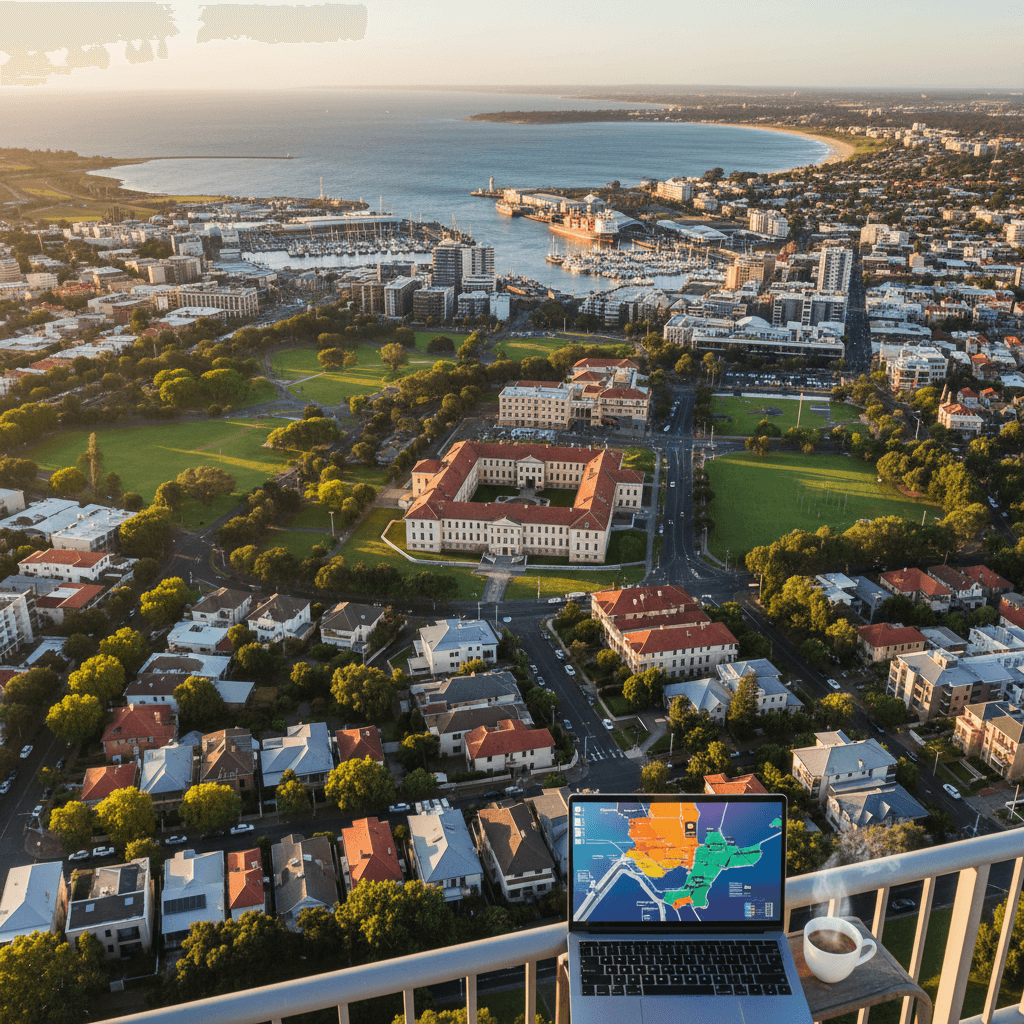
If Perth is the polished, corporate face of Western Australia, Fremantle, or Freo as locals call it, is the eccentric, salty uncle with a story for every occasion. This port city sits where the Swan River meets the Indian Ocean, and it feels fundamentally different from any other Australian hub. It is a place where 19th-century limestone architecture houses modern tech startups, and the scent of roasting coffee competes with the sharp tang of sea salt.
The vibe here is unapologetically laid back. You will see people walking barefoot from the beach to the supermarket, yet the person in the linen shirt next to you at the cafe is likely managing a global remote team. It is a town that values creativity and heritage over the frantic pace of the East Coast. For a nomad, this means a slower rhythm of life that actually encourages deep work during the day and genuine decompression by sunset.
Who You will Meet
Fremantle attracts a specific type of traveler. You won't find the same high-energy hustle culture seen in Sydney. Instead, you will rub shoulders with marine biologists, artists, indie developers, and long-term expats who came for a weekend and never left. The community is tight-knit but welcoming, centered around a shared love for the outdoors and a high-quality flat white.
Most nomads find that social life revolves around the Cappuccino Strip on South Terrace or the grassy knoll at Esplanade Park. It is easy to strike up a conversation here; the locals are famously chatty and will likely give you their unsolicited opinion on the best surf break or the most reliable 5G spot in town. It is a place where the barrier to entry for social circles is remarkably low.
The Daily Flow
Life in Freo is dictated by the Fremantle Doctor, the cooling afternoon sea breeze that blows in almost every day during summer. Mornings are for focused work in sun-drenched cafes like Moore & Moore or Gino's. By 3:00 PM, when the heat peaks, the Doctor arrives to drop the temperature, signaling it is time to wrap up and head to South Beach for a swim.
The city is compact and highly walkable. You can cross the entire central heritage district in 15 minutes on foot. This accessibility makes it a dream for those who want to ditch the car. You will spend your days moving between heritage-listed buildings that have been converted into modern workspaces, feeling the history of the old convict prison and the maritime trade in every limestone brick.
Why Freo Stands Out
What makes Fremantle unique is its grit. It hasn't been sanitized for tourists. You still have a working port with massive cargo ships gliding past the E Shed Markets, and the weekend markets have been running since 1897. This authenticity is a breath of fresh air for nomads who are tired of the cookie-cutter "digital nomad hubs" found in Southeast Asia or Europe.
While the internet connectivity across Australia can be hit or miss, Fremantle has seen significant upgrades. Most central rentals and cafes now offer NBN speeds that comfortably handle video calls and large uploads. It is a functional, beautiful, and slightly rebellious corner of the world that rewards those who prefer character over polish.
- The Pace: Slow, intentional, and tied to the tides.
- The Aesthetic: Victorian-era stone, street art, and industrial port vibes.
- The Draw: A high standard of living without the frantic energy of a capital city.
- The Weather: Mediterranean summers with consistent sunshine and cool evening breezes.
Living here feels like being part of a well-kept secret. You have access to world-class beaches like Cottesloe and Leighton just a short train ride away, yet you return to a home base that feels like a village. It is the kind of place where you stop being a tourist within forty-eight hours and start feeling like a local.
The Fremantle Price Tag
Living in Freo isn't exactly a budget backpacker's dream, but it's significantly more manageable than the eye watering prices you'll find in Sydney or Melbourne. You're paying for a specific lifestyle here; the ability to walk to the beach, grab a world class coffee, and work from a heritage building all in one afternoon. Most nomads find they need a monthly budget of at least $3,200 to $4,500 AUD to live comfortably without constantly checking their bank balance.
The Australian dollar fluctuates, but it generally gives those earning in USD or Euros a bit of a boost. Still, local costs for services and dining out are high because wages in Western Australia are among the highest in the world. You'll feel this most when you're at the pub or paying for a mobile data plan.
Accommodation by Neighborhood
The rental market in Fremantle is tight. If you're staying for a few months, look for "short stay" apartments or house shares on sites like Flatmates.com.au. Prices vary wildly depending on whether you want to be in the thick of the West End or the quieter residential pockets.
Fremantle City Centre (West End)
- The Vibe: Historic, walkable, and close to the train station.
- Monthly Rent (Studio/1BR): $2,400 to $3,200 AUD
- Pros: You won't need a car. You're steps away from the Cappuccino Strip.
South Fremantle
- The Vibe: The trendy, coastal heart of Freo. Very popular with the digital nomad crowd.
- Monthly Rent (Studio/1BR): $2,600 to $3,500 AUD
- Pros: Walking distance to South Beach and the best bakeries in town.
Beaconsfield & White Gum Valley
- The Vibe: More suburban and leafy, located just up the hill.
- Monthly Rent (Room in a shared house): $1,100 to $1,500 AUD
- Pros: Much better value for money and a quieter environment for deep work.
Food, Drink, and Socializing
Eating out is a major part of the culture here, but it adds up quickly. A standard flat white will set you back about $5.00 to $6.50 AUD. If you're heading to a spot like Bread in Common for dinner, expect to pay $30 to $45 AUD for a main dish. A pint of local craft beer at Little Creatures usually lands around $12 to $14 AUD.
Savvy nomads stick to the "Sunday Markets" for cheaper produce. The Fremantle Markets are great for atmosphere, but the locals often head to the morning farmers markets at local schools for better deals on fruit and veg. Cooking at home most nights is the only way to keep your budget under $4,000 AUD.
Workspace and Connectivity
While Perth is sometimes criticized for having "fewer connections" than the East Coast, Fremantle itself has a solid infrastructure for remote work. Most cafes are laptop friendly on weekdays, provided you keep the coffee orders coming. For a dedicated desk, coworking is the way to go.
- fSpace (Market St): A popular boutique space. A hot desk day pass is roughly $40 AUD, while monthly memberships hover around $450 AUD.
- Home Office Setup: A decent NBN (National Broadband Network) plan for your rental will cost about $80 to $110 AUD per month.
- Mobile Data: Grab a Boost or Telstra SIM card for about $40 AUD a month to ensure you have coverage even when you head further down south to Margaret River.
Transport and Utilities
If you stay central, your transport costs are nearly zero. Fremantle is incredibly bike friendly and the "CAT" bus (Central Area Transit) used to be free, though check the current zones as routes change. A train ticket to Perth CBD is about $5.00 AUD. If you decide to rent a car for weekend trips, budget at least $70 to $90 AUD per day plus fuel, which stays around $1.80 to $2.10 AUD per liter.
Utilities like electricity and water are often included in short term rentals. If they aren't, expect to pay about $200 to $250 AUD a month, especially in summer when the air conditioning becomes a non negotiable requirement.
The Urban Nomad: South Fremantle
If you want to step out of your rental and be within a two minute walk of both a flat white and a beach sunset, South Freo is your spot. It centered around South Terrace, a long stretch of historic buildings filled with independent cafes and small bars. Most digital nomads gravitate here because it feels less like a tourist trap and more like a local village. You can spend your morning working at Running with Thieves, a massive warehouse space that doubles as a brewery and distillery, or grab a corner table at South Beach Cafe.
- Average Rent: $650 to $850 per week for a decent one bedroom apartment or studio.
- Vibe: Barefoot luxury meets industrial grit. You will see people walking to the grocery store without shoes.
- Best for Work: Fremantle Library at Walyalup Koort is just a short bike ride away and offers free, reliable high speed internet.
The Long Term Expat: East Fremantle
East Freo is where you go when you want to feel settled. It is slightly more upscale and residential than the city center, tucked along the banks of the Swan River. Expats often choose this area because it is quieter but still has a high density of quality dining. The Left Bank and George Street are the main hubs here. George Street in particular feels very European with its boutique shops and wine bars like Strange Company nearby.
- Average Rent: $750 to $1,100 per week for character homes or modern townhouses.
- Vibe: Leafy streets, river views, and a very active morning fitness culture.
- Local Tip: It is a bit further from the train station, so having a car or a sturdy bike is helpful if you plan on heading into Perth often.
Families: Beaconsfield and White Gum Valley
For those traveling with kids, the suburbs just up the hill from the coast offer a lot more space for your dollar. Beaconsfield and White Gum Valley are known for their "sustainability" focus and community gardens. You will find larger backyards and proximity to Beaconsfield Primary School, which is highly regarded. The Fremantle Farmers Market happens every Sunday nearby, which is a staple for local families grabbing organic produce and breakfast.
- Average Rent: $600 to $900 per week for a three bedroom family home.
- Vibe: Quiet, creative, and very neighborly. Expect lots of street parties and community compost bins.
- Perks: You are still only a 5 to 10 minute drive from the beach, but you avoid the noise of the late night pub crowds.
Solo Travelers: Fremantle City Centre
If you are arriving solo and want to meet people immediately, stay in the thick of it. The West End is the historic heart of the city, characterized by stunning gold rush era architecture. You will be steps away from the Fremantle Markets and the Cappuccino Strip. Living here means you don't need a car at all; the train to Perth is right there, and the ferry to Rottnest Island departs from the nearby wharf. For a dedicated desk, fSpace on Market Street is the go to coworking spot for solo professionals, costing roughly $40 for a day pass or $350 for monthly access.
- Average Rent: $500 to $700 per week for a central loft or apartment.
- Vibe: High energy and convenient. You have the best access to nightlife and the Old Courthouse social scene.
- Safety: Generally very safe, though like any port city, the area around the train station can get a little rowdy late on weekend nights.
The Connectivity Reality
Fremantle, or Freo as everyone calls it, has a bit of a reputation for being the laid back cousin to Perth's corporate center. While the pace is slower, the internet infrastructure is generally solid. Most digital nomads find that the National Broadband Network (NBN) coverage here is reliable enough for heavy video calls and large file uploads. You can expect average download speeds between 50 Mbps and 100 Mbps in most residential areas and cafes.
Mobile data is your best friend for backup. Telstra has the most consistent coverage across Western Australia, though Optus and Vodafone are perfectly fine within the Fremantle city limits. If you're planning to work from the beach or one of the more historic buildings with thick limestone walls, grabbing a local SIM card with a 50GB to 100GB data plan for around $40 to $60 AUD per month is a smart move.
Top Coworking Spots
The coworking scene in Fremantle is intimate rather than corporate. You won't find massive global chains here; instead, the spaces reflect the city's artistic and maritime heritage. Most spots offer a mix of daily passes for those passing through and monthly memberships for longer stays.
- fSpace: Located right in the heart of town on Market Street, this is the go-to for most nomads. It has a very communal, non-corporate vibe with plenty of natural light. A day pass costs $40 AUD, while a dedicated desk for a month sits around $450 AUD.
- WOTSO: Technically located just a short hop away in nearby areas like North Perth or Mandurah, some residents commute if they need a more standardized, 24/7 access corporate environment. However, most stick to the local Freo independents to avoid the travel.
Laptop-Friendly Cafes
If you prefer the hum of a milk steamer over a quiet office, Fremantle has plenty of spots where you can camp out for a few hours. The local etiquette is generally to buy a coffee or a meal every couple of hours, and most staff won't mind you staying if it isn't during the peak lunch rush.
- Moore & Moore: Housed in a historic warehouse on Henry Street, this place has a massive courtyard and plenty of nooks. The Wi-Fi is decent, and the atmosphere is pure "creative professional."
- Gino’s: Located on the famous Cappuccino Strip, it is better for quick emails rather than deep work. It is an institution, great for people-watching while you clear your inbox.
- The Fremantle City Library: Located at the Walyalup Civic Centre, this is arguably the best "free" office in town. The Wi-Fi is fast, there are plenty of power outlets, and the modern architecture makes it a very comfortable place to grind through a project.
Practical Tips for Staying Online
Australia uses Type I plugs (the three-flat-pin variety), so you will likely need an adapter. Power surges aren't really an issue here, but the heat can be. In the peak of summer, when temperatures hit 40°C (104°F), some smaller cafes might struggle with cooling. On those days, the library or fSpace are your best bets for climate-controlled productivity.
Public Wi-Fi is available around the Town Hall and the Visitor Centre, but it is better suited for checking maps than running a business. Most nomads find that a combination of a $40 AUD fSpace day pass and a solid 5G mobile hotspot covers all their bases without any stress.
Staying Healthy and Safe in Freo
Fremantle has a laid back, salty air that makes it feel incredibly safe compared to most global port cities. It's the kind of place where people still look you in the eye and say hello on the street. While it’s technically part of the Perth metropolitan area, Freo operates like a self contained village where the community keeps a close watch on things.
General safety is high, but like any area with a lively nightlife, the central strip near South Terrace can get a bit rowdy on Friday and Saturday nights. Local expats generally suggest keeping an eye on your belongings when you're at the beach or sitting in the busy cafes along the Cappuccino Strip. If you're walking back to your accommodation late at night, sticking to well lit main roads like High Street or South Terrace is a smart move. Petty theft isn't rampant, but leaving a laptop visible in a parked car at South Beach is asking for trouble.
Medical Care and Emergency Services
If you find yourself under the weather, you won't have to go far for high quality care. The primary facility in the immediate area is Fremantle Hospital located on South Terrace. Fremantle Hospital focuses on specialist services; for emergencies, head to Fiona Stanley Hospital in Murdoch (15 minutes away), which is one of the most advanced medical facilities in Western Australia.
For day to day health needs, there are several reliable GP clinics in town. Fremantle Family Doctors has locations on South Terrace and in Beaconsfield, and they're usually able to accommodate new patients with a bit of notice. A standard consultation fee typically ranges from $80 to $110, though you might get some of that back if you're from a country with a reciprocal healthcare agreement. Pharmacies, or chemists as locals call them, are everywhere. Wizard Pharmacy on Adelaide Street is a reliable spot for prescriptions and basic health advice.
- Emergency Services (Police, Fire, Ambulance): Dial 000
- Non-Emergency Police: Dial 131 444
- Healthdirect Australia: Dial 1800 022 222 for 24/7 health advice from a registered nurse.
Sun Safety and the Environment
In Fremantle, the biggest threat to your health isn't crime; it's the sun. The Western Australian UV index is notoriously high, often reaching extreme levels by 10:00 AM. Long term residents swear by the "Slip, Slop, Slap" rule. Don't underestimate the breeze coming off the ocean, known locally as the Fremantle Doctor. It feels cooling, but it won't stop you from getting a severe sunburn in under 15 minutes.
If you're heading into the water at Bathers Beach or Leighton, always swim between the red and yellow flags. These areas are patrolled by lifesavers who know the local currents. While shark sightings make international headlines, they are statistically very rare. Most local swimmers use the SharkSmart app to stay informed about recent sightings and beach closures, which provides peace of mind before you dive in.
Digital Nomad Insurance and Visas
Since Australia doesn't have a specific digital nomad visa yet, most people working remotely here do so on a Subclass 600 Visitor Visa. This allows for stays of up to 12 months, but it doesn't give you access to Medicare unless your home country has a reciprocal agreement. Countries like the UK, New Zealand, and several European nations have these deals, but they usually only cover "essential" treatments.
Most nomads in Freo opt for private health cover like Bupa or Allianz Care to avoid massive out of pocket costs. A basic monthly policy for a single person usually starts around $120. Having this sorted before you land means you can enjoy the sunset sessions at South Beach without worrying about the cost of an unexpected trip to the clinic.
Walking and the CAT Bus
Fremantle is surprisingly compact, and you can easily cover the historic center on foot. Most expats find that if they live within two kilometers of the Cappuccino Strip, they rarely need a car for day to day life. The streets follow a grid pattern that makes it hard to get lost, and the flat terrain is a relief if you are carrying a laptop bag from your apartment to a cafe.
The best way to save your legs is the Central Area Transit, or the CAT bus. These are bright blue buses. They operate on a loop every 15 to 20 minutes, with a free transit zone along South Terrace; check current fares for full routes. The Blue CAT runs from the train station through the heart of town and down to South Beach, making it the go to choice for nomads who want a morning swim before starting their work day. It operates roughly from 7:30 AM to 6:30 PM, though hours are slightly shorter on weekends.
Public Transport and the SmartRider
If you are heading into the Perth CBD or exploring further out, you will use the Transperth network. The Fremantle Line train is your lifeline here; it is a 30 minute ride from Fremantle Station to Perth Station. Trains run every 15 minutes during the day and every 10 minutes during peak hour. It is clean, safe, and offers some pretty great views of the Swan River as you pass through North Fremantle and Mosman Park.
To get around, you need a SmartRider card. You can buy these at the newsstand in the train station for $10. Using the card is about 20% cheaper than buying paper tickets. A standard fare from Freo to Perth costs roughly $2.80 to $3.50 each way with SmartRider. Make sure you "tag on" at the green pillars before boarding and "tag off" when you exit, or the system will charge you a default fare which is significantly higher.
Cycling and Micro-mobility
The locals here are big on bikes. There is a dedicated cycle path that runs all the way from Fremantle into Perth, following the train line. It is a fantastic way to see the coast without dealing with traffic. If you are staying for a few months, check out the Fremantle Recycling Centre or local Facebook groups like "Fremantle Buy and Sell" to pick up a cheap second hand bike for under $100.
For shorter trips, you will see orange Neuron or purple Beam e-scooters scattered around the sidewalks. You unlock them with an app and pay by the minute. They are great for getting to a specific restaurant in South Fremantle, but the costs add up quickly. Expect to pay about $1 to unlock and roughly $0.45 per minute after that. Just remember that Western Australia has strict helmet laws; you must wear the one attached to the scooter or face a $100 fine.
Rideshares and Driving
Uber is the dominant rideshare app here, but locals also use Ola or DiDi, which often have better discounts for new users. A ride from the Fremantle town center to the popular bars in South Fremantle usually costs between $10 and $15. If you are planning a late night out, keep in mind that prices can surge after midnight on Fridays and Saturdays.
Renting a car is only necessary if you plan on heading to the Swan Valley wineries or down south to Margaret River. Parking in the center of Freo can be a nightmare and expensive, with many lots charging $3 to $5 per hour. If you do need a vehicle for a quick grocery run, look for GoGet pods or similar car-sharing services like Uber Carshare. These are car sharing services where you can book a vehicle by the hour, and they have several dedicated spots near the train station and the Esplanade Hotel.
Summary of Costs
- Train Fare to Perth: $2.80 to $3.50 (with SmartRider)
- E-Scooter 10-minute ride: $5.50
- Uber to South Fremantle: $12.00
- Daily Car Rental: $65.00 to $90.00
The Local Lingo
In Fremantle, or Freo as everyone actually calls it, English is the primary language, but it comes with a distinct West Coast flavor. You will find the local dialect is laid back and heavy on abbreviations. If someone asks you to meet at the Esplanade for a brekkie or suggests a sundowner at South Beach, they are just inviting you for breakfast or a sunset drink. It is a friendly, approachable atmosphere where a simple "G'day" or "How's it going?" works in almost any social or professional setting.
While the accent is generally easy to understand for native English speakers, the pace of life in Western Australia is slower than in Sydney or Melbourne. This reflects in the speech; people take their time. If you are coming from a fast paced tech hub, you might need to dial back your own speed to match the local rhythm. Most nomads find that being direct but casual is the best way to get things done here.
Staying Connected
Reliable internet is the lifeblood of any remote setup, and Freo generally delivers, though it pays to be selective about your base. Most apartments and cafes use the National Broadband Network (NBN). You can expect download speeds ranging from 50Mbps to 100Mbps in well established areas like South Fremantle or the West End. However, some older limestone buildings in the historic center have thick walls that can wreak havoc on Wi-Fi signals, so always ask for a speed test screenshot before committing to a long term rental.
For mobile data, the big three providers are Telstra, Optus, and Vodafone. Telstra is the most expensive but offers the most consistent coverage if you plan on road tripping up the coast to Lancelin or Margaret River. For staying strictly within the city limits, Optus or a budget provider like Boost Mobile or Amaysim will save you money. You can pick up a prepaid SIM card at the Woolworths on Adelaide Street for about $2 and load it with a $35 to $50 monthly plan that usually includes 30GB to 60GB of data.
Coworking and Cafe Culture
Fremantle does not have the massive coworking hubs you might find in Bali or Chiang Mai, but the options available are high quality and community focused. fSpace on Market Street is the go to spot for many digital nomads. It is located in a beautiful heritage building and offers a professional yet relaxed vibe. Expect to pay around $40 for a day pass or roughly $350 for a monthly hot desk. It is a great place to network with local entrepreneurs and find out about weekend events.
If you prefer the cafe route, Freo is famous for its coffee culture. Many nomads spend their mornings working from places like Gino's Cafe on the Cappuccino Strip or Moore & Moore in the West End. Just keep in mind that:
- Lunch hours get very busy, so it is polite to move on or order a full meal if you are taking up a table with a laptop.
- Public Wi-Fi is available in some areas but is often slow and unsecured; using a VPN and your own hotspot is the standard move.
- Power outlets are a rarity in older cafes, so show up with a full charge.
The Digital Nomad Community
The expat and nomad community in Fremantle is smaller and more integrated than in Perth's CBD. You won't find massive digital nomad meetups every night, but the community is tight knit. Local Facebook groups like Fremantle Community or Perth Digital Nomads are helpful for finding housing leads or casual meetups. Most social interaction happens organically at spots like Running with Thieves in South Freo or during the Sunday Music sessions at the Fremantle Arts Centre. It is an easy place to make friends if you are willing to strike up a conversation over a pint of local craft beer.
The Mediterranean Sweet Spot
Fremantle, or Freo to anyone who has been here more than ten minutes, enjoys a classic Mediterranean climate. You can expect hot, dry summers and cool, wet winters. Because it sits right on the edge of the Indian Ocean, it escapes the worst of the inland heat that hits Perth, thanks to a legendary local wind called the Fremantle Doctor. This sea breeze kicks in almost every afternoon between December and March, dropping the temperature by several degrees and making those 32°C (90°F) days much more bearable for working on a laptop.
Most digital nomads aim for the window between September and November or March and May. During these shoulder seasons, the weather is predictable and mild, usually hovering around 22°C to 26°C. You will avoid the peak summer humidity and the winter rains that can make the limestone streets feel a bit gloomy. If you are here in November, you will also catch the tail end of the wildflower season, which is a massive draw for weekend trips out of the city.
Seasonal Breakdown for Nomads
- Summer (December to February): Expect consistent sun and temperatures reaching 30°C to 38°C. This is peak tourist season, so expect higher prices for short term rentals in South Fremantle. It is the best time for beach lovers, but you will want a coworking space with high quality air conditioning like fSpace on Market Street.
- Autumn (March to May): Locals often say this is the best time to be here. The ocean is still warm enough for a morning swim at South Beach, but the scorching heat has faded. The mornings are crisp, and the wind dies down, making it perfect for outdoor cafe hopping.
- Winter (June to August): This is the rainy season. While it rarely gets freezing, temperatures sit around 12°C to 18°C. It can be quite damp, and some of the older heritage buildings lack proper insulation. If you visit now, make sure your Airbnb mentions heating.
- Spring (September to November): The city wakes up again. It is a fantastic time for hiking the nearby trails or taking the ferry to Rottnest Island before the summer crowds arrive.
The "Doctor" and Your Daily Schedule
Living in Freo means timing your day around the sun and the wind. Most expats and remote workers here adopt an early start. You will see the cafes along South Terrace packed by 7:30 AM. If you get your deep work done in the morning, you can spend the afternoon when the "Doctor" blows in enjoying the cooler air at a courtyard pub or a beachside park.
One thing to keep in mind is the UV index. Even on a pleasant 24°C day in October, the Australian sun is incredibly strong. You will see signs for Slip, Slop, Slap everywhere, and it is not just for kids. If you are planning to work from an outdoor table at Gino's Cafe, grab a spot under the awning or you will be burnt before your second espresso arrives.
When to Book
If you are looking for better deals on monthly stays, aim for a winter arrival in June. You can often negotiate lower rates on apartments near Fishing Boat Harbour when the holiday crowds thin out. However, if you want the quintessential Fremantle experience with outdoor markets, live music at The Fremantle Arts Centre, and sunset drinks, February is the peak of the social calendar. Just be prepared to book your accommodation at least three months in advance for any stay during the summer months.
Visas and Staying Legal
Australia doesn't have a dedicated digital nomad visa yet, so most remote workers arrive on a Subclass 600 Visitor Visa. This allows you to stay for up to 12 months, though you aren't technically allowed to work for Australian companies. If you're under 35 and from an eligible country, the Working Holiday Visa (Subclass 417 or 462) is a much better bet. It gives you more freedom and lasts a year, with options to extend if you're willing to do some regional work.
Connectivity and Coworking
While Perth and Fremantle are sometimes described as having fewer connections than the east coast, the local infrastructure is solid. You'll find NBN (National Broadband Network) speeds are reliable enough for video calls and heavy uploads. Most cafes in "Freo" are laptop friendly during the weekdays, but for a dedicated desk, fSpace on Market Street is the local favorite. It's a boutique setup with a community feel, costing around $40 AUD for a day pass or $350 AUD for monthly access.
If you prefer the library vibe, the Fremantle City Library at Walyalup Koort is free, has great air conditioning, and offers decent public Wi-Fi for those days when you're between paid memberships.
Cost of Living Breakdown
Fremantle isn't cheap, but it's often more manageable than central Sydney. You should budget for the following monthly expenses:
- Studio Apartment: $1,800 to $2,400 AUD
- Coworking Desk: $350 to $450 AUD
- Local SIM Card (50GB): $35 to $45 AUD
- Daily Coffee and Lunch: $25 to $35 AUD
Getting Around
You don't need a car if you stay within the city center or South Fremantle. The town is incredibly walkable and bike friendly. For longer trips into Perth CBD, use the Transperth train line. It takes about 30 minutes and costs roughly $5 AUD one way with a SmartRider card. If you're heading to the beach, the Blue CAT bus is a free shuttle that loops around the main sights every 10 to 15 minutes.
Climate and Timing
The best time to base yourself here is from October to April. The Mediterranean climate means endless blue skies, though the "Fremantle Doctor" (a famous sea breeze) kicks in every afternoon to cool things down. Be prepared for the heat in January and February, where temperatures often climb above 35 degrees Celsius. Winters are mild but can be surprisingly wet and windy, which makes the limestone buildings feel quite damp.
Safety and Local Tips
Fremantle is generally very safe, even at night. Like any port city, the area around the train station can get a bit rowdy on weekend evenings when the pubs close. Use common sense and stick to well lit paths. For healthcare, there are several GP clinics along South Terrace that offer walk in appointments for around $80 to $100 AUD if you don't have local Medicare coverage. Always keep your SunSmart app handy; the UV index here is brutal and will burn you in less than 15 minutes during mid summer.
Need visa and immigration info for Australia?
🇦🇺 View Australia Country GuideEasy Landing
Settle in, no stress