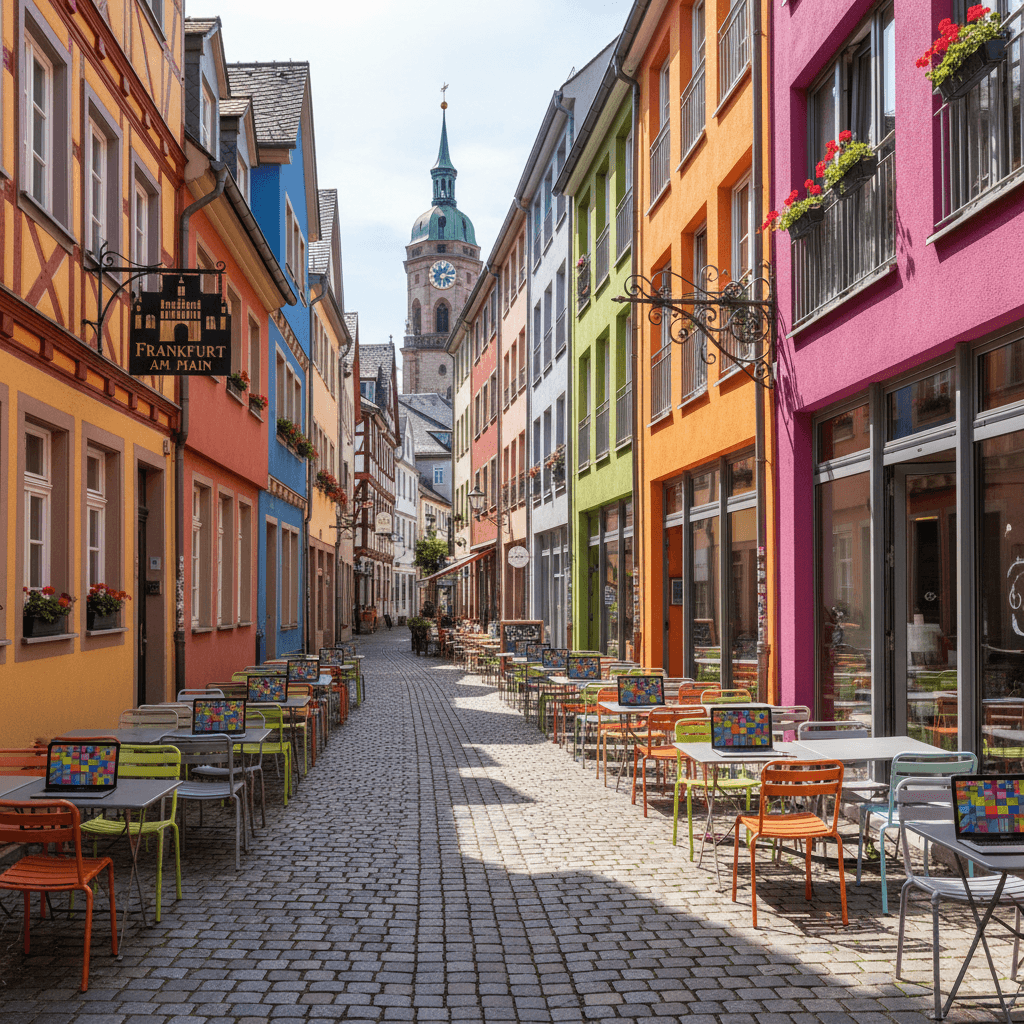
Frankfurt am Main
🇩🇪 Germany
The Manhattan of the Main
Frankfurt is a bit of a chameleon. To the casual observer flying into its massive 70 million passenger hub, it looks like a mini Manhattan. It has the only real skyscraper skyline in Germany, a fast paced banking core, and a glass-and-steel aesthetic that feels distinctly un-European. But step off the main thoroughfares and you'll find a city that's surprisingly green, intensely international, and more relaxed than its "Mainhattan" nickname suggests.
Most nomads find that Frankfurt isn't about old-world charm or the gritty hipster energy you'd find in Berlin. Instead, it's about efficiency and global access. Over 50% of the population has an international background, making this perhaps the easiest German city to navigate if your German is rusty. You're here for the high quality of life, the slick infrastructure, and the fact that you can be at a world-class fintech coworking space in the morning and a traditional apple wine tavern in Sachsenhausen by sunset.
The Daily Grind and the Sky-High Views
The vibe here is professional but increasingly creative. While the Innenstadt is dominated by suits and ties, neighborhoods like the Bahnhofsviertel have transformed from gritty red-light districts into hubs for diverse street food and late-night drinks. It's a city of contrasts where you'll see a €100,000 car parked next to a €5 currywurst stand.
For remote work, the city is a powerhouse. You aren't just working from a cafe; you're often working from the clouds. Spaces like Collection in the Nextower offer hot desks for around €99 a month with views that make your Zoom background look fake. If you prefer a more communal feel, Mindspace and Design Offices are the go-to spots for the local fintech crowd, though you'll pay a premium of €300 to €500 for a dedicated desk.
Where to Plant Your Flag
Choosing a neighborhood in Frankfurt usually comes down to your budget and how much noise you can handle. Expats and nomads usually gravitate toward these four areas:
Innenstadt & Westend
- Best for: High-flyers and short-term nomads who want to be in the thick of it.
- The Vibe: Upscale, polished, and very central. You're near the luxury shops of Goethestraße and the leafy Grüneburgpark.
- Monthly Rent: €1,400 to €1,800 for a studio.
- Pros: Walkable to everything, great parks, and the best English-speaking services.
- Cons: It's expensive and can feel a bit sterile after dark.
Sachsenhausen
- Best for: Long-term stays and those who want a "neighborhood" feel.
- The Vibe: Historic cobblestones, traditional cider houses, and a slightly slower pace of life south of the river.
- Monthly Rent: €1,000 to €1,500.
- Pros: Great weekend markets, authentic atmosphere, and excellent riverside running paths.
- Cons: A bit further from the main coworking hubs.
Bahnhofsviertel
- Best for: Budget-conscious nomads and foodies.
- The Vibe: Edgy, chaotic, and incredibly diverse. It's the most "real" part of the city.
- Monthly Rent: €900 to €1,300.
- Pros: The best international food in the city and cheaper rents.
- Cons: It's still the drug-help center of the city; some streets feel unsafe or unpleasant at night.
Altstadt & Römerberg
- Best for: Solo travelers who want the "postcard" German experience.
- The Vibe: Touristy but beautiful, featuring reconstructed medieval timber houses.
- Monthly Rent: €1,200 to €1,600.
- Pros: Extremely walkable and visually stunning.
- Cons: You'll be sharing your front door with tour groups.
Living the Frankfurt Life
Expect to spend between €2,500 and €3,500 for a comfortable mid-range lifestyle. While that's high for Germany, the convenience is hard to beat. You'll likely use the RMV or DB Navigator apps to get around, though the city center is small enough to navigate on a Nextbike for just €1 per 30 minutes. On weekends, the local move is to grab a Frankfurt Card for €11.50 and head to the Museumsufer, a collection of world-class museums lining the riverbank. If the city feels too small, the train can whisk you to the ruins of Heidelberg or the vineyards of the Rhine Valley in under an hour.
The Price of Mainhattan
Frankfurt doesn't hide its status as Europe's financial powerhouse. While it's generally more affordable than London or Zurich, it sits at the higher end of the German scale. You're paying for world-class infrastructure, a massive international airport, and a city that runs like clockwork. Most nomads find that a monthly budget of €2,500 to €3,500 allows for a comfortable lifestyle, though you can scrape by on €1,500 to €2,200 if you're diligent about cooking at home and living in the outskirts.
Rent is your biggest hurdle. The market is competitive, and prices fluctuate significantly depending on how close you want to be to the skyscrapers. Expats recommend using ImmobilienScout24 to gauge the market, but be ready to move fast when a listing pops up. If you want to be in the thick of it, a central studio or one-bedroom will run you between €1,200 and €1,800. Suburbs or slightly edgier areas like the Bahnhofsviertel offer some relief, with prices starting around €900.
Neighborhood Breakdown
Choosing where to plant your flag depends on your tolerance for noise and your budget. Here is how the costs usually shake out across the city's most popular districts:
- Innenstadt & Westend: This is the heart of the "Mainhattan" skyline. It's upscale, green, and incredibly convenient for those working in fintech. Expect to pay €1,400 to €1,800 for a one-bedroom apartment.
- Altstadt & Römerberg: The historic center is beautiful but touristy. It's walkable and full of cafes, with rents typically ranging from €1,200 to €1,600.
- Sachsenhausen: Located south of the river, this area is a favorite for families and those who want a quieter vibe. It's well-connected but offers more space for €1,000 to €1,500.
- Bahnhofsviertel: This is the city's most diverse and gritty neighborhood. It has a reputation for being rough around the edges, but it's where you'll find the best cheap eats and rents between €900 and €1,300.
Eating, Drinking, and Socializing
Frankfurt's food scene reflects its international population. You can grab a quick currywurst or street food snack for €5 to €8, while a solid lunch at a traditional German tavern in Sachsenhausen usually costs between €15 and €25. If you're heading out for a high-end dinner in the financial district, expect to see €40 or more on the bill per person.
To save some cash, locals use the Too Good To Go app to snag discounted leftovers from bakeries and restaurants. For daily groceries, discounters like Aldi or Lidl are your best bet, while Rewe and Edeka offer more variety at a higher price point. If you prefer delivery, Wolt and Lieferando are the dominant players here.
Transport and Connectivity
Getting around is remarkably efficient. The RMV app is your best friend for navigating the network of U-Bahns, S-Bahns, and trams. A monthly pass generally costs between €50 and €100. If you're just visiting for a few days, the Frankfurt Card is a smart buy at €11.50 for one day, covering all local transport and offering museum discounts.
For the digital nomad, coworking is an investment. Collection at Nextower offers hot desks starting at €99 per month, which is a steal considering the 29th-floor skyline views. More established brands like WeWork, Mindspace, and Design Offices offer dedicated desks for €300 to €500 per month. If you prefer working from cafes, Frankfurt's coffee culture is strong, and most spots offer reliable high-speed WiFi for the price of a flat white.
Practical Spending Tips
- Banking: Expats typically use N26 or Revolut for instant setup and low-fee currency exchanges.
- Phones: Grab a local SIM or an eSIM to avoid roaming charges; Germany’s mobile data is reliable but can be pricier than in Eastern Europe.
- Freebies: Time your visit for SaTOURday, the last Saturday of every month, when many museums offer free entry.
- Biking: Use nextbike or TIER for short trips. It costs about €1 per 30 minutes, or you can get a monthly subscription for €9.
For Nomads: Innenstadt & Westend
If you want to be in the thick of Frankfurt's high energy, Innenstadt is your base. It's the central hub where the glassy skyscrapers meet high street shopping. Most nomads choose this area because it's insanely walkable and puts you minutes away from high end coworking spaces like Collection in the Nextower. You can grab a hot desk on the 29th floor for about €99 per month and work with a view of the skyline that actually makes you feel like a global player.
Just a short walk away is Westend, which is the sophisticated older sibling of the city center. It's greener, quieter, and filled with grand 19th century villas. Expats love it here because you're close to the Palmengarten botanical gardens, giving you a much needed break from the concrete. Expect to pay a premium for the prestige, with 1BR apartments ranging from €1,400 to €1,800. It's expensive, but you're paying for the most polished version of Frankfurt life.
For Expats: Sachsenhausen
Sachsenhausen is where the city feels less like a bank vault and more like a home. Located just across the Main River, it's famous for its traditional Apfelwein (apple wine) taverns and cobblestone streets. It strikes a perfect balance between a relaxed neighborhood vibe and quick access to the city center via the U-Bahn or a scenic walk across the Eiserner Steg bridge.
The north side (Sachsenhausen-Nord) is livelier with plenty of cafes and bars, while the south side is more residential. Rent is slightly more approachable here than in Westend, usually landing between €1,000 and €1,500 for a decent studio or one bedroom. It's a top pick for those staying long term who want a sense of community without sacrificing the urban perks.
For Families: The Suburbs & Outer Districts
Frankfurt's suburbs are the go to for families who need more square footage and proximity to international schools. These areas offer a slower pace and much more greenery than the central districts. While the commute into the financial district might take 20 to 30 minutes, the trade off is a quiet environment and better access to playgrounds and parks.
Living further out can also bring your monthly costs down. You can often find larger apartments or small houses for €900 to €1,400, which is a steal compared to the city center. Most families rely on the RMV app to manage their monthly transport passes, which usually cost between €50 and €100 depending on the zones you cover.
For Solo Travelers: Altstadt & Bahnhofsviertel
If you're in town for a shorter stint and want to be where the action is, Altstadt is the most iconic choice. This is the historic heart, home to the Römerberg square and plenty of traditional German restaurants. It's touristy, but it's also incredibly safe and puts every major site within walking distance. You'll pay about €1,200 to €1,600 for the convenience of being in the middle of the history.
For those on a tighter budget or looking for a grittier, international scene, Bahnhofsviertel is the spot. Located right by the main train station, it's known for having the best cheap eats in the city, with €5 to €8 currywurst and diverse street food options. It has an edgy reputation and some streets are best avoided late at night, but it's the most diverse neighborhood in Frankfurt. Rent here is among the lowest in the central area, typically €900 to €1,300 for a studio. It's perfect for solo travelers who want easy airport access and a nightlife scene that stays open late.
Neighborhood Comparison
- Innenstadt/Westend: Best for high earners and fintech pros. Expect high rents (€1,400+) and a fast, corporate pace.
- Sachsenhausen: Best for a balanced lifestyle. Great for river walks, traditional food, and mid range rents (€1,000 to €1,500).
- Bahnhofsviertel: Best for budget conscious nomads. Diverse food, edgy nightlife, and lower rents (€900 to €1,300).
- Altstadt: Best for short term stays. Historic charm, very walkable, but can feel like a tourist bubble.
Connectivity and Speed
Frankfurt is the backbone of Germany's internet infrastructure, and it shows. The city hosts one of the world's largest internet exchange points, so you can expect rock-solid connectivity. Most coworking spaces and modern rentals offer fiber optics with speeds ranging between 100 and 500 Mbps. Even the local café scene has stepped up its game, though you should always check for a "WiFi" sign before settling in with your laptop.
For mobile data, don't rely on finding open hotspots on every street corner. Germany is famously protective of data privacy, which can make public WiFi registration a bit of a chore. Most nomads pick up a local SIM or an eSIM immediately upon arrival. If you're looking for a quick setup, apps like N26 or Revolut are the go-to for banking, and they pair perfectly with digital SIM providers to get you online before you even leave the airport.
Top Coworking Spots
The coworking scene here is heavily influenced by the city's banking roots, meaning spaces tend to be professional, sleek, and high-end. You won't find many "shabby chic" lofts, but you will find incredible views and ergonomic chairs.
- Collection (Nextower): Located on the 29th floor, this is the place to go if you want to work while staring at the skyline. Hot desks start around €99 per month, which is a steal for this level of prestige.
- Mindspace: Known for a more "boutique" feel, Mindspace is popular with the creative and fintech crowd. It's a bit pricier, but the community events are top-tier.
- WeWork & Design Offices: These are the reliable workhorses of the city. Expect to pay between €300 and €500 per month for a dedicated desk. They have multiple locations, including spots in the Westend and near the Hauptbahnhof.
Café Culture for Remote Work
If you prefer the hum of a milk steamer over a quiet office, Frankfurt has plenty of laptop-friendly spots. The Nordend and Bornheim neighborhoods are your best bets for findng independent coffee shops where you won't be glared at for staying two hours. Most nomads use DeepL to read the menus or chat with baristas, as it handles German nuances much better than other translation apps.
Keep in mind that while English is the unofficial second language of the financial district, some smaller shops still prefer cash (Geld). Always keep a few Euros on you just in case the card reader is "broken" that day.
The Freelance Ecosystem
Because Frankfurt is a global hub for fintech and logistics, there's a massive market for freelance consultants and developers. If you're looking to network, keep an eye on digitalnomads.world or local InterNations groups. Many expats recommend focusing your networking efforts in the Innenstadt or Bahnhofsviertel areas, where the density of startups and international firms is highest.
For those staying long-term, remember that Germany loves its paperwork. You'll eventually need to handle your Anmeldung (residence registration) and get a Steuernummer (tax ID) if you plan on invoicing local clients. It's a bit of a hurdle, but the infrastructure you get in return is some of the best in Europe.
Cost Breakdown for Remote Workers
- Hot Desk: Starts at €99/month
- Dedicated Desk: €300 to €500/month
- Coffee: €3.50 to €5.00
- Monthly Transport (RMV): €50 to €100
- High-Speed Home Internet: €30 to €50/month
Staying Safe in the Financial Capital
Frankfurt is generally one of the safest major cities in Europe, but its reputation can be a bit polarizing depending on who you ask. Because it's a massive transit hub and financial center, you'll notice a heavy police presence around the main station and the airport. Most expats and nomads feel perfectly comfortable walking alone at night in neighborhoods like Westend or Sachsenhausen, where the vibe is residential and calm.
The one area that requires a bit of street smarts is the Bahnhofsviertel, the district surrounding the main train station. While it's home to some of the city's best international food and trendy bars, it also contains the city's red-light district and has a visible drug scene. It's rarely dangerous for bystanders, but it can feel gritty and uncomfortable after dark. Stick to the main well-lit streets and you'll be fine. If you're ever in a pinch, the emergency number is 112, which works for both police and medical assistance across the EU.
For solo travelers and nomads, the biggest "danger" is usually bike theft or pickpocketing in crowded tourist spots like Römerberg. Keep your phone tucked away and use a sturdy U-lock if you're renting a bike from services like Nextbike or Swapfiets. Overall, the city is efficient and orderly; follow the local lead and you'll find it's a very manageable place to live.
World Class Healthcare Access
Germany's healthcare system is legendary for a reason, and Frankfurt sits at the heart of it. You're never far from a high-end clinic or a specialist. The University Hospital Frankfurt is the gold standard for complex issues, but there are dozens of smaller clinics scattered throughout the city that provide excellent care.
If you need to see a doctor for something non-urgent, don't just show up at a clinic. Use the Doctolib app. It's the go-to platform for locals to book appointments, and you can filter for English-speaking doctors, which is a lifesaver when you're trying to explain symptoms in a second language. Most doctors in the city center speak excellent English anyway, given the international banking crowd they serve.
For minor ailments, look for the red "A" sign of an Apotheke (pharmacy). German pharmacists are highly trained and can often give better medical advice than a GP in other countries. Just keep in mind that most pharmacies close early on Saturdays and are shut on Sundays. There is always an emergency pharmacy open on a rotation basis; you can find the schedule posted on the door of any closed pharmacy or check online.
Practical Health and Safety Tips
- Insurance Requirements: If you're on a freelancer or nomad visa, you must have German-approved health insurance. Providers like Feather or Ottonova are popular with the expat community because they offer digital-first services in English.
- Tap Water: The water in Frankfurt is 100% safe to drink and tastes great. Save your Euros and skip the bottled water; just refill your canteen at home.
- Emergency Services: Dial 112 for fire and ambulance, or 110 specifically for the police. Operators usually speak English.
- Pharmacy Costs: Expect to pay around €5 to €15 for standard over-the-counter cold meds or painkillers.
- Hospital Locations: Most expats recommend the facilities in Nordend or Westend for shorter wait times and modern equipment.
The city's infrastructure is built for efficiency. Whether you're navigating the U-Bahn late at night or visiting a specialist for a check-up, the systems are designed to work. As long as you have your insurance sorted and stay aware of your surroundings near the Hauptbahnhof, your stay in Frankfurt should be smooth and stress-free.
The Pulse of the RMV
Frankfurt is a city built on efficiency, and its transit network, the RMV, is the gold standard for getting around without a car. Most nomads find they rarely need anything more than the DB Navigator or RMV apps to traverse the city. These apps handle everything from local trams to the S-Bahn trains that connect the suburbs to the city center. A single trip usually sets you back between €3 and €10, but if you're staying for a while, look into monthly passes which typically range from €50 to €100.
If you're just touching down for a few days of scouting, grab a Frankfurt Card. It costs €11.50 for one day or €17 for two days and covers all your transport, including the ride from the airport. It also knocks a few Euros off museum entries, which is a nice perk when you're taking a break from the screen.
Two Wheels and Electric Power
The city center is surprisingly compact and flat, making it a dream for cyclists. Expats often swear by Swapfiets, where €20 a month gets you a reliable bike and peace of mind. If you aren't ready to commit, nextbike and Call-a-Bike are everywhere. You'll pay about €1 for 30 minutes, or you can opt for a €9 monthly subscription if you plan on daily rides to your favorite cafe in the Westend.
For those who prefer not to pedal, the e-scooter scene is massive. You'll see Lime, Bolt, Voi, and Dott scooters parked on almost every corner. They're perfect for that awkward "last mile" between the U-Bahn station and your Airbnb, though the costs can add up faster than a train ticket if you aren't careful.
Airport Connectivity
One of Frankfurt's biggest selling points is its massive airport, which sees over 70 million passengers every year. It's an international gateway that's incredibly easy to reach. You don't need an expensive taxi; just hop on the S8 or S9 S-Bahn lines. They run frequently and will get you from the main station (Hauptbahnhof) to the terminal in about 15 minutes. It's arguably the most painless airport commute in Europe.
Ride-Hailing and Taxis
While the public transport is top-tier, sometimes you just want a private ride after a long night in the Bahnhofsviertel. Uber and Bolt both operate here, though they often function as aggregators for local taxi companies rather than the private-car model you might see in the States. It's reliable and safe, but definitely the most expensive way to move through the city.
Walking the City
Don't overlook your own two feet. Frankfurt is highly walkable, especially if you're staying in the Innenstadt or Altstadt. You can stroll from the glassy skyscrapers of the financial district to the historic Römerberg square in under ten minutes. The riverside paths along the Main are also perfect for a long walk or a morning run, offering some of the best views of the skyline without spending a cent.
Quick Transport Summary
- RMV Monthly Pass: €50 to €100 depending on the zones covered.
- Frankfurt Card (1-Day): €11.50 for unlimited city travel.
- Nextbike: €1 per 30 minutes or €9 per month.
- Swapfiets Rental: Around €20 per month for a long-term bike.
- Airport S-Bahn: Approximately 15 minutes from the city center.
The Linguistic Landscape
Frankfurt is arguably the most international city in Germany, a fact reflected in its linguistic diversity. Because it serves as the financial heartbeat of Europe and a global aviation hub, English is the unofficial second language here. You'll find that in the banking district and upscale areas like Westend, English is often the primary language of business. Most nomads find they can navigate daily life, from ordering a €5 currywurst in the Bahnhofsviertel to setting up a €99 coworking membership at Collection, without knowing much German.
That said, while you can survive on English, the local culture remains firmly German. Over 50% of the population has an international background, creating a polyglot environment where you'll hear Spanish, Turkish, and Mandarin on the U-Bahn. Expats recommend learning at least the basics to bridge the gap during administrative tasks or when venturing into traditional cider houses in Sachsenhausen.
Digital Communication and Apps
To stay connected, skip the expensive roaming fees and grab a local SIM or eSIM immediately. Major providers like Telekom and Vodafone offer reliable 5G, but many nomads prefer the flexibility of digital-first options. If you're staying long term, pairing your mobile plan with a digital bank like N26 or Revolut is the standard move for seamless payments and app-based management.
Communication isn't just about talking; it's about navigating the city's systems. You'll want these specific apps on your home screen to stay in the loop:
- DeepL: Developed in Germany, this is widely considered superior to Google Translate for local nuances. It's a lifesaver for translating lease agreements or official mail.
- RMV and DB Navigator: These are your bibles for public transit. They provide real-time updates on delays and allow you to buy tickets directly.
- Doctolib: Essential for booking medical appointments without having to navigate a phone call in German.
- Lieferando or Wolt: The go-to apps for food delivery when you're working late at a coworking space.
Cultural Nuances and Etiquette
Frankfurt's communication style is efficient and direct. Don't mistake brevity for rudeness; it's just the local way of respecting your time. When meeting someone for the first time, a firm handshake is the standard greeting. Punctuality isn't just a stereotype here; it's a form of social currency. If you have a meeting at 9:00 AM, arriving at 9:05 AM is considered quite late.
Socializing often happens in the city's green spaces or at "Stammtisch" (regular meetups). Digital nomad communities often organize through platforms like digitalnomads.world or InterNations. If you're looking to meet people, the coworking scene is your best bet. Spaces like Mindspace and Design Offices host regular networking events that are usually conducted in English.
Essential Phrases to Know
Even though English proficiency is high, locals appreciate the effort when you use a few German phrases. It shows you're not just passing through but engaging with the city. Start with these:
- Guten Tag: Good day (Standard greeting)
- Hallo / Moin: Informal hello
- Danke: Thank you
- Entschuldigung: Excuse me / Sorry (Useful for crowded trains)
- Tschüss: Bye (Casual)
- Sprechen Sie Englisch?: Do you speak English?
One specific Frankfurt quirk is the local dialect, "Hessisch," though you'll mostly hear this in traditional apple wine taverns. If someone offers you "Ebbelwoi," they're talking about the local tart cider. Just remember to never call it "cider" to a local's face; it's always apple wine.
When to Land in Mainhattan
Frankfurt has a temperate climate that keeps you on your toes. You'll experience four distinct seasons, each bringing a different vibe to the skyline. Most nomads find the sweet spot is between May and September. During these months, the city sheds its stiff corporate skin and moves outdoors to the banks of the Main River. You can expect mild to warm days with temperatures hovering between 20°C and 28°C.
This is also when the city's festival calendar kicks into high gear. If you're here in late August, the Museum Embankment Festival (Museumsuferfest) turns the riverside into a massive cultural party. Expats recommend using these warmer months to explore the nearby Rhine Valley or take a quick train to Heidelberg, as the greenery and vineyard views are at their peak.
The Winter Reality
From December to February, the "Mainhattan" energy shifts indoors. It gets cold, with averages sitting between 0°C and 6°C. It's not just the temperature that's the hurdle; it's the grey. Frankfurt sees a fair amount of rain and overcast skies during the winter months, which can feel a bit draining if you're used to sunnier hubs.
However, if you're a fan of the traditional German atmosphere, December brings the iconic Christmas markets to the Römerberg. It's the one time of year when the city's modern, glassy financial district feels genuinely cozy. Just be prepared for the dampness; travelers often say that the wind whipping between the skyscrapers makes 2°C feel much colder than it looks on paper.
Packing and Preparation
Because the rain is a year round guest, peaking between October and March, your wardrobe needs to be versatile. Locals favor high quality layers. You'll want a solid waterproof jacket and shoes that can handle wet cobblestones in the Altstadt. Even in the height of summer, a sudden thunderstorm can drop the temperature by ten degrees in an hour.
Best Times for Your Budget
Frankfurt is a massive trade fair hub. This is the most important thing to check before booking your flight or Airbnb. When the Book Fair or major auto and tech shows are in town, hotel and short term rental prices skyrocket. If you're looking for better deals, aim for the shoulder seasons:
- Late April to May: The city is blooming, the beer gardens are opening, and the summer crowds haven't arrived yet.
- September to early October: The weather is still crisp and pleasant, perfect for walking the city center without the mid summer humidity.
- January and February: These are the cheapest months for accommodation, provided there isn't a major niche trade fair happening.
Seasonal Highlights for Nomads
- Spring (March to May): Great for networking as the fintech scene wakes up. The parks in the Westend are perfect for outdoor "office" afternoons.
- Summer (June to August): The best time for social life. Join the locals for an Apfelwein in Sachsenhausen or hit the riverside paths for a sunset run.
- Autumn (September to November): Ideal for day trips. The nearby vineyards are harvesting, and the train rides to the Rhine Valley are spectacular.
- Winter (December to February): Best for deep work. Retreat into coworking spaces like Mindspace or the 29th floor of the Nextower to stay productive while the weather is bleak.
Getting Connected and Set Up
Setting up your digital life in Frankfurt is straightforward if you know which tools to use. Most nomads skip the traditional brick and mortar banks and head straight for N26 or Revolut. These mobile banks let you set up an account in minutes, which is helpful since Germany is still surprisingly reliant on cash in smaller shops, though the "Mainhattan" financial district is much more card-friendly than Berlin.
For mobile data, grab an eSIM before you land or pick up a local SIM at the airport. If you're staying long term, you'll need to handle the Anmeldung (residence registration) to get your Steuernummer (tax ID). It's a bit of a bureaucratic hurdle, but it's the key to unlocking long-term apartment contracts and gym memberships.
- Internet Speed: Expect 100 to 500 Mbps in most coworking spaces and modern apartments.
- Translation: Skip Google and use DeepL. It's a local favorite and handles German grammar much better.
- Healthcare: Download Doctolib to book doctor appointments without having to call and struggle with German over the phone.
Moving Around the City
Public transport here is world-class, but it isn't cheap. A monthly pass usually runs between €50 and €100. Download the RMV or DB Navigator apps to buy tickets on the fly; don't bother with the physical machines unless you have to. If you're just here for a weekend, the Frankfurt Card at €11.50 for one day is a solid deal since it covers all transport and gives you half-off museum entries.
The city center is incredibly walkable, but for longer distances, the bike-sharing scene is top-tier. Nextbike and Call-a-Bike are the main players. For about €9 a month, you can get a subscription that makes short hops virtually free. If you prefer electric, Tier, Lime, and Bolt scooters are parked on almost every corner.
Where to Work
Frankfurt's skyline isn't just for bankers. There are some fantastic spots to get through your to-do list while enjoying the views. Collection in the Nextower is a favorite for its 29th-floor views, with hot desks starting around €99 a month. If you want a more social vibe, Mindspace or WeWork are the go-to spots for meeting other expats and fintech freelancers.
Café culture is strong here too. You'll find plenty of laptops open in the Westend and Nordend districts. Just remember that Germans value their privacy and quiet; keep your Zoom calls to a minimum if you're working from a local coffee shop.
Budgeting for the City
Frankfurt is one of Germany's most expensive hubs, so your budget needs to reflect that. A solo nomad should expect to spend between €2,500 and €3,500 for a mid-range lifestyle. Rent will be your biggest hit, especially in central areas like Innenstadt or Westend, where a studio can easily cost €1,500 to €1,800.
Eating out varies wildly. You can grab a €7 currywurst or €8 doner kebab on the street, but a sit-down dinner in a traditional apple wine tavern in Sachsenhausen will run you €20 to €30. To save some cash, expats recommend the Too Good To Go app, which lets you pick up surplus food from high-end bakeries and restaurants for a few euros at the end of the day.
Local Customs and Safety
The city is generally very safe, even at night. The only exception is the area immediately around the main train station, the Bahnhofsviertel. It's home to some of the best international food and nightlife, but it has an edgier feel and some visible drug use. Stick to the main streets and you'll be fine.
Socially, punctuality is a big deal here. If you're meeting a local for coffee at 2:00 PM, show up at 1:55 PM. Also, take recycling seriously. There's a strict system for glass, paper, and plastic, and your neighbors will likely let you know if you've put a cardboard box in the wrong bin. If you want to save money on culture, remember SaTOURday; many museums offer free entry on the last Saturday of every month.
Need visa and immigration info for Germany?
🇩🇪 View Germany Country GuideNomad Haven
Your home away from home