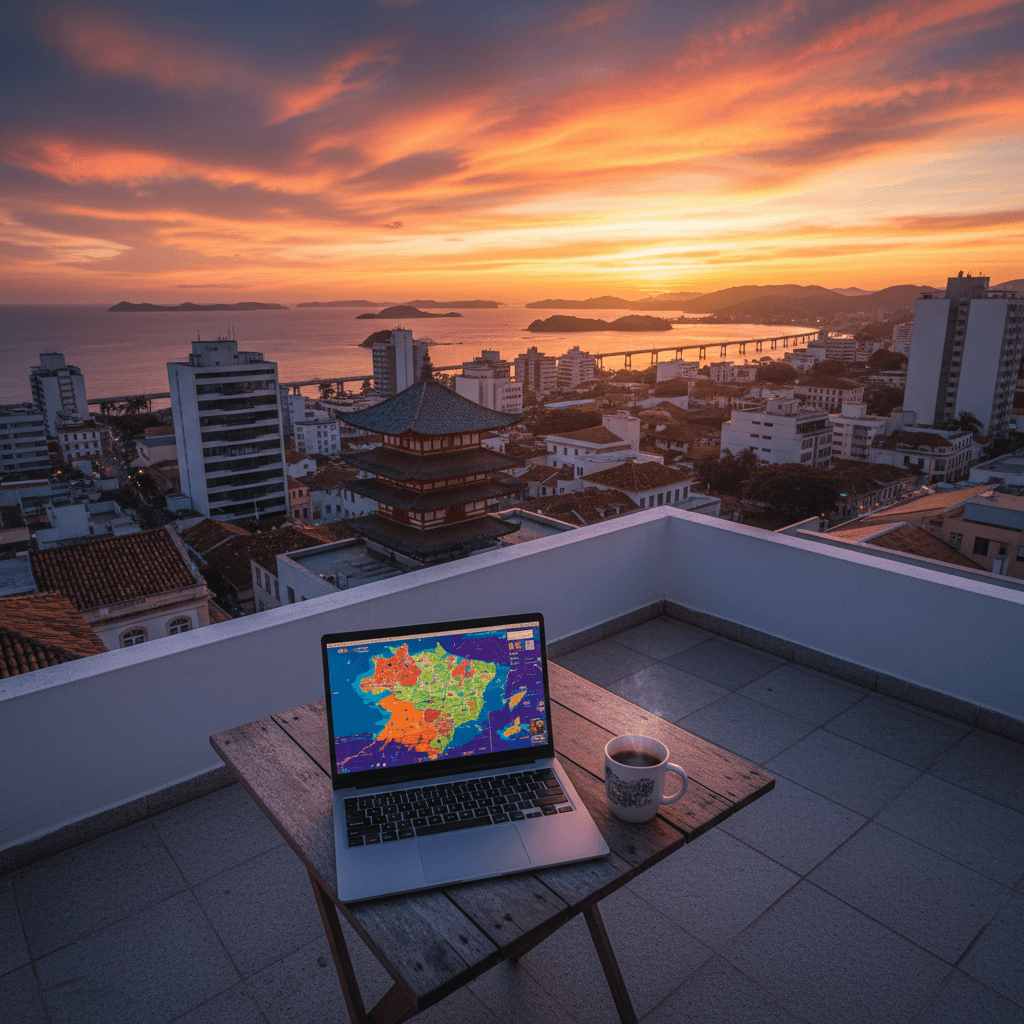
Florianópolis
🇧🇷 Brazil
The Magic Island Experience
Florianópolis, or "Floripa" as you will quickly learn to call it, is a bit of a geographical anomaly that works perfectly for remote work. It is a massive island connected to mainland Brazil by a bridge, but it feels worlds away from the concrete intensity of São Paulo. The vibe here is surf x chill. It is one of the few places where you can take a high stakes Zoom call in the morning and be hiking to a secluded beach or catching a wave by 3:00 PM.
What makes Floripa stand out from other South American hubs is the balance of safety and infrastructure. It is widely considered one of the safest cities in Brazil, which takes a lot of the "big city anxiety" off your plate. You get the benefits of a tech forward city, including a growing startup scene, without losing the soul of a coastal village. The air smells like salt water, the hills are a deep, prehistoric green, and the locals are famously welcoming to the international crowd.
What to Expect on the Ground
Living here means embracing a slower pace of life. While the infrastructure is solid, the island operates on "island time." You will find yourself trading formal offices for laptop friendly cafés where the pão de queijo is always warm and the coffee is strong. Most nomads gravitate toward Lagoa da Conceição, the undisputed heart of the community. It sits right on a massive lagoon and serves as the central nervous system for nightlife, dining, and coworking.
If you want something quieter, Barra da Lagoa offers a more traditional fishing village feel. It is less about the "hustle" and more about the "flow," though you might find the internet a bit more temperamental there compared to the mainland or the Lagoa area. No matter where you land, you are never more than a short Uber ride from one of the 42 beaches that ring the island.
The Nomad Lifestyle & Budget
While Brazil has seen some inflation, Floripa remains highly accessible for those earning in USD or Euros. A comfortable monthly budget for a nomad sits around $1,000. This goes a long way when you consider the average local income is closer to $700. You will be living well, eating fresh seafood dinners, and enjoying a social life that doesn't drain your savings.
- Internet: Reliable fiber optic is standard in most rentals, averaging around 140 Mbps. It is fast enough for video calls, though power backups aren't a guarantee in every café.
- Payments: You can leave your cash at home most of the time. Card payments and PIX (the local instant payment system) are accepted almost everywhere, from high end restaurants to beach stalls.
- Transport: Uber is the lifesaver here. It is affordable and reliable for crossing from the lagoon to the beaches. While public buses exist, they can be slow and confusing for newcomers.
- Language: You will want a translation app handy. English is common in the nomad bubbles like Lagoa, but once you head to the local markets or quieter beaches, Portuguese is the only way to get things done.
Why It is Trending for 2026
The secret is out, but the island isn't spoiled yet. There is a steady inflow of expats and remote workers drawn by the Brazilian Digital Nomad Visa. This visa allows you to stay for one year, renewable once for a total of two years as long as you can prove you work for a company outside Brazil. With the tech scene expanding and the "Magic Island" reputation growing, the community is becoming more diverse every month. It is the perfect spot if you are tired of the "concrete jungle" and want a workspace where you can actually hear the ocean.
The Price of Paradise
Living the island life in Floripa is surprisingly attainable, especially if you're earning in stronger currencies like USD or Euros. While it isn't the cheapest spot in Brazil, it provides a high quality of life for a fraction of what you'd pay in coastal Europe or North America. Most nomads find they can live comfortably on a budget of $1,000 per month, though your lifestyle choices, particularly regarding housing and dining, will dictate how far that stretch goes.
The local economy operates on a different scale, with the average local income sitting around $700. This gap means your purchasing power is significant, allowing for frequent dinners out and Uber rides across the island without much stress. Card payments are the norm here, so you won't need to carry stacks of Reais for most daily transactions.
Monthly Budget Breakdowns
To give you a better idea of what to expect, here is how costs typically break down across different lifestyle tiers:
The Budget Nomad
- Monthly Total: Under $800
- Housing: Shared apartments or modest studios in less touristy spots like Barra da Lagoa.
- Food: Heavy focus on street food, local bakeries (padarias) for pão de queijo, and cooking at home.
- Transport: Using the public bus system and walking within your neighborhood.
The Mid-Range Professional
- Monthly Total: $1,000 to $1,300
- Housing: A private 1BR or modern studio in Lagoa da Conceição.
- Food: A mix of home cooking and frequenting mid-range restaurants and local cafes.
- Transport: Regular use of Uber for longer trips and occasional bike rentals.
The Comfortable Expat
- Monthly Total: $1,800+
- Housing: High-end apartments with amenities, likely near the beach or in trendy areas of Lagoa.
- Food: Dining out daily, focusing on premium seafood spots and upscale international cuisine.
- Transport: Exclusively using Uber or perhaps renting a car for weekend explorations.
Daily Expenses & Lifestyle Costs
Expect to pay a premium during the high season, which runs from December through February. Prices for short term rentals can double or even triple during the summer holidays, so booking several months in advance is a smart move if you're planning a southern summer stay.
- Street Food & Snacks: Local snacks like coxinha or açaí bowls are very affordable, usually just a few dollars.
- Dining Out: A meal at a mid-range restaurant is moderate, while a high-end seafood feast will be your biggest splurge.
- Getting Around: Uber is the go-to for most expats. It is reliable, safe, and priced competitively compared to international standards.
- Connectivity: Mobile data is excellent and affordable. Most nomads grab a local SIM card immediately to stay connected while moving between beach bars and cafes.
One thing to keep in mind is that while the island feels like a playground, the infrastructure is solid. You aren't just paying for the beach; you're paying for a city that has reliable fiber optic internet and a booming tech scene. This makes the cost of living feel even more justified, as you aren't sacrificing productivity for the sake of the view.
For Digital Nomads: Lagoa da Conceição
If you want to be where the action is, head straight to Lagoa. It is the undisputed heart of the remote work scene on the island. The neighborhood sits right on a massive saltwater lagoon, surrounded by lush green hills and a high concentration of laptop friendly cafes and boutique coworking spots. Most nomads find this the easiest place to land because you can walk to almost everything you need.
The vibe here is a mix of bohemian and upscale. During the day, you will see people working from patios with lagoon views; at night, the streets come alive with live music and craft beer bars. It is perfectly positioned to give you access to both the north and south of the island, though traffic can get heavy during the summer months.
- Vibe: Social, energetic, and walkable.
- Workability: Highest density of fiber optic WiFi and dedicated workspaces.
- Top Draw: The perfect balance of nature and nightlife right at your doorstep.
For Slow Travelers and Surf Seekers: Barra da Lagoa
A short drive from the main hub, Barra da Lagoa feels like a traditional fishing village that slowly evolved into a backpacker and surf haunt. It is significantly more relaxed than Lagoa da Conceição. If your ideal Tuesday involves a morning surf session followed by a few hours of deep work and a $5 seafood lunch, this is your spot.
The pace is slower here, and the community is tight knit. While you will find fewer formal coworking spaces, the local cafes are generally welcoming to those with laptops. It is an ideal choice for travelers who want to save a bit on rent while staying steps away from one of the most consistent surf breaks on the island.
- Vibe: Laid back, salty, and authentic.
- Workability: Better for "work from home" setups or casual cafe sessions.
- Top Draw: Direct beach access and a strong sense of local community.
For Expats and Long Term Residents: The North Shore
Expats looking for a more "metropolitan" feel often gravitate toward the northern neighborhoods like Jurerê or Ingleses. These areas offer more modern infrastructure, paved roads, and high end apartment complexes. Jurerê, in particular, is known for its luxury villas and manicured streets, catering to a crowd that prefers fine dining and beach clubs over surf shacks.
Living here feels more like a traditional city experience with the added bonus of calm, turquoise waters. It is a popular choice for those earning in dollars or euros who want a higher standard of living and don't mind a slightly more manicured, less "rugged" island experience. The internet infrastructure here is among the most reliable on the island.
- Rent: Expect to pay a premium compared to the central lagoon area.
- Vibe: Polished, quiet, and upscale.
- Top Draw: High safety ratings and modern amenities.
For Solo Travelers: Campeche
Campeche is the rising star of the south. It has a wilder, more expansive beach than the north and attracts a younger, health conscious crowd. Solo travelers often find it easy to meet people here through beach volleyball, kite surfing, or the growing number of vegan cafes and yoga studios popping up along the main strip.
It is a bit more spread out than Lagoa, so you might find yourself relying on Uber or a bicycle to get around. However, the tradeoff is a stunning view of Ilha do Campeche and a neighborhood that feels like it is constantly evolving with new energy. It is arguably the best place to find a modern studio apartment with a view for around $800 to $1,200 per month.
- Vibe: Outdoorsy, hip, and adventurous.
- Safety: Very walkable and generally considered safe for solo exploration.
- Top Draw: Massive white sand beaches and a booming health food scene.
Staying connected in Floripa is generally a smooth experience, but it requires a bit more intentionality than in a hyper-connected hub like Lisbon or Medellin. The island has modernized quickly, and while you'll find fiber optic connections in most modern apartments, the infrastructure can occasionally feel the strain of the island's geography. Most nomads find the average speeds of around 140 Mbps perfectly adequate for Zoom calls and heavy uploads, though you should always verify your specific Airbnb has fiber before booking.
The Coworking Scene
The work culture here is deeply tied to the "surf x chill" lifestyle. You won't find many high-pressure, corporate-style offices. Instead, the spaces are designed with natural light, ergonomic setups, and a community-first approach. Lagoa da Conceição is the undisputed headquarters for remote work; it's where you'll find the highest density of people with laptops and the best networking opportunities.
When choosing a workspace, keep these local realities in mind:
- Power and Redundancy: While fiber is common, backup power and secondary internet lines aren't standard. If you have a mission-critical meeting, ask the manager specifically about their failover systems.
- The Vibe: Expect a social atmosphere. People come here to meet others, so if you need total silence, look for spaces with dedicated "quiet zones" or phone booths.
- Operating Hours: Many spaces align with the local rhythm, sometimes closing earlier on Fridays or opening later on weekends to accommodate beach time.
Laptop-Friendly Cafés
If you prefer the "café hopping" lifestyle, you're in luck. Floripa has a thriving bakery and coffee culture. Most spots are welcoming to remote workers as long as you keep the coffee and pão de queijo orders flowing. In Lagoa, you'll find plenty of cozy spots with reliable WiFi and enough outlets to get through a four-hour deep work session. It's a standard part of the local ecosystem, and you'll rarely be the only person working from a screen.
Mobile Data and SIM Cards
Don't rely solely on café WiFi. The mobile coverage across the island is excellent, often providing a faster or more stable connection than older DSL lines in some beach houses. Expats recommend grabbing a local SIM card immediately to use as a hotspot. The main providers offer affordable prepaid plans that you can top up at most pharmacies or via apps. Having a 4G or 5G backup is the best way to ensure you never drop out of a meeting during a tropical rainstorm or a local power flicker.
Practical Connectivity Tips
- Test before you commit: If you're staying long-term, visit a coworking space for a day pass before buying a monthly membership. Prices are generally affordable, but the "vibe" varies wildly between the tech-heavy spaces and the more relaxed, beachside setups.
- Peak Season Speeds: During December, January, and February, the island's population swells with tourists. This can occasionally lead to slower speeds in crowded beach areas like Barra da Lagoa, so plan to do your heavy lifting from Lagoa or the city center during these months.
- Digital Nomad Community: Use local WhatsApp and Telegram groups to find out which cafés currently have the best speeds. The community is very active and happy to share real-time updates on the best places to plug in.
Staying Safe on the Island
Florianópolis consistently ranks as one of the safest capital cities in Brazil. For nomads used to the high-alert levels of Rio or São Paulo, Floripa feels like a breath of fresh air. You'll often see people walking with their phones out in Lagoa da Conceição or sitting in open-air cafés without a second thought. It is a place where the "surf chill" vibe extends to the general sense of security.
That said, don't let the island magic make you completely careless. Petty theft, like snatched bags or phones, can happen in crowded beach areas during the high season from December to February. Expats generally recommend keeping an eye on your belongings at Praia Mole or Joaquina, especially if you're heading into the water. If you are staying in Barra da Lagoa, the vibe is even more communal and relaxed, but it's still smart to lock your doors and keep valuables out of sight in parked cars.
- Neighborhood Watch: Stick to well-lit, populated streets at night. While neighborhoods like Lagoa are very walkable, some remote beach trails are better hiked in groups during daylight.
- Transport Safety: Most nomads rely on Uber to get around at night. It is affordable, tracked, and removes the guesswork of wandering into unfamiliar areas.
- Local Tip: If you are heading to the "Centro" (the mainland/bridge area), stay more alert than you would on the beaches. It has a more typical urban feel where standard city precautions apply.
Healthcare and Wellness
The healthcare infrastructure in Floripa is robust and modern. If you're coming from North America or Europe, you'll likely find the quality of private care to be excellent and significantly more affordable. The city is a hub for medical tourism within Brazil, so the facilities are top-tier.
For minor issues, pharmacies (farmácias) are everywhere. You can find one on almost every major corner in Lagoa. Many common medications that require a prescription elsewhere can be bought over the counter here, though you should always consult with the on-site pharmacist. Most nomads find that basic English is spoken by doctors in private clinics, but having a translation app handy is a good move for smaller neighborhood clinics.
- Private vs. Public: Brazil has a universal public system (SUS) for emergencies, but nomads and expats almost exclusively use private insurance to skip the wait times.
- Insurance Requirements: To snag the Digital Nomad Visa, you must show proof of health insurance that covers you within Brazilian territory.
- Water Quality: While the tap water is generally treated, most locals and long-termers stick to filtered water or buy 20-liter jugs (bombonas) for drinking to avoid any stomach upsets.
Emergency Contacts
It's a good idea to keep these numbers saved in your phone, though you'll hopefully never need them. Note that English operators aren't always guaranteed, so knowing a few basic Portuguese words for "help" (socorro) or "accident" (acidente) is useful.
- Police (Polícia Militar): 190
- Ambulance (SAMU): 192
- Fire Department (Bombeiros): 193
Overall, your biggest "safety" concern in Florianópolis is likely to be a sunburn or a twisted ankle from a hiking trail. As long as you use the same common sense you'd use in any international coastal city, you'll find the island to be an incredibly welcoming and secure base for remote work.
Getting Around the Magic Island
Navigating Florianópolis is a unique experience because the city is split between a small mainland area and a massive, mountainous island. While the scenery is stunning, the geography creates some interesting bottlenecks. You'll find that your transport strategy depends entirely on which pocket of the island you call home.
The Ride-Hailing Standard
For most digital nomads, Uber is the primary way to get around. It's affordable, reliable, and covers almost the entire island. It's significantly safer than hailing random taxis on the street, and you won't have to worry about the language barrier when giving directions. A typical 15 to 20 minute ride often costs between $4 and $7 USD, making it a budget-friendly choice for getting from the lagoon to the northern beaches.
During the peak summer months of December, January, and February, traffic can become a major headache. The island has a limited number of main arteries, and a single accident or heavy rainstorm can turn a 20 minute trip into an hour long crawl. If you're heading to a meeting or a flight, always pad your travel time.
Public Buses and the Integrated System
Floripa has a comprehensive public bus system known as the TICEN (Terminal de Integração do Centro). The yellow and blue buses connect the various regional terminals scattered across the island. While it's the most economical way to travel, it's not always the most efficient for remote workers on a tight schedule.
- The Yellow Buses: These are the "Executive" buses (Amarelinhos). They're more expensive but offer air conditioning and more comfortable seating.
- The Integrated Terminals: You can switch buses at terminals like TILAG (Lagoa da Conceição) or TIRIO (Rio Tavares) without paying a second fare, provided you stay inside the terminal.
- Payment: While cash is sometimes accepted, it's much easier to get a Passe Rápido card at one of the main terminals.
Walkability and Neighborhood Living
If you choose your neighborhood wisely, you might not need a car at all for your daily routine. Lagoa da Conceição is the gold standard for walkability. You can easily reach coworking spaces, organic markets, and waterfront bars on foot. Similarly, parts of Barra da Lagoa are compact enough that a surfboard under your arm is the only "vehicle" you'll need.
However, once you leave these hubs, the island becomes very spread out. Sidewalks can be uneven or disappear entirely on the winding roads that cross the hills, so walking between different beach towns isn't usually practical or recommended at night.
Renting Your Own Wheels
Expats staying for several months often consider renting a car or a scooter. Having your own wheels is the only way to reach the more secluded "secret" beaches on the south of the island where buses don't run frequently. To rent a car, you'll generally need your home country's driver's license and a credit card for the deposit. Just keep in mind that parking in Lagoa or Praia dos Ingleses can be a nightmare during the high season.
Airport Transfers
When you land at Hercílio Luz International Airport (FLN), the simplest move is to use the airport WiFi to call an Uber. There's a dedicated pickup zone right outside the terminal. A ride to the nomad hub of Lagoa da Conceição usually takes about 20 to 30 minutes and costs roughly $8 to $12 USD depending on the time of day.
The Language Barrier (and How to Break It)
In Floripa, the local tongue is Portuguese, delivered with a distinct, singing accent known as manezinho. While you'll find that English proficiency is moderate overall, it's highly concentrated in specific pockets. If you're hanging out in Lagoa da Conceição or working from a tech-focused coworking space, you'll get by just fine with English. The international community here is massive, and most young professionals or those in the tourism industry speak enough to help you out.
Once you step away from the nomad hubs or head to the more traditional fishing villages in the south of the island, English becomes much rarer. You'll need at least a few survival phrases to navigate grocery stores, talk to bus drivers, or order at a local quilo restaurant. Brazilians are famously patient and friendly, they'll usually meet you halfway with a mix of Spanish, hand gestures, and a smile.
Essential Portuguese for the Island
You don't need to be fluent to have a great time, but showing effort goes a long way with the locals. Here are the basics that nomads use daily:
- Tudo bem?: The universal greeting. It means "How are you?" and "Everything’s good" all at once.
- Obrigado (m) / Obrigada (f): Thank you. You'll say this a hundred times a day.
- Com licença: Excuse me. Use this when getting off a crowded bus or trying to catch a server's attention.
- A conta, por favor: The bill, please.
- Cardápio: Menu.
- Valeu!: A slangy, casual "thanks" or "cool" that fits the surf vibe of the island perfectly.
Communication Tools and Tech
In Brazil, WhatsApp is the only app that matters. It is the primary way to book a hair appointment, order a pizza, talk to your landlord, and even communicate with government offices. If a business has a phone number, it’s almost certainly a WhatsApp account. Most nomads find it helpful to set up a Brazilian SIM card immediately to stay connected, as mobile coverage is excellent across the island.
For those moments when your Portuguese fails you, Google Translate is your best friend. The "Conversation" mode is particularly useful for more complex interactions like explaining a mechanical issue with a rental car or discussing a lease. Since card payments are accepted almost everywhere, from high end restaurants to beach kiosks, you won't often have to struggle through counting out physical currency or asking for change in a language you don't know.
Connecting with the Community
If you're feeling isolated, the digital nomad scene in Lagoa da Conceição is the easiest place to find English speakers. Most laptop friendly cafés serve as informal meet up spots. While there isn't one single dominant app for social groups, many expats rely on local Facebook groups or simply show up to popular coworking spaces where the community naturally gravitates. The "surf x chill" culture means people are generally open to a conversation, whether you're at a beach bar in Barra da Lagoa or waiting for your pão de queijo at a bakery.
The Rhythm of the Seasons
Florianópolis doesn't follow the tropical heat patterns of Rio or the Northeast. Because it sits further south, the island experiences four distinct seasons that can catch unprepared nomads by surprise. You'll find a humid subtropical climate where the air is usually warm and breezy, but the vibe changes significantly depending on the month you land.
The peak of summer hits in December, January, and February. This is when the island is at its most electric, with temperatures frequently climbing into the high 80s°F (30°C+). It is the high season for a reason: the water is warm, the beach clubs in Jurerê are peaking, and the sun stays out late. However, this is also when the island's infrastructure is pushed to its limit. Traffic on the small island roads can become a nightmare, and prices for short term rentals often double.
When to Find the Sweet Spot
Most long term nomads and expats swear by the shoulder seasons. March through May is arguably the best window to experience Floripa. The chaotic summer crowds head home, but the ocean retains its warmth from the summer sun. You'll get clear, blue skies and comfortable working temperatures that don't require blasting the AC all day.
The second sweet spot occurs from September to November. Spring brings a fresh energy to the island. While the water might still be a bit crisp for a casual swim without a wetsuit, it is the perfect time for hiking the trails around Costa da Lagoa or surfing the consistent swells at Praia Mole.
The "Winter" Reality
If you're planning to stay year round, don't let the "Magic Island" moniker fool you into packing only flip flops. From June to August, Floripa cools down significantly. Daytime temperatures often hover around 60°F to 65°F (15°C to 18°C), and nights can drop into the 50s°F (10°C to 12°C).
The real challenge isn't the outdoor temperature, it is the indoor setup. Most Brazilian apartments lack central heating. Expats often find themselves buying small electric heaters or wearing hoodies inside during these months. It is a quieter, more contemplative time on the island, ideal for deep work phases, but the grey, rainy days can feel a bit isolating if you're staying in a sleepy beach village like Barra da Lagoa.
Quick Guide to Planning Your Arrival
- Best for Socializing: December to February. Expect crowds, parties, and high humidity.
- Best for Value: March to June. Rental prices stabilize and the weather is nearly perfect for outdoor activities.
- Best for Surfing: June to September. The swells are most consistent, though you'll definitely need a 3/2mm wetsuit.
- Worst for Crowds: Late December through Carnival (usually February). The island’s population triples, and getting from Lagoa to the northern beaches can take hours.
Travelers often say that if you can handle a few weeks of rain in the winter, the rewards of a Floripa autumn are worth the wait. Just remember that the "Magic" includes a rainy season that isn't strictly defined; tropical showers can pop up year round, so a waterproof laptop bag is a non negotiable investment for any nomad working from the local cafés.
Getting Connected
Internet on the island is reliable but won't win any global speed races. You can expect average speeds around 140 Mbps, which is plenty for Zoom calls and uploading files, but it lacks the lightning fast fiber you might find in São Paulo or Lisbon. Most nomads stick to Lagoa da Conceição because it has the highest concentration of laptop friendly cafés and dedicated workspaces.
- Mobile Data: Coverage is excellent across the island. Grab a local SIM card immediately; the 4G and 5G signals often act as a vital backup when a café's WiFi gets spotty.
- Coworking Vibe: The spaces here lean into the "surf x chill" lifestyle. You'll find ergonomic chairs and natural light, but don't expect every spot to have a backup generator or redundant internet lines. It's a more relaxed professional environment than a high pressure corporate hub.
- Café Culture: If you prefer working to the sound of a milk steamer, you're in luck. Many bakeries and cafés are accustomed to remote workers staying for a few hours, provided you keep the pão de queijo and coffee orders flowing.
Money and Costs
Floripa is incredibly affordable if you're earning in dollars or euros. While the average local income sits around $700 a month, a nomad can live a very comfortable, mid range lifestyle for about $1,000 a month. This covers a nice apartment, frequent meals out, and plenty of weekend trips.
- Payments: You can leave your cash at home most of the time. Credit and debit cards are accepted almost everywhere, from high end seafood spots to small beach kiosks.
- Daily Expenses: Street food and casual local spots are budget friendly, while the upscale seafood restaurants in areas like Santo Antônio de Lisboa will be your biggest splurge.
The Visa Situation
Brazil has become a top tier destination for remote workers thanks to its Digital Nomad Visa (VITEM XIV). This permit allows you to stay for one year, renewable once if you aren't ready to leave the island life behind. To qualify, you'll need to show proof of foreign source income, have valid health insurance, and provide a clean background check. It is a straightforward process that has fueled the recent influx of expats moving here.
Moving Around
The island is larger than it looks on a map, and traffic can be a massive headache during the high season of December through February. If you're staying in Lagoa da Conceição, you'll find it's quite walkable for your day to day needs. For everything else, Uber is the gold standard. It's affordable, safe, and available across the island at almost any hour.
Public transport is an option and is slowly improving, but most expats find the convenience of ride hailing apps worth the extra few dollars. If you're heading to more remote beaches like Barra da Lagoa, an Uber is definitely the way to go to save time.
Safety and Language
You can breathe a bit easier here than in Rio or São Paulo. Florianópolis is frequently cited as one of the safest cities in Brazil. Petty theft, like bag snatching, can happen in crowded tourist spots, but the nomad heavy neighborhoods are generally low risk and very walkable. Just use the same common sense you'd use in any international city.
On the language front, Portuguese is the main tongue. You'll find moderate English proficiency in the tourist shops and among the younger tech crowd, but it drops off quickly once you leave the main hubs. Learning a few basic Portuguese phrases will go a long way in making friends with the locals, who are famously welcoming to "foreigners."
Need visa and immigration info for Brazil?
🇧🇷 View Brazil Country GuideEasy Landing
Settle in, no stress