Flores
🇬🇹 Guatemala
Flores isn't your typical jungle outpost. It's a tiny, circular island squeezed into Lake Peten Itza, connected to the mainland by a single causeway. Imagine a maze of steep, cobblestone streets lined with houses painted in every shade of the rainbow, where the smell of woodsmoke from corn tortillas blends with the humid air of the surrounding rainforest. It's compact enough that you can walk the entire perimeter in 20 minutes, yet it feels like a world away from the grit of Santa Elena across the water.
The Island Vibe
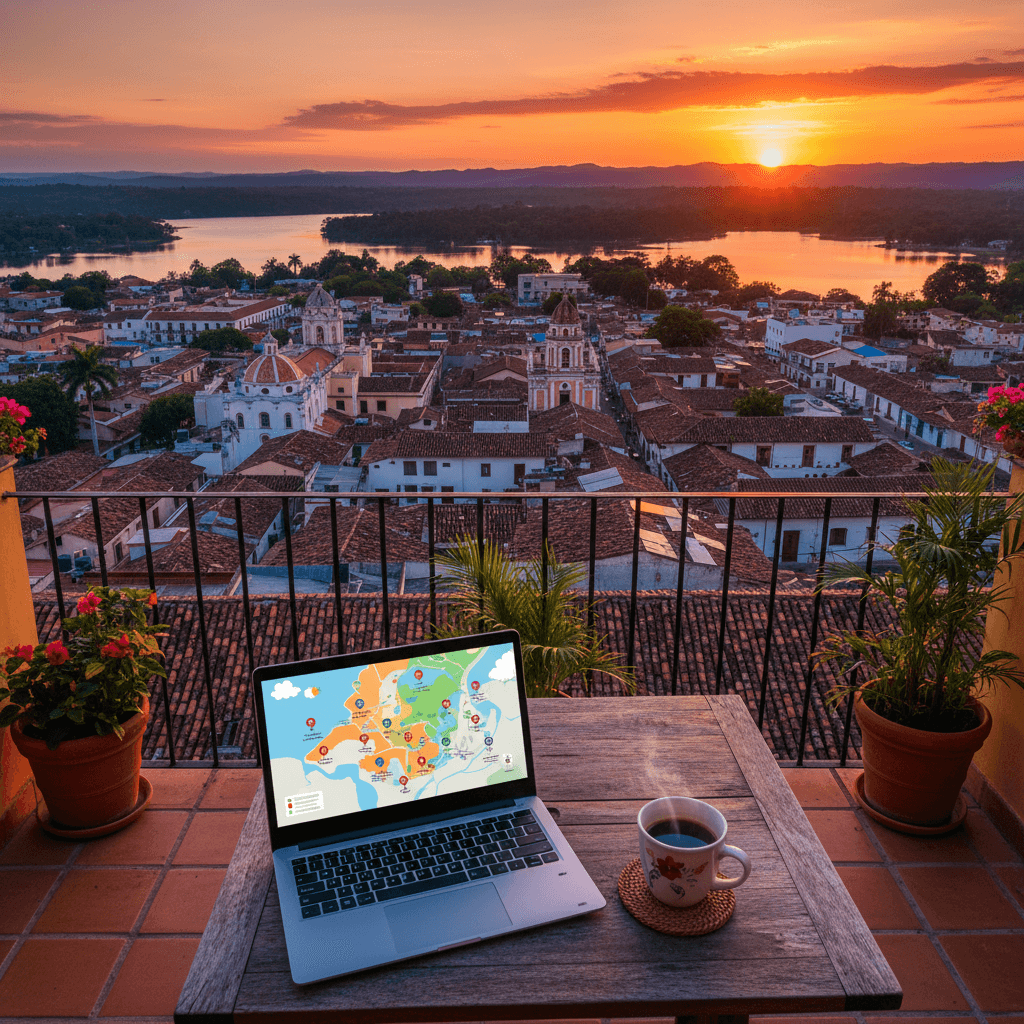
The energy here is a specific blend of "island chill" and "expeditional hub." By day, the town feels sleepy as most travelers have vanished into the jungle to explore Tikal. By late afternoon, the island wakes up. You'll see locals jumping off the wooden piers into the lake, nomads post up in cafes like Los Amigos with their laptops, and everyone eventually gravitates to the western shore to catch a sunset that turns the water into liquid gold. It's relaxed, safe, and surprisingly social for such a small footprint.
While the colonial charm is high, keep in mind that this is the jungle. It’s hot, sticky, and the infrastructure is a bit more rugged than what you'd find in Antigua. If you're looking for sleek glass high-rises or a massive mall, you're in the wrong place. People come here to disconnect from the grind and reconnect with history, using the island as a comfortable base for UNESCO world heritage adventures.
What It Costs
Flores is remarkably affordable, even as its popularity grows. Most digital nomads find they can live comfortably on $1,000 to $1,500 per month. Here is how the budget usually breaks down:
- Budget Living ($800 to $1,200): This usually involves a bed in a social hostel like Los Amigos or a simple room on the Santa Elena mainland. You'll be eating $2 to $4 meals at the local night markets or street stalls.
- Mid-Range ($1,200 to $1,800): This gets you a private guesthouse on the island with air conditioning and most of your meals at lakeside cafes where a plate costs $5 to $10.
- Comfortable ($2,000+): You'll be staying in the premier lakefront boutique hotels or eco-lodges, taking private transfers to the ruins, and dining at the more upscale spots where dinner and drinks run $20 to $30.
The Digital Nomad Reality
For a long time, Flores was just a one night stopover. That’s changing. With 10 to 15 Mbps WiFi becoming the standard in most cafes and guesthouses, it's now a viable spot for remote work. New coworking spaces are popping up with daily rates around $5 to $10, offering the high speed stability needed for video calls that the older island infrastructure sometimes lacks.
The community is small but tight. You won't find thousands of nomads here yet, which is exactly why people like it. You'll likely meet the same group of people at the Jorge’s Rope Swing or during a sunset beer on a rooftop terrace. It’s the kind of place where the "work-life balance" actually tilts toward life. You work in the morning, take a $1 tuk-tuk to the mainland for supplies, and spend your afternoon on a boat or exploring a 2,000 year old temple.
When to Go
The climate is a major factor in the experience. If you hate being drenched, avoid September and October, which are the peak of the rainy season. The sweet spot is November through April. The weather is dry, the skies are clear for ruin-hopping, and the temperatures stay between 25°C and 32°C. Just be prepared for the humidity; it’s a constant companion in the Peten region, making the lake your best friend for a midday cool down.
The Cost of Living in Flores
Living on the island of Flores puts you in a unique position where you can enjoy a tropical, lakefront lifestyle for a fraction of what you would pay in Antigua or Lake Atitlán. Most digital nomads find they can live comfortably here on $1,000 to $1,500 per month. While prices for tours and Westernized meals have crept up recently due to the influx of Tikal-bound travelers, the day to day expenses remain remarkably low if you know where to look.
The island is tiny, so you won't find distinct neighborhoods with varying price points. Instead, the cost of accommodation depends on how close you want to be to the water. If you are on a tight budget, the mainland area of Santa Elena, just across the bridge, offers significantly cheaper long term rentals and local markets. However, most nomads choose to stay on the island for the safety, the views, and the social scene.
Monthly Budget Breakdowns
The Budget Traveler ($800 to $1,200/month)
- Rent: $200 to $400. This usually means a long term bed at a social hub like Los Amigos or a basic room in Santa Elena.
- Food: $250 to $350. You'll be eating primarily at the local night markets on the malecon or grabbing $2 to $4 street food meals.
- Transport: $30. Mostly walking, with the occasional $1 to $2 tuk-tuk ride across the bridge.
The Mid-Range Nomad ($1,200 to $1,800/month)
- Rent: $400 to $700. You can secure a private room in an island guesthouse or a small studio with decent WiFi.
- Food: $450 to $600. This allows for daily visits to popular cafes and a few lakefront dinners.
- Transport and Coworking: $150 to $200. Includes a weekly pass at a coworking space and a couple of guided trips to nearby ruins.
The Comfortable Expat ($2,000+/month)
- Rent: $800 to $1,200. You'll likely be staying in a high end lakefront hotel or a private eco-lodge with air conditioning and premium views.
- Food: $800+. Frequent dining at upscale spots where a meal costs $15 to $25.
- Transport: $300+. Private transfers to the airport and private boat tours around Lake Petén Itzá.
Connectivity and Remote Work
WiFi in Flores has improved drastically over the last year. Most hotels and cafes now offer speeds between 10 and 15 Mbps, which is plenty for video calls. A new crop of coworking spaces has appeared on the island recently, charging about $5 to $10 per day or $25 to $35 per week. These spots are the best way to guarantee a stable connection and meet other remote workers.
For mobile data, travelers recommend using a Nomad eSIM for immediate connectivity. If you prefer a local physical SIM, head to the airport or a shop in Santa Elena to pick up a Claro or Tigo card. These are inexpensive and provide surprisingly good coverage even in the jungle areas surrounding the town.
Practical Expenses
Getting around is simple because the island is so compact. You can walk the entire perimeter in about 20 minutes. If you need to head to the airport or a larger supermarket in Santa Elena, a tuk-tuk will cost you roughly $5 to $10 depending on your haggling skills. For the mandatory trip to Tikal, expect to pay $8 to $12 for a round trip shuttle.
Banking is straightforward with several ATMs located directly on the island. Smart travelers use apps like Wise or Revolut to avoid hefty international fees. Just keep in mind that while many cafes and hotels now accept cards, the local markets and smaller shops are strictly cash only. It is always a good idea to keep a stash of Quetzales on hand for street food and boat rides to Jorge's Rope Swing.
For Nomads and Slow Travelers
If you're coming to Flores to work, Isla de Flores is the only place you'll want to be. It's a tiny, walkable island that you can loop in about 20 minutes. Most nomads base themselves here because the WiFi is surprisingly reliable for a jungle outpost, usually hitting 10 to 15 Mbps in the better guesthouses and cafes. It feels like a small village where everyone knows your face by day three.
The social heart of the island is Los Amigos. While it's famous as a backpacker hostel, it's also the unofficial headquarters for remote workers. You'll find people on laptops in the leafy courtyard or at nearby cafes like Cool Beans. It's a great setup if you want to crush some work before heading to the Tikal ruins at 4 AM.
- Rent: $400 to $700 for a decent guesthouse room with a lake view.
- Vibe: Social, colorful, and very safe.
- Best for: Networking, reliable power, and being steps away from sunset beers on the malecon.
For Budget Expats and Long-Termers
If you're planning to stay for a month or more and the island prices start to feel a bit "touristy," look across the bridge to Santa Elena. This is the mainland hub where the locals actually live and shop. It lacks the rainbow hued colonial charm of the island, but your money goes much further here. You'll be closer to the Maya Mall and the massive local markets where you can grab fresh fruit and street food for $2 to $4.
Living in Santa Elena means you're closer to the airport and the main bus terminals, which is handy for weekend trips. You'll still spend most of your social time on the island, but a quick $1 to $2 tuk-tuk ride gets you across the causeway in minutes. It's busier and noisier than the island, but it's the place to find actual apartments rather than just hotel rooms.
- Rent: $200 to $400 for basic local housing or long term hostel stays.
- Vibe: Authentic, busy, and functional.
- Best for: Saving money and being close to major transport links.
For Families
Families usually find the Isla de Flores to be the most comfortable fit because of the safety and ease of movement. There are no cars allowed on most of the narrow cobblestone streets, so kids can wander a bit more freely. The lakefront is the main playground here. Many families choose the slightly quieter north side of the island to avoid the noise from the happy hour bars on the west side.
For a more relaxed, nature focused stay, some families opt for eco-lodges tucked along the shores of Lake Peten Itza, just a short boat ride from the main island. These spots offer more space and direct water access. You can hire a private boat for a few dollars to ferry you back and forth for dinner or supplies. It's a bit more isolated but offers a much better "jungle" experience for children.
- Rent: $800 to $1,200 for comfortable lakefront hotels or larger guesthouses.
- Vibe: Quiet, scenic, and relaxed.
- Best for: Safety, swimming access, and easy walks to ice cream shops.
For Solo Travelers
If you're rolling solo, stick to the western and southern edges of the island. This is where the energy is. The sunset views from the malecon are world class, and the bars here are designed for meeting people. Most solo travelers end up at the local markets or small cafes where communal tables are the norm. It's incredibly easy to find a group to split the $8 to $12 shuttle cost to Tikal or Yaxha.
The island is small enough that you'll never feel truly alone. You can spend your mornings working in a cafe and your afternoons taking a boat to Jorge's Rope Swing for a few bucks. Safety isn't a major concern on the island, even at night, though it's always smart to stick to the well lit areas near the water. Most solo travelers find that two to three days is enough to see the ruins, but the "island chill" often tempts people to stay a week.
- Rent: $15 to $25 per night for a solid hostel bed or a basic private room.
- Vibe: High energy, adventurous, and easy to navigate.
- Best for: Making friends, sunset happy hours, and easy tour bookings.
Connectivity on the Island
For a town located deep in the Petén jungle, Flores punches well above its weight regarding internet reliability. Most nomads find the island's infrastructure surprisingly stable, with average speeds hovering between 10 to 15 Mbps. While you won't find the fiber-optic lightning speeds of Antigua, it's more than enough for Zoom calls, uploading content, and standard remote work tasks.
The WiFi situation has improved dramatically over the last few years. Most guesthouses and hotels on the island now treat reliable internet as a standard amenity rather than a luxury. If you're staying at popular spots like Los Amigos Hostel, you'll find decent coverage in the common areas, though the thick colonial walls can sometimes weaken the signal in private rooms. A good backup plan is to grab a local SIM card or an eSIM immediately upon arrival.
Coworking Spaces and Nomad Hubs
Flores is currently transitioning from a quick backpacker stop to a legitimate nomad base. While the island lacks large corporate offices, various cafes and hostels serve as nomad workspaces, catering specifically to the remote work crowd. These spots usually offer comfortable seating, reliable connections, and that all-important bottomless coffee supply.
If you prefer a more casual "laptop and latte" setup, the cafe culture here is incredibly welcoming. Several spots near the waterfront and around the Los Amigos area offer free WiFi for customers. Just keep in mind that the island can get quite hot in the afternoons, so look for cafes with good cross-breezes or air conditioning if you're planning a long session.
Mobile Data and SIM Cards
Don't rely solely on hotel WiFi if you have deadlines. The local providers, Claro and Tigo, both have decent coverage on the island and even along parts of the road to Tikal. You can pick up a physical SIM at the airport in Santa Elena or at small shops throughout the island. You'll generally need your passport for registration.
Many digital nomads now prefer using a Nomad eSIM for convenience. It saves you the hassle of swapping cards and provides reliable data right when you land. If you're heading out to the ruins for the day, don't expect much signal deep in the jungle, so get your emails sent before the shuttle leaves at 4:00 AM.
Power and Practicalities
Guatemala uses Type A and B plugs (the same as the USA and Canada), so North American travelers won't need adapters. Power outages are infrequent on the island but can happen during heavy tropical storms in the rainy season from May to October. It's a smart move to keep your devices charged and perhaps carry a small power bank if you're working on a tight schedule.
The cost of working from Flores is one of its biggest draws. With a daily budget of $5 to $10 for a workspace and lunch, it's a highly affordable alternative to the more established nomad hubs in Mexico or Costa Rica. Most travelers find that the blend of jungle views and a functional workspace makes for a perfect short-term "workation" spot.
Safety on the Island
Flores is one of the most relaxed places in Guatemala. Because the island is so small and centered around tourism, it feels more like a secure village than a city. You can comfortably walk the cobblestone streets at night, and solo travelers often mention feeling safe wandering between the lakefront bars and their guest houses. The community is tight knit, and locals generally look out for the travelers who keep the island economy moving.
While the island itself is a bubble, you still need to use common sense when crossing the bridge to Santa Elena. The mainland is busier and less polished. Most nomads suggest avoiding unguided areas of the mainland after dark. Stick to the well lit areas of the island core, keep your phone tucked away while walking, and you likely won't have any issues beyond the occasional pushy tour hawker. If you do run into an emergency, you can reach the police at 110 or an ambulance at 125 or 186.
Healthcare and Medical Services
For minor ailments or travel tummy, the island has several farmacias (pharmacies) that stay well stocked with over the counter basics. The pharmacists are usually helpful and can recommend treatments for common tropical issues. If you need a consultation for something non urgent, there are small private clinics on the island and in Santa Elena where doctors often speak a bit of English.
For anything serious, you'll need to head across the bridge to Santa Elena. There are hospitals there that provide adequate care for tourists, though they aren't the high tech facilities you'd find in Guatemala City. If you have a major medical emergency, most expats and long term travelers recommend stabilizing at a local clinic before arranging transport to the capital. Always make sure your travel insurance covers medical evacuation just in case, as the Petén jungle is quite remote.
Health Precautions for Nomads
The biggest health hurdles in Flores are the heat and the water. The jungle humidity is intense, especially from May to October, so staying hydrated is a full time job. Never drink the tap water here. Most hostels and hotels like Los Amigos provide filtered water refills, and you should use bottled water even for brushing your teeth if you have a sensitive stomach.
- Mosquitoes: Being on a lake in the jungle means bugs are a reality. Use repellent, especially at dusk, to avoid Zika or Dengue, which occasionally pop up in the region.
- Sun Protection: The sun reflects off Lake Petén Itzá with surprising strength. If you're taking a boat to Jorge's Rope Swing, wear more sunscreen than you think you need.
- Vaccinations: Most travelers arrive with standard shots like Hepatitis A and Typhoid. Malaria isn't a massive concern on the island, but if you're trekking deep into the ruins at Tikal or Yaxha, check with a travel clinic before you arrive.
Practical Safety Tips
When it comes to your gear, the standard rules apply. Use the lockers in your hostel or the safe in your hotel room for your passport and extra cash. Petty theft like pickpocketing is rare on the island but can happen in the crowded markets of Santa Elena. If you're carrying a laptop to a cafe for a work session, just keep it within sight. Most nomads find the island safe enough to leave their gear on a table for a quick bathroom break, but it's always better to ask a neighbor to watch your things.
Digital nomads often recommend using a Nomad eSIM for reliable data while out and about. Having a working map and the ability to call a local contact provides an extra layer of security when you're exploring the mainland or heading out on early morning shuttles to the ruins.
The Island Loop
You can walk across the entire island of Flores in about 15 to 20 minutes. Because the town is so compact, your own two feet are your primary mode of transport. The cobblestone streets are charming but can be slippery when it rains, so wear shoes with decent grip. Most nomads find the circular layout easy to master within a single afternoon.
If you need to get across the bridge to the mainland town of Santa Elena for errands or the airport, hop in a tuk-tuk. These three wheeled taxis are everywhere and usually cost just a few quetzales for a quick hop. Expect to pay between $5 and $10 for a ride from Mundo Maya International Airport to the island center, depending on your haggling skills and the amount of luggage you have.
Getting to the Ruins
Since Flores is the main base for Tikal National Park, the transport infrastructure is heavily geared toward getting you to the jungle and back. You won't find Uber or Lyft here, but you don't really need them. Most travelers use shared shuttles that depart early in the morning, typically around 4:00 AM to catch the sunrise at the temples.
- Tikal Round Trip: Shared shuttles cost between $8 and $12. These are easy to book through hostels like Los Amigos or any of the small travel agencies lining the waterfront.
- Yaxha and Blue Crater: These require a bit more planning. You can join a minibus tour or hire a private driver if you have a small group. Prices vary wildly based on your negotiation, but expect to pay $50 or more for private transfers.
- Boat Taxis: To reach spots across the water like Jorge’s Rope Swing or the beach at Playa San Miguel, you'll need a lancha (small boat). These depart from the various docks around the island perimeter and usually cost a few dollars per person.
Connectivity for the Remote Worker
The days of struggling with dial up speeds in the jungle are mostly over. Most island cafes and guesthouses now offer reliable WiFi hovering between 10 and 15 Mbps. While that is not lightning fast, it is enough for standard Zoom calls and managing a workflow. For heavy duty tasks, check out the newer coworking spaces that have popped up between 2024 and 2025, which offer more stable high speed connections and a professional environment.
For mobile data, don't rely solely on your home roaming plan. Expats recommend getting a local SIM from Claro or Tigo at the airport or in Santa Elena. If you prefer a digital route, a Nomad eSIM is a solid choice for immediate data upon arrival. Use the code REBEXSAXQK to get a $5 credit when you sign up.
Arriving and Departing
Most nomads arrive via a short flight from Guatemala City or a long haul bus from Antigua or Belize. The airport is only 10 minutes away from the island. If you are coming from the capital, the flight saves you a grueling 8 to 10 hour bus ride, though the overnight luxury buses (like those from Fuente del Norte) are a popular budget alternative for those who can sleep through the bumps.
The Language Landscape
Spanish is the heartbeat of Flores. Because the island is small and centered almost entirely around tourism, you'll hear it spoken everywhere from the colorful lakefront cafes to the local markets in Santa Elena. While Spanish is the primary tongue, the surrounding Petén region is home to several indigenous Maya dialects, though you'll mostly encounter these when venturing into smaller villages or deeper into the jungle.
For nomads and remote workers, the language barrier is surprisingly low. Most hotel staff, tour guides, and waiters at popular spots like Los Amigos speak enough English to make your stay seamless. You can easily book a shuttle to Tikal or order a meal without knowing more than the basics. However, once you cross the bridge to the mainland for cheaper groceries or local hardware, English proficiency drops off quickly. Having a foundation in Spanish will definitely help you negotiate tuk-tuk prices or find specific items in the Santa Elena markets.
Communication Tools and Tech
Don't rely on your home data plan here; roaming charges in Guatemala can be steep and the connection is often spotty. Most travelers now opt for a Nomad eSIM for immediate data upon arrival. If you're staying for more than a week, it's worth picking up a local physical SIM card from Claro or Tigo. You can find these at the airport or in small shops throughout the island. Tigo generally has a reputation for better coverage if you plan on taking day trips to remote ruins like Yaxha.
Google Translate is your best friend in Flores. Download the Spanish dictionary for offline use before you arrive, as cell signals can dip when you're inside the thick limestone walls of older colonial buildings. It's particularly useful for translating menus at the smaller, family-run comedores where the daily specials are often handwritten on chalkboards.
Useful Phrases for the Island
While you can get by with English, locals appreciate the effort of a few Spanish phrases. It changes the vibe of an interaction immediately. Stick to these basics to get started:
- ¿Cuánto cuesta? (How much does it cost?): Use this for everything from street food to boat rides.
- ¿Dónde está el baño? (Where is the bathroom?): Self-explanatory and always needed.
- La cuenta, por favor (The check, please): Useful at the lakefront restaurants during sunset.
- Disculpe (Excuse me): Great for navigating the narrow, crowded sidewalks.
- Gracias (Thank you): A little politeness goes a long way here.
Social Nuances and "Island Time"
Communication in Flores is relaxed. People move at a slower pace, often referred to as island time. If you're waiting for a coffee or a bill, don't expect the lightning-fast service of a major city. It's perfectly normal to linger at a table for hours while working on your laptop. Most nomads find that a friendly "Hola" or "Buenas tardes" when entering a shop or cafe is the standard social glue that makes the community feel welcoming.
If you're looking to connect with other English speakers, the social scene revolves around the hostels and the newer coworking spaces appearing near the center of the island. These spots act as informal hubs where you can find travel partners for the $8 to $12 Tikal shuttles or get the latest tips on which cafes have the strongest 15 Mbps WiFi for your next Zoom call.
The Tropical Rhythm
Living in Flores means embracing a classic jungle climate. Since it's located in the Petén lowlands, the air is thick, humid, and consistently warm. You won't find the eternal spring temperatures of Antigua or Lake Atitlán here; instead, expect a tropical heat that dictates the pace of your day. Most nomads find that the best way to handle the weather is to mimic the locals; get your deep work or ruin trekking done in the early morning, and retreat to a lakeside cafe or a shaded hammock during the midday peak.
The Golden Window: November to April
The dry season is undoubtedly the prime time to base yourself on the island. From November through April, the skies clear up and the humidity becomes much more manageable. During these months, daytime highs usually hover between 25°C and 32°C (77°F to 90°F). It is the ideal window for exploring Tikal or Yaxha without getting caught in a torrential downpour that turns the jungle trails into mud slides.
- January to March: This is the sweet spot. The evenings are slightly cooler, often dipping to 20°C (68°F), which makes sleeping much more comfortable if you are staying in a budget guesthouse without air conditioning.
- April: This is often the hottest month of the year. Temperatures can spike to 33°C (91°F) or higher. If you struggle with heat, ensure your accommodation on the island has a reliable fan or AC unit.
The Green Season: May to October
When May hits, the humidity levels jump and the rainy season begins in earnest. While it rarely rains all day, the afternoon storms are intense and predictable. You can expect heavy, dramatic downpours that cool the air for an hour before the sun breaks through again. The "worst" months are typically September and October, when the rainfall is at its peak and some jungle roads can become difficult to navigate.
Travelers who visit during this time often enjoy lower prices and fewer crowds at the major archaeological sites. However, the mosquitos are out in full force, so high quality repellent is a requirement. If you are planning to work remotely, the green season is a great time to lean into the cafe culture at spots like Los Amigos, where you can watch the rain over the lake while staying dry.
Practical Seasonal Tips
- Tikal Timing: Regardless of the month, plan your Tikal trips for the 4:00 AM shuttle. You'll beat the heat and the majority of the tour groups, plus the sunrise over the temples is spectacular.
- Lake Levels: During the peak of the rainy season, the water level of Lake Petén Itzá can rise significantly. While it rarely impacts the main streets of the island, some of the lower perimeter walkways might get a bit soggy.
- Packing: Even in the dry season, the jungle is unpredictable. Bring lightweight, breathable linen or moisture wicking fabrics. A light rain shell is useful year round, but you can leave the heavy sweaters at home.
Seasonal Cost and Crowds
Because Flores is a major hub for Tikal, tourism peaks during the December to January holidays and again during Semana Santa (Holy Week). During these periods, expect prices for lakefront hotels to rise and shuttles to fill up quickly. If you are looking for a more relaxed, budget friendly experience, the shoulder months of November and May offer a great balance of decent weather and lower accommodation rates, often ranging from $15 to $25 per night for decent island guesthouses.
Flores is a rare breed of destination where the logistics are as breezy as the lakefront sunset. Because the island is only 13 hectares, you can walk the entire perimeter in 20 minutes. It’s a place where "getting lost" isn't really possible, making it an easy win for nomads who want a base that doesn't require a complex commute.
Cost of Living
Your budget here goes surprisingly far, though prices are creeping up as its reputation grows. Most nomads find they can live comfortably on $1,000 to $1,500 per month. If you’re staying long term, look at guesthouses on the island or apartments in Santa Elena for better rates.
- Rent: $200 to $400 for a basic hostel bed or mainland studio; $400 to $700 for an island guesthouse; $800+ for lakefront hotels or eco-lodges.
- Meals: $2 to $4 at local markets or street stalls; $5 to $10 at popular island cafes; $15 to $25 for a nice dinner with a view.
- Transport: $1 to $2 for a tuk-tuk ride; $8 to $12 for a round-trip shuttle to Tikal.
The Neighborhood Breakdown
The choice is simple: stay on the island for the vibe, or stay on the mainland for the savings. There aren't distinct districts, just a change in atmosphere once you cross the bridge.
Isla de Flores
This is the heart of the action. It's safe, walkable, and packed with rainbow-hued colonial buildings. You'll have the best access to cafes and the social scene, though it can get noisy during happy hour. It's the top choice for solo travelers and short-term nomads.
Santa Elena
Located just across the bridge, this is the functional side of town. It lacks the island's charm but offers cheaper rent, larger grocery stores, and proximity to the airport. It's better suited for those on a strict budget or families who need more space.
Internet and Remote Work
Reliable WiFi used to be a gamble here, but things have changed. Most hotels and cafes now offer 10 to 15 Mbps, which is plenty for video calls. New coworking spaces have popped up recently, offering dedicated desks for $5 to $10 per day or $25 to $35 per week. These spots are great for networking and usually include coffee and backup power.
For data, travelers recommend grabbing a Nomad eSIM before landing. If you prefer a local physical SIM, Claro and Tigo have the best coverage in the Petén region. You can pick these up at the airport or in Santa Elena.
Getting Around
On the island, your feet are your primary mode of transport. For anything further, like a trip to the mall in Santa Elena or the airport, hop in a tuk-tuk. They're everywhere and only cost a few quetzales. To reach the ruins, shared shuttles depart for Tikal between 4:00 AM and 2:00 PM daily. If you want to explore the lake, hire a small boat (lancha) to take you to Jorge’s Rope Swing or the Tayazal peninsula.
Safety and Health
The island is remarkably safe and has a tight-knit community feel. You can comfortably walk around at night, though it's wise to avoid unlit areas on the mainland after dark. For health needs, pharmacies are plentiful on the island. If you need a doctor, the hospitals in Santa Elena are equipped to handle most tourist-related issues. Keep the emergency numbers handy: 110 for police and 125 for an ambulance.
Weather and Timing
The jungle climate is no joke. It's hot and humid year-round, so pack light, breathable fabrics. The dry season from November to April is the sweet spot, with daytime temps between 25°C and 32°C. May through October brings heavy rains and peak humidity, which can make trekking through the ruins a bit of a slog. September and October are typically the wettest months.
Money and Tech
While some upscale spots take cards, Flores is still a cash-heavy economy. There are several ATMs on the island, but they occasionally run out of bills during busy holidays. Using a Wise or Revolut card can help minimize international fees. Power outlets are Type A and B, the same as in the USA, so bring an adapter if you're coming from Europe or the UK.
Need visa and immigration info for Guatemala?
🇬🇹 View Guatemala Country GuideHidden Gem
Worth the effort