Eskişehir
🇹🇷 Turkey
The Continental Heartbeat
If Istanbul is Turkey's chaotic, beautiful soul and Antalya is its sun-drenched playground, Eskişehir is its brain. It is the most European city in the country, often called the Venice of the East because of the Porsuk River that winds through its center. While other Turkish hubs feel ancient or coastal, Eskişehir feels young, intellectual, and surprisingly walkable. It is a city built for people, not cars, which is a rare find in this part of the world.
The vibe here is defined by its massive student population. With two major universities, the energy is consistently high but lacks the frantic edge of a capital city. You will find a level of liberalism and artistic flair here that rivals Berlin or Prague. Local nomads often say the city feels like a well-kept secret, a place where you can actually focus on deep work without the distractions of a beach or the sensory overload of a metropolis.
The Daily Flow
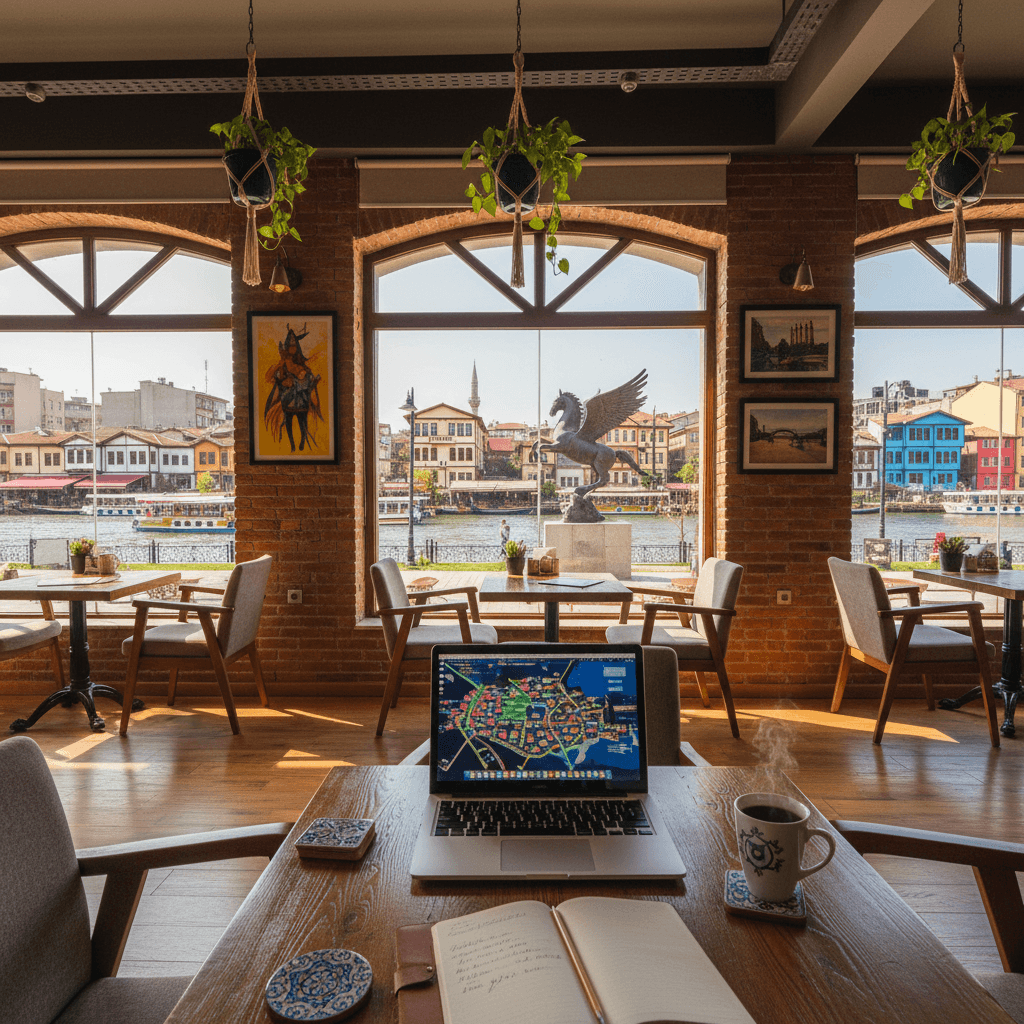
Life in Eskişehir revolves around the water. In the afternoons, the grassy banks of the Porsuk River are lined with people drinking tea and socializing. It is common to see gondolas and motorboats passing by, giving the city a rhythmic, calm atmosphere. Because it is a university town, the coffee shop culture is elite. You can spend an entire morning working from a cafe in the Tepebaşı district and nobody will give you a second look as long as you keep the caffeine flowing.
The city is split between two distinct personalities. Odunpazarı represents the historical side with its colorful Ottoman houses and cobblestone streets. It is where you go for inspiration or a slow weekend walk. On the other side of the tracks, the modern city center is where the action happens. It is dense with bars, bookstores, and modern art galleries like the OMM (Odunpazarı Modern Museum), which has become a landmark for the city's creative class.
What Sets It Apart
The biggest shift you will feel here compared to Izmir or Istanbul is the pace. It is remarkably organized. The tram system is efficient, the streets are clean, and there is a genuine sense of safety even late at night. Expats often remark on how easy it is to integrate here if you enjoy a lifestyle that favors parks and museums over nightclubs and malls. It is a intellectual hub where people actually read on the grass and gather for live jazz or theater.
- The Riverfront: The social spine of the city, perfect for evening walks and casual networking.
- Student Energy: Keeps prices low and the atmosphere progressive and welcoming to foreigners.
- Walkability: You can cross most of the central interest points on foot, saving you the headache of Turkish traffic.
- Creative Hub: Home to some of the best glass art and modern architecture in the region.
The Emotional Experience
Living in Eskişehir feels like being part of a community that is constantly evolving. There is a sense of pride among the locals; they know their city is different from the rest of Turkey. You won't find the aggressive "tourist tax" or the constant hustle of the coastal resorts. Instead, you'll find a quiet confidence. It’s the kind of place where the barista remembers your order by day three and the local park becomes your de facto office. It’s comfortable, it’s affordable, and it’s deeply civilized.
While the winters can be biting and the lack of a coastline might deter some, the warmth of the social scene usually makes up for it. Most nomads find that they come for a week and end up staying for a month because the friction of daily life is so low. It is a place that allows you to be productive during the day and culturally enriched by the time the sun goes down.
The Sweet Spot of Turkish Affordability
If you have spent any time in Istanbul lately, you know the prices have climbed significantly. Eskişehir is the breath of fresh air your bank account needs. Because it is a massive university hub, the local economy is geared toward students and young professionals who demand quality without the Istanbul price tag. You can expect your daily expenses to drop by 30% to 40% compared to the capital or the coast.
Most nomads find they can live a very comfortable, middle class lifestyle here for significantly less than the $3,000 monthly income requirement often cited for the Turkish Digital Nomad Visa. While you still need to prove that income for your paperwork, your actual outgoings will be much lower.
Monthly Budget Estimates
- Digital Nomad (Comfortable): $1,100 to $1,400 per month. This covers a modern one bedroom apartment in a central area, dining out daily, coworking fees, and weekend trips.
- Budget Traveler: $700 to $900 per month. This involves staying in a more modest studio, cooking some meals at home, and sticking to the city's very affordable tram system.
Housing and Neighborhoods
Rent is the biggest variable. While Izmir and Antalya have seen prices spike due to high expat demand, Eskişehir remains grounded. Expats recommend looking in Tepebaşı or Odunpazarı for the best balance of amenities and price. You'll find that many apartments already have fiber optic connections installed, which is a major win for remote work.
- Modern 1-Bedroom (Tepebaşı): $360 to $530 per month. These are often newer builds with better insulation.
- Traditional Apartment (Odunpazarı): $350 to $500 per month. You get more character but might spend more on heating in the winter.
- Utilities (Electric, Water, Gas): $60 to $90 per month. Keep in mind that Eskişehir gets cold, so heating bills in January and February will be your highest.
Food and Dining
The dining scene is where you really see the "student effect." You can find incredible street food like Balaban Kebab or Çibörek for just a few dollars. Even the trendy cafes along the Porsuk River are priced for locals rather than tourists. Travelers often say they can eat a full meal with a drink for less than $8 at a mid range restaurant.
- Quick Lunch / Street Food: $3 to $5
- Dinner for two (Mid-range): $20 to $30
- Third-wave Coffee: $2.50 to $3.50
- Monthly Groceries: $200 to $250
Connectivity and Coworking
Since you won't find the massive coworking chains like WeWork here, nomads usually gravitate toward local hubs or laptop friendly cafes. The cost of staying connected is negligible compared to Western Europe or North America. Most people grab a local SIM from Turkcell or Vodafone, or use an eSIM like Holafly for the first few days. A 20GB data plan typically costs less than $15.
- Coworking Day Pass: $10 to $15
- Fiber Internet (100 Mbps): $15 to $25 per month if included in your rental contract.
Getting Around
Eskişehir is remarkably walkable, especially the areas around the river and the old town. When you do need to go further, the Estram (tram) system is efficient and incredibly cheap. You won't need a car here; in fact, having one is usually more of a headache for parking. A single tram ride is less than $0.50, making it one of the most affordable transit systems in the country.
For Digital Nomads: Tepebaşı and the Porsuk River Corridor
If you're coming to Eskişehir to work, you'll want to be in Tepebaşı. This is the heartbeat of the city's student and creative population. The area around the Porsuk River, specifically the Adalar district, is where you'll find the best density of laptop-friendly spots. Most nomads gravitate toward Gaga Plus or Walker's Coffee House for reliable WiFi and a work-friendly atmosphere.
The vibe here is youthful and energetic. You're never more than a five-minute walk from a Third Wave coffee shop or a cheap eatery. Rent for a modern one-bedroom apartment in this area typically runs between $360 to $530 per month. It's the most social part of the city, making it easy to meet locals who speak English, which can be a bit of a challenge in other neighborhoods.
- Best for: Networking, evening walks by the river, and proximity to coworking-style cafes.
- Internet: Fiber is widely available in newer apartment blocks; expect speeds up to 100 Mbps.
- Top Spot: Haller Gençlik Merkezi, a refurbished fruit warehouse turned into a social hub with plenty of seating.
For Expats and Long-Term Residents: Batıkent
Expats looking for a quieter, more "suburban" feel without leaving the city limits usually head to Batıkent. It's located in the western part of the city and is significantly more polished than the central districts. The streets are wider, the buildings are newer, and there's a lot more green space. It feels less like a university town and more like a modern European neighborhood.
Living here requires a bit more of a budget. You'll see more gated complexes with private security and gyms. Prices for a spacious three-bedroom apartment often sit around $700 to $900. While it's further from the nightlife, the tram system in Eskişehir is world-class. You can jump on the Estram and be back in the city center in about 20 minutes.
- Rent: $700+ for premium apartments.
- Vibe: Quiet, upscale, and residential.
- Practicality: Home to larger supermarkets like Migros Jet and several private clinics.
For Families: Vişnelik and Sümer
Vişnelik is arguably the most prestigious neighborhood for families. It sits right next to Sazova Park, which is basically the Disneyland of Turkey, featuring a massive fairy tale castle, a pirate ship, and a space center. Families love this area because it's flat, walkable, and safe. The streets are lined with trees, and the air feels a bit fresher than in the dense center.
Sümer is the neighboring district and is equally attractive for those with kids. It's home to the Eskişehir Eti Underwater World and several large playgrounds. You'll find plenty of local bakeries and family-run grocery stores here. Rents are stable, usually ranging from $500 to $750 for family-sized units. It's the kind of place where neighbors still know each other's names.
- Proximity: Walking distance to Sazova Park and the Eskişehir Atatürk Stadium.
- Safety: Very high; it's common to see kids playing outside until dusk.
- Transport: Heavily served by the main tram lines and local dolmuş (minibuses).
For Solo Travelers: Odunpazarı
If you're in town for a shorter stint or just want to soak up the history, stay in Odunpazarı. This is the "Old Town" section of Eskişehir, famous for its colorful Ottoman-era houses and cobblestone streets. It's incredibly atmospheric, especially in the early morning before the tour groups arrive. Solo travelers often prefer the boutique hotels and guesthouses here, like the Abacı Konak Hotel, which offer more personality than the chain hotels downtown.
Staying here puts you within walking distance of the OMM (Odunpazarı Modern Museum), which is a must-see for any art lover. While it's a bit touristy during the day, the evenings are peaceful. You'll find unique artisan shops selling Meerschaum pipes (Lületaşı), a local specialty. It's not the best place for long-term "deep work" due to the narrow streets and older infrastructure, but for a week of exploration, it's unbeatable.
- Cost: Boutique stays range from $40 to $80 per night.
- Food: Home to the best Çibörek (traditional fried dough with meat) in the city.
- Culture: Directly adjacent to the Woodworking Museum and the Glass Arts Museum.
Connectivity in the City
Eskişehir is Turkey's quintessential student town, which means the infrastructure is built for people who spend their days on laptops. While it lacks the massive coworking corporate culture of Istanbul, you'll find that the internet is surprisingly reliable. Most modern apartments in neighborhoods like Tepebaşı or near the Anadolu University campus come equipped with fiber optic connections reaching speeds up to 100 Mbps. If you are renting an Airbnb, always ask for a speed test screenshot; some older buildings in the Odunpazarı district might still rely on aging copper lines.
For mobile data, don't wait until you arrive in the city center. Grab an eSIM from providers like Holafly or ZetSIM before you land to stay connected during the train ride from Istanbul or Ankara. Local physical SIMs from Turkcell generally offer the best coverage if you plan on exploring the surrounding Phrygian Valley, though Vodafone is a solid, slightly cheaper alternative for city use. Expect to pay around $15 to $25 for a substantial monthly data package.
Coworking Spaces and Work Hubs
The coworking scene here is intimate rather than industrial. You won't find dozens of global chains, but the local spots are welcoming and much more affordable than their counterparts in the West. Most nomads gravitate toward shared offices that cater to the city's tech startups and academic researchers. These spaces usually offer daily, weekly, and monthly passes, providing a professional environment without the Istanbul price tag.
- Zübeyde Hanım Cultural Center: While not a dedicated coworking space, the library areas here are quiet and frequented by students. It is free, though you'll need to bring your own hotspot if the public WiFi is under heavy load.
- Tasigo Hotels: If you need a high end setting for a video call, the lounge areas in the upscale hotels near Bademlik offer excellent connectivity and a quiet atmosphere for the price of a few espressos.
The Café Office Culture
If you prefer the hum of a coffee shop, you are in luck. Eskişehir has one of the highest concentrations of cafés per capita in Turkey. The Adalar district, which runs along the Porsuk River, is lined with spots where seeing a laptop is the norm. The general etiquette here is relaxed; most owners won't mind you staying for 2 or 3 hours as long as you keep the orders coming. During peak student exam seasons, however, these spots fill up fast, so try to start your workday before 10:00 AM.
For a reliable work session, look for these areas:
- Cassaba Modern: This is a trendy open air mall complex. It features several high end coffee shops with outdoor seating and reliable WiFi, making it perfect for those who like a modern, polished vibe.
- Barlar Sokağı (Bar Street): During the day, many of the pubs and bistros here are quiet, sunlit, and very laptop friendly before the evening crowds arrive.
- Doctorlar Caddesi: This central pedestrian street has plenty of second floor cafés that offer a great view of the city and stable connections.
Practical Logistics for Nomads
To stay long term, many nomads are now looking into the Turkey Digital Nomad Visa. This is available for remote workers aged 18 to 55 years old who can prove an annual income of at least $36,000. While the application is handled through a central government portal, choosing a city like Eskişehir over Izmir can sometimes be a strategic move, as the local immigration offices are often less overwhelmed, making residency appointments slightly easier to navigate.
Digital nomads often find that the cost of working here is significantly lower than in the coastal hubs. A monthly desk at a local shared office might run you $80 to $120, whereas a similar setup in Istanbul could easily double that. Combined with the walkable nature of the city, your "commute" cost is essentially zero if you stay central.
Staying Safe in the Student Capital
Eskişehir is widely regarded as one of Turkey's safest cities, largely thanks to its massive student population and walkable layout. Unlike the overwhelming grit of some Istanbul districts, the vibe here is relaxed and communal. You can comfortably walk through the Porsuk River area or the Adalar district late at night without the high-alert status required in other major hubs.
Pickpocketing and petty theft are rare, but keep your wits about you in crowded spots like the Hamamyolu Market. Most nomads find that the biggest "danger" is simply the uneven cobblestones in the historic Odunpazarı district. If you're out late at the bars on Vural Sokak, you'll see a heavy but non-intrusive police presence that keeps things orderly. Solo female travelers generally report feeling very secure here, though it's always smart to use apps like BiTaksi for late-night rides rather than hailing random cars.
Scams are less common here than in tourist-heavy Antalya or Istanbul. You won't find the "let's go for a drink" bar scams or the aggressive shoe shiners. Most locals are genuinely curious about foreigners and will try to help you even if their English is limited. Just remember that the city is conservative in some pockets and ultra-liberal in others; sticking to the student-heavy Tepebaşı area ensures a more laid-back environment.
Healthcare Infrastructure
Turkey’s healthcare system is surprisingly robust, and Eskişehir serves as a regional medical hub. You'll find a mix of massive state hospitals and sleek private facilities. For digital nomads, private hospitals are the way to go. They offer shorter wait times and a higher likelihood of finding English-speaking staff. Acıbadem Eskişehir Hospital is the gold standard in the city, located centrally and equipped with modern tech. Ümit Hospital is another reliable private option frequently used by the expat community.
- Emergency Number: Dial 112 for all emergencies. Dispatchers may not always speak English, so have a translation app ready or ask a local to help.
- Pharmacies (Eczane): These are everywhere. Look for the red "E" sign. On Sundays and late nights, only "duty pharmacies" (Nöbetçi Eczane) are open. You can find the daily list posted in any pharmacy window or via local apps.
- Insurance: To get your Digital Nomad Visa or a residence permit, you'll need local health insurance. Basic policies for expats are affordable, often costing between $80 and $150 per year depending on your age and coverage.
For minor issues like a cold or a basic prescription, visit a local Aile Sağlığı Merkezi (Family Health Center). These neighborhood clinics are efficient for routine check-ups. If you need specialized care or dental work, prices are significantly lower than in Western Europe or the US. A standard dental cleaning usually runs around $40 to $60 at private clinics.
Practical Wellness Tips
The tap water in Eskişehir is generally fine for brushing your teeth, but most residents and expats stick to bottled water for drinking. You can order 19-liter carboys for about $3 to $5 delivered directly to your apartment via apps like Getir or BiSu.
Air quality can dip in the dead of winter when some older buildings still use coal for heating, though the city has largely transitioned to natural gas. If you have sensitive lungs, aim for a modern rental in Batıkent or Vişnelik where infrastructure is newer. Lastly, don't ignore the city's namesake; Eskişehir literally means "Old City," but its thermal springs are legendary. Visiting a traditional hammam like the Tasigo facilities isn't just a tourist activity; locals use these mineral-rich waters for everything from skin health to stress relief.
The Tram is King
Eskişehir is famous for being one of the few truly walkable cities in Turkey, but the EsTram tram system is the real heartbeat of the local commute. It's clean, punctual, and covers almost everywhere you'll want to go, from the university campuses to the nightlife in Barlar Sokağı. You'll need an Eskart to ride; you can pick these up at kiosks near major stops like Çarşı or İstasyon. A single ride usually costs less than $0.60, making it incredibly budget friendly for daily use.
Most nomads prefer staying central so they can walk between cafes and coworking spots. If you're based near the Porsuk River or the Adalar district, you likely won't even need the tram unless you're heading to the Sazova Park outskirts. The city is flat, which is a rare gift in Turkey, so your legs won't get the workout they'd get in the hills of Istanbul.
Navigating the Porsuk River
The river isn't just for aesthetics. During the warmer months, gondolas and motorboats ferry people along the water. While it feels a bit like a tourist activity, it's a legitimate way to get from the city center toward the Kentpark area. A gondola trip is a great way to clear your head after a long Zoom call, and it usually costs around $3 to $5 depending on the length of the trip.
Taxis and Ride-Hailing
Yellow taxis are everywhere. You'll find stands at major intersections, or you can use the BiTaksi app, which is the standard for booking rides in Turkish cities. Since Eskişehir is compact, a cross-town trip rarely exceeds $6 or $7. Most drivers are honest, but always make sure the meter is running. If you're heading to the high-speed train station for a weekend trip to Istanbul, a taxi is usually the most stress-free way to get there with luggage.
The High-Speed Connection
One of the best parts about living in Eskişehir is the YHT (Yüksek Hızlı Tren). The high-speed train station is right in the city center. You can reach Ankara in about 1.5 hours or Istanbul in roughly 3 hours. Tickets sell out fast, especially on weekends, so nomads recommend booking at least 3 to 5 days in advance through the TCDD Taşımacılık app. A standard ticket to Istanbul usually hovers around $12 to $15, which is a steal for the comfort and speed provided.
Cycling and Micro-mobility
Because the terrain is flat and there's a huge student population from Anadolu University, cycling is more common here than in other Turkish hubs. You'll see locals on bikes everywhere along the river paths. While there isn't a massive city-wide bike-share program like you'd find in Europe, many expats buy a cheap second-hand bike for their stay. For shorter bursts, look for orange or blue electric scooters scattered on sidewalks. You'll need an app like BinBin or Martı to unlock them. They're perfect for ziping between Odunpazarı and the modern city center when you're running late for a meetup.
Getting There from Abroad
Eskişehir has a small airport, but it mostly handles seasonal flights. Most travelers fly into Istanbul (IST) or Sabiha Gökçen (SAW) and then take a bus or the high-speed train. If you land at Sabiha Gökçen, you can take a shuttle to Pendik station to catch the train, or hop on a Kamil Koç or Pamukkale bus directly from the airport terminal. The bus ride takes about 4 hours and costs roughly $10 to $15, offering a reliable backup if the trains are fully booked.
The Language Landscape
In Eskişehir, the linguistic atmosphere feels different than the tourist heavy bubbles of Istanbul or Antalya. Because this is a university town, you will find a surprising number of young people who speak decent English, especially around the Anadolu University campus and the Tepebaşı district. However, once you step into a local bakery in Odunpazarı or try to negotiate a lease, Turkish is the undisputed king. Most nomads find that while they can survive with English in the trendy cafes along the Porsuk River, a little effort with the local tongue goes a long way in building rapport.
The city has a reputation for being the most "European" city in Turkey, which translates to a more open, patient attitude toward foreigners struggling with the language. You won't find the aggressive sales pitches common in the Grand Bazaar; instead, you will get polite, curious interactions. If you are planning to stay for more than a month, learning the basics is not just helpful, it is a sign of respect that locals deeply appreciate.
Digital Essentials and Connectivity
Staying connected is rarely an issue here. Fiber optic internet is standard in most modern apartments in neighborhoods like Bahçelievler and Eskibağlar. You can expect speeds up to 100 Mbps, though it is always smart to ask for a speed test before signing a rental agreement. For mobile data, travelers often recommend picking up a local SIM or an eSIM to avoid roaming charges.
- Turkcell: Generally considered the best coverage and fastest speeds, though often the most expensive.
- Vodafone: A solid middle ground with frequent promotions for high data packages.
- ZetSIM or Holafly: Great for immediate data upon arrival without needing to visit a physical store or provide a passport immediately.
Most cafes in the Adalar district are work friendly. If you are setting up shop for a few hours, the unwritten rule is to order a fresh coffee or tea every two hours. Avoid the peak lunch and dinner rushes if you plan to keep your laptop open, as space can get tight.
Survival Phrases and Translation
You will want to keep Google Translate or DeepL downloaded for offline use. The camera translation feature is a lifesaver when staring at a menu full of traditional Anatolian dishes or trying to understand a water bill. While you can get by with "merhaba" (hello) and "teşekkürler" (thank you), knowing a few more specific terms will make your life easier.
- Kolay Gelsin: Literally "may it come easy to you." Use this when entering a shop, hanging up the phone, or passing someone working. It is the ultimate Turkish social lubricant.
- Hesap, lütfen: "The bill, please."
- İngilizce biliyor musunuz?: "Do you speak English?"
- Temassız: "Contactless." Essential for paying with your card at the grocery store.
Social Integration
Networking in Eskişehir happens organically in the "Kitap Cafes" (book cafes) that dot the city. Places like Adımlar Kitap & Kafe are hubs for students and intellectuals where English is commonly heard. Expats recommend joining local Facebook groups or checking Meetup, though the community here is smaller and more tight knit than in the coastal nomad hubs. If you are looking for a coworking environment, look for spaces near the Haller Youth Center, where the vibe is professional yet relaxed.
One thing to keep in mind is that official business, like applying for your Digital Nomad Visa residency permit or opening a bank account, will almost certainly require a translator or a Turkish speaking friend. Government offices rarely have English speaking staff on hand, and the technical terminology can be daunting even for those with intermediate language skills. Budgeting a small amount for a local "fixer" or a bilingual student to help with your paperwork is a common move for long term residents.
Embracing the Central Anatolian Seasons
Unlike the balmy Mediterranean coast or the humid breeze of Istanbul, Eskişehir sits on the Anatolian plateau. This means you are looking at a continental climate: crisp, bone dry, and sharply defined by the seasons. You will find that the weather here dictates the social rhythm of the city. When the sun is out, the Porsuk River banks are packed; when the frost hits, the city retreats into its legendary cafe culture and underground arts scene.
The Sweet Spot: May to June and September to October
Most nomads and long term expats agree that late spring and early autumn are the golden windows for Eskişehir. During May and June, the city shakes off a surprisingly stubborn winter. Temperatures hover between 20°C and 25°C, making it the perfect time to work from a terrace in the Odunpazarı district without needing a heavy coat or a fan.
The autumn months of September and October are equally pleasant. The air turns crisp, the humidity stays low, and the student population returns, injecting a fresh energy into the streets. It is the best time for walking tours or taking the tram between coworking spots because you won't be battling the afternoon heat or the winter slush.
Survival Guide: The Deep Freeze (December to March)
If you are planning to base yourself here in the winter, come prepared. Eskişehir is famous in Turkey for its biting cold. Temperatures frequently drop to -5°C or -10°C at night, and snow is a regular guest. While the city looks beautiful under a white blanket, the wind chill coming off the plains can be intense.
The silver lining for digital nomads is the infrastructure. Unlike some coastal towns that aren't built for the cold, Eskişehir has excellent central heating and a high density of cozy, well insulated cafes. Places like Hey Joe Coffee Co. or the libraries in Tepebaşı become warm sanctuaries where you can get through a deep work session while the snow falls outside. Just make sure your rental apartment has a modern "kombi" (gas boiler) system before you sign a winter lease.
The Summer Heat (July and August)
Mid summer can be a bit of a desert experience. While it doesn't get as swampy as Istanbul, the dry heat often peaks around 32°C to 35°C. Since Eskişehir isn't a coastal city, there is no sea breeze to save you. Residents often head to the shaded parks like Sazova or Kentpark, which features a man made beach to simulate the seaside experience.
For those working remotely, this is the time to ensure your accommodation has air conditioning. While many traditional homes rely on thick walls to stay cool, modern apartments might get stuffy during an August heatwave. Most locals stay indoors during the peak sun hours of 1:00 PM to 4:00 PM and emerge for dinner and drinks once the sun dips behind the hills.
What to Pack
- The Layering Rule: Even in May, the temperature can swing 15 degrees between noon and midnight. Always carry a light jacket.
- Winter Gear: A heavy puffer coat, thermal socks, and boots with good grip are mandatory if you are visiting between December and February.
- Skincare: The air is very dry compared to the coast. Bring a heavy moisturizer and lip balm to combat the Anatolian wind.
- Tech Protection: If you are working outside in the spring, a privacy screen or anti glare film for your laptop is helpful as the sun can be quite piercing on the plateau.
Seasonal Cost Variations
While Eskişehir is generally more affordable than Istanbul or Antalya, you will see slight shifts in your budget depending on when you arrive:
- Heating Bills (Winter): Expect to pay an extra $40 to $70 per month for natural gas if you like your apartment toasty.
- Short Term Rentals: Prices often peak in September when thousands of students are hunting for housing. If you want a deal, try to secure your spot in July or February.
- Produce: Local markets (Pazar) are cheapest in late summer and autumn when the surrounding plains yield harvests of tomatoes, peppers, and world class grapes.
Connectivity and Workspace
Internet reliability in Eskisehir is surprisingly high for a mid sized city, largely because of the massive student population from Anadolu University. Fiber optic connections reaching 100 Mbps are standard in modern apartment rentals around the Tepebasi district. For mobile data, skip the airport kiosks and head to a Turkcell or Vodafone shop in the city center; alternatively, use an eSIM like ZetSIM or Holafly to get connected the moment you step off the train.
While Eskisehir doesnt have the massive coworking chains found in Istanbul, the cafe culture is elite. Most nomads congregate in the Adalar district or along the Porsuk River. Look for places like Walker's Coffee House or Hey Joe Coffee Co, which are accustomed to laptops. If you need a more formal environment, the Anadolu University library is a quiet fallback, though you should check access requirements for non students. Local etiquette suggests ordering a fresh drink or snack every 2 hours if you're taking up a table during peak afternoon hours.
The Digital Nomad Visa
Turkey recently launched a dedicated Digital Nomad Visa that is a game changer for those wanting to stay longer than a standard 90 day tourist stint. To qualify, you need to be between 18 and 55 years old and prove an annual income of at least $36,000. You'll start the process on the official government portal to get your Digital Nomad Identification Certificate, which you then take to the nearest Turkish consulate.
If you're already in Turkey and want to pivot to Eskisehir, the residency permit process is generally smoother here than in "saturated" cities like Izmir. Keep your rental contract notarized and ensure your health insurance meets the local requirements for the "ikamet" application.
Cost of Living Breakdown
Eskisehir is significantly more affordable than Istanbul or Antalya, making it a top choice for those looking to stretch their budget without sacrificing urban amenities. Most expenses will be paid in Turkish Lira, so keep an eye on fluctuating exchange rates.
- One Bedroom Apartment: Expect to pay between $400 and $600 per month in popular areas like Eskibaglar or Yenibaglar.
- Monthly Groceries: A budget of $200 to $300 covers high quality local produce and basics.
- Dining Out: A solid meal at a local "lokanta" costs about $5 to $8, while a fancy dinner by the river might hit $20.
- Transportation: A single tram ride is less than $0.50, and the city is incredibly walkable.
Getting Around and Staying Safe
The Estram tram system is the backbone of the city. It's clean, efficient, and connects the train station to the main nightlife and residential hubs. For trips further afield, the high speed train (YHT) is your best friend. You can reach Istanbul in 3 hours or Ankara in 1.5 hours for a very low cost, but book your tickets at least a few days in advance as they frequently sell out.
Safety is rarely a concern here. Because it's a university town, the streets stay active late into the night, and there's a general atmosphere of tolerance and modernism. Standard travel precautions apply, but solo travelers and women often report feeling much more comfortable walking here at night than in larger Turkish metropolises.
Language and Social Life
English isn't as widely spoken here as it is in the Sultanahmet district of Istanbul. You'll find that students speak it well, but shopkeepers and taxi drivers likely won't. Download a translation app and learn basic Turkish phrases like "Tesekkur ederim" (Thank you). It goes a long way in building rapport with the locals.
To meet people, skip the formal networking events and head to the Barlar Sokagi (Bars Street). It's the social heart of the city. Expats and nomads often connect through Facebook groups or by simply striking up a conversation in the riverside cafes. If you're looking for a weekend escape, the proximity to the high speed rail makes it easy to organize group trips to the ruins of Ephesus or the thermal baths in nearby provinces.
Need visa and immigration info for Turkey?
🇹🇷 View Turkey Country GuideNomad Haven
Your home away from home