České Budějovice
🇨🇿 Czech Republic
The South Bohemian Pace
If Prague is the frantic, neon-lit heart of the Czech Republic, České Budějovice is its steady pulse. Most people know it for the beer, but for those of us working remotely, it represents a rare middle ground between a functional city and a sleepy historic village. It is a place where the 13th-century layout meets a modern university crowd, creating a vibe that is surprisingly productive but never rushed.
The city sits at the confluence of the Vltava and Malše rivers, and that water defines the layout. You will find yourself walking everywhere. The center is dominated by Náměstí Přemysla Otakara II, one of the largest squares in Europe, which feels like a massive outdoor living room. It is a town where you can actually hear your own thoughts, a sharp contrast to the tourist-heavy streets of nearby Český Krumlov.
Living here feels like being part of a well-kept secret. While the digital nomad crowds congregate in Brno or Prague, Budějovice remains authentically Czech. You will hear more local dialect than English in the supermarkets, and the prices reflect that. It is a spot for the nomad who wants to save money without sacrificing the classic European aesthetic or high-speed fiber internet.
Neighborhoods and Home Bases
The city is compact, but where you park your laptop matters. Most expats and short term residents gravitate toward these three zones:
- Historické Centrum: This is the postcard version of the city. You are steps away from the Black Tower and the best cafes. Rent for a one bedroom apartment here usually hovers around 14,000 to 18,000 CZK per month. It is beautiful, but the cobblestones make for a noisy morning when the delivery trucks arrive.
- Havlinova Čtvrť: Located just south of the historic core, this area is more residential and green. It is popular with young professionals and professors from the University of South Bohemia. It offers a quieter atmosphere with better access to the river paths for morning runs.
- Pražské Předměstí: This is the area heading north toward the main train station. It is less "charming" in the traditional sense, but it is practical. You will find better grocery stores, modern apartment blocks, and lower rents, often starting around 12,000 CZK.
The Remote Work Scene
Do not expect a massive selection of dedicated coworking spaces like you would find in Berlin. The scene here is more organic. Most nomads work from the city's robust cafe culture. Places like Kavárna VLNA, which literally floats on the river, or the minimalist Široko, are the unofficial offices for the local creative class.
For a more formal setup, Coworking CB in the center provides the infrastructure you need for heavy lifting or client calls. A day pass usually runs about 350 CZK, while a monthly desk is around 3,000 CZK. The internet speeds across the city are remarkably stable, with most cafes offering 50 Mbps or higher, which is standard for the Czech Republic's tech-forward infrastructure.
Cost of Living Breakdown
Your money goes significantly further here than in Western Europe or the Czech capital. A lifestyle that feels "middle class" is very attainable on a standard remote salary.
- Monthly Rent (City Center): 15,000 CZK
- Local Beer (0.5L): 45 to 60 CZK
- Lunch Special (Menu): 160 to 210 CZK
- Monthly Transit Pass: 420 CZK
- Coffee: 65 CZK
The Emotional Draw
There is a specific kind of peace that comes with living in Budějovice. It is the lack of "FOMO." Because the city isn't trying to be a global tech hub, there is no pressure to network at 9:00 PM on a Tuesday. Instead, you find yourself joining the locals for a bike ride along the river or sitting in a pub that has been serving the same lager for centuries. It is a city that invites you to slow down, do your work efficiently, and then actually enjoy your life. If you want to disappear into a beautiful, functional, and affordable corner of Central Europe, this is where you go.
One of the biggest draws of South Bohemia is that your money goes significantly further than it would in Prague. While the capital feels the squeeze of over-tourism, České Budějovice remains a bastion of Czech affordability. You can expect your daily expenses to sit about 20% to 30% lower than in Prague, especially when it comes to housing and dining out. It is a city where a high quality of life doesn't require a massive tech salary.
Monthly Budget Estimates
- Solo Nomad (Frugal): $1,100 to $1,300 per month. This covers a studio apartment outside the center, cooking most meals, and using public transit.
- Solo Nomad (Comfortable): $1,600 to $1,900 per month. This allows for a modern apartment in the historic center, daily cafe visits, and frequent weekend trips to nearby towns like Český Krumlov.
- Couple: $2,400 to $2,800 per month. Sharing a larger two bedroom flat and enjoying the local craft beer scene regularly.
Housing and Neighborhoods
Rent is your most variable expense. Most nomads look for short term leases on platforms like Bezrealitky or local Facebook groups. If you want to be in the heart of the action, the Staré Město (Old Town) is the place to be, though prices are highest here. For a better deal, look just across the river in Vltava or the areas near Stromovka Park, which offer a quieter, more residential vibe with plenty of green space.
- Studio in City Center: $650 to $850 per month.
- One Bedroom Apartment (Outside Center): $500 to $650 per month.
- Utilities (Electricity, Heating, Water): $150 to $220 per month for a standard flat.
Food and Drink
Since this is the home of the original Budweiser Budvar, beer is famously cheaper than bottled water in many establishments. A pint of world class lager will usually set you back about $2.20 to $3.00. Eating out is equally reasonable, especially if you stick to the "polední menu" (lunch specials) offered by most restaurants between 11:00 AM and 2:00 PM. These sets usually include a soup and a main course for around $7.50 to $10.00.
- Casual Dinner for Two: $35.00 to $45.00 including drinks.
- Cappuccino at a specialty cafe: $3.20.
- Monthly Grocery Bill: $250 to $350 for one person.
Connectivity and Logistics
The Czech Republic has some of the most reliable internet in Central Europe. Most apartments come with fiber optic connections, and mobile data is fast, though slightly pricier than in neighboring Poland. A local SIM card with a generous data package from providers like O2 or Vodafone will cost you around $35 per month. If you need a dedicated workspace, local spots like Coworking CB offer daily or monthly memberships that are much cheaper than what you would find in Western Europe.
Transport
The city is incredibly flat and walkable, so you might find you rarely need the bus. However, the public transport system is efficient and punctual. A single ticket costs about $1.00, but most long term residents opt for a monthly pass, which is roughly $20.00. If you enjoy cycling, the city is connected by excellent bike paths along the Malše and Vltava rivers, making a second hand bike a great investment for about $100.
Nomads and Remote Workers
If you are coming to town to work, you want to be in the Staré Město, the historic Old Town. This is the heart of the city where you can walk from a 13th century square to a modern cafe in five minutes. Most nomads gravitate toward the streets surrounding Náměstí Přemysla Otakara II because the Wi-Fi is reliable and the coffee culture is surprisingly strong for a smaller city.
You will likely find yourself working from Klub Slavie or Born in London, two spots where the staff won't mind if you stay for a few hours with a laptop. Expect to pay around $750 to $900 for a decent studio or one bedroom apartment in this area. While it is the most expensive part of town, you save money by never needing a bus or a taxi.
- Rent: $800 on average for a central flat
- Vibe: Historic, walkable, and social
- Best for: People who want to be near the action and the best espresso
Expats and Long-Term Residents
For those staying a year or more, Havličkova Čtvrť is the neighborhood of choice. It is located just south of the center and feels much more residential and quiet. It is known for its beautiful villas and proximity to the Malše River, which is perfect for morning runs or evening walks. It is a bit more sophisticated than the student heavy areas and attracts a lot of international professionals working at local firms like Budweiser Budvar or Bosch.
Living here gives you a more authentic slice of South Bohemian life. You are close enough to walk to the center in 15 minutes, but you are far enough away to avoid the summer tourist crowds. Prices here are slightly lower than the Old Town, usually landing between $600 and $750 for a comfortable space.
- Rent: $700 for a spacious apartment
- Vibe: Leafy, upscale, and quiet
- Best for: Professionals and people who value peace and quiet
Families
Families usually head toward Rožnov. It is a southern suburb that has grown significantly but kept its green spaces. You will find plenty of playgrounds, schools, and easy access to the Stromovka Park, which is the largest green lung in the city. It is very safe, and the streets are wide and easy to navigate with a stroller.
The transport links are excellent, with the Number 7 bus connecting you to the main train station and the city center in about 10 to 12 minutes. You can often find larger three bedroom apartments or small houses here for about $950 to $1,100, which is a steal compared to Prague prices. The local grocery stores are large and convenient, making the weekly shop much easier than in the cramped city center.
- Rent: $1,000 for a family sized home
- Vibe: Suburban, safe, and green
- Best for: Parents who need space and easy access to parks
Solo Travelers and Students
If you are on a budget or traveling solo, look at the area around the University of South Bohemia in the Čtyři Dvory district. Since it is a student hub, the prices for food and beer are the lowest in the city. There are plenty of cheap pubs like Kampa where you can meet locals and other travelers without spending more than $2 on a pint.
The area is right next to the Vltava River, where there is a dedicated path for cycling and inline skating that goes all the way to Hluboká nad Vltavou. Shared housing is common here, and you can find a room for as little as $350 or a small private flat for $500. It is a bit of a trek to the historic center, but the bike infrastructure is so good you can pedal there in under 10 minutes.
- Rent: $500 for a small flat or studio
- Vibe: Energetic, youthful, and budget friendly
- Best for: Solo travelers and anyone looking to save money
Connectivity and Speed
You won't have to worry about dropping off a Zoom call while you're based in the capital of South Bohemia. The Czech Republic has some of the most reliable internet infrastructure in Central Europe, and České Budějovice is no exception. Most apartments and cafes offer fiber optic or high speed cable connections with average download speeds ranging between 50 Mbps and 150 Mbps.
Mobile data is just as dependable. If you're planning to stay for more than a week, pick up a local SIM card from O2, T-Mobile, or Vodafone. You can find their kiosks in the IGY Centrum or Mercury Center malls. A prepaid plan with 10GB to 20GB of data usually costs around 400 CZK to 600 CZK. 5G coverage is widespread across the city center, so tethering your laptop in a park is a viable backup plan.
Coworking Spaces
The coworking scene here is smaller than in Prague, but it's more intimate and affordable. Most digital nomads gravitate toward Coworking CB, located near the main square. It's a functional, quiet space that attracts local freelancers and small tech teams. They offer daily passes for about 300 CZK and monthly memberships for roughly 3,000 CZK. It's the best spot to meet locals who can give you the real scoop on the city.
Another solid option is GoSourcing Cowork. It feels a bit more corporate but provides excellent ergonomic setups and ultra-stable Wi-Fi. If you're an entrepreneur looking for a professional environment to host a meeting, this is your best bet. Because the community is tight knit, you'll rarely find these places overcrowded, which is a massive plus compared to the packed hubs in larger cities.
Laptop Friendly Cafes
If you prefer the hum of a coffee machine to a quiet office, the city has a fantastic cafe culture. Kavárna VLNA is a favorite for many travelers; it sits right on the river and offers a peaceful atmosphere for morning deep work. The Wi-Fi is reliable, and the staff won't hover if you stay for a couple of hours.
For a more modern vibe, head to Born in London. It's a bit more upbeat and has plenty of power outlets. If you're near the university, Kampa is a student staple with plenty of desk space and very affordable caffeine. Just keep in mind that many local spots expect you to order something every hour or two, which is fair given the low prices.
Digital Nomad Logistics
While the city is easy to navigate, your experience will depend on your setup. Here is what you can expect for your digital workspace budget:
- Daily Coworking Pass: 250 to 350 CZK
- Monthly Dedicated Desk: 2,800 to 3,500 CZK
- Espresso at a Cafe: 45 to 60 CZK
- Mobile Data (15GB): 500 CZK
Most nomads find that the lack of "digital nomad" marketing in České Budějovice is actually a benefit. You get the same infrastructure as the big cities but without the inflated prices or the struggle to find a seat. It's a place where you can actually get work done during the day and be at a world class brewery five minutes after closing your laptop.
Public Wi-Fi is available in the main square, Přemysl Otakar II Square, and inside the Mercury bus station. It's fine for checking emails or maps, but for anything involving sensitive data or video calls, stick to your apartment or a dedicated workspace. The city is safe, and nobody will look twice at you working on a laptop in a public space, but always use common sense with your gear in high traffic areas.
Staying Safe in South Bohemia
You'll find that České Budějovice is one of the most relaxed cities in Central Europe. It lacks the hectic energy of Prague, and that carries over into its safety profile. Most expats and nomads feel perfectly comfortable walking through the historic center or along the Vltava river at 2:00 AM. Violent crime is incredibly rare here, and you're more likely to be bothered by a rowdy group of students near the University of South Bohemia than by any actual danger.
Pickpocketing isn't the major industry here like it is in the capital, but you should still keep an eye on your laptop bag if you're working at a cafe like Datel or Born in London. The main square, Náměstí Přemysla Otakara II, is well lit and monitored by local police, so it's a very safe spot to hang out. If you're cycling, which is the best way to get around, make sure you have a solid U-lock. Bike theft is the most common petty crime in the region, especially near the main train station.
Solo female travelers generally find the city welcoming and low stress. There aren't many "no go" zones to worry about, though some of the industrial areas toward the edges of the city can feel a bit lonely at night. If you ever feel uneasy, the Liftago app is the most reliable way to call a vetted taxi rather than hailing one on the street.
Healthcare Infrastructure
The healthcare system in South Bohemia is high quality but can be a bit bureaucratic if you don't speak Czech. The primary facility is Nemocnice České Budějovice, located on B. Němcové street. It's one of the best hospitals in the country, and they have specialized departments for almost everything. If you have an emergency, you'll want to head to the Pohotovost (Emergency Room) entrance.
Most specialists and doctors in the city center speak at least some English, but the administrative staff at the front desks often don't. It's a good idea to have a translation app ready or ask a local friend to help with the initial appointment booking. For minor issues, pharmacies (lékárna) are everywhere. You'll recognize them by the green cross. The pharmacy at the IGY Centre mall is convenient and has staff used to dealing with international visitors.
If you're here on a Digital Nomad visa or the Zivno, you'll likely be dealing with VZP or PVZP insurance. Make sure you keep your insurance card on you at all times. Most private clinics will expect payment upfront if you don't have a local public insurance card, but they'll provide the paperwork for you to get reimbursed later.
Practical Health and Safety Tips
- Emergency Numbers: Dial 112 for the general European emergency line where operators usually speak English. For specific services, 150 is fire, 155 is ambulance, and 158 is state police.
- Tap Water: The water is perfectly safe to drink and tastes great. You don't need to waste money on bottled water here.
- Tick Safety: If you're hiking in the nearby Šumava National Park or the forests around Hluboká, be aware of ticks. Tick borne encephalitis is present in South Bohemia, so many long term nomads choose to get vaccinated or at least use heavy duty repellent.
- Pharmacy Hours: Most pharmacies close by 6:00 PM or 7:00 PM, but there's always one "apotheke" on duty for 24 hour service, usually rotating or located at the hospital.
Cost of Care Examples
- General Practitioner Visit: $30 to $50 (if paying out of pocket)
- Emergency Room Co-pay: $4 to $6 (standard fee for non-urgent visits)
- Antibiotics: $10 to $25
- Dental Cleaning: $60 to $90
Overall, your biggest health risk in České Budějovice is probably the hangover from too many 12 degree Budvar lagers. The city is built for a high quality of life, and the peace of mind you get from the low crime rate is one of the main reasons people choose to stay here long term.
The Layout of the Land
České Budějovice is a compact, flat city designed for easy movement. Most of your daily life will likely center around the Náměstí Přemysla Otakara II, which is one of the largest squares in Europe. If you are staying within the historic center or the surrounding neighborhoods like Havlíčkova Kolonie, you can reach almost everything on foot in under 15 minutes.
The city is a major junction in South Bohemia, but it lacks the chaotic traffic of Prague. It feels more like a large town where the pace is governed by the rivers Vltava and Malše. Most nomads find that they rarely need a car unless they are planning weekend trips to the Šumava mountains or the nearby village of Holasovice.
Public Transit: Buses and Trolleybuses
The local transit system, operated by DPMCB, is remarkably reliable. Since the city is flat, the trolleybuses are quiet and frequent. You will see red and white vehicles running on most major arteries from 5:00 AM until around midnight. After that, a limited night service takes over, though the city is safe enough that many expats just walk home.
Tickets are cheap, but don't try to pay the driver with cash. You can buy a single ride for 20 CZK (about $0.85) using a contactless credit card directly on the bus. If you are staying for a month or more, it is much smarter to get a monthly pass for 550 CZK. You will need to visit the main transit office near the train station to set up a prukazka (ID card) first.
- Single Ticket (60 mins): 20 CZK
- 24-Hour Pass: 80 CZK
- Monthly Subscription: 550 CZK
- Main Transit Hub: Mercury Center (roof level)
Cycling: The Local Favorite
This is arguably the best cycling city in the Czech Republic. Because there are no hills to speak of, everyone from students to retirees uses bikes. There are dedicated paths running along both riverbanks that connect the suburbs to the center. It is a scenic way to commute if you are working from a spot like Coworking CB or grabbing a coffee at Datel.
For short trips, look for the pink Rekola bikes. You can unlock them via an app for a few crowns. If you want something more permanent, check the Bazoš or Facebook Marketplace groups for a used "city bike." Just make sure you have a decent lock; while violent crime is non-existent, bike theft is the one thing locals actually worry about.
Regional Travel and Trains
The České Budějovice Main Station (nádraží) is a beautiful neo-Renaissance building that serves as your gateway to the rest of Central Europe. It is located right next to the Mercury Center bus terminal. You can catch a fast train to Prague every hour, and the journey takes about 2 hours. Tickets usually cost around 220 to 300 CZK depending on how far in advance you book.
Expats often recommend using the RegioJet or FlixBus coaches for trips to Český Krumlov or Linz in Austria. The bus to Krumlov takes only 30 minutes and costs less than $2. It is often faster and more convenient than the train for these specific South Bohemian routes.
Ride Sharing and Taxis
Don't expect to find a massive fleet of Ubers here. While Bolt operates in the city, the wait times can be long during off-peak hours. Local taxi companies like Taxi Budějovice are still the standard. Expect a base fare of around 40 CZK and roughly 30 CZK per kilometer. Most drivers speak a little English, but having your destination written down or pinned on a map helps avoid any confusion.
- Bolt App: Best for weekend nights
- Liftago: Reliable for scheduled trips to the station
- Walking: Still the most common way to get around the Staré Město
The Language Landscape
In České Budějovice, you are stepping away from the international bubble of Prague. While the younger crowd and university students at the University of South Bohemia usually speak great English, the older generation often leans toward German as their second language. You will find that most staff in the main square, Přemysl Otakar II, can handle an order in English, but having a few Czech phrases ready goes a long way in the smaller pubs or local bakeries.
Expats living here often find that while you can survive without the local tongue, life gets much richer once you learn the basics. Most nomads recommend using the first few weeks to master the "survival five": hello (Dobrý den), please (Prosím), thank you (Děkuji), beer (Pivo), and the check (Účet, prosím). It is a sign of respect that locals genuinely appreciate, especially in a city that feels more like a lived-in community than a tourist trap.
Getting Connected
The Czech Republic has some of the most reliable internet in Central Europe, and Budějovice is no exception. Most apartments in the historic center or the residential areas like Pražské předměstí come with high speed fiber connections. You can expect speeds between 50 Mbps and 100 Mbps for about 500 CZK to 800 CZK per month. If you are staying in an Airbnb, always ask for a speed test screenshot before booking, as some older buildings have thick stone walls that can mess with Wi-Fi signals.
For mobile data, you have three main providers: O2, T-Mobile, and Vodafone. Most nomads opt for a prepaid SIM card to avoid the paperwork of a long term contract. You can pick up a card at the Mercury Center mall right next to the train station. A typical plan with 10GB to 15GB of data will cost you roughly 400 CZK to 600 CZK. If you plan on traveling to nearby Austria or Germany, these plans include EU roaming, so your data stays active across the border.
Digital Communication and Apps
To get around and stay informed, there are a few apps you should download the moment you arrive. The local infrastructure is efficient, but it relies on these digital tools to work smoothly.
- IDOS: This is the absolute gold standard for public transport. It tracks every bus in the city and every train leaving for Prague or Cesky Krumlov in real time.
- Liftago: While Uber is not as dominant here as it is in larger capitals, Liftago is the local answer for reliable taxi services with transparent pricing.
- Wolte or Dame Jidlo: These are the go-to apps for food delivery. If you are working late from a coworking spot and need a burger or some traditional Svíčková, these are your best bets.
- Mapy.cz: While Google Maps is fine, Mapy.cz is far superior for hiking trails and cycling paths around South Bohemia. It is much more detailed for the rural areas outside the city.
Coworking and Work Culture
The work culture in Budějovice is generally quiet and focused. You won't find the frantic energy of a tech hub, which is exactly why many nomads choose it. Coworking spaces like Cowork CB provide a professional environment where you can meet local entrepreneurs and other remote workers. Monthly memberships usually hover around 2,500 CZK to 3,500 CZK for a dedicated desk.
If you prefer the cafe scene, the city center is dotted with laptop friendly spots. Places like Kavárna VLNNA or Datel are popular among the remote crowd. Just remember the local etiquette: if you are taking up a table for four hours, keep the coffee and snacks or lunch orders coming. Most cafes are happy to host you as long as you are a paying customer, but always check for "no laptop" signs during the busy lunch rush from 11:00 to 13:00.
Mail and Packages
Receiving packages is straightforward but can be a bit of a hurdle if you aren't home. The Czech Post (Česká pošta) is the traditional route, but most locals prefer using Zasilkovna. It is a network of pickup points in small shops and kiosks across the city. When you order something online, you just select the nearest Zasilkovna point to your apartment, and you will get a code on your phone when it is ready. It is much easier than trying to coordinate a delivery time with a courier who might not speak English.
The Seasonal Rhythm of South Bohemia
Living in České Budějovice means embracing the distinct shifts of Central European seasons. Since the city sits in a basin where the Vltava and Malše rivers meet, the humidity can make the winter chill feel sharper and the summer afternoons a bit more heavy. Most nomads find that the city hits its stride between May and September, when the outdoor beer gardens and riverside paths come alive.
Spring arrives late here compared to Western Europe. You can expect crisp mornings and unpredictable rain through April, but by May, the square is lined with cafe tables and the surrounding South Bohemian countryside turns a vivid green. This is arguably the best window for deep work; the city is quiet, the weather is mild with highs around 18°C (64°F), and the tourist crowds heading toward nearby Český Krumlov haven't yet peaked.
Summer: Peak River Life
July and August are the warmest months, with temperatures frequently reaching 26°C (79°F). While that sounds moderate, the lack of air conditioning in many older apartment rentals and local offices can make mid-afternoon work sessions a bit sticky. Expats usually head to the Malák beach on the Malše river or take a short train ride to the Lipno Reservoir to cool off during the weekends.
The city feels most social during this time. You will find locals lingering over Budvar at the many outdoor pubs until well after sunset. If you are planning a short-term stay, keep in mind that August is the busiest month for local festivals and regional travel, which can drive up the price of short-term Airbnbs by about 20% to 30%.
Autumn and the Golden Window
September is often cited by long-term residents as the sweet spot. The heavy summer humidity breaks, but the days stay warm enough for cycling the flat trails that lead out to Hluboká Castle. By October, the foliage in the city parks turns a deep gold, and the morning mist over the rivers creates a moody, focused atmosphere perfect for knocking out big projects.
The temperature begins to drop significantly in November, often hovering around 5°C (41°F). This is the start of the "grey season," where the sky can remain overcast for weeks. It is a quiet time in the city, but it is also when you will find the best deals on monthly rentals if you are negotiating directly with landlords.
Winter Expectations
Winter in České Budějovice is cold and damp rather than snowy and bright. While you will see the occasional dusting of snow on the Přemysl Otakar II Square, it rarely stays for long. January and February are the coldest months, with lows dipping to -4°C (25°F). You will need a heavy coat and waterproof boots, as the slush around the cobblestone streets can be a challenge.
The highlight of the winter is the Christmas market in December. It is smaller and more authentic than the ones in Prague, featuring a massive ice rink around the Samson Fountain. It is a great time for networking with the local expat community over mulled wine, but from a productivity standpoint, the short daylight hours can be a bit of a drain on your energy.
Best Time for Nomads by Category
- Best for Budget: November to March (excluding Christmas). Landlords are more flexible with short-term leases and cafe seating is easy to find.
- Best for Lifestyle: June and September. Perfect weather for the city's famous cycling paths and drinking beer by the river.
- Best for Networking: May and June. This is when the local university crowd and the tech community are most active before the summer holidays.
If you hate the cold, avoid arriving between November and February. However, if you want a quiet, affordable base to hunker down and get things done, the South Bohemian winter offers exactly that kind of stillness. Most travelers find that late May offers the most reliable balance of pleasant weather and local events.
Getting Around and Staying Connected
You won't need a car to get around the historic center. The city is famously flat, making it a dream for cyclists. Most locals use the DPMCB mobile app to buy bus and trolleybus tickets. A single trip costs about 20 CZK, while a monthly pass sits around 380 CZK. If you are heading out to Hluboka Castle or the nearby village of Holasovice, the trains from the main station are reliable and cheap.
Internet speeds in South Bohemia are generally excellent. You can expect fiber connections in most modern apartments. If you need a professional desk, Coworking CB on Riegrova is the primary hub for freelancers. It is a quiet, productive space where a daily hot desk goes for roughly 300 CZK. For a more casual vibe, Kavarna VLNA offers great views of the Mlynska stoka canal and reliable Wi-Fi for the price of a coffee.
Money and Local Costs
While the Czech Republic is part of the EU, they still use the Czech Koruna (CZK). Card payments are accepted almost everywhere, from the grocery stores like Albert to the smaller bistros. However, keep a few coins on hand for public restrooms or small bakeries. Your money goes significantly further here than in Prague or Brno.
- Monthly Rent (1-bedroom): 12,000 to 16,000 CZK
- Pint of Budvar: 45 to 60 CZK
- Lunch Special (Menu): 160 to 220 CZK
- Monthly Gym Membership: 800 to 1,200 CZK
The Digital Nomad Visa
The Czech Republic recently introduced a formal Digital Nomad Program, though it is currently limited to citizens of specific countries like the USA, UK, Canada, and Australia. If you qualify, the processing time is relatively fast at about 45 days. You will need to prove a monthly income of at least 73,823 CZK. For those who don't qualify for this specific program, the Zivno visa remains the standard path for long term stays, though it involves more paperwork and a local trade license.
Safety and Local Etiquette
Ceske Budejovice is incredibly safe, even late at night. The biggest "danger" is usually just accidentally walking into a bike lane. When dining out, a tip of about 10 percent is standard if the service was good. Don't wait for the server to come back to the table with the bill; it is common to tell them the total amount you want to pay, including the tip, while they are standing there with the card reader.
Learning a few words of Czech goes a long way. While younger people speak English well, the older generation often speaks German as their second language. A simple "Dobry den" (Good day) when entering a shop and "Dekuji" (Thank you) will make your daily interactions much smoother. Locals are reserved at first but become very welcoming once you are a regular at their favorite hospoda.
Best Neighborhoods for Nomads
Choosing where to drop your bags depends on your tolerance for tourists. The historic core is beautiful but can get noisy during the summer festivals. Most expats look just outside the center for better value and more space.
Havirsky Ostrov
- Vibe: Green and peaceful
- Pros: Close to the river trails and the park
- Rent: 14,000 CZK for a modern studio
Prazske Predmesti
- Vibe: Urban and convenient
- Pros: Walking distance to the train station and the best supermarkets
- Rent: 13,000 CZK for an older flat
Hospital and Emergencies
The Nemocnice Ceske Budejovice is one of the best rated hospitals in the country. For minor issues, pharmacies are marked with a green cross. If you need an English speaking doctor, it is best to call ahead or use a service like Ulekare.cz to book an appointment. Make sure your health insurance meets the PVZP requirements if you are applying for a long term visa, as this is a strict requirement for the Ministry of the Interior.
Need visa and immigration info for Czech Republic?
🇨🇿 View Czech Republic Country GuideEasy Landing
Settle in, no stress
Monthly Budget Estimates
More cities in Czech Republic
Pilsen
🇨🇿 Czech Republic
Ostrava
🇨🇿 Czech Republic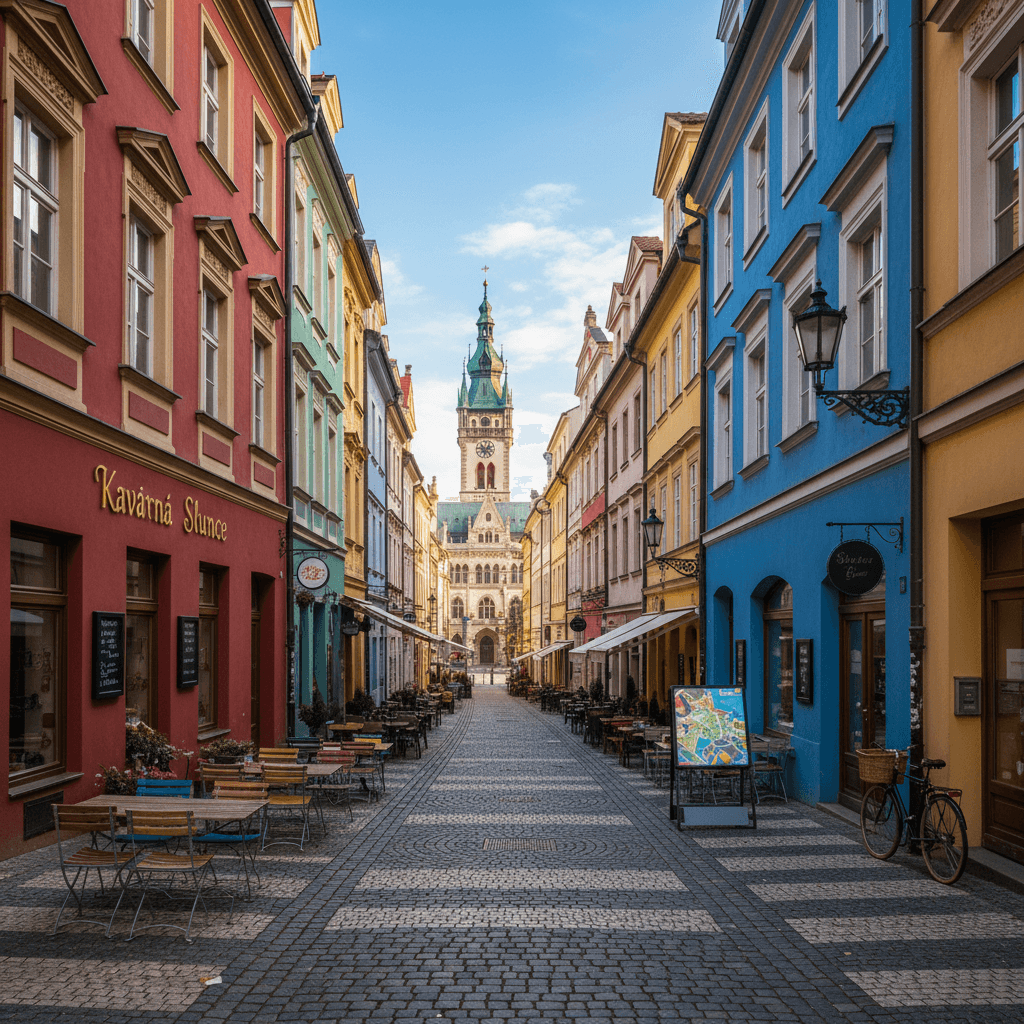
Liberec
🇨🇿 Czech Republic