Envigado
🇨🇴 Colombia
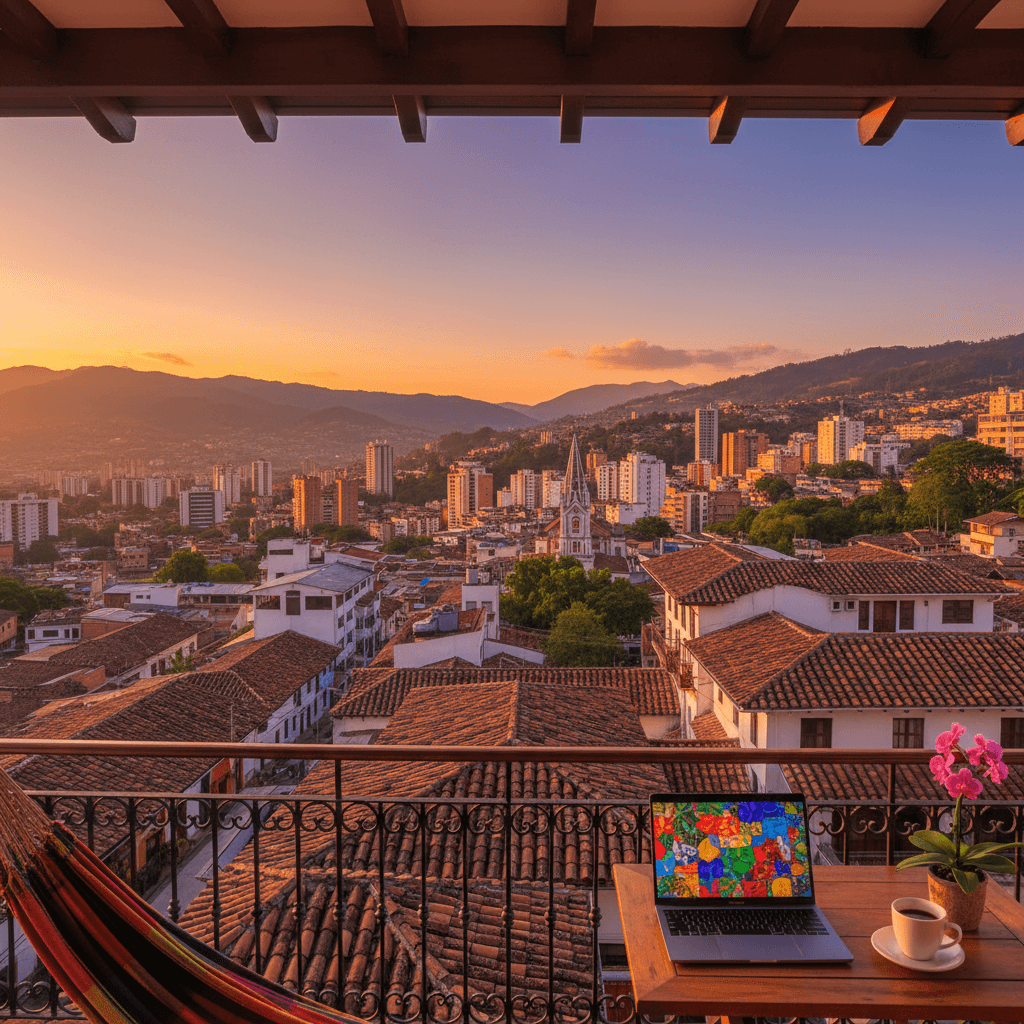
If Medellín is the high energy heart of the valley, Envigado is its relaxed, soulful neighbor. While most travelers instinctively head for the neon lights of El Poblado, seasoned nomads are increasingly looking south. Envigado feels like a real Colombian town that just happens to be twenty minutes away from a major metropolis. It’s where you go when you want to trade the tourist bubble for a residential neighborhood where neighbors actually know each other and the pace of life slows down to a comfortable stroll.
The Local Vibe
Living here feels grounded. You’ll spend your mornings at a local bakery with a $1 coffee, watching the city wake up without the frantic rush of the downtown core. It’s a family oriented municipality with a fierce sense of identity; residents here often say they live in Envigado, not Medellín. It’s quieter, greener, and significantly more affordable than the expat heavy districts. You’ll hear more Spanish than English on the streets, so having a translation app like Google Translate is a necessity for daily life.
The trade off for this peace is a sleepier social scene. If you’re looking for rooftop parties every night, you’ll find yourself taking plenty of $4 Uber or InDriver rides back to Poblado. But for those who prioritize deep work and a sense of community, the atmosphere is hard to beat. Most nomads find the balance perfect: work in the calm of Envigado during the day, then hop on the Metro for $0.70 when you need a dose of city chaos.
Cost of Living Breakdown
Envigado offers some of the best value in the Aburrá Valley. You can maintain a high quality of life here for much less than you’d spend in the trendy pockets of Medellín.
- Budget Tier (~$1,000/month): You’ll likely stay in the residential outskirts or near the Sabaneta border. Rent for a modest studio runs between $400 and $600. You’ll eat mostly at local spots where a traditional lunch set (almuerzo ejecutivo) costs around $5.
- Mid-Range (~$1,500/month): This is the sweet spot. You can snag a nice apartment in Central Envigado for $600 to $900. You’ll have enough left over for a dedicated desk at a coworking hub and regular dinners out at the Viva Envigado mall.
- Comfortable (~$2,500+): At this level, you’re looking at modern high rise builds with gyms and views, costing $1,000 or more. You can eat at the best restaurants in the area daily and rely entirely on private transport.
Neighborhoods to Know
Central Envigado
This is the heart of the action. It’s walkable, packed with local cafes, and gives you the quickest access to the Metro. It’s ideal for solo nomads who want to be close to traditional markets and authentic Colombian life. Rent is affordable, but the nightlife is fairly tame.
Viva Envigado Area
Centered around one of the largest malls in the country, this area is modern and very safe. It’s a favorite for families or nomads who want familiar amenities like major gyms and international food chains. Keep in mind that utilities here are often higher due to the socioeconomic "estrato" system.
The Outskirts
Heading toward the Sabaneta border, things get even quieter and cheaper. It’s great for those who want to hunker down and save money, though you’ll rely more on buses or ride hailing apps to get anywhere interesting. The hills can be steep, so check the walkability before booking an apartment.
Practical Realities
The "Eternal Spring" weather is a major draw, with temperatures hovering between 22°C and 28°C year round. You’ll want to pack an umbrella for the rainy seasons in April and October, but otherwise, it’s light jacket weather every night. For work, the internet is reliable, with most modern apartments offering 100 to 200 Mbps. While Envigado doesn’t have a Selina or WeWork of its own yet, the Medellín hubs are a short commute away. Local cafes are welcoming, but bring noise canceling headphones as the Colombian love for music means there’s often a speaker nearby.
Safety is generally a non issue in the central residential zones, especially compared to the center of Medellín. Just use common sense: don't flash expensive tech on unlit streets at night. If you’re staying long term, the digital nomad visa is a great path, requiring proof of ~$1,300 USD monthly income (3x current minimum wage) and health insurance. For connectivity, grab a Claro or Tigo SIM card at the mall for about $20 to get unlimited data and stay connected while you’re exploring the hills.
The Price of the Quiet Life
Envigado is where you go when you want the perks of Medellín without the "gringo tax" of El Poblado. It feels like a real Colombian town that just happens to be twenty minutes from a major metropolis. You get more space for your money here, and the local vibe means you aren't constantly surrounded by other digital nomads unless you want to be.
The cost of living is tied to the estrato system, which determines your utility rates based on the neighborhood's socioeconomic level. Most nomads stick to estrato 3 or 4 areas to keep costs low while maintaining a high standard of living. Expect to pay between $23 and $34 a month for utilities including high speed internet if you're renting a local apartment.
Monthly Budget Breakdown
Your total spend depends on how much you prioritize modern amenities over local immersion. Here is what to expect for your monthly burn:
- The Budget Tier (~$1,000): Ideal for those living in the residential outskirts or near the Sabaneta border. You can find older studios for $400 to $600, eat $3 street food or daily lunch specials, and use the Metro for almost everything.
- The Mid-Range Tier (~$1,500): This is the sweet spot for most. A comfortable apartment in central Envigado runs $600 to $900. You'll eat out at nice spots in Viva Envigado mall and use apps like Uber or InDriver for late night trips, which usually cost $3 to $5 per ride.
- The Comfortable Tier ($2,500+): You're looking at modern high rise builds with gyms and views, costing $1,000 or more. This budget allows for daily upscale dining, a dedicated desk at a premium coworking space, and frequent weekend trips.
Neighborhood Value Comparison
Where you plant your flag in Envigado changes your daily expenses and experience. Most nomads gravitate toward these three zones:
Central Envigado
This is the heart of the action. It's walkable, filled with local cafes, and provides the easiest access to the Metro. Rent is affordable, and you're surrounded by family owned businesses rather than chains.
Viva Envigado Area
This area feels more suburban and polished. It's home to one of the largest malls in the country, so you have every modern convenience at your doorstep. Expect higher utility costs and a slightly more expensive, family oriented atmosphere.
Outskirts (Sabaneta Border)
If you want the absolute lowest rent, head south. It's quiet and great for deep work, but you'll spend more on transport and have fewer dining options within walking distance.
Work, Connectivity, and Gear
While Envigado doesn't have a massive Selina style hub yet, the internet is reliable. Fixed broadband speeds of 100 to 200 Mbps are standard. For a dedicated workspace, many nomads hop on the Metro to WeWork in Medellín, which costs roughly $150 to $250 a month for a desk. If you prefer working from cafes, a cappuccino will only set you back about $1, but bring noise-canceling headphones to drown out the local chatter.
For mobile data, grab a SIM card from Claro, Movistar, or Tigo. You can get an unlimited data plan for about $20 to $30 a month, which is a lifesaver when you're using translation apps to navigate the low English proficiency in the area.
Practical Savings Tips
- Eat the Menu del Dia: Most local restaurants offer a set lunch (soup, main, juice) for $4 to $7. It's the most cost effective way to eat well.
- Use the Metro: At $0.70 a ride, it's the fastest and cheapest way to reach El Poblado or Laureles.
- Digital Nomad Visa: If you plan to stay long term, the visa requires proof of income around $900 per month. It's an upfront investment but saves you from "border runs" later on.
- Banking: Stick to Wise or Revolut for daily spending to avoid terrible exchange rates at local ATMs.
The Solo Nomad: Central Envigado
If you're landing in Envigado to focus on work without the distractions of El Poblado, stay in the central grid. This area feels like a real Colombian town rather than a tourist hub. You'll find $1 cappuccinos at local bakeries and a community that still greets their neighbors on the street.
- The Vibe: Authentic, walkable, and productive. It's the sweet spot for those who want a 15 minute metro ride to the city but a quiet desk at night.
- Rent: Expect to pay between $600 and $900 for a solid one bedroom apartment.
- Coworking: Most nomads head into Medellín for hubs like Selina or WeWork, but local cafes are great for deep work if you bring noise canceling headphones.
- The Trade-off: Nightlife is thin here. If you want to dance until 3:00 AM, you'll be taking an Uber back from the city.
Families: Viva Envigado and Surrounding Barrios
Families usually gravitate toward the modern developments near the Viva Envigado mall. It's one of the largest shopping centers in the country, offering everything from high end grocery stores to safe indoor play areas. The streets are wider, the parks are better maintained, and the apartment complexes often come with 24 hour security and pools.
- The Vibe: Suburban comfort with high end amenities. It feels very safe and manageable with kids.
- Rent: Modern builds in high estrato areas usually start at $1,000 and go up based on square footage.
- Daily Life: You've got easy access to healthcare and international brands. It's the most "Western" feeling part of the municipality.
- The Trade-off: Utility bills are higher here because of the socioeconomic tiering system, and it lacks that gritty, local charm of the town center.
The Budget Traveler: The Southern Outskirts
For those living on a $1,000 monthly budget, looking toward the border of Sabaneta is the move. You're still within striking distance of the metro, but the prices for everything from rent to almuerzo corriente (daily lunch specials) drop significantly. You can find street food like arepas for $2 to $4 and keep your total monthly spend very low.
- The Vibe: No frills residential. It’s where you go to disappear into the local culture and stretch your dollars.
- Rent: You can still find modest studios or older apartments for $400 to $600 if you look on local Facebook groups like Medellín Expats.
- Transport: You'll rely heavily on the metro or apps like InDriver and Uber, which usually cost $3 to $5 per trip into the main hubs.
- The Trade-off: English proficiency is almost zero. You'll need Google Translate for almost every interaction until your Spanish improves.
Expats and Long Termers: Upper Envigado (The Hills)
Expats who've been in Antioquia for a while often move up the hills for the views and the "Eternal Spring" weather. It’s a few degrees cooler than the valley floor, and the air is much fresher. You'll need a car or a reliable taxi budget, as these areas aren't walkable, but the peace and quiet are unmatched.
- The Vibe: Quiet luxury and bird calls. It’s for people who are done with the city noise but still want to see the Medellín lights at night.
- Logistics: Grocery delivery apps like Rappi are a lifesaver here since you won't want to run down the hill for a gallon of milk.
- Internet: Despite the elevation, you can still get 100 to 200 Mbps fiber optic connections from providers like Claro or Tigo.
- The Trade-off: You'll feel isolated without your own wheels. Walking to a cafe isn't an option when the incline is 30 degrees.
Connectivity and Speed
Living in Envigado doesn't mean sacrificing your bandwidth. While the vibe is decidedly more residential than the high energy of El Poblado, the infrastructure is just as modern. You can expect standard fiber optic speeds between 100 and 200 Mbps in most modern apartment builds. If you're staying in a higher estrato area like the neighborhoods surrounding Viva Envigado, the connection is generally rock solid for video calls and heavy uploads.
For your mobile backup, grab a SIM card from Claro, Movistar, or Tigo. Most nomads prefer Claro for its superior coverage if you plan on taking weekend trips into the mountains, but Tigo often wins on speed within the city limits. An unlimited data plan will set you back roughly $20 to $30 USD per month. You can pick these up at the airport, but you'll get better rates at the official tech stands inside the Viva Envigado mall.
Coworking Spaces
Envigado is still growing its dedicated coworking scene. Many residents choose to hop on the Metro for a 15 minute ride to the heavy hitters in Medellín like Selina or WeWork. However, if you want to stay local and avoid the commute, you have a few solid options that trade the corporate feel for a more community focused atmosphere.
- Shared Desks: Expect to pay around $100 per month for part time access to local hubs.
- Dedicated Desks: These usually range from $150 to $250 per month, often including coffee and printing credits.
- Premium Offices: If you need a private suite, prices start at $300 and go up based on the view and amenities.
The local coworking culture is quieter here. You won't find the same level of "digital nomad networking" events as you would in Laureles, but that's exactly why people choose Envigado. It's a place where you actually get work done during the day so you can enjoy a local meal in the evening.
The Cafe Office Culture
If you're the type who likes to "cafe hop," Envigado is a dream, provided you have a good pair of noise canceling headphones. The local coffee shops are often filled with students and professionals, but they can get lively during the afternoon rush. Most cafes won't mind you staying for a few hours if you're ordering regularly.
Central Envigado is packed with smaller, independent spots where a cappuccino costs about $1 to $2. While English isn't widely spoken in these local haunts, the staff are generally patient with nomads using Google Translate to ask for the WiFi password. Just keep in mind that power outlets can be hit or miss in the older, more traditional buildings, so show up with a full charge.
Practical Remote Work Tips
Power outages aren't a frequent problem, but they can happen during the heavy rain seasons in October and November. Having a local SIM with a hotspot capability is a non negotiable safety net. If you're scouting for an apartment on Airbnb or through Medellín Expats Facebook groups, always ask for a screenshot of a speed test before booking. Some older residential outskirts might still be running on copper lines which won't cut it for professional use.
For banking and managing your local expenses, most nomads rely on Wise or Revolut. While many cafes in Envigado now take card, having some cash on hand for the smaller "tiendas" is still the way to go. If you're staying long term and applying for the digital nomad visa, you'll need to show proof of income of at least $900 per month, and having a local bank account like Bancolombia can make paying your utility bills much easier.
Safety in a Suburban Setting
Envigado has a reputation for being one of the safest spots in the Aburrá Valley. While it's technically a separate municipality, most nomads treat it as a quieter extension of Medellín. Because it's a deeply residential area where families have lived for generations, there's a strong sense of community oversight that you won't find in the more transient parts of El Poblado.
You'll find that central areas like Jardines or the neighborhoods near Viva Envigado are low risk for petty crime during the day. Locals often walk their dogs or shop at the local fruver (fruit and vegetable store) well into the evening. However, the standard rules of urban Colombia still apply here. Don't "give papaya," which is the local way of saying don't flash your expensive tech or jewelry in public. Keep your phone tucked away while walking and use ride-hailing apps like Uber or InDriver after dark rather than hailing taxis on the street.
The outskirts and hilly areas can get a bit desolate at night. If you're staying further out toward the Sabaneta border, it’s better to take a car directly to your door rather than walking from the metro station. Most nomads feel much more relaxed here than in Medellín's city center, but staying alert in unlit areas is just common sense.
Healthcare Infrastructure
One of the biggest perks of living in Envigado is the access to world-class medical care. Colombia consistently ranks high for healthcare quality in Latin America, and the Medellín metro area is the country's medical hub. You're never more than a 10 to 15 minute drive from top-tier facilities.
- Hospitals: Many expats head to Hospital Manuel Uribe Ángel for emergencies. It's a reliable local institution. For more specialized or English-speaking services, Hospital Pablo Tobón Uribe and Fundación Valle del Lili are the gold standards in the region.
- Pharmacies: You'll see Droguerías on almost every corner. Chains like Droguería Alemana or Pasteur are reliable. Many medications that require a prescription in the US or Europe are available over the counter here, usually for a fraction of the price.
- Emergency Services: Dial 123 for any emergency. It's the national equivalent of 911 and covers police, fire, and ambulance services.
Insurance and the Nomad Visa
If you're applying for the Digital Nomad Visa (V-Visa), the Colombian government requires you to have health insurance with coverage for "all risks." This isn't just a formality; they check the policy details thoroughly. Expect to show proof of a plan that covers emergencies, repatriation, and basic care. Most nomads opt for international providers like Genki or SafetyWing, which usually satisfy the visa requirements.
For those staying long-term on a local ID (Cédula), you might eventually look into the EPS (public system) or Prepagada (private insurance). Private insurance is incredibly affordable compared to Western prices, often ranging from $50 to $100 USD per month for excellent coverage. It grants you faster access to specialists and nicer clinic environments, which is a huge plus if you're making Envigado your semi-permanent home.
Practical Safety Tips
- ATM Safety: Only use ATMs located inside malls like Viva Envigado or City Plaza. Avoid street-side machines, especially at night.
- Water Quality: Most expats boil or filter tap water or buy bottled for safety.
- Local Apps: Keep Google Translate handy. While healthcare providers in major hospitals often speak some English, the administrative staff and local pharmacy clerks almost certainly won't.
The Metro: Your Lifeline to Medellín
Living in Envigado doesn't mean you're cut off from the action in Medellín. The metro system is the pride of the valley, and for $0.80-$0.95 per ride depending on card type, it's the most efficient way to bypass the notorious Aburrá Valley traffic. If you're based near the center, you'll likely use the Envigado station on Linea A. It'll get you to the coworking hubs of El Poblado in about 15 to 20 minutes.
Most nomads pick up a Civic card (Tarjeta Cívica) at any station. You can load it with credit and use it for both the trains and the integrated feeder buses (integrados) that circulate through the steeper residential neighborhoods. It’s cheap, clean, and remarkably punctual, though it gets packed during the 5:00 PM rush hour.
Ride-Hailing and Taxis
While traditional yellow taxis are everywhere, most expats and nomads stick to apps for the added security and upfront pricing. Uber and InDriver are the go-to choices here. A typical trip from central Envigado to the Viva Envigado mall or a nearby cafe usually costs between $3 and $5.
If you're heading to the José María Córdova International Airport (MDE), expect a 45-minute drive. A private car or taxi will set you back about $20 to $30. Pro tip: because the airport is up the mountain in Rionegro, the drive is winding, so keep that in mind if you're prone to motion sickness.
Micromobility and Walking
Envigado is a tale of two topographies. The central "flat" area near the main park (Parque Envigado) is highly walkable. You can easily hop between local bakeries and fruit stalls on foot. However, as you move toward the eastern hills, the incline becomes a workout. If your apartment is "loma arriba" (up the hill), you won't want to walk with groceries.
- Cycling: There are some dedicated bike lanes, but Envigado's streets can be narrow. Only confident cyclists tend to brave the main roads during peak hours.
- Walking: Stick to the central grid for the best experience. It's safe, social, and the best way to soak in the local residential vibe.
Transport Costs at a Glance
Budgeting for your monthly commute is straightforward since public transit prices are fixed and ride-hailing is consistently affordable.
- Public Transit: Roughly $0.80-$0.95 per trip; heavy users spend about $25 per month.
- Ride-Hailing: Expect to pay $3 to $5 per trip for local hops.
- Monthly Transport Budget: Most mid-range nomads spend between $50 and $100 total, depending on how often they head into Medellín for nightlife.
Travelers often say that while Envigado feels like a separate, quieter world, the ease of the metro makes it feel like just another neighborhood of the big city. You get the peace of a suburb without the isolation.
The Spanish Standard
In Envigado, Spanish isn't just the official language; it's the only language for about 95% of your daily interactions. Unlike the bubble of El Poblado where waitstaff often speak conversational English, Envigado remains a traditional residential stronghold. You'll find that older residents and shopkeepers in Central Envigado likely won't speak a word of English. Most nomads find this intimidating at first, but it's actually the fastest way to level up your language skills.
Expats recommend downloading the offline Spanish dictionary on Google Translate before you arrive. You'll use it constantly at local fruver (fruit and vegetable) stands or when explaining a specific household issue to your landlord. While the younger crowd at spots like Viva Envigado might have some English proficiency, don't count on it for utility setups or doctor visits.
Local Slang and the Paisa Accent
The local accent is famous for being clear and melodic, but it comes with a heavy dose of "Paisa" slang. You'll hear "¿Qué más?" instead of "How are you?" and "Listo" for "Okay" or "Understood" dozens of times a day. One phrase you'll need immediately is "¿A cómo?" to ask for prices at the market. Most travelers say that locals are incredibly patient with learners, so don't be shy about using broken Spanish; they'll appreciate the effort far more than a "Do you speak English?"
Connectivity and Data
Staying connected is relatively cheap and straightforward. You'll want to grab a physical SIM card or eSIM as soon as you land. Claro is the heavy hitter for coverage, though Tigo and Movistar often offer better deals for heavy data users. You can expect to pay between $20 and $30 for a monthly plan with enough data to hotspot in an emergency.
- Claro: Best for weekend trips to the outskirts or Guatapé where signals get spotty.
- Tigo: Often preferred by nomads for slightly faster urban data speeds in Central Envigado.
- Movistar: Great for budget-conscious users often running promotions for "unlimited" social media data.
Digital Communication and Apps
In Colombia, WhatsApp is the lifeblood of communication. You won't just use it for friends; you'll use it to book hair appointments, order delivery from the local corner store, and message your landlord. If a business has a phone number listed, they almost certainly expect a WhatsApp message rather than a phone call.
For getting around and eating, keep these apps updated on your home screen:
- Uber and InDriver: Essential for rides when you don't want to hail a yellow taxi. Expect to pay $3 to $5 for most trips within the city.
- Rappi: The "everything app" for Colombia. Use it for groceries, pharmacy runs, or getting a $4 lunch delivered to your desk.
- Google Translate: Use the camera feature to read menus at local spots in the Calle de la Buena Mesa.
The Social Barrier
Because Envigado is quieter and more family oriented, the "nomad scene" is less obvious than in Medellín. You won't find many English-speaking meetups within the city limits. Most expats living here join Medellín-based Facebook groups like "Medellín Expats" or "Digital Nomads Medellín" to find community events, which are usually a 20-minute metro ride away. For a local connection, head to independent cafes where the vibe is more "work-from-home" and less "tourist party."
The Eternal Spring
Envigado shares the same legendary climate as its neighbor Medellín, earning it a spot in the region often called the land of eternal spring. You can expect daytime temperatures to hover consistently between 22°C and 28°C (72°F to 82°F) throughout the year. It rarely gets sweltering, and the evenings usually dip into a comfortable 17°C (63°F), which is perfect for sleeping without needing power-hungry air conditioning.
Because it sits slightly higher in the valley than the Medellín city center, Envigado often feels a degree or two cooler and noticeably fresher. The air quality tends to be better here too, as the residential greenery helps buffer against the urban smog that sometimes gets trapped in the belly of the valley.
The Wet and Dry Seasons
While the temperature doesn't fluctuate much, the rainfall definitely does. Colombia doesn't have traditional seasons; instead, life is dictated by the rain. Most nomads find the best time to base themselves here is from December to March. This is the driest window of the year, offering plenty of sunny afternoons for exploring the local parks or walking to your favorite cafe.
There are two distinct rainy seasons you should plan around:
- April to May: The first peak of the rainy season. Expect frequent afternoon downpours that can be intense but usually pass quickly.
- October to November: This is historically the wettest time of the year. The rain can be more persistent during these months, occasionally leading to overcast days and localized flooding in lower parts of the valley.
- June to September: A "mid-year" dry spell that usually sees plenty of sunshine, though you'll still get the occasional tropical thunderstorm.
When to Visit
If you want the absolute best experience, aim for January or February. The weather is nearly perfect, the holiday crowds have thinned out, and the city feels energized. If you're looking to save a bit on short-term rentals, visiting during the shoulder months like September can be a smart move, as demand is slightly lower than the peak winter months.
Keep in mind that even during the "worst" months of October and November, the rain rarely ruins a trip for digital nomads. Since you'll likely be hunkered down in a coworking space or a cafe like Viva Envigado during the day, the afternoon showers just become part of the background rhythm. Just make sure to carry a sturdy umbrella and download Uber or InDriver for those moments when the skies open up and you don't want to walk to the Metro.
Local Events and Atmosphere
Timing your visit isn't just about the rain. If you stay through early August, you can easily commute into Medellín for the Feria de las Flores (Flower Festival). While the main events are in the city, Envigado maintains a more relaxed, family-oriented version of the celebrations. Conversely, December is a magical time to be here. The Christmas lights, or Alumbrados, in Envigado are famous for being some of the most traditional and beautiful in the region, turning the central plaza into a nightly festival of food stalls and music.
The Local Vibe
Envigado feels like the backyard of Medellín that hasn't quite realized it's a major city suburb yet. While El Poblado is dominated by glass towers and tourist traps, Envigado keeps things low-slung, residential, and unapologetically Paisa. You'll find grandmas chatting on porches and kids playing in the plazas, giving it a family-oriented atmosphere that makes it much easier to focus on work than the party-heavy neighborhoods nearby.
Most nomads choose this area because it offers a better quality of life for your dollar. It is quieter, safer, and significantly more affordable than the trendy hotspots, yet you're only a 15 to 20 minute metro ride away from the action in Medellín. The trade-off is that English isn't widely spoken here, so keep your translation apps ready and prepare for a more immersive experience.
Cost of Living Breakdown
Your budget goes much further here, especially regarding rent and groceries. Prices fluctuate based on the neighborhood "estrato," which is a socioeconomic rating that determines your utility costs. Most expats settle in Estrato 3 to 5 areas for the best balance of safety and price.
- Budget Tier (~$1,000/month): You'll likely stay in the residential outskirts or near the Sabaneta border. Expect to pay $400 to $600 for a modest studio, eat $3 street food, and rely heavily on the metro.
- Mid-Range (~$1,500/month): This is the sweet spot for many. You can snag a nice 1BR in Central Envigado for $600 to $900, enjoy $12 dinners at mid-range bistros, and use ride-hailing apps like Uber or InDriver frequently.
- Comfortable ($2,500+ /month): You can afford a high-end modern build for $1,000+, work from premium coworking spaces, and eat out at upscale spots in the Viva Envigado mall daily.
Where to Plant Your Flag
Each pocket of Envigado has a different personality. Think about how much you value walkability versus peace and quiet before signing a lease.
Central Envigado
- Best for: Solo nomads and those who want a local feel.
- Rent: $600 to $900 for a 1BR.
- Pros: Excellent access to the metro, tons of local cafes, and a genuine neighborhood vibe.
- Cons: Nightlife is limited; you'll likely head to El Poblado for weekend drinks.
Viva Envigado Area
- Best for: Families and those who like modern conveniences.
- Rent: $800 to $1,200 for newer apartments.
- Pros: Proximity to one of the best malls in the country, very safe, and plenty of green spaces.
- Cons: Higher utility costs due to the estrato rating and a more "suburban" feel.
Connectivity and Workspace
The internet in Envigado is surprisingly reliable. Most modern apartments and cafes offer speeds between 100 and 200 Mbps. If you're a heavy user, look for a dedicated desk at hubs like Selina or WeWork in nearby Medellín, which cost between $150 and $300 per month. Local cafes are great for a few hours of work, but they can get noisy, so bring good headphones.
For mobile data, grab a SIM card from Claro, Movistar, or Tigo. You can find these at the airport or in the Viva Envigado mall. A month of unlimited data usually runs between $20 and $30. Claro generally has the most consistent coverage if you plan on taking weekend trips into the mountains.
Navigating the City
The Metro is your lifeline. It's clean, efficient, and costs about $0.70 per ride. For direct trips, use Uber or InDriver, which usually cost $3 to $5 for most cross-town hops. If you're feeling adventurous, bike and scooter rentals via apps like Grin are popular for short, flat distances, though the hills in the outskirts will test your fitness.
Practical Essentials
- Banking: Use Wise or Revolut for daily spending to get the best exchange rates. For visa purposes, you might eventually need a local Bancolombia account.
- Healthcare: Medellín has some of the best hospitals in Latin America. Pharmacies are on almost every corner and can handle basic ailments without a doctor's visit.
- Visa: The Colombian Digital Nomad Visa requires proof of health insurance and a minimum monthly income of roughly $900.
- Weather: Expect "eternal spring" with temps between 22 and 28°C. October and November are the rainiest months, so keep an umbrella handy.
Need visa and immigration info for Colombia?
🇨🇴 View Colombia Country GuideHidden Gem
Worth the effort