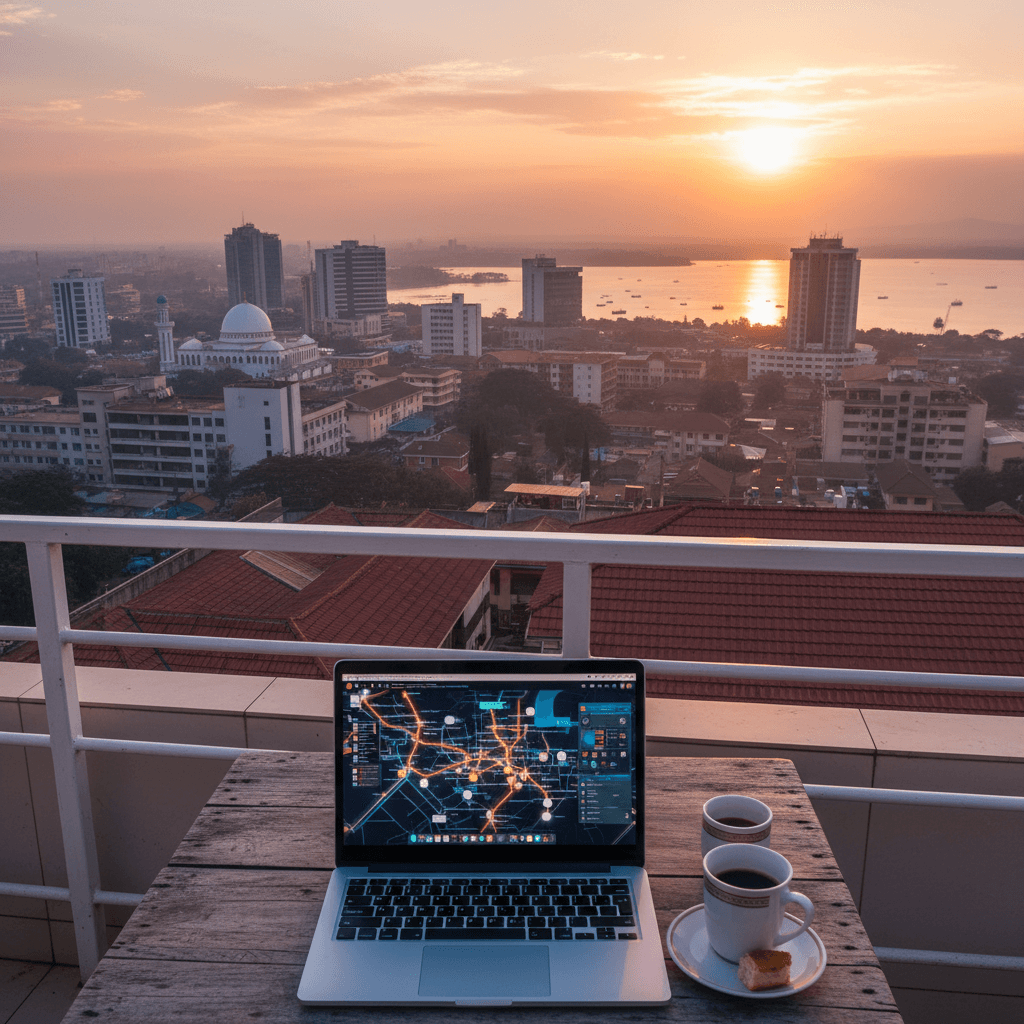
Entebbe
🇺🇬 Uganda
Entebbe isn't your typical African capital spillover. While it sits just 37km southwest of the chaotic energy of Kampala, it feels like a different world entirely. This is a peninsula town defined by the rhythms of Lake Victoria, where the air is noticeably cooler and the pace of life slows down to a manageable crawl. It serves as the gateway to the country, but for a growing community of remote workers and UN professionals, it's much more than a transit point. It's a place where you can start your morning with a round of golf at the Entebbe Golf Club, the oldest course in East Africa, and end it watching the sunset over the water with a cold Nile Special.
The Local Vibe
The atmosphere here is a unique blend of colonial history, high-level diplomacy, and tropical relaxation. Because it hosts the State House and the UN Regional Service Center, the town is exceptionally well maintained and secure. You'll find a professional yet laid back environment where expats and locals mingle in lakeside cafes. It lacks the intense nightlife of Kampala, but it trades that for lush greenery, botanical gardens, and a sense of quiet privacy that's hard to find in other regional hubs. Most nomads find the 25°C year round weather nearly perfect, though you'll need to prepare for heavy tropical downpours during the rainy seasons in April and November.
What It Costs
Living here is remarkably affordable for the quality of life provided. A mid range monthly budget typically hovers around $1,545. This covers a comfortable lifestyle without much compromise. If you're looking to stretch your budget, you can get by on $1,000 by sticking to local markets and shared housing. For those wanting a private villa and frequent upscale dining, $2,500 or more will provide a truly luxury experience.
- Housing: A 1BR apartment in a central area usually runs between $400 and $600, while quieter outskirts can drop to $300.
- Food: A local Rolex (chapati and egg roll) from a street vendor costs about $2, while a meal at a popular spot like Faze 3 Lounge is around $10.
- Transport: Boda-boda rides across town are usually $1 to $3, and a private taxi to the airport is roughly $15.
Where to Set Up Base
Most nomads gravitate toward Airport Road or the central district. It's the most walkable part of town and keeps you close to the best cafes and the UN community. It's secure and convenient, though you'll pay a premium for rent. If you prefer nature over convenience, the Lake Victoria Shores near the Botanical Gardens offer a resort like feel. It's quieter and scenic, but you'll deal with more mosquitoes and fewer shopping options.
Connectivity and Work
Internet speeds average around 9 Mbps. While it's not lightning fast, it's stable enough for Zoom calls and standard remote tasks. There aren't many dedicated coworking spaces in Entebbe yet, so most people work from home or head to Java House, which is the gold standard for reliable WiFi and good coffee. For serious deep work, some nomads make the trek to Kampala to use spaces like Outbox or Switch Coworking. For mobile data, grab a SIM from MTN or Airtel at the airport for about $5; it's often more reliable than hotel WiFi.
Getting Around and Staying Safe
Entebbe is one of the safest towns in Uganda. You can walk around the central areas during the day without a second thought, though it's best to use the SafeBoda or Uber apps after dark rather than walking alone. For longer trips to the capital, Matatus (minibuses) cost about $1 and run constantly along the main road. If you need medical care, the International Clinic Entebbe is the standard choice for expats and provides high quality service.
The real magic of Entebbe is in the small moments. It's the ease of grabbing a boat to Gamba Island for a weekend escape or the simple pleasure of a morning walk through the Botanical Gardens. It's a town that rewards those who aren't in a rush, offering a professional environment that actually feels like a getaway.
Entebbe is a rare find for nomads who want the tropical ease of Lake Victoria without the frantic energy of Kampala. It feels more like a sprawling garden than a transit hub, despite being home to the country's main airport. You'll find a professional yet laid-back crowd here, largely due to the presence of the UN Regional Service Center and various government offices. It is the kind of place where your morning "commute" might involve dodging a stray vervet monkey on your way to a lakeside cafe.
The Monthly Budget
Living comfortably in Entebbe usually rounds out to about $1,545 per month. This covers a mid-range lifestyle where you aren't counting every shilling but aren't living in a luxury resort either. If you are on a tighter budget, you can scrape by on $1,000 by sticking to local matatus for transport and eating more street food. On the flip side, $2,500 a month gets you into high-end villas and frequent dinners at upscale spots like Faze 3 Lounge.
- Studio or 1BR Apartment: Expect to pay between $500 to $900 for furnished 1BR in expat areas. Moving further out can drop your rent to around $300.
- Dining: A local Rolex (an omelet rolled in a chapati) costs about $2. A solid meal at a mid-range restaurant is roughly $10, while a high-end dinner will run you $20 or more.
- Transport: Boda-bodas (moto-taxis) are the lifeblood of the town, costing $1 to $3 for most trips. If you prefer four wheels, Uber and SafeBoda are your best bets for reliable pricing.
Where to Plant Your Flag
Most expats and nomads gravitate toward Airport Road or Central Entebbe. It’s the most walkable part of town, keeping you close to the Entebbe Golf Club and the main shopping centers. You’ll pay a premium for the security and convenience, but it’s the easiest place to find a consistent community.
If you want a view of the water, look toward the Lake Victoria Shores near the Botanical Gardens or Kitolo. It’s quieter and feels like a permanent vacation, though you’ll want plenty of insect repellent for the evening mosquitoes. Those who need more frequent access to the capital’s networking events often stay on the Nakasero outskirts, which cuts down the trip to Kampala but adds a bit of urban noise to your morning.
Work and Connectivity
Internet speeds hover around 12 Mbps. It’s enough for Zoom calls and standard remote work, but it’s wise to have a backup. Most nomads use MTN or Airtel for mobile data; a 10GB starter pack is only about $5. If your apartment's WiFi flutters, head to Java House. It’s a reliable standby for nomads because the coffee is good and the connection is steady.
Dedicated coworking spaces are still catching up in Entebbe. Many people make the trek to Kampala for spaces like Outbox or Switch Coworking, which cost about $10 for a day pass. Locally, the trend is "pop-up" style working in cafes or resort lobbies. For banking, Stanbic Bank ATMs are the most reliable for international cards, and MTN MoMo (mobile money) is used for almost everything from utility bills to grocery runs.
Safety and Health
Entebbe is generally considered safer than Kampala. The heavy security presence near State House and the UN base keeps petty crime lower than in other urban areas. That said, don't wander lonely stretches of beach after dark. For medical needs, International Clinic Entebbe and Lake Victoria Hospital are the standard choices for expats, offering professional care and well-stocked pharmacies.
Practical Logistics
- Seasonality: The best weather hits from June to September. Avoid April if you can, as the heavy rains can turn dirt roads into mud tracks and lead to occasional power outages.
- Language: English is the official language and is spoken everywhere. Learning a few words of Luganda, like "Webale" (thank you), goes a long way with locals.
- Sourcing a Flat: Skip the formal agencies and check Jiji.ug or Facebook groups like "Uganda Expats Guide." Word of mouth at the Entebbe Golf Club is also a surprisingly effective way to find a lead on a rental.
The Digital Nomad: Airport Road and Central Entebbe
If you need to be where the action is, Central Entebbe is your best bet. This area feels the most "connected" because it hosts the UN Regional Service Center and major government hubs. It is the most walkable part of town, meaning you can easily hop between your apartment, the Entebbe Golf Club, and various cafes without needing a ride every ten minutes.
Most nomads gravitate toward spots like Java House for reliable WiFi and a professional atmosphere. While dedicated coworking spaces are still popping up, the cafe culture here is strong enough to sustain a 40 hour work week. You will find the highest concentration of fellow remote workers here, usually swapping tips on the best 4G signal boosters or local networking events.
- Monthly Rent: Expect to pay $500 to $600 for a decent one bedroom apartment.
- Internet: Reliable 4G/5G coverage; average speeds around 12 Mbps.
- Vibe: Professional, secure, and conveniently close to the airport for quick weekend getaways.
- Downside: Traffic can get heavy during peak hours, and rents are the highest in the city.
The Long-Term Expat: Kitolo and Lake Victoria Shores
Expats who plan to stay for a year or more often head toward the lakefront. Areas near the Botanical Gardens or Kitolo offer a much more relaxed, scenic lifestyle. It feels less like a transit hub and more like a tropical retreat. You will be trading some of the central convenience for better air quality and immediate access to the water.
The social life here revolves around the beach resorts and the Golf Club. It is common to spend Saturday afternoons at Faze 3 Lounge, where you can grab a solid meal for about $10 while looking out over the lake. Most expats in this area use SafeBoda to get into the center of town, which usually costs between $2 and $5 depending on the distance.
- Monthly Rent: Range of $400 to $600 for mid-range housing.
- Food: Easy access to fresh lake fish and local markets; mid-range dining averages $12 per person.
- Vibe: Quiet, green, and breezy.
- Downside: Mosquitos are more prevalent near the water, so a good net and repellent are non-negotiable.
Families and Slow Travelers: The Quiet Outskirts
For those traveling with a family or looking for a slower pace, the outskirts toward the Kampala-Entebbe Expressway offer more space for your money. You can find larger properties and private villas that provide the "comfortable" lifestyle tier for around $2,500 a month, including a car rental and private help. These areas are much quieter than the central district, making them ideal if you don't mind a short commute for groceries or social outings.
Parents often appreciate the proximity to the Uganda Wildlife Education Centre and the Botanical Gardens, which provide plenty of outdoor space for kids. While you are further from the main coworking hubs, the peace and quiet make for a great home office environment if you have a stable router and a power bank for the occasional outage.
- Monthly Rent: $300 to $500 for modest homes; $1,500+ for large private villas.
- Transport: A personal car or frequent use of ride-hailing apps is recommended.
- Vibe: Suburban, residential, and very private.
- Downside: Limited walking access to shops and higher reliance on transport apps.
The Budget Solo Traveler: Near the Matatu Stages
If you are watching your wallet, staying near the main transport arteries allows you to live the "Budget" lifestyle for roughly $1,000 a month. By using Matatus (minibuses) to get around, you can reach Kampala for about $1. You will likely be eating more street food, like the famous Rolex (a chapati and egg roll), which costs a mere $2 to $4 and is a staple of the local diet.
Solo travelers find it easy to meet people in these more densely populated areas. Shared housing options are more common here, and you will be closer to the local markets where your Ugandan Shillings go much further. It is a more authentic, "boots on the ground" experience of Ugandan life.
- Monthly Rent: $300 to $400 for simple studio apartments.
- Daily Costs: Street meals for $3; local transport for under $2.
- Vibe: High energy, local, and very affordable.
- Downside: It can be noisy, and you will need to be more mindful of your surroundings after dark.
Connectivity on the Lake
Working from Entebbe feels more like a retreat than a typical office grind. While the average download speed clocks in around 12 Mbps, it is consistent enough for video calls and standard remote tasks. You won't find the lightning fast fiber common in European hubs, but the stability is surprisingly reliable for a lakeside town.
Mobile data is your best friend here. Most nomads skip the hotel WiFi and tether to a local 4G or 5G connection. You can pick up a SIM card from MTN or Airtel right at the airport or at various shops along Airport Road. A 10GB data pack costs roughly $15 to $25, and the coverage remains strong throughout Central Entebbe and the UN corridor.
If you're staying for more than a week, look into an eSIM via RoamJet. It saves you the hassle of swapping physical cards and keeps you connected the moment you touch down. Just remember to pack a high quality power bank. While the grid is generally stable, local maintenance can cause occasional afternoon outages, and you don't want your laptop dying mid-meeting.
Coworking and Work-Friendly Cafes
Dedicated coworking spaces are still a relatively new concept in Entebbe. Most professionals and digital nomads gravitate toward the town's growing cafe culture or the business centers within the larger resorts. If you need a formal office environment with high speed backups, many people make the trek to Kampala to use Outbox or Switch Coworking, where day passes run about $10.
For a more local, relaxed vibe, these spots are the go-to for the nomad community:
- Java House: Located at Victoria Mall, this is the gold standard for remote work in town. The WiFi is free with your coffee, there are plenty of power outlets, and the air conditioning is a lifesaver on humid afternoons.
- Faze 3 Lounge: Perfect for those who want a view of the lake while they type. The atmosphere is quiet during the day, and the $10 lunch specials make it an affordable "office" for the afternoon.
- Entebbe Golf Club: A favorite for expats and UN staff. It offers a professional, quiet environment where you can work from the veranda between rounds of golf.
Digital Nomad Costs & Logistics
Living and working here is remarkably affordable compared to neighboring Kenya or Rwanda. Most nomads find that a monthly budget of $1,545 allows for a very comfortable lifestyle, including a private apartment and frequent dining out.
Typical Monthly Work Expenses
- Coworking Membership (Kampala-based): $100 to $200
- Mobile Data (30GB+): $15 to $25
- Coffee/Cafe workspace daily spend: $5 to $12
- Mid-range 1BR Apartment: $400 to $600
When you're looking for a base, focus on Central Entebbe or the area near Airport Road. These neighborhoods house the majority of the expat population and the UN Regional Service Center, meaning the infrastructure is prioritized. You'll find better power stability and more reliable signal strength here than in the quieter outskirts like Kitolo.
For payments and transfers, Wise works well for moving money into the country. Once you're on the ground, MTN MoMo (mobile money) is the local currency. You can pay for almost everything, from your groceries to your SafeBoda rides, directly from your phone. It's often more convenient than hunting for a Stanbic Bank ATM every few days.
Staying Safe in the Peninsula
Entebbe is widely considered one of the safest spots in Uganda, largely because it hosts the State House and a significant UN presence. The vibe here is much more relaxed than the frantic energy of Kampala, and you'll notice a heavy security presence in central areas that keeps opportunistic crime low. Most nomads feel comfortable walking around central neighborhoods like Airport Road during the day, though it's always smart to take a SafeBoda or an Uber if you're heading home after dark.
While the city is generally peaceful, you should be cautious around isolated stretches of the Lake Victoria shoreline at night. Some of the quieter beaches can be poorly lit, making them spots to avoid once the sun goes down. Stick to well known areas like the Entebbe Golf Club or established beach resorts for evening drinks. If you're exploring the outskirts near Wakiso, keep your belongings secure and stay aware of your surroundings, as these areas don't have the same level of patrol as the town center.
- Emergency Police: Dial 999
- Ambulance Services: Dial 112
- Local Tip: Keep a power bank on you. Since street lighting can be inconsistent during occasional power outages, having a charged phone for navigation and ride hailing is a must.
Healthcare and Medical Facilities
For routine issues or minor emergencies, Entebbe is well equipped to handle expat needs. International Clinic Entebbe (ICE) is a go to for many in the international community, offering a standard of care that aligns with what most Western travelers expect. Lake Victoria Hospital is another reliable option for more urgent medical attention. Both facilities are accustomed to dealing with travel insurance and international patients.
Pharmacies are easy to find and generally well stocked. Nakasero Pharmacy is a trusted name if you need to pick up prescriptions or basic first aid supplies. While many over the counter meds are available, it's a good idea to bring a supply of any specific chronic medications from home, as brands can vary locally. Expats often suggest keeping a small kit of malaria prophylactics and high quality insect repellent, especially if you're spending time near the Botanical Gardens or the lake, where mosquitoes are most active.
Health Essentials for Nomads
- Water Safety: Don't drink the tap water. Stick to bottled water, which is cheap and available at every corner shop, or use a high quality filtration bottle.
- Vaccinations: You'll need your Yellow Fever certificate to enter the country. Most doctors also recommend being up to date on Hepatitis A and Typhoid.
- Insurance: Make sure your policy covers medical evacuation to Nairobi or South Africa for serious procedures, as local facilities have limits for complex surgeries.
- Malaria: It is a reality here. Most long term residents rely on nets and repellent rather than daily pills, but talk to a travel clinic before you arrive to decide on your strategy.
Overall, the health and safety risks in Entebbe are manageable with a bit of common sense. The presence of the UN Regional Service Center means the local infrastructure for emergencies is better than in many other towns of this size. You'll find that as long as you respect local customs and avoid unlit areas at night, your stay will be remarkably hassle free.
The Entebbe Commute: Relaxed and Reliable
Unlike the chaotic, exhaust-filled streets of Kampala, getting around Entebbe feels surprisingly manageable. The town is laid out with a logic that rewards walkers in the central districts, while the outskirts rely on a mix of digital apps and local staples. Most nomads find that once they've settled into the central Airport Road or Kitolo areas, their daily radius stays small and stress-free.
Public Transport and Ride-Hailing
The backbone of local travel is the matatu (minibus) and the boda-boda (motorcycle taxi). While matatus are incredibly cheap for getting between Entebbe and the capital, they aren't always the most efficient for short hops within town. For daily errands, expats and nomads lean heavily on SafeBoda. It's the gold standard app here; it provides transparent pricing, tracked rides, and drivers who actually carry spare helmets for passengers.
- SafeBoda/Uber: Expect to pay between $2 and $5 for most trips across town. While Uber is emerging, SafeBoda remains the more reliable platform for quick moto-taxis.
- Matatus: These frequent Airport Road and the main highway. A seat to Kampala costs roughly $1, though the 37km trip can take anywhere from 45 minutes to two hours depending on traffic at the city entrance.
- Airport Transfers: Official yellow taxis at the terminal charge between $10 and $15 to reach most central guest houses. It's smart to pre-book via an app or your accommodation to avoid the "tourist tax" at the arrivals gate.
Walking and Cycling
Central Entebbe is one of the few places in Uganda where walking is actually pleasant. The streets near the Entebbe Golf Club and the UN Regional Service Center are paved, shaded by old trees, and relatively quiet. It's a different story on the outskirts or near the informal settlements in Wakiso, where sidewalks disappear and the dust picks up.
If you want more freedom, look into bike rentals. Several local shops near the Botanical Gardens rent out mountain bikes for about $10 a day. It's the best way to scout out lakeside cafes or reach the quieter beaches without haggling over prices every time you move.
Navigating by Water
Since Entebbe is a peninsula, some of your "getting around" might involve Lake Victoria. If you're heading to Ngamba Island or various lakeside resorts, you'll be using motorized canoes or speedboats. A boat hire to nearby islands typically starts around $20, depending on your negotiation skills and the size of the vessel. Always check for life jackets before pushing off; the lake's weather can shift quickly.
Practical Transport Costs at a Glance
- Boda-boda ride (short): $1 to $2
- Private Hire (Taxi/Uber) across town: $5 to $8
- Monthly Fuel: $1.50 per liter if you choose to rent a car
- Bicycle Rental: $10 per day
- Matatu to Kampala: $1
Most long-term residents suggest keeping a power bank in your bag if you rely on apps for transport. While 4G coverage is decent, a dead phone can leave you stranded in a neighborhood where you don't know the local landmarks. For those planning to stay several months, buying a second-hand scooter is a popular move, though you'll need to stay alert for the occasional infrastructure inconsistencies like sudden potholes or unlit stretches of road after dark.
English and the Local Lingo
You won't have much trouble being understood in Entebbe. English is the official language and it is the primary medium for business, government, and education. Because the town hosts the UN Regional Service Center and the international airport, the level of English proficiency is exceptionally high compared to more rural areas. Most nomads find they can handle everything from lease negotiations to ordering a $2 Rolex at a roadside stall without a translator app.
While English gets the job done, the local heart of Entebbe beats in Luganda. The name of the town itself comes from the Luganda word for seat or chair. You'll hear it spoken in the markets and among friends at the beach. Learning a few words goes a long way in building rapport with the locals, who are famously polite and appreciative when visitors make an effort.
- Oli otya? (How are you?)
- Bulungi (I am fine)
- Webale (Thank you)
- Ssebo / Nnyabo (Sir / Madam)
- Kale (You're welcome / OK)
Digital Communication and Connectivity
Staying connected is relatively straightforward, though it requires a bit more strategy than in Europe or North America. Most expats recommend picking up a local SIM card immediately upon landing. You can find MTN and Airtel kiosks right at Entebbe International Airport. Expect to pay around $15 to $25 for 10GB data bundle. If your phone supports it, eSIMs via services like RoamJet are becoming a popular, hassle-free alternative for shorter stays.
Average WiFi speeds around 9 Mbps. While that is plenty for emails and Slack, it can be temperamental during heavy tropical downpours. Reliable fiber is slowly rolling out to high-end apartments near Airport Road, but many nomads rely on 4G or 5G mobile hotspots as a backup. Java House is a reliable fallback; the WiFi is generally stable and free with your coffee, making it a default office for many remote workers in town.
Social Etiquette and Networking
Communication in Uganda is deeply rooted in respect and formality. Greetings are not just a politeness; they are a requirement. If you walk into a shop or approach a Boda-Boda driver, always start with a "Good morning" or "How are you?" before diving into your request. Handshakes are the standard greeting, often lasting longer than you might be used to in the West.
For professional networking and meeting fellow nomads, the scene is intimate. Since there aren't many dedicated coworking spaces in Entebbe yet, social life revolves around the Entebbe Golf Club and lakeside lounges like Faze 3. Expats and UN staff often congregate here. If you're looking for a more tech-focused crowd, the "Digital Nomads Uganda" Facebook group is the best place to find pop-up meetups or to coordinate a shared car into Kampala for larger networking events.
Practical Tech Tips
- Translation: Google Translate works well for Luganda and Swahili, though the nuance of Luganda is better captured through conversation with locals.
- Mobile Money: Download the MTN MoMo or Airtel Money apps. In Uganda, mobile money is more common than credit cards for daily transactions like paying for groceries or a $3 SafeBoda ride.
- Power: Keep a beefy power bank charged. While the grid is decent, occasional outages can cut your router's life short right before a Zoom call.
- Banking: Use Stanbic Bank or ABSA ATMs for the most reliable international card withdrawals. Wise is the preferred method for most expats to move money into the country with low fees.
The Tropical Rhythm
Living on the equator means you won't see much variation in daylight hours, but Entebbe definitely has its own seasonal moods. The climate is tropical and humid, though the constant breeze off Lake Victoria keeps things from feeling oppressive. You can expect an average temperature of 25°C (77°F) year-round, which makes it a dream for nomads who want to ditch the winter coat for good.
The city operates on two distinct rainy seasons and two dry seasons. While it never gets truly cold, the rain can be intense enough to disrupt your afternoon plans or turn a quick boda-boda ride into a soggy ordeal. Most expats find that the weather dictates the social calendar more than anything else.
Peak Season: June to September
This is widely considered the best time to base yourself in Entebbe. These months are the driest and most pleasant, with temperatures hovering between 24°C and 28°C. It is the ideal window for exploring the Botanical Gardens or taking boat trips to Ngamba Island without worrying about a sudden downpour.
Because the skies are clear, the sunsets over the lake are particularly spectacular during this window. It is also the busiest time for tourism in Uganda, so expect slightly higher prices for short-term guesthouses and more foot traffic around the popular beach cafes near Airport Road.
The Low Season: March to May
If you aren't a fan of the rain, April is the month to avoid. This is the peak of the primary rainy season, and the showers can be heavy and persistent. While the rain usually comes in short, powerful bursts, it can lead to occasional power outages or muddy roads in the outskirts of town.
The silver lining for digital nomads is that the landscape becomes incredibly lush and green. If you're working from a covered porch or a lakeside cafe like Java House, the sound of the rain is actually quite therapeutic. You might also find better deals on long-term rentals during these months as the tourist crowds thin out.
The Short Rains: October to November
The second rainy season hits toward the end of the year. These rains are generally less intense than the spring deluge but can still catch you off guard. It is a transitional period where you will see a mix of brilliant sunshine and grey, overcast afternoons.
Expats living near the Lake Victoria shores often mention that mosquitoes become more active during these months. If you are staying in areas like Kitolo, make sure your accommodation has solid screens or a reliable net. It is also a good time to keep a light rain jacket in your bag if you are commuting toward the Kampala outskirts.
What to Pack
- Lightweight cottons and linens: The humidity is real, so breathable fabrics are your best friend.
- A sturdy umbrella or rain shell: Essential if you plan on being mobile during the shoulder seasons.
- Power bank: Heavy rain can sometimes lead to localized grid issues, so keep your laptop and phone topped up.
- Insect repellent: Especially important if you enjoy sundowners by the water.
- A light sweater: You won't need it often, but late nights by the lake can occasionally feel a bit brisk.
Seasonal Cost Snapshot
- Dry Season (June to Sept): Higher demand for accommodation; expect to pay $500 to $600 for a central 1BR.
- Rainy Season (March to May): Lower demand; you can often negotiate monthly rates down by 10% to 15%.
- Year-round Staples: A Rolex chapati roll stays a steady $2, and a cold Club beer is about $2 to $3 regardless of the clouds.
Living Costs and Budgeting
Entebbe is significantly more affordable than Nairobi or Kigali, though being the country's diplomatic and transit hub keeps prices slightly higher than rural Uganda. A monthly budget of $1,545 allows for a comfortable lifestyle, including a private apartment and frequent dining out. If you're on a tighter budget, you can get by on $1,000 by sticking to local markets and matatus for transport.
- Studio/1BR Rent: $400 to $600 in central areas; $300 to $500 on the outskirts.
- A "Rolex" (Street Food): $2 to $4 for this iconic chapati and egg roll.
- Mid-range Dinner: $8 to $12 at spots like Faze 3.
- Coworking/Data: $100 to $200 per month depending on your data needs.
Connectivity and Workspace
Internet speeds average around 12 Mbps. While this handles video calls and standard remote work, it can fluctuate during heavy rain. Most nomads skip the hunt for dedicated coworking offices in Entebbe, as the scene is still developing. Instead, they head to Java House for reliable WiFi and a professional atmosphere. If you need a serious office setup, a 45 minute trip to Kampala opens up options like Outbox or Switch Coworking for about $10 a day.
For your phone, grab a SIM card from MTN or Airtel right at the airport. A 10GB data pack costs roughly $5. For those who prefer digital setups, RoamJet offers functional eSIMs for the region. Always keep a charged power bank on hand, as brief power cuts are a reality of life here.
Neighborhood Guide
Choosing the right area depends on how much you value peace versus proximity to cafes. Central Entebbe is the most practical choice for those without their own wheels.
Airport Road and Central
- Best for: New arrivals and UN contractors.
- Pros: Very safe, walkable to the Entebbe Golf Club, and close to the main supermarkets.
- Cons: Highest rents in town, often reaching $500 or more for a modern one-bedroom.
Lake Victoria Shores (Kitolo)
- Best for: Nature lovers and slow travelers.
- Pros: Stunning views near the Botanical Gardens and a true resort feel.
- Cons: You will need to fight off more mosquitoes, and shopping options are limited.
Getting Around
The town is surprisingly walkable if you stay central, but you'll eventually need wheels. For quick trips, download SafeBoda. It's a ride-hailing app for motorbike taxis that provides helmets and tracked rides for about $1 to $3. For longer hauls to Kampala, Matatus (minibuses) cost about $1 and leave constantly from Airport Road. If you're heading to the airport, a private taxi usually charges $10 to $15.
Safety and Health
Entebbe is one of the safest urban areas in Uganda, largely due to the heavy presence of the State House and UN personnel. Violent crime is rare, but petty theft happens. Avoid walking alone on isolated beaches or dark stretches of road after sunset. For medical needs, International Clinic Entebbe and Lake Victoria Hospital are the standard choices for expats. Most basic medications are easy to find at Nakasero Pharmacy branches.
Cultural Etiquette
Ugandans are formal and exceptionally polite. Always start a conversation with a greeting like "Oli otya?" (How are you?) before asking for a price or directions. Handshakes are the standard greeting. When you're near the State House or government buildings, keep your camera tucked away, as photography in these zones is strictly prohibited. For payments, MTN MoMo (mobile money) is king. It's often easier than using a credit card for small daily purchases.
Need visa and immigration info for Uganda?
🇺🇬 View Uganda Country GuideHidden Gem
Worth the effort