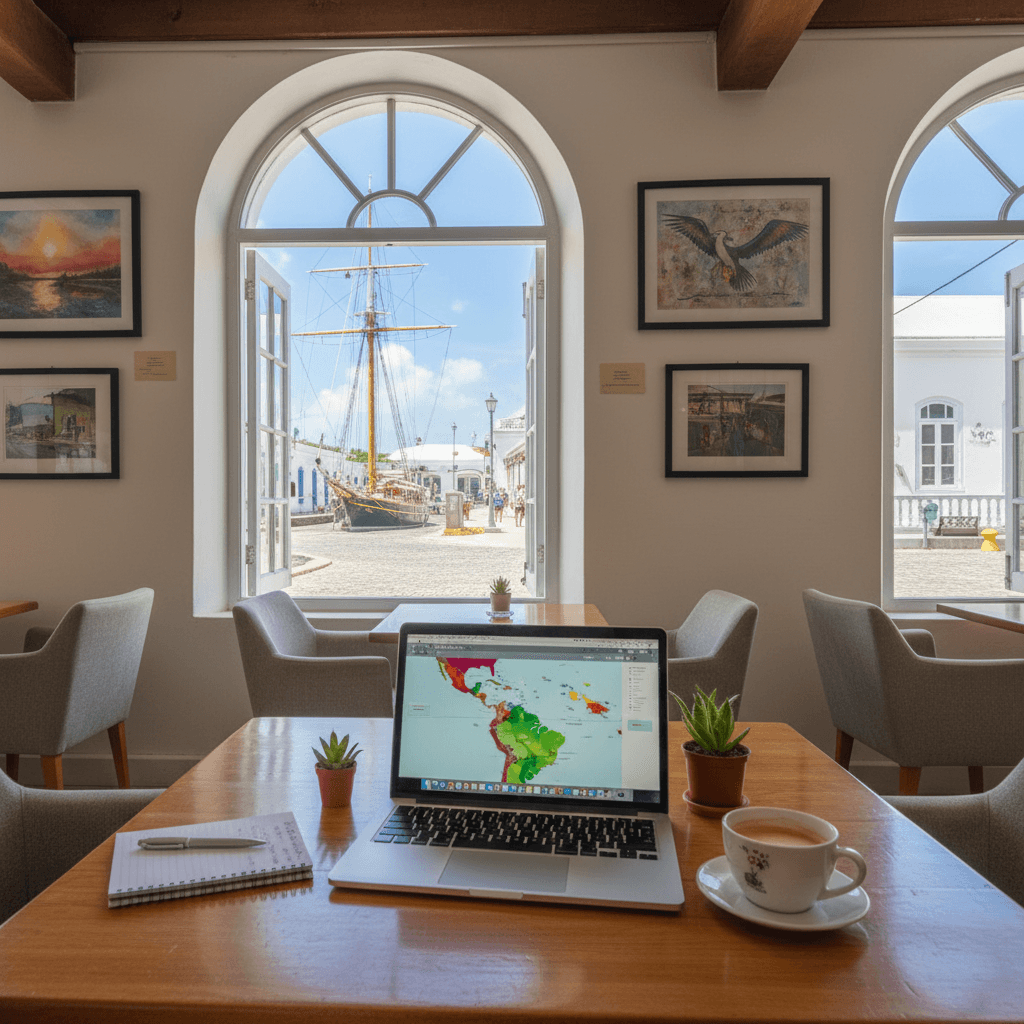
English Harbour
🇦🇬 Antigua and Barbuda
English Harbour is, honestly, unlike anywhere else in the Caribbean. It's a working historic port that happens to be gorgeous, centered on Nelson's Dockyard, a UNESCO-listed complex of Georgian stone buildings that still smells faintly of salt, rope and old wood. Yachts worth more than most houses bob in the marina just meters away from where 18th-century British naval officers once paced the same docks.
The vibe is upscale but not stuffy, nautical but not kitsch. You'll hear halyards clinking against masts in the morning, catch the smell of coffee drifting out of waterfront cafes before 8am and watch serious sailors in faded gear share bar space with remote workers on laptops by afternoon. That mix is, turns out, genuinely rare.
Most nomads who land here describe a specific feeling: like you've stumbled into a place that takes itself seriously without being pretentious about it. The crowd skews older and more affluent than your typical nomad hub, so don't expect a party-hostel scene or a scrappy startup energy. What you get instead is a concentrated, walkable pocket of good restaurants, reliable internet and people who've actually chosen to be here rather than just passing through.
It's not cheap. That's the real disclaimer. English Harbour is the most expensive corner of an already pricey island and you'll feel it immediately, from the menu prices to the accommodation listings. Budget travelers can make it work, but they'll be stretching.
The community can feel transient, which is worth acknowledging. Sailing season runs roughly November through April and the energy during those months is electric, the bars full, the marina packed, the conversations genuinely interesting. Off-season, things quiet down noticeably, some restaurants close or cut hours and the place takes on a slower, more local rhythm that some people love and others find isolating.
Falmouth Harbour sits right next door and is, frankly, the smarter base for most people. It's a five-minute walk from English Harbour's highlights but rents run lower and the atmosphere is slightly less performative. Long-term expats almost always recommend starting there rather than committing to English Harbour proper right away.
What makes this place stick with people isn't the heritage or the yachts. It's the specific combination of beauty, history and actual functionality, which, surprisingly, is harder to find than it sounds.
English Harbour is, honestly, one of the priciest places to base yourself in the entire Caribbean. That's not a surprise given the superyachts and UNESCO heritage site out your window, but it's worth going in with eyes open. Budget travelers will find it a stretch; mid-range nomads will find it manageable if they're disciplined about dining out.
Housing is the biggest hit. Studios run $1,050 to $1,300 per month, one-bedrooms stretch from $1,100 to $1,900 and a two-bedroom in English Harbour proper will cost you $2,200 to $3,500. Falmouth Harbour, right next door, is slightly more forgiving on rent and still puts you within walking distance of the marina scene, most long-term nomads end up there once they realize the savings add up fast.
Food costs depend entirely on how often you wander into the waterfront restaurants. Local meals and street food run $8 to $15, mid-range dinners hit $15 to $30 per person and the upscale spots along the dockyard can push $40 to $80 without blinking. Groceries, turns out, are reasonable if you stick to basics, around $200 a month, but imported goods carry a stiff markup and the selection is thin compared to what you'd find in St. John's.
Transport is cheap, which helps offset everything else. The Route 17 minibus connects St. John's to Nelson's Dockyard for $1 to $3 a ride, taxis within the English Harbour area run $5 to $15 for fixed-zone trips. A car rental gives you real freedom on the island, it's not cheap either, factor in $50 to $80 per day if you go that route.
Coworking runs $8 to $15 a day or $150 to $300 a month for a dedicated desk. Many nomads just work from the waterfront cafes, the WiFi is frankly decent enough most days.
Here's the realistic monthly breakdown:
- Budget tier: $1,500 to $2,000 (shared housing, street food, minibus only)
- Mid-range: $2,500 to $4,000 (one-bedroom, mixed dining, occasional taxis)
- Comfortable: $4,500 and up (two-bedroom, regular restaurant meals, car rental)
Most nomads land somewhere in the mid-range and find it sustainable, the lifestyle justifies the cost for a few months, though few stay indefinitely once the novelty of the dockyard wears off.
English Harbour and Falmouth Harbour are, honestly, the same neighborhood in practice. They sit side by side on Antigua's southern tip, connected by a short walk past clanging rigging and the faint smell of salt and diesel from the marina. Most people don't bother distinguishing between them, they just say "the harbour" and everyone knows.
For Digital Nomads
English Harbour is the prestige pick. You're paying for the atmosphere, the waterfront cafes with decent WiFi and the concentration of people who are also working remotely or running something location-independent. Falmouth Harbour is the smarter move financially, rents run lower and you're still a five-minute walk from everything. Two-bedroom apartments in English Harbour proper run $2,200 to $3,500 a month, Falmouth comes in noticeably cheaper for comparable space.
The community here is transient, turns out that's both a feature and a flaw. You'll meet interesting people constantly, but don't expect deep roots. Most nomads cycle through for a season.
For Expats
Long-term expats who want proximity to the sailing scene without paying English Harbour's premium tend to land in Falmouth or push slightly further toward Jolly Harbour on the west coast, where two-bedrooms average around $2,600 a month and the marina community is tight-knit. St. John's is the practical choice if you want supermarkets, pharmacies and actual urban infrastructure within walking distance, it's less than 20 minutes from the southern harbours by car and noticeably cheaper across the board.
For Families
Families, frankly, don't have many options in English Harbour itself. It's a small, bar-heavy waterfront area, not a residential neighborhood with schools and playgrounds. Hodges Bay and Cedar Grove near the airport are where most expat families settle, premium rents in the $2,400 to $2,600 range for two bedrooms, but quieter streets and better access to the international school. Dickenson Bay is another option, beautiful beach access, though dining and housing costs are high.
For Solo Travelers and Short Stays
Skip the guesthouses scattered around St. John's and stay in English Harbour. The concentration of restaurants, bars and the Nelson's Dockyard area makes it walkable in a way that almost nowhere else on the island is and that matters when you don't have a car. Budget travelers should look at Falmouth, it's the same vibe, lower prices, no sacrifice on location.
English Harbour's internet is, honestly, better than you'd expect for a small Caribbean harbour town. Average download speeds around 20-30 Mbps, upload 10-15 Mbps based on recent tests, which is plenty for video calls, large file transfers and the occasional frustrated Slack message. The general island average is closer to 16 Mbps, so staying in English Harbour specifically does make a difference.
For mobile data, you've got two operators: Digicel and Flow. Both have decent coverage around the south coast. You can grab a SIM at V.C. Bird International Airport when you land, it's convenient, though you'll pay a premium for that convenience, buying from an official store on Market Street in St. John's runs noticeably cheaper. Prepaid data plans run $15 to $30 a month for a reasonable data allowance. If your phone supports eSIM, services like Hello offer plans from around $14.99 for 3GB, you get a QR code by email and activate it before you even clear customs.
Coworking is a mixed picture. In English Harbour specifically, the options are more boutique than corporate, catering to the sailing crowd and remote workers who want a harbour view more than a standing desk. Turns out, the cafe working culture here is strong enough that many nomads skip formal coworking altogether.
The waterfront spots around Nelson's Dockyard and Falmouth Harbour tend to have reliable WiFi and the kind of atmosphere where nobody bats an eye at a laptop, there's always someone nursing a coffee and staring at a spreadsheet between boat arrivals. That said, don't expect dead-quiet focus rooms or blazing fast speeds during peak hours when the marina fills up.
- Download speeds (English Harbour): ~20-30 Mbps
- Upload speeds: ~10-15 Mbps
- Mobile operators: Digicel, Flow
- SIM cost tip: Buy in St. John's, not the airport
- Prepaid data plans: $15 to $30 per month
Most nomads find the connectivity more than workable, the bigger frustration is finding a dedicated quiet space during regatta season when every seat in every cafe disappears fast.
English Harbour is, honestly, one of the safer spots in the Eastern Caribbean. Crime levels sit at moderate overall, but daytime safety scores are very high and most nomads who spend time here say they never feel threatened walking the waterfront or marina areas. Nights are fine too, though you shouldn't wander unlit back roads alone after a few drinks at the dockyard bars.
Mugging and robbery risk is low. That's not just tourist-brochure spin, the numbers back it up. Still, petty theft happens anywhere yachties and laptops congregate, so don't leave bags unattended at waterfront cafes and keep valuables out of sight in rental cars.
For emergencies, the numbers you need:
- Police, fire, ambulance: 911 or 999
- Antigua Barbuda Emergency Medical Services (ABEMS): +1 (268) 562-2434
- Sea rescue (ABSAR): +1 (268) 562-1234, critical if you're spending time on the water
The main public hospital is Sir Lester Bird Medical Centre in St. John's, about 30 minutes from English Harbour, with roughly 185 beds and a functioning emergency department reachable at +1-268-484-2700. It's adequate for serious emergencies, turns out, but expats consistently recommend going private if you can afford it. Adelin Medical Centre and Holberton Hospital both offer faster service and better facilities than the public system.
Closer to the harbour, Dockyard Pharmacy Plus is a five-minute walk from the marinas, which is genuinely convenient when you need something quickly. For a bigger selection, Woods Pharmacy and City Pharmacy in St. John's are well-stocked, though don't count on finding your specific prescription brand. Bring enough of any regular medication to last your stay, then some.
Health insurance isn't optional here. Medical evacuation to a facility in Barbados, Puerto Rico or Miami is expensive and it happens more than people expect, especially among the sailing crowd. Get a policy that covers inpatient care, outpatient visits, specialist access and medical evacuation before you land. Weirdly, many nomads skip this step because English Harbour feels so polished and safe, then scramble when something goes wrong. Don't be that person.
English Harbour is small. You can walk the dockyard area in under twenty minutes, so for day-to-day errands within the harbour itself, your feet are honestly enough. Once you need to leave, though, your options narrow pretty fast.
Renting a car is the move most long-term visitors make and it's easy to see why. The island's roads connect English Harbour to Falmouth, St. John's and the northern beaches, but public transport doesn't cover those routes on any schedule you can rely on. Most rental agencies require an Antiguan driving permit on top of your home license, which costs around $20 and takes about ten minutes to sort at the police station or through your rental company. Drive on the left, watch for speed bumps that appear out of nowhere and expect roads that, turns out, vary wildly in quality once you leave the main routes.
Public Buses
- Route: Route 17 runs between St. John's and Nelson's Dockyard
- Cost: $1 to $3 per ride
- Reliability: Infrequent, especially on Sundays and public holidays
- Vibe: Minivans, privately operated, no fixed timetable
Budget travelers use the buses, most nomads don't bother after the first week. The frequency is frustrating if you're trying to keep any kind of schedule and standing roadside in Caribbean heat waiting for a van that may or may not appear gets old fast.
Taxis
- Identification: Yellow license plates with "TX" prefix
- Pricing: Government-regulated fixed rates by zone, unmetered
- Typical cost: $5 to $15 within the English Harbour area
- Availability: Plentiful at the airport, hotels and cruise docks
Always confirm the fare before you get in, that's not a negotiation tactic, it's just how it works here. Drivers are, frankly, accustomed to tourists who don't ask and pay whatever's named at the end.
For water travel, water taxis run between English Harbour and Falmouth Harbour, which is handy given how close the two marinas sit. If you're on a boat or staying near one, this becomes a genuinely useful option. No car needed, no bus schedule to chase.
Good news first: English Harbour is an English-speaking destination, so there's no language barrier to worry about. The official language is English, it's been that way since British colonial rule and you'll have zero trouble communicating anywhere on the island.
That said, the local dialect is its own thing entirely. Antiguan Creole blends English with West African linguistic patterns and when locals are talking among themselves, the cadence and vocabulary can honestly catch you off guard. You'll hear dropped consonants, shifted vowel sounds and phrases that don't map cleanly to standard English. Most Antiguans switch effortlessly to standard English with visitors, so it's rarely a practical problem, but don't be surprised if your first few market conversations in St. John's leave you nodding along while understanding about 60% of what was said.
A few phrases you'll pick up fast:
- "Wha' happening?" Standard greeting, equivalent to "how's it going?"
- "Liming" Hanging out, doing nothing in particular. A high compliment if someone invites you to lime with them.
- "Chupse" A teeth-sucking sound expressing mild annoyance or dismissal. You'll hear it often, don't take it personally.
Communication culture here is, frankly, unhurried. Emails get answered when they get answered, phone calls are preferred over texts for anything logistical and showing up in person still works better than both. Expats who've been here a while will tell you to build extra time into any admin task that requires back-and-forth with a local business or government office. That's not a criticism, it's just the rhythm of the place.
Mobile connectivity is solid. Digicel and Flow are the two main carriers, both offer prepaid SIMs for around $15 to $30 a month for a data-focused plan. Buy your SIM in St. John's at an official store, not at the airport, turns out the airport kiosks charge noticeably more for the same product. eSIM options exist too, with services like Hello starting around $14.99 for 3GB, which works fine for a short stay.
WhatsApp is, weirdly, the default communication tool for everything here. Rental inquiries, restaurant reservations, taxi bookings. Download it before you land, you'll use it constantly.
English Harbour sits in Antigua's rain shadow, so it gets less rainfall than the north of the island. That's mostly a good thing. The dry season runs from December through April and those months are, honestly, as close to perfect Caribbean weather as you'll find anywhere: low humidity, temperatures hovering around 27°C (80°F) and a steady northeast trade wind that keeps things comfortable even in direct sun.
The high season peaks between January and March, which is also when the sailing crowd descends and prices spike accordingly. Book accommodation early if you're planning to visit during Antigua Sailing Week in late April or the Classic Yacht Regatta in May, rooms disappear fast and landlords know it.
May through November is hurricane season. Antigua sits south of the main hurricane belt, so direct hits are less frequent than on other islands, but the risk isn't zero, it's just lower. The wetter months are September and October, when you'll get heavy afternoon downpours that roll in fast, drench everything and clear within an hour. The air smells like wet earth and salt afterward, the streets steam a little, then it's done. Annoying if you're mid-hike up Shirley Heights, not a dealbreaker otherwise.
Summer months, June through August, are warm and humid but still manageable compared to somewhere like Barbados or St. Lucia. Temperatures rarely exceed 32°C (90°F). The trade winds, turns out, do a lot of heavy lifting.
Best times to visit by traveler type:
- Digital nomads doing a long stay: November to December hits a sweet spot, weather's improving, prices haven't peaked yet and the social scene around the harbour is picking up.
- Sailing and events: April and May for the regattas, though expect crowds and inflated rates.
- Budget travelers: June through August offers the lowest accommodation prices, the weather's fine, you just can't count on dry afternoons.
- Avoiding crowds: Early December or late April, shoulder season is genuinely pleasant here.
Most long-term expats say the weather is one of Antigua's strongest selling points and they're not wrong. It rarely gets cold enough to matter, the sun is reliable, the rain is dramatic but brief.
English Harbour isn't cheap and there's no point pretending otherwise. Budget at least $2,500 a month for a comfortable solo setup, less if you're sharing, more if you want a place with a view and AC that actually works.
Taxis don't have meters, they use government-regulated fixed rates by zone, so confirm the fare before you get in. Official cabs show "TX" on yellow plates, that's your signal you're not about to get ripped off. For cheaper daily movement, minibus Route 17 runs from St. John's down to Nelson's Dockyard for $1 to $3 a ride, it's slow and infrequent on Sundays, but it works.
For a SIM card, skip the airport kiosks. They're honestly overpriced for what you get. Head to an official Digicel or Flow store on Market Street in St. John's instead, you'll pay significantly less for the same prepaid data. Budget around $15 to $30 a month for a solid data plan, eSIM options through services like Hello start at around $14.99 for 3GB if you want something set up before landing.
Internet at the harbour is, turns out, better than most of the Caribbean. Expect around 80 Mbps down and 50 Mbps up at good spots. Cafe WiFi is reliable enough for most work and there are roughly 45 coworking spaces across Antigua with day rates starting at $8.
On safety: daytime is genuinely relaxed. Don't wander unlit areas alone at night though, common sense applies. The emergency number is 911 or 999 and for anything maritime, ABSAR picks up at +1 (268) 562-1234.
Healthcare is fine for minor issues. Dockyard Pharmacy Plus is a five-minute walk from the marinas and Sir Lester Bird Medical Centre in St. John's handles emergencies. That said, get private health insurance before you arrive, ideally one that covers medical evacuation, because the public system has real limitations.
- Pharmacies: Bring prescription meds from home; specific brands are often unavailable
- Cash: Keep Eastern Caribbean dollars (XCD) on hand; not everywhere takes cards
- Groceries: Budget around $200 a month for basics, more if you're not eating local
- Sundays: Many services run reduced hours, plan accordingly
Need visa and immigration info for Antigua and Barbuda?
🇦🇬 View Antigua and Barbuda Country GuideNomad Haven
Your home away from home