El Zonte
🇸🇻 El Salvador
The Bitcoin Beach Lifestyle
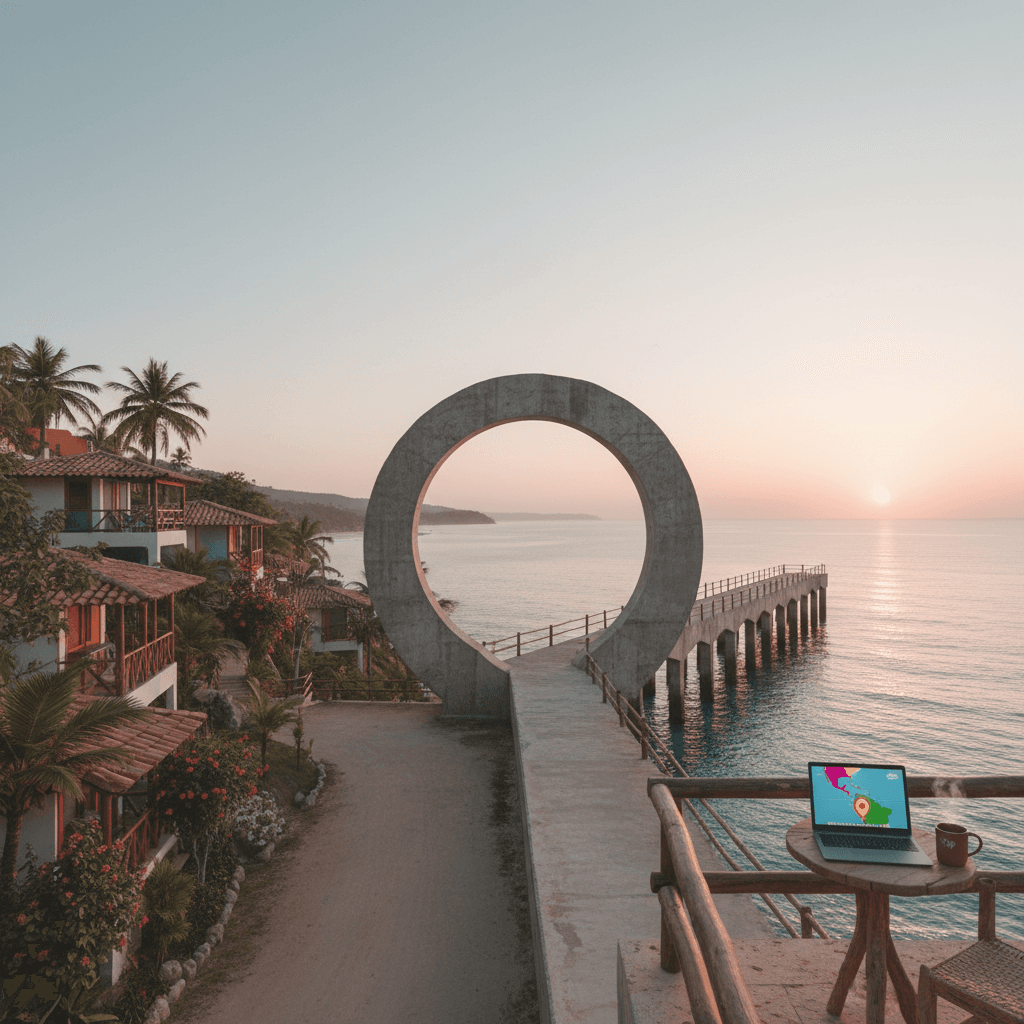
El Zonte isn't your typical tropical nomad hub. It feels like a social experiment that actually worked, where high-tech financial sovereignty meets a dusty, barefoot surf culture. Known globally as the birthplace of Bitcoin Beach, this small coastal village has transformed from a sleepy backpacker stop into a lighthouse for crypto enthusiasts and remote workers who want to live outside the traditional banking system. You'll see the orange Bitcoin logo on everything from high-end surf resorts to the local pupusa stands.
The vibe here is intentionally slow. Life revolves around the tides, the sunset, and the river mouth that splits the beach. Unlike the nearby party scene in El Tunco, El Zonte is where you go to actually meet people. It's a tight-knit community where you'll likely run into the same digital nomads at the Bitcoin Hardware Store or during a morning session at SAY ZONTE! surf school. It’s an organic, friendly atmosphere that feels more like a neighborhood than a tourist trap.
However, that charm comes with a reality check for heavy internet users. While the town is innovating rapidly, the infrastructure is still catching up. Most nomads find the WiFi at even the priciest beachfront villas can be temperamental. If your job requires six hours of seamless Zoom calls, you'll need a solid backup plan. Most experienced travelers here rely on Claro or Tigo SIM cards, which offer surprisingly fast 4G/5G data for about $15 to $20 a month.
What It Costs
El Zonte offers a wide spectrum of pricing, though beachfront real estate has climbed significantly as the town's popularity exploded. You can still live cheaply if you eat like a local, but if you want "Western" comforts and a view of the waves, your budget will reflect that.
- Budget ($800 to $1,200/month): Staying in shared spaces like The Pocket or Casa Mowgli and sticking to $1 to $2 pupusas and local buses.
- Mid-Range ($1,500 to $2,500/month): A private studio or 1-bedroom Airbnb (expect to pay $600 to $1,000) and dining at mid-range surf camps like Horizonte for $5 to $10 per meal.
- Comfortable ($3,000+ /month): Luxury beachfront villas, private surf coaching, and upscale dining at spots like K Lodge where dinner and drinks can run $20 to $30.
Where to Set Up Base
The town is compact enough to walk almost everywhere, but the "vibe" shifts depending on which side of the river you land on.
Central Bitcoin Beach
- Best For: Solos and first-timers who want to be in the heart of the action.
- Pros: Highly walkable, home to most Bitcoin-accepting shops, and the best place for sunsets and social meetups.
- Cons: Can get crowded during the December to April peak season; Airbnbs are the most expensive here.
Esencia Nativa / Outskirts
- Best For: Families and long-termers looking for a quieter pace.
- Pros: More affordable housing, a deeper local feel, and plenty of space.
- Cons: A bit of a trek to the main nomad hangouts; fewer organized meetups.
The Nomad Workflow
Dedicated coworking spaces are still a rarity here, so most people work from their rentals or surf camps. K Lodge is a favorite for those needing a "work-surf-eat" loop, offering some of the more reliable WiFi in town for a daily fee. For crypto-specific networking, the Bitcoin Hardware Store or community events are the place to be. If you find the beach internet too frustrating, many nomads take the 45-minute trip into San Salvador for a few days to knock out heavy projects in a more corporate environment.
Socially, it's hard to stay lonely. Between sea turtle releases, yoga classes, and the general "Bitcoin Beach Wallet" ecosystem, you'll find yourself chatting with locals and expats alike. It's a place that rewards those who show up with an open mind and a bit of patience for the occasional power outage or dropped signal.
The Price of Paradise and Crypto Innovation
Living in El Zonte is a study in contrasts. You can survive on a few dollars a day eating street pupusas, or you can drop a Silicon Valley paycheck on a luxury beachfront villa. While El Salvador is generally affordable, El Zonte's reputation as "Bitcoin Beach" has driven up prices for prime real estate. Most nomads find that a monthly budget between $1,500 and $2,500 allows for a comfortable lifestyle with a private studio and regular meals out.
The town operates on a dual-currency system. While the U.S. Dollar is the official legal tender, Bitcoin is woven into the fabric of daily life here. You'll want to download the Bitcoin Beach Wallet app as soon as you arrive. From buying a beer at a local tienda to paying for surf lessons, the Lightning Network makes small transactions seamless. For cash needs, the Bitcoin Hardware Store houses a Lightning ATM, though it's wise to keep some physical dollars for smaller vendors who haven't fully made the digital leap.
Monthly Budget Breakdowns
- Budget ($800 to $1,200): This tier is for the dedicated surfers and backpackers. You'll likely stay in shared dorms or simple guesthouses like The Pocket or Casa Mowgli. Your diet will consist heavily of $1 to $2 pupusas and local market finds.
- Mid-Range ($1,500 to $2,500): This is the sweet spot for most remote workers. It covers a private 1-bedroom studio (usually $600 to $1,000) and daily meals at spots like Horizonte Surf Camp, where a solid lunch runs $5 to $10.
- Upscale ($3,000+): For those wanting luxury, high-end beach villas and private estates are available. Dinner at the more refined beachfront spots will cost $15 to $25 per person, excluding drinks.
Housing and Neighborhoods
El Zonte is compact, so you're never more than a ten-minute walk from the waves. However, where you plant your surfboard matters for your wallet and your sleep quality.
Central Bitcoin Beach
- Best For: Solos and social nomads who want to be near the action.
- Rent: Expect to pay $800+ for decent Airbnb setups.
- Pros: Highly walkable, immediate access to the river mouth surf break, and the highest concentration of Bitcoin-friendly shops.
- Cons: It gets crowded during the high season from December to April, and the noise from local events can be a factor.
Esencia Nativa and Outskirts
- Best For: Families and travelers seeking a quieter, more authentic vibe.
- Rent: Slightly more affordable, with options often dipping below $700 for longer stays.
- Pros: More space, local neighbors, and a relaxed atmosphere.
- Cons: You'll be doing more walking or might need to rent a scooter for $20 a day to get into the main hub.
The Connectivity Catch
The biggest "cost" in El Zonte isn't always financial; it's the frustration of unreliable infrastructure. Even at pricey rentals, WiFi can be spotty. Savvy nomads treat their mobile data as their primary lifeline. Picking up a Claro or Tigo SIM card at the airport or in town is mandatory. Plans are cheap, usually $10 to $20 a month, and the 4G coverage is often more stable than the local fiber optics.
Dedicated workspace is limited. K Lodge is one of the few spots that successfully blends a surf vibe with a workable environment, offering day passes for $10 to $20. If you have a high-stakes meeting or a massive upload, many expats recommend making the 45-minute trek to San Salvador for the day to use more robust coworking facilities.
Transport and Practicalities
Getting around is remarkably cheap if you stick to the local "chicken buses," which cost about $0.50 to $1 for trips to La Libertad. If you prefer more comfort, a private shuttle from the airport typically runs $30 to $50. Within the village, your feet are your best assets, though bike rentals are available for roughly $10 a day at most surf shops. For healthcare, basic pharmacies are easy to find, but for anything serious, you'll be heading to the capital, where private clinics offer high-quality care at a fraction of U.S. prices.
Solos and Digital Nomads: Central Bitcoin Beach
If you're coming to El Zonte to plug into the local scene, the central river mouth area is where you'll spend 90% of your time. This is the heart of the Bitcoin Beach initiative, where the community vibe is thick and the walkability is high. Most nomads gravitate toward The Pocket or Horizonte Surf Camp, which offer a social atmosphere and easy access to the main surf break. You'll find the Bitcoin Hardware Store here, which serves as a de facto hub for anyone needing a Lightning ATM or a place to talk shop about crypto.
- Rent: Expect to pay $800 to $1,200 per month for a decent studio or a room in a shared villa.
- Vibe: High energy, social, and very surf-focused. You'll meet people at SAY ZONTE! during morning lessons or over sunset beers by the river.
- Connectivity: This is the catch. While it's the most social area, WiFi can be temperamental. Expats usually rely on Claro or Tigo SIM cards with data plans costing about $15 to $20 a month to tether during outages.
Remote Workers and Couples: The Beachfront Strip
For those with a higher budget who need a bit more "work" in their work-life balance, the properties along the beachfront strip provide the best views and slightly more professional setups. Places like K Lodge are popular because they attempt to bridge the gap between a surf resort and a workspace, offering healthy meals and more reliable internet for about $10 to $20 a day for drop-ins. It's quieter than the river mouth area, making it better for those who actually need to take Zoom calls without a soundtrack of crashing waves and barking dogs.
- Rent: Private villas and upscale apartments here often exceed $1,000 to $3,000 per month.
- Food: You're close to mid-range dining where meals run $15 to $25, but you can still find $2 pupusas just a short walk inland.
- Safety: It's generally very safe, though travelers advise against walking the more isolated stretches of beach alone after dark.
Families and Long-Termers: Esencia Nativa and the Outskirts
The outskirts of town, particularly the area around Esencia Nativa, offer a more authentic, residential feel that suits families or those staying for several months. It's less about the "crypto-bro" energy and more about the local Salvadoran pace of life. Casa Mowgli is a frequent recommendation for families needing extra bedrooms and a kitchen. While you're further from the main cluster of Bitcoin-only shops, the peace and quiet are a fair trade-off.
- Rent: You can find better value here, with larger homes occasionally dipping into the $600 to $1,000 range if you book well in advance.
- Transport: It's less walkable than the center. Many long-termers end up renting a scooter for around $20 a day or using the local buses, which are a steal at $0.50 for trips toward La Libertad.
- Healthcare: Families appreciate being within a 45 to 60 minute drive of the high-quality hospitals in San Salvador for any emergencies, though local pharmacies handle the basics.
Budget Travelers and Backpackers: Inland Pockets
If you're watching every penny, moving just one or two blocks back from the sand changes the price point significantly. The community is tight-knit enough that you won't feel left out of the action. You'll find small, locally-run guesthouses where you can live on $800 a month if you eat at the street stalls. This is the best way to experience the "real" El Zonte, away from the polished Airbnb rentals. You'll spend your days at the Bitcoin Beach Office or hanging out at the sea turtle releases, which are a major social pillar for the budget crowd.
- Food: Living on street food like pupusas and fresh seafood will keep your daily food spend under $10.
- Social: Most of the social life happens organically on the beach or at bonfire gatherings, so you don't need to stay at an expensive resort to be part of the scene.
- Practicality: Make sure to download the Bitcoin Beach Wallet app before you arrive; even the small fruit vendors and corner shops are set up for digital payments.
The Connectivity Reality Check
If you're heading to El Zonte, manage your expectations regarding the "digital" part of digital nomadism. While the town is famous for its forward-thinking Bitcoin Beach initiative, the physical infrastructure hasn't quite caught up to the hype. WiFi in beach areas is notoriously spotty, even at high-end properties and villas charging $1,000 a month. You'll find that many routers struggle with the salt air and occasional power flickers, making video calls a bit of a gamble during peak hours.
Most seasoned nomads here treat their phone's hotspot as their primary connection rather than a backup. You'll want to pick up a local SIM card immediately upon arrival. Claro and Tigo are the two big players, and you can grab a starter kit at the airport or in town for about $10. Data plans are affordable, usually running between $15 and $20 for a month of high-speed access. If your work depends on 100% uptime, have two different SIMs from different providers ready to go.
Coworking and Work-Friendly Spots
Dedicated coworking spaces are still a rarity in this part of El Salvador. Most people work from their surf camps or local cafes, which creates a social but sometimes distracting environment. If you need a more professional setup, your best bet is K Lodge. They've carved out a niche by blending the surf lifestyle with a functional workspace, offering relatively fast WiFi and healthy meal options to keep you fueled. Expect to spend $10 to $20 a day if you're using their facilities as a non-guest.
For those deeply embedded in the crypto world, the Bitcoin Beach Office is the local hub for networking and technical discussions. It's less of a traditional "quiet office" and more of a community center for the Bitcoin movement. If you find yourself facing a major deadline or a week of heavy Zoom calls, many nomads recommend heading 45 minutes inland to San Salvador. The capital has the fiber-optic reliability that El Zonte currently lacks.
Cafe Culture and Laptop-Friendly Hangouts
The "work from anywhere" vibe is alive at the various surf camps lining the beach. Horizonte Surf Camp is a popular choice; they often include WiFi and coffee with their lessons, and the staff is used to seeing people on laptops between sets. The Bitcoin Hardware Store is another unique spot where you can check your emails while using their Lightning ATM or chatting about the latest in digital payments.
- SAY ZONTE!: Great for a quick morning session with a coffee, especially if you're already there for surf lessons.
- The Pocket: A favorite for solo nomads who need a chill corner to knock out some admin work.
- Esencia Nativa: Located slightly further out, it offers a quieter atmosphere away from the main river mouth crowds.
Practical Tech Tips
Before you even unpack your laptop, download the Bitcoin Beach Wallet app. While you can certainly use cash, El Zonte is a living experiment in circular crypto economies. You'll find everyone from high-end hotels to street vendors selling $1 pupusas accepting BTC via the Lightning Network. It's often the fastest way to pay and earns you immediate respect from the local community.
Power surges can happen, especially during the rainy season from May to November. If you're carrying expensive gear, a small portable surge protector is a smart addition to your bag. Most cafes won't mind you plugging in, but outlets can be scarce in the older, more rustic buildings, so show up with a full charge if you're planning a long afternoon session by the waves.
Staying Safe in El Zonte
El Zonte has shed much of its old reputation along with the rest of El Salvador. Today, it feels more like a sleepy surf village than a high stakes destination. The Bitcoin Beach initiative has fostered a tight knit community where locals and foreigners generally look out for one another. Most nomads feel perfectly comfortable walking the main dirt roads during the day with a laptop bag or surfboard in tow.
That said, the town is still rustic. While violent crime is rare in the tourist zones, petty theft can happen if you leave valuables unattended on the sand while hitting the waves. Stick to the central beach areas after dark. The beachfront strip near the river mouth is well lit and social, but isolated stretches of coastline should be avoided once the sun goes down. If you're staying on the outskirts near Esencia Nativa, use a flashlight to navigate the uneven paths at night, mostly to avoid tripping or surprising the local wildlife.
For emergencies, you can dial 911 for police, ambulance, or fire. Most travelers find that common sense goes a long way here; don't flash large amounts of cash and keep your smartphone tucked away when you're not using it. The local vibe is "tranquilo," and as long as you respect the community, you'll likely find the same respect returned.
Healthcare and Medical Services
Don't expect a high tech hospital in the middle of town. El Zonte is served by small, basic pharmacies that carry essentials like bandages, painkillers, and antibiotics. For anything beyond a minor scrape or a stomach bug, you'll need to head out of town. The nearest reliable medical facilities are in La Libertad, about 25 minutes away, or San Salvador, which is a 45 to 60 minute drive depending on traffic.
- Private Clinics: San Salvador is home to high quality private hospitals that meet international standards. Expats often recommend Hospital de Diagnóstico for specialized care.
- Costs: A standard consultation at a private clinic usually runs between $40 and $60.
- Pharmacy Access: Local shops near the surf camps carry basic meds, but if you have a specific prescription, stock up in the capital before heading to the coast.
Ocean Safety and Wellness
In a town built on surfing, the biggest health risks are often found in the water. The currents at the river mouth can be strong, especially during high tide or large swells. If you're a beginner, booking a lesson with SAY ZONTE! or Horizonte Surf Camp isn't just about learning to pop up; it's about understanding the rocks and rip currents that aren't always visible from the shore.
Dehydration and heat exhaustion are the other silent killers of productivity. The tropical sun is intense, often hitting 90°F (32°C) during the dry season from December to April. Most nomads balance the heat by hitting the yoga mats at K Lodge or one of the beachfront villas in the early morning before the humidity peaks. Tap water isn't drinkable, so you'll be relying on "garrafones" (large water jugs) which cost about $2 to $3 for a refill at local tiendas.
Practical Peace of Mind
Since El Zonte is the birthplace of the Bitcoin Beach movement, you'll want the Bitcoin Beach Wallet app on your phone. It’s not just for the novelty; it’s a practical way to pay for everything from pupusas to surf wax without carrying heaps of physical cash. Many vendors actually prefer it, and it reduces the risk of losing your wallet while you're out exploring the sea caves or watching a turtle release.
For long term stays, join the local expat and nomad Facebook groups or WhatsApp chats. These are the best resources for finding out which private doctors are currently making house calls to the coast or where to find the fastest ambulance service if an emergency arises. In a small town like this, word of mouth is always faster than a Google search.
The Walkability Factor
El Zonte is a remarkably compact beach town. If you are staying in the central Bitcoin Beach zone near the river mouth, your primary mode of transportation will be your own two feet. Most of the surf camps, pupuserias, and community hangouts are within a ten minute walk of each other. The layout is simple and encourages a slow pace, though the unpaved paths can get muddy during the rainy season from May to November.
Public Buses (The Chicken Bus)
For trips outside the village, the local bus system is the most authentic and affordable way to travel. Buses run frequently along the coastal highway toward La Libertad and San Salvador. A ride usually costs between $0.50 and $1. While they are cheap and reliable for daytime travel, they can be crowded and lack air conditioning. Most nomads use these for quick supply runs to larger supermarkets in La Libertad, which is about a 20 to 30 minute ride away.
Ride-Hailing and Taxis
You won't have much luck with Uber in El Zonte. While the app works in the capital, drivers are sparse along the coast. Local taxis are available but aren't metered, so you will need to negotiate the price before getting in. Expect to pay $5 to $10 for short trips between neighboring beaches like El Tunco. For late-night returns when the buses stop running, these taxis are your only real option, as walking along the highway after dark isn't recommended.
Bikes and Scooters
If you want more autonomy without the hassle of a car, renting wheels is a popular move. Several surf shops and hostels offer daily rentals.
- Bicycles: Usually around $10 per day. These are great for reaching the sea caves or quieter stretches of sand on the outskirts.
- Scooters: Expect to pay $20 or more per day. A scooter is ideal if you want to scout different surf breaks like Punta Roca without relying on bus schedules.
Airport Transfers
The Monseñor Óscar Arnulfo Romero Airport (SAL) is roughly 45 minutes away from El Zonte. Most nomads skip the complicated bus transfers and opt for a pre-arranged shuttle or taxi.
- Private Shuttles: Usually cost between $30 and $50. You can often book these through your accommodation or via WhatsApp with local drivers.
- Bitcoin Payments: Many local drivers are part of the Bitcoin Beach ecosystem and will happily accept BTC via the Bitcoin Beach Wallet or any Lightning-enabled app.
Navigating with Tech
Since street signs are hit or miss, Google Maps is your best friend. However, since WiFi in town is notoriously spotty, download the offline map area for the Libertad department before you arrive. If you are using the Bitcoin Beach Wallet to pay for rides or rentals, ensure your Claro or Tigo SIM card has an active data plan, as you won't always find a signal near the beach shops. Most nomads find that a $15 to $20 monthly data plan is enough to keep them connected while moving around town.
The Local Lingo
Spanish is the heartbeat of El Zonte. While the town has gained international fame through the Bitcoin Beach movement, it remains a traditional Salvadoran fishing village at its core. You'll find that Spanish is dominant in daily life, from ordering pupusas at a roadside stand to chatting with surf instructors. English proficiency is growing among younger locals and those working directly in the tourism or crypto sectors, but it's far from universal.
Most nomads find that a "Gringo bubble" exists within the upscale surf camps and the Bitcoin Hardware Store, where English is common. However, once you step into the smaller tiendas or local eateries, you'll need at least a basic grasp of Spanish to get by comfortably. Expats recommend learning the essentials before arriving, as it goes a long way in building rapport with a community that prides itself on being tight-knit and friendly.
Digital Communication and Apps
In El Zonte, your smartphone is more than just a communication tool; it's your wallet. Download the Bitcoin Beach Wallet app before you arrive. This is the local standard for transactions, and you'll see QR codes for Lightning payments everywhere from high-end villas to tiny vegetable stalls. For general messaging, WhatsApp is the undisputed king. Locals, surf coaches, and landlords all use it for everything from booking a lesson to negotiating monthly rent.
Because the local accent can be fast and full of regional slang, travelers often rely on Google Translate with the offline Spanish pack downloaded. It's a lifesaver when you're trying to explain a specific dietary preference or discussing a technical issue with your WiFi router.
Staying Connected
Reliable internet is the Achilles' heel of El Zonte. While the vibes are high, the bandwidth often isn't. Even expensive beachfront properties struggle with spotty connections, and many nomads report that "high-speed" claims should be taken with a grain of salt. To mitigate this, getting a local SIM card is a non-negotiable step for anyone working remotely.
- Claro and Tigo: These are the primary providers. You can pick up a SIM card at the airport or in nearby La Libertad. Expect to pay around $10 for a starter kit and roughly $15 to $20 per month for a generous data plan.
- Mobile Data: Most remote workers use their phone as a hotspot when the house WiFi inevitably dips during a tropical afternoon rainstorm. 4G coverage is generally decent in the central Bitcoin Beach zone.
- Backup Workspaces: If your deadline is looming and the beach WiFi is failing, head to K Lodge or Hope House. These spots are known for having the most stable setups in town, often charging between $10 and $20 for a day pass.
Key Phrases for the Coast
You don't need to be fluent to show respect for the local culture. Using a few specific terms will help you blend in with the surfing and nomad crowd. "Buenas" is a versatile greeting you'll hear constantly when walking down the main strip. If you're heading to the waves, asking about the "marea" (tide) is a great conversation starter. When you're finished with a meal, "la cuenta, por favor" (the bill, please) is standard, though in El Zonte, you might just ask if they accept "Bitcoin" via the Lightning network.
Expect a slow, chill pace of communication. If a local tells you something will happen "mañana," it might mean tomorrow, or it might just mean "not today." Embracing this relaxed rhythm is part of the El Zonte experience. Most expats find that a smile and a patient attitude are just as important as knowing the right verbs.
The Tropical Rhythm
El Zonte operates on a simple, sun-drenched schedule. Because it's a tropical climate, you aren't choosing between "cold" and "warm," but rather between "dry" and "dusty" or "lush" and "humid." Most nomads find that the weather dictates their productivity; you'll likely find yourself working during the hottest midday hours and hitting the surf or the Bitcoin Hardware Store when the temperature dips.
Dry Season: December to April
This is the undisputed peak season for a reason. The sky stays a consistent, brilliant blue, and the rain almost entirely disappears. Expect daytime highs to hover around 85°F to 90°F (29°C to 32°C), while evenings cool down to a comfortable 70°F (21°C). It’s the best time for outdoor community events, beach bonfires, and sea turtle releases.
The trade-off for the perfect weather is the crowd. Digital nomads and surfers flock to the central Bitcoin Beach zone during these months, which pushes accommodation prices up. If you're looking at popular spots like The Pocket or Casa Mowgli, you'll need to book months in advance. Expect to pay $800 to $1,200 for a decent studio during this window.
Rainy Season: May to November
Don't let the "rainy" label scare you off. In El Zonte, the wet season usually means sunny mornings followed by intense, dramatic afternoon or evening thunderstorms. It keeps the landscape incredibly green and helps keep the dust down on the unpaved roads. Temperatures stay warm, averaging around 82°F (28°C), but the humidity definitely kicks up a notch.
This is the savvy nomad's favorite time to visit. The crowds thin out, and you can often negotiate better long-term rates on Airbnbs or at surf camps like Horizonte. While the humidity can make the lack of AC a dealbreaker for some, the cooling afternoon showers provide a natural respite from the heat. Plus, the surf remains world-class and consistent throughout these months.
The Surfer’s Calendar
While digital nomads focus on the rain, surfers focus on the swell. El Zonte is a year-round destination, but there are nuances to when you should paddle out:
- March to October: This is when the biggest south swells hit. It's prime time for experienced surfers, though beginners might find the river mouth a bit intimidating.
- November to February: The waves are generally smaller and more manageable. This is the ideal window for those taking lessons at SAY ZONTE! or looking for a more relaxed longboard vibe.
- Tides: Regardless of the month, high tide is generally the best time for the main point break. Most locals check the charts daily before planning their "deep work" blocks.
When to Visit: The Verdict
If you want the most social experience and don't mind paying a premium for a beachfront villa, aim for January or February. You'll find the most active nomad community and plenty of crypto-focused meetups during this time. The vibe is electric, and the sunsets over the Pacific are consistently world-class.
For those on a tighter budget who want a quieter, more "local" experience, May and June are the sweet spots. You’ll beat the heaviest rains of October, enjoy cheaper beer and pupusas, and won't have to fight for a seat with good WiFi at K Lodge or the Bitcoin Beach Office. Just make sure your laptop setup can handle a bit of extra humidity.
Making it Work in Bitcoin Beach
Living in El Zonte feels like being part of a small, experimental village where the future of finance meets a 1970s surf vibe. It is compact, dusty, and incredibly social. You will find yourself paying for a $1 pupusa with a Lightning wallet while watching world class surfers carve up the river mouth. While the lifestyle is idyllic, the infrastructure can be a bit of a gamble, especially if your job depends on heavy video calls.
The Connectivity Reality Check
Internet is the main gripe for nomads here. Even at high end beachfront rentals, WiFi tends to be spotty. Most remote workers rely on a Claro or Tigo SIM card as a backup. You can grab a starter kit for about $10 and load up monthly data for around $15 to $20. If you need a stable environment, K Lodge is the go to spot for a blend of surf and work, offering some of the most reliable speeds in town for a daily fee of $10 to $20. For a more tech focused vibe, the Bitcoin Beach Office or the Bitcoin Hardware Store are the local hubs for digital work and crypto networking.
Cost of Living Breakdown
Prices in El Zonte vary wildly depending on how close you are to the sand. While local life is cheap, the "nomad tax" on beachfront Airbnbs is real. Most mid range nomads budget between $1,500 and $2,500 per month to live comfortably.
- Budget ($800 to $1,200/month): Staying at hostels like The Pocket or Casa Mowgli, eating $2 street pupusas, and using the local bus.
- Mid Range ($1,500 to $2,500/month): A private studio or 1BR apartment for $600 to $1,000, eating at spots like Horizonte Surf Camp for $10, and occasional scooter rentals.
- High End ($3,000+/month): Private beach villas, upscale dining at $25 a plate, and private airport transfers.
Where to Plant Your Surfboard
The town is small enough to walk end to end in 15 minutes, but the vibe shifts slightly depending on where you stay.
- Central Bitcoin Beach: This is the heart of the action near the river mouth. It is the best area for solo travelers and those who want to be steps from the SAY ZONTE! surf school and community events. Expect to pay a premium for the convenience.
- Esencia Nativa / Outskirts: A bit quieter and more popular with families or long term backpackers. It is more affordable and has a local feel, though you will be walking a bit more to get to the main nomad meetups.
- Beachfront Strip: Ideal for couples and expats who want the view. While beautiful, it can get noisy with weekend crowds, and rents often top $1,000.
Safety and Logistics
The days of El Salvador being a "no go" zone are largely in the rearview mirror. El Zonte feels like a tight knit community where people look out for one another. That said, petty theft can happen. Don't leave your phone on a beach towel while you're in the water, and stick to the main lit paths if you're walking back to your rental late at night. For healthcare, there are basic pharmacies in town, but for anything serious, you'll need to head to La Libertad or San Salvador, which is about a 45 to 60 minute drive.
Getting Around and Settling In
You don't need a car here. The town is highly walkable, and the "chicken buses" to La Libertad cost less than $1. If you want more freedom, you can rent a scooter for about $20 a day. To hit the ground running, download the Bitcoin Beach Wallet app before you arrive. Many local shops, from fruit stands to surfboard repair shops, prefer it over credit cards. For cash, there is a Lightning ATM at the Bitcoin Hardware Store, but it is always smart to carry some physical USD for smaller vendors who haven't gone digital yet.
Weather and Timing
The dry season from December to April is the sweet spot. You will get consistent sun and temperatures between 75°F and 90°F. The rainy season from May to November brings high humidity and afternoon downpours, but the surf stays excellent year round. If you're coming for the community, aim for the dry season when the beach bonfires and turtle releases are in full swing.
Need visa and immigration info for El Salvador?
🇸🇻 View El Salvador Country GuideOff the Radar
Pioneer territory
Monthly Budget Estimates
More cities in El Salvador
Ataco
🇸🇻 El Salvador
Santa Ana
🇸🇻 El Salvador
Suchitoto
🇸🇻 El Salvador