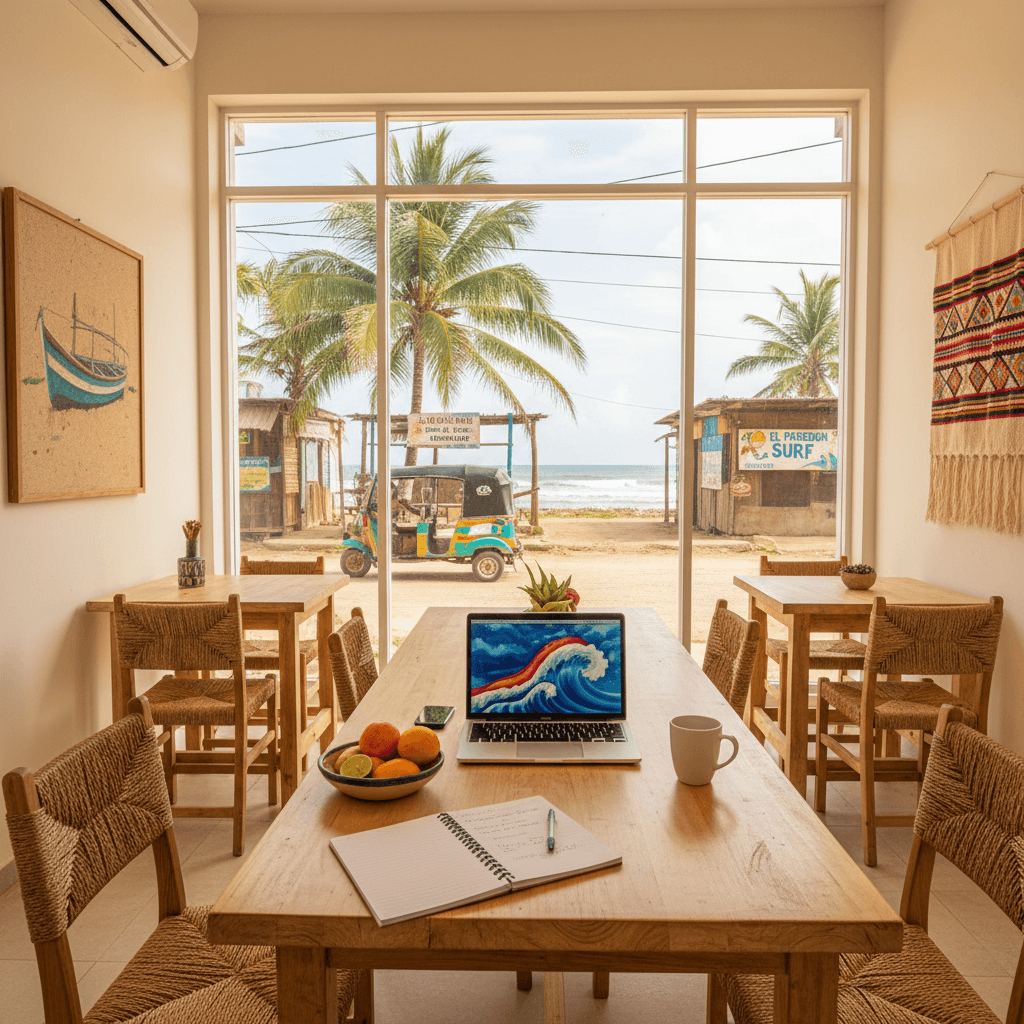
El Paredon
🇬🇹 Guatemala
The Vibe: Early Sayulita Energy
If you've spent time in the more polished surf hubs of Mexico or Costa Rica, El Paredon will feel like a step back in time. It’s a sleepy village on Guatemala’s Pacific coast where the paved road eventually gives way to dirt and the volcanic black sand stays hot enough to burn your feet by noon. The atmosphere is unpretentious and stripped back. Think thatched-roof surf houses, salt-crusted hair, and a community that measures time by the tide rather than a clock.
Most nomads who land here are looking for an "off-the-grid" lifestyle without actually being offline. It has that raw, up and coming energy often compared to Sayulita before the crowds arrived. You’ll find a mix of serious surfers, wellness seekers, and remote workers who don't mind a bit of humidity and the occasional power outage in exchange for world class sunsets and a $1,200 monthly budget.
The Living Experience
Life here is concentrated into one tiny village, El Paredon Buena Vista. You won't find distinct neighborhoods or gated communities. Instead, everything happens along the main beach strip and the few sandy blocks behind it. It’s an intimate setup where you’ll recognize everyone at the local cafe by day three. While families sometimes gravitate toward the quieter edges near La Choza Chula, most solo travelers and nomads stay right in the core for easy walkability.
The emotional pull of El Paredon is the forced slow-down. Since the WiFi now typically 10-50 Mbps or higher with upgrades like Starlink in some spots and can be temperamental, you’ll learn to work when the connection is strong and surf when it’s not. It isn't a place for high-intensity corporate types who need 24/7 fiber optic reliability. It’s for the person who wants to close their laptop at 5:00 PM and join the entire town on the sand for a beer as the sun drops into the Pacific.
Cost of Living Breakdown
While prices are rising as the town gains popularity, it remains one of the more affordable surf destinations in Central America. Most nomads find that $1,000 to $1,500 per month covers a comfortable lifestyle including a private room, daily cafe meals, and plenty of time on a board.
- Budget Tier ($1,000): Shared surf shacks or basic guesthouses for $300 to $500 a month, eating street food like pupusas or tostadas for under 50 GTQ per meal.
- Mid-Range ($1,200 to $1,400): A private one bedroom bungalow, regular sessions at spots like Cafecito del Mar, and a few surf lessons.
- Comfortable ($1,500+): Beachfront living, upscale dining at boutique hotels where meals hit 200 GTQ, and private shuttles for weekend trips.
Digital Nomad Logistics
Working from El Paredon requires a bit of strategy. There aren't any formal coworking spaces yet, so the "laptop lifestyle" happens in breezy cafes. Cafecito del Mar is the unofficial headquarters for people with MacBooks. Because the local WiFi can be flaky, travelers highly recommend picking up a TIGO SIM card in Escuintla or Sipacate before arriving. Having a backup data plan is the only way to ensure you don't miss a meeting during a village-wide outage.
Getting around is simple because you won't need a car. The village is entirely walkable. If you need to head further out, a tuk-tuk ride usually costs between 10 and 30 GTQ. For arrivals, most people take a shared shuttle from Guatemala City or Antigua for around 200 to 400 GTQ, a journey that takes roughly 2 to 3 hours depending on the coastal traffic.
Social Scene and Safety
The social life is centered around the water and the sunset. It’s incredibly easy to meet people; just show up at the beach in the evening or join a mangrove tour through La Choza Chula, a local social enterprise that supports education and trade for women in the village. The vibe is safe and communal, though it’s wise to avoid walking alone on isolated stretches of beach late at night. For health needs, there are basic pharmacies in town, but anything serious requires a 2 hour trip to Escuintla or Guatemala City.
The best time to visit is the dry season from November to May. You’ll get consistent sun and manageable waves. If you come during the rainy season between June and October, expect heavy downpours and much larger swells that might be intimidating if you aren't an experienced surfer.
The Cost of Living in El Paredon
Living in El Paredon feels like stepping back into a simpler era of travel. It is a place where your biggest daily expense is likely a surfboard rental and your footwear is entirely optional. For digital nomads and long term travelers, the monthly burn rate typically sits between $1,000 and $1,500. While it is not as dirt cheap as some highland towns in Guatemala, the "saltwater tax" is relatively low compared to similar surf hubs in Mexico or Costa Rica.
Monthly Budget Tiers
- The Budget Nomad ($1,000): You are staying in a shared surf shack or a basic fan room, eating mostly street food like pupusas or local comedor meals, and keeping the Gallo beers to a minimum.
- The Mid-Range Resident ($1,200 to $1,400): This covers a private one bedroom bungalow or a nice room in a guesthouse, daily cafe meals at spots like Cafecito del Mar, and regular surf sessions.
- The Comfortable Expat ($1,500+): At this level, you are looking at beachfront living with AC, private surf lessons, and frequent dinners at the more upscale hotel restaurants.
Housing and Accommodation
Since the village is tiny, there are no distinct neighborhoods to choose from. Almost everyone stays within the main grid of sandy paths near the beach. Long term rentals are usually found through word of mouth or by messaging guesthouse owners directly on WhatsApp. A simple thatched roof surf house generally runs between $300 and $600 per month. If you want high speed internet and air conditioning, expect those prices to climb quickly as electricity and reliable mesh networks are premium commodities here.
Food and Dining
The culinary scene is casual and centered around fresh seafood. Most nomads find that a mix of local stands and "gringo" cafes works best for the budget. A meal at a local comedor or a street food snack will cost under 50 GTQ ($6). If you are heading to a mid-range cafe for a smoothie bowl or a poke bowl, expect to pay between 80 and 150 GTQ ($10 to $19). For a high end dinner that mirrors prices in Antigua, you might spend 200 GTQ ($25) or more, especially if cocktails are involved.
Surf and Lifestyle Expenses
Surfing is the primary "utility" here. Renting a board costs about 80 to 125 GTQ ($10 to $16) for a session, though most people staying a month just buy a used board or negotiate a long term rental rate. A private two hour lesson including the board usually costs 120 to 150 GTQ ($15 to $19). For non surf days, mangrove tours through La Choza Chula are a popular way to support the local community while seeing the landscape.
Practical Connectivity and Transport
Connectivity is the one area where you shouldn't skimp. Since cafe WiFi often hovers around a sluggish 10 Mbps, expats recommend buying a TIGO SIM card as a dedicated backup. You can get a starter data plan for 100 to 200 GTQ ($13 to $26) in nearby Escuintla. Within the village, transportation costs are nearly zero because everything is walkable. If you need to head out of town, a tuk tuk or chicken bus ride is cheap, usually between 10 and 50 GTQ depending on the distance.
Important Financial Tips
- Cash is King: ATMs are notoriously unreliable or non existent in the village. Most travelers head to Sipacate to withdraw cash or bring a large stash of Quetzales from Guatemala City.
- Transport to the Village: A shared shuttle from the airport or Antigua costs roughly 200 to 400 GTQ ($25 to $50), while a private car can run up to 1,000 GTQ ($128).
- Eco-conscious Spending: Supporting local initiatives like La Choza Chula helps ensure your tourist dollars stay within the village community.
The Main Strip (Beachfront Core)
El Paredon isn't a city of sprawling districts; it's a tiny, dusty fishing village that has slowly morphed into a surf sanctuary. Everything centers around the main beach road, a sandy stretch where the salt air meets thatched roofs. Most nomads and solo travelers cluster here because it's where the action is. You'll find the highest concentration of surf shacks, cafes, and guesthouses within a five minute walk of the black sand.
Living in the core means you're part of a tight social circle. You'll likely start your morning with a session at the main break and end it with a sunset beer on the beach. While it's the most convenient area, it's also the loudest. If you're sensitive to the sound of late night social gatherings or the early morning pulse of surf schools, you might find the proximity a bit intense.
- Rent: $400 to $800 per month for a private room or small surf house.
- Vibe: Social, sandy, and surf-centric.
- Best for: Surfers, social butterflies, and those without transport.
For Digital Nomads
If you're working remotely, your "neighborhood" is defined by two things: WiFi stability and proximity to Cafecito del Mar. Since town-wide internet averages a sluggish 10 Mbps, nomads gravitate toward the few cafes that understand the laptop lifestyle. Most remote workers choose to stay as close to these hubs as possible to avoid trekking through the midday heat with a laptop bag.
Reliability is the biggest hurdle here. Experienced nomads recommend staying near the center but keeping a TIGO SIM card loaded with data as a backup. You won't find dedicated coworking spaces with ergonomic chairs, so you'll be joining the "cafe crawl" along the main strip. It's a trade-off: you get a world-class surf break at your doorstep, but you'll have to be patient with the infrastructure.
- Daily Budget: 150 to 250 GTQ for meals and coffee.
- Hotspots: Cafecito del Mar and local guesthouses with Starlink.
- Pro Tip: Buy your SIM card in Escuintla before arriving; options in the village are limited.
For Solo Travelers
Solo travelers should stick to the beachfront hostels and guesthouses near the center of the village. This is where the community feels most like a family. It’s incredibly easy to meet people during the 80 to 125 GTQ surfboard rental sessions or over a 50 GTQ plate of fish tacos at a local shack. Safety is generally high, but staying in the well-lit, populated core is the standard move for those traveling alone.
Walking everywhere is the norm. Since there's no Uber, being in the heart of the village means you aren't reliant on tuk-tuks for every meal. Most solo travelers find that within three days, they know half the people walking down the street.
- Surf Lesson: 120 to 150 GTQ for a private two hour session.
- Social Hubs: Beachfront bars at sunset and the communal tables at local cafes.
- Safety: Stick to the main paths and avoid solo walks on isolated stretches of beach after dark.
For Families and Long-Term Expats
Families and those looking for a quieter, more "local" experience often drift toward the edges of the village, particularly the area near La Choza Chula. This part of town feels more like a community and less like a vacation spot. It’s closer to the mangrove forests and the local school, offering a bit of a buffer from the backpacker party scene.
This "neighborhood" is better for those who want to support local initiatives and engage with the residents. You can book mangrove tours or cooking classes through the local NGO, which works with village women. It’s a bit more of a walk to the primary surf breaks, but the trade-off is a peaceful night's sleep and a deeper connection to the actual culture of El Paredon.
- Atmosphere: Quiet, authentic, and community-oriented.
- Activities: Mangrove boat tours and turtle conservation projects.
- Transport: Consider an informal bike rental for 50 GTQ a day to bridge the gap to the beach.
The Connectivity Reality Check
If you're coming to El Paredon expecting fiber optic speeds and air conditioned office pods, you'll need to adjust your expectations before you land. This is a town where the tide dictates the schedule and the infrastructure is still catching up to its growing popularity. With Starlink availability and mobile 4G improvements, speeds now typically 10-50 Mbps or higher in cafes and guesthouses with upgrades, which is fine for emails or Slack, but might struggle with heavy uploads.
The local network can be temperamental, especially during the tropical storms of the rainy season. Power outages happen, and when they do, the routers go down with them. Most nomads who stay here long term treat the local WiFi as a secondary option rather than a guarantee.
The Golden Rule: Get a TIGO SIM
The most important piece of advice from the local expat community is to bring your own internet. Don't rely on your guest house or a cafe's router. You'll want to pick up a TIGO SIM card before you arrive in town, as options to buy one within the village are limited. Most travelers grab theirs in Escuintla or Sipacate on the way down.
Data plans are affordable, usually ranging between 100 and 200 GTQ for a starter pack with a decent data allowance. This serves as your vital backup. If the town's internet drops, you can usually hotspot from your phone and keep working without a hitch. Just keep your devices charged, as a power bank is a smart investment for this part of the coast.
Where to Work: Cafe Culture
There are currently no dedicated coworking spaces in El Paredon. The "office" is wherever you can find a flat surface and a breeze. The town has embraced a laptop friendly cafe culture, though, so you won't be the only one trying to hit a deadline while wearing board shorts.
- Cafecito del Mar: This is the unofficial headquarters for digital nomads. It has a great atmosphere, solid coffee, and the staff are used to people staying for a few hours. The vibe is social, making it easy to meet other remote workers during your lunch break.
- Surf Shacks and Guest Houses: Many nomads choose to work from their own accommodation. If you're booking a place for a month, ask the host for a screenshot of a speed test. Thatched roof bungalows look great on Instagram, but they can get hot in the afternoon, so look for spots with good airflow or a fan near the table.
- La Choza Chula: While primarily a community hub and shop, it's a great place to connect with the local scene. They can often point you toward the best spots for a quiet afternoon of work.
Managing Your Workflow
To survive as a nomad here, you have to be flexible. Schedule your most data heavy tasks for the early morning when fewer people are on the network. If you have a massive client presentation, it's a good idea to have a backup plan or let your team know that your connection might be spotty.
Most people find that the trade off is worth it. You might have to deal with variable speeds, but you're also steps away from a world class surf break and a $10 surfboard rental. The work life balance in El Paredon leans heavily toward "life," and that is exactly why nomads keep coming back.
Digital Nomad Essentials
- Backup Internet: TIGO SIM card (Essential)
- Average Cost: 100 to 200 GTQ for data plans
- Typical Speeds: 10-50 Mbps (Variable)
- Best Work Spot: Cafecito del Mar
- Power: Bring a high quality surge protector and a power bank
Stay Smart on the Sand
El Paredon feels like a bubble. It is a tiny, laid-back village where the biggest "danger" is usually a sunburn or a missed surf session. Most nomads find the town incredibly safe, even compared to other popular spots in Guatemala. Because the community is so small, people tend to look out for one another, and the vibe is generally very welcoming.
That said, don't let the relaxed atmosphere make you reckless. The village is remote and lighting can be sparse once you get away from the main beachfront hostels. Travelers often say it is best to avoid walking alone on isolated stretches of the beach at night. Petty theft isn't common, but it can happen if you leave your tech or wallet unattended on the sand while you're out in the waves. Treat your gear like you would anywhere else: keep it locked up in your surf shack or guesthouse.
The ocean is actually the most significant safety factor here. The Pacific coast has powerful currents and strong riptides. Even if you are a strong swimmer, the waves can be heavy. If you aren't an experienced surfer, stick to the areas where others are in the water and always respect the local surf etiquette to avoid collisions.
Healthcare and Emergencies
Healthcare in El Paredon is very basic. You will find small pharmacies in the village that can handle minor issues like "traveler's tummy," stings, or small cuts. For anything more serious, you are going to have to travel. This is one of the trade-offs for living in a remote paradise.
- Local Clinics: There are no major medical centers in town. Small pharmacies stock basic antibiotics, painkillers, and bandages.
- Nearest Hospitals: For emergencies or X-rays, you'll need to head to Escuintla, which is about 1 to 2 hours away by car.
- Private Care: Most expats and long-term nomads head to Antigua or Guatemala City for high-quality private clinics and specialists.
- Emergency Numbers: Dial 110 for the police or 125 for fire and ambulance services.
Because the infrastructure is limited, many nomads keep the contact info for El Paredón Tours (check current WhatsApp via their site) handy. While they are a tour operator, they are deeply embedded in the community and can often provide quick advice or help coordinate transport if you're in a bind.
Practical Wellness Tips
The heat in El Paredon is intense and humid, with temperatures often hitting 32°C (90°F). Dehydration is a common reason nomads feel run down. Stick to bottled or filtered water, as tap water in the village isn't safe for drinking. Most guesthouses provide large "garrafones" of purified water for their guests.
If you have specific prescriptions, bring a full supply with you. You won't find specialized medications in the village pharmacies, and even the shops in Escuintla might not have everything you need. It is also smart to carry a basic first aid kit with antiseptic and waterproof bandages, as small cuts from coral or surfboards can get infected quickly in the tropical humidity.
Finally, make sure your travel insurance covers "adventure sports" if you plan on surfing. Since the nearest major hospital is a significant drive away, having insurance that handles medical evacuations or private transport can save you a massive headache and a lot of money.
Getting Around El Paredon
El Paredon is a compact, dusty village where the concept of a commute doesn't really exist. The layout is simple, centered around a main sandy strip that runs parallel to the Pacific. Most nomads find that once they arrive, their primary mode of transport is their own two feet. You can walk from the furthest surf shack to the beachfront in under 10 minutes, making it one of the most walkable nomad hubs in Central America.
On Foot and Two Wheels
The streets are unpaved and the sand gets incredibly hot by midday, so a sturdy pair of flip-flops is mandatory. If you are staying slightly further back from the water near La Choza Chula, you might want something faster than a walk to beat the heat. Many guesthouses and surf hostels offer informal bike rentals for around 50 GTQ per day. It is the best way to scout out different surf breaks or head to Cafecito del Mar for a morning session without breaking a sweat.
Scooter rentals are less formalized here than in places like Bali or Thailand. You won't find a dedicated rental shop on every corner; instead, you'll need to ask around at your accommodation or check with local surf shops. Expect to pay a bit of a premium for the convenience, but honestly, the town is so small that a motor is rarely a necessity unless you plan on exploring the coastal roads toward Sipacate.
Local Tuk-Tuks and Shuttles
For trips that are too far to walk, like reaching the boat docks for a mangrove tour, look for the local tuk-tuks. These three-wheeled taxis are the workhorse of the village. A short hop within the town limits usually costs between 10 and 20 GTQ. If you are heading further out toward the main road to catch a bus, the fare might climb to 30 GTQ. Always agree on the price before you hop in, though the drivers here are generally straightforward with travelers.
There are no ride-hailing apps like Uber or Lyft operating in El Paredon. If you need a ride at an odd hour, your best bet is to save a local driver's number or ask your hostel to call one for you. For organized excursions, travelers often coordinate through @elparedontours via WhatsApp to arrange transport for groups.
Regional Travel and Airport Transfers
Getting to El Paredon from Guatemala City or Antigua requires a bit of planning. Most nomads opt for the tourist shuttles, which are shared vans that run daily schedules. These are significantly more comfortable than the alternative and will drop you off right at your hostel door.
- Shared Shuttle (GUA Airport or Antigua): Expect to pay between 200 and 400 GTQ. The journey takes roughly 2 to 3 hours depending on traffic leaving the city.
- Private Transfer: If you value air conditioning and a direct route without stops, a private car will cost around 1000 GTQ. This is a popular choice for groups of three or four.
- Chicken Buses: For those on a strict budget, you can take a series of public chicken buses through Escuintla and Sipacate. It will only cost you about 50 GTQ total, but it involves multiple transfers and can take 5 hours or more.
Practical Transit Tips
Cash is the only currency that matters for transportation here. Tuk-tuk drivers and shuttle operators do not take cards, and since ATMs are notoriously rare or frequently out of cash in El Paredon, you should stock up on Quetzales in Guatemala City or Antigua before you head to the coast. If you find yourself short, you may have to take a tuk-tuk all the way to Sipacate just to find a working cash machine.
If you are planning to stay for a month or more, expats recommend getting a local TIGO SIM card. While it won't help you navigate (you can't really get lost here), it is vital for coordinating shuttle pickups and tours via WhatsApp, which is the primary way the town communicates. You can usually pick these up in Escuintla on your way down to the beach.
The Language Barrier
In El Paredon, Spanish is the heartbeat of the village. While you'll find plenty of English spoken within the surf camps and high end hostels catering to international travelers, the local community remains firmly Spanish speaking. Most nomads find that while they can get by with "Spanglish" and hand gestures at the beach, a basic grasp of the local tongue goes a long way when you're negotiating a tuk tuk ride or ordering a fresh ceviche from a street stall.
The vibe here is incredibly welcoming, so don't be afraid to stumble through your sentences. Locals are patient and used to the influx of surfers. However, don't expect the staff at smaller family run tiendas or the older generation in the village to be fluent in English. If you're planning to stay for more than a week, learning the basics will significantly improve your experience and help you connect with the people who make this town so special.
Essential Phrases for the Surf Nomad
You don't need to be fluent to survive, but having a few key phrases ready will make your daily life smoother. Travelers often say that even a simple "buenos dias" opens doors here. Focus on these basics:
- "¿Cuánto cuesta?" (How much does it cost?): Use this for everything from street food to board rentals.
- "Una lección de surf, por favor" (A surf lesson, please): You'll likely be saying this at least once.
- "¿Dónde está el baño?" (Where is the bathroom?): Always good to have in your back pocket.
- "La cuenta, por favor" (The bill, please): Standard for the cafes.
- "¿Tienes WiFi?" (Do you have WiFi?): You'll be asking this a lot.
Digital Tools and Communication
Since the internet in El Paredon is notoriously fickle, you shouldn't rely on live translation apps that require a constant connection. Expats recommend downloading the Google Translate offline Spanish pack before you leave Guatemala City or Antigua. This allows you to translate menus or signs even when the village power goes out or the signal drops.
For staying in touch with local businesses, WhatsApp is the undisputed king. Whether you are booking a mangrove tour through La Choza Chula or checking board availability with El Paredón Tours (successor to La Choza Chula tours), almost all professional and social communication happens through the app. You'll often see phone numbers scrawled on chalkboards outside cafes; just save them to your contacts and send a message. It's much more effective than trying to call or email.
Connecting with the Community
Communication isn't just about words; it's about where you hang out. The social scene is small and intimate, centered around sunset drinks on the beach or post surf coffee at Cafecito del Mar. Most nomads find that the best way to meet people is through shared activities. If you want to dive deeper into the local culture, head to the La Choza Chula shop. They support local women and offer tours that provide a great bridge between the expat community and the village residents. Supporting these local initiatives is a great way to practice your Spanish in a low pressure, friendly environment.
Practical Connectivity Tips
Because communication often depends on your data signal, your choice of carrier matters. Most travelers find that TIGO offers the most reliable coverage in this remote stretch of the Pacific coast. It is best to set this up in a larger hub like Escuintla before you arrive, as options in the village itself are limited. Expect to pay between 100 and 200 GTQ for a starter data plan. Having a local SIM as a backup is non negotiable if you need to stay connected for work or coordinate meetups with other nomads.
The Tropical Rhythm
Life in El Paredon is dictated by the sun and the swell. Being on Guatemala's Pacific coast, you can expect a tropical climate that stays consistently warm throughout the year. Temperatures usually hover between 25°C and 32°C (77°F to 90°F), but the humidity can make those afternoon peaks feel significantly heavier. If you're planning to work from a cafe like Cafecito del Mar, you'll want to time your deep work for the early morning before the midday heat settles in.
Dry Season: November to May
This is the prime window for digital nomads and surf enthusiasts. During these months, you're almost guaranteed clear blue skies and offshore winds that keep the surf breaks clean and consistent. It's the most social time in town, with travelers gathering on the beach every evening to watch the sunset. Because the weather is so reliable, this is also when the village feels most alive, though you'll want to book your thatched surf house or guesthouse well in advance as the best spots fill up quickly.
Expats and long term visitors prefer this season because the dirt roads are manageable and the outdoor lifestyle is at its peak. You won't have to worry about sudden downpours soaking your laptop while you're hopping between surf shacks. However, the black sand gets incredibly hot by noon, so always keep your flip flops handy.
Rainy Season: June to October
The landscape turns a brilliant, lush green during the rainy season, but the humidity climbs. You can expect heavy tropical downpours, usually in the late afternoons or at night. September and October are typically the wettest months and are generally considered the "worst" time to visit if you're looking for sunshine. Some local businesses take this time to do renovations, and the village feels much quieter.
For experienced surfers, however, the rainy season brings the biggest swells. While the water can get a bit choppier, the power of the Pacific really shows off during these months. Just keep in mind that heavy rain can occasionally interfere with the already spotty 10 Mbps WiFi, so having a Tigo SIM card as a backup is even more vital during the winter months.
Best Time for Specific Activities
- Surfing for Beginners: November to March offers more manageable waves and friendly conditions for those taking lessons at the local schools.
- Advanced Surfing: June to August provides larger, more challenging swells for those who don't mind a bit of rain.
- Budget Travel: May and June often see slightly lower prices in guesthouses before the heart of the rainy season hits.
- Social Vibe: December and January are the peak of the social calendar, perfect for meeting other nomads during beach bonfires.
What to Pack
The vibe in El Paredon is incredibly casual, so leave the formal wear behind. You'll spend most of your time in swimwear, linen shirts, and shorts. Because of the tropical setting, high quality sunscreen and mosquito repellent are non negotiable. If you're visiting during the rainy season, a lightweight waterproof jacket and a dry bag for your electronics are smart additions to your kit. Most nomads also recommend bringing a reusable water bottle to stay hydrated in the 30°C+ heat and a sturdy pair of sandals for the hot black sand.
Connectivity and the Nomad Reality
El Paredon is a place where you come to disconnect, even if you’re trying to do the opposite. The WiFi situation is notoriously fickle, usually hovering around 10 Mbps. Most nomads find that relying on hostel or cafe WiFi alone is a recipe for stress. Your best bet is to pick up a TIGO SIM card before you arrive. You can grab one in Escuintla or Sipacate for about 100 to 200 GTQ depending on the data plan. It’s the most reliable backup when the village power flickers or the router gives up.
Since there aren't any dedicated coworking spaces yet, the "office" usually means a table at Cafecito del Mar. It has a great laptop vibe and decent coffee. Just remember that this is a tropical beach town; the heat and humidity can be tough on hardware, so keep your gear out of the direct sun.
Cost of Living Breakdown
You can live comfortably here for $1,200 to $1,500 USD a month, though budget travelers can swing it for closer to $1,000 if they stick to shared surf shacks and street food. Cash is the absolute ruler here. ATMs are rare and often empty, so make a habit of withdrawing plenty of Quetzales in Sipacate or Guatemala City before heading down.
- Private 1-bedroom or guesthouse: $400 to $800 per month
- Surfboard rental: 80 to 125 GTQ for a session
- Private surf lesson: 120 to 150 GTQ
- Casual meal: 50 to 80 GTQ
- Mid-range dinner: 100 to 150 GTQ
- Local transport (Tuk-tuk): 10 to 30 GTQ
Getting Around and Staying Safe
The village is tiny and almost entirely walkable. You’ll spend most of your time barefoot or in flip-flops. If you need to go further afield, guesthouses often rent out bikes or scooters for around 50 GTQ a day. To get here from Guatemala City, most travelers book a shuttle for 200 to 400 GTQ. If you’re feeling adventurous, the chicken buses are much cheaper but involve a few transfers and a lot more sweat.
Safety is rarely an issue in El Paredon. It feels like a tight-knit community where everyone knows everyone. That said, the beach gets very dark at night. Expats recommend avoiding long solo walks on isolated stretches of the sand after sundown. For health needs, there are basic pharmacies in town, but for anything serious, you’ll be heading two hours away to Escuintla or back to the private clinics in Antigua.
Social Life and Local Etiquette
The social scene revolves around the sunset. When the sun starts to dip, everyone heads to the beach with a beer. It’s the easiest way to meet people. For a more structured way to get involved, check out La Choza Chula. They run community tours and a local shop that supports education and entrepreneurship for women in the village. You can message them on WhatsApp to book mangrove tours or cooking classes.
Spanish is the primary language, and while surf instructors and cafe owners usually speak some English, knowing the basics goes a long way. Download the Google Translate Spanish offline pack before you arrive. A simple "Cuanto cuesta?" or "Donde esta el baño?" will make your daily life much smoother. Also, respect the surf etiquette; the locals are friendly, but the lineup can get crowded, so don't drop in on people.
Weather and Timing
The best time to visit is the dry season from November to April. The skies are blue, the humidity is manageable, and the surf is consistent. If you come during the rainy season between June and October, expect heavy afternoon downpours and much larger swells. September and October are the wettest months, which can make the dirt roads in town pretty muddy and difficult to navigate.
Need visa and immigration info for Guatemala?
🇬🇹 View Guatemala Country GuideOff the Radar
Pioneer territory