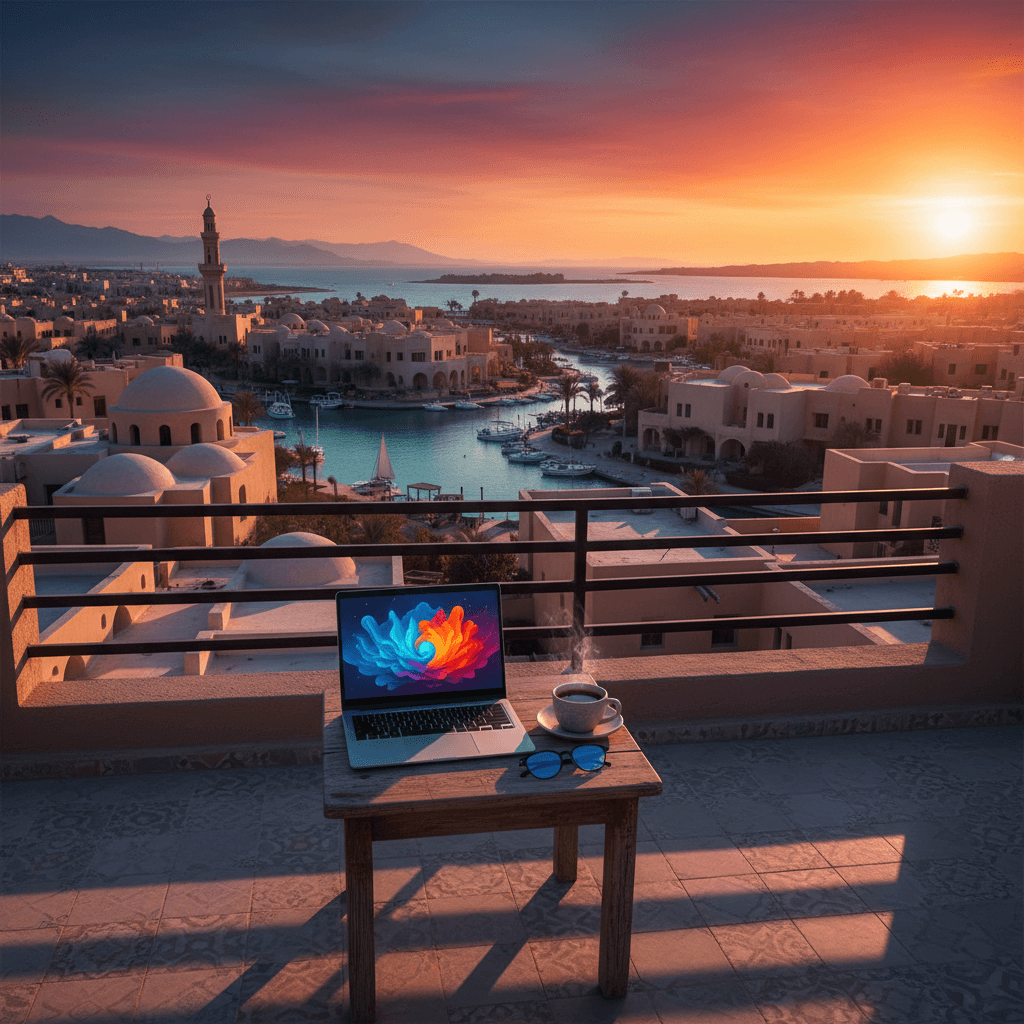
El Gouna
🇪🇬 Egypt
The Venice of the Red Sea
El Gouna isn't your typical Egyptian city. It's a privately owned, master-planned resort town that feels more like a Mediterranean village crossed with a California tech hub. Built across a series of man-made lagoons and islands, the architecture is a mix of traditional Nubian styles and sleek modernism. For nomads, it offers a level of polish and tranquility you won't find in Cairo or even nearby Hurghada.
The vibe here is undeniably upscale and curated. You'll see entrepreneurs sipping espresso in the marina, kitesurfers catching air in the shallow lagoons, and a cosmopolitan crowd that skews toward high-earning remote workers. It’s a "bubble" in the best sense of the word; it’s incredibly safe, clean, and organized, though that comes with a price tag that filters out the budget backpacker crowd.
The Cost of Living
Living the Gouna lifestyle requires a healthy bank balance. While the rest of Egypt is famously affordable, this town operates on its own economic scale. You should budget between $3,000 and $4,000 per month to really enjoy what's on offer. If you're running a six-figure business, you'll find it's worth every penny for the infrastructure and community.
- Comfortable Lifestyle (Lagoon View): Expect to spend $4,000+ monthly. This covers a premium apartment, frequent fine dining at the marina, and regular water sports.
- Mid-Range Nomad: Budget around $3,000. This gets you a nice one-bedroom, a mix of cooking at home and eating out, and a coworking membership.
- "Budget" (Gouna Style): You’ll need at least $2,000. This means living further inland, sticking to local eateries in Downtown, and using tuk-tuks instead of private cars.
Where to Plant Your Laptop
The town is split into two main hubs, each with a distinct personality. Most nomads gravitate toward Abu Tig Marina. It’s the heart of the social scene, packed with yachts, high-end boutiques, and restaurants. It’s pricier and busier, but you’re steps away from the best nightlife and networking. If you want to be where the action is, this is it.
Downtown El Gouna (centered around Tamr Henna Square) feels a bit more grounded. It’s picturesque and walkable, with a focus on local crafts and live music. It’s a great spot for solo travelers who want a slightly more "village" feel without sacrificing access to amenities. For long-term stays, look for apartments near the lagoons for a quieter, more scenic work environment.
Work, Connectivity, and Gear
The internet here is some of the most reliable in Egypt. Speeds typically hover around 15 to 16 Mbps, which is plenty for Zoom calls and heavy uploads. While many nomads work from breezy cafes like Caleo or marina-side eateries, there is a growing coworking culture. You can expect to pay between $100 and $300 a month for a dedicated desk in emerging tech hubs.
For mobile data, grab a SIM from Vodafone, Orange, or Etisalat. You can get a solid data plan for 100 to 300 EGP per month. Most expats recommend having a backup hotspot just in case, though outages are rare compared to the rest of the country.
Life Between the Lags
What makes Gouna special is how easy it is to unplug. You can spend your morning on a call and your afternoon kitesurfing or diving in the Red Sea. The town is highly walkable, but the local way to get around is the tuk-tuk. You can hail one for 20 to 50 EGP, or use the SIXT app for a more formal taxi. For longer trips, London Cabs are the gold standard for reliability.
Social life revolves around the water and the desert. You'll find yourself invited to sunset boat trips, desert treks to Wadi Bileh with groups like Mountain Goats, or live music sessions in the square. It’s a tight-knit, entrepreneurial community where business deals are often closed over a cold drink at a beach club rather than in a boardroom.
The Price of Paradise
If you're coming from Cairo or Dahab, El Gouna will give you a bit of a reality check. This isn't the place for the shoestring backpacker circuit; it's a private, meticulously maintained resort town designed for high net worth entrepreneurs and digital nomads who've already scaled their businesses. You're paying for a level of safety, infrastructure, and "it just works" convenience that is rare elsewhere in Egypt.
A comfortable monthly budget here typically lands between $3,000 and $4,000. While that's significantly higher than the national average, it buys you access to a Mediterranean lifestyle on the Red Sea. You won't find the chaotic haggling of the capital here. Instead, you'll find a community where people prioritize kitesurfing sessions between Zoom calls and high-end dining at the marina.
Monthly Budget Tiers
- The Lean Nomad ($2,000): This is the baseline. It covers a basic studio apartment further inland, eating mostly local Egyptian fare, and relying on the ubiquitous tuk-tuks for transport.
- The Balanced Professional ($3,000): This is the sweet spot for most. It allows for a one-bedroom apartment, a mix of home cooking and dining out at Tamr Henna Square, and a dedicated desk at a coworking hub.
- The Luxury Executive ($4,000+): At this level, you're looking at lagoon-view terraces, nightly dinners at Abu Tig Marina, frequent scuba diving trips, and private car rentals.
Housing and Neighborhoods
Rent is your biggest variable. Prices fluctuate based on your proximity to the water and the sheer "vibe" of the neighborhood. Most nomads look for long term rentals through local agencies like Paradise Real Estate rather than relying on short term hotel rates.
Abu Tig Marina
- Vibe: The social heart of town, filled with yachts, upscale boutiques, and the best nightlife.
- Rent: High. Expect to pay $1,500 to $2,500 for a premium apartment.
- Pros: Everything is walkable; you're steps away from the best coffee and networking.
Downtown (Tamr Henna)
- Vibe: More traditional and slightly more relaxed, with brick architecture and central squares.
- Rent: Moderate. Studios can be found for $800 to $1,200.
- Pros: Better access to local supermarkets and slightly cheaper "everyday" restaurants like Caleo.
Food, Drink, and Socializing
Dining out is an event in El Gouna. While you can find street food like ful or taameya for $1 to $2 (about 50 to 100 EGP), most mid-range meals will cost you $4 to $8. If you're heading to the waterfront for a steak or fresh seafood, expect the bill to start at $10 to $15 per person before drinks.
Groceries are manageable if you shop at local markets, but imported goods carry a heavy premium. For your caffeine fix, a flat white at a trendy marina cafe usually runs about $2 to $3. Alcohol is available and social, but it's taxed heavily; many expats stick to local wine or beer to keep the "fun budget" from spiraling.
Connectivity and Transport
One of the reasons nomads justify the cost here is the reliability of the tech setup. Coworking spaces are emerging as the town positions itself as a 2026 nomad hub, with monthly memberships ranging from $100 to $300. Home internet is surprisingly solid, often hitting 15 to 16 Mbps, which is plenty for video calls.
Getting around is the one area where you'll save money. The town is incredibly walkable and flat. When you're tired, you can hail a tuk-tuk for 20 to 50 EGP ($0.50 to $1.00). For longer trips or airport runs to Hurghada, use the SIXT app or book a London Cab. A trip to the airport usually costs between 200 and 500 EGP depending on your haggling skills and the vehicle type.
Practical Spending Tips
- Data: Grab a local SIM from Vodafone or Orange. A heavy data plan will only set you back about $5 to $10 a month.
- Banking: Use Wise or Revolut for better exchange rates at ATMs. ATMs are everywhere, but they often have withdrawal limits.
- Tipping: It's customary to tip 10 to 15 percent at restaurants, even if a service charge is included on the bill.
For Social Nomads: Abu Tig Marina
If you want to be in the heart of the action, Abu Tig Marina is the place to plant your flag. This is the town's most cosmopolitan hub, where superyachts dock right next to high end restaurants and boutiques. It's the primary choice for digital nomads who prioritize a social life and want to be within walking distance of the best nightlife in the Red Sea.
- The Vibe: Upscale, energetic, and highly international. You'll hear five different languages over breakfast at a waterfront cafe.
- Workability: Excellent. Many nomads treat the outdoor tables at marina eateries as their secondary office. The WiFi is generally reliable, and you're never more than a few minutes from a caffeine fix.
- Cost: This is the most expensive area in town. Expect to pay $3,500 to $4,500 per month for a comfortable lifestyle here.
- Pros: High walkability, the best social networking, and direct access to boat trips.
- Cons: It can get noisy during weekend parties and carries a premium price tag.
For Solo Travelers: Downtown (Kafr El Gouna)
Downtown, specifically around Tamr Henna Square, feels a bit more "authentic" while still maintaining El Gouna's signature luxury. It's characterized by traditional nubian style architecture with domes and arches. Solo travelers often prefer this area because it's compact, easy to navigate on foot, and has a more relaxed, community focused atmosphere than the flashy marina.
- The Vibe: Picturesque and charming. It feels more like a Mediterranean village than a resort hub.
- Living: You'll find plenty of studios and one bedroom apartments tucked away in quiet alleys. Rent here is slightly more accessible, though still high for Egypt.
- Local Life: This is where you'll find the local crafts at the Egyptian House and live music in the square. It's also the best spot for grabbing a $2 street food snack between Zoom calls.
- Pros: Very walkable, great for meeting people at local cafes like Caleo, and close to the main supermarkets.
- Cons: Can feel a bit touristy during the day when visitors arrive for shopping.
For Families and Long-Term Expats: The Lagoons
The various lagoon neighborhoods spread out from the center are designed for those staying a few months or longer. These areas offer more privacy and space, often featuring villas or large apartments with direct water access. It's the top choice for families who want a quiet environment where kids can swim in the calm, shallow man made lagoons right outside the front door.
- The Vibe: Peaceful and suburban. This is where you'll find the "six figure entrepreneur" crowd who values privacy over proximity to bars.
- Getting Around: You'll rely more on the SIXT app or the ubiquitous EGP 20 to 50 tuk-tuks to get into town for meetings or dinner.
- Activities: Perfect for those who own their own kitesurfing or paddleboarding gear, as you can often launch directly from your property.
- Pros: Quiet nights, private water access, and more "home-like" amenities for long term stays.
- Cons: Requires transport for almost everything; can feel a bit isolated for solo residents.
For Kitesurfers and Water Sports Pros: Northern Beaches
Serious kitesurfers and windsurfers usually gravitate toward the northern outskirts of town. This puts you closest to the specialized beaches and schools where the wind conditions are most consistent. While there are fewer dedicated residential blocks here, many expats rent long term in nearby resorts or newer developments to minimize their commute to the water.
- The Vibe: Active and athletic. The daily schedule here is dictated by the wind forecast rather than the clock.
- Community: You'll quickly fall in with the "water tribe." It's easy to meet people at the beach clubs during the day.
- Logistics: It's a bit of a trek to the Marina for dinner, but the proximity to the best kiting spots in the Red Sea makes it worth it for enthusiasts.
- Pros: Immediate access to world class kiting and snorkeling; generally quieter than Downtown.
- Cons: Limited dining and shopping options within walking distance.
El Gouna is a rare exception in the Egyptian digital nomad scene. While much of the country can be a gamble for stable connectivity, this privately managed town offers a level of infrastructure that feels closer to Southern Europe than North Africa. It is the go-to destination for high earning entrepreneurs who need to guarantee they won't drop off a Zoom call while overlooking a turquoise lagoon.
Connectivity and Speeds
You can expect reliable fiber optic and VDSL connections across most of the resort town. Average speeds typically hover around 15 to 16 Mbps, though many upscale rentals and dedicated workspaces offer much higher ceilings. Unlike Cairo, where power cuts can occasionally disrupt your flow, El Gouna's private utility grid is remarkably stable.
Most nomads find that the Wi-Fi in hotels and high end rentals is sufficient for heavy lifting, but it's smart to have a backup. We recommend picking up a local SIM card from providers like Vodafone, Orange, or Etisalat. You can find these at local shops for around 100 to 300 EGP per month for generous data plans. 4G coverage is excellent throughout the Marina and Downtown areas, making it easy to tether if you decide to work from a beach beanbag for the afternoon.
Coworking Spaces and Laptop Friendly Cafes
The coworking scene here is evolving rapidly as the town positions itself as a global nomad hub. Dedicated spaces are popping up to cater to the "six figure founder" crowd, with monthly memberships usually ranging between $100 and $300. These hubs provide the most professional environment, featuring ergonomic seating and private booths for calls.
If you prefer a more social atmosphere, the cafe culture is elite. Abu Tig Marina is the primary hotspot. You'll see plenty of professionals with MacBooks perched at waterfront tables, taking advantage of the breeze and the high quality coffee. Downtown El Gouna, specifically around Tamr Henna Square, offers a slightly more laid back vibe with several cafes like Caleo that are welcoming to long stay workers.
- Abu Tig Marina Cafes: Best for morning deep work with a view of the yachts.
- Downtown Cafes: Ideal for casual admin tasks and meeting other expats.
Practical Workflow Tips
The "Gouna Lifestyle" often dictates a split shift. Many nomads wake up early to hit the water for kitesurfing or windsurfing while the winds are best, then move into deep work from 11:00 AM to 6:00 PM. Because the town is so compact and safe, you can easily hop between your apartment and a coworking space via a 20 to 50 EGP tuk-tuk ride.
For those managing international teams, the time zone is a major perk. Being in EET (UTC+2) means you are perfectly positioned between European and Asian business hours. If you are working with US based clients, you'll have your entire morning and afternoon free for leisure before the East Coast wakes up in your late afternoon.
Remote Work Costs at a Glance
- Monthly Coworking Desk: $100 to $300
- High Speed Home Internet: Included in most premium rentals (check before booking)
- Local SIM with 20GB+ Data: $5 to $10
- Coffee at a Workspace: $2 to $4
While the cost of living is significantly higher than the rest of Egypt, the trade off is a frictionless work environment. You aren't just paying for the internet; you're paying for the peace of mind that comes with a town designed specifically for a premium, international lifestyle.
The Gouna Bubble
In the world of Egyptian travel, El Gouna is often referred to as "the bubble." It is a privately owned, gated town that operates with a level of organization and security that feels distinct from the rest of the country. For digital nomads and high earners, this translates to a stress free environment where you can walk home from Abu Tig Marina at 2:00 AM without a second thought. There aren't any specific neighborhoods to avoid here; the entire town is designed for safety and ease of movement.
The town maintains its own private security force, and entry points are monitored. While Egypt generally requires a baseline of street smarts, El Gouna is the exception where you can truly let your guard down. Petty crime is remarkably rare. Most expats find that the biggest safety "risk" is simply forgetting to wear enough sunscreen during a desert quad bike tour or catching a chill from the aggressive air conditioning in the upscale boutiques.
Healthcare and Medical Facilities
If you do run into trouble, you aren't stranded. El Gouna Hospital is the primary facility in town and is widely regarded as one of the best in the Red Sea region. It is a modern, well equipped hospital that handles everything from diving accidents to general surgery. They have an international department and the staff generally speaks excellent English, which is a huge relief if you're dealing with an emergency.
For minor ailments or "mummy tummy," you'll find pharmacies scattered throughout Downtown and the Marina. Egyptian pharmacists are highly trained and can often provide over the counter consultations for basic issues. They are usually open late, and many offer delivery services directly to your apartment or hotel via a quick phone call or WhatsApp message.
- El Gouna Hospital: Located near the town entrance, offering 24/7 emergency services and a decompression chamber for divers.
- Pharmacies: Look for El Gouna Pharmacy in Downtown or the branches near Abu Tig Marina.
- Emergency Numbers: Dial 122 for police and 123 for an ambulance.
Staying Healthy as a Nomad
The most common health hurdle for newcomers is the water. Do not drink the tap water here. Even though the infrastructure is premium, your stomach likely won't appreciate the local mineral content. Stick to bottled water for drinking and even for brushing your teeth if you have a sensitive system. Most long term rentals provide large water dispensers that you can refill for a few dollars.
Food hygiene in El Gouna is generally excellent, especially in the mid range and upscale spots around the lagoons. You can eat the salads and fruit at reputable restaurants without the paranoia you might feel in busier, more chaotic cities. If you're heading out for a desert trek with a group like the Mountain Goats, just ensure you've packed plenty of hydration; the Red Sea sun is relentless, with temperatures often hitting 35°C (95°F) or higher in the summer months.
Insurance and Logistics
While the local healthcare is great, it isn't cheap by Egyptian standards because it caters to the expat and luxury tourist market. Most entrepreneurs living here carry international health insurance. If you need specialized care that the local hospital can't provide, Hurghada is only about 30 to 45 minutes away by taxi and has several additional private hospitals and specialists.
For daily peace of mind, the town is extremely walkable and the flat terrain makes it easy to stay active. Many nomads opt for a bicycle or use the ubiquitous tuk tuks to get around. These are safe and regulated, usually costing between 20 and 50 EGP per ride. It is a controlled ecosystem where the goal is your comfort, allowing you to focus on your business rather than your safety.
Navigating the Lagoons
El Gouna is uniquely designed around a series of man-made lagoons, which makes the layout more spread out than a typical city but surprisingly easy to navigate. The terrain is almost entirely flat, and dozens of small bridges connect the different islands and neighborhoods. Most nomads find the town incredibly pedestrian-friendly, especially if you are staying in central hubs like Downtown or near Abu Tig Marina.
While walking is great for short distances, the desert sun can be brutal during the middle of the day. You'll quickly notice that the town has a relaxed, resort-style pace where nobody is in a massive rush. Whether you are heading to a kitesurfing lesson or a coworking session, you have a few reliable options to get there without breaking a sweat.
The Iconic Tuk-Tuk
The three-wheeled tuk-tuk is the unofficial mascot of El Gouna transport. They are everywhere, and they are easily the most convenient way to zip between the Marina and Downtown. Unlike the chaotic tuk-tuk experiences in Cairo, the ones here are regulated and generally much safer.
- Cost: Expect to pay between EGP 20 and EGP 50 for a one-way trip within the town limits.
- How to catch one: You can simply hail them from the side of the road or find them idling at designated stations near major plazas and supermarket entrances.
- Payment: Always carry small cash denominations in Egyptian Pounds. Drivers rarely have change for large bills, and they don't accept cards.
Private Cars and Apps
If you prefer a bit of air conditioning or need a more professional ride for a night out at an upscale restaurant, El Gouna has a few "classier" alternatives to the open-air tuk-tuks.
The SIXT app is the primary digital platform used here for booking rides. It functions similarly to Uber, allowing you to track your driver and see pricing upfront. For a more premium experience, look for the London Cabs. These are distinctive black taxis that offer a higher level of comfort and fixed rates, making them a favorite for expats heading to formal events or business meetings.
Bikes and Scooters
Because the town is private and gated, the roads are significantly quieter and safer than anywhere else in Egypt. This makes El Gouna one of the few places in the country where cycling is actually enjoyable. Many long-term nomads choose to rent a bicycle or an electric scooter for the duration of their stay.
You can find rental shops near the major beaches and within the Marina. It’s a great way to maintain some independence and get a bit of exercise while moving between your apartment and the lagoon. Just keep in mind that sand often drifts onto the paved paths, so stay alert on the turns.
Getting to and from Hurghada
El Gouna is about 25 kilometers north of Hurghada International Airport. Since there isn't a reliable public bus system connecting the two, you'll likely rely on private transfers. Most travelers recommend pre-booking a shuttle or taking a taxi for this leg of the journey.
- Travel Time: The drive usually takes 30 to 60 minutes depending on security checkpoints.
- Airport Transfer Cost: A standard taxi or private car typically ranges from EGP 200 to EGP 500.
- Pro Tip: If you are arriving late at night, arrange a pickup through your accommodation or a reputable service like London Cab to avoid haggling at the terminal.
Car Rentals
Unless you plan on taking frequent day trips to the desert or driving down to Safaga for diving, you probably won't need your own car. Most of the town's charm is found in its walkable alleys and waterfront paths. However, if you do choose to rent, there are several agencies located in the Downtown area. Parking is generally easy to find and free in most residential zones, though the Marina area can get crowded during evening events.
English is the Local Currency
In most parts of Egypt, you will need a few Arabic phrases to get by. In El Gouna, things are different. This is a purpose built, international enclave where the population is a mix of wealthy Egyptians, European expats, and high earning digital nomads. Because of this cosmopolitan makeup, English is the primary language of business, social life, and service.
You will find that staff at the boutiques in Abu Tig Marina, servers at Downtown cafes like Caleo, and even the tuk tuk drivers speak English fluently. Many locals and long term residents are actually multilingual, often switching between English, Arabic, German, and French. You won't struggle to negotiate a lease or explain a technical issue with your WiFi here.
Arabic for Connections
While you can easily live in a bubble of English, learning a bit of Egyptian Arabic goes a long way. It shows respect for the local culture and helps build rapport with the people who make the town run. Egyptian Arabic is the most widely understood dialect in the Middle East thanks to Egypt's massive film and music industry, so what you learn here will be useful elsewhere.
Most nomads find that a few "magic words" are enough to transition from being a tourist to a recognized member of the community. Use these phrases when you're grabbing street food in Downtown or chatting with a boat captain at the marina:
- Shukran: Thank you. (The most used word in your vocabulary).
- Min fadlak: Please (when addressing a male) or Min fadlik (when addressing a female).
- Salam: A casual hello or goodbye.
- Aywa / La: Yes / No.
- Khalas: Done, finished, or "enough." Great for politely telling a vendor you aren't interested in more items.
Digital Communication and Connectivity
Communication isn't just about what you say; it's about staying online. El Gouna is one of the few places in Egypt where the internet doesn't feel like an afterthought. Most apartments and coworking spaces offer speeds around 15 to 16 Mbps, which is plenty for Zoom calls and standard remote work tasks. However, don't rely solely on hotel WiFi, which can get congested during peak tourist seasons.
Expats recommend picking up a local SIM card immediately to use as a hotspot backup. You can find kiosks for the major providers in the Downtown area. Expect to pay between 100 EGP and 300 EGP (roughly $2 to $6 USD) for a monthly data plan that will keep you connected while you're working from a beach club.
- Vodafone: Generally considered to have the most reliable coverage across the lagoons.
- Orange: A solid alternative with competitive data packages.
- Etisalat: Good speeds, though coverage can be spotty in the newer desert developments.
Navigation and Apps
When it comes to getting around or ordering services, you will mostly use English language apps. For transport, the SIXT app and London Cab are the standard for pre booked rides. If you are hailing a tuk tuk, you will usually just use hand signals and basic English to state your destination. Most rides within the town limits cost between 20 EGP and 50 EGP ($0.40 to $1.00 USD), and it's helpful to have small cash denominations ready since many drivers don't carry much change.
For everything else, Google Translate is your best friend for reading menus that might not have an English translation or for communicating complex needs at a pharmacy. The "camera" feature on the app is particularly useful for reading labels on local grocery items at the supermarkets.
Climate and Seasonality
El Gouna enjoys a classic Red Sea climate, which means you are looking at year round sunshine and almost zero rainfall. If you are coming from Northern Europe or the US, the constant blue skies are a massive draw for productivity and mental health. However, the heat isn't something to take lightly if you plan on doing more than just sitting in an air conditioned coworking space.
The sweet spot for most nomads falls between October and April. During these months, daytime temperatures hover between 20°C and 25°C (68°F to 77°F). It is warm enough for a dip in the lagoons but cool enough to walk between Abu Tig Marina and Downtown without breaking a sweat. Evenings in December and January can get surprisingly crisp, so you will definitely want a light jacket or hoodie for those sunset drinks by the water.
Summer, specifically June through August, is a different beast. Temperatures regularly climb to 40°C (104°F) or higher. While the dry heat is more manageable than the humidity of Southeast Asia, the midday sun is intense. Most long term expats shift their schedules during this time, getting work done in the early morning and staying indoors until the sun starts to dip. If you are a hardcore kitesurfer, you might actually prefer the summer for the consistent thermal winds, but for everyone else, the heat can be a bit of a productivity killer.
Best Time to Visit for Nomads
When you should book your stay depends largely on whether you are looking for a social scene or a quiet place to focus. El Gouna has a distinct seasonal rhythm that impacts both the vibe and your wallet.
- Peak Season (October to May): This is when the town is at its most alive. The weather is perfect for outdoor dining at places like Caleo or hanging out in Tamr Henna Square. You will find more networking events and a higher concentration of entrepreneurs. The downside is that accommodation prices for lagoon view apartments peak during this time.
- Shoulder Season (May and September): These are the best months for value. The "winter" crowds have thinned out, but the extreme heat hasn't fully arrived or is just starting to fade. You can often negotiate better monthly rates on rentals during these windows.
- The Summer Lull (June to August): While the town is quieter, it is also the least comfortable for anyone who isn't a dedicated water sports enthusiast. Unless you thrive in high heat, it is probably the best time to head to the Mediterranean coast instead.
What to Pack and Expect
Life in El Gouna is upscale but casual. You don't need a suit for a business meeting here; a linen shirt or a nice sundress is the standard uniform even at the high end restaurants in the Marina. Because the town is privately owned and managed, it feels very different from the rest of Egypt. You can wear typical beach attire around the lagoons and resorts without any issues, though it is respectful to dress slightly more modestly if you head into Hurghada for a day trip.
If you are planning a winter stay, don't forget that most buildings are designed to stay cool, not warm. They often lacks central heating, so those 15°C (59°F) nights can feel much colder indoors than you might expect. A pair of warm socks and a decent sweater will make your late night deep work sessions much more comfortable.
For the digital nomad, the most important thing to bring is a high quality power bank and perhaps a universal travel adapter, though most outlets are the standard European two pin style. While the infrastructure in El Gouna is some of the best in the country, having a backup for your devices is always a smart move when working from cafes like those found around Abu Tig.
Connectivity and Workspace
Internet in El Gouna is surprisingly reliable for a desert oasis. You can expect speeds around 15 to 16 Mbps, which is plenty for Zoom calls and standard remote work. While most villas and apartments have decent WiFi, the local cafe culture is where most nomads end up. Abu Tig Marina has a high concentration of eateries with solid connections and great views of the yachts.
For a more professional setup, dedicated coworking hubs are becoming a staple of the local entrepreneur scene. Monthly memberships generally run between $100 and $300. If you need a mobile backup, grab a local SIM from Vodafone, Orange, or Etisalat. You can get a solid data plan for EGP 100 to 300 per month. It's best to set this up at a local shop rather than the airport to ensure you get the best rates.
Cost of Living Breakdown
El Gouna is the most expensive spot in Egypt. It’s a privately owned town designed for luxury, so the prices reflect that. If you’re a solo nomad, you’ll want a budget that matches your lifestyle tier.
Budget Nomad
- Monthly Total: Around $2,000
- Housing: Basic studio apartment inland.
- Food: Sticking to street food like EGP 50 to 100 falafel or koshary and cooking at home.
- Transport: Exclusively using the local tuk-tuks.
Mid-Range Lifestyle
- Monthly Total: Around $3,000
- Housing: A one-bedroom apartment with a decent view.
- Food: A mix of home cooking and mid-range meals at EGP 200 to 400 per person.
- Extras: A few coworking days and occasional kitesurfing lessons.
High-End Entrepreneur
- Monthly Total: $4,000+
- Housing: A premium lagoon-view apartment in Abu Tig Marina.
- Food: Dining out frequently at upscale spots where meals start at EGP 500.
- Extras: Full-time coworking, private boat trips, and desert safaris.
Getting Around
The town is remarkably flat and walkable, but the heat often makes that a challenge during the day. Most people rely on the fleet of tuk-tuks that roam the streets; a quick hail and EGP 20 to 50 will get you almost anywhere within the town limits. For a more formal ride, use the SIXT app or call a London Cab (the iconic black taxis).
If you're arriving from Hurghada Airport, the trip takes about 30 to 60 minutes. Expect to pay between EGP 200 and 500 for a private transfer. Once you're settled, renting a bike or a scooter is a popular way to hop between the lagoons and the beach clubs.
Safe and Sound
Safety is a non-issue here. El Gouna is a gated community with its own security, making it one of the safest places in the country for solo travelers and expats. There aren't any "no-go" zones to worry about. If you do run into trouble, the emergency number for the police is 122 and 123 for an ambulance. The town has its own hospital and plenty of well-stocked pharmacies for minor issues.
Weather and Timing
The Red Sea climate is sunny year-round, but your experience will change drastically depending on the month. Most nomads find the sweet spot between October and April, when temperatures hover between 20°C and 30°C. It’s perfect for outdoor work and water sports.
The summer months from June to August are intense. Temperatures often spike to 40°C, which can make even a short walk to a cafe feel like an expedition. If you aren't a fan of extreme heat, plan your stay for the winter or spring. Rain is almost non-existent, so you don't need to pack much more than light clothing and a sweater for the cooler desert nights.
Need visa and immigration info for Egypt?
🇪🇬 View Egypt Country GuideHidden Gem
Worth the effort