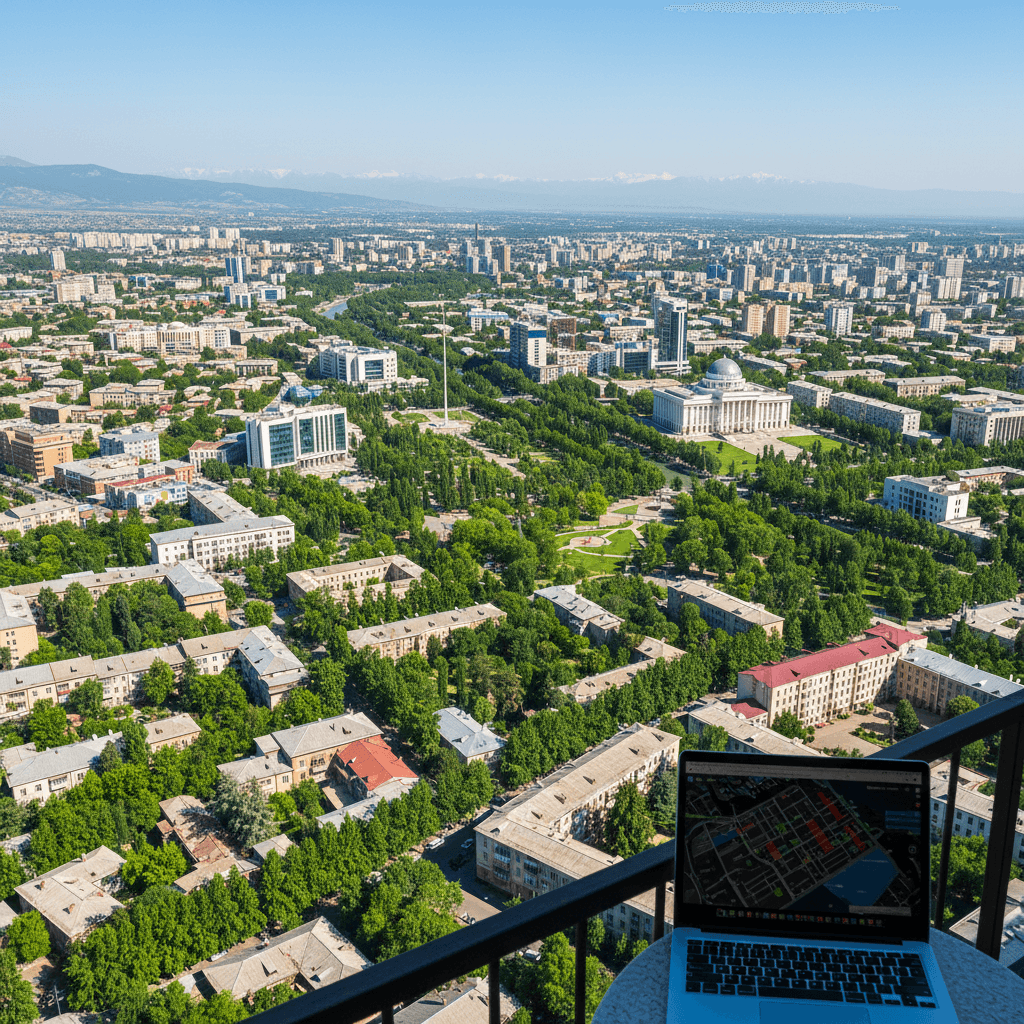
Dushanbe
🇹🇯 Tajikistan
The Vibe: Slow Paces and Green Spaces
Dushanbe doesn't feel like a typical capital city. While Tashkent or Almaty lean into their Soviet grandeur and rapid modernization, Dushanbe keeps a lower profile. It feels more like a massive, leafy village that happened to grow into a city of about 1.1 million people. Most nomads who land here are struck by the silence. The avenues are wide, the mountain backdrop is constant, and the pace of life invites you to actually sit down and stay a while.
You'll spend a lot of time walking under the plane trees on Rudaki Avenue or watching the fountains at Rudaki Park. It's a place where the air smells like roses in the spring and woodsmoke in the winter. The city is safe, deeply welcoming, and carries an authenticity that's getting harder to find in more popular nomad hubs. You aren't just another tourist here; you're often a guest of the city.
Cost of Living Breakdown
Dushanbe is one of the most affordable capitals in Central Asia. If you're coming from Western Europe or North America, your purchasing power will be significant. Most nomads find they can live comfortably on $1,455 per month, though you can easily drop that to $850 if you stick to local markets and guesthouses.
- Budget Lifestyle (~$855/month): Expect to pay $200 to $300 for a basic apartment on the outskirts. You'll eat $2 plov at the bazaars and use the $0.20 marshrutkas to get around.
- Mid-Range Lifestyle (~$1,455/month): This covers a $500 one bedroom apartment in a decent area, regular meals at mid-range cafes for $8 to $12, and frequent use of ride-hailing apps.
- Comfortable Lifestyle (~$2,123/month): You'll be staying in the heart of the City Center near the National Museum, paying $700 or more for a high end flat. You can eat at the best spots in town every night and still have plenty left for weekend 4WD trips into the mountains.
Where to Set Up Base
Dushanbe is relatively compact, but where you live dictates your access to stable internet and English speaking circles.
City Center (Near Rudaki Park)
- Best for: Digital nomads and first timers.
- The Draw: This is where you'll find the highest concentration of cafes with working Wi-Fi and the few dedicated coworking spaces. It's walkable, green, and close to Mehrgon Market.
- The Trade-off: Rents are the highest in the country and traffic can get noisy during the afternoon rush.
The Outskirts (Near Green House Hostel)
- Best for: Budget travelers and those wanting a community feel.
- The Draw: Areas around the Green House Hostel or Hello Dushanbe guesthouse offer a built in social life. Rents are much lower, often between $10 and $30 per night for short stays.
- The Trade-off: Internet is famously spotty here. You'll likely need a local SIM with a heavy data plan to tether for work.
The Digital Nomad Reality Check
Working from Dushanbe requires a bit of patience. While the city has a growing cafe culture, the internet speeds generally hover between 29 and 48 Mbps. It's workable for emails and basic uploads, but you might struggle with heavy video calls or large file transfers outside of the upscale hotels or specific cafes in the center. Most remote workers recommend picking up a local SIM from Ucell or Beeline immediately upon arrival at the airport.
The social scene is small but tight. You won't find massive nomad meetups every night. Instead, you'll find people through the Dushanbe Digital Nomads Telegram groups or over a beer at the Green House Hostel. It's a DIY destination where you have to put in a little effort to find your tribe, but the reward is a level of cultural immersion that's rare in the digital age.
Logistics and Language
Tajik and Russian are the dominant languages. While younger people in the trendy cafes near Rudaki Park might speak some English, you'll want Google Translate downloaded for offline use when hitting the markets. Use the 112 number for emergencies, and always carry some cash. While ATMs exist in the center, Tajikistan remains a cash heavy society where the Somoni is king. For getting around, stick to the local buses or use ride hailing apps arranged through your hotel to avoid the "tourist tax" on street hails.
The True Cost of a Slow-Paced Life
Dushanbe is one of the few places left where your dollar stretches so far it almost feels like a mistake. It is a city of wide, tree-lined avenues and a pace that encourages you to actually sit down for tea rather than grab it to go. For nomads who are tired of the hyper-inflated prices in Tbilisi or Almaty, this is a breath of fresh air. You can live well here for a fraction of what you would spend in Europe, provided you are comfortable with a cash-heavy society and a bit of DIY infrastructure.
Most nomads find that a budget of $1,455 per month allows for a very comfortable mid-range lifestyle. This covers a modern apartment, daily cafe visits, and plenty of weekend trips into the mountains. If you are really pinching pennies, you can get by on roughly $855, though you will likely be staying further from the center and sticking to the legendary street food at Mehrgon Market.
Breaking Down the Monthly Spend
- Studio or 1BR Rent: Expect to pay $350 to $500 for a decent spot in the city center near Rudaki Park. If you head to the outskirts or stay near the Green House Hostel area, prices drop to $200 to $300.
- Daily Meals: A plate of plov or shashlik at a local bazaar costs about $1 to $2. A mid-range dinner at a nice cafe in the center runs between $8 and $12, while a high-end meal at a hotel restaurant might top $30.
- Transport: Local buses and marshrutkas are nearly free at $0.20 per ride. Most expats rely on ride-hailing apps or local taxis, which will cost you about $30 to $50 over the course of a month.
- Connectivity: A local SIM from Ucell or Beeline with a healthy data package costs around $10. Coworking spaces are still a new concept, but dedicated desks in the center go for $100 to $200 a month.
Where to Plant Your Flag
The City Center is the obvious choice for anyone who needs to get work done. Staying near Rudaki Park puts you within walking distance of the National Museum and the best cafes for remote work. You will pay a premium for rent, but the reliability of the internet and the proximity to English-speaking hubs makes it worth the extra cash.
The Outskirts, particularly areas near the Green House Hostel, are better for those who want a quieter, more residential feel. It is greener and much cheaper, but you will find yourself commuting more often. Travelers often say this area feels more like "real" Tajikistan, though the internet speeds can be hit or miss compared to the modern buildings downtown.
For those who want total cultural immersion, the area near Mehrgon Market is unbeatable. It is noisy, chaotic, and smells like fresh bread and spices. Rents are low and the food is the best in the city, but don't expect much English to be spoken at the local corner store.
Practical Money Matters
Cash is king in Dushanbe. While you can use cards at upscale hotels and some fancy cafes near the center, you will need the local currency, the somoni, for almost everything else. ATMs are plentiful in the city center, and apps like Wise or Revolut work for withdrawals, but always keep a stash of USD or Euros for emergencies or long-distance shared taxis.
When it comes to groceries, skip the small supermarkets and head to the bazaars. Not only is the produce better, but it is significantly cheaper. You can fill a bag with fresh fruit, nuts, and bread for less than $5. Just remember to bring your own bags and a few basic Tajik phrases like "Chand somoni?" to ask for the price.
Healthcare is basic but affordable for minor issues. Most expats keep a small kit of imported medicines for routine ailments. For anything serious, you will likely be looking at a flight to Istanbul or Dubai, so decent travel insurance is a non-negotiable expense you should factor into your initial setup costs.
The Nomads' Choice: City Center (Rudaki Park Area)
If you're working remotely, you'll want to stay as close to Rudaki Avenue as possible. This is the city's main artery and the only place where the internet is reliable enough for a Zoom call. It's the most modern part of Dushanbe, filled with neoclassical buildings and wide, tree-lined sidewalks that make it surprisingly walkable.
Most nomads gravitate toward the cafes near the National Museum for their daily setup. While dedicated coworking spaces are still a new concept here, you can find quiet corners in the upscale coffee shops for about $100 to $200 a month in "desk spend." You'll be within walking distance of the best gyms and the few spots where English is actually spoken.
- Monthly Rent: Expect to pay $400 to $600 for a modern one-bedroom apartment.
- Internet Speed: Usually ranges between 29 and 48 Mbps in the better cafes.
- Best for: Reliable WiFi, networking with other remote workers, and proximity to the National Museum of Antiquities.
The Solo Traveler's Hub: Near Mehrgon Market
For those who care more about local flavor than a perfect espresso, the area around Mehrgon Market is the place to be. It's further north than the posh center but offers a much more authentic Tajik experience. The market itself is a massive, ornate hall where you can grab a mountain of fresh fruit or a plate of plov for just $1 or $2.
The vibe here is louder and more chaotic. You won't find many English menus, so you'll need a translation app and some patience. It's the best spot to save money while staying in a neighborhood that feels like real life rather than a tourist bubble. Just keep in mind that the streets can get dark at night, so it's better to stick to the main roads after sunset.
- Daily Food Cost: You can easily eat well for $5 to $10 a day using the local stalls.
- Transit: Well connected by marshrutkas (minibuses) that cost about $0.20 per ride.
- Best for: Cultural immersion, cheap street food, and photography.
The Budget Nomad and Backpacker: The Southern Outskirts
If you're looking to stretch a tight budget or meet other travelers, head toward the southern edge of the city. This area is home to legendary spots like the Green House Hostel and Hello Dushanbe. It's much quieter than the center and has a laid-back, residential feel with plenty of green space.
The tradeoff here is the commute. You'll rely on ride-hailing apps or local taxis, which usually cost around $2 to $5 to get into the center. The internet in the guesthouses can be spotty, so many people here use local SIM cards from Ucell or Beeline to tether their laptops. It's the best place to find partners for 4WD trips into the Pamir Mountains.
- Monthly Rent: Budget apartments or long-term guesthouse stays run $200 to $350.
- Social Scene: This is the primary hub for the expat and backpacker community.
- Best for: Meeting travel partners, low-cost living, and a quiet environment.
Expats and Long-Term Residents: Mavlono Yaqubi Charkhi
Expats who are staying for six months or more often look for apartments in the pockets just east of the main center. These neighborhoods offer a balance between the luxury of the Rudaki area and the prices of the outskirts. You'll find newer apartment blocks that cater to the international community, often with better heating and plumbing than the older Soviet-style flats.
Living here feels more settled. You're close enough to the "fancy" grocery stores that stock imported goods but far enough from the main tourist sites to avoid the crowds. Most expats in this area use local taxi apps to get around, spending about $30 to $50 a month on transport.
- Monthly Rent: Mid-range apartments typically cost between $400 and $500.
- Amenities: Better access to private clinics and international-style pharmacies.
- Best for: Long-term stays, families, and those who want a westernized lifestyle at a discount.
The Connectivity Landscape
Working from Dushanbe requires a bit of strategic planning. You won't find fiber-optic speeds on every street corner, but the city is the only reliable pocket for remote work in Tajikistan. Average speeds hover between 10 and 25 Mbps in the center. While that's plenty for emails and standard video calls, the connection can get spotty the moment you head toward the outskirts or into the Pamir mountains.
Most nomads rely on a dual-setup strategy. Local SIM cards from Ucell or Beeline are affordable, usually costing around $5 to $10 for a starter pack with data. If you prefer the convenience of an eSIM, Airalo works well for tethering, though you should double-check if your specific plan supports hotspots before committing. Expect to pay cash for your SIM at the airport or local markets, as card payments are still catching up in many retail shops.
Coworking Spaces and Work-Friendly Cafes
The dedicated coworking scene in Dushanbe is still in its infancy, but it's growing. You'll find a handful of unnamed or smaller professional hubs concentrated in the city center near Rudaki Park. Monthly memberships generally run between $100 and $200, providing a more stable environment than your average hotel lobby. These spaces are your best bet if you have high-stakes meetings or need to upload large files.
If you prefer a more social atmosphere, the city's cafe culture is surprisingly welcoming to laptop users. The upscale cafes lining the main avenues offer free WiFi, though it's often open-access and hit-or-miss during peak hours. Expats and travelers frequently congregate at Green House Hostel or Backpacker Hostel. These spots serve as informal hubs where you can trade tips on the best local signals over a coffee.
- Dedicated Coworking: $100 to $200 per month for a fixed desk.
- Cafe Sessions: Free WiFi with a $3 to $5 coffee or lunch purchase.
- Day Passes: Available in some central hubs for roughly $10 to $15.
Technical Realities and Workarounds
Power outages aren't a daily occurrence in the capital like they can be in rural provinces, but they do happen. It's smart to keep your devices charged and have a local data plan as a backup for your home or hostel WiFi. Most nomads find that the internet in hostels like Hello Dushanbe is sufficient for basic tasks but might struggle with heavy streaming.
Digital nomads here often use Telegram and Facebook groups to stay updated on the best work spots. The Dushanbe Digital Nomads group is a helpful resource for real-time info on which cafes currently have the strongest signals. Since English isn't widely spoken outside these tech-friendly pockets, having Google Translate offline packs downloaded on your phone is a lifesaver when you're trying to troubleshoot a router issue with a local landlord.
Practical Connectivity Tips
- Stick to the City Center if your job depends on consistent uptime; the outskirts are significantly less reliable.
- Carry a Wise or Revolut card for online transactions, but always keep Somoni cash on hand for your SIM card top-ups.
- If you're planning a mountain trek, finish your deliverables before leaving the city, as internet disappears almost entirely once you hit the trails.
- Use a VPN for an extra layer of security when using the open WiFi networks in public squares or parks.
Staying Safe on the Streets
Dushanbe is surprisingly mellow for a capital city. Most digital nomads find the atmosphere relaxed and the locals incredibly hospitable. Violent crime is rare in the city center, especially around Rudaki Park and the main avenues. You can generally walk around during the day without a second thought, though it is smart to stick to well lit areas once the sun goes down. The outskirts can get a bit dark and quiet at night, so if you are staying further out near Hello Dushanbe or the Green House Hostel, grab a taxi instead of walking long distances in the dark.
The most common issues travelers face are petty scams or occasional police stops asking for documents. Always carry a high quality photocopy of your passport and visa rather than the original. If you are ever approached by someone claiming to be an official, stay polite but firm. Most interactions with locals are overwhelmingly positive, and many will go out of their way to help you if you look lost.
Healthcare Infrastructure
While Dushanbe is the best place in Tajikistan for medical care, the infrastructure still lags behind Western standards. For minor issues, you will find plenty of pharmacies stocked with basic supplies, but for anything serious, the quality of care is limited. Expats usually recommend having a solid travel insurance policy that includes medical evacuation just in case.
- Emergency Services: Dial 112 for general emergencies, though response times vary.
- Pharmacies: Widely available in the center; look for the "Apteka" signs.
- Hospitals: Facilities are basic. Most nomads choose to fly to Istanbul or Dubai for major procedures.
Staying Healthy and Hydrated
The biggest threat to your productivity will likely be your stomach rather than any street crime. Tap water is not safe to drink here. Stick to bottled water for everything, including brushing your teeth if you have a sensitive system. When you are eating at the local bazaars like Mehrgon Market, look for stalls with high turnover where the food is cooked fresh in front of you.
Avoid ice in your drinks and be cautious with unpeeled fruits or raw vegetables. It is also wise to carry a small "go bag" with you. Western style toilets are not the norm outside of modern cafes and higher end hotels, so keep some toilet paper and hand sanitizer in your day pack. You will thank yourself later when you are out exploring the city or taking a day trip to Hissor Fort.
Practical Safety Tips for Nomads
Being a nomad in Dushanbe requires a bit of old school preparation. Since the city is very cash heavy, try to avoid flashing large rolls of Somoni in public. Use ATMs located inside banks or major hotels near the center to minimize the risk of card skimming. If you are a solo female traveler, the city is generally safe, but dressing modestly is the best way to avoid unwanted attention. Covering your shoulders and knees is the standard, especially when visiting religious sites or traditional markets.
- Air Quality: Can dip in the winter due to heating soot, so check local sensors if you have respiratory issues.
- Local Apps: Download Google Translate offline packs for Russian and Tajik to communicate medical needs clearly.
- Connectivity: Keep a local SIM from Ucell or Beeline active so you can always call a taxi or use a map if you get turned around.
Getting Around the Capital
Dushanbe is surprisingly easy to navigate once you get the hang of the local rhythm. The city layout follows a logical grid, with many of the main attractions and nomad friendly spots clustered around the central axis of Rudaki Avenue. It is a very walkable city, especially in the center where wide, tree lined sidewalks make strolling between cafes and parks a pleasure rather than a chore.
Public Transport and Marshrutkas
The backbone of local transit consists of buses, trolleybuses, and the ubiquitous marshrutkas, which are fixed route minivans. These are incredibly cheap, usually costing between $0.20 and $0.50 per ride. While they are efficient, they can get cramped during peak hours and rarely follow a strict printed schedule. You will mostly see locals using them to zip across town, and they are a great way to save money if you are on a budget.
- Buses and Trolleybuses: Modern and relatively comfortable for longer stretches across the city.
- Marshrutkas: Faster than the bus but require a bit of local knowledge to know which number goes where.
- Shared Taxis: For trips leaving the city toward the mountains or other regions, shared taxis departing from specific lots are the standard.
Ride Hailing and Taxis
Most nomads prefer using taxis for convenience, especially since prices are low by international standards. While you can hail a cab on the street, it is better to use local apps or have your hotel call one to ensure a fair price. A typical ride within the city center usually runs between $2 and $5. Expect to pay around $5 to $10 for a transfer from Dushanbe Airport to the central district.
For those planning weekend escapes to places like Hissor Fort or Iskanderkul Lake, renting a 4WD vehicle is the way to go. You can expect to pay about $100 per day for a rugged vehicle capable of handling the mountain roads outside the city limits. This is often the best way to explore the stunning scenery that makes Tajikistan so special.
The Nomad Experience: Neighborhood by Neighborhood
Where you stay significantly impacts how you move through the city. Most remote workers choose the center for its proximity to reliable infrastructure, but there are other options depending on your budget.
City Center (Near Rudaki Park)
- Best for: Digital nomads, solo travelers, and those who want everything within walking distance.
- Transport: Highly walkable; easy access to the best cafes with WiFi.
- Rent: Around $350 to $600 per month for a one bedroom apartment.
- Vibe: Modern, green, and the most English friendly part of town.
Outskirts (Near Green House Hostel)
- Best for: Budget travelers and families looking for a quieter pace.
- Transport: Requires more frequent use of marshrutkas or taxis to reach the center.
- Rent: Approximately $200 to $400 per month.
- Vibe: Local and calm, though the internet can be less reliable here.
Near Mehrgon Market
- Best for: Short term stays and cultural immersion.
- Transport: Very central but can be noisy with heavy foot traffic.
- Food: Excellent access to cheap bazaar food like plov and shashlik for $1 to $2.
- Vibe: Authentic and bustling, though you will find less English spoken here.
Practical Navigation Tips
Download Google Translate with the offline Russian and Tajik packs before you arrive. While English is growing in the tourist cafes near Rudaki Park, many drivers and market vendors only speak Tajik or Russian. Using a local SIM from Ucell or Beeline, which costs about $5 to $10 for a starter pack, is also vital for using translation apps and maps on the fly.
Cash is king in Dushanbe. While some upscale spots in the center might take cards, you will need somoni for almost all transport, from the smallest marshrutka to private taxis. Keep small bills handy to make paying for short rides easier and faster.
The Linguistic Landscape
Dushanbe sits at a fascinating crossroads of history and identity. The primary language is Tajik, which is a dialect of Persian (Farsi). Unlike the script you'll see in Iran, however, Tajik is written using the Cyrillic alphabet. This can be a bit disorienting if you speak Farsi but can't read the Russian-style characters on street signs. Most nomads find that while Tajik is the heart of the city, Russian remains the lingua franca for business, government, and technical discussions.
Don't expect a high level of English proficiency once you step off the plane. While younger locals in the trendy cafes near Rudaki Park or staff at upscale hotels often speak enough English to get by, the average person on the street likely won't. That said, Dushanbe has a reputation for extreme hospitality. Locals are patient and will often go out of their way to understand your hand gestures or translation apps.
Practical Communication Strategies
If you're planning to stay for more than a week, learning the Cyrillic alphabet is a game changer. It only takes a few hours to master and allows you to read menus at Mehrgon Market or identify bus stops. Beyond that, the digital nomad community relies heavily on Google Translate. Make sure you download the Tajik and Russian offline packs before you arrive, as data can be spotty when you're moving between neighborhoods.
Expats recommend leading with a friendly "Salom" (Hello). It opens doors much faster than jumping straight into English. If you have a basic grasp of Russian, you'll find navigation significantly easier, especially when negotiating prices for shared taxis or 4WD rentals for weekend trips into the mountains.
- Salom: Hello (Universal and friendly)
- Rahmat: Thank you (Essential for the constant tea offerings)
- Chand somoni?: How much? (Used constantly at bazaars)
- Khair: Goodbye
Staying Connected
Internet speeds in Dushanbe average 10-25 Mbps in the city center, but it becomes notoriously unreliable as you move toward the outskirts or into the Pamir regions. For remote work, don't rely on hostel or guesthouse WiFi alone. Most nomads treat local SIM cards as their primary connection, often using their phones as hotspots.
You can pick up a physical SIM card from providers like Ucell or Beeline at the airport or in major markets for about $5 to $10. If your phone supports it, Airalo or Nomad eSIM are popular choices for immediate data upon landing, though you should verify if your specific plan allows for tethering. Expect to pay around $100 to $200 a month if you decide to use a dedicated coworking space in the center to ensure a stable connection for video calls.
Social Circles and Networking
Since the nomad scene is still in its infancy, social life revolves around a few key hubs. The Green House Hostel is a go-to spot for meeting other travelers and finding people to split the cost of a 4WD. For more professional networking, keep an eye on the Dushanbe Digital Nomads groups on Facebook and Telegram. These small but active communities are where you'll find the most up-to-date info on which cafes currently have the best uptime or where the latest expat meetup is happening.
Communication here is often face-to-face. Whether you're chatting with a vendor at the market or meeting a fellow remote worker over coffee, the pace is slow. Embrace the long tea breaks; they are often where the best local tips and connections are made.
The Climate Reality
Dushanbe is a city of extremes, defined by a fierce continental climate that dictates the rhythm of local life. If you are planning a stint here, your timing will make or break your experience. The city sits in a valley surrounded by mountains, which means it traps heat in the summer and holds onto a crisp, biting chill in the winter. Most nomads find that the sweet spot for productivity and exploration falls during the shoulder seasons.
The summer months, particularly July and August, can be brutal. Temperatures frequently soar to 36°C (97°F) or higher. During this time, the city slows down significantly in the afternoons. You will see locals retreating to the shade of Rudaki Park or ducking into air conditioned cafes like those near the National Museum to escape the dry heat. If you struggle with high temperatures, you will find it difficult to stay focused without a high end apartment or a dedicated coworking space with reliable cooling.
Winter in Dushanbe is a different beast. From December through February, the mercury often hovers around 0°C (32°F) at night, and snow is a regular occurrence. While the city looks beautiful under a blanket of white, the short days and gray skies can feel isolating, especially since the nomad community is still quite small. Infrastructure can also be a bit temperamental in the cold, so expect occasional heating hiccups if you are staying in older outskirts housing.
When to Pack Your Bags
For the best balance of weather and outdoor lifestyle, aim for May, June, or September. These months offer the most comfortable temperatures for walking the wide, tree lined avenues and working from outdoor terraces.
- Spring (April to early June): This is arguably the most beautiful time to visit. The city is incredibly green, the parks are in full bloom, and the rainfall is low. Average highs sit around 20°C to 25°C, making it perfect for long strolls to Mehrgon Market.
- Autumn (September to October): Expats often recommend this window. The intense summer heat has faded, but it is still warm enough for day trips to Iskanderkul Lake or Hissor Fort. The markets are also overflowing with local produce during the harvest.
- The "Avoid" Zone: Unless you love the cold, January is the toughest month. It is the coldest time of year with highs rarely breaking 8°C.
Seasonal Survival Guide
Living in Dushanbe requires a bit of tactical planning regarding the weather. Because the city is the only real remote work hub in Tajikistan, you want to be there when the surrounding nature is accessible. Many nomads use Dushanbe as a base for 4WD mountain excursions, which are often impossible in the dead of winter due to blocked passes.
If you do end up here during the peak summer, follow the local lead: do your heavy lifting and errands before 11:00 AM. Spend your midday in a cafe with strong WiFi and then head back out once the sun dips behind the Gissar Range. For those staying long term, look for apartments near the center where utility reliability is higher, as you will be leaning heavily on your AC or heater depending on the month.
Quick Weather Stats
- Hottest Month: July (Avg 36°C)
- Coldest Month: January (Avg 0°C)
- Best for Hiking: June and September
- Rainy Season: Roughly May through October, though it is generally a dry city.
Survival Basics
Dushanbe isn't your typical digital nomad hub. It's a slow paced, green capital where the infrastructure is still catching up to the scenery. You'll find wide, tree lined avenues and a surprisingly relaxed atmosphere, but you have to be comfortable with a bit of "organized chaos" when it comes to the logistics of daily life.
Cash is king here. While some upscale hotels and restaurants in the center take cards, you'll need the local currency, Somoni, for almost everything else. Most nomads rely on ATMs in the city center near Rudaki Avenue. If you use Wise or Revolut, you can usually pull cash without issues, but always keep a backup stash of US dollars in pristine condition. Tajikistan is picky about torn or folded bills.
The Connectivity Situation
Internet is the biggest hurdle in Dushanbe. Speeds usually hover between 29 and 48 Mbps, which is fine for emails and basic tasks but can be frustrating for heavy video calls. Outside of the city center, reliability drops off fast. Most expats recommend getting a local SIM from Ucell or Beeline as soon as you land. You can pick one up at the airport or near the markets for about $5 to $10. For a backup, Airalo eSIMs work well for data tethering when the cafe WiFi decides to take a nap.
Dedicated coworking spaces are still a new concept. Most nomads set up shop in cafes near Rudaki Park. The coffee culture is growing, and you'll find plenty of spots where you can work for the price of a latte. Just don't expect silent zones or ergonomic chairs.
Cost of Living Breakdown
Your budget goes a long way here. Dushanbe is one of the most affordable capitals in Central Asia, especially if you eat local and use public transport.
- The Budget Tier (approx. $855/month): This covers a basic apartment on the outskirts, plenty of $2 plov from the bazaars, and getting around via marshrutkas.
- The Mid-Range Tier (approx. $1,455/month): You'll get a decent one bedroom apartment closer to the action, eat at mid range cafes, and use ride hailing apps instead of the bus.
- The Comfortable Tier ($2,100+/month): This gets you a high end apartment near Rudaki Park, regular dining at the city's best restaurants, and a dedicated workspace.
Where to Plant Your Flag
Choosing a neighborhood depends on how much you value walkability versus your budget.
City Center (Near Rudaki Park)
- Best for: Nomads and solo travelers who want to be near the best WiFi and cafes.
- Pros: Most walkable part of the city, close to Mehrgon Market and the National Museum.
- Cons: Highest rent in the city, around $600 to $700 for a nice one bedroom.
The Outskirts (Near Green House Hostel)
- Best for: Budget travelers and those looking for a quiet, residential vibe.
- Pros: Much cheaper housing, often around $200 to $350. It's a great spot to meet other travelers at the famous Green House or Hello Dushanbe guesthouses.
- Cons: You'll spend more time in taxis and the internet can be spotty.
Getting Around
The city center is very walkable, especially around the parks. For longer distances, local buses and marshrutkas cost next to nothing, usually around $0.20 to $0.50 per ride. They can be crowded and confusing if you don't speak the language, so many nomads prefer ride hailing apps or local taxis. A trip across town rarely costs more than $3 to $5. If you're planning a day trip to Hissor Fort or Iskanderkul Lake, you'll need to negotiate a rate with a 4WD driver, which usually runs about $100 for the day.
Health and Safety
Dushanbe is generally very safe, even for solo travelers. Violent crime is rare, but it's smart to avoid unlit areas on the outskirts at night. Healthcare is basic, so bring a solid supply of any personal medications. Most travelers suggest avoiding tap water and being cautious with unpeeled fruit to avoid stomach issues. Western style toilets aren't a guarantee once you leave the modern cafes, so keep some tissues and sanitizer in your bag.
Language and Culture
Tajik is the main language, and Russian is widely understood. English proficiency is low, though you'll find it more often in tourist focused cafes. Learning a few phrases like "Salom" (hello) and "Rahmat" (thanks) goes a long way. Download an offline Russian pack on Google Translate before you arrive. Culturally, Tajikistan is conservative but incredibly hospitable. Dress modestly, especially when visiting markets or mosques, and always remove your shoes when entering someone's home. If someone offers you tea, it's a genuine gesture of welcome, so take a moment to sit and enjoy it.
Need visa and immigration info for Tajikistan?
🇹🇯 View Tajikistan Country GuideHidden Gem
Worth the effort