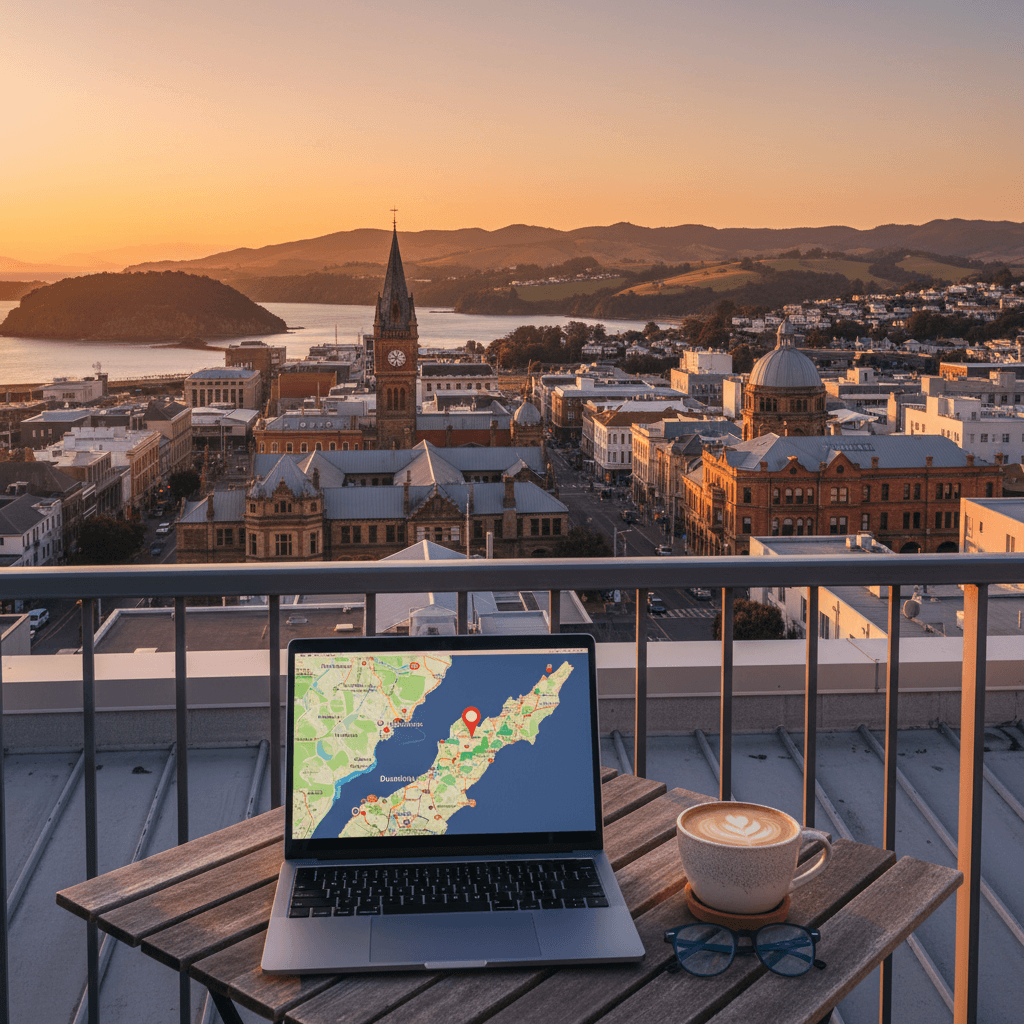
Dunedin
🇳🇿 New Zealand
Dunedin feels like a city that never quite hurries and that’s the point. You get Scottish bones, student energy, cold sea air, gulls yelling over the harbor and a lot of wet, grey mornings that can either feel moody or depressing, depending on your mood. The nomad score is 72/100, which sounds fair, because the tradeoff is obvious, low stress and big scenery, but also rain, hills and a nightlife scene that can feel thin if you’re used to bigger places.
Most nomads who settle here come for the outdoors first, then stay for the calm. The Otago Peninsula is the big draw, with penguins, albatross, rough coastline and that wind-in-your-face kind of walk that clears your head fast, while the city itself has a student-heavy pulse from the University of Otago that keeps cafés busy and keeps rent from feeling insane by New Zealand standards.
Not cheap, but not Auckland either. A one-person monthly budget sits around NZ$2,106 including rent and you can still keep things reasonable if you don’t mind a smaller place and a bus pass, though the wet winters and steep streets do make every errand feel a bit more effortful than it should.
What it feels like in practice
- North Dunedin: Best for young nomads and solo arrivals, with cafes, cheaper studios around NZ$1,200+ and easy access to the university crowd, though Castle Street can get loud and messy when students are out.
- St Clair: Better if you want quieter mornings, beach walks and a more settled expat feel, but you’ll probably want a car and you’ll pay more, often NZ$1,500+ for a 1BR.
- Dunedin Central: Handy for coworking, errands and museums, though the hills bite a bit and you’ll end up relying on buses more than you might expect.
The city is safe enough that most people just use normal common sense, still, petty theft happens and student bars can get rowdy late at night. Internet is solid, which, surprisingly, matters more here than the scenery and you’ll find decent fiber, Regus on George Street, plus cafés where people actually work instead of just pretending to with a coffee.
Dunedin’s personality is a little eccentric, a little weather-beaten and honestly a bit polarizing. If you want constant nightlife and flat sidewalks, skip it, but if you like long walks, cheap lunch spots, sea spray on your jacket and a place that feels lived-in rather than performed for visitors, it can be a very good base.
Cost of Living
Dunedin feels affordable for New Zealand, but it’s still New Zealand. A solo nomad usually lands around NZ$2,106 a month with rent included and that number gets tighter fast if you want a bigger flat, more café lunches or a car for weekend escapes.
Rent is the part that bites hardest. In North Dunedin, a studio or 1BR often sits around NZ$1,200 to NZ$1,478, while places outside the center, like St Clair, can run NZ$1,000 to NZ$1,280, though the trade-off is fewer walkable errands and a bit more bus dependence, honestly.
Typical Monthly Costs
- Food: about NZ$508 for one person, with cheap eats like a McDonald's combo around NZ$17 and a mid-range dinner for two near NZ$120.
- Transport: roughly NZ$56 if you’re mostly using buses and the odd ride-share, though a monthly Orbus pass is closer to NZ$120.
- Utilities and internet: around NZ$150 combined, with fibre plans from about NZ$92 for decent speeds and reliable video calls.
- Coworking: Regus hot desks start around NZ$65 a day, while monthly desks can begin near NZ$239, so it adds up if you’re not careful.
Food costs behave the way you'd expect in a student city, some meals are cheap, some aren't. George Street has plenty of easy lunch spots and the smell of fried chips drifting out of takeaway joints after dark is basically part of the streetscape.
Comfortable living usually starts around NZ$3,500+ if you want a decent one-bedroom, regular café time and a bit of breathing room. Mid-range nomads often budget NZ$2,500 to NZ$3,000, while lean travellers can scrape by near NZ$2,000 if they keep rent low and don’t drink every night.
What Changes the Budget
- North Dunedin: best if you want cheaper central-ish rent and don’t mind student noise, late-night shouting and Castle Street parties.
- Dunedin Central: handy for cafés, coworking and errands, but the hills can make a simple grocery run feel weirdly like a workout.
- St Clair: quieter and closer to the beach, though you’ll probably want a car or a solid bus routine.
The city’s weather nudges costs in sneaky ways, too. Rain gear, warmer layers and heating bills become part of life in winter and that damp cold gets into your bones after a few grey weeks.
Bottom line, Dunedin isn’t cheap-cheap, but it’s easier on the wallet than Auckland and less frantic, which makes the numbers feel fairer. You’ll pay for the calm, the coastline and the university-town energy and honestly, that balance works for a lot of nomads.
Nomads
North Dunedin is the default pick if you want cafes, cheap-ish rentals and a short walk to George Street, but it comes with student noise, late-night yelling and Castle Street party chaos. The upside is real, though, because you can get a one-bedroom for around NZ$1,200 and still be close to coffee, buses and the odd quiet corner for work.
Dunedin Central works better if you care more about errands than charm, with Regus on George Street, easy access to shops and fewer hours spent hauling yourself up steep hills with groceries digging into your hands. Internet is good, honestly and fiber speeds around 169 Mbps make remote work painless, even if the weather outside is grey and damp enough to make your desk feel twice smaller.
Expats
St Clair is the nicer long-term bet if you want a calmer, leafier setup and don’t mind being less central, because the beach air, wider streets and quieter evenings make a big difference after a week of Dunedin drizzle. It’s pricier, with one-bedrooms often starting around NZ$1,500 and you’ll probably want a car, which, surprisingly, is the part that annoys people most.
For everyday life, the city’s appeal is simple, good coffee, manageable costs and a community feel that’s stronger than you’d expect in a place this small, though the social scene can feel a bit student-heavy and thin after 9pm. You’ll hear rain on windows a lot, smell woodsmoke in winter and deal with weather that can turn sharp and cold in minutes.
Families
St Clair is the easiest family choice because it’s quieter, safer-feeling and close to the beach, with schools nearby and less of the late-night student mess you get inland. Kids get space to run, parents get a calmer evening and the tradeoff is obvious, you’re farther from the center and busier on sunny weekends.
If you need a more central base, look around the edges of Dunedin Central rather than the busiest pockets, because the middle can be hilly, bus-dependent and a pain with prams or shopping bags. The city’s low crime rate helps, but property theft still happens, so don’t leave bikes, strollers or bags sitting out like you’re in a postcard.
Solo Travelers
North Dunedin is the easiest place to meet people fast and the student bars on Castle Street keep the social energy high, though frankly the nightlife is pretty limited once you’ve done the pub circuit twice. If you want cleaner conversation, head to cafes, meetup groups or peninsula tours, because that’s where the calmer crowd actually shows up.
Solo travelers who like walking should pick a base with bus access, not just a pretty address, because Dunedin’s hills get old fast, especially when it’s raining sideways and the pavement feels slick and cold under your shoes. Stay central, keep a rain jacket in your day bag and use Orbus or Uber when the weather turns nasty, which it will.
Dunedin’s internet is, honestly, better than the city’s weather gets credit for. Fiber is common, speeds average 20-100+ Mbps on fiber and a basic home plan can land near NZ$92 a month, so most nomads can work without staring at a spinning wheel all afternoon. Still, grey skies, cold rooms and the occasional power-cut mood from the weather can make a fast connection feel more precious than it should.
The coworking scene is small, but it works. Regus at 218 George Street is the cleanest bet if you want a proper desk, quiet aircon and fewer distractions than a cafe full of laptop campers, while Harvest Court Mall has a similar businesslike feel, if a bit less personality. Internet in cafes is fine too, weirdly, especially around Andersons Bay Road and parts of the centre, though you’ll want to buy a flat white or a scone and not sit there all day like a miser.
Best Coworking Options
- Regus, 218 George Street: Hot desk from NZ$65 a day, dedicated desk from about NZ$239 a month, good if you need quiet calls and a reliable chair.
- Harvest Court Mall: Another solid office-style option, practical rather than stylish, better for focused work than networking.
- Cafes on Andersons Bay Road: Free WiFi, decent coffee and an easy fallback when you don't need a full desk or meeting room.
For most nomads, a cafe plus a decent home setup is enough and honestly that’s the Dunedin way. You’ll hear students chatting over trays, milk frothers hissing and the rain tapping on windows while you answer emails, which sounds lovely until the room gets chilly and your hands start feeling stiff.
Mobile Data and Backup
- Spark prepaid: Good city coverage, starter plans usually sit in the NZ$30 to NZ$60 range with 10GB plus data.
- Vodafone prepaid: Similar pricing and coverage, handy if you want a second SIM as backup.
- Where to buy: Supermarkets and the airport both sell SIMs, so you won't be stranded on arrival.
My take, skip the idea that Dunedin is a remote dead zone. It isn't and if you're based in North Dunedin or the centre, you can stay online, get work done, then walk home past damp stone buildings, gulls yelling overhead and that sharp South Island wind that cuts straight through a jacket.
Safety
Dunedin feels calm, even at night. Most nomads find it safe around the center, North Dunedin and the busier stretches of George Street, though student zones can get noisy and messy after dark, with smashed glass, late shouting and the odd bike left where it shouldn't be.
Violent crime is low, property theft is the real nuisance, so lock your scooter, don't leave a laptop visible in a café window and keep your bag zipped on buses. Honestly, that's the routine here and it works.
The hills change the mood fast, too, because a quick walk can turn into a sweaty climb in summer or a slippery trudge in rain and weirdly that catches visitors out more than the weather reports do. If you want quieter streets, St Clair feels more residential and less buzzy, while North Dunedin is cheaper but comes with student-party chaos near Castle Street.
Healthcare
The medical setup is solid for a city this size and that matters when you're dealing with a cold wind, damp feet and the kind of grey cough that lingers for days in winter. Dunedin Public Hospital handles serious care and Dunedin Urgent Doctors on Filleul Street is the place most people mention for walk-in urgent treatment, with triage, pharmacy access and radiology on site.
For day-to-day stuff, pharmacies are spread around town and some keep on-call services, so you won't be stranded if you need antihistamines, dressings or a repeat prescription. Emergency response runs through 111 and that number should already be in your phone.
What to Keep in Mind
- Night safety: Stick to lit streets, especially around student-heavy blocks and the steep shortcuts that feel fine by day but dead quiet after midnight.
- Theft: It happens, honestly, more than assaults, so lock bikes properly and don't leave gear in cars, even for a quick run into a shop.
- Weather: Cold rain, wind off the harbour and damp pavements make minor injuries and colds more common than you'd expect, so pack decent shoes and layers.
- Access: If you need regular care, register early with a local GP, because wait times can be annoying when winter bugs start moving through town.
For most travelers, Dunedin doesn't feel sketchy, just a bit scruffy in patches and very weather-dependent. If something goes wrong, the system is straightforward and that's a relief.
Dunedin is easy to get around if you stay near the center and mildly annoying if you don’t. The city’s buses, run through Orbus, are cheap at NZ$2.50 a ride with Bee Card, but the hills are real, the weather turns slippery fast and a short walk can feel longer than it looks on the map.
Most nomads end up mixing buses, walking and the occasional Uber, because that’s the least painful combo for errands, cafés and night trips home after the rain starts hammering the footpaths. The bus network is decent for a small city, though service can feel thin once you’re off the main routes and honestly, that matters more than the fare.
Best ways to move around
- Bus: Great King Street is the main hub, single rides are NZ$2.50 with Bee Card and a monthly pass is around NZ$120.
- Uber and taxis: Handy citywide and to the airport, usually NZ$30 to NZ$50 for transfers depending on time and traffic.
- Walking: Fine in the flat central streets, but the hills bite hard, especially if you’re carrying groceries or a laptop bag.
- Biking and scooters: Useful for quick hops, though wet roads and steep sections can make the ride feel sketchy, frankly, after sunset.
Where the layout helps and where it doesn’t
- North Dunedin: Central, walkable to cafés and the bus hub, but noisy thanks to students and Castle Street party traffic.
- Dunedin Central: Good for errands, coworking and culture, though the streets are hilly and you’ll still rely on buses sometimes.
- St Clair: Lovely for beach access and quieter days, but you’ll probably want a car or be ready for longer bus rides.
If you’re staying a while, get a transport card or just budget for the monthly pass, because scattered single fares add up faster than you’d think. For airport runs, the shuttle is a solid fallback and Uber usually beats haggling with a taxi line after a late flight.
One thing people underestimate here is the weather, which, surprisingly, changes how you move through the city almost daily. A dry morning can turn into cold drizzle by lunch and then your bike seat’s soaked, your sleeves smell like wet wool and the pavement feels colder than it should. That’s Dunedin transport in a sentence.
Dunedin’s English is easy for most visitors and the pace of speech is pretty relaxed, but the local rhythm can still catch you out. People say “kia ora” for hello and you’ll hear Māori words in everyday conversation, especially in shops, on campus and at community events. Friendly enough. Quietly local, too.
Don’t expect a language barrier if you speak English, the real adjustment is cultural, with small-town politeness, dry humour and a lot of “yeah, nah” style back-and-forth that can sound vague until you get used to it, honestly. In cafés around George Street or North Dunedin, staff are usually warm and direct and nobody pushes hard sales chat. That’s a relief.
Useful phrases
- Kia ora: hello, thanks or a warm greeting depending on context.
- Ka mihi: thanks, appreciated.
- Haere rā: goodbye, used when someone’s leaving.
- Ae / Āe: yes, though you’ll hear it softened in fast speech.
Most nomads only need Google Translate for the odd Māori phrase or when a local reference goes over your head, which happens more than people admit. You’ll see Māori place names all over Otago and it helps to ask instead of guessing, because people usually appreciate the effort. Turns out, a quick “how do you say that?” goes a long way.
Phone and digital communication are straightforward, with strong mobile coverage and plenty of free WiFi in cafés, coworking spaces like Regus on George Street and even some casual lunch spots. SIM cards from Spark or Vodafone are easy to buy and airport kiosks are handy if you want data the minute you land, though the airport pricing can feel a bit cheeky. Not hard, just annoying.
How people communicate here
- Texting: common for meetups, rentals and casual work contact.
- Email: still the default for landlords, clinics and formal admin.
- Phone calls: used for bookings and urgent matters, especially outside office hours.
- Meetups: Facebook groups, Meetup and word of mouth still do a lot of the heavy lifting.
Be clear and polite, because people don’t love overexplaining and they really don’t love pushy behaviour. If you need help, ask directly, keep it short and you’ll usually get a useful answer, often with a local tip attached. The accent is mild compared with other parts of New Zealand, though every so often a sentence gets swallowed by the wind, the rain and someone walking too fast up a hill.
Dunedin’s weather has a personality and frankly, it changes fast. You can get bright blue sky over Otago Harbour, then a cold squall rolling in off the coast twenty minutes later, with rain tapping on corrugated roofs and a wind that feels sharper than the forecast suggests.
Summer is the sweet spot. January and February are the warmest months, with highs around 19°C, so you can actually sit outside without freezing. Even then, evenings can feel damp and chilly, so pack a proper layer, not just a hoodie you hope will do the job.
Best months to visit:
- February to April: Usually the most comfortable stretch, milder temps, less rain than winter, good for hiking the peninsula and day trips.
- September: Often drier than you’d expect and it’s a solid shoulder-season pick if you hate crowds.
- June to August: Cold, grey, wet and a bit miserable honestly, though the city still works if you don’t mind layers and early nights.
Winter here isn’t dramatic, just persistent. July and August sit around 10 to 12°C, the air feels damp on your skin, pavements stay slick and the hills can turn into a leg workout you didn’t ask for, which, surprisingly, is part of why some nomads burn out on the city faster than they expected.
If you’re working remotely, aim for a shoulder season stay. You’ll get better chances for outdoor time, easier bike rides and fewer days where the whole sky looks like wet cement, though the tradeoff is that Dunedin never really turns tropical, so don’t arrive expecting beach weather for weeks on end.
What to pack:
- Rain shell: You’ll use it a lot, even in months that look mild on paper.
- Warm layers: Merino, fleece and a decent windproof jacket beat one heavy coat.
- Good shoes: Streets and tracks can be steep, slippery and gritty after rain.
- Indoor backup plans: Cafes, museums and coworking spaces help when the weather turns nasty.
My take? Visit in late summer or early autumn if you want the best balance of daylight, decent weather and outdoor access. Winter’s fine if you like moody skies and quiet streets, but it can feel long, grey and a little boxed in, especially if the wind’s howling down George Street and your socks never seem fully dry.
Dunedin works best if you like clean air, wet jackets and a city that feels half student town, half gateway to the wild. It’s cheaper than Auckland, the hills will make you curse your bag on day one and the weather can flip from bright to grey in ten minutes. Not beach weather. Pack layers.
Money-wise, plan around NZ$2,000 a month if you’re keeping it tight and more like NZ$2,500 to NZ$3,000 if you want a decent one-bed, the odd café lunch and a bit of breathing room. Studio and 1BR places in North Dunedin often sit around NZ$1,200 to NZ$1,478, while quieter spots like St Clair can run higher, weirdly, even though you’re farther from the centre.
Where to stay
- North Dunedin: Best for nomads who want cafes, buses and a cheap-ish base, though Castle Street can get loud when students are out.
- Dunedin Central: Handy for errands, coworking and day-to-day life, but the hills are real and you’ll feel them carrying groceries home.
- St Clair: Quieter, leafier and near the beach, honestly, but you’ll probably want a car or a very patient bus routine.
Internet is solid, which, surprisingly, makes remote work much easier than the weather does. Fiber plans can start around NZ$92 a month and average speeds are strong enough for calls, uploads and regular work without the usual buffering nonsense.
If you want a desk, Regus on George Street is the most straightforward option, with hot desks around NZ$65 a day and monthly desks from about NZ$239. Cafes on Andersons Bay Road often have free WiFi too, though you’ll get the clatter of cups, espresso steam and the occasional seat-stealer if you linger too long.
Daily basics
- SIMs: Spark and Vodafone starter packs are easy to grab at the airport and prepaid plans usually run NZ$30 to NZ$60.
- Transport: Orbus rides are about NZ$2, with a monthly pass around NZ$120 and Uber works well for late nights or airport runs.
- Banking: ASB and BNZ apps are the easiest local setup and Wise is handy if you’re moving money around often.
For healthcare, Dunedin Public Hospital covers the basics well and Dunedin Urgent Doctors on Filleul Street is the place to remember for walk-in care. Safety is generally fine, though theft does happen, so don’t leave your laptop on a café table while you pop to the toilet, that kind of thing.
Day trips matter here. Do the Otago Peninsula for penguins and albatross, skip the lazy tourist drift and if you’ve got a spare afternoon, book the Moeraki Boulders route through a tour or bus option because driving and weather can get annoying fast.
Customs are easy enough, though Kiwis do appreciate a little politeness and indoor hats look odd in more formal settings. Tip lightly, say “kia ora” when it fits and don’t expect big city nightlife, because after midnight Dunedin gets quiet in a way you can hear.
Need visa and immigration info for New Zealand?
🇳🇿 View New Zealand Country GuideEasy Landing
Settle in, no stress