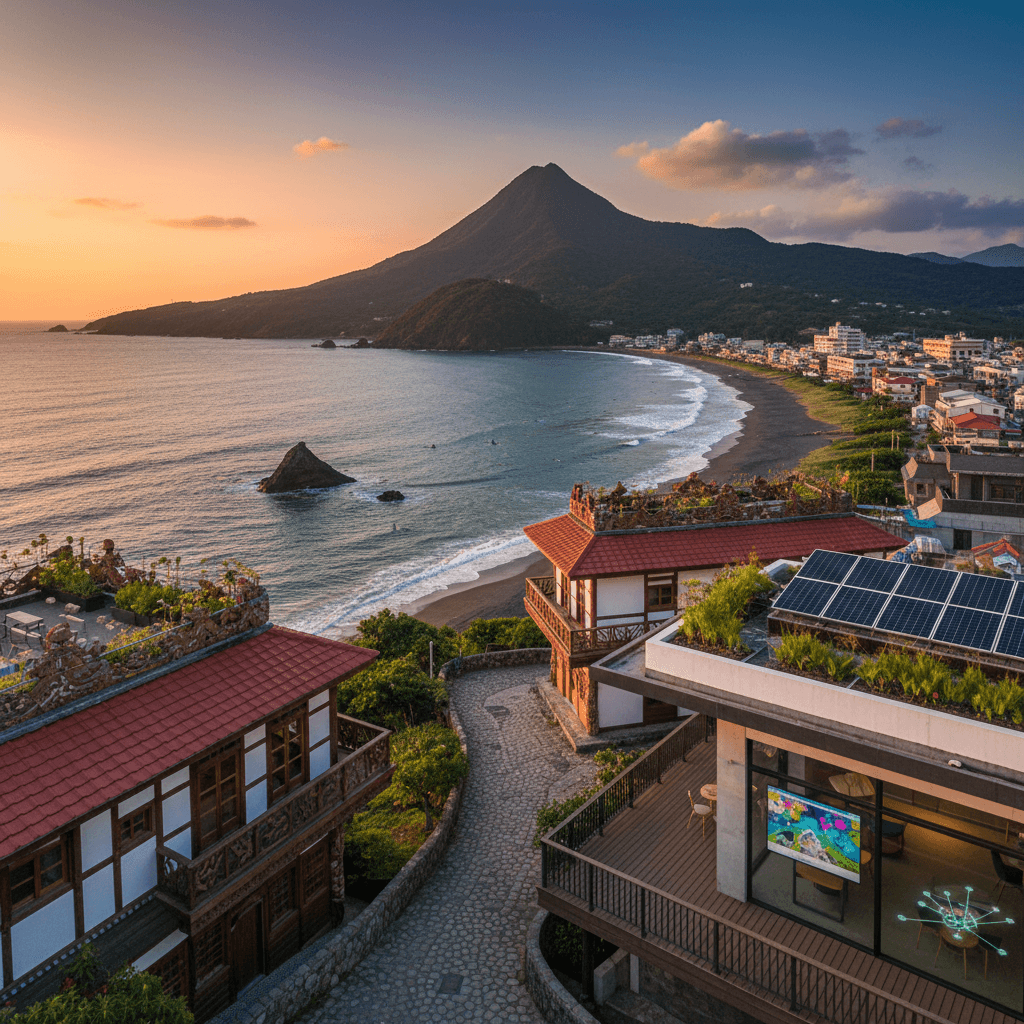
Dulan
🇹🇼 Taiwan
The Spirit of the Coast
Dulan is where Taiwan takes a deep, salty breath. While the rest of the island races ahead with high speed rail and neon-lit tech hubs, this small village on the southeast coast remains stubbornly, beautifully slow. It is a place defined by the rhythm of the Pacific and the deep roots of the indigenous Amis people. You won't find skyscraper offices here; instead, you'll find converted sugar factories turned into art galleries and surfboards leaning against every second cafe wall.
The vibe is distinctly bohemian and unpretentious. It attracts a specific breed of digital nomad, those who prioritize a morning surf or a mountain hike over high end networking events. There is a raw, creative energy in the air that feels more like a small town in Byron Bay or Canggu twenty years ago than a typical East Asian destination. It is a community of makers, musicians, and wave riders who have traded the "hustle" for a life measured in tides and sunset beers.
What Makes Dulan Different
Unlike the polished streets of Taipei, Dulan is a bit gritty in the best way possible. You'll spend your days scootering up Yuanshan Industry Road for views that make you forget your inbox exists, or hanging out at the Dulan Sugar Factory, which serves as the village's creative heart. It is one of the few places in Taiwan where the local indigenous culture is the primary influence rather than a footnote. This gives the town a soulful, grounded feeling that's hard to find in more commercialized coastal spots.
The emotional experience of living here is one of total decompression. Most nomads arrive planning to stay for a week and find themselves still there three months later. You'll get used to the "Dulan Time" where meetings are loose and the most important decision of your day is which beach has the best break. It is the ultimate antidote to burnout.
The Practical Reality
Living here requires a bit of a pivot in expectations. While Taiwan's internet is famously fast, Dulan’s infrastructure is rural. You won't find dedicated coworking spaces with ergonomic chairs. Instead, you'll be working from local cafes like those near Dulan Beach, where the price of "office space" is usually a 150 NTD latte and a polite smile. English isn't widely spoken once you leave the main surf shops, so having Google Translate ready is a must for navigating local eateries.
It is also remarkably safe. You can leave your helmet on your scooter or your bag at a cafe table without a second thought. This level of security, combined with the low cost of living compared to Western hubs, makes it a sanctuary for solo travelers. However, the isolation is real. If you need a mall or a cinema to feel happy, Dulan will feel too small within forty eight hours. If you need the ocean and a quiet place to think, you might never want to leave.
Cost and Lifestyle Tiers
- The Budget Nomad: Expect to spend 30,000 to 45,000 NTD per month. This covers a bed in a shared guesthouse, sticking to local seafood stalls for 150 NTD meals, and getting around mostly on foot or by the occasional bus.
- Mid-Range Living: A budget of 45,000 to 70,000 NTD is the sweet spot. This allows for a private studio or a nice B&B room, a consistent scooter rental at 400 NTD per day, and plenty of cafe working sessions.
- The Comfortable Stay: At 70,000+ NTD, you're living exceptionally well. You can snag a premium rental with mountain views, eat at the nicer fusion restaurants on the main strip, and take frequent trips into Taitung City for supplies.
The new 180 day Digital Nomad Visa makes Dulan an even more attractive prospect for 2025 and 2026. It allows you to actually settle in, learn the local breaks, and become a regular at the village's small handful of bars. You aren't just a tourist here; after a few weeks, the locals will recognize your scooter and know your coffee order.
The Price of Paradise
Dulan is a breath of fresh air for your bank account if you are coming from Taipei, but it is not the dirt-cheap haven you might find in Vietnam or Northern Thailand. You are paying for a high quality of life, incredible safety, and reliable infrastructure in a rural setting. Most nomads find they can live comfortably here for significantly less than in Taiwan's major cities, provided they embrace the local pace.
For a solo nomad, your monthly burn will likely fall into one of these three brackets:
- Budget: 30,000 to 45,000 NTD ($950 to $1,400 USD). This covers a bed in a shared guesthouse or a very basic local rental, plenty of street food, and getting around mostly on foot or by bus.
- Mid-range: 45,000 to 70,000 NTD ($1,400 to $2,200 USD). This is the sweet spot for most. You'll get a private studio or a nice room in a B&B, a dedicated scooter rental, and a mix of local stalls and trendy cafes.
- Comfortable: 70,000+ NTD ($2,200+ USD). At this level, you are looking at premium mountain-view rentals, frequent Western meals, and plenty of weekend trips around Taitung County.
Housing and Accommodation
Finding a long term rental in Dulan requires a bit of "boots on the ground" effort. There aren't many large apartment complexes, so you'll mostly be looking at converted guesthouses or small houses. Prices for a decent studio or a one bedroom near the beach usually land between 15,000 and 25,000 NTD per month. If you want those sweeping Pacific views from the hills along Yuanshan Industry Road, expect to pay a premium for the scenery.
Eating and Drinking
Food is where you can really control your costs. If you stick to the local seafood stalls and noodle shops in the village center, a solid meal only costs 100 to 200 NTD. It is fresh, delicious, and usually involves the catch of the day. The local cafes cater more to the surfing and nomad crowd, with brunch plates or dinners ranging from 300 to 500 NTD. Nightlife is fairly quiet, mostly revolving around a few beachside bars where a beer will set you back about 100 to 150 NTD.
Transport and Connectivity
Public transport is infrequent, so a scooter is almost mandatory if you want to explore the coastline. Daily rentals are usually 300 to 500 NTD, but you can negotiate a much better "long stay" rate if you're sticking around for a month or more. Expect to pay around 8,000 to 10,000 NTD for a monthly scooter lease.
Since there are no dedicated coworking spaces in the village, your "office" costs will mostly be the price of a coffee or a meal. Most cafes are happy to let you work for a few hours if you keep the orders coming. A high speed mobile data plan is a smart investment; a local SIM from Chunghwa Telecom costs about 300 NTD for 10GB, though many nomads opt for unlimited plans to use as a hotspot.
Daily Essentials
- Coffee at a local cafe: 100 to 150 NTD
- Liter of milk: 90 NTD
- Quick 7-11 meal: 80 to 120 NTD
- Surfboard rental: 500 NTD per day
- Bus trip to Taitung City: 50 to 100 NTD
While Taiwan is often described as being on the pricier side for Asia, the value in Dulan is found in the lack of "city stress" costs. You won't spend much on expensive gym memberships or high end entertainment. Life here is about the ocean and the mountains, and those are always free.
For Nomads: The Beachfront and Surf Hubs
If you're coming to Dulan to balance deep work with Pacific swells, you'll want to stay as close to the coastline as possible. This area, stretching toward Dulan Beach, is where the village's bohemian heart beats loudest. It's the most social part of town, filled with surfers and travelers who congregate at local cafes once the morning fog lifts.
- The Vibe: Salty, creative, and extremely laid-back. You'll find most of the village's "work-friendly" cafes here, where 5G speeds are surprisingly reliable despite the rustic surroundings.
- Housing: Mostly boutique guesthouses and B&Bs. Expect to pay between 15,000 and 25,000 NTD per month for a private room or studio.
- Pros: You can walk to the surf breaks in five minutes and grab a craft beer at a beach bar by sunset.
- Cons: It gets noisy during the weekends when domestic tourists arrive, and the salt air can be tough on your laptop if you aren't careful.
For Solo Travelers: The Village Center (Highway 11)
Most solo travelers choose to base themselves along the main artery of the village, Highway 11. This isn't a "neighborhood" in the traditional sense, but rather a compact cluster of life where everything you need is within a ten-minute walk. It's the best spot for those who don't want to rely entirely on a scooter for every meal or grocery run.
The social scene here revolves around the Dulan Sugar Factory, an old industrial site turned into an arts collective. Solo travelers often spend their evenings here watching live music or browsing local Amis handicrafts. It's the easiest place to meet people without needing a formal expat meetup group.
- Daily Costs: Street food stalls serve fresh seafood or noodles for 100 to 200 NTD. A coffee at a nomad-friendly spot usually runs about 150 NTD.
- Convenience: This is the only part of town where you'll find easy access to the bus to Taitung City and the local 7-11, which acts as the village's de facto logistics hub for everything from ATM withdrawals to shipping packages.
For Expats and Long-Termers: Yuanshan Industry Road
Once you've decided to stay for a few months on the new 180-day Digital Nomad Visa, the noise of the main road might start to wear on you. Expats and those seeking a "home base" feel usually head "up the hill" toward the mountains. Following Yuanshan Industry Road leads you into a lush, jungle-like environment with sweeping views of the ocean below.
Life up here is quiet. You'll hear cicadas instead of scooters. Most long-term rentals in this area are larger properties or quiet villas tucked away in the greenery. You'll definitely need to budget about 400 NTD per day for a scooter rental, as the walk into town is steep and long.
- Rent: Private houses or larger mountain-view apartments can start at 25,000 NTD and go up significantly depending on the view.
- The Trade-off: You get incredible peace and better air quality, but you're a 15-minute ride away from the nearest convenience store. It's the preferred choice for writers or developers who need total silence to focus.
For Families: Northern Dulan and Coastal B&Bs
Dulan isn't a typical family destination due to the lack of international schools or playgrounds, but families who visit usually opt for the northern outskirts of the village. This area offers more space and direct access to quieter stretches of the coast where the tide pools are safer for kids to explore than the main surf breaks.
The pace here is glacial. Families typically rent out entire B&Bs for a month at a time to secure a kitchen, as consistent family-style dining is limited in the village center. Most find that the safety of Taiwan makes this a stress-free environment; kids can roam relatively freely, and the local community is famously welcoming to children.
- Transport: A car rental is highly recommended for families to reach the larger hospitals and supermarkets in Taitung City, which is about a 30-minute drive south.
- Healthcare: While there are local clinics for minor issues, most families head to Taitung Hospital for anything serious, where English-speaking staff are more common.
Digital Infrastructure and Connectivity
You might be trading the skyscrapers of Taipei for the surf breaks of Taitung, but you aren't sacrificing your connection. Taiwan consistently ranks among the world's best for internet speeds, and Dulan is no exception. Even in this sleepy coastal village, fiber optic lines and widespread 5G coverage are the norm. Expect speeds ranging from 100 Mbps to 500 Mbps in most guesthouses and cafes, which is plenty for heavy video calls or uploading large files after a morning session on the waves.
For mobile data, don't rely on roaming. Most nomads pick up a local SIM from Chunghwa Telecom or Taiwan Mobile. You can grab these at the airport or a local 7-Eleven for around 300 NTD for a 10GB starter pack. If you prefer the convenience of an eSIM, Airalo works flawlessly here, though local physical SIMs generally offer better value for long-term stays under the new 180-day Digital Nomad Visa.
Coworking and Remote Work Spots
Dulan now has at least one dedicated coworking space, Surf House Taiwan, which offers standing desks, WiFi, air conditioning, and a lounge area. For additional options with private offices, you can also head into Taitung City, about 30 minutes south. There, you can find general business hubs and shared offices with day rates typically between 500 and 1,000 NTD.
Most nomads in Dulan embrace the "laptop cafe" lifestyle. The village center and the beachfront are dotted with laid-back spots that are very accommodating to remote workers. As long as you're ordering coffee or a meal, staff generally won't mind you staying for a few hours. Power outlets are common, though it's smart to carry a portable power bank if you're heading to the more rustic beachside shacks.
- The Village Core: Several cafes along Highway 11 offer reliable WiFi and a steady supply of caffeine. It's the best spot for networking with the small but growing community of international nomads.
- Beachside Cafes: These offer the best views but can be more exposed to the elements. They're perfect for light admin work or emails, though the salt air and wind might not be ideal for expensive hardware during a storm.
- Dulan Sugar Factory: This repurposed industrial space is the village's creative heart. While it's more of an arts hub, its cafes provide a unique atmosphere for afternoon work sessions surrounded by local galleries.
Practical Tips for Remote Workers
The work-life rhythm in Dulan is dictated by the ocean. Most remote workers here flip their schedules, hitting the surf at sunrise and starting their "office hours" in the late morning when the cafes open. Since the village is small, you'll likely run into the same group of expats and travelers daily, making it easy to form informal co-working clusters.
If your job requires absolute silence for meetings, be mindful of the local environment. Dulan is peaceful, but the sounds of cicadas, distant scooters, or crashing waves can be surprisingly loud on a sensitive microphone. Most nomads recommend choosing a guesthouse with a private desk or a dedicated common area to ensure a controlled environment for important calls.
- Daily Budget: Plan for about 200 to 400 NTD if you're working from cafes, covering a couple of specialty coffees and a snack.
- Power Stability: Power outages are rare but can happen during typhoon season. Having a 5G hotspot as a backup is a standard move for anyone with tight deadlines.
- Hardware: There are no major electronics stores in Dulan. If you lose a charger or need a new mouse, you'll need to make the trip into Taitung City to find a specialty tech shop.
Personal Safety and Local Vibes
Taiwan consistently ranks as one of the safest places on the planet, and Dulan is no exception. In this sleepy coastal village, the biggest "crime" you are likely to encounter is a cheeky local dog trying to sniff your surfboard. Solo travelers, including women, usually feel completely comfortable walking home from a beachside bar or a late night snack run at the 7-Eleven under the stars. There are no "no go" zones here; the community is tight knit and people generally look out for one another.
The real safety concerns in Dulan are environmental rather than social. If you are renting a scooter to explore the winding mountain paths of Yuanshan Industry Road, watch out for gravel and wandering livestock. During typhoon season, which typically peaks between July and September, the ocean can become treacherous. Always check with local surf shops like WaGaLiGong before heading into the water if the swell looks heavy. Most nomads find that as long as they respect the ocean and wear a helmet on their bike, they stay out of trouble.
Healthcare and Emergency Services
While Dulan is rural, you are never far from world class medical care. Taiwan’s healthcare system is famous for its efficiency and affordability. For minor issues like a cold or a small scrape, the local pharmacies in the village center can help you out. For anything more serious, you will need to head into Taitung City, which is about a 20 to 30 minute drive south.
- Taitung Hospital: This is the main facility for the region. It is modern, well equipped, and you will usually find staff who speak enough English to get you through an emergency or a specialist appointment.
- St. Mary’s Hospital: Another excellent private option in Taitung City often recommended by expats for its high standard of care and friendly atmosphere.
- Emergency Numbers: Dial 119 for an ambulance or fire services, and 110 for the police. If you are struggling with a language barrier, the dedicated tourist information hotline at 0800-011-765 can provide assistance in English.
The Digital Nomad Visa and Health Insurance
If you are taking advantage of the new Digital Nomad Visa, which allows for an initial 180 day stay and is renewable for up to two years, you will eventually want to look into the National Health Insurance (NHI) scheme. Once you become a legal resident, you can often enroll in this system, which makes doctor visits incredibly cheap, often costing less than $15 USD for a consultation and medication. Before that kicks in, make sure you have a solid private policy like SafetyWing or Genki that covers scooter accidents and water sports.
Practical Wellness Tips
The sun in Southeast Taiwan is intense. Travelers often underestimate the heat, especially when the ocean breeze makes it feel cooler than it actually is. Stay hydrated with bottled water or filtered water from your guesthouse; while the tap water in Taiwan is generally high quality, most locals and long term expats prefer to boil it or use a filter before drinking. For daily essentials, the 7-Eleven and FamilyMart in the village center are your best friends. They function as mini community hubs where you can pay bills, ship packages, and find basic over the counter health supplies at any hour of the day.
The Scooter Life
Dulan is a village where life happens along a single main artery. While the central core is walkable, you'll feel stuck without your own wheels. Most nomads find that renting a scooter isn't just a convenience; it's a requirement for reaching the best surf breaks, hidden mountain cafes, and the more secluded B&Bs up Yuanshan Industry Road.
You can pick up a rental for about 300 to 500 NTD per day. If you're staying for a month or longer, negotiate a long-term rate. Expect to pay around 6,000 to 8,000 NTD for a monthly lease. Just make sure you have an International Driving Permit (IDP) with a motorcycle endorsement, as local police in Taitung County have become stricter about documentation for foreigners lately.
Public Transit and Buses
The public bus system is reliable but infrequent. The Dingdong Bus and the Taiwan Tourist Shuttle (East Coast Line) run through the village, connecting Dulan to Taitung City and other coastal spots like Chenggong. Tickets usually cost between 50 and 100 NTD depending on how far you're heading.
- Frequency: Buses typically run every 30 to 60 minutes during the day.
- Payment: Use an EasyCard or iPass. You can buy and top these up at any 7-11 or FamilyMart in the village.
- Apps: Download the Bus+ or Taiwan Bus app to track real-time arrivals. Without these, you'll spend a lot of time staring at an empty road.
Getting to Dulan from the North
Most travelers arrive via Taipei. The fastest route is taking the express TRA train (Puyuma or Taroko) to Taitung Station. The train ride takes approximately 3.5 to 4.5 hours and costs around 1,000-1,200 NTD for express service. Note: Taiwan High Speed Rail (HSR) does not serve Taitung; it terminates at Zuoying in Kaohsiung.
Once you hit Taitung Station, you have three main choices to reach Dulan:
- Taxi: A 24-25 minute ride will cost you about 600-750 NTD. It's the easiest way if you have surfboards or heavy luggage.
- Bus: Walk to the bus stop outside the station and look for the 8101, 8102, or 8103 routes.
- Scooter Rental: Many nomads rent their scooter right at the Taitung train station and drive themselves to Dulan. It’s a straightforward 15-kilometer cruise up the coast.
Ride-Hailing and Taxis
Don't count on Uber here. While the app might show a car occasionally in Taitung City, it's virtually non-existent in Dulan. Instead, use Line Taxi (integrated into the Line messenger app) or ask a local shop owner to call a "Ji-cheng-che" (taxi) for you. Most drivers are local residents and are generally very honest, but they rarely speak English, so have your destination written in Chinese characters on your phone.
Cycling and Walking
The village center is tiny. If you're staying near the Dulan Sugar Factory, you can walk to most cafes, the local 7-11, and a few bars within 10 minutes. However, the walk to Dulan Beach is about 15 to 20 minutes under a very hot sun. Bicycles are a decent alternative for short trips, but the hilly terrain toward the mountains will test your legs quickly. Unlike Taipei, you won't find YouBike docking stations here; you'll need to check if your guesthouse provides a cruiser for free.
The Linguistic Landscape
In Dulan, your ears will catch a mix of sounds that set it apart from the concrete jungles of Taipei or Kaohsiung. Mandarin Chinese is the primary language for business and daily life, but this is the heartland of the Amis people. You'll frequently hear the rhythmic, melodic tones of the Amis indigenous dialect being spoken by elders in the village or at the local markets.
Don't expect the high level of English proficiency found in the northern tech hubs. In rural Taitung County, English levels are generally low. While younger surf instructors and cafe owners often speak enough to get by, the aunties running the fruit stalls or the local seafood spots likely won't. Most nomads find that a friendly smile and some patient gesturing go a long way here.
Practical Communication Strategies
If you're planning to stay for more than a week, you'll need a digital toolkit to bridge the gap. Travelers often say that Google Translate is their most used app, specifically the camera feature for deciphering menus at local eateries. Since many signs are written in Traditional Chinese characters, being able to scan a chalkboard menu is a lifesaver.
- Line: This is the "everything app" of Taiwan. Whether you're booking a surf lesson, talking to a landlord, or ordering a taxi from Taitung, it happens on Line. Download it and set it up before you arrive.
- Language Apps: Spending twenty minutes a day on an app like Pleco or HelloChinese will make your life significantly easier. Even basic recognition of characters for "pork," "chicken," or "exit" changes the experience.
- Voice Translation: For more complex conversations, like explaining a specific dietary restriction or negotiating a long term scooter rental, use a voice-to-voice translator.
Essential Phrases for the Village
Locals in Dulan are incredibly welcoming, and making an effort to speak even a few words of Mandarin or Amis will instantly warm up your interactions. It's the difference between being a tourist and being a neighbor.
Mandarin Basics:
- Nǐ hǎo: Hello
- Xièxie: Thank you
- Duōshǎo qián?: How much? (Expect to pay around 100 to 200 NTD for a standard local meal).
- Bùyào: I don't want/need it (useful for polite refusals).
- Tíng: Stop (useful when navigating with a driver).
Amis Basics:
- Nga'ayho: Hello/How are you? (Using this in Dulan is a guaranteed way to get a huge grin from the locals).
- Aray: Thank you.
Staying Connected
Reliable communication requires reliable data. While Dulan feels remote, the 5G coverage is surprisingly robust. Most expats recommend picking up a local SIM card at the airport upon arrival rather than trying to find one in the village. Chunghwa Telecom and Taiwan Mobile have the best coverage along the coast.
If you're looking for the path of least resistance, an Airalo eSIM works perfectly for short to medium stays. For long term nomads staying 3 months or more, getting a physical SIM at a 7-Eleven or a dedicated shop in Taitung City is more cost effective, usually running around 300 to 500 NTD for a generous data package. You'll find that almost every cafe along the main road offers free, fast WiFi, usually averaging between 100 and 300 Mbps, making it easy to stay in touch even if your mobile signal dips in the mountains.
When to Go and What to Expect
Dulan is a tropical escape that operates on a different clock than the rest of Taiwan. Because it sits on the southeast coast, the weather is heavily influenced by the Pacific Ocean. You'll find a humid, warm climate for most of the year, but the "best" time to visit depends entirely on whether you're here to catch waves, hike the coastal range, or just find a quiet corner to work from your laptop.
The Surfing Season: November to March
For the surfing community, the winter months are the undisputed peak. While northern Taiwan gets grey and drizzly, Dulan stays relatively dry and comfortably cool. Temperatures usually hover between 18°C and 24°C (64°F to 75°F). This is when the northeast monsoon kicks in, bringing the most consistent swells to Dulan Beach.
- The Vibe: The village feels alive with international surfers and nomads who've moved south to escape the Taipei winter.
- Pros: Perfect water for surfing, no sweltering heat, and very little rain.
- Cons: Accommodations near the beach fill up fast; expect to pay closer to 25,000 NTD for a decent monthly rental during this window.
The Summer Heat: June to September
Summer in Dulan is intense. Temperatures frequently climb above 32°C (90°F) with high humidity that makes midday outdoor work almost impossible without air conditioning. This is also typhoon season. While the central mountain range protects the west coast, Dulan sits right in the firing line for storms coming off the Pacific.
- The Vibe: Slow and sleepy. Most activity happens before 10:00 AM or after 4:00 PM. It's the best time for swimming and snorkeling when the ocean is flat.
- Pros: Lush, green landscapes and incredibly clear skies for mountain drives up Yuanshan Industry Road.
- Cons: High risk of travel disruptions due to typhoons; the heat can be draining for those not used to the tropics.
The Sweet Spots: April, May, and October
Many long term expats argue that the shoulder seasons are the best time to settle in. October, in particular, offers a brilliant balance. The brutal summer heat has faded, the typhoon risk drops significantly, and the water is still warm enough for a morning swim without a wetsuit. April and May are similarly pleasant, though you might encounter the "plum rains," a period of frequent but short lived afternoon showers.
Practical Realities for Nomads
Regardless of when you arrive, you need to account for the humidity. It's a constant factor that can affect electronics if you aren't careful. Most nomads recommend choosing a guesthouse with a dehumidifier. If you're planning a stay longer than a month, try to arrive in late autumn. You'll beat the winter surf crowd to the best housing deals and enjoy the most stable weather for scootering around the Taitung coastline.
Keep an eye on the local Amis festival calendar as well. The Harvest Festivals usually take place between mid-July and early September, with different tribes celebrating at different times. While it's a hot time to visit, the cultural energy in the village is unmatched, and it's a rare chance to see traditional celebrations that have remained central to Dulan's identity for generations.
Connectivity and Tech Setup
Taiwan's internet infrastructure is among the best in the world, and Dulan is no exception. Even in this sleepy surf town, you'll find reliable 5G coverage and high speed fiber in most guesthouses. Most nomads find that a local SIM card is the most reliable way to stay connected while scootering between beaches. Pick up a Chunghwa Telecom or Taiwan Mobile SIM at the airport or a 7-11 for about 300 NTD. If you prefer the digital route, Airalo works perfectly here.
There aren't any formal coworking spaces in the village yet. Most remote workers set up in cafes like Dulan Sugar Factory or the various surf hangouts along the main road. Expect to pay about 200 NTD for a coffee and a few hours of table time. Power outlets are common, and the vibe is generally "work at your own pace." If you need a proper office setup for a day, you'll have to take the 30-minute bus ride into Taitung City.
Visas for the Long Haul
The game changer for 2025 and 2026 is the new Digital Nomad Visa. It allows you to stay for up to 180 days and is renewable for up to two years. This is a massive upgrade from the old visa runs nomads used to do. If you're from a visa-exempt country like the US, UK, or Australia, you can still enter for 90 days without any paperwork, which is plenty of time to see if the slow life suits you.
Money and Local Costs
Cash is still king in rural Taiwan. While you can use cards at 7-11 or larger hotels, you'll need NTD for street food and scooter rentals. There are ATMs in the village center that accept international cards. For a comfortable mid-range lifestyle, budget between 45,000 and 70,000 NTD per month. This covers a private studio, a scooter, and plenty of local meals.
- Budget Stay: 30,000 to 45,000 NTD per month
- Mid-range Stay: 45,000 to 70,000 NTD per month
- High-end Stay: 70,000+ NTD per month
Getting Around
The village itself is walkable, but you'll feel trapped without wheels. Travelers recommend renting a scooter immediately. It usually costs between 300 and 500 NTD per day, though you can negotiate a monthly rate of around 6,000 to 8,000 NTD if you're staying long-term. An International Driving Permit is technically required, so bring one to avoid issues with local police or rental shops.
To get here from Taipei, take the express TRA train (Puyuma or Taroko) to Taitung Station. It takes approximately 3.5 to 4.5 hours and costs around 1,000-1,200 NTD. Note: HSR does not serve Taitung. From the Taitung station, a taxi to Dulan will set you back about 300 NTD, or you can catch the infrequent local bus for a few dollars.
Health and Safety
Taiwan is incredibly safe, even for solo female travelers at night. The biggest "danger" in Dulan is probably a stray dog or a slippery road during a typhoon. If you get sick, Taitung Hospital is about 20 minutes away. It's modern, and you'll usually find English-speaking staff in the emergency room. For minor issues, the local 7-11 or small village pharmacies have basic supplies. Use the emergency number 119 for ambulances and 110 for police.
Language and Etiquette
English levels are low compared to Taipei. You'll get by with Google Translate and hand gestures, but learning a few Mandarin phrases goes a long way. Locals are incredibly patient and friendly. When visiting indigenous Amis areas or events at the Sugar Factory, a simple "Ni hao" and a smile are usually all you need to break the ice. Nomads often say that the community here is the most welcoming part of the experience.
Need visa and immigration info for Taiwan?
🇹🇼 View Taiwan Country GuideHidden Gem
Worth the effort