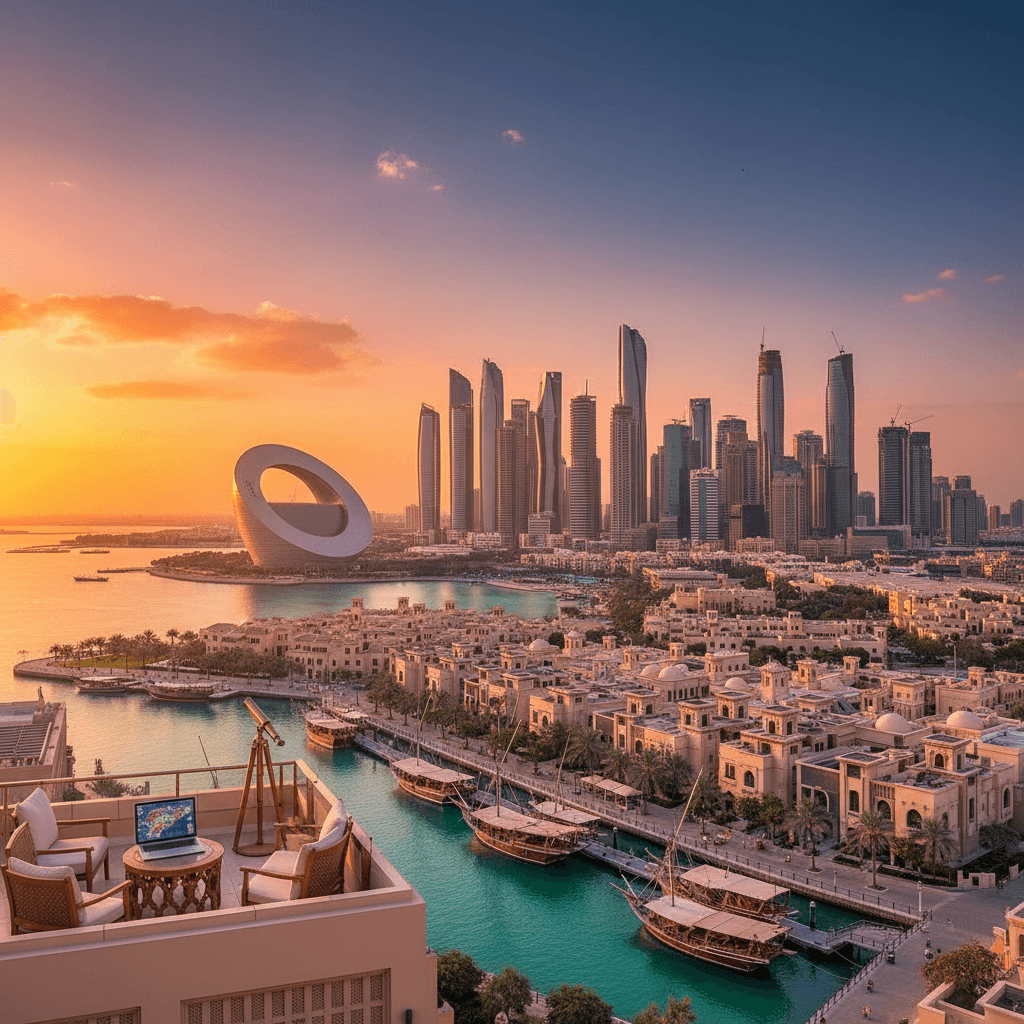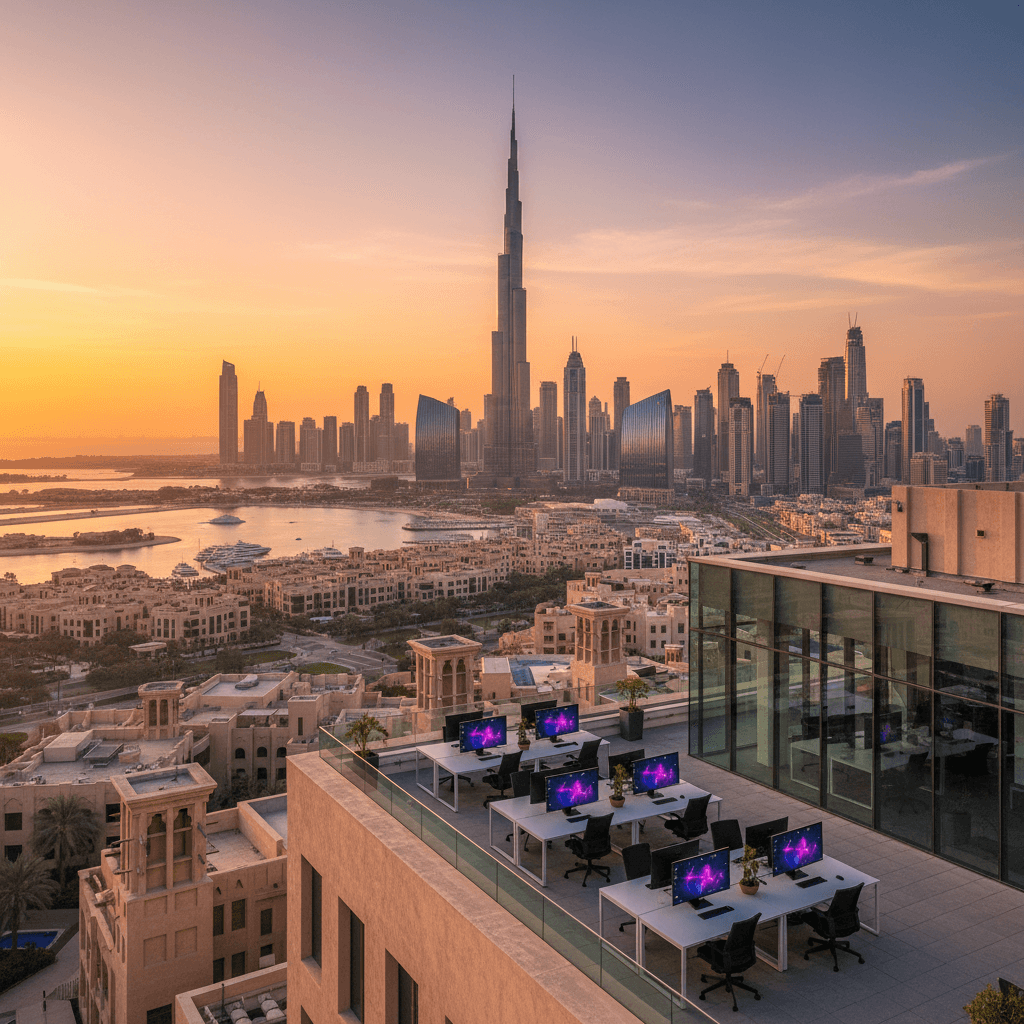
Dubai
🇦🇪 United Arab Emirates
The High-Octane Hub
Dubai is a city that refuses to stand still. It feels less like a traditional metropolis and more like a live-action blueprint of the future. For remote workers, the draw isn't just the zero personal income tax or the year round sunshine; it's the sheer speed of everything. From the D33 economic strategy driving tech innovation to the seamless digital government services, the city is designed for people who want to get things done without the friction of old world bureaucracy.
The vibe is undeniably cosmopolitan. You'll hear five different languages before you finish your first coffee at a cafe in Jumeirah Village Circle (JVC). It's an ambitious, high energy atmosphere where the world's time zones converge. Because it sits perfectly between Europe, Asia, and Africa, you'll find nomads taking calls at 2:00 AM in 24/7 coworking spaces like WeWork or Regus. It’s a place where "luxury" is the baseline, but the real soul of the city lies in its multicultural expat community.
Living here means trading the grit of traditional nomad hubs for extreme safety and world class infrastructure. You can leave your laptop on a table to grab a refill without a second thought. However, that polish comes with a price tag. While the lack of tax is a win, escalating rents in popular spots like the Dubai Marina and Downtown have seen 20-30% hikes recently. Most seasoned nomads now look toward emerging neighborhoods to balance their budgets while still enjoying the high speed 500-1000 Mbps fiber internet that blankets the city.
The Cost of Living Breakdown
Your monthly burn rate in Dubai depends entirely on how much of the "glossy" lifestyle you want to buy into. Most expats find that their biggest hurdle is the housing market, which is why many now favor monthly holiday home rentals or co-living setups.
- Budget ($1,500 to $2,500 USD): Focus on shared living or studios in JVC or Dubai Silicon Oasis. You'll eat at local spots like Al Mallah and use the Metro.
- Mid-Range ($3,000 to $5,000 USD): A private 1BR in Al Barsha, frequent Uber rides, and a dedicated desk at a coworking space.
- High-End ($6,000+ USD): Luxury high-rises in the Marina or Downtown with views of the Burj Khalifa and weekend beach club visits.
Where to Plant Your Laptop
Each neighborhood has a distinct personality, and choosing the wrong one can mean spending hours in traffic. Here is where the nomad community currently clusters:
Jumeirah Village Circle (JVC)
- Best For: Value seekers and solo travelers.
- Rent: AED 4,000 to 7,000 ($1,100 to $1,900) for a studio.
- The Draw: It has a genuine community feel with plenty of parks and nomad friendly cafes. It's less flashy but much more affordable.
Al Barsha
- Best For: Central access and lifestyle balance.
- Rent: AED 6,000 to 10,000 ($1,600 to $2,700) for a 1BR.
- The Draw: You're right next to the Mall of the Emirates. It’s a practical, suburban choice with great metro links.
Dubai Marina
- Best For: Social butterflies and sunset lovers.
- Rent: AED 12,000+ ($3,300+) for a 1BR.
- The Draw: This is the Dubai you see on Instagram. High-rises, rooftop pools, and walkability along the water. It’s crowded and expensive, but the social scene is unmatched.
Practical Realities
Getting around is easy but requires strategy. The Dubai Metro is spotless and efficient, costing between AED 3 and 8 per ride, but it doesn't reach every corner. For everything else, you'll use Careem or Uber. Don't expect to walk much; the city is spread out and the heat from June to September often tops 40°C (104°F), making air conditioning your best friend.
For connectivity, grab a Du or Etisalat prepaid SIM at the airport for about AED 100. You'll need health insurance to secure your remote work visa, and while the city is Westernized, it’s important to respect local customs. Modest dress in public buildings and mindfulness during Ramadan go a long way. Ultimately, Dubai is a place that rewards the driven. It’s a city that makes you feel like anything is possible, provided you can keep up with its pace.
The Reality of the Dubai Price Tag
Dubai is often painted as a playground for the ultra-wealthy, but for the remote work crowd, the financial reality is more nuanced. While you can easily drop $10,000 a month living the high life in a Marina penthouse, many nomads find a comfortable middle ground around the $3,500 to $4,500 mark. The biggest draw remains the zero percent personal income tax, which effectively gives most expats a significant "raise" the moment they land.
The main challenge lately is the rental market. Between 2023 and 2025, popular hubs like Downtown and the Marina saw price hikes of 20% to 30%. If you want to keep your overhead low, you have to look beyond the glittering skyscrapers of the immediate coastline. Most seasoned expats suggest budgeting at least $1,200 for a basic studio in "value" areas, while a 1BR in a prime location will regularly clear $3,300.
Cost Breakdown by Lifestyle
- The Budget Hustler ($1,500 to $2,500): You'll likely base yourself in Jumeirah Village Circle (JVC) or Silicon Oasis. You're eating AED 15 shawarmas from Al Mallah, using the Metro, and working from laptop-friendly cafes rather than dedicated private offices.
- The Mid-Range Professional ($3,000 to $5,000): This covers a nice 1BR in Al Barsha, a full-time WeWork membership, regular Uber trips, and weekend brunches. You're living well without being flashy.
- The High-Earner ($6,000+): You're looking at the Marina or Downtown. Your life involves high-floor views, rooftop gyms, frequent fine dining at places like Pierchic, and zero compromises on convenience.
Neighborhood Price Comparison
Location is the single biggest factor in your monthly burn rate. Here is what you can expect to pay for a typical one-bedroom apartment or studio in the current market.
Jumeirah Village Circle (JVC)
- Monthly Rent: $1,100 to $1,900 (AED 4,000 to 7,000)
- Vibe: Community focused and green. It's the go-to for solo nomads who want a modern building without the Marina price tag.
- Trade-off: The traffic can be a headache during peak hours.
Al Barsha
- Monthly Rent: $1,600 to $2,700 (AED 6,000 to 10,000)
- Vibe: Central and practical. You're right next to Mall of the Emirates and surrounded by some of the city's best casual dining.
- Trade-off: It feels more like a traditional suburb than a futuristic hub.
Dubai Marina
- Monthly Rent: $3,300+ (AED 12,000+)
- Vibe: The classic Dubai experience. High-rises, yachts, and a massive social scene.
- Trade-off: It's crowded, noisy, and the rent increases here are the most aggressive in the city.
Everyday Expenses
Beyond rent, your daily costs are relatively predictable. Food is where you have the most control over your budget. A quick street food meal costs about $5, while a standard dinner for two at a mid-range Lebanese spot like Al Hallab will run you $30 to $50.
For getting around, the Metro is incredibly efficient and cheap, with rides costing between $1 and $2. If you prefer ride-hailing, the Careem app is the local favorite. A 15 minute trip usually costs around $10 to $15. For connectivity, grab a 50GB data SIM from Du or Etisalat at the airport for roughly $50; it's a bit pricey, but the 5G speeds are some of the fastest in the world.
Coworking and Connectivity
If your apartment doesn't have a dedicated "office corner," which many new builds in Silicon Oasis now include, you'll need a workspace. A flexible desk at WeWork Dubai or Regus averages $270 to $450 per month. Most nomads find the $820 premium plans worth it for 24/7 access and the networking opportunities that come with Dubai's ambitious expat community.
The Value Seekers: Jumeirah Village Circle (JVC) and Al Barsha
If you're landing in Dubai with a mid range budget and want to avoid the eye watering price hikes of the coast, JVC is where most nomads eventually settle. It feels like a real neighborhood rather than a tourist attraction. You'll find plenty of green parks and a growing community of remote workers who prefer a quieter pace. Studio rents here typically hover between AED 4,000 and 7,000, which is a steal compared to the Marina.
- Best for: Digital nomads and solo travelers looking for community.
- The Vibe: Suburban, relaxed, and increasingly social.
- Coworking: Many newer buildings feature integrated co-living spaces and lobbies designed for laptops.
- Downside: You'll deal with some heavy traffic during peak hours, and it's not directly on the Metro line.
Al Barsha is the middle ground choice. It's more central than JVC and sits right next to the Mall of the Emirates. Expats recommend it for the incredible density of nomad friendly cafes with fast WiFi. Expect to pay between AED 6,000 and 10,000 for a solid one bedroom apartment. It's functional, well connected, and puts you within a short Careem ride of almost anywhere else in the city.
The Tech Crowd: Dubai Silicon Oasis (DSO)
DSO is the city's dedicated tech hub, located a bit further inland. It’s a favorite for tech freelancers and developers who prioritize high speed fiber and low overheads over beach views. It feels like a self contained ecosystem where everyone is working on a startup or a freelance project.
- Best for: Tech freelancers and budget conscious professionals.
- Rent: Roughly AED 4,000 to 7,000 for a studio.
- Work Spaces: Home to Regus and various tech incubators with flexible plans starting around AED 1,000 a month.
- The Trade off: It's a bit of an island. You'll feel isolated from the nightlife in the Marina or the sights of Downtown.
The High Earners: Downtown Dubai
If your business is scaling and you want to be in the thick of the "New York of the Middle East," Downtown is the only choice. You're living in the shadow of the Burj Khalifa and have the world's largest mall as your local grocery store. It's polished, professional, and very expensive.
- Best for: High earners and families who want premium amenities.
- Rent: Expect to pay AED 12,000+ for a 1BR apartment.
- Lifestyle: You'll have access to some of the world's best gyms and dedicated office corners in the newer luxury builds.
- Note: It can feel very touristy, especially around the Dubai Fountain, so look for apartments slightly tucked away from the main promenade.
The Socialites: Dubai Marina
Dubai Marina is the classic expat dream. It’s a forest of skyscrapers surrounding a winding canal, filled with yachts and joggers. Most newcomers start here because short term rentals are easy to find, even if they're pricey. Travelers often warn about the 20 to 30% rental hikes seen recently, but for many, the lifestyle justifies the cost.
- Best for: Social expats and families who want a coastal lifestyle.
- The Vibe: High energy, vibrant, and very pedestrian friendly compared to the rest of Dubai.
- Work and Play: You can work from a rooftop lounge like Aura Skypool during the day and be at a world class restaurant by 8:00 PM.
- Cost: Budget at least AED 12,000 for a decent apartment, and be prepared for crowds on the weekends.
Practical Logistics for Choosing
When you're searching, use apps like Bayut or Property Finder to get a feel for the current market. Most nomads find it's better to book an Airbnb for the first two weeks to visit these neighborhoods in person. Check the proximity to the Metro; while Careem and Uber are reliable and cost between AED 20 and 50 for most city trips, being near a Red Line station will save you a fortune in the long run. If you're staying long term, remember that health insurance is mandatory for your visa, and you'll want to look into local banks like Emirates NBD once your residency is sorted.
The Digital Backbone
Dubai is a city that doesn't just embrace the future; it builds it. For remote workers, this means you are stepping into one of the most connected environments on the planet. Fiber internet is the standard here, with speeds often hitting 500 to 1000 Mbps. Whether you are in a high rise in the Marina or a cozy apartment in JVC, the connection is rock solid. Most nomads find the reliability of the grid a massive relief, especially when handling heavy video calls or large data transfers.
To get connected the moment you land, head to the Du or Etisalat kiosks at DXB airport. You can grab a prepaid SIM for about AED 100 to 200 ($27 to $55). These starter packs usually come with 50GB of data and plenty of local minutes. If you miss the airport booths, both providers have shops in every major mall, like Mall of the Emirates or Dubai Mall. Just bring your passport to get registered.
Top Coworking Spaces
The coworking scene in Dubai is sophisticated and caters to every type of professional, from solo tech freelancers to corporate teams. Most spaces offer 24/7 access, which is a lifesaver if you are bridging time zones between Europe and Asia.
- WeWork (Multiple Locations): The most popular choice for nomads who want a familiar vibe. They offer flexible monthly plans ranging from AED 1,500 to 3,000. You'll get access to private phone booths, high end coffee, and a community of international expats.
- Regus (Silicon Oasis): Located in the heart of the tech hub, this spot is perfect for those staying in DSO. It’s a bit more corporate and quiet, with focus rooms and day passes starting around AED 1,000 to 2,500 for monthly flexible access.
- Nook (JLT): A favorite for health and wellness entrepreneurs, this space is vibrant and social. It’s great for networking if you want to meet other digital nomads.
- Community Workspaces: Many newer residential buildings in areas like JVC or Downtown now include dedicated "work from home" lobbies or rooftop pods. Day passes for these boutique spots often start around AED 80.
Cafe Culture and Remote Work
If you prefer the hum of a coffee shop over a structured office, Dubai’s cafe culture is world class. Unlike some cities where laptop users are discouraged, many Dubai cafes welcome the "laptop lingerer" as long as you keep the coffee flowing. In Jumeirah Village Circle (JVC), you'll find plenty of local spots with fast WiFi and a community feel. Expats often recommend the cafes near Al Barsha for their reliable speeds and proximity to the metro.
Keep in mind that while WiFi is free in almost every mall and cafe, certain VoIP services like WhatsApp calling or FaceTime can be spotty without a VPN due to local regulations. Most nomads use a reliable VPN to keep their international calls seamless. For casual work sessions, the public libraries and even some beach clubs offer high speed connectivity, though the midday heat usually drives everyone back inside to the air conditioning.
Connectivity Costs at a Glance
- Monthly Coworking (Flexible): AED 1,000 to 3,000 ($270 to $820)
- Daily Hot Desk: AED 80 to 150 ($22 to $40)
- Prepaid SIM Card: AED 100 to 200 ($27 to $55)
- Average Home Fiber: Included in most high end rentals; otherwise AED 350+ monthly.
Travelers often say that the cost of working here is higher than in Southeast Asia, but the trade off is the sheer speed and lack of downtime. You won't be hunting for a signal here; you'll be deciding which rooftop view you want while you clear your inbox.
Staying Safe in the City of Gold
Dubai is famously one of the safest hubs on the planet for remote workers. You can walk through most neighborhoods at 2:00 AM with your laptop bag and feel completely at ease. The local culture places a massive premium on security, and the police are highly efficient, though they mostly operate in the background. While crime is statistically negligible, it is still smart to keep your wits about you in the older, more crowded parts of town like Deira or the Souqs late at night, where the vibe is a bit more chaotic than the polished streets of the Marina.
The real "danger" in Dubai isn't theft; it is the strict legal code. Most nomads find the transition easy if they follow a few simple rules. Public displays of affection are a no-go, and you should dress modestly in malls or government buildings. During Ramadan, you will need to be respectful of those fasting by not eating or drinking in public during daylight hours. Stick to these basics and you will find the environment incredibly welcoming.
- Emergency Police/Ambulance: Dial 999
- Fire Department: Dial 998
- Reporting Minor Incidents: Use the Dubai Police App, which is surprisingly high-tech and responsive.
World-Class Healthcare for Expats
If you get sick, you are in good hands. The healthcare system here is private, ultra-modern, and feels more like a five-star hotel than a clinic. English is the primary language for medical staff, many of whom are recruited from the UK, US, and Europe. For digital nomads, having health insurance isn't just a good idea; it is a mandatory requirement for the remote work visa.
Expats and long-term travelers generally gravitate toward two major providers known for international standards. Mediclinic City Hospital is a favorite for its specialized staff and 24/7 emergency room. Another top-tier option is American Hospital Dubai, which is widely recognized for its high-quality care and seamless billing for those with international insurance policies.
Pharmacies and Daily Wellness
You won't have to look far for a pharmacy. Chains like Life Pharmacy and Aster are on almost every street corner and inside every major mall. Many are open 24 hours, and they often stock international brands you will recognize from home. While many over-the-counter meds are easy to get, the UAE has very strict laws regarding controlled substances. If you bring prescription meds with you, keep them in their original packaging and carry a copy of your doctor's note to avoid any headaches at customs.
Health and Safety Checklist
- Insurance: Ensure your policy covers private hospitals like Mediclinic.
- Hydration: The desert heat is no joke. Between June and September, temperatures hit 45°C (113°F). Most residents stay indoors, but if you're out, carry water constantly.
- Apps: Download DHA (Dubai Health Authority) to track your records or find nearby clinics instantly.
- Prescriptions: Check the Ministry of Health website before flying to ensure your specific medications aren't on the restricted list.
Overall, the peace of mind you get here is a huge draw. Whether you're working late at a cafe in JVC or taking a midnight stroll in Downtown, the city feels designed to keep you secure. Just keep your insurance paperwork handy and respect the local customs, and you will find Dubai to be one of the most stress-free environments for the nomad lifestyle.
Navigating the City of the Future
Dubai is a city built for cars, but its public infrastructure is catching up fast. While the layout is sprawling and the summer heat makes walking nearly impossible for half the year, the transit system is remarkably efficient and clean. Most nomads find that a mix of the Metro and ride hailing apps is the best way to keep life moving without the headache of owning a vehicle.
The Dubai Metro and Public Transport
The Metro is the backbone of the city, consisting of the Red and Green lines. It is fully automated, driverless, and offers some of the best views of the skyline as you head toward Downtown. To use it, you will need a Nol card, which costs AED 25 to start and can be topped up at any station or via the RTA app. Rides are affordable, usually ranging from AED 3 to AED 8 depending on how many zones you cross.
- Gold Class: If you want more space during rush hour, you can pay extra for the Gold Class cabin.
- Women and Children's Carriage: A dedicated section for female travelers and kids is available on every train.
- Buses: The bus network is extensive and connects areas like JVC or Silicon Oasis to the nearest Metro hubs, though traffic can make them slow during peak hours.
Ride Hailing and Taxis
When the humidity hits or you are heading home after a late night in the Marina, apps are your best friend. Careem is the local heavy hitter and often more versatile than Uber. You can use it to book standard RTA taxis (the cheapest option), private Lexus cars, or even bikes. A short trip across town usually runs between AED 20 and AED 50. For a quick hop from the airport (DXB) to the city center, expect to pay around AED 50 to AED 80 via Careem, or just AED 7.50 if you take the Metro.
Micromobility and Walking
Walkability is hit or miss. Neighborhoods like Dubai Marina, Jumeirah Beach Residence (JBR), and City Walk are designed for pedestrians with plenty of shade and retail lining the paths. Outside of these hubs, you will encounter multi lane highways that are difficult to cross. Careem Bike has stations scattered throughout the popular districts, costing about AED 1 per minute, which is perfect for a sunset ride along the Dubai Canal or the Marina promenade.
Driving and Car Rentals
If you plan on staying in Jumeirah Village Circle (JVC) or Silicon Oasis, a car might be worth the investment. The roads are world class, but the driving style is aggressive and fast. Renting a small car costs roughly AED 1,500 to AED 2,500 per month. Just keep an eye out for Salik, the city's automated toll system. Each time you pass a gate, it adds AED 4 to your bill, which can add up quickly if you are commuting through the heart of the city daily.
Practical Transit Tips
- The Heat Factor: From June to September, even a five minute walk to the Metro can be grueling. Plan your outfits and timing accordingly; air conditioning is your only sanctuary.
- Peak Hours: Sheikh Zayed Road becomes a parking lot between 8:00 AM and 10:00 AM and again from 5:00 PM to 7:30 PM. Use the Metro during these windows to save time.
- Digital Integration: Download the S'hail app. It is the official RTA tool for planning trips across all modes of transport, including the water taxis and trams.
The Lingua Franca of the Desert
You might expect to need a crash course in Arabic before landing at DXB, but the reality on the ground is quite different. English is the undisputed language of daily life, business, and social interaction in Dubai. With an expat population hovering around 90%, English serves as the common bridge between the diverse mix of Europeans, Asians, and Americans who call the city home.
From reading menus in Al Barsha to negotiating a lease in JVC, you'll rarely encounter a situation where English isn't spoken fluently. Most nomads find they can live here for years without learning more than a handful of Arabic words. That said, the linguistic landscape is incredibly layered. You'll hear a constant hum of Hindi, Urdu, Tagalog, and Russian in the elevators and cafes, reflecting the city's status as a global crossroads.
Essential Arabic for the Polite Nomad
While you won't need Arabic to survive, using a few local phrases goes a long way in showing respect for the local Emirati culture. It’s a small gesture that opens doors and builds rapport with locals and long term residents alike. Keep these in your back pocket:
- Shukran: Thank you. You'll use this dozens of times a day.
- Min fadlak: Please. Use this when ordering your flat white or asking for the check.
- Habibi (m) / Habibti (f): Literally "my love" or "my friend." It’s used casually and frequently in social settings.
- Inshallah: God willing. You’ll hear this constantly; it’s often used to mean "hopefully" or "we'll see."
- Yalla: Let’s go or hurry up. Great for when you’re trying to get your group into a Careem.
Digital Communication and Connectivity
Staying connected is a non-negotiable for anyone working remotely, and Dubai’s infrastructure is built for it. Fiber internet is the standard, with speeds often reaching 500 to 1000 Mbps. Most modern apartment buildings in areas like Dubai Silicon Oasis or Dubai Marina come with high speed connectivity already baked into the infrastructure.
For your mobile needs, grab a prepaid SIM card immediately upon arrival. You’ll find kiosks for the two main providers, Du and Etisalat, right in the arrivals hall at the airport. Expect to pay between AED 100 and AED 200 ($27 to $55) for a starter pack that includes 50GB of data and plenty of international calling minutes. Be aware that while the internet is fast, the UAE does have restrictions on certain Voice over IP (VoIP) services. Standard WhatsApp messaging works perfectly, but for video or voice calls, you may need to use local apps like Botim or stick to the calling features within platforms like Zoom and Microsoft Teams, which usually work fine for business.
Navigating the Social Scene
Communication in Dubai often happens through apps. WhatsApp is the primary tool for everything from chatting with friends to booking a hair appointment or talking to your landlord. If you’re looking to build a network, join the Dubai Digital Nomads Facebook group or check out InterNations. These communities are incredibly active and are the best way to find out about pop up coworking events or weekend desert safaris.
When it comes to translation, Google Translate is reliable for reading signs or official documents, though almost all government apps and services, like the Nol Pay app for transport or Careem for rides, are fully available in English. Travelers often say the ease of communication is one of the biggest "pro" factors for choosing Dubai over other regional hubs; there is simply no language barrier to hold you back from getting straight to work.
The Sweet Spot: October to April
If you want to experience Dubai without feeling like you're living inside a hairdryer, aim for the winter months. From October through March, the city is at its absolute best. Temperatures hover between 20°C and 30°C (68°F to 86°F), which is perfect for working from a rooftop in the Marina or taking your laptop to a beach club in Jumeirah. This is when the city truly comes alive, and you can actually walk between your apartment and the metro without breaking a sweat.
January and February are the peak of the "cool" season. You might even need a light jacket in the evenings. This period also sees the occasional brief rain shower, which the city isn't exactly built for, so expect a bit of chaos on the roads if a few drops fall. Because the weather is so good, this is also the most expensive time to book short term rentals. Expect to pay a premium for Airbnbs and holiday homes in popular hubs like JVC or Al Barsha during these months.
The Shoulder Season: April and May
April is a bit of a transition month. It's getting warmer, but it’s still manageable for outdoor dining and weekend trips to the desert. By May, the humidity starts to creep in. Most expats and nomads use this time to transition their routines indoors. You'll find yourself moving from beachside cafes to air conditioned coworking spaces like WeWork or the many high speed fiber enabled lobbies in Dubai Silicon Oasis.
Surviving the Summer: June to September
Summer in Dubai is no joke. From June through September, temperatures regularly hit 35°C to 45°C (95°F to 113°F) with high humidity that makes it feel even hotter. It is effectively "indoor season." Unless you are moving from your air conditioned apartment to an air conditioned car or the Dubai Metro, you won't want to be outside for more than five minutes.
The upside for nomads? This is when you can snag the best deals. Since many expats flee to cooler climates, short term rental prices often dip, and you can find luxury apartments in Downtown or Dubai Marina for significantly less than winter rates. If you’re a "power worker" who plans to spend 10 hours a day in a dedicated office or a space like Regus, the heat might not bother you since every square inch of the city is aggressively climate controlled.
Planning Around Ramadan
It’s also worth checking the lunar calendar for Ramadan, as the dates shift every year. While the city has become much more relaxed recently, with many restaurants staying open and shielded by curtains, it’s still a time of reflection. You'll need to be respectful of those fasting by not eating, drinking, or smoking in public during daylight hours. The upside is the incredible "Iftar" feasts at night and a generally slower, more peaceful pace of life that some nomads find quite productive.
Best Time for Your Budget
- High Season (Nov to Mar): Best weather, highest prices for accommodation, most social events and meetups.
- Shoulder Season (Apr to May, Oct): Good balance of warm weather and slightly lower flight costs.
- Low Season (Jun to Sep): Intense heat, but the best time to find "value" rents and empty gyms or pools.
Most long term nomads recommend arriving in October. It gives you a chance to settle in and find a semi permanent spot before the November rush, and you’ll get a solid six months of outdoor living before the summer heat forces everyone back inside.
Getting Connected
You can grab a SIM card the moment you land at DXB airport. Look for Du or Etisalat kiosks near baggage claim. A starter pack usually costs around AED 100 ($27), but if you need a heavy data lift, most nomads opt for plans around AED 200 ($55) which offer 50GB or more. Fiber internet is the gold standard here, with speeds often hitting 500 to 1000 Mbps, so video calls and large uploads are rarely an issue.
Budgeting for the Desert
Dubai is not a budget destination, but you can manage your burn rate by choosing the right neighborhood. If you are on a tighter budget of $1,500 to $2,500 per month, you will likely be looking at shared spaces or studios in Jumeirah Village Circle (JVC) or Dubai Silicon Oasis. Mid range living in Al Barsha usually requires $3,000 to $5,000, while a high end lifestyle in the Marina or Downtown starts at $6,000 and goes up quickly.
- Cheap Eats: A shawarma at Al Mallah costs about AED 15 ($4).
- Mid Range Dining: Expect to pay AED 50 to 100 ($14 to $27) for a solid meal at places like Al Hallab.
- Coworking: A flexible monthly desk at WeWork or Regus ranges from AED 1,000 to 3,000 ($270 to $820).
Where to Set Up Base
The rental market is moving fast, with prices in prime areas climbing 20 to 30 percent recently. Expats recommend checking Bayut or Property Finder to get a feel for the market, but always visit a unit in person before signing anything.
Jumeirah Village Circle (JVC)
- Best For: Solo nomads and community seekers.
- Rent: AED 4,000 to 7,000 ($1,100 to $1,900) for a studio.
- The Vibe: More relaxed and green, though traffic can be a headache during rush hour.
Dubai Marina
- Best For: Those who want the iconic skyline and beach access.
- Rent: AED 12,000+ ($3,300+) for a 1BR.
- The Vibe: High energy, very social, and incredibly crowded on weekends.
Dubai Silicon Oasis
- Best For: Tech freelancers and budget conscious remote workers.
- Rent: AED 4,000 to 7,000 ($1,100 to $1,900).
- The Vibe: Quiet and functional with great infrastructure, but it feels a bit isolated from the city center.
Navigating the City
Public transport is excellent but limited in reach. The Dubai Metro is clean and efficient, costing between AED 3 and 8 per ride. You will need a Nol card, which you can buy at any station for AED 25. For everything else, download Careem. It is the local equivalent of Uber and works for taxis, private cars, and even bike rentals. Short trips usually run AED 20 to 50. Walking is rarely an option from June to September when temperatures hit 45°C (113°F), so plan to move from AC to AC during those months.
Health and Safety
Dubai is remarkably safe, even late at night. If you do have an emergency, dial 999 for police or 998 for an ambulance. For healthcare, Mediclinic City and American Hospital Dubai are the top choices for expats, offering high quality care and English speaking staff. Keep in mind that health insurance is a requirement for your nomad visa, and you will find Life Pharmacy branches on nearly every corner for basic needs.
Social Etiquette
While the city is cosmopolitan, it is important to respect local customs. Dress modestly in public buildings and malls, avoid public displays of affection, and be mindful of fasting hours during Ramadan. Most business is conducted in English, but learning a few words like Shukran (thank you) goes a long way with the locals.
Need visa and immigration info for United Arab Emirates?
🇦🇪 View United Arab Emirates Country GuideNomad Haven
Your home away from home
Monthly Budget Estimates
More cities in United Arab Emirates
Sharjah
🇦🇪 United Arab Emirates
Ras Al Khaimah
🇦🇪 United Arab Emirates