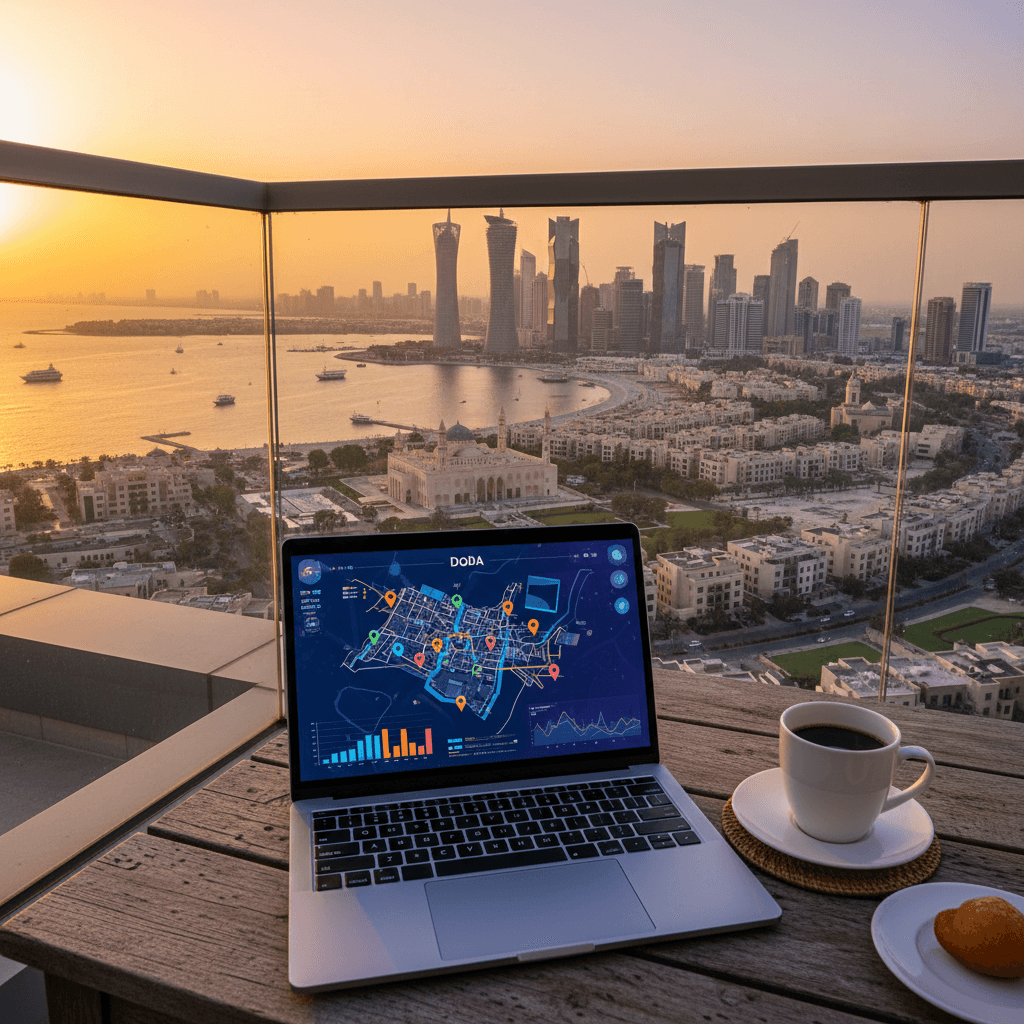
Doha
🇶🇦 Qatar
A City of Contrasts
Doha is where the desert’s quiet stillness meets a hyper-modern, neon-lit future. Unlike the frantic energy of Dubai, Doha feels more intentional and grounded. You’ll spend your mornings working from a high-tech skyscraper in West Bay and your evenings sitting on a floor cushion in a traditional majlis, sipping karak tea and eating dates. It’s a place that demands you slow down and embrace a more relaxed pace of life, even while surrounded by some of the most impressive architecture on the planet.
The city has a distinct personality shaped by its deep Bedouin roots and a massive expat population that makes up the majority of the residents. This creates a unique atmosphere where you can find world-class Islamic art just a few blocks away from a luxury marina filled with superyachts. For digital nomads, the appeal lies in the absolute safety and the seamless infrastructure. You can leave your laptop on a cafe table while you grab a refill without a second thought, a level of security that’s rare in most nomad hubs.
The Price of Luxury
Living here isn't cheap. Doha is a high-end destination where the cost of entry is significant. Most nomads find they need between $2,500 and $3,500 per month to live comfortably, though those who prefer the luxury of The Pearl-Qatar can easily see that number climb past $3,700. Rent is the biggest hurdle, with modern studios starting around $1,500 and climbing quickly.
Daily life follows the rhythm of the sun. During the scorching summer months from June to September, when temperatures routinely hit 45°C (113°F), the city moves indoors or underground into the sleek, air-conditioned Metro system. The vibe shifts entirely from November to March. The weather becomes perfect, the outdoor cafes at Souq Waqif fill up, and the city finally breathes. This is when you’ll see people walking the Corniche or taking boat trips out to the desert dunes.
Finding Your Neighborhood
Where you plant your flag depends on whether you want a corporate pulse or a cultural immersion. Each area has a very different "soul":
- West Bay: This is the business heart. It's full of glass towers, upscale hotels, and fast internet. It’s the go-to for professionals who want to be near the action, though the traffic can be a headache.
- The Pearl-Qatar: A man-made island that feels like a slice of the Mediterranean in the Gulf. It’s luxury living at its peak, perfect for those who want beaches and high-end dining at their doorstep, though it can feel a bit isolated from the rest of the city.
- Souq Waqif: The historical center. It’s the best place for solo travelers who want to feel the traditional side of Qatar. The winding alleys are packed with spice shops, pearl divers, and lively cafes that stay open late.
- Education City: A quieter, more academic vibe. It’s home to the stunning Qatar National Library and plenty of green space, making it a favorite for nomads who need a focused, studious environment.
The Work-Life Balance
Work culture here is efficient but social. While there are dedicated coworking spaces like Coffice and The Company, many nomads prefer the "cafe office" culture. You’ll see people perched with MacBooks at Flat White or Evergreen Organics. Internet is world-class and highly reliable, with average speeds exceeding 350 Mbps, providing excellent performance for video calls and remote work.
Socializing often revolves around food and shared spaces rather than a traditional bar scene. Since alcohol is mostly restricted to high-end hotels, people bond over elaborate dinners, shisha, or late-night walks through the markets. If you’re looking for a party-hard environment, Doha might feel too quiet. But if you value a high standard of living, deep cultural respect, and a safe home base to explore the Middle East, it’s an incredible place to spend a season, especially with the new Digital Nomad Visa requiring an annual income of at least $24,000.
The Financial Reality
Doha isn't a destination for the budget-conscious backpacker. It's a high-end hub where luxury is the default and safety comes with a premium price tag. Most nomads find that while they spend less on taxes, they make up for it in rent and lifestyle costs. You'll need at least $2,500 to $3,500 a month for a mid-range lifestyle. If you want to live in the glass towers of the Pearl, expect that number to climb past $3,700 quickly.
Recent arrivals often compare the costs to Dubai, though many argue you get more peace and security for your money here. While the price of entry is high, the infrastructure is world-class, meaning you rarely deal with the "hidden costs" of unreliable internet or poor transport found in cheaper nomad hubs.
Housing and Rent
Rent will be your biggest hurdle. Unlike Southeast Asia or Eastern Europe, short-term rentals are expensive and often require a bit of digging on platforms like NomadStays or Property Finder. Prices vary wildly depending on how much "view" you want.
- West Bay: This is the business heart of the city. For a modern studio or one-bedroom apartment among the skyscrapers, you're looking at $1,500 to $2,500 per month.
- The Pearl-Qatar: If you want the Mediterranean-style marina life, be prepared to pay. One-bedroom apartments here typically range from $2,000 to $4,000.
- Souq Waqif Area: More traditional and culturally immersive, but options are limited. It's better for short stays if you can find a boutique hotel or guesthouse.
Food and Dining
Doha has a dual-track food economy. You can eat like a local for pennies or dine like royalty for hundreds. Expats recommend sticking to the souqs and small cafeterias for daily meals to keep the budget in check.
- Budget eats: A quick shawarma or a meal at a local souq stall will cost you between $5 and $10. Don't skip the karak tea; it's a staple and costs less than a dollar.
- Mid-range cafes: Working from places like Flat White or Café #999? Expect to pay $15 to $25 for a solid lunch and coffee.
- Fine dining: Dinner at a high-end hotel in West Bay or a terrace at The Pearl will easily run $50 to $100 per person, especially if you're at a licensed venue that serves alcohol.
Transport and Connectivity
Getting around is surprisingly affordable if you use the metro. The system is brand new, spotless, and incredibly efficient. For everything else, there's Uber and Careem.
- Metro and Bus: A single ride is only about $1. If you're staying for a month, a pass costs around $50.
- Ride-hailing: A typical trip across the city via Uber usually lands between $5 and $15.
- Mobile Data: Grab a SIM from Ooredoo or Vodafone at Hamad International Airport or any major mall. Expect to pay around $16-30 for a decent data plan of 8-24GB.
Coworking and Workspaces
If you can't work from your apartment, Doha has several high-end coworking spaces. Most nomads find the libraries are a great "hack" for free, reliable workspace. The Qatar National Library offers free WiFi and a stunning environment for focused sessions.
- Coffice Qatar: A popular choice for those needing a professional setup, with monthly desks ranging from $250 to $400.
- The Company: Great for networking with the local expat community, costing around $300 a month.
- Coworking Qatar: The most affordable dedicated option, with hot desks starting at $200.
The New Digital Nomad Visa
The 2025 Qatar Digital Nomad Visa has made staying here legally much easier, but it has a financial barrier to entry. You'll need to prove a minimum annual income of $24,000 (roughly €20,000) to qualify for the one to two year residency. It's a straightforward process, but it reinforces that Doha is looking for established professionals rather than those just starting their remote work journey.
The Expat Hub: West Bay
If you want to be in the center of the action, West Bay is where you'll likely land. It's the city's skyline, defined by glittering glass towers and high-end hotels. Most expats choose this area because it cuts down on the commute to corporate offices and puts you within walking distance of the city's best high-rise bars and gyms.
- Average Rent: $1,500 to $2,500 for a modern studio.
- Best for: Networking, fast fiber-optic internet, and a "big city" lifestyle.
- The Trade-off: Traffic can be a nightmare during rush hour, and you'll definitely pay a premium for the convenience.
Living here means you're close to Coffice Qatar, a favorite coworking spot for those who need a professional setup outside their apartment. It's a polished neighborhood where English is the default language and everything you need is a short Uber ride away.
The Nomad's Cultural Base: Souq Waqif
Solo travelers and nomads who want to skip the sterile skyscraper vibe usually head toward the Souq Waqif area. This is the historic heart of Doha. It feels more authentic, with winding alleys, spice markets, and constant activity. You'll find plenty of cafes like MIA Park Café nearby, which is perfect for working with a view of the water.
- Vibe: Traditional, energetic, and highly walkable.
- Dining: You can find street food for $5 to $10, making it the most budget-friendly pocket of the city.
- The Trade-off: It gets incredibly crowded on weekend evenings, and the heat feels more intense here without the sea breeze of the Corniche.
Most nomads find the social scene here much easier to break into. The majlis culture is strong, and it's common to meet people over a cup of karak tea in the late afternoon. It's the best spot to soak in the local atmosphere without feeling like you're stuck in a corporate bubble.
Luxury and Families: The Pearl-Qatar
For those moving with a partner or children, The Pearl-Qatar is the gold standard. It's a massive man-made island divided into Mediterranean-style districts like Porto Arabia and Qanat Quartier. It feels like a private Mediterranean resort, complete with yacht-lined marinas and pastel-colored townhouses.
- Average Rent: $2,000 to $4,000 for a one-bedroom or family villa.
- Amenities: Private beaches, high-end nurseries, and pedestrian-friendly boardwalks.
- The Trade-off: It's geographically isolated from the rest of Doha. You'll find yourself living in a "Pearl bubble" where prices for everything from coffee to groceries are higher.
Families appreciate the safety and the abundance of green spaces. If you're working remotely from here, Evergreen Organics offers a great atmosphere for a few hours of laptop time between school runs or beach visits.
The Budget-Conscious Student Vibe: Education City
Located a bit further inland, Education City is a unique choice for nomads who value quiet and productivity over nightlife. It's home to several satellite campuses of international universities and the stunning Qatar National Library. The library itself is one of the best free "offices" in the world, with blazing fast WiFi and silent study zones.
- Cost: More affordable cafes and student-priced dining options.
- Pros: Incredible architecture and some of the only truly walkable green spaces in the country.
- The Trade-off: It's a dry area (no alcohol) and can feel a bit empty during university breaks.
Expats recommend this area if you're looking to save money while utilizing the $1 metro rides to get into the city center when you need a change of pace. It's a focused environment that's perfect for knocking out a big project.
Connectivity and Speed
Doha is a hyper-connected city where staying online is rarely an issue. Doha has world-class mobile internet speeds, with average 4G download speeds around 350-587 Mbps as of 2025-2026, ranking among the fastest globally. Most dedicated workspaces and high-end hotels provide much faster fiber connections. You'll find the infrastructure is modern and reliable enough for video calls and heavy uploads, though public Wi-Fi in malls can be hit or miss during peak evening hours.
For your mobile data, don't wait until you get to your hotel. Pick up a SIM card at Hamad International Airport immediately after clearing customs. The two main players are Ooredoo and Vodafone. Most nomads opt for plans costing between $16-30 USD, which typically provide 8-24GB of data depending on the provider and plan. If you're planning a longer stay, look into their "Unlimited" social media add-ons which keep you connected even if your primary data bucket runs dry.
Top Coworking Spaces
The coworking scene in Doha has matured quickly, moving away from stiff corporate suites toward more community-focused hubs. Expect to pay between $200 and $500 per month for a dedicated desk, depending on the level of amenities you need.
- Coffice Qatar: This is a favorite for those who need a professional backdrop for meetings. It features high-speed internet and well-equipped conference rooms. Monthly memberships usually range from $250 to $400.
- The Company: If you're looking to network with local entrepreneurs and other expats, this is the spot. It has a heavy focus on community events and costs around $300 per month.
- Coworking Qatar: A solid, no-frills option for those on a tighter budget. You can snag a desk here starting at $200 per month, making it one of the most affordable professional setups in the city.
Work-Friendly Cafes and Libraries
If you prefer a change of scenery without the monthly commitment, Doha has a thriving cafe culture. Unlike some European cities where laptops are frowned upon, many Doha cafes embrace the "laptop nomad" vibe, especially during the quieter morning hours.
- Flat White: Located in The Pearl and West Bay, it's widely considered the gold standard for specialty coffee and reliable Wi-Fi. It gets busy on weekends, so try to snag a spot early.
- Qatar National Library: This is a world-class facility in Education City. It's free to enter, offers blazing fast Wi-Fi, and has dedicated quiet zones. It's arguably the most beautiful place to work in the country.
- Evergreen Organics: Perfect for the health-conscious nomad. It offers a relaxed atmosphere and plenty of power outlets, though the prices for food are on the higher side.
- MIA Park Café: For the best views of the skyline, head here. It's better for light admin work rather than deep focus, but the breeze from the water makes it a great winter afternoon spot.
Digital Nomad Visa Basics
Qatar recently introduced a dedicated Digital Nomad Visa in 2025, making it much easier to stay long-term without a local employer. The permit lasts for 1 to 2 years. To qualify, you’ll need to prove a minimum annual income of $24,000 (approximately €20,000). This is a game-changer for those who used to rely on 30-day visa runs or expensive business visas.
Keep in mind that while the internet is unrestricted for most business use, some VoIP services can be finicky. Most expats use a VPN to ensure consistent access to all their favorite communication tools and streaming services from home. It's a standard part of the digital toolkit for anyone living in the Gulf.
A Haven of Safety
Doha is consistently ranked as one of the safest cities on the planet, and you'll feel it the moment you land. Whether you're walking through West Bay at midnight or exploring the winding alleys of Souq Waqif alone, the sense of security is palpable. Petty crime like pickpocketing is almost non-existent here, allowing you to carry your laptop and gear without the constant "head on a swivel" mentality required in many other global hubs.
Most nomads report that they feel comfortable exploring any neighborhood solo. There aren't really any "no-go" zones to worry about. That said, it's a conservative society. While you're safe from crime, you'll want to respect local customs to avoid unwanted attention. Dressing modestly by covering your shoulders and knees in public spaces is the standard, especially in government buildings or traditional markets.
If you ever find yourself in a pinch, the emergency services are incredibly responsive. You can reach the police or an ambulance by dialing 999. The dispatchers usually speak excellent English, so communication won't be a barrier if you need help quickly.
World-Class Healthcare Standards
The healthcare system in Qatar is top-tier, featuring a mix of massive public facilities and high-end private clinics. Most expats and nomads gravitate toward private providers because the service is faster and the facilities feel more like luxury hotels than hospitals. You'll find that medical staff are almost entirely expats themselves, often trained in the UK, US, or Europe, which makes the experience very familiar for Western travelers.
For routine issues or prescriptions, pharmacies are everywhere. You'll recognize the Boots chain in many malls, along with local giants like Kulud Pharmacy. Most common medications are easy to find, though anything considered a controlled substance will require a local doctor's prescription and a bit of paperwork.
Healthcare Options and Costs
- Hamad Medical Corporation (HMC): This is the main public provider. While it's excellent for emergencies, it can be crowded for non-urgent visits. Expats can access it, but most prefer private insurance for regular checkups.
- Private Facilities: Hospitals like Sidra Medicine or Al Ahli Hospital are the go-to for those who want premium care without the wait.
- Digital Nomad Visa Requirement: If you're applying for the new residency permit, you'll need to show proof of a minimum income of $24,000 and have a valid health insurance policy that covers you in Qatar.
- Insurance Costs: While some basic plans start around $50 to $100 per month, most nomads opt for international plans that allow them to use the high-end private clinics in The Pearl or West Bay.
Practical Health Tips
The biggest health risk in Doha isn't a virus; it's the sun. From June to September, temperatures regularly soar above 40°C (104°F). Heatstroke is a real danger if you're outside for more than a few minutes during the day. Locals stay indoors or move between air-conditioned spaces during these months, and you should too. Dehydration happens fast in the desert climate, so keep a bottle of water with you at all times.
Tap water is technically safe to drink, but most people don't like the taste because it's desalinated. You'll see most residents using filtered water dispensers or buying large jugs for their apartments. If you're staying in a high-end rental in The Pearl-Qatar, your building might already have a high-quality filtration system built in.
The Logistics of Movement
Doha is a city built for the car, but the infrastructure is changing fast. Most nomads find that while the city is sprawling, the core districts are becoming surprisingly easy to navigate without a personal vehicle. The heat is usually the deciding factor; between November and March, you can enjoy a stroll, but during the June to September peak, you'll want to stay strictly in climate controlled transport.
The Doha Metro
The crown jewel of the city's transit system is the Doha Metro. It is clean, incredibly fast, and looks like something out of a sci-fi movie. It connects major hubs like Hamad International Airport, West Bay, and Lusail. To use it, you'll need a Karwa Smart Card, which you can top up at any station or via their app.
- Standard fare: Roughly $0.55 per ride.
- Day pass: About $1.65 for unlimited travel.
- Monthly pass: Usually around $50 for heavy users.
- Gold Class: For a few extra dollars, you can sit in the luxury cabins, though the standard cars are already better than most European subways.
Ride Hailing and Taxis
When the metro doesn't reach your specific villa or coworking spot, ride hailing is the default. Uber and Careem are the dominant players here. They are reliable, safe, and generally arrive within five minutes in central areas. A typical ten minute trip across town usually costs between $5 and $15 depending on traffic.
You can also flag down the turquoise Karwa taxis. These are government owned and metered. While they are slightly cheaper than Uber, most expats prefer the apps for the ease of digital payment and GPS tracking. If you are coming from the airport, a taxi to the center will run you about $20 to $30.
Buses and Micro-Mobility
The Mowasalat bus network covers the areas the metro misses, though it is slower and mostly used by local workers. For short hops in the West Bay or Msheireb areas, look for the Lime or Falcon scooters. They cost about $1 to unlock and $0.20 per minute. They are perfect for getting from a metro station to a nearby cafe without breaking a sweat.
Walkability Realities
Doha is a tale of two cities when it comes to walking. Some areas are designed beautifully for pedestrians, while others are essentially highways with no sidewalks. Travelers often say that Souq Waqif and Msheireb Downtown are the most walkable spots, featuring shaded alleys and cooling systems. The Pearl-Qatar is also great for a sunset walk along the marina, but you'll need a car or taxi to get there in the first place.
Renting Your Own Wheels
If you plan on staying for the full one to two year duration of the new digital nomad visa, renting a car might be your best bet. Petrol is cheap, and the roads are well maintained. Just be prepared for aggressive driving styles on the Corniche and major highways. You'll need an International Driving Permit to start, but you must convert to a local license if you become a long term resident. Small car rentals start around $400 to $600 per month.
Navigating the Linguistic Landscape
You won't have much trouble getting your point across in Doha. While Arabic is the official language, the city functions primarily in English. Because about 80 percent of the population is made up of expats from all over the globe, English has become the default bridge for business, tourism, and daily life.
Most nomads find they can navigate the entire city, from the high-rises of West Bay to the luxury boutiques in The Pearl, without knowing a word of Arabic. Menus, street signs, and official government documents are almost always bilingual. If you're working from a spot like Coffice Qatar or Flat White, you'll hear a mix of accents, but the common ground is nearly always English.
The Local Dialect and Etiquette
The local dialect is Gulf Arabic (Khaleeji), which sounds distinct from the Levantine or North African versions you might have heard elsewhere. While you don't need to be fluent, learning a few phrases goes a long way with the locals. It shows respect for the culture and often results in a warmer reception in more traditional settings like Souq Waqif.
- Marhaba: Hello (General greeting)
- Shukran: Thank you
- Kam?: How much? (Useful for haggling in the markets)
- Inshallah: God willing (You will hear this constantly; it basically means "hopefully" or "we'll see")
When you're out and about, especially in a majlis or a traditional coffee house, remember that communication is often as much about body language as it is about words. Qataris are known for their hospitality, but they appreciate a polite, somewhat formal approach when you're first meeting.
Digital Tools for Communication
Technology fills in the gaps when things get lost in translation. Travelers often say that Google Translate is their best friend here, specifically for its camera feature that can read handwritten Arabic signs or older menus. It handles the local dialect reasonably well for basic needs.
For staying connected, you'll want to grab a local SIM card immediately. You have two main choices:
- Ooredoo: The biggest provider with the widest coverage.
- Vodafone: Often has competitive data packages for expats.
Expect to pay around $16-30 for a solid starter plan with 8-24GB of data depending on the provider. You can pick these up at Hamad International Airport as soon as you land or at any major mall like Doha Festival City. Public WiFi is common in cafes and the Qatar National Library, but having your own data is necessary for using ride-hailing apps like Uber or Careem.
Professional Communication
If you're moving your business here under the 2025 Digital Nomad Visa, you'll find that the corporate world is entirely English-centric. Contracts, banking apps for Qatar Islamic Bank, and networking events at The Company are all accessible to English speakers. Most nomads find the transition much easier here than in other Middle Eastern hubs because the infrastructure is designed for an international workforce.
One thing to keep in mind is that while communication is open, it's important to remain respectful of local customs. Avoid loud or aggressive confrontations in public, as this is culturally frowned upon and can lead to trouble. A calm, soft-spoken approach is the standard in Doha, whether you're talking to a waiter or a potential business partner.
Timing Your Arrival
Doha is a city of two distinct realities, and your experience depends entirely on when you touch down. If you're planning a stint here, the window between November and March is the sweet spot. During these months, temperatures hover between 20°C (68°F) and 28°C (82°F), making the city feel like a Mediterranean paradise rather than a desert outpost.
This is when the city truly wakes up. You can spend your mornings working from a laptop at MIA Park Café or Evergreen Organics without breaking a sweat. Most nomads find this the best time to explore the walkable pockets of Souq Waqif or the luxury marinas of The Pearl-Qatar. Evenings are crisp and perfect for outdoor majlis gatherings or rooftop drinks in West Bay.
The Summer Reality
From June through September, the heat becomes the defining factor of daily life. Temperatures regularly soar between 35°C (95°F) and 45°C (113°F+). It isn't just the heat; the humidity can make a five minute walk to the metro feel like a marathon. During this stretch, the city moves indoors. You'll spend most of your time in climate controlled environments like Coffice Qatar or the Qatar National Library.
Expats often use the summer months to travel elsewhere, but if you stay, you'll find the city much quieter. Prices for high end accommodation can sometimes dip, though Doha remains an expensive hub year round. Just be prepared for a lifestyle centered around malls, underground tunnels, and Uber rides, as being outside for more than a few minutes is physically draining.
Seasonal Breakdown
- Winter (December to February): The peak season. Expect highs of 21°C (70°F). You might see a few brief winter showers, but it's mostly clear skies. It's the most expensive time for short term rentals.
- Spring and Autumn (April and October): Transition months. Temperatures sit around 30°C to 34°C (86°F to 93°F). It's warm but manageable for evening strolls.
- Summer (June to August): The peak of the heat. Highs of 38°C to 45°C (100°F to 113°F) are standard. Outdoor activity is essentially non-existent during daylight hours.
Cultural Considerations
Beyond the thermometer, the lunar calendar plays a huge role in your timing. During Ramadan, the pace of the city slows down significantly. Many cafes and coworking spaces adjust their hours, and eating or drinking in public during daylight hours is restricted. Travelers often find this a fascinating time to experience the evening Iftar feasts, but for a digital nomad on a strict schedule, it requires some extra planning.
If you're applying for the Qatar Digital Nomad Visa, which requires a minimum income of $24,000, aim to have your approval cleared by October. This ensures you land just as the weather breaks, giving you a full six months of outdoor living before the summer humidity kicks in.
Connectivity and Workspace
Staying connected in Doha is straightforward. You can grab an Ooredoo or Vodafone SIM card right at Hamad International Airport or any major mall like Villaggio. Expect to pay around $20 to $30 for a solid data plan of 20GB to 50GB. Public WiFi and mobile connectivity in Doha are world-class, with average speeds exceeding 350 Mbps, providing excellent reliability for remote work.
If you need a professional setup, Coffice Qatar is a favorite for its high speed internet and meeting rooms, with monthly memberships ranging from $250 to $400. The Company is another great spot if you're looking to network with other entrepreneurs for about $300 a month. For a more relaxed vibe, nomads often set up at Flat White or Evergreen Organics. If you're on a budget, the Qatar National Library in Education City provides free WiFi and silent study spaces that feel incredibly futuristic.
Cost of Living Breakdown
Doha isn't cheap, and your budget will largely depend on your housing choices. Most expats find that a comfortable lifestyle requires at least $3,700 per month, though you can scrape by on $2,000 if you're frugal with dining and rent.
- Housing: A studio in West Bay usually runs between $1,500 and $2,500. If you want the luxury lifestyle in The Pearl-Qatar, expect to pay $2,000 to $4,000 for a one bedroom apartment.
- Food: You can find $5 to $10 meals at Souq Waqif, but a mid range dinner at a nice restaurant will cost about $25. Upscale dining easily clears $50 per person.
- Transportation: The metro is a steal at $1 per ride. If you prefer door to door service, Uber and Careem are the go to apps, with most city trips costing between $5 and $15.
The Logistics of Daily Life
Getting around is a mix of ultra modern and car dependent. The metro is fantastic for reaching hubs like Msheireb or Lusail, but you'll want a Karwa Smart Card to use it. For shorter distances in the heat, look for Lime scooters, which cost about $1 to unlock and $0.20 per minute. Just keep in mind that while areas like the Corniche are walkable, the city layout often requires a car or ride hailing app to get between neighborhoods.
English is the unofficial language of business and daily life, spoken by over 80% of the population. You'll have no trouble getting by, but learning a few phrases like Shukran (thank you) goes a long way. For money, Wise is the easiest way to handle international transfers, as opening a local bank account typically requires a residency permit and a local sponsor.
Health and Safety
This is one of the safest cities you'll ever visit. Crime is remarkably low, and solo travelers frequently report feeling comfortable walking around late at night. If you do run into trouble, the emergency number is 999. The healthcare system is world class, with Hamad Medical Corporation providing high quality public care, though most nomads opt for private clinics like those in the Sidra Medicine network. Make sure your travel insurance is comprehensive, as private costs can add up quickly.
When to Go and What to Wear
The weather dictates everything here. Aim for November to March, when temperatures hover between 20°C and 28°C. This is when the city comes alive with outdoor markets and cafe culture. Avoid June through September if possible, as the heat can soar past 45°C, making it impossible to be outside for more than a few minutes.
Doha is a conservative city, so dress modestly in public spaces. This means covering your shoulders and knees. It's not just about tradition; it's the local law in government buildings and malls. Also, if you're visiting during Ramadan, remember that eating, drinking, or smoking in public during daylight hours is prohibited, though many international hotels keep their restaurants screened off for guests.
The Nomad Visa
Qatar recently introduced a Digital Nomad Visa for 2025. It allows you to stay for 1 to 2 years provided you can show a minimum annual income of $24,000. It's a game changer for those who want to use Doha as a base for exploring the Middle East without the hassle of constant visa runs.
Need visa and immigration info for Qatar?
🇶🇦 View Qatar Country GuideOff the Radar
Pioneer territory