Diani Beach
🇰🇪 Kenya
The Tropical Slow-Down
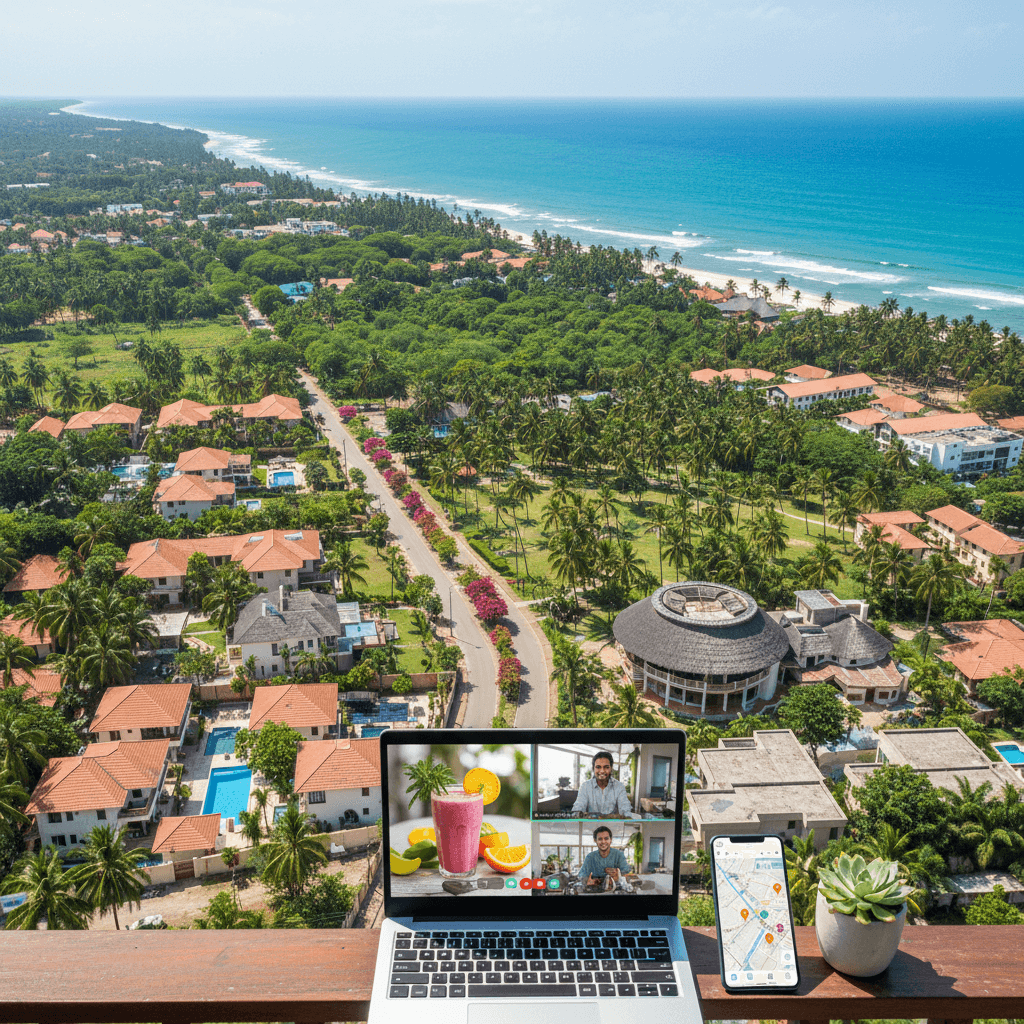
Diani Beach isn't your typical high-intensity digital nomad hub. While places like Nairobi or Cape Town thrum with a frantic energy, Diani operates on "pole pole" time, the Swahili concept of moving slowly and intentionally. It is a 17km stretch of powder-white sand and turquoise water where the morning commute usually involves a barefoot run or a quick kite-surfing session before the first Zoom call of the day.
What sets Diani apart from other beach destinations is the surprising infrastructure hidden beneath the palm trees. You get the postcard-perfect Indian Ocean backdrop without the connectivity nightmares often found in remote islands. It is one of the few places in East Africa where you can sit at a beach bar with a cold Tusker beer and enjoy 4G+ speeds that frequently outperform European home internet.
The Daily Rhythm
Life here centers around the beach road. Most nomads start their day early to beat the equatorial heat, hitting the water or grabbing a coffee at spots like Ani's or Kokkos Cafe. By mid-morning, the focus shifts to work. You'll see laptops open in shaded garden patios and coliving spaces like those run by AfricaNomads, where the community is tight-knit and welcoming.
The vibe is a unique blend of Swahili Digo culture and a cosmopolitan expat scene. It feels safer and more intimate than Mombasa, which is about 45 minutes north. You'll get to know the local tuk-tuk drivers by name, and by your second week, the baristas will likely remember your order. It’s the kind of place where a "quick" trip to the supermarket usually turns into a 30-minute social hour.
Finding Your Neighborhood
Choosing where to plant your tripod depends on how much "quiet" you can actually handle. The town is loosely divided into zones that cater to different paces of life.
- Diani Beach (Central): This is the heart of the action between Kongo River and the Baobab Hotel. It’s where you’ll find the highest concentration of restaurants, grocery stores like Carrefour, and the best WiFi-enabled cafes. It’s perfect for solo travelers who want to be within walking distance of everything.
- Galu & Kinondo: Located south of the main hub, these areas are quieter and more residential. They are favorites for long-term nomads and families who want more space and less foot traffic on the sand.
- Tiwi Beach: To the north, Tiwi is rugged and secluded. It’s ideal for a weekend retreat or for those who truly want to disconnect, though you'll find fewer amenities and dining options here.
- Ukunda: This is the local town on the main highway. While most nomads don't live here, it's the place to go for local markets, affordable hardware, and the airstrip.
The Cost of Coastal Life
Diani offers incredible value, especially if you move away from the short-term tourist rentals. You can live a very comfortable life here for a fraction of what you'd spend in a Mediterranean beach town.
- Budget Tier ($800 to $1,200 per month): This covers a room in a shared coliving space, eating mostly at local "vibandas" or cooking at home, and using tuk-tuks for transport.
- Mid-Range Tier ($1,500 to $2,500 per month): This is the sweet spot for most nomads. It gets you a private one-bedroom Airbnb or apartment, daily meals at mid-range cafes, and a monthly scooter rental.
- Comfortable Tier ($2,500+ per month): At this level, you’re looking at a modern villa with a private pool, Starlink internet, and frequenting the upscale dining spots along the coast.
Connectivity and Community
The internet is the unsung hero of Diani. Safaricom provides excellent coverage, and many modern rentals now bake high-speed fiber or satellite internet into the price. While the signal might dip if you're sitting right on the water's edge due to the elevation changes, the cafes and dedicated workspaces are rock solid.
The nomad community is smaller than in Nairobi, but it’s very active. Because there aren't a hundred different coworking spaces to choose from, people tend to congregate in the same handful of spots. Between weekly salsa nights, karaoke sessions, and group dhow trips at sunset, it’s remarkably easy to build a social circle within your first week.
The Price of Paradise
Diani Beach strikes a rare balance between tropical luxury and genuine affordability. While it's more expensive than the rural interior of Kenya, your money stretches significantly further here than in Nairobi or European coastal hubs. Most nomads find they can live a high quality life for a fraction of what they'd spend in the West, provided they embrace the local rhythm of life.
Monthly Budget Tiers
- The Budget Nomad ($800 to $1,200): You'll likely stay in a shared coliving space or a modest studio in Ukunda. You'll rely on street food, local markets for groceries, and use tuktuks for all your transport.
- The Mid-Range Professional ($1,500 to $2,500): This is the sweet spot for most. It covers a private one bedroom Airbnb or apartment with reliable WiFi, regular meals at beachfront cafes like Kokkos or Nomad, and a monthly scooter rental.
- The High-End Expat ($2,500+): This budget secures a premium villa or a modern apartment equipped with Starlink. You'll dine at upscale spots like Ali Barbour's Cave Restaurant and enjoy frequent weekend excursions or diving sessions.
Housing and Utilities
Rent is your biggest variable. If you want to be within walking distance of the waves, expect to pay a premium. Modern apartments with dedicated workspaces and backup power start around $450 per month, but prices can climb quickly during the peak tourist season from December to March.
- Short-term Airbnbs: $40 to $80 per night for decent beachfront proximity.
- Long-term Rentals: $500 to $900 for a furnished 1BR in Diani Beach or Galu.
- Electricity/Water: Usually included in short-term stays; long-termers should budget $50 to $100 depending on AC usage.
Dining and Groceries
Diani has over 80 restaurants, so you won't run out of options. Local Swahili dishes like pilau or wali wa nazi at a "mama ntilie" (local eatery) cost just a few dollars. Mid-range cafes serve excellent espresso and avocado toast for $6 to $10.
For groceries, Carrefour and Naivas in the Diani shopping centers carry everything from local passion fruit to imported cheeses. Expats recommend buying fresh seafood directly from the fishermen at the beach early in the morning for the best prices and quality.
Transport and Connectivity
Getting around is simple and cheap. Tuktuks are the lifeblood of the coast; a short trip usually costs between $1 and $2. If you prefer independence, long-term scooter rentals are the way to go, allowing you to zip between the Kongo River and Galu with ease.
- Safaricom 4G Data: Approximately $15 to $20 for a 30GB monthly plan.
- Tuktuk Ride: $0.50 to $3.00 depending on distance.
- Scooter Rental: $150 to $250 per month.
- Airport Transfer (Mombasa): $20 to $30 for a private taxi.
Lifestyle and Leisure
Your "extra" spending will likely go toward the ocean. A PADI dive course or a day of kitesurfing will be your biggest luxury expenses. However, many of the best parts of Diani, like the sunset at the Kongo River estuary or the weekly salsa nights, cost very little. Most nomads find that $300 a month covers a very active social life and plenty of weekend adventures.
The Social Hub: Diani Beach Central
If you are a nomad looking to be in the thick of the action, the central stretch between the Kongo River and the Baobab Hotel is where you want to drop your bags. This is the heart of the community where most of the 80+ restaurants and coffee shops are concentrated. You can start your morning with a beach run and transition straight into a work session at a beachfront cafe.
Most nomads find this area the easiest place to live because everything is walkable or a short $1 to $2 tuktuk ride away. You will find the best 4G+ coverage here, though signal strength can dip if you are sitting directly on the sand. AfricaNomads operates coliving setups in this zone, which is the fastest way to meet other remote workers since the nomad density is still lower than in places like Nairobi.
- Best For: Digital nomads and solo travelers.
- Rent: Modern apartments with Starlink often start around $450 a month.
- The Vibe: Established, social, and convenient with easy access to PADI dive schools and grocery stores.
- Trade-off: It is the most developed part of the coast, so prices are higher and the beaches can feel busier during peak tourist seasons.
The Quiet Retreat: Galu and Kinondo
Expats and long term nomads who have outgrown the central "strip" usually migrate south to Galu. The beach here is wider and the atmosphere shifts from touristy to residential. It feels more like a neighborhood and less like a holiday resort. You will still find great beach bars and kitesurfing schools, but they are spaced further apart.
Connectivity remains strong, but you will likely want to rent a scooter for around $150 to $200 a month to get to the larger supermarkets in the center. It is the kind of place where you recognize your neighbors and the local fruit vendors by name after a week. Many expats recommend this area if you need a quiet environment for deep work without the distraction of constant social invites.
- Best For: Long term expats and professional nomads.
- Rent: Expect to pay $600 to $1,000 for high quality private villas or modern 1BR apartments.
- The Vibe: Up and coming, peaceful, and spacious.
- Trade-off: Fewer amenities within walking distance; you will be more dependent on transport.
The Family Escape: Tiwi Beach
North of the Kongo River lies Tiwi, a spot that feels worlds away from the Diani hustle. Families and travelers seeking total seclusion often land here. It is famous for the "African Pool," a natural rock pool shaped like the continent that appears at low tide. This isn't a place for someone who needs a different coworking cafe every day, but it is perfect for those who prioritize nature and privacy.
- Best For: Families and travelers seeking peace.
- Rent: Varies widely, but family sized cottages are the standard here.
- The Vibe: Rugged, quiet, and naturally beautiful.
- Trade-off: Very few restaurants or shops. You will need to do your main provisioning in Ukunda or central Diani.
The Budget Base: Ukunda
Ukunda is the main town on the highway, located about ten minutes inland from the beach. While most nomads prefer to wake up to the sound of the ocean, budget conscious travelers sometimes base themselves here to save on living costs. It is the best place for local markets, cheap street food, and getting a feel for the daily rhythm of Kwale County away from the sun loungers.
- Best For: Budget travelers and those who want a local experience.
- Rent: Significantly cheaper than beachfront options; basic studios can be found for under $300.
- The Vibe: Busy, authentic, and functional.
- Trade-off: It is hot, dusty, and lacks the coastal breeze. You will spend a lot of time and money on tuktuks getting to the water.
The Connectivity Landscape
Diani Beach might look like a postcard from the 1990s, but its digital infrastructure is surprisingly modern. Kenya boasts some of the fastest 4G+ speeds in East Africa, and Diani is no exception. Most nomads find the connection here more reliable than in many Mediterranean beach towns. You can easily handle Zoom calls while watching the tide come in, provided you aren't sitting directly on the shoreline where the signal occasionally dips due to the elevation of the coral rag cliffs.
Fiber optics have reached most of the main villas and apartment complexes along the beach road. If you are booking an Airbnb, ask the host specifically if they have a dedicated fiber line or if they rely on a "mifi" dongle. For those needing maximum stability, many modern rentals now come equipped with Starlink, which has become the gold standard for remote workers in the region. You should expect speeds anywhere from 20 Mbps to 100 Mbps in well equipped spots.
Mobile Data and M-Pesa
Your first move after landing should be picking up a Safaricom SIM card. It is the dominant provider with the best coverage across Kwale County. You can find a dealer in Ukunda or at the local supermarkets like Chandarana. Data is affordable; you can get large bundles (around 20GB to 30GB) for a fraction of what you would pay in Europe or North America.
While you are getting your SIM, set up M-Pesa. This mobile money platform is the heartbeat of Kenya. You will use it for everything from paying your tuktuk driver to settling your tab at a beach bar. Most nomads rarely carry significant cash, preferring to "Lipa na M-Pesa" (pay with M-Pesa) for almost every transaction.
Coworking and Coliving
Diani doesn't have a massive inventory of standalone "cubicle style" coworking spaces. Instead, the work culture is integrated into coliving hubs and social spaces. This makes it easier to meet people, though it requires a bit more discipline if you're easily distracted by the prospect of a midday swim.
- The Diani Beach Nomad Vibe: Many travelers opt for private apartments in the $450 to $800 per month range and use local cafes for a change of scenery. The community is smaller than Nairobi, so these shared spaces are vital for networking.
- Galu Beach Spots: If you head further south to Galu, the coworking options are more informal, usually centered around boutique hotels or quiet villas that cater to long term stays.
Work Friendly Cafes
If you prefer the "cafe hop" lifestyle, Diani has several spots where a laptop is a common sight. Most owners are welcoming to nomads as long as you keep the coffee and snacks flowing. Just remember that power outages can happen during the rainy seasons of April to May, so always keep your devices charged and have a backup power bank.
- Aniellos: A favorite for its reliable WiFi and excellent coffee. It is a common morning haunt for expats and nomads catching up on emails before the heat of the day kicks in.
- Nomad Beach Bar: While it can get busy, the views are unbeatable. It is better for light admin work or creative brainstorming rather than deep focus sessions.
- Kokkos Cafe: Located near the center of the beach road, it offers a more "urban" cafe feel with solid internet and a menu that caters to international tastes.
A pro tip from the local expat community: the 4G signal is strongest near the Chandarana Supermarket hub and weakens as you move toward the more remote parts of Tiwi to the north. If your work requires heavy uploading or constant video streaming, stick to the central Diani Beach strip or Galu where the infrastructure is most dense.
Staying Safe in the Sun
Diani is widely regarded as one of the safest beach destinations in East Africa for remote workers. Unlike the high energy and occasional tension of Nairobi, the vibe here is distinctly mellow. Most nomads find they can walk around the main tourist hub and beach areas during the day with little to no worry. While it's a secure environment for your laptop and gear, the standard rules for any tropical destination apply: don't leave your electronics unattended on a beach towel while you go for a swim.
The most common interaction you'll have is with the beach boys. They're generally friendly and looking to sell dhow trips or wood carvings. A polite but firm "hapana asante" (no thanks) usually does the trick. Expats recommend staying in well lit areas if you're out late at night, and while the beach is beautiful under a full moon, it's better to stick to the road or use a taxi after dark. For peace of mind, many long termers prefer gated coliving setups or villas with 24/7 security guards, which are standard for most mid range rentals.
- Emergency Number: Dial 112 for national police and emergency services.
- Local Transport: Use trusted tuktuk drivers or motorbike taxis (boda bodas) you recognize from your neighborhood.
- Personal Belongings: Keep your expensive camera gear and laptops in a bag rather than draped over your shoulder when walking through Ukunda.
Healthcare and Medical Facilities
For minor ailments, stomach bugs, or "Diani belly," you'll find well stocked pharmacies in the Ukunda area and near the major supermarkets like Carrefour or Chandarana Foodplus. These pharmacies often have a clinician on site who can provide basic consultations and suggest over the counter treatments. Most nomads use M-Pesa to pay for medications, as it's the most convenient way to handle transactions across Kenya.
If you need more serious medical attention, Diani has local clinics that can handle basic diagnostics and malaria tests. However, for major emergencies or specialized procedures, travelers usually head to Mombasa. It's about a 45 minute drive north, and the city hosts several international standard hospitals with modern equipment. If you're planning an extended stay, ensure your travel insurance covers medical evacuation to Mombasa or even Nairobi for peace of mind.
Staying Healthy in the Tropics
The heat is the biggest health factor to manage. Temperatures consistently hover between 25°C and 32°C with high humidity, so dehydration can sneak up on you while you're focused on a Zoom call. Stick to bottled or filtered water; the tap water in Diani isn't safe for drinking. Most Airbnbs and coliving spaces provide large 20 liter water dispensers for a few dollars.
Malaria is present in the coastal region, though many long term nomads choose not to take daily prophylactics due to side effects. Instead, they rely on heavy duty mosquito repellent and ensuring their beds have intact nets. If you suddenly feel feverish or lethargic, get a quick malaria test at a local clinic; they're inexpensive, fast, and much more effective than guessing at home. Also, be mindful of the sun. The Kenyan coast sits near the equator, and the 11:00 AM to 3:00 PM rays are intense enough to ruin your work week if you aren't careful with the SPF.
Practical Health Contacts
- Pharmacies: Located primarily at Diani Shopping Centre and Mutual Plaza.
- Major Hospitals: Located in Mombasa (Aga Khan Hospital or The Mombasa Hospital).
- Medical Emergencies: Most expats rely on private taxis for quick transport to clinics, as ambulance response times can vary.
The Diani Rhythm
Diani Beach stretches across 17km of coastline, but it isn't a place where you'll spend much time behind a steering wheel. Most of the action happens along the Diani Beach Road, the main artery running parallel to the ocean. The layout is linear and intuitive, making it nearly impossible to get lost. You'll likely find yourself adopting the local pace, which means less rushing and more enjoying the breeze from the back of a three-wheeled taxi.
Tuktuks and Boda Bodas
The undisputed kings of the road here are tuktuks. These covered three-wheelers are everywhere, and you rarely have to wait more than a minute to flag one down. They're the preferred choice for nomads heading to a cafe with a laptop or hauling groceries from the Carrefour or Naivas supermarkets. A short hop usually costs around 50 to 100 KES ($0.40 to $0.80), while longer trips from the Kongo River area down to Galu might run you 300 to 400 KES ($2.30 to $3.10). Always agree on the price before you hop in.
For a faster, solo option, boda bodas (motorbike taxis) are the way to go. They're slightly cheaper than tuktuks and can weave through traffic if things get busy near the Ukunda junction. While they're convenient for quick trips, most expats recommend sticking to tuktuks at night or during the occasional tropical downpour.
Long-Term Rentals
If you prefer total independence, renting your own set of wheels is straightforward. Many long-term nomads opt for scooter rentals, which give you the freedom to explore the quieter southern stretches of Galu or head north to Tiwi without haggling for every ride. Daily rates for a scooter hover around $10 to $15, but you can negotiate significantly lower monthly rates if you're staying for a while.
- Bicycles: Great for morning rides on the hard-packed sand at low tide, though the humidity makes them less practical for midday errands.
- Car Rentals: Generally unnecessary unless you're planning a weekend trip to the Shimba Hills or driving into Mombasa.
- Ride-Hailing: While apps like Uber and Bolt dominate in Nairobi and Mombasa, they haven't quite taken over Diani yet. You're better off saving the phone number of a trusted tuktuk driver.
The Mombasa Connection
Getting to and from the regional hub of Mombasa is the only time transportation requires a bit of planning. Diani is about 30 to 45 minutes south of Moi International Airport (MBA), but the travel time depends heavily on the Likoni Ferry or the newer Dongo Kundu bypass. A private taxi from the airport to your Diani Airbnb typically costs between $20 and $30.
For a more local experience, matatus (minibuses) run constantly between Ukunda and Mombasa. They're incredibly cheap, often less than $2, but they can be cramped and slow. If you're arriving on the SVR train from Nairobi, most travelers suggest pre-booking a private transfer to avoid the chaos of the station exit.
Walking and Beach Access
Diani is remarkably walkable if you're staying in the central tourist hub. Many coliving spaces and apartments are within a 10-minute walk of the beach and various cafes. Walking along the shoreline is the best way to move between beach bars, just keep an eye on the tide charts. At high tide, some sections of the beach disappear, forcing you back onto the main road. Most nomads find that a mix of walking for exercise and tuktuks for utility creates the perfect balance for coastal life.
The Linguistic Landscape
You'll find that communication in Diani Beach is remarkably straightforward. While Swahili is the national language and the primary way locals interact, English is the official language of instruction and business across Kenya. In a tourist hub like Diani, English proficiency is exceptionally high among restaurant staff, tour operators, and property managers. You won't need to be a polyglot to negotiate a tuktuk fare or set up your home office.
The local community is predominantly Digo, a coastal ethnic group with their own Bantu language. However, almost everyone you encounter will switch seamlessly between Swahili and English. Most nomads find that while they can get by exclusively in English, learning a few phrases of Swahili goes a long way in building rapport and showing respect for the local culture.
Swahili Basics for the Beach
The coastal version of Swahili, known as Kiwaswahili, is often considered the most "pure" and melodic. It's slower and more rhythmic than the fast paced "Sheng" slang you'll hear in Nairobi. Here are the essentials for your first few days:
- Jambo: The standard "hello" for visitors.
- Habari?: "How are you?" (The standard reply is Nzuri, meaning "good").
- Asante: "Thank you." Use Asante sana for "thank you very much."
- Karibu: "Welcome." You'll hear this constantly when entering shops or homes.
- Sawa: "Okay" or "Alright." Use this to confirm plans or agree on a price.
- Bei gani?: "How much is this?"
- Hapana asante: "No thank you." This is your best tool for politely declining beach sellers or "beach boys" offering tours.
The Digital Language: M-Pesa and Data
Communication isn't just about what you say; it's about how you stay connected. In Kenya, your phone is your wallet. The first thing most expats recommend is getting a Safaricom SIM card. You can do this at the local shops in Ukunda or near the Carrefour supermarket. You'll need your passport for registration.
Once you have a SIM, you must set up M-Pesa. This mobile money platform is ubiquitous. You'll use it to pay for everything from 50 KES tuktuk rides to your monthly rent or electricity bills. Even the smallest fruit stall on the side of the road will have an M-Pesa "Till Number." It's so integrated into life here that not having it will significantly complicate your day to day interactions.
Navigating Social Circles
For deeper community connection, nomads often join local WhatsApp groups. These are the lifeblood of Diani, used for everything from finding a reliable plumber to hearing about the next salsa night or karaoke session at the beach bars. Since the nomad community is smaller here than in Nairobi, these digital threads are where you'll find the most up to date info on social gatherings.
If you're ever stuck on a translation, Google Translate works well for Swahili, though it sometimes misses the coastal nuances. For navigating, don't expect precise street addresses. Communication for directions usually involves landmarks, like "the gate past the Baobab Hotel" or "near the Petro station in Ukunda." Most locals use WhatsApp for all voice calls and messaging, so ensure you have a steady data plan before heading out to more remote spots like Galu or Tiwi where the signal can occasionally dip.
The Tropical Rhythm
Diani Beach operates on a consistent tropical loop where the mercury rarely dips below 25°C (77°F) and often peaks around 32°C (90°F). You can expect high humidity year round, which makes those morning beach runs or sunset dhow trips more of a necessity than a luxury. Most nomads find the climate predictable enough to plan their deep work sessions around the heat of the midday sun.
The year is split into distinct seasons that dictate the vibe of the town. While the sun is a constant companion, the arrival of the rains and the changing winds completely transform the coastline from a kitesurfing playground into a quiet, lush retreat.
The Peak Season: June to September
If you're looking for the quintessential Diani experience, this is your window. The weather is dry, sunny, and cooled by the Kusi monsoon winds. It's the prime time for outdoor enthusiasts; the water is clear for PADI diving schools and the wind is consistent for kitesurfers in Galu. Since it's the driest part of the year, you won't have to worry about sudden downpours interrupting your poolside Zoom calls.
- Vibe: High energy, social, and perfect for networking at beach bars.
- Connectivity: Best time for outdoor working as signal remains stable without storm interference.
- Crowds: Expect more travelers and slightly higher demand for top tier Airbnbs.
The Short Rains: October to December
Temperatures start to climb as the year winds down. You'll encounter the "short rains," which usually manifest as brief, heavy afternoon showers that clear up quickly. It's a favorite period for long term expats because the landscape turns incredibly green and the dust settles. Many nomads use this time to snag mid range housing deals before the Christmas rush hits in late December.
The Heat and the Long Rains: January to May
January through March is the hottest period. It’s glorious if you love the heat, but you'll definitely want a workspace with a good breeze or AC. Everything changes in April and May. This is the "long rains" season. It doesn't just drizzle; it pours. Some restaurants and smaller boutiques take this time to close for renovations or staff holidays.
Travelers often say that while May is the "worst" time to visit due to the grey skies and heavy mud, it's actually the best time for deep work. With fewer distractions and significantly lower rent prices, you can tuck away in a villa in Kinondo and focus on a big project. Just be aware that the 4G signal can occasionally dip during the heaviest storms, though Starlink installations in modern apartments are making this less of an issue.
Best Time for Your Lifestyle
Choosing when to land in Diani depends on what you want out of your Kenyan stint. Most nomads recommend arriving in September to catch the end of the dry season and settle in before the end of year festivities. If you're on a budget, aim for late May to negotiate long term rates on premium properties before the June rush begins.
- For Kitesurfers: June to September (Kusi winds) or January to February (Kaskazi winds).
- For Budget Seekers: April and May offer the lowest prices on luxury villas.
- For Social Butterflies: December and January bring the most events, salsa nights, and beach parties.
Regardless of when you arrive, the Indian Ocean stays warm enough for a swim 365 days a year. Just pack plenty of linen, a reliable power bank for the occasional rain induced flicker, and a high quality sunscreen that can handle the equatorial sun.
Connectivity and Mobile Data
Kenya has some of the fastest 4G+ speeds in East Africa, and Diani is no exception. Most nomads find the connection more stable than parts of Europe, provided you aren't working directly on the sand where the signal tends to dip. Safaricom is the undisputed king here; pick up a SIM card as soon as you land. You'll need your passport for registration. Expect to pay around $10 to $20 for a generous monthly data bundle.
The real game changer in Diani is M-Pesa. This mobile money service is used for everything from supermarket hauls at Carrefour to paying your tuktuk driver. Download the M-Pesa app and load it with cash at any small green booth you see on the street. It eliminates the need to carry large amounts of cash or worry about card skimmers.
Money and Budgeting
While Diani offers a high quality of life, your costs will vary based on how "local" you live. Most expats recommend budgeting between $1,500 and $2,500 for a comfortable mid-range lifestyle that includes a private Airbnb with Starlink and frequent meals at cafes like Ani's or Nomad Beach Bar. If you're on a tighter budget, you can get by on $800 to $1,200 by staying in coliving spaces and eating Swahili street food in Ukunda.
- Rent: Modern apartments start near $450 per month, but beachfront villas in Galu can easily exceed $2,000.
- Transport: Tuktuks are the primary way to get around. A short ride usually costs about $1 to $2. Negotiate the price before you hop in.
- Scooter Rentals: For more freedom, long term scooter rentals are common and cost effective for those staying a month or more.
Safety and Health
Diani is generally safe and welcoming for remote workers. The community is tight-knit, and you'll likely start recognizing faces within a week. That said, be smart about your gear. Don't leave your laptop unattended at a beach bar while you go for a swim. Stick to the main tourist zones after dark, and use a trusted taxi or tuktuk driver rather than walking long, unlit stretches of the beach road at night.
For medical needs, there are well-stocked pharmacies in the Diani Shopping Centre and near Naivas supermarket. For anything serious, you'll want to head to Mombasa, which is about 45 minutes away. Most nomads carry international health insurance that covers medical evacuation to Nairobi if needed. If you have an emergency, the national contact number is 112.
Cultural Etiquette
The local Digo culture is conservative yet friendly. While swimwear is standard on the beach, it's respectful to cover up with a sarong or t-shirt when you're walking through town or heading into a supermarket. When it comes to the "beach boys" offering tours or trinkets, a polite but firm "Hapana, asante" (No, thank you) usually does the trick. If you do want to book a dhow sunset trip, your best bet is to get a recommendation from your coliving host or a fellow nomad to ensure a fair price and a good experience.
Visa Logistics
Kenya's Digital Nomad Visa (launched in 2025) has made staying long term much simpler. It's designed specifically for those working for offshore companies. If you're just passing through for a month, the standard tourist entry requirements apply. Always check the latest government portal before travel, as the transition to the Electronic Travel Authorisation (eTA) system has changed the entry process for many nationalities.
Best Times to Visit
The sweet spot for Diani is June through September. The weather is dry, sunny, and the humidity is manageable. Avoid April and May if you can; these are the "long rains" months when many restaurants close for renovations and the humidity can make working without air conditioning a struggle. If you're into kitesurfing, aim for the Kuzi (June to September) or Kaskazi (December to March) wind seasons.
Need visa and immigration info for Kenya?
🇰🇪 View Kenya Country GuideEasy Landing
Settle in, no stress
Monthly Budget Estimates
More cities in Kenya
Nairobi
🇰🇪 Kenya
Mombasa
🇰🇪 Kenya
Kisumu
🇰🇪 Kenya