Debrecen
🇭🇺 Hungary
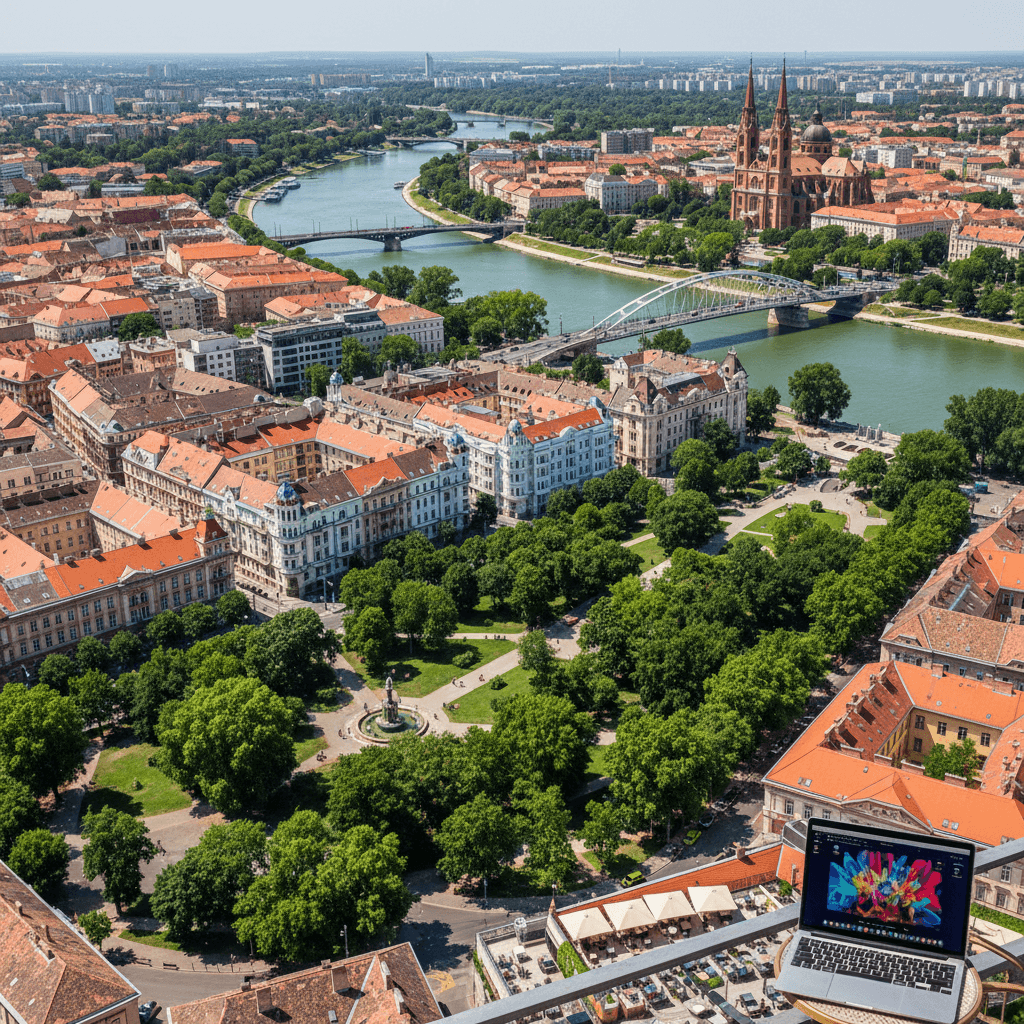
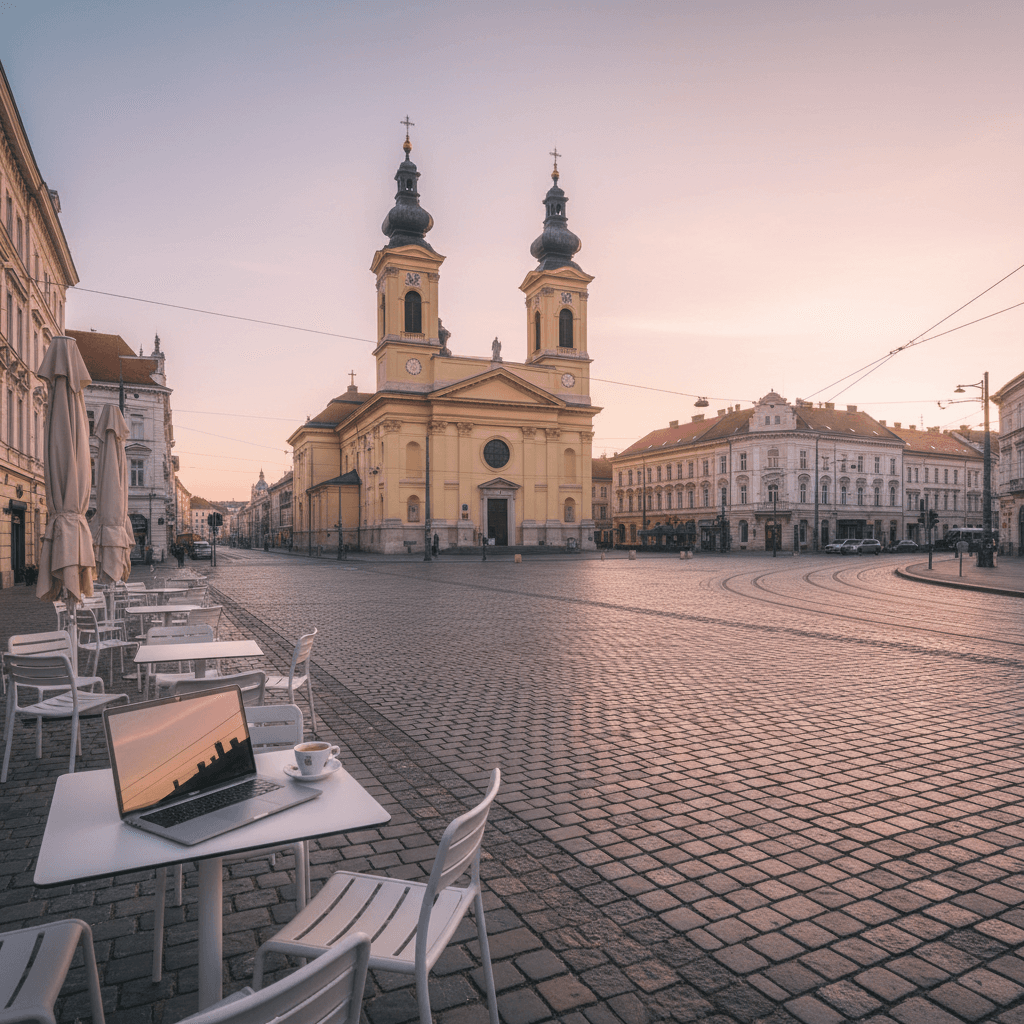
Debrecen feels slower than Budapest and that’s the point. Hungary’s second city has a student pulse, a plainspoken mood and a surprisingly easy day-to-day rhythm, with the Reformed Great Church, tram bells and tree-lined streets giving the center a calm, almost provincial feel. Not flashy. Still, it’s hardly sleepy, because the university, the Innovation District and a steady flow of local life keep things moving without the chaos.
For nomads, the appeal is practical: cheap rent, decent internet and lots of green space. A solo budget can sit around $800 to $1,000 if you keep it simple, but a more comfortable month with a one-bedroom near the center, cafe lunches, transport and the occasional coworking day pushes closer to $1,100 to $1,500. Dinner for two at a mid-range place runs about $51 and if you want to work in a proper space, Xponential or Regus will do the job, though the scene is small, honestly and you’ll notice it.
Where people actually stay
- City Center: Best for solo nomads, walkable, close to cafes, bars and Nagytemplom, but summer evenings can get noisy with teens hanging around the square.
- Jókai, Hatvan, Rákóczi streets: The sweet spot for many expats, quiet enough to sleep, close enough to walk everywhere and usually a better deal than the most obvious central blocks.
- Outskirts and the Innovation District: More space, more trees, lower prices, but you’ll trade convenience for longer commutes and, frankly, a darker-feeling night scene.
The city works well for remote work because the internet is solid, usually 48 to 163 Mbps and home plans start around $20. Cafes are workable too, though English can thin out fast once you leave the student core, so Google Translate becomes part of the daily kit. The air can smell like grilled sausage, coffee and bus exhaust all at once and in winter the cold tile floors hit hard when you step inside from the wind.
Debrecen also has a reserved social rhythm. Locals aren’t unfriendly, they just don’t rush to fill silence, so don’t expect instant small talk in every shop or bar and don’t be surprised if things feel a bit closed off at first. Safe overall, useful for long stays and nowhere near as intense as Budapest, but it won’t spoon-feed you a social scene, you’ve got to go looking for it.
Debrecen sits in a sweet spot for budget-conscious nomads, it’s cheaper than Budapest, but it doesn’t feel like a sleepy backwater either. A solo renter can live here on roughly $1,114 a month with rent or about $541 if housing is already sorted and that number feels realistic if you keep your habits local instead of treating every meal like a restaurant meal.
Not cheap. Not pricey either. A studio or 1BR in the city center usually runs about $446 to $546, with recent city-center studios around 180,000 HUF and outside the core you can shave off a bit more, though you’ll trade some walkability for quieter streets and longer tram rides.
Groceries and transport stay manageable and honestly that’s where Debrecen starts to make sense. A monthly transit pass is about $24, a single ticket ~$1.25-$1.30 and if you eat like a local, street food or fast food lands near $10, while a mid-range lunch is around $13, which, surprisingly, adds up slower than you’d expect if you’re not grabbing coffee and pastries all day.
- Budget tier: $800 to $1,000, shared housing, public transport, simple meals.
- Mid-range tier: $1,100 to $1,500, one-bedroom near the center, a mix of cafes and lunch spots, plus some coworking.
- Comfortable tier: $1,800+, better apartments, more dining out, Bolt rides, gym memberships.
The coworking scene, turns out, is decent for a city this size. Xponential Coworking Office and Regus are the names people mention most, day passes hover around 6,500 HUF and a dedicated desk can be as low as 1,300 HUF a day, which makes popping in for a workday far less painful than paying for a full office setup.
Food can be a mixed bag. Debreceni kolbász and Hortobágyi palacsinta are worth trying once, but a lot of evenings still end up at places like Csokonai, IKON or Vintage World, where dinner for two can hit about $51 and the bill feels noticeably heavier than lunch.
For neighborhoods, stay central if you want to walk everywhere, especially around Batthyány and Nagytemplom, but Jókai, Hatvan and Rákóczi streets are the better bet if you want quieter nights without drifting too far from cafes and trams. The outskirts are cheaper, frankly, but the commute and empty streets can get old fast after dark.
Internet is solid, 48 to 163 Mbps is common and home plans can start around $20 a month, so remote work usually isn’t the problem. The real pressure point is housing quality and language, not bandwidth, because once you’re inside a warm flat on a cold winter night, with the radiator hissing and tram bells clanging outside, you’ll care a lot more about insulation than speed tests.
Debrecen feels calm before it feels busy. The center has trams, cafe chatter and that faint mix of coffee, exhaust and fryer oil drifting out of lunch spots, while the outer districts get quieter fast and honestly a bit sleepy after dark.
Solo travelers
City Center, especially Batthyány and the blocks around Nagytemplom, is the easy pick if you want to walk everywhere and still have bars, bakeries and coworking nearby. It’s livelier in summer, teens hang around late and you’ll hear scooter buzz and music spilling out of terraces, but that also means you’re close to the action.
- Best for: First-timers, short stays, people who like being able to stumble home.
- Downside: Noisier than the rest of town.
Nomads and expats
Jókai, Hatvan and Rákóczi streets are the sweet spot if you want a quieter apartment without feeling cut off. You’re still close to the center, rent tends to be saner and the streets have a lived-in feel, with older apartment blocks, little groceries and less of the weekend noise that hits downtown.
- Best for: Remote workers who want sleep, routine and a short walk to cafes.
- Rent: Usually a bit cheaper than the core center listings.
- Downside: Less nightlife, fewer spontaneous meetups.
The coworking scene, turns out, is small but usable, with Xponential Coworking Office and Regus giving you decent desks and reliable internet when your flat’s WiFi acts weird. Home connections often run 50 Mbps or better, which is enough for calls, uploads and normal remote work and a SIM from Vodafone, Yettel or Telekom is cheap if you need backup.
Families
Outskirts and the Innovation District make more sense if you need space, greenery and a calmer pace. Kids get more room to move, parks are easier to find and you’re less boxed in by downtown traffic, though you’ll spend more time on buses or in a car, which gets old in winter when the wind cuts through your coat.
- Best for: Longer stays, families, people who want quiet.
- Rent: Often lower than central neighborhoods.
- Downside: Longer commutes, especially at night.
If you want the simplest rule, stay central for convenience, choose Jókai or Hatvan for balance and move outward only if you actually need the extra space. Debrecen isn’t flashy, it’s practical and that’s why the right neighborhood here matters more than the prettiest street name.
Internet & Coworking
Debrecen’s internet is solid, honestly better than a lot of smaller European cities. Home connections usually run 50 Mbps and up and average speeds land somewhere around 48 to 163 Mbps, which is plenty for Zoom calls, cloud work and the odd giant file upload that everyone pretends won’t happen until it does.
The city feels calm online and off. You’ll still get the usual Hungarian bureaucracy headaches, but the actual connection rarely gives you grief and that’s the part that matters when you’re trying to work near Nagytemplom with tram bells clanging outside and the smell of espresso drifting in from the next café.
Best Coworking Options
- Xponential Coworking Office: The most straightforward nomad pick, with a proper work setup and a more focused atmosphere than a café.
- Regus: Polished, predictable and a bit sterile, but good if you want a quiet desk and don’t care about personality.
- Day pass: Usually around 14,000-19,000 HUF depending on the space, which feels fair if you need a full workday and want reliable chairs, power and AC.
Cafés work too, though the good ones fill with students fast, so arrive early if you want a corner table and a plug. Internet cafés aren’t really the point here, coworking is and the stronger spaces give you less noise, fewer awkward laptop stares and a better shot at finishing actual work.
If you want a SIM, go with Vodafone, Yettel or Telekom, then grab a prepaid plan and move on with your life. Prepaid options start around $2.40 and can go up to about $17, while small data plans around 1GB sit near 1,100 to 1,290 HUF, which is handy for tethering when your apartment Wi-Fi decides to sulk.
What Nomads Should Expect
- Best areas for work: City Center, Jókai, Hatvan and Rákóczi Streets, because you’re close to cafés, transit and decent apartments.
- Cheaper setup: The outskirts and Innovation District can save money, but commute times stretch out.
- Reality check: The nomad crowd is small, so don’t expect Budapest-level networking or endless meetups.
The scene works, but it’s quiet. Most nomads end up mixing coworking, café sessions and university events, then building their own routine because there isn’t a huge built-in community waiting around the corner, which, surprisingly, can be nice if you’re tired of constant networking noise.
Bottom line, Debrecen’s internet won’t be your problem. The bigger issue is deciding where to work, because the best setup usually depends on whether you want calm, cheap or social and you rarely get all three in the same place.
Debrecen feels calmer than Budapest and that calm usually translates into decent day-to-day safety. Violent crime is low, the city center around Nagytemplom is fine for walking after dark and most problems are the boring kind, phone snatches, drunk teens, the occasional dodgy character near the edges of town. Stay alert in the market area and on quieter streets late at night, especially in the outskirts, because those places empty out fast and the wind gets sharp.
Honestly, the main annoyance is petty theft, not serious trouble. Keep your bag zipped on trams and in crowded spots and don’t leave your laptop half out on a cafe table just because the place looks sleepy, it still gets busy around class-change hours and lunch.
- Best areas: City Center, Jókai Street, Hatvan Street and Rákóczi Street
- Use extra caution: Outer residential edges and poorly lit streets at night
- Emergency number: 112
Healthcare is usable, though it can be clunky and frankly you’ll feel the strain more in paperwork and wait times than in the quality of basic care. The University of Debrecen hospital is the place most expats point to for serious treatment, pharmacies are easy to find and for coughs, minor injuries or antibiotics, you’re usually sorted without drama. Still, the system can feel old-school, so bring documents, a card that works and patience.
Pharmacies are everywhere, the staff usually know enough English for simple requests and buying over-the-counter medicine is straightforward. If you need anything more complex, go early, because queues can get long and the waiting room air, weirdly, always seems too warm and a little stale.
- Go to: University of Debrecen hospital for bigger issues
- Use pharmacies for: Basic meds, prescriptions, first-line advice
- Bring: Passport, insurance details and any medical records
Most nomads rely on private insurance, because public care isn’t built for convenience and the national system has had closures and staffing pressure. If you’re here long-term, set up a doctor visit before you actually need one, since finding a good English-speaking GP in a panic is a headache you don’t want. The air in winter gets dry and cold, the tile floors bite your feet and when you’re sick, that matters.
For emergencies, call 112 and speak slowly. That number works.
Debrecen’s center is easy to live in and honestly, that’s the main reason most nomads don’t bother with a car. Trams, buses and trolleybuses cover the practical stuff, the streets around Nagytemplom are flat enough for walking and the city feels small in the best and worst ways, so you’ll hear church bells, bus brakes and the occasional scooter buzzing past café terraces.
DKV runs the public network and a single ticket is about $1.25-$1.30, while a monthly pass is around $24, which makes it one of the cheaper parts of staying here. Tickets are fine for occasional trips, but if you’re moving around every day, the pass pays for itself fast, especially in winter when cold wind cuts across the open squares and you’d rather not wait around.
- Best for walking: City center, Batthyány and the blocks around Nagytemplom.
- Best for a quieter base: Jókai, Hatvan and Rákóczi streets, where you’re still close but the noise drops off.
- Best for space and green areas: Outskirts and the Innovation District, though commutes are longer.
The center is the smart pick if you want cafés, bars and easy access to coworking spaces like Xponential or Regus, because you can go out on foot and skip the whole taxi routine. Jókai, Hatvan and Rákóczi are calmer, cheaper and frankly a better bet if you’d rather sleep than listen to teenagers hanging around late in summer.
Ride-hailing is straightforward. Bolt works well, Uber shows up too and a short ride usually beats waiting for a bus when it’s raining, when the pavement smells like wet dust or when you’ve got a grocery run and don’t want to haul bags through slush.
Bikes and scooters are around, though the city isn’t as cycle-heavy as some places in western Europe, so don’t expect a perfect lane network everywhere. Weirdly, the most pleasant part of Debrecen is how compact it feels, you can cross the center on foot in a decent pair of shoes, then jump on DKV if you’re heading farther out.
Airport access is simple. Debrecen Airport sits about 5 km from town and you can get in with a DKV shuttle in roughly 15 minutes or just take a taxi or Bolt, which is easier if you’ve got luggage, a bad back or a late-night arrival when the terminal feels half asleep.
Debrecen runs on Hungarian first, English second and that gap shows up fast once you leave the center. Around Nagytemplom, the university and the main cafes, you’ll get by with English often enough, but in shops, pharmacies, taxis and apartment viewings, don’t assume anyone will switch for you. Honestly, that can be tiring. The city feels friendly, just not chatty and the silence at the counter can be weirdly awkward until you get used to it.
Most nomads end up learning a few survival phrases, then leaning hard on Google Translate when the conversation gets real. Szia works for a casual hello, Beszélsz angolul? is the practical one and Nem értem saves time when someone’s talking too fast. You’ll hear a lot of Hungarian in everyday life, the sharp consonants and rolled sounds bouncing off tram stops and shop windows and if you only know English, some errands will feel slower than they should.
How to get by
- Apps: Google Translate is the default fix and it’s the one locals seem most used to seeing.
- SIMs: Vodafone, Yettel and Telekom all work well enough for translation on the move, with cheap prepaid options if you’re just staying a while.
- Cafes and coworking: Staff in places like Xponential Coworking Office and Regus usually handle basic English, especially if the clientele skews student or remote-work.
- Banks and paperwork: Bring patience, because forms, fine print and appointment desks can turn a simple task into a slow little puzzle.
The student crowd makes life easier and honestly, that’s the main reason Debrecen feels manageable for remote workers at all. Around the university and coworking spots, English pops up often enough to keep you moving, but outside those pockets you’ll need more patience than in Budapest. Street-level communication can be blunt, short and practical, which suits errands fine, though it can feel chilly if you’re expecting small talk.
If you want smoother days, learn the basics, keep cashless payment ready and don’t pretend language barriers aren’t real. They are. People usually help if you stay calm and clear, but you’ll get further with a few Hungarian words, a translation app and a sense of humor than by trying to wing it in English everywhere.
Debrecen has a proper continental swing and it shows. May and June, plus September, are the sweet spots, with mild days around 20 to 25°C, café tables spilling into the square and just enough breeze to keep the heat from sticking to your skin.
Spring and autumn can be rainy, so pack a light jacket and shoes that can handle wet pavement, puddles and the odd gust that carries dust and diesel through the center. Honestly, those shoulder seasons are the easiest time to live here, because you can walk across Batthyány Street without melting or freezing.
Winter is bleak in a very Central European way. December through February usually sits around -2 to 5°C and the cold bites harder when the wind cuts across the flat eastern plains, so tile floors feel icy, tram stops feel longer and you’ll want real boots, not cute ones.
Summer gets hot, sometimes annoyingly so. July and August often land around 25 to 30°C, with the occasional hot spell that makes the air feel thick and still, then you get that smell of hot asphalt, cut grass and exhaust near the busier roads, which, surprisingly, can be worse than the temperature itself.
Best Times to Visit
- May to June: Best overall, warm but manageable, good for walking, cycling and sitting outside in the City Center.
- September: My pick for a quieter trip, the light is softer, the students are back and the city feels active without the summer noise.
- July to August: Fine if you like heat, but it can be brutal, especially if your place doesn’t have decent cooling.
- December to February: Cheapest-feeling season, but cold enough that you’ll think twice before making a grocery run on foot.
If you’re working remotely, aim for late spring or early fall. Internet’s solid year-round, but the weather matters more than people expect, because a grey February week can make the whole city feel smaller, while a sunny September afternoon makes cafés, trams and Debrecen’s parks actually pleasant.
Skip the dead of winter unless you like grey skies and cold tile under your socks. For most nomads, Debrecen works best when the weather lets you stay outside a little longer, then duck into a coffee shop or coworking space before the evening chill rolls in.
Debrecen is easier on your wallet than Budapest, but it’s not dirt cheap if you want a private flat in the center. A solo nomad usually lands around $1,100 to $1,500 a month and that covers rent, food, trams and the odd coworking day, though you can push it lower with shared housing and supermarket lunches. Not exactly lavish.
If you want a sane base, stick to the city center around Batthyány or Nagytemplom or the quieter Jókai, Hatvan and Rákóczi streets, because they’re walkable, close to cafes and less annoying than living far out by the ring roads. The Innovation District is greener and calmer, but the commute bites and the outskirts can feel a bit dead after dark, honestly.
Money, housing and internet
- Rent: City-center studios often run around 180,000 HUF and one-bed flats near downtown can sit in the $450 to $550 range.
- Food: Street food and fast meals are about $10, a decent lunch can be $13 and a nicer dinner for two sits around $51.
- Internet: Home connections usually hit 50 Mbps or better and the city’s speeds are good enough for video calls without drama.
- Coworking: Xponential Coworking Office and Regus both work, offering day passes that are reasonably priced for a mid-sized city.
For admin, Wise is the cleanest banking choice, because fees stay low and fintech is widely accepted. SIM cards are easy to grab at Vodafone, Yettel or Telekom shops, plus airport counters if you land late and eSIMs through apps like Yesim are handy when you don’t feel like queueing. Sorting it out early saves a headache.
Getting around and staying sane
- Transport: DKV trams, buses and trolleybuses are reliable, with a monthly pass around $27.
- Ride-hailing: Bolt is the one people actually use and taxis are fine for late nights or bad weather.
- Walking and biking: The center is compact, so you’ll often just walk, then regret not bringing better shoes when the pavements get icy.
Debrecen feels safe in the center, though pickpockets still work the busy market and tourist areas, so keep your bag zipped and don’t drift into empty outskirts late at night. Health care is decent enough through the University of Debrecen system, pharmacies are everywhere and 112 is the emergency number, which you should save now instead of hunting for it later.
People can be reserved and English drops off fast once you leave the student zones, so learn a few basics like “Szia” and “Beszélsz angolul?”, then use Google Translate when your charm runs out. Tip 10 to 15 percent, take your shoes off indoors and if you want a break, head to Hajdúszoboszló or Hortobágy for a day, because city life here can get quiet in a good way and sometimes that’s exactly the point.
Need visa and immigration info for Hungary?
🇭🇺 View Hungary Country GuideEasy Landing
Settle in, no stress