Darkhan
🇲🇳 Mongolia
The Anti-Capital Escape
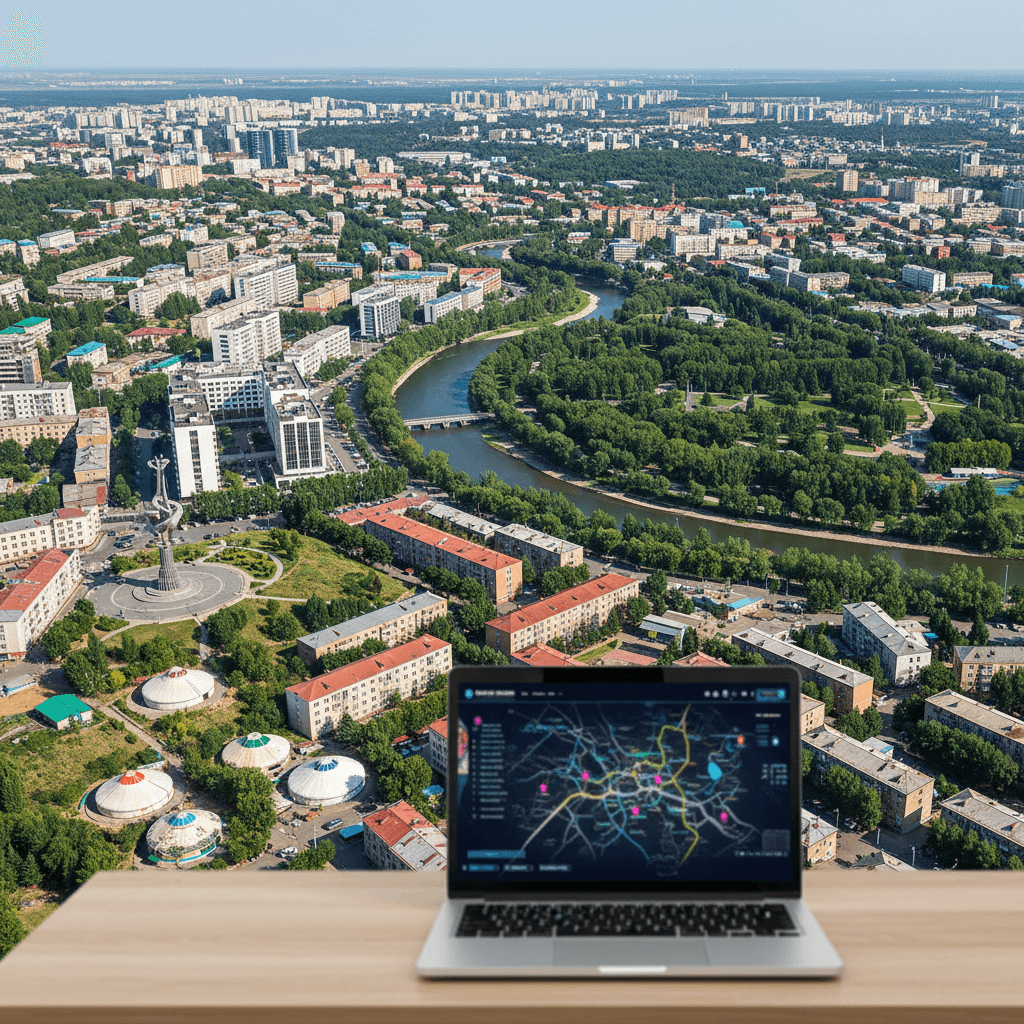
If Ulaanbaatar is the frantic, smog-choked heart of Mongolia, Darkhan is its deep, steady breath of fresh air. It is the country's second largest city, but it feels more like a collection of quiet neighborhoods stitched together by wide streets and a sense of calm that you won't find in the capital. For nomads, the draw here isn't a high-octane social scene or a strip of glass-fronted coworking spaces. It is the silence. It is the ability to walk out of a modern cafe and be in the middle of the vast, rolling steppe in less than ten minutes.
The city has a distinct "industrial-meets-pastoral" personality. You'll see Soviet-era architecture and functional shopping centers standing alongside traditional gers. There is a tangible lack of pretension here. People aren't rushing to meetings; they are stopping to talk to neighbors. Expats often describe it as the most peaceful city in Mongolia, where the "eternal blue sky" actually feels reachable because there isn't a thick layer of coal smoke blocking your view.
The Daily Grind
Living here requires a bit of self-reliance. You won't find a community of thousands of digital nomads, so your social life usually revolves around the local families you meet or the small circle of English teachers and volunteers working in the schools. Most nomads find that the best way to integrate is through cultural exchange. It is common to spend your mornings working from a home setup with high-speed fiber internet and your afternoons learning how to make buuz (steamed dumplings) or riding horses on the outskirts of town.
The pace is slow, which is perfect for deep work. While there aren't dedicated coworking hubs, the emerging coffee shop culture provides enough caffeine and WiFi to get by. Just bring a pair of noise-canceling headphones; while it is quieter than UB, the local cafes can get lively with students during the afternoons.
Cost of Living Breakdown
Darkhan is significantly more affordable than Ulaanbaatar. Your dollar goes a long way here, especially if you eat local and avoid the few "upscale" imports. Most nomads can live very comfortably on $1,200 to $1,500 per month.
- Housing: A decent 1-bedroom apartment in the city center typically runs between $200 and $400. Many travelers find housing through local hosts or Workaway-style arrangements where rent is subsidized in exchange for a few hours of English tutoring.
- Food & Drink: A hearty meal of traditional Mongolian fare at a local eatery costs about $3 to $5. If you head to a mid-range restaurant, expect to pay $8 to $12. A local beer is usually under $2.
- Connectivity: A monthly SIM card from Mobicom or Unitel with 20GB of data will cost you around $10. High-speed home internet is reliable in the city center and usually included in apartment rentals.
- Transportation: Getting around is cheap. Public buses are roughly $0.50 per ride, and the city is compact enough that you can walk most places in the center.
The Emotional Landscape
There is a specific kind of magic in Darkhan that comes from its proximity to the wild. You might spend your Monday morning on a Zoom call and your Saturday night sleeping in a ger under a blanket of stars so bright they feel fake. It can feel isolating if you are used to the constant buzz of a place like Chiang Mai or Mexico City, but that isolation is the point. It is a place for the nomadic soul that needs a reset. You come here to disappear into the landscape, to simplify your routine, and to experience a version of Mongolia that hasn't been polished for mass tourism.
The locals are incredibly welcoming but often shy if they don't speak English. Learning a few phrases like "Sain baina uu?" (Hello) goes a long way. You'll find that once the initial barrier is broken, you aren't just a visitor; you're part of the neighborhood fabric. It’s a city that rewards those who stay long enough to let the stillness sink in.
The Price of Peace in Mongolia's Second City
Darkhan feels like a well kept secret for nomads who find Ulaanbaatar too chaotic or polluted. It provides a rare middle ground where you can enjoy urban comforts like reliable 4G and modern grocery stores without the suffocating traffic of the capital. Best of all, your dollar stretches significantly further here, making it one of the most affordable urban hubs in East Asia for the 2025-2026 season.
While Ulaanbaatar prices have crept up, Darkhan remains firmly in the budget-friendly category. You aren't paying the "expat tax" here because the expat community is small and integrated. You'll be paying what the locals pay, which is refreshing for anyone used to the inflated rental markets of Southeast Asia or Europe.
Monthly Budget Tiers
- The Bootstrapper ($800 to $1,200): This covers a modest apartment, plenty of meals at local canteens, and getting around via the local bus system. You'll have enough left over for weekend trips into the countryside.
- The Mid-Range Nomad ($1,500 to $2,000): At this level, you're looking at a modern one-bedroom studio in the city center, daily cafe visits, and frequent use of ride-hailing apps. You can eat at the best restaurants in town without checking the menu prices.
- The High-End Resident ($2,500+): This budget is overkill for Darkhan. You'd be living in the most spacious private housing available, hiring private drivers for excursions, and likely hosting others. It's difficult to spend this much without trying very hard.
Housing and Utilities
Rent is your biggest saving. A comfortable one-bedroom apartment in the central district usually runs between $200 and $400 per month. Many nomads find their feet through local hosts or language schools, where housing is often bundled into a work-trade or volunteer arrangement. If you're looking for a private long-term stay, local Facebook groups are more effective than international booking sites.
- Standard 1BR Apartment: $250 to $350 per month.
- Utilities (Heat, Water, Electricity): $40 to $70. Note that heating is centralized and very effective during the brutal winters.
- High-Speed Home Internet: $15 to $25 per month.
Food and Dining
Eating out is a mix of traditional Mongolian fare and emerging cafe culture. A hearty plate of buuz (steamed dumplings) or tsuivan (fried noodles) at a local spot will cost you about $2 to $5. If you head to the more modern shopping centers for a mid-range meal, expect to pay $8 to $12. Groceries at the local bazaars are incredibly cheap, especially for root vegetables, flour, and dairy, though imported goods from Korea or Russia carry a premium.
- Local Canteen Meal: $3.
- Dinner for two at a nice restaurant: $20.
- Cappuccino at a modern cafe: $2.50.
- Domestic Beer (0.5L): $1.50.
Transport and Connectivity
Darkhan is walkable, but when the temperature drops to -20 degrees, you'll want wheels. The local bus is nearly free at $0.50 a ride. For more convenience, use the UBCab app. It's the Mongolian equivalent of Uber and works well here, though you might need to use a translation app to communicate your exact pickup spot if it's off the main road.
For your phone, grab a SIM card from Mobicom or Unitel at the central bazaar. A massive 20GB data package will only set you back about $10. This is vital because while host WiFi is generally good, having a hotspot is a necessary backup for those days when you decide to work from a remote ger in the nearby steppes.
The "Hidden" Costs
Don't forget to budget for gear. If you arrive in autumn, you'll need to invest in high-quality Mongolian wool or cashmere and heavy-duty boots. These aren't just fashion choices; they're survival requirements for the Mongolian winter. A good set of winter gear purchased locally will cost between $150 and $300, but it's an investment that pays off in comfort.
For Digital Nomads
If you are working remotely, you will want to plant your flag in Central Darkhan. This area sits between the main train station and the central shopping districts. It is the only part of the city where you can reliably find high speed internet and a decent caffeine fix at the same time. While there are no dedicated coworking spaces yet, nomads usually rotate between modern coffee shops or work from their host apartments.
- The Vibe: Surprisingly quiet for a city of this size. You get the convenience of walkable grocery stores and pharmacies without the suffocating smog of Ulaanbaatar.
- Internet: Most modern apartments here come with fiber optic connections. If you're out and about, grab a Unitel or Mobicom SIM card at the local bazaar for about $10 to get 20GB of data.
- Rent: A private one bedroom apartment in the center typically runs between $200 and $400 per month.
For Expats and Long-Term Residents
Expats moving here for teaching or community projects tend to stick to the New Darkhan areas. These neighborhoods feel a bit more planned and offer better access to the larger shopping centers and international schools. It is the most practical choice if you want to be near other English speakers and the few mid range restaurants the city offers.
Living here means you are never more than a ten minute walk from a bazaar where you can find everything from sheepskin boots to fresh produce. Most expats use the UBCab app to get around when the weather turns cold, as it lets you pin locations without needing to master Cyrillic. Expect to spend about $0.50 for a standard bus ride or $2 to $5 for a quick cross town trip in a car.
For Solo Travelers
If you are here for a short stint, stay as close to the Darkhan Train Station as possible. This is the city's pulse and your gateway to the rest of Mongolia. It is incredibly safe, even at night; travelers often describe it as the most peaceful urban environment in the country. You will find basic guesthouses and hotels here that cater to people passing through on the Trans-Mongolian route.
- Dining: Stick to the local eateries near the station for $2 to $5 meals like buuz (steamed dumplings).
- Social Life: It is low key. Socializing usually happens over tea in someone's home rather than at a bar. You will likely meet people by hanging out at the local language centers or through volunteer networks.
For Families and Immersion Seekers
The Outskirts and the surrounding steppe are where you go if you want the "National Geographic" experience. This isn't a neighborhood in the traditional sense, but a series of nomadic settlements and ger districts that ring the city. It is perfect for families who want their kids to see a completely different way of life, involving livestock and wide open spaces.
- The Trade-off: You will swap high speed WiFi for wood fired stoves and battery powered lights. Logistics are harder here, so you will need a local contact or a host family to manage transport.
- Activities: Days are spent horse riding or learning traditional cooking. It is a total disconnect from the digital world.
- Cost: Often arranged as a package with hosts, but a comfortable mid range lifestyle including tours and private drivers can still stay under $2,000 a month for a family.
Connectivity in the Steel City
Working from Darkhan is a lesson in prioritizing stability over variety. While Ulaanbaatar is packed with glass-walled hubs, Darkhan operates on a more personal scale. While limited, a few coworking spaces exist alongside cafes. Instead, the digital nomad scene relies heavily on high-speed home connections and a handful of quiet, modern cafes that are surprisingly welcoming to laptop users.
The WiFi Situation
Most nomads in Darkhan find that residential internet is actually quite reliable. If you're staying in a modern apartment or a guesthouse near the city center, you can expect fiber-optic speeds capable of handling Zoom calls and heavy uploads without much drama. However, once you step into the Ger districts or head toward the outskirts for a weekend of nomadic immersion, the signal drops off a cliff. If you plan to work while exploring the countryside, you'll need to be self-sufficient.
- Home Fiber: Standard in central 1-room apartments, usually included in the rent.
- Public WiFi: Spotty at best. Don't rely on open networks in public squares or malls.
- Reliability: Power outages are rare but can happen during heavy winter storms. A laptop with a good battery is your best friend.
Mobile Data and SIM Cards
Your first stop after arriving by train should be a local bazaar or a service center to grab a SIM card. Mobicom and Unitel are the two heavy hitters in Mongolia. Both offer excellent coverage within Darkhan's city limits. For about $10 USD, you can snag a monthly package with roughly 20GB of data, which is plenty for use as a backup hotspot.
Expats usually recommend Unitel if you plan on traveling between cities, as their rural coverage is often cited as being slightly more robust. You'll need your passport to register the SIM, and the process takes about ten minutes if there isn't a queue.
Where to Work: The Cafe Scene
The local coffee shops serve as popular de facto offices. The culture here is much more relaxed than in the capital; you won't get "the look" for sitting with a latte for three hours. However, the concept of a "work cafe" is still emerging, so it's polite to keep ordering and keep your setup compact.
- Central Darkhan Cafes: Look for spots near the main shopping centers. These are the most likely to have reliable routers and accessible power outlets.
- Noise Levels: Generally quiet during the day, but they can get lively after 4:00 PM when students finish classes. Bring noise-canceling headphones to stay in the zone.
- Etiquette: Most places don't mind you staying, but always ask "WiFi bii yu?" (Is there WiFi?) before you sit down to ensure the router isn't having a bad day.
Remote Setup Essentials
If you're staying long-term, many nomads find it easier to work directly from their host's home or a private rental. Renting a 1-room studio in the center typically costs between $200 and $400 USD per month, and these almost always come with a desk and a router already installed. It's the most cost-effective way to ensure you have a "private office" without the commute.
For those living the van life or staying in more rugged accommodations, some hosts offer camper van parking with dedicated internet access. It's a niche but growing segment for travelers who want the "eternal blue sky" view without losing their Slack connection. Just remember that if you head out for a "nomadic Friday," the vast lands surrounding the city are a total dead zone. Finish your tasks by Thursday night so you can truly disconnect over the weekend.
General Safety and Street Smarts
If you are coming from the frantic energy of Ulaanbaatar, Darkhan feels like a deep breath. Local expats often call it the most peaceful city in Mongolia, and for good reason. The crime rate is remarkably low, and the community is tight knit. You won't find the aggressive pickpocketing culture sometimes seen in the capital's busier markets, but it is still smart to keep your wits about you at the Darkhan Bazaar or near the train station at night.
The biggest safety "risk" here isn't crime; it is the infrastructure and the elements. Sidewalks can be uneven or icy in the winter, and street lighting is hit or miss once you leave the central shopping districts. If you are heading into the nomadic outskirts for a weekend ger stay, remember that you are truly off the grid. Power is often limited to battery packs, and internet can vanish entirely. Always let someone know your coordinates before heading into the steppe.
- Solo Travel: Darkhan is exceptionally safe for solo travelers. Women reporting on their stays often mention feeling comfortable walking the central areas alone, though a lack of English speakers means you should have Google Translate downloaded for offline use.
- Emergency Numbers: Dial 112 for general emergencies. It is the standard across Mongolia for police, fire, and ambulance services.
- Nightlife Safety: The scene is quiet, revolving mostly around coffee shops. If you do head out for drinks, stick to the more modern restaurants in the New Darkhan area.
Healthcare and Medical Facilities
Healthcare in Darkhan is functional for basic needs but lacks the specialized bells and whistles of international clinics in Ulaanbaatar. For minor ailments, stomach issues, or infections, the local hospitals near the central stations can handle you. However, for anything serious or surgical, most expats hop on a 3 hour train or bus back to the capital to visit facilities like Intermed or SOS Medica.
Pharmacies are easy to find and are usually tucked inside the larger shopping centers or near the bazaars. Most pharmacists won't speak English, so have a photo of the medication or the chemical name ready on your phone. Many medications that require prescriptions in the West are available over the counter here, but always check the expiration dates.
- Pharmacy Costs: Basic antibiotics or painkillers usually run between $5 and $15.
- Insurance: Make sure your policy covers medical evacuation. If you have a serious accident in the countryside, getting you back to a high quality facility is expensive.
- Water Safety: Do not drink the tap water. Stick to bottled water, which is cheap and available at every corner "pauza" or grocery store.
Environmental Hazards
The real health challenge in Darkhan is the climate. While the city avoids the soul crushing smog of Ulaanbaatar, the winters are brutal. Between December and March, temperatures regularly plummet to -20°C (-4°F) or lower. Frostbite is a genuine concern if you aren't dressed in proper layers. If you are visiting during these months, invest in high quality wool gear from the local markets; the locals know how to handle the cold better than any international brand.
Conversely, the summer sun is intense. At this altitude, you will burn much faster than you expect. Always carry high SPF sunscreen and a hat if you are out exploring the vast lands under the eternal blue sky. If you are staying with a nomadic family, be prepared for very basic sanitation. Hand sanitizer and biodegradable wet wipes are a nomad's best friend when running water isn't a guarantee.
The Logistics of Ease
Unlike the gridlock and smog that define Ulaanbaatar, Darkhan is a breath of fresh air. It is Mongolia's second-largest city, but it feels more like a collection of interconnected neighborhoods where you can actually hear yourself think. Most nomads find that the city center is manageable on foot, especially if you're staying near the main shopping districts or the central park areas. It is a compact layout that rewards those who like to walk, though you'll want to bundle up if you're visiting anytime between November and March.
Public Transport and Trains
The Darkhan Railway Station is the city's heartbeat, connecting you to the capital and the Russian border. Trains are reliable and incredibly cheap, usually costing between $10 and $20 for a comfortable berth to Ulaanbaatar. For daily laps around town, the local bus system is the go-to for residents. It is basic and the routes aren't always clear to newcomers, but at roughly $0.50 per ride, it is the most budget-friendly way to cover distance. Most buses converge near the central bazaars, making them easy to spot even if you don't speak the language.
Ride-Hailing and Apps
While you won't find Uber or Lyft here, the UBCab app is your best friend. It works similarly to international apps, though you should be prepared for the interface to occasionally lean on Cyrillic. Expats recommend pinning your location precisely on the map rather than trying to type in addresses, as many streets in Darkhan lack formal signage. If you're flagging a car the old-fashioned way, just stand by the curb and hold your hand out. Private cars often act as unofficial taxis; just agree on the price before you close the door. A typical trip across the city center rarely exceeds $3 to $5.
- UBCab: The primary digital lifeline for getting a ride without a language barrier.
- apps like TapaTrip for inter-city bookings: Use this for booking inter-city travel or more formal transport arrangements.
- Google Translate: Essential for showing drivers specific destinations or reading bus stop signs.
Reaching the Steppe
The real magic of Darkhan is how quickly the urban landscape dissolves into the nomadic countryside. You can be at a shopping mall one minute and standing in the middle of the vast, open steppe twenty minutes later. There aren't many formal bike or scooter rental shops yet, so most travelers rely on their hosts or local drivers for these excursions. If you're planning to head into the rural outskirts for a ger stay, don't expect paved roads. You'll likely be in a sturdy Russian van or a 4WD vehicle, and the "road" will be a series of tire tracks in the grass. Most local hosts offer station pickups for free, which saves a lot of headache upon your initial arrival.
Arrival and Connections
Since Darkhan doesn't have its own commercial airport, you'll likely land at Chinggis Khaan International Airport in Ulaanbaatar. From there, you have a few choices. The train is the most scenic and relaxing, taking about 4 to 5 hours. Shared minivans and buses are faster, usually making the trip in about 3 hours, but they can be a bit cramped. If you value comfort, hiring a private driver for the trek from the capital is the way to go, costing anywhere from $60 to $100 depending on your negotiation skills.
The Linguistic Landscape
In Darkhan, your relationship with the local language will define your experience. Unlike the more international vibe of Ulaanbaatar, English isn't widely spoken on the streets here. You'll find that Mongolian, written in the Cyrillic script, is the absolute standard for everything from restaurant menus to bus schedules. Most nomads find that while young students are eager to practice their English, the average shopkeeper or taxi driver will rely entirely on Mongolian.
Expats recommend getting comfortable with the Cyrillic alphabet before you land. It looks intimidating, but you can learn to phoneticize signs in a weekend. Being able to recognize "Ресторан" (Restaurant) or "Дэлгүүр" (Shop) makes a massive difference when you're wandering the central districts near the train station.
Digital Communication Tools
Since English proficiency is low, your phone is your best friend. Google Translate is the local favorite, specifically the camera feature that translates text in real time. It's perfect for deciphering labels at the local bazaars or reading official notices in your apartment building.
For getting around, ride-hailing apps like UBCab (primarily for larger cities) can be a lifesaver. Even though it's a Mongolian app, you can pin your locations on a map, which bypasses the need to explain directions to a driver in broken Mongolian. Travelers often say that having a local SIM card is the first thing you should do; A tourist SIM from Mobicom or Unitel costs around MNT 40,000 (~$12 USD) for 20GB data valid 30 days. You can grab one at the larger shopping centers.
Social Etiquette and Integration
Darkhan has a reputation as a peaceful, friendly city where people actually take the time to talk to you. If you're staying with a host family or volunteering at a language school, you'll likely be invited to "tea and talk" sessions. These are informal but culturally significant. Locals appreciate it when you attempt even the most basic greetings.
- Sain baina uu? (Hello/Are you well?) is the standard opener.
- Bayarlalaa (Thank you) goes a long way at the market.
- Zugeer, zugeer (It's okay/No problem) is a handy phrase for social ease.
If you're looking to meet English speakers, your best bet isn't a bar or a meetup group; it's the local schools. Many expats find their social circle by offering to help with English conversation at language centers. These spots act as unofficial hubs for the small international community and the local "intellectuals" who speak multiple languages.
Communication in the Countryside
The moment you step outside the city limits into the nomadic areas, digital communication drops off. While Darkhan itself has high speed internet in apartments and cafes, the surrounding gers often have no signal at all. If you're heading out for a weekend in the steppe, tell someone your plans beforehand. In these areas, communication is purely face to face and often involves a lot of gesturing and shared meals. It's a slower, more intentional way of connecting that most nomads find refreshing after weeks of screen time.
The Seasonal Cycle
Living in Darkhan means embracing the extremes of a classic continental climate. You'll experience the full spectrum of Mongolia's "Eternal Blue Sky," where the sun shines almost year round even when the mercury drops to bone-chilling depths. Unlike Ulaanbaatar, Darkhan doesn't suffer from the same heavy winter smog, making the cold months feel much crisper and cleaner, if no less intense.
The transition between seasons happens fast here. You can go from wearing a light jacket to a heavy parka in the span of two weeks. If you're planning a stint here, your gear needs to be versatile. Locals rely on layers of wool and cashmere, which you can pick up for reasonable prices at the local bazaars if your home wardrobe isn't up to the task.
When to Go: The Sweet Spot
The window for the most comfortable nomad experience is June through August. This is when the steppe turns a brilliant green and the temperatures hover between 20°C and 25°C (68°F to 77°F). It is the perfect time for those weekend escapes into the countryside that make Darkhan worth the trip. You'll get the best of the nomadic lifestyle without the survivalist edge of the winter months.
- June: The landscape wakes up. It is fresh, breezy, and the days are incredibly long.
- July: This is the peak of summer. It is also when Naadam festivities happen, though Darkhan's celebrations are much more intimate and community focused than the massive crowds in the capital. Expect some rain, but it usually comes in short, heavy bursts that clear the air.
- August: Still warm, but you'll start to feel the first hints of the autumn chill at night. It is the best month for hiking and visiting nearby nomad camps.
The Shoulder Seasons
May and September are the wildcards. May brings the end of the dust storms and the start of the thaw, while September offers beautiful golden hues across the plains. Temperatures during these months usually sit around 10°C to 15°C (50°F to 59°F). You'll find fewer travelers and lower prices, but you need to be prepared for sudden cold snaps. Most nomads find these months ideal for deep work since the weather isn't quite nice enough to be outside all day, but not so cold that you're trapped indoors.
Surviving the Deep Freeze
If you arrive between December and March, you are in for a serious reality check. Temperatures frequently bottom out at -20°C (-4°F) and can dip even lower at night. Darkhan is much more peaceful during this time, but your social life will likely migrate entirely to heated coffee shops and private apartments.
The city's infrastructure handles the cold well, and indoor heating is generally robust. However, if you plan on visiting a ger (traditional felt tent) in the surrounding countryside during winter, keep in mind that facilities are basic. You'll be relying on wood stoves and battery powered lights, and the internet will be non-existent. It is an authentic experience, but definitely not a "work from home" scenario.
A Quick Monthly Snapshot
- Warmest Month: July (Average 22°C / 72°F)
- Coldest Month: January (Average -25°C / -13°F)
- Rainiest Period: July and August (Expect about 50mm per month)
- Best for Outdoor Activities: Late June to Early August
- Best for Budget Travelers: October or April (Transition periods with lower demand)
Most expats recommend arriving in late May to get settled before the heat of summer and the festival rush. This gives you time to find a reliable apartment and map out the best WiFi spots before the city gets into its summer groove.
Connectivity and Tech Setup
In Darkhan, your digital life revolves around the local bazaars. Head there immediately to grab a SIM card from Mobicom or Unitel. A monthly data package of 20GB will set you back about $10. While the city center has decent 4G, speeds can be hit or miss once you venture toward the nomadic outskirts.
You won't find dedicated coworking spaces here like you would in Ulaanbaatar. Most nomads set up shop in their apartments or local coffee houses. High speed internet is standard in modern 1-room rentals, but it's smart to carry a backup hotspot. If you're working from a cafe, bring noise cancelling headphones; the local social scene is intimate and people love to chat. If you're planning a weekend "ger" stay in the countryside, assume you'll be completely offline. Those areas often rely on battery power and have zero cellular reception.
Money and Budgeting
Darkhan is significantly more affordable than the capital. You can live comfortably on $1,500 to $2,000 a month, which covers a private studio, frequent cafe visits, and private rides. If you're on a budget, $800 to $1,200 is plenty if you stick to traditional eateries and public transport.
- Rent: Expect to pay between $200 and $400 for a decent 1-room apartment in the center.
- Meals: A quick lunch at a local spot costs around $2 to $5, while a nicer dinner at a sit-down restaurant runs $10 to $15.
- Groceries: Stick to the local bazaars for the best prices on fresh produce and dairy.
Cards are widely accepted in shopping centers and larger pharmacies, but cash is king at the markets. Keep a stash of Mongolian Tugrik (MNT) for small purchases and bus fares. Most expats use local bank branches near the train station for larger transactions.
Getting Around the City
The city center is surprisingly walkable, but you'll need wheels for anything else. Download the UBCab app before you arrive. It works similarly to Uber, though you'll want to use Google Translate to pin your locations since the interface uses Cyrillic. A typical ride across town is rarely more than a few dollars.
Public buses are reliable and cheap, costing roughly $0.50 per trip. Since there is no local airport, you'll likely arrive via Ulaanbaatar. The 3-hour train or bus journey from the capital is easy and costs between $10 and $20. For trips between cities, travelers recommend the TapaTrip app to book tickets in advance.
Language and Social Etiquette
English proficiency is low in Darkhan. You'll definitely need Google Translate for daily interactions. Learning basic phrases like Sain baina uu (Hello) and Bayarlalaa (Thank you) goes a long way with the locals. If you're invited into a home or a ger, it's polite to accept food or tea offers with your right hand. People are incredibly welcoming, and the community is tight-knit, so don't be surprised if strangers strike up a conversation to practice their English.
Health and Safety
Darkhan is often cited as the most peaceful city in Mongolia. Crime is very low, and the air is much cleaner than in Ulaanbaatar. For medical needs, there are several pharmacies located within the main shopping districts. In an emergency, dial 112. While the city is safe, the rural areas can be rugged; if you're heading out for a trek, let someone know your expected return time since help can be far away.
Need visa and immigration info for Mongolia?
🇲🇳 View Mongolia Country GuideHidden Gem
Worth the effort