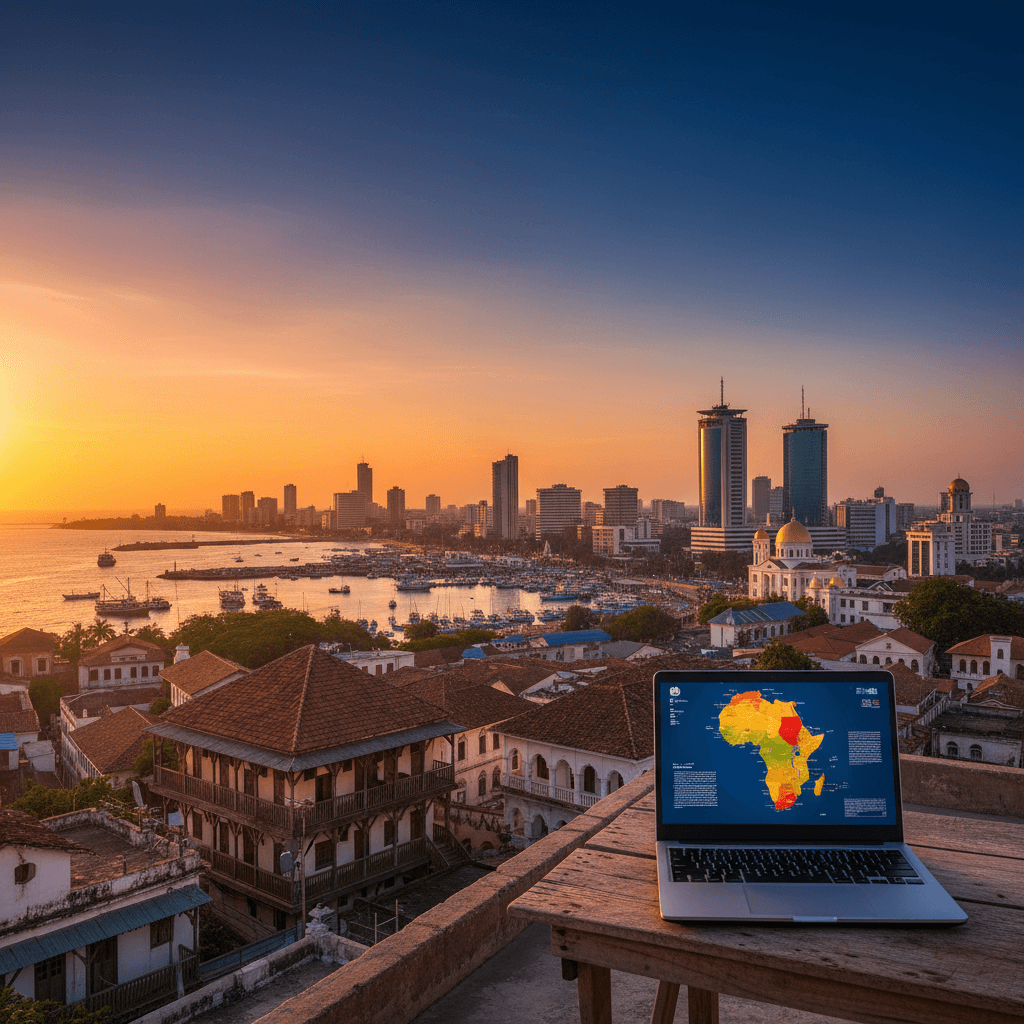
Dar es Salaam
🇹🇿 Tanzania
The Soul of the Swahili Coast
Dar es Salaam isn't your typical manicured nomad hub. It's a sprawling, humid, and high energy metropolis where the Indian Ocean breeze constantly battles the heat of the city streets. While Bali or Lisbon might feel like polished coworking colonies, Dar feels like a real city that's just starting to wake up to the remote work revolution. It's the kind of place where you can spend your morning on a high speed fiber connection and your afternoon eating nyama choma (grilled meat) at a plastic table by the water.
The vibe here is defined by "Bongo," a local nickname for the city that implies you need brains and wit to thrive. It's a sensory overload of salt air, charcoal smoke, and the constant hum of bajajis darting through traffic. For nomads, the draw is the balance of affordability and access. You get the creature comforts of a capital city, like modern gyms and international grocery stores, without losing the grit and soul of East Africa.
Cost of Living Breakdown
Living in Dar is remarkably affordable if you eat local, though costs can creep up if you insist on imported cheeses and air conditioning 24/7. Most nomads find they can live well on $1,000 to $1,500 per month.
- Budget Lifestyle ($800/month): This usually involves a shared apartment in the city center for $300 to $500, eating street food like ugali for $2 a meal, and using public transport.
- Mid-Range Lifestyle ($1,000 to $1,500/month): You'll likely stay in Masaki or Oyster Bay in a private studio for $600 to $900. You'll mix local spots with international cafes and use Bolt taxis to get around.
- Comfortable Lifestyle ($1,500 to $3,000/month): This covers premium apartments in Upanga with reliable backup generators and water, frequent seafood dinners, and weekend trips to Zanzibar or nearby safari circuits.
Where to Plant Your Flag
Choosing the right neighborhood is the difference between a productive stay and a frustrating one. Traffic in Dar is legendary, so you want to live near where you plan to work.
Masaki & Oyster Bay
- Best For: Digital nomads and the expat community.
- The Vibe: Seaside, upscale, and walkable in small pockets. This is where most of the nightlife and international dining is clustered.
- Rent: $600 to $900 for a modern studio.
- Pros: Close to the beach, high concentration of other nomads, and the best coworking access.
- Cons: The most expensive part of town; traffic can be a nightmare during rush hour.
Upanga
- Best For: Professionals who want a central, quieter base.
- The Vibe: Residential and established. It feels more "grown up" than Masaki and sits right between the city center and the peninsula.
- Rent: $900+ for high quality apartments.
- Pros: Home to Seedspace Dar, very reliable infrastructure, and walkable to many hospitals and offices.
- Cons: Lacks the "beach town" feel of the peninsula.
Connectivity and Coworking
Internet reliability has made massive leaps recently. You can expect 4G+ speeds of 25 to 40 Mbps on mobile networks, while fiber in dedicated workspaces hits 50 Mbps. Most nomads grab a Vodacom or Airtel SIM card at the airport for about $25 a month for unlimited data.
Seedspace Dar is the gold standard for coworking, offering a dedicated desk for around $120 a month. It's a great spot to meet the local tech scene and attend community events. If you prefer the cafe route, the peninsula is dotted with spots that offer decent WiFi for the price of a coffee, though it's always smart to have your phone hotspot as a backup.
The Daily Grind and Getting Around
Life in Dar moves to the rhythm of the sun. Most people start early to beat the heat. For transport, skip the crowded dala dalas (minibuses) and download the Bolt app. It's the safest and most transparent way to get around, with monthly transport costs usually landing between $50 and $100. For short hops, a bajaji (three wheeled taxi) is faster and cheaper, though you'll need to haggle if you don't use an app.
English is widely spoken in business and expat circles, but learning a few Swahili basics goes a long way. A simple "Asante" (thank you) or "Habari" (how are you) opens doors and builds rapport quickly. It's a friendly city, provided you keep your wits about you and stick to well lit, populated areas like Masaki or Upanga after dark.
The best time to visit is from June to September, when the weather is a manageable 28°C and the rain stays away. Avoid April if you can, as the heavy rains can turn the city's infrastructure into a muddy challenge. If you can handle the humidity and the occasional power flicker, Dar offers a coastal lifestyle that feels far more authentic and adventurous than the typical nomad circuit.
The Nomad’s Budget
Dar es Salaam is one of those rare spots where you can live a high-end coastal lifestyle for a fraction of what you would pay in Cape Town or Lisbon. Most nomads find they can get by comfortably on $1,200 to $1,500 a month, though you can easily push that to $3,000 if you want a luxury high-rise in Masaki with a pool and ocean views.
Your biggest variable will be housing. If you are on a tighter budget, shared apartments in the City Center or Upanga run between $300 and $500. For the typical nomad experience, a private studio in the expat-heavy Masaki or Oyster Bay neighborhoods usually lands between $600 and $900. These areas are pricier because they offer more reliable backup generators and water tanks, which are vital for remote work.
- Budget Tier ($800/month): Shared housing, local street food like ugali and nyama choma, and using public bajajis for transport.
- Mid-Range Tier ($1,000 to $1,500/month): Private studio in Masaki, a mix of local and international cafes, and a dedicated desk at a coworking space.
- Comfortable Tier ($1,500 to $3,000/month): Modern AC apartment in Upanga, frequent dinners at upscale seafood spots, and private Bolt transfers.
Daily Expenses and Lifestyle
Food costs depend entirely on how much you rely on imported goods. Local markets keep the basics incredibly cheap, with street meals costing as little as $2 to $5. However, travelers often say that grocery shopping at high-end supermarkets can inflate your budget quickly since imported cheeses or specialty snacks are taxed heavily. Expect to spend $150 to $250 a month on groceries if you cook at home.
Dining out is a major part of the social scene. A mid-range meal at a popular spot in Oyster Bay usually costs around $10 to $15. If you are heading out for a night of upscale seafood and cocktails, you will likely spend $20 or more per person. For getting around, most nomads prefer the Bolt app. It is safer and more predictable than hailing someone on the street, costing most people between $50 and $100 a month for regular use.
Coworking and Connectivity
The digital infrastructure has improved significantly recently. You can expect 4G+ speeds of 25 to 40 Mbps, and most coworking spaces offer fiber connections hitting 50 Mbps. It is smart to grab a Vodacom or Airtel SIM card at the airport upon arrival. An unlimited data plan usually costs about $25 a month and serves as a reliable hotspot when the cafe WiFi gets spotty.
- Seedspace Dar: Located in both Upanga and Masaki, this is the go-to for the nomad community. A dedicated desk is roughly $120 a month.
- Cafe Culture: Many urban cafes offer free WiFi, though it is best for light tasks rather than heavy video calls.
Logistics and Local Tips
Cash is still king for many local transactions, but the M-Pesa mobile money system is widely used for everything from utility bills to market purchases. Expats recommend keeping a Wise or Revolut account for international transfers and using local ATMs for Tanzanian Shillings.
When searching for apartments, look at platforms like Wenomad.so or connect with local agents specifically for Masaki listings. Most people find that while the city is moderate in terms of safety, using Bolt at night and staying in neighborhoods like Upanga or Oyster Bay provides the best balance of security and convenience. If you need medical care, Aga Khan Hospital in Upanga is the standard for high-quality private healthcare.
The Nomad Hub: Masaki and Oyster Bay
If you're coming to Dar with a laptop in your bag, you'll likely end up in Masaki. This peninsula is the heartbeat of the international community, where the Indian Ocean breeze actually reaches the streets. It's the most polished part of the city, filled with walkable stretches, trendy cafes, and the highest concentration of other remote workers.
Most nomads aim for Masaki because it feels familiar without losing the Tanzanian soul. You're close to the Yacht Club and Coco Beach, and the social scene revolves around sundowners and weekend meetups. It's also home to the best infrastructure; you'll find modern apartments that don't struggle as much with water or power consistency compared to the city center.
- Rent: Expect to pay between $600 and $900 for a private studio or a high end apartment.
- Coworking: Seedspace Dar is the go to spot here, offering 50 Mbps fiber and a solid community vibe for about $120 a month.
- Vibe: Coastal, upscale, and social. You'll find plenty of English speakers and international menus.
The Professional Pulse: Upanga
Expats and long term professionals often gravitate toward Upanga. It sits perfectly between the frantic energy of the City Center and the relaxed luxury of the peninsula. It's a bit more "real world" than Masaki, with a mix of residential towers and commercial hubs. If you need to be near the big hospitals like Aga Khan or government offices, this is your base.
The streets here are generally wider and more organized, making it one of the few places where you can actually walk to a grocery store or a pharmacy without needing a Bolt taxi. It's quieter than the center but still feels like you're in the middle of the action.
- Rent: High quality AC studios with reliable utilities usually start around $900.
- Food: A mix of local spots and mid range international restaurants where a meal costs $5 to $15.
- Vibe: Serious, central, and convenient. It’s the sweet spot for those who want reliability over a beach view.
The Family Retreat: Msasani
For families moving to Dar, Msasani offers a slightly slower pace. It’s tucked away from the main transit corridors, which helps cut down on the city's notorious noise. You’ll find more standalone houses here with yards rather than just high rise apartments, and it's close to several reputable international schools.
While it’s quieter, keep in mind that utilities like electricity and water can sometimes be pricier here depending on the age of the house. You’ll also be a bit further from the main coworking hubs, so a reliable home internet setup is a must. Most families rely on private transfers or Bolt to get around since it's less walkable than Upanga.
- Rent: Prices vary wildly, but family sized homes often sit in the $1,500 to $3,000 range for comfortable living.
- Pros: Proximity to family friendly beaches and a quieter residential atmosphere.
- Cons: Traffic can be a headache when trying to reach the city center during peak hours.
The Budget Base: City Center
Solo travelers or those on a tighter budget often start in the City Center. This is the oldest part of Dar, defined by its markets, transport hubs, and the ferry to Zanzibar. It’s loud, crowded, and chaotic, but it’s also where you’ll find the cheapest living arrangements and the best street food.
Living here means you're at the center of the dala dala (bus) network, making it easy to explore the rest of the city for pennies. However, the noise levels are high, and the area can feel overwhelming after dark. Most people stay here for a few weeks to find their footing before moving further north to the peninsula.
- Rent: Shared housing or modest private rooms can be found for $300 to $500.
- Food: You can live on $2 to $5 a day if you stick to local favorites like ugali and nyama choma.
- Vibe: High energy and authentic. It's perfect for those who want to be immersed in the local hustle.
Practical Neighborhood Logistics
Regardless of where you land, download the Bolt app immediately. It's the standard for getting between neighborhoods safely and usually costs $50 to $100 a month for regular use. For internet, don't rely solely on apartment Wi-Fi; grab a Vodacom or Airtel SIM card at the airport for about $25 a month to ensure you have a 4G+ backup for work calls.
Working from Dar es Salaam has come a long way in just a few years. While you might still encounter the occasional power flicker or a drop in signal during a heavy tropical downpour, the city has matured into a legitimate tech hub. Most nomads find that as long as they stick to the right neighborhoods and have a backup plan, staying productive here is surprisingly easy.
Internet Speeds and Connectivity
You can expect 4G+ speeds to hover between 25 and 40 Mbps across the city. Fiber is becoming more common in upscale apartments and dedicated workspaces, often clocking in at 50 Mbps. It’s reliable enough for video calls and heavy uploads, though latency can occasionally be an issue for gamers or high-frequency traders.
For your primary connection, don't rely solely on hotel WiFi. Expats recommend grabbing a local SIM card immediately upon arrival at Julius Nyerere International. Here is how the mobile data landscape looks:
- Vodacom: Generally considered the most reliable for coverage and speed. You can get an unlimited monthly 4G+ data plan for about $25.
- Airtel: A solid runner-up with competitive pricing and good speeds in the Masaki and Upanga areas.
- M-Pesa: Once you have your SIM, set up this mobile money service. It’s the standard for paying for data top-ups and even your morning coffee without needing cash.
Top Coworking Spaces
The coworking scene is concentrated in the areas where nomads actually live. These spaces aren't just about desks; they are the primary way to meet other remote workers and get plugged into the local startup scene.
Seedspace Dar is the heavy hitter here. Located in both Upanga and Masaki, it’s the go-to for serious professionals. A dedicated desk costs around $120 per month. You get 50 Mbps fiber internet, access to community events, and a terrace that’s perfect for networking after the sun goes down.
Top 62 Coworking is another reliable option if you need a professional environment for meetings. It’s known for having consistent uptime and a quiet atmosphere that’s hard to find in the noisier parts of the city center.
Working from Cafes
If you prefer the hum of a coffee shop, Dar has a growing cafe culture that’s friendly to laptops. Most urban spots offer free WiFi, though it’s polite to keep the coffee flowing if you’re staying for a few hours. Travelers often congregate in Oyster Bay and Masaki for the best work-friendly vibes. Look for spots with backup generators, as the city does experience occasional "load shedding" or power cuts.
Practical Tips for Staying Online
- Get a local SIM: Do this at the airport to avoid the hassle of finding a shop later. It's the cheapest way to stay connected.
- Power backups: If you are renting an Airbnb, ask specifically if the building has a "full backup generator." Some only power the elevators and hallway lights, leaving your router dead during a blackout.
- Data is cheap: Since $25 gets you a month of unlimited data, many nomads use their phone as a hotspot whenever the fiber fluctuates.
- Safety first: While Masaki and Upanga are safe, don't walk around with your laptop bag visible at night. Use Bolt to get between your apartment and your workspace.
Overall, the cost to stay connected is low. Between a $120 coworking membership and a $25 data plan, your total "office" overhead is under $150 a month. That’s a steal for a coastal city with this much access to the Indian Ocean.
Staying Safe in the City
Dar es Salaam is generally welcoming, but like any major commercial hub, it requires a bit of street smarts. Most nomads find that the upscale neighborhoods of Masaki and Oyster Bay feel quite secure during the day. Locals and expats alike suggest sticking to these areas or Upanga if you're planning to walk around. It's best to avoid wandering through Temeke or Manzese after dark, as petty crime can be an issue in less developed districts.
The most common advice from travelers is to skip the traditional street taxis and rely on the Bolt app. It provides a digital trail and upfront pricing, which cuts out the stress of haggling or getting lost. If you're out late at a beach club or restaurant, always have your ride pick you up at the door. While the city feels safer than many people expect, keeping your phone and expensive tech out of sight while walking near traffic is a simple way to stay under the radar.
Healthcare Facilities and Quality
If you need medical attention, the quality of care varies significantly between public and private sectors. Expats and long-term nomads almost exclusively use private hospitals for anything more serious than a cold. These facilities are modern, well-equipped, and staffed by English-speaking professionals.
- The Aga Khan Hospital: Located in Upanga, this is the gold standard for healthcare in Dar. It's a full-service hospital with an emergency department and specialist clinics.
- IST Clinic: Located in Masaki, this is a popular choice for routine check-ups and minor ailments, specifically catering to the international community.
- Pharmacies: You'll find well-stocked pharmacies (locally called Chemists) throughout Masaki and the City Center. Most basic medications are available over the counter, but it’s wise to bring a supply of any specific prescriptions from home.
Insurance and Emergencies
Don't even think about landing without a solid travel insurance policy that covers medical evacuation. While Dar can handle most standard procedures, serious emergencies might require a flight to Nairobi or Johannesburg. For immediate help, the emergency number is 112, though calling your private hospital's ambulance line directly is often faster.
Malaria is a reality in Tanzania, so most nomads keep a supply of mosquito repellent and stay in rooms with screens or nets. If you develop a fever, head to a clinic for a quick test; they're experts at treating it quickly. It's also a good idea to stick to bottled or filtered water to avoid any stomach issues, especially when you first arrive and your system is adjusting to the local environment.
Practical Safety Tips
- Cash and Cards: Carry only what you need for the day. Use M-Pesa for mobile payments when possible, as it's the standard for cashless transactions and reduces the need to carry large amounts of Tanzanian Shillings.
- Dress Code: While Masaki is relaxed, dressing modestly in more traditional or Muslim neighborhoods shows respect and helps you blend in, which naturally improves your safety.
- Connectivity: Ensure your phone is always charged and has a local Vodacom or Airtel SIM card. Having 4G+ data allows you to call a Bolt or check your GPS at any moment.
Mastering the Move
Dar es Salaam doesn't do "quiet." It's a high energy city where the traffic can be as intense as the tropical heat. If you're coming from a city with a seamless metro system, you'll need to adjust your expectations. Most nomads find that getting from point A to point B requires a mix of patience and the right apps on your phone.
The Nomad Standard: Bolt
For most digital nomads and expats, Bolt is the absolute lifeline. It's the primary ride-hailing app here and it works remarkably well. You can hail a standard car or a Bajaji (a three wheeled tuk-tuk) directly through the app. Using the app is safer than flagging someone down on the street because the price is fixed and the driver is tracked. Expect to spend between $50 and $100 per month if you're using Bolt daily for short hops around Masaki or Upanga.
- Car Taxis: Best for night trips or when you need air conditioning. A ride from the airport to Masaki usually costs between $10 and $20.
- Bajajis: These are the kings of the short distance. They're nimble enough to weave through the notorious Dar traffic, making them faster than cars during rush hour.
- Boda Bodas: Motorbike taxis are everywhere. They're the fastest way to move, but they come with significant safety risks. Most seasoned expats suggest sticking to the four wheeled options or a Bajaji unless you're in a massive hurry.
Public Transit: Dala Dalas
If you want the true local experience, you'll eventually find yourself staring at a Dala Dala. These are privately owned minibuses that follow set routes. They are incredibly cheap, often costing less than $0.50 per ride, but they are frequently packed to the gills and don't follow a strict schedule. While they're great for a budget-friendly adventure, they aren't the most productive environment if you're trying to get to a meeting at Seedspace without breaking a sweat.
Walkability and Micro-Mobility
Dar es Salaam isn't a city built for walking. The humidity is high, sidewalks are often non-existent or uneven, and the sun is relentless. However, specific pockets like Oyster Bay and Upanga are much more pedestrian-friendly. You'll see people walking to cafes or grocery stores within these neighborhoods, but you won't want to walk between them.
In Masaki, a few local operators have started introducing bike and scooter rentals. These are perfect for coastal cruises along the peninsula, but they haven't quite replaced cars for general commuting yet. If you're staying in the city center, you'll find the density makes walking more feasible, though the noise and crowds can be draining.
Practical Transit Tips
- Avoid the Rush: Traffic peaks between 7:00 AM and 9:00 AM and again from 4:30 PM to 7:00 PM. If you can, schedule your coworking sessions or gym trips outside these windows.
- Airport Arrivals: When landing at Julius Nyerere International, skip the aggressive touts at the exit. Use the airport WiFi to call a Bolt or check if your accommodation provides a private shuttle service.
- Cash is King: While Bolt allows card payments, many drivers prefer cash or M-Pesa. Keep small bills in Tanzanian Shillings to avoid the "I have no change" song and dance.
- Safety First: Keep your windows rolled up and doors locked when sitting in traffic, especially at night. It's a simple habit that prevents opportunistic "snatch and grab" incidents.
The Language Balance
You'll find that navigating Dar es Salaam is a dual-language experience. Swahili is the heartbeat of the city, used for everything from haggling at Mwenge Carvers Market to chatting with your Bolt driver. However, because Dar is a major commercial hub, English is widely spoken in professional circles, upscale neighborhoods, and the hospitality sector.
If you're based in Masaki or Oyster Bay, you can easily get by with English alone. Most staff at cafes, high-end restaurants, and private hospitals like Aga Khan are fluent. That said, the social experience changes completely once you pick up the basics. Tanzanians are incredibly polite and appreciative when visitors make an effort to speak the national language.
Swahili for Your Daily Routine
While you won't need to be fluent to get your work done at Seedspace, a few phrases go a long way in building rapport. Start with these basics to smooth out your daily interactions:
- Jambo / Habari: The standard hellos. Habari is more common and literally means "what news?"
- Asante: Thank you. You'll use this dozens of times a day.
- Karibu: Welcome. You'll hear this every time you enter a shop or home.
- Mambo: An informal "what's up" used with younger crowds or friends. The reply is always Poa (cool).
- Bei gani?: "How much?" This is vital for street food or markets where prices aren't listed.
Most nomads recommend downloading the Google Translate offline Swahili pack. It's a lifesaver when you're deep in a local market or trying to explain a specific direction to a bajaji driver who might not have perfect English.
Communication and Connectivity
Staying connected is relatively straightforward, but you should handle your tech setup as soon as you land at Julius Nyerere International Airport. Don't rely on roaming; it's expensive and often spotty. Instead, pick up a local SIM card from Vodacom or Airtel. Both offer 4G+ speeds that have improved significantly, now reaching 25 to 40 Mbps in central areas.
Expect to pay around $25 per month for a generous data package. This is usually enough to tether your laptop if the cafe WiFi fails. For more intensive work, the fiber connections at coworking spaces like Seedspace Dar hit around 50 Mbps, which is the gold standard for the city.
Digital Communication and Payments
In Dar, WhatsApp is the primary tool for almost everything. You'll use it to book tours, message landlords, and even order delivery from local spots. If you're staying for more than a month, expats suggest setting up M-Pesa. It's a mobile money service through Vodacom that allows you to pay for groceries, utilities, and transport without carrying heaps of cash. It's often more widely accepted than international credit cards in smaller establishments.
Cultural Nuances in Conversation
Communication in Tanzania is deeply rooted in respect. A proper greeting is never optional; jumping straight into a business question or a price negotiation is considered rude. Always start with a Habari and a handshake. If you're speaking to someone significantly older, the respectful greeting is Shikamoo, to which they will respond Marahaba.
Nomads often find that "Tanzania time" affects communication too. While business meetings in Upanga usually start on time, social plans and local services might be more fluid. A "five-minute" wait can easily turn into twenty, so a little patience goes a long way when you're waiting for a response or a delivery.
The Tropical Reality
Living in Dar es Salaam means embracing a tropical rhythm where the sun is constant and the humidity is a permanent companion. Temperatures generally hover between 25°C and 32°C throughout the year. While the heat is manageable if you're working from an air-conditioned spot like Seedspace, the "real" seasons here are defined by rainfall rather than temperature shifts.
Most nomads find the sweet spot for a visit is from June to September. This is the long dry season. The air is slightly cooler, usually around 28°C, and the humidity drops just enough to make walking around Oyster Bay or Masaki pleasant. It's also the prime window for planning weekend safari hops or boat trips to Bongoyo Island because the skies stay clear and the sea is calm.
The Rainy Seasons to Watch
Tanzania has two distinct rainy periods that can impact your productivity and social life. Travelers often find the "short rains" from October to December easy to handle; they usually consist of quick, heavy bursts in the afternoon that clear up fast. However, the "long rains" from March to May are a different story. April is typically the wettest month and can be a challenge for digital nomads. Heavy downpours often lead to flash flooding and intense traffic congestion, making it harder to get across town for meetups or coworking.
Best Time for Your Lifestyle
If you're balancing work with adventure, here is how the calendar stacks up:
- Peak Season (June to September): Best for outdoor enthusiasts. The weather is dry, making it the safest time for island hopping and the most comfortable time for exploring the Mwenge Carvers Market. Expect slightly higher prices for short-term rentals in Masaki during these months.
- Shoulder Season (January to February): It gets incredibly hot and humid during these months, often reaching 32°C. However, if you don't mind the heat, it's a great time for beach life. The ocean is warm, and the city feels lively before the heavy rains begin.
- Low Season (March to May): While you might find better deals on long-term apartment stays, the humidity is at its peak and the rain can be relentless. Most expats recommend staying central in Upanga during this time to minimize travel through flooded streets.
Strategic Planning Tips
When you're booking your stay, keep these practicalities in mind:
- AC is non-negotiable: If you're visiting between October and March, ensure your Airbnb or apartment has reliable air conditioning. The humidity can make it difficult to focus if you're just relying on a ceiling fan.
- Internet considerations: Heavy rain during April and May can occasionally interfere with satellite-based connections. If you're here during the wet season, stick to spaces with fiber like Seedspace or use a Vodacom 4G+ SIM as a backup.
- The Safari Connection: If your goal is to pair your nomad stint with a trip to the Serengeti or Ngorongoro, aim for July or August. This aligns Dar's best weather with the peak wildlife viewing season.
Most nomads agree that arriving in late June is the smartest move. You'll land just as the dust settles from the rains, the greenery is still lush, and you have several months of perfect beach weather ahead of you before the humidity spikes again in December.
The Cost of Living Breakdown
Dar es Salaam is one of the more affordable coastal hubs for nomads, though your budget depends heavily on how much you lean into the expat lifestyle. On a tight budget, you can get by on $800 a month if you share a flat and stick to local markets. Most nomads find the $1,000 to $1,500 range more realistic for a comfortable mid-range life.
- Rent: Expect to pay $300 to $500 for a shared spot in the city center. If you want a private studio in Masaki or Oyster Bay, prices jump to $600 to $900. For high-end apartments with reliable backup generators and water in Upanga, you're looking at $900 or more.
- Food: Local street food like ugali or nyama choma costs about $2 to $5. A meal at an international restaurant in Masaki will run you $5 to $15, while upscale seafood dinners usually start at $15.
- Connectivity: A dedicated desk at a spot like Seedspace costs around $120 a month. For mobile data, an unlimited 4G+ SIM from Vodacom or Airtel is about $25.
Where to Base Yourself
The city is spread out, and traffic is a legitimate hurdle, so choosing the right neighborhood is the most important decision you'll make. Most nomads gravitate toward Masaki and Oyster Bay. These areas feel more like international enclaves with easy beach access, modern apartments, and the highest concentration of cafes. The downside is the higher rent and the bubble-like atmosphere.
Upanga is the go-to for professionals who need to be near the action. It's walkable, has the most reliable infrastructure, and is home to the main Seedspace coworking hub. If you're on a budget and don't mind the noise, the City Center offers the cheapest housing and the best proximity to transport hubs, though it lacks the breezy "nomad vibe" of the coast.
Internet and Productive Spaces
Internet speeds have seen a massive jump recently. You can now expect 25 to 40 Mbps on a 4G+ connection, while dedicated coworking spaces usually provide fiber reaching 50 Mbps. While you can work from cafes in Oyster Bay, the WiFi is often hit-or-miss, so having a local SIM as a backup is mandatory.
Seedspace Dar is the gold standard here. It has locations in both Upanga and Masaki, offers a terrace for when you need a breeze, and hosts regular events that make it easier to meet people. For a more corporate but reliable environment, Top 62 Coworking is another solid choice for meetings and stable fiber.
Getting Around and Staying Safe
Don't bother with the local dala dalas unless you're looking for an adventure; they're crowded and slow. Instead, download Bolt. It's the preferred way for nomads to get around safely, and you'll likely spend between $50 and $100 a month on rides. For short hops, grab a bajaji (three-wheeled taxi), but always agree on the price before you hop in.
Safety is generally good in Masaki, Upanga, and Oyster Bay during the day. Like any major city, petty crime exists, so avoid walking alone at night in areas like Temeke or Manzese. For healthcare, expats recommend the Aga Khan Hospital in Upanga for anything serious. It's private, modern, and easy to navigate.
The Social Scene and Culture
Socializing in Dar revolves around food and the water. You'll find a growing community on Facebook groups and at coworking events. For a more local experience, head to the Mwenge Carvers Market or grab a coffee at the National Museum. English is the standard for business and tourism, but learning basic Swahili phrases like "Asante" (thank you) and "Habari" (how are you) goes a long way with locals.
The weather is tropical and humid year-round, usually sitting between 25°C and 32°C. The best time to visit is from June to September when it's dry and slightly cooler. Try to avoid March through May, as heavy rains can turn the streets into rivers and make the humidity unbearable.
Quick Tips for New Arrivals
- Pick up your Vodacom or Airtel SIM card at the airport to save yourself a trip to a mall later.
- Use M-Pesa for local payments; it's the dominant mobile money platform and works almost everywhere.
- Dress modestly when venturing into more traditional or Muslim neighborhoods to show respect.
- When looking for apartments, check Wenomad.so or contact local agents directly for the best Masaki listings.
Need visa and immigration info for Tanzania?
🇹🇿 View Tanzania Country GuideHidden Gem
Worth the effort