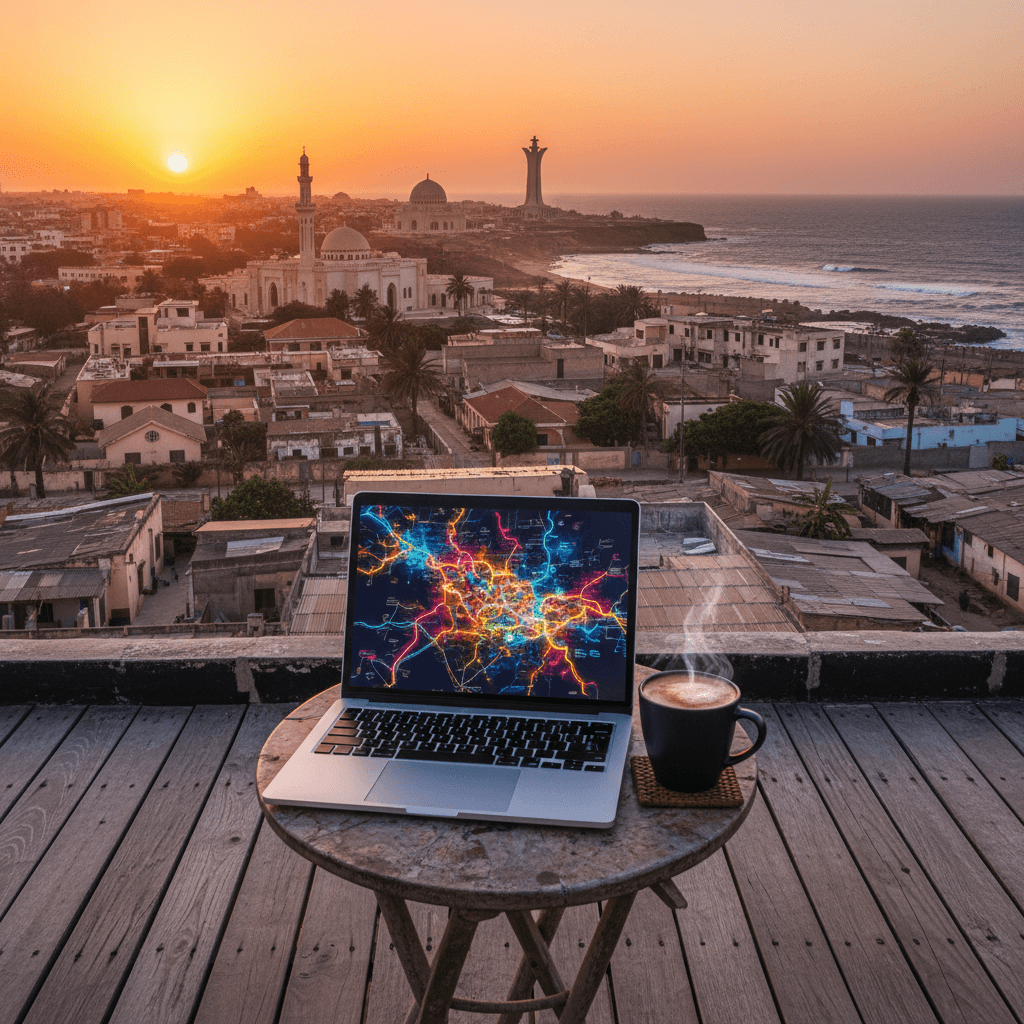
Dakar
🇸🇳 Senegal
The Teranga Spirit
Dakar sits at the westernmost tip of Africa, a peninsula where the Atlantic breeze cuts through the heat of a city that feels both ancient and aggressively modern. It doesn't have the polished, digital nomad infrastructure of Lisbon or Canggu, and that's exactly why people are starting to flock here. It's a place defined by Teranga, a Wolof word for hospitality that goes beyond being polite. It's an active, communal warmth you'll feel when a vendor offers you a seat or a stranger helps you find your way through the maze of Plateau.
The energy is a mix of French colonial architecture, Islamic tradition, and a booming tech scene. You'll hear the rhythmic pulse of Mbalax music spilling out of taxis while high-speed 5G starts to flicker on your phone. It's a city of contrasts where goats might graze near a sleek coworking space and surfers share the waves in Ngor with traditional wooden pirogues. It's gritty, chaotic, and occasionally frustrating, but it has a soul that more established hubs often lose.
The Daily Grind and Flow
Life for a remote worker in Dakar requires a bit of flexibility. Internet speeds usually hover between 6 and 34 Mbps. While that's fine for emails and most video calls, savvy nomads always keep a local Orange or Free SIM card as a backup. You can grab a prepaid card at the airport for around 5,000-6,000 XOF ($8-10).
When you need a dedicated office, Jokkolabs is the gold standard for reliable speed and networking with the local startup crowd. For a more relaxed vibe, Nomad U is a favorite for its coffee and laptop-friendly atmosphere. Most nomads find that the best way to work is to lean into the city's rhythm: hit the cafes in the morning, take a long lunch of thieboudienne (the national fish and rice dish), and save the beach for a sunset surf or a cold Gazelle beer.
Where to Plant Your Flag
Choosing the right neighborhood changes your entire experience of the city. Dakar isn't particularly walkable as a whole, so where you live dictates your social life.
- Almadies: This is the expat and nomad powerhouse. It's coastal, safe, and packed with international restaurants. Expect to pay between $800 and $1,500 for a nice apartment. It's the most English-friendly part of town.
- Point E: A leafy, residential balance. It's quieter than the coast but central enough to reach anywhere quickly. Rents here are slightly lower, ranging from $600 to $1,000.
- Plateau: The downtown core. It's walkable and historic, but it can be intense. It’s great for short stays if you want to be in the thick of the business district, with rents around $700 to $1,200.
- Ngor and Yoff: The budget choice for those who want to be by the water. You can find spots for $500 to $900. It’s more laid back and surf-focused but has fewer high-end services.
The Cost of Living
Dakar isn't the cheapest African capital, but your money goes far if you live like a local. A comfortable mid-range lifestyle usually costs around $1,327 to $1,800 per month. If you're pushing for luxury in Almadies with upscale dining, budget closer to $2,500.
- Street Food: 1,000 to 2,000 XOF ($1.60 to $3.20) for a filling meal.
- Mid-range Restaurant: 5,000 to 10,000 XOF ($8 to $16).
- Taxis: Most short hops across town cost 500 to 1,000 XOF ($0.80 to $1.60). Always negotiate before you get in, or use the AlloTaxi app to skip the haggling.
Navigation and Safety
Getting around is an adventure. The iconic "cars rapides," brightly painted minibuses, are dirt cheap but chaotic for newcomers. Most expats stick to taxis. While Dakar is generally safe, petty crime like pickpocketing happens in crowded spots like Plateau. Use common sense, avoid walking alone in dark areas at night, and keep your phone tucked away on busy streets.
The biggest hurdle for many is the language. French is the official tongue and Wolof is the soul of the streets. While you can get by with English in Almadies, learning "Nanga def?" (How are you?) will open doors and hearts faster than any translation app. You don't need a special visa for stays under 90 days, making it an easy "plug and play" destination for a season of dry, sunny weather between November and May.
The Cost of Living in Dakar
Dakar is a city of layers. You can survive on a shoestring budget eating street-side thieboudienne or drop a small fortune on a seaside villa in Almadies. On average, most digital nomads find that $1,300 to $1,800 per month covers a comfortable lifestyle including a private apartment, frequent dining out, and a dedicated workspace.
Cash is still the primary way to get things done here. While you can use cards at high-end hotels and supermarkets like Casino or Auchan, you'll want plenty of West African CFA francs (XOF) for everything else. ATMs are easy to find, but it's smart to keep a backup card like Wise or Revolut for better exchange rates.
Monthly Budget Tiers
- Budget ($1,200): This involves living in more local neighborhoods like Yoff or Ouakam, sharing an apartment, and sticking mostly to street food and local markets.
- Mid-range ($1,800): This is the sweet spot for most remote workers. It covers a nice one-bedroom in Point E, a mix of local and international meals, and a membership at a coworking space.
- Comfortable ($2,500+): If you want the expat dream in Almadies with a pool, ocean views, and nightly dinners at upscale fusion restaurants, your costs will align more with Southern European capital cities.
Housing by Neighborhood
Rent is your biggest variable. Prices fluctuate based on how "Western" the amenities are, particularly reliable backup generators for the occasional power cut.
Almadies
- The Vibe: The most popular spot for expats and nomads. It feels international, safe, and has the best access to surf spots and nightlife.
- 1BR Rent: $800 to $1,500
- Pros: Walking distance to the best restaurants; very English-friendly.
Point E
- The Vibe: A leafy, calm residential area that serves as a middle ground between the coast and downtown.
- 1BR Rent: $600 to $1,000
- Pros: Central location; home to great cafes like Nomad U.
Plateau
- The Vibe: The historic colonial center. It's walkable and energetic during the day but can feel a bit intense at night.
- 1BR Rent: $700 to $1,200
- Pros: Close to the ferries for Goree Island and the main business hub.
Ngor, Yoff, and Ouakam
- The Vibe: These areas offer a more authentic, laid-back Dakar experience. They are favorites for surfers and those on a tighter budget.
- 1BR Rent: $500 to $900
- Pros: Best beach access and significantly lower prices for groceries and services.
Food and Daily Expenses
Eating out is a highlight of life in Senegal. Street food like fataya (savory pastries) or bowls of rice and fish will cost you between 1,000 and 2,000 XOF ($1.60 to $3.20). If you prefer a sit-down meal at a mid-range bistro, expect to pay 5,000 to 10,000 XOF ($8 to $16). Upscale dining in Almadies usually starts around 15,000 XOF ($24) without drinks.
For groceries, local markets are incredibly cheap for produce. However, imported French goods like cheese, wine, and specific cereals at the supermarkets come with a heavy price tag. If you shop like a local, you'll save hundreds of dollars a month.
Connectivity and Workspace
While internet speeds are improving, they can still be temperamental. Most nomads find speeds between 6 and 34 Mbps. It's enough for Zoom calls, but having a local SIM card from Orange or Free as a hotspot backup is a necessity. You can grab a prepaid SIM at the airport for about 5,000 XOF ($8) with a starting data package.
Coworking is a growing scene. Spaces like Jokkolabs offer reliable high-speed fiber and a community of local entrepreneurs. Monthly memberships generally run between $100 to $200. If you prefer the cafe route, Nomad U is widely praised by the remote work community for its coffee and reliable WiFi.
Getting Around
Taxis are everywhere and very affordable. A short ride across town usually costs between 500 and 1,000 XOF ($0.80 to $1.60). Always negotiate the price before you get in, as meters aren't used. For a more modern experience, the AlloTaxi app is a reliable way to hail a ride without the haggling. Public minibuses, known as cars rapides, are an experience in themselves and cost pennies, but they are often too crowded and chaotic for a daily commute.
For Digital Nomads: Almadies
If you want to be where the action is, Almadies is your home base. It is the westernmost point of the continent and feels like a mix of a high end coastal resort and a tech hub. This is where you will find the most consistent infrastructure and a heavy concentration of international restaurants and surf spots.
- Rent: Expect to pay between $800 and $1,500 for a modern one-bedroom apartment.
- Vibe: Very English friendly and packed with remote workers. It is the safest bet for those who do not speak fluent French.
- Work Spots: Most nomads head to Nomad U, a cafe specifically praised for its reliable WiFi and quality coffee. Jokkolabs is also nearby for those needing a dedicated office environment.
- Daily Life: You are steps away from the water. It is common to see people working on laptops until 4:00 PM and then hitting the waves for a sunset surf session.
For Expats and Long-Termers: Point E
Point E is the choice for those who want a more residential, established feel without the tourist prices of the coast. It is centrally located, making it easy to reach any other part of the city by taxi. The streets are wider and quieter, lined with trees and diplomatic residences.
- Rent: More affordable than Almadies, usually ranging from $600 to $1,000 for a solid apartment.
- Vibe: Calm, professional, and very balanced. It feels like a real neighborhood rather than a vacation zone.
- Work Spots: There are plenty of quiet, upscale cafes here that are laptop friendly. It is a favorite for those who do deep work and want to avoid the distraction of the beach.
- Daily Life: You will find better grocery options here and a community of professionals who have lived in Dakar for years.
For Solo Travelers: Plateau
Plateau is the downtown heart of Dakar. It is where the colonial history of the city meets the modern business district. If you want to walk out of your door and be surrounded by markets, museums, and street life, this is it. It is highly walkable, though you need to keep your wits about you regarding pickpockets in crowded areas.
- Rent: Central living costs between $700 and $1,200 depending on the age of the building.
- Vibe: High energy and fast paced. It is great for solo travelers who want to be near the ferries to Goree Island or the nightlife in the city center.
- Daily Life: You will spend your time navigating the Sandaga Market or grabbing a 1,000 XOF street meal of thieboudienne. Just be prepared for the "hassle" factor from street vendors, which is higher here than elsewhere.
For Budget Travelers and Surfers: Ngor, Yoff, and Ouakam
These neighborhoods offer a more authentic, laid back experience at a fraction of the cost. Ngor is particularly famous for its island access, while Yoff provides a more traditional, religious atmosphere with massive stretches of beach. These areas are perfect if you are looking to stretch your budget while staying close to the ocean.
- Rent: You can find decent studios or shared housing for $500 to $900.
- Vibe: Very relaxed and local. You will hear more Wolof than English here.
- Daily Life: Life revolves around the water. In Ngor, you can hop on a small boat for a few hundred XOF to spend the day on the island. It is quieter at night, so you will likely taxi to Almadies for big dinners or parties.
- Practicality: Internet can be more hit or miss here. Most expats recommend getting an Orange or Free SIM card with a data pack as a backup for your home connection.
The Connectivity Reality
Dakar is an emerging tech hub, but you need to manage your expectations regarding speed. Most nomads find the local internet a bit of a mixed bag; while 5G is starting to pop up in upscale areas, average speeds generally hover between 6 and 34 Mbps. It is enough for Zoom calls and standard workflows, but large video uploads might test your patience.
The golden rule here is redundancy. Even if your Airbnb host promises high speed fiber, power fluctuations or service drops happen. Most long term travelers pick up a local SIM card immediately to use as a hotspot. Orange and Free are the dominant players. You can grab a prepaid SIM at the airport or at branded kiosks throughout the city for about 5,000 XOF ($10), which usually includes your first gigabyte of data.
Top Coworking Spaces
When your home Wi-Fi fails or you just need some professional energy, Dakar has reliable anchors where the city’s startup scene lives and breathes.
- Jokkolabs: This is the heavyweight of the Dakar scene. It is more than just a desk; it is a community hub for West African entrepreneurs. They offer the most stable high speed connections in the city and a professional atmosphere that is great for deep work. Monthly memberships typically run between $100 and $300 depending on your needs.
Cafe Culture and Laptop Spots
If you prefer working from cafes, stick to Almadies or Point E. These neighborhoods have the highest concentration of spots that won't mind you lingering over a latte for a few hours. In Almadies, you can find several breezy, coastal spots where the salt air makes the workday feel significantly shorter. Just keep in mind that while many cafes offer free Wi-Fi, it is rarely fast enough for heavy lifting, so keep that Orange hotspot ready.
In Point E, the vibe is a bit more residential and academic. The cafes here are quieter and often frequented by students and researchers, making it a great area if you need to focus. Most nomads find that as long as they buy a coffee every few hours, staff are incredibly welcoming and "Teranga" (the local culture of hospitality) extends to the digital crowd.
Practical Tech Tips
- Power Backups: Power outages aren't a daily occurrence, but they happen. If you have a critical meeting, ensure your laptop and power bank are fully charged.
- Fintech: Don't rely on digital payments for everything. While you can use Wise or Revolut at many ATMs, cash is still the primary way to pay for everything from taxis to street food.
- Data Bundles: Use the local provider apps to buy "Pass Internet" bundles. They are much cheaper than paying per megabyte and can be topped up easily at almost any corner boutique.
Staying Safe in the Peninsula
Dakar is widely considered one of the safer hubs in West Africa, but it requires a specific kind of street smarts. Most nomads feel perfectly comfortable walking around during the day, especially in international pockets like Almadies or residential Point E. The primary concern here isn't violent crime; it's the persistent "hassle" and petty theft that can wear you down if you aren't prepared.
In high traffic areas like Plateau or near the colonial buildings downtown, you'll likely encounter "guides" or vendors who are very assertive. It's best to keep your phone tucked away and your bag in front of you. Avoid walking alone in the downtown core or on deserted beaches after dark. If you're heading out for the night, stick to taxis or the AlloTaxi app rather than wandering on foot.
The local concept of Teranga, or hospitality, is real. People are generally helpful and friendly, but it's important to distinguish between genuine hospitality and someone looking for a tip. A firm but polite "Non, merci" usually does the trick. If you feel overwhelmed, duck into a pharmacy or a cafe like Nomad U to reset.
Healthcare Infrastructure
The quality of medical care in Dakar varies significantly between public facilities and private clinics. For anything beyond a minor scrape, expats and long term nomads almost exclusively use private clinics. These facilities are concentrated in Plateau and Almadies, where you'll find doctors who speak French and occasionally English.
- Pharmacies: You'll see green crosses everywhere. They are well stocked with French imports, and pharmacists can often give basic medical advice or provide over the counter treatments for common stomach bugs.
- Emergency Numbers: In a crisis, dial 15 for the police or 1255 for an ambulance. However, many expats prefer to keep the direct number of a private clinic on hand, as response times for public services can be slow.
- Private Clinics: Facilities like Clinique de la Madeleine are frequently recommended for their higher standard of care and modern equipment.
Health Precautions for Nomads
Before you arrive, make sure you're up to date on routine vaccinations. While Dakar isn't a high risk malaria zone compared to the rural interior, mosquitoes are still a nuisance, especially during the rainy season from June to October. Most travelers use repellent and stay in places with screens or nets.
Tap water is a no go for drinking. Stick to bottled water like Kirène, which is available at every corner shop for a few hundred XOF. When it comes to food, your stomach might need a few days to adjust to the local oils. Street food like thieboudienne is delicious and cheap, usually 1,000 to 2,000 XOF, but choose vendors with high turnover and a clean setup to avoid a "Dakar belly" situation.
Insurance and Logistics
Don't skip out on international health insurance. If a serious medical emergency occurs, you may need medical evacuation to Europe, which can cost tens of thousands of dollars out of pocket. Ensure your policy covers private hospital stays and emergency transport. Since there is no specific digital nomad visa, most visitors enter on a 90 day visa free stay, so verify that your insurance remains valid for the duration of your "tourist" visit.
The Daily Commute
Dakar is a city that moves at its own rhythm, often dictated by the ebb and flow of traffic along the Corniche. While the city is the westernmost point of Africa, the infrastructure is a blend of old-world charm and modern ambition. You will quickly learn that getting from Point E to Almadies is less about the distance and more about the time of day.
For most nomads, taxis are the primary way to get around. They are everywhere, identifiable by their bright yellow and black paint. A short hop within a neighborhood usually costs between 500 and 1,000 XOF ($0.80 to $1.60). It is standard practice to negotiate the fare before you get in, as meters are nonexistent. If you prefer to skip the haggling, download the AlloTaxi app. It provides a more structured experience and is a favorite for airport transfers, which typically run between $10 and $20 depending on your destination.
Public Transit and Local Flavor
If you are looking for the most authentic, albeit chaotic, way to see the city, look for the Cars Rapides. These are brightly painted minibuses that weave through traffic with impressive agility. They are incredibly cheap, costing just a few cents, but they don't follow a set schedule and can be overwhelming for newcomers. Most expats stick to taxis or private drivers for their daily needs, leaving the minibuses for when they want a true taste of local life.
- Taxis: Plentiful and affordable; always negotiate before the wheels move.
- AlloTaxi: The go-to ride-hailing app for those who want a fixed price and less stress.
- Cars Rapides: Colorful, cheap, and hectic; great for the experience, less so for a timely meeting.
- Walking: Best reserved for specific pockets like the Plateau or the Almadies boardwalk.
Navigation by Neighborhood
Dakar is not a particularly walkable city in a traditional sense. The heat and the lack of continuous sidewalks in many areas make long treks difficult. However, once you are in a specific hub, things change. The Plateau is the city's downtown core and is quite walkable, filled with colonial architecture and business centers. Almadies is also pedestrian-friendly along its coastal stretches, where you can walk between seaside restaurants and coworking spots like Nomad U.
Biking and scooter rentals haven't really taken off here yet. The combination of sandy side streets and aggressive driving on the main arteries makes cycling a bit of a sport for the brave. If you need to move between neighborhoods like Ngor or Yoff, stick to four wheels. For island hopping, the ferry to Goree Island or the small wooden boats to Ngor Island are reliable and offer a refreshing break from the city's mainland hum.
Practical Transit Tips
Traffic is the biggest hurdle for remote workers in Dakar. The rush hours can be brutal, particularly on the roads leading into the Plateau in the morning and out toward the residential areas in the evening. Most nomads find it best to base their housing near their favorite coworking space or cafe to avoid spending two hours a day in a car.
Keep small change on you at all times. While the city is becoming more tech-forward, the transit economy runs on CFA francs (XOF). Having 500 and 1,000 XOF notes will save you a lot of headaches when it comes time to pay your driver. If you are heading out at night, especially in the Plateau, it is wiser to call a taxi through an app or have a restaurant call one for you rather than wandering the streets looking for a ride.
The Linguistic Landscape
Dakar is a city where your ears will constantly be switching gears. French is the official language of government and business, but Wolof is the true heartbeat of the streets. You'll hear it in the markets of Sandaga and blasting from the speakers of colorful cars rapides. While you can get by with just French, the city opens up in a completely different way if you pick up even a handful of Wolof greetings.
For most digital nomads, English is a secondary tool here. You'll find a decent amount of English speakers in the upscale Almadies neighborhood or within the tech community at Jokkolabs, but don't expect the average taxi driver or shopkeeper to be fluent. If you're coming from an English speaking background, downloading an offline French pack on Google Translate is a smart move before you land.
Mastering the Greetings
In Senegal, skipping the greeting is a social faux pas. The culture of Teranga (hospitality) starts with a proper hello. Even if you're just asking for a price or directions, start with a smile and a formal acknowledgement. It changes the entire energy of the interaction.
- Salaam aleikum: The standard Islamic greeting used by almost everyone. The response is Maleikum salaam.
- Nanga def? This is Wolof for "How are you?" Most locals will be pleasantly surprised to hear a foreigner use it. The standard reply is Mangi fi (I am here/fine).
- Jërëjëf: This means thank you in Wolof. While Merci is perfectly fine and understood everywhere, using the local term earns you immediate respect.
- Waaw/Deedeet: Yes and No. Simple, but effective for quick interactions.
Communication for Remote Work
When it comes to the technical side of staying connected, your first stop should be a local SIM card. Don't rely solely on your Airbnb or cafe WiFi; Dakar's internet can be temperamental, with speeds ranging anywhere from 6 to 34 Mbps. Having a 4G or 5G backup is a necessity for video calls.
Orange and Free are the two main players. You can pick up a SIM at the airport or at branded kiosks throughout the city for about 5,000 XOF ($8), which usually includes a starting data pack. Expats generally prefer Orange for its broader coverage. For serious work sessions, head to Nomad U in Point E. It's a favorite for its reliable connection and community of English speakers.
Social Apps and Connectivity
WhatsApp is the undisputed king of communication in Dakar. You'll use it for everything from booking a table at a restaurant in Almadies to negotiating with a landlord or messaging a taxi driver. If a business has a phone number listed, they almost certainly have a WhatsApp account attached to it.
For getting around, the AlloTaxi app is helpful, though many nomads still prefer the old school method of hailing a cab and haggling. If you're looking to meet people, the Dakar Digital Nomads and Expats in Dakar Facebook groups are active and great for finding weekend meetups or advice on local services. Most of the coordination for these events happens in English, making it the easiest entry point for newcomers.
Language in the Neighborhoods
Your language experience will shift depending on where you hang your hat. In Almadies, the vibe is international and English is relatively common in the surf shops and high end restaurants. In Plateau, the business district, French is dominant. If you choose to stay in more local areas like Ngor or Yoff, Wolof becomes the primary way people connect. Most nomads find that a mix of basic French and a few Wolof phrases is the "sweet spot" for a smooth stay.
The Seasonal Rhythm
Dakar sits on a peninsula, which means the Atlantic breeze usually keeps the heat from becoming suffocating. That said, the city has two very distinct gears. Most nomads aim for the dry season, which runs from November to May. During these months, you can expect clear skies, low humidity, and temperatures hovering between 20°C and 27°C (68°F to 81°F). It is the sweet spot for working from a terrace in Almadies without breaking a sweat.
The vibe shifts significantly around June as the humidity climbs. The rainy season peaks in August and September. While it doesn't rain every day, when it pours, the city's infrastructure can struggle. Flooding in neighborhoods like Ouakam or Yoff is common, and the heavy humidity makes the 30°C to 35°C (86°F to 95°F) heat feel much more intense. If you're sensitive to heat or rely on walking between meetings, the mid summer months might test your patience.
When to Touch Down
If you have the flexibility, plan your arrival for December or January. The air is crisp, the "Harmattan" winds haven't yet brought too much dust from the Sahara, and the social calendar is packed. This is also the best time for surfers to catch the consistent swells at Ngor Beach. Most expats and long term travelers find that the shoulder months of November and May offer the best balance of lower prices and manageable weather.
Climate Breakdown by Season
- Dry Season (November to May): The prime window. Expect sunny days and cool nights. You might need a light sweater for evening walks on the Corniche. This is the peak time for tourism, so book your apartments in Point E or Almadies early.
- Transition Period (June to July): The heat starts to ramp up. You will notice the humidity first. It is still manageable for work, but you will definitely want a workspace with reliable air conditioning.
- Rainy Season (August to October): Expect dramatic tropical storms and high heat. While the landscape turns surprisingly green, the mosquitoes are more active and the streets can become muddy. It is the quietest time for the nomad community, as many people head to cooler climates.
Practical Packing for the Dakar Climate
Senegal is a majority Muslim country with a deep sense of style, so your wardrobe should balance the heat with local customs. While beach areas like Ngor are relaxed, "Teranga" hospitality involves a level of mutual respect in how you present yourself. Most nomads recommend lightweight linen or cotton fabrics that breathe well. If you are staying through the dry season, a windbreaker or light jacket is helpful for the cool Atlantic nights.
Don't forget that the sun here is exceptionally strong. Even on overcast days in September, you can get burned quickly. High quality sunscreen can be expensive in local pharmacies, often costing upwards of 12,000 XOF ($20), so it is one of the few things worth stocking up on before you fly in. If you plan on staying through the rains, a pair of sturdy, waterproof sandals or boots is better than sneakers, which will likely get ruined by the puddles and red dust.
Living Costs and Budgeting
Dakar fits into that sweet spot for remote workers who want coastal living without the price tag of Cape Town or Casablanca. Most nomads find they can live comfortably on $1,300 to $1,800 a month, though you can easily push toward $2,500 if you're eyeing a high end apartment in Almadies.
Your biggest expense will be housing. If you want to be near the action, expect these monthly ranges:
- Almadies: The expat hub. Expect $800 to $1,500 for a modern one-bedroom.
- Point E: More central and residential. Prices hover between $600 and $1,000.
- Ngor or Yoff: Great for surfers and budget seekers. You can find solid spots for $500 to $900.
Daily life is affordable if you mix local habits with expat comforts. A plate of Thieboudienne from a street stall will set you back about 1,500 XOF ($2.50), while a mid range dinner at a coastal restaurant usually lands between 6,000 and 10,000 XOF ($10 to $16). Cash is still the primary way to pay for almost everything, so keep your Wise or Revolut cards for ATM withdrawals and use local currency (CFA Francs) for daily transactions.
Finding Your Neighborhood
Where you park your laptop matters because Dakar's traffic is notoriously slow. Almadies is the default choice for most newcomers; it's safe, English friendly, and packed with international restaurants. If you prefer a quieter, more local vibe with plenty of cafes, Point E is the neighborhood expats recommend for a better work life balance.
For those who want to wake up and hit the water, Ngor and Yoff are the go to spots. They’re more affordable and offer a laid back beach culture, though you might find fewer high speed internet options compared to the business districts. Plateau is the downtown core; it's walkable and historic, but it gets hectic during the day and can feel a bit sketchy for solo walks late at night.
Connectivity and Workspace
Internet in Senegal is improving but remains a bit of a gamble. Speeds usually range from 6 to 34 Mbps. It’s enough for Zoom calls, but savvy nomads always have a backup. Pick up an Orange or Free SIM card as soon as you land. A prepaid 1GB data plan costs around 5,000 XOF ($8) and can save your life when the home WiFi dips.
If your rental's connection isn't cutting it, head to a dedicated workspace. Jokkolabs is the most reliable name in the city for high speed fiber. For a more relaxed atmosphere, Nomad U is a favorite cafe among remote workers for its consistent WiFi and excellent coffee. Expect to pay between $100 and $300 a month for a full time coworking membership.
Getting Around
Forget the "cars rapides" (the colorful minibuses) unless you’re looking for an adventure; they’re cheap but confusing for newcomers. Taxis are everywhere and very affordable. A short ride across town should cost between 500 and 1,000 XOF ($0.80 to $1.60). Always negotiate the price before you get in, as meters aren't a thing here. If you prefer a fixed price without the haggling, download the AlloTaxi app.
Health and Safety
Dakar is generally safe, especially in the northern neighborhoods like Almadies. The most common issue is petty theft in crowded markets or the Plateau district. Keep your phone tucked away and be firm but polite with street hawkers. For healthcare, expats typically stick to private clinics like Clinique de la Madeleine. If you have an emergency, the numbers to know are 15 for the police and 1255 for an ambulance.
Local Customs and Language
Senegal is famous for "Teranga," a Wolof word for hospitality. You'll find people are incredibly welcoming, but a little etiquette goes a long way. Always greet people before asking for directions or prices. While French is the official language, Wolof is what you'll hear on the street. Learning a few phrases like "Nanga def?" (How are you?) will instantly change how locals treat you. Most people in the tech and expat scenes speak some English, but having Google Translate ready for French conversations is a must.
Seasonal Timing
The best time to base yourself here is from November to May. The weather is dry, breezy, and comfortable. Avoid the June to October window if you can; the humidity spikes and heavy rains can turn the city's dirt roads into a muddy mess, often leading to power outages that aren't great for your deadlines.
Need visa and immigration info for Senegal?
🇸🇳 View Senegal Country GuideWild Card
Expect the unexpected