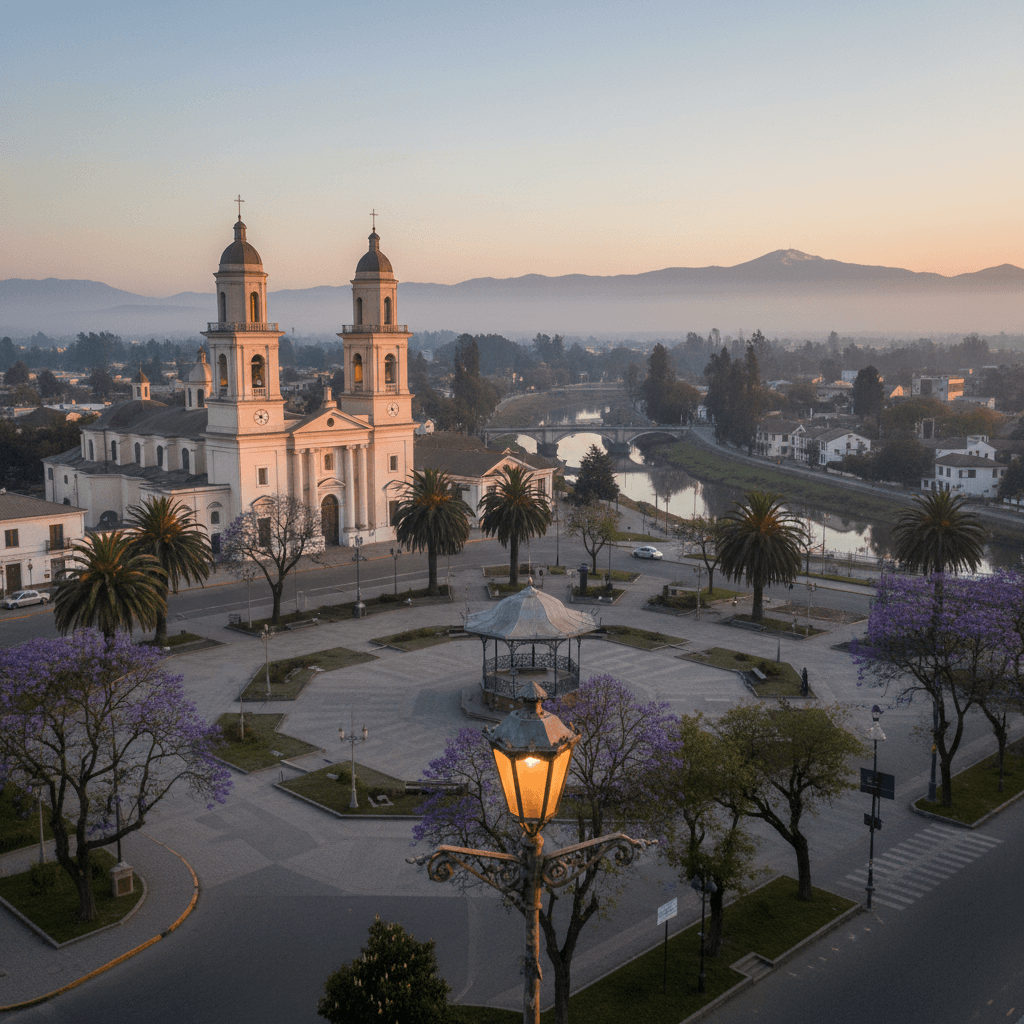
Curicó
🇨🇱 Chile
The Agricultural Heartbeat
Curicó isn't your typical digital nomad hub. It doesn't have the frantic energy of Santiago or the bohemian grit of Valparaíso. Instead, it feels like a place where the clock slows down just enough for you to actually get some deep work done. Located in the fertile Maule Region, this is the soul of Chile's wine and fruit country. You'll spend your mornings looking out at the Andes and your afternoons cycling past endless rows of vineyards. It’s a city that trades rooftop parties for quiet plazas and high-speed urban chaos for the predictable rhythm of rural life.
The vibe here is unpretentious and deeply rooted in the land. It’s the kind of place where people still greet each other on the street and the air smells like ripening grapes during the harvest season. While it lacks a massive expat community, that’s exactly why some nomads are starting to trickle in. It’s an authentic slice of Chilean life where you can disappear into your work without the distractions of a major metropolitan center.
Life in the Maule Valley
Living here is significantly more affordable than the coast or the capital. Most nomads find they can spend between $800 to $1,000 for a comfortable single nomad lifestyle, though budget-conscious travelers can easily scrape by on less if they stick to local markets and shared housing. The city is compact and walkable, especially if you stay near the center. If you’re looking for a bit more space or a quieter environment, the outskirts toward the Sector Curicó-Chillán are seeing a rise in modern Airbnb options, though you’ll want a car or a bike to get around from there.
- Downtown Curicó: This is where you want to be for convenience. It’s walkable to the main plazas, local pharmacies, and the best empanada spots. Rent for a decent apartment here usually lands between $400 and $600.
- The Outskirts: Better for families or those who want a view of the mountains. You’ll find more spacious properties here, though it’s a quieter, more isolated experience.
The Remote Work Reality
Don't let the rural setting fool you; the infrastructure is surprisingly solid. Internet speeds average a snappy 283 Mbps, which is more than enough for video calls and heavy uploads. You won't find a dedicated "Nomad Cafe" with avocado toast and neon signs here. Instead, you'll be working from local cafes near the main square or from your own apartment. For data, most travelers pick up an eSIM or grab a local SIM from Entel or WOM for about $10 to $20 a month.
Socially, you’ll have to be proactive. There aren't any established nomad meetups yet, so your best bet is joining Digital Nomads Chile on Facebook or taking private wine tours to meet other travelers. Knowing some basic Spanish is a must. Outside of the main tourist hotels, English is rare. Learning how to ask "¿Dónde está...?" or ordering your "vino tinto" in the local tongue will go a long way in making friends.
What to Expect
The weather is classic Mediterranean. Summers from December to February are dry and hot, often hitting 29°C to 35°C. It’s the perfect time for exploring the nearby Andes or taking day trips to the vineyards. Winters from June to August get chilly and rainy, so make sure your rental has decent heating. Most people agree that November to March is the sweet spot for a visit.
Safety is generally a non-issue compared to larger cities, but keep your wits about you in crowded areas. Petty theft happens, so don't leave your laptop unattended in a cafe. For anything serious, Santiago is only about a two-hour drive away, which is where you'll find the major hospitals and the international airport. For day-to-day life, Curicó is a peaceful, wine-soaked retreat for those who want to trade the "hustle" for a bit of Chilean charm.
The Bottom Line
Curicó is a breath of fresh air for those tired of the price tags in Santiago or the tourist markups of the coast. It’s an agricultural powerhouse that feels like a real Chilean town, not a resort. You can expect $800 to $1,000 total monthly expenses. This covers a comfortable lifestyle without having to constantly check your banking app.
The value here is hard to beat if you’re looking for a focused work environment. While it lacks the flashy nightlife of Valparaíso, your dollar stretches much further. Most nomads find they can live quite well on a mid-range budget, which buys a nice one-bedroom apartment and plenty of local wine and dining.
Housing and Neighborhoods
Finding a place to stay usually means browsing Airbnb or local rental listings, as there isn't a massive "expat" quarter. Most remote workers stick to Downtown Curicó. It’s walkable, puts you near the main plazas, and keeps you close to the best cafes. If you want more space and don't mind a commute, the Sector Curicó-Chillán outskirts are seeing a surge in new builds and quiet rentals, though you'll likely want a car if you stay out there.
- Downtown (Central): Expect to pay between $400 and $600 for a decent studio or one-bedroom apartment. It's the best spot for those who want to be near the action.
- Outskirts/Rural: Prices are similar, but you get more square footage. It's ideal if you’re traveling with a partner or family and want a view of the vineyards.
- Utilities: High-speed fiber internet is standard in the city center, and basic utilities usually won't run more than $80 to $120 a month.
Eating and Socializing
Food is where Curicó really shines. Because it’s the heart of wine country, the local produce is incredible and cheap. If you eat like a local, you’ll save a fortune. Street food like empanadas or a quick lunch will cost you about $5 to $8. A mid-range dinner for two with a bottle of local Carmenere usually lands between $30 and $45.
- Street Food/Markets: $5 to $8 per meal.
- Mid-range Restaurant: $10 to $15 per person.
- Upscale Dining/Vineyard Lunch: $20+ per person.
- Coffee: A good latte in a plaza cafe is about $3.
Connectivity and Transport
The internet in Curicó is surprisingly fast, averaging 283 Mbps. You won't find many dedicated coworking spaces yet, so most people work from home or set up in cafes around the main square. For mobile data, grab a local SIM from Entel or WOM for about $15 a month, or use an eSIM like Holafly if you want to be online the second you hop off the bus.
Getting around is cheap. Local buses, or "micros," cost about $1 per ride. Uber works well within the city limits. Since there's no major airport in town, you'll likely fly into Santiago (SCL) and take a two-hour bus or a $100 private transfer to get here. Once you're in the center, your own two feet are usually all you need.
Typical Monthly Tiers
- The Budget Nomad: You're renting a room in a shared house, cooking most meals with market produce, and using the local bus system.
- The Mid-Range Professional ($800 to $1,000): This gets you a private one-bedroom apartment downtown, regular dinners out, and a few weekend wine tours.
- The Comfortable Expat: You're living in a premium apartment or a house on the outskirts, eating at the best restaurants, and frequently taking private trips into the Andes.
The Solo Traveler and Digital Nomad Core: Downtown Curicó
If you're coming to Curicó to work, you'll want to stay within the central grid. This is the only part of the city that feels truly walkable. Everything radiates out from the Plaza de Armas, where the internet speeds are surprisingly fast, often hitting 283 Mbps. Staying here means you can walk to the local markets for fresh fruit and hit the wine shops without needing a car.
The vibe is quiet compared to Santiago. You won't find a dedicated "nomad cafe" with neon signs and avocado toast. Instead, you'll be working from spots like Café de la Plaza or local bakeries. It's a DIY experience. Most nomads pick up a local Entel or WOM SIM card for about $15 to ensure they have a backup hotspot while exploring the nearby vineyards.
- Monthly Rent: $400 to $950 for a furnished studio.
- Vibe: Practical, central, and authentic.
- Pros: Best internet reliability, no commute, close to the bus terminal for weekend trips.
- Cons: Traffic noise during the day, limited English speakers.
The Long-Term Expat: East Curicó
Expats looking for a more permanent or "settled" feel usually head toward the eastern residential pockets. This is where you find more modern houses and gated communities. It feels less like a transit hub and more like a neighborhood. You'll need a car here, as it's too far to walk to the center for a quick coffee.
The air is clearer here and the views of the Andes are much better. It's the kind of place where you get to know your neighbors over the fence. Since there isn't a massive expat community, you'll likely be hanging out with Chilean professionals and winery managers. It’s a great spot if you're serious about mastering Spanish and want a "comfortable" lifestyle tier that costs around $3,000 a month including a private vehicle.
- Monthly Rent: $800 to $1,200 for a larger house.
- Vibe: Quiet, suburban, and upscale.
- Pros: Safe, panoramic mountain views, larger modern kitchens.
- Cons: Requires a car, higher utility costs, isolated from the city's social core.
Families and Slow Travelers: Sector Curicó-Chillán Outskirts
Families often find the city center too cramped and loud. The outskirts toward the south and east, specifically the growing Sector Curicó-Chillán, offer more breathing room. There’s been a 35% jump in short term rental supply here lately, meaning you can find larger Airbnbs with backyards and pools that are perfect for kids.
Living out here puts you closer to the nature trails and the actual vineyards. It’s the best choice if your priority is weekend hiking and fresh air rather than being near a coworking desk. You’ll spend about $10 to $15 on a mid range family meal at local spots, and the grocery stores in this direction are large and well stocked with regional produce.
- Monthly Rent: $700 to $1,000 for 3+ bedrooms.
- Vibe: Rural-adjacent and peaceful.
- Pros: Space for children to play, proximity to the wine route, newer builds.
- Cons: Early market saturation makes the best spots go fast, 15 minute drive to reach any services.
Budget Seekers: Near the Terminal and Markets
For those on a $1,500 budget, the areas just west of the downtown core offer the best value. This is the heart of the city's trade. You'll be steps away from the street food stalls where a meal costs $5 to $8. It’s gritty and functional, but it’s where the real life of the city happens.
Safety is fine during the day, though you should stick to well lit streets at night and keep an eye on your phone in crowded market areas. Transport is incredibly cheap here, with local buses costing about $1 per ride. It's the best place to live if you want to save money to spend on high end wine tours in the Colchagua Valley on the weekends.
- Monthly Rent: $300 to $450 for a basic apartment or shared housing.
- Vibe: Energetic, blue collar, and very cheap.
- Pros: Cheapest food in the city, excellent transport links, very few tourists.
- Cons: Can be dusty and loud, older building stock, less reliable home WiFi.
Connectivity in the Heart of Wine Country
Curicó isn't your typical digital nomad hub with neon signs and glass-walled coworking offices on every corner. Instead, it's a place where you'll find a reliable, surprisingly fast digital backbone tucked into a traditional Chilean agricultural setting. Most nomads are pleasantly surprised by the speeds here, with fiber connections averaging around 236 Mbps. It’s more than enough for heavy Zoom calls or uploading large files, provided you’ve vetted your Airbnb or rental first.
The city's infrastructure is stable, but the culture is still catching up to the remote work revolution. You won't find a dedicated WeWork or a branded coworking franchise in the city center. Most remote workers here set up shop in their apartments or lean into the local cafe culture. If you need a change of scenery, the area around Downtown Curicó has several spots near the main plaza where you can grab a table for a few hours without being ushered out.
Best Places to Work
Since formal coworking spaces are scarce, you'll need to be strategic about where you open your laptop. Local libraries and university-adjacent spaces often provide a quiet environment, but for a more social vibe, stick to the central cafes.
- Plaza de Armas: The heart of the city has several cafes with decent WiFi. It’s perfect for light administrative work, though the noise from the street can be a bit much for important meetings.
- Local Vineyards: If you have a car or don't mind a short cab ride, some of the boutique wineries on the outskirts offer beautiful outdoor settings. Their WiFi is hit-or-miss, so this is where a local SIM card becomes your best friend.
- Private Rentals: Most nomads choose to work from home here. Look for listings in the Sector Curicó-Chillán outskirts if you want more space and peace, but verify the router setup with the host before you book.
Data and SIM Cards
Don't rely on finding open public WiFi networks; they are irregular and often frustratingly slow. Your best bet is to secure a local connection the moment you arrive. Chile has some of the most affordable data in South America, and the coverage in Curicó is excellent.
- Entel: Generally considered the gold standard for coverage, especially if you plan on heading out into the nearby Andes or deep into the vineyards. Expect to pay around $10 to $20 per month for a plan with more data than you'll likely use.
- WOM: A popular choice for younger travelers and nomads. They often have aggressive data deals and plenty of kiosks in the central shopping areas.
- Holafly: If you want to hit the ground running without hunting for a physical SIM, an eSIM is the way to go. You can set it up before you land, though it’s usually more expensive than buying a local chip.
The Remote Work Lifestyle
Working from Curicó requires a bit of self-sufficiency. Because there isn't a pre-built expat community, you won't find organized "nomad mixers" or tech meetups. Most people here are working in the wine or fruit industry, so your "coworkers" at a local cafe will likely be locals going about their daily business. It’s a fantastic environment for deep focus work, but it can feel a bit isolating if you’re used to the social buzz of Santiago.
To stay connected to the wider community, many nomads join Facebook groups like Digital Nomads Chile. Since Curicó is only a 2 to 3 hour drive from Santiago, it's easy to head to the capital for a weekend if you need a dose of big-city networking and more traditional coworking amenities. For the day-to-day, stick to a routine, get a high-quality local SIM, and enjoy the fact that your "office view" likely includes some of the best vineyards in the world.
Staying Safe in the Heart of Maule
Curicó is a breath of fresh air compared to the frantic energy of Santiago. It feels like a large country town where people still recognize their neighbors. Generally, it's a safe place to plant your laptop for a few months. You won't find the aggressive tourist scams common in Valparaíso, but that doesn't mean you should leave your MacBook unattended at a plaza bench.
Petty theft is the most common issue here. Most nomads find that sticking to the central downtown area near the main plaza is the safest bet for walking around. If you're heading to the outskirts or less populated residential sectors like the Curicó-Chillán corridor, it's better to call an Uber after the sun goes down. Local residents suggest keeping a low profile and not flashing expensive gear in public squares, especially if you're the only one around.
- Emergency Police (Carabineros): Dial 133
- Ambulance: Dial 131
- Fire Department: Dial 132
Healthcare and Medical Services
If you come down with a stomach bug or need a prescription, Curicó is well-equipped for the basics. Pharmacies are everywhere in the city center, often on every other corner. Keep an eye out for chains like Cruz Verde or Farmacias Ahumada. Most pharmacists can help with minor ailments, but they'll rarely speak English, so have Google Translate ready on your phone.
For more serious medical needs, the local hospitals provide decent care, but the facilities are modest. If you require specialized treatment or a major procedure, most expats recommend making the 2 to 3 hour drive north to Santiago. The capital has world-class private clinics like Clínica Alemana or Clínica Las Condes that rival hospitals in the US or Europe.
Before you arrive, make sure you have solid travel insurance that covers medical evacuation. It's a "just in case" expense that pays for itself if you need a quick transfer to a better facility. Always carry a physical copy of your ID and insurance card, as most clinics will want to see proof of payment or coverage before they admit you.
Practical Tips for Peace of Mind
Water quality in Curicó is generally high and considered safe to drink straight from the tap. However, if you have a sensitive stomach, stick to bottled water for the first week while your system adjusts to the local minerals. It's a cheap way to avoid losing a few days of work to a "traveler's tummy."
When it comes to your digital life, the 283 Mbps internet speeds are great, but public WiFi isn't always secure. Use a VPN if you're working from a cafe near the plaza. For mobile data, picking up a local SIM from Entel or WOM for about $10 to $20 a month is the most reliable way to stay connected if you need to call for help or navigate back to your apartment.
Finally, keep an eye on the air quality during the winter months from June to August. Because Curicó is in a valley and many locals still use wood-burning stoves for heat, the air can get quite smoky. If you have asthma or respiratory issues, it's something to consider before booking a long-term winter stay.
Getting Around Curico
Curico is a compact, grid-based city that feels more like a large town than a sprawling metropolis. Most nomads find the city center incredibly walkable, especially if you're staying near the Plaza de Armas. Since the downtown area is relatively flat, you can easily knock out your daily errands, visit local cafes, or head to the market on foot without ever needing a set of wheels.
Public Buses and Micros
For trips that are a bit too far for a stroll, the local buses, known as micros, are your best bet. They are efficient, run frequently during daylight hours, and are incredibly cheap at roughly $1 per ride. You'll see them buzzing through the main arteries of the city and connecting the center to the outskirts. Just keep some small change or CLP 1,000 bills handy, as drivers prefer exact or near-exact change. It's a no-frills experience, but it's how the locals get from point A to point B without the stress of parking.
Ride-Hailing and Taxis
If you're out late or carrying groceries, Uber is active in the region and serves as the primary ride-hailing app. It's generally more predictable than flagging down a street taxi, especially if your Spanish is still a work in progress. For those who prefer traditional taxis, you'll find stands near the main plaza and the bus terminal. Prices are reasonable, though always confirm the fare or ensure the meter is running before you pull away from the curb.
Cycling and Scooters
While Curico doesn't have a massive city-wide bike share program like Santiago, the flat terrain makes it a prime spot for cycling. Many long-term visitors end up buying a cheap second-hand bike or checking with local tour operators like those found via GoWithGuide for short-term rentals. If you're planning to explore the nearby vineyards or take a slow ride through the Sector Curico-Chillan outskirts, a bike is the most rewarding way to soak in the Andean views at your own pace.
Regional Travel and Airport Transfers
Curico doesn't have its own major commercial airport. Most travelers arrive via Santiago's SCL Airport, which is about a 2-hour drive away. To get to the city from the airport, you have a few options:
- Private Transfers: You can book a private car for approximately $100. This is the most seamless option if you're hauling luggage and monitors.
- The Train: The EFE Trenes de Chile service is a favorite for nomads. It's comfortable, scenic, and connects Curico to Santiago and Chillan. It's often faster and more relaxing than the bus.
- Intercity Buses: Companies like TurBus or Pullman run frequent routes from Santiago's South Terminal. Seats are cheap, often under $10, and the coaches are surprisingly high-quality with semi-cama or cama (reclining) options.
Day Trips to Wine Country
You didn't come to the Maule Region to sit in traffic. To reach the famous vineyards in the Curico Valley, you'll likely want to hire a local guide for the day. This takes the guesswork out of navigation and allows you to enjoy the tastings without worrying about the drive back. For nature lovers heading toward the Radal Siete Tazas national park, renting a car for the day is recommended, as public transport to the deeper rural trailheads can be sporadic and time-consuming.
The Linguistic Landscape
Expect to lean heavily on your Spanish skills here. Curicó is a heartland city rooted in agriculture and wine production, which means it hasn't been "internationalized" like Santiago or the coastal hubs. English proficiency is quite low once you step away from the primary vineyard tours or high-end hotels. Most locals you'll interact with at the Feria Libre de Curicó or the local panaderías speak only Spanish, so having a solid foundation is more than just a courtesy; it's a daily necessity.
Chilean Spanish is famous for being fast, dropping the "s" at the ends of words, and using a unique set of slang known as chilenismos. You'll hear "po" added to the end of almost every sentence for emphasis. While it might feel overwhelming at first, the locals in the Maule Region are generally patient and appreciate any effort you make to speak the language.
Communication Tools and Apps
Since you won't find many English signs or menus, technology is your best friend. Most nomads in the region rely on Google Translate, specifically the offline mode and the camera feature, which is a lifesaver for translating handwritten daily specials at local diners. For more formal communication or booking local services, WhatsApp is the undisputed king. Whether you are messaging a landlord about a rental in Sector Curicó-Chillán or booking a private tour through GoWithGuide, don't bother with emails or phone calls. Just send a text.
Staying Connected
The internet infrastructure in Curicó is surprisingly robust, often hitting speeds around 283 Mbps. This makes it a reliable spot for video calls and heavy data lifting, even if the town feels sleepy. For mobile data, you have two main paths:
- eSIMs: If you want to be online the second you hop off the bus from Santiago, a Holafly eSIM is the easiest path. It’s convenient but usually more expensive than local options.
- Local SIMs: For better long-term rates, head to a kiosk for Entel or WOM. You can get unlimited data plans for roughly $10 to $20 per month. Entel generally offers the most consistent coverage if you plan on heading out into the nearby Andes or deep into the vineyards.
Social Integration
There isn't a formal digital nomad meetup scene or a dedicated expat bar in Curicó yet. If you're looking for community, you'll need to be proactive. Most remote workers find their "tribe" by joining Facebook groups like Digital Nomads Chile or by taking weekend trips to Santiago to network. In Curicó itself, social life revolves around the Plaza de Armas. It's the natural spot for casual chats and people-watching. If you want to meet people while learning the local ropes, booking a private wine tour is often the best way to get a one-on-one deep dive into the local culture and language nuances.
Essential Local Phrases
While you'll need more than a few words to get by, these basics will smooth over your initial interactions:
- ¿Cachai?: This means "You get it?" or "You know?". You will hear this constantly.
- Buen provecho: Said before a meal. You'll hear it from waiters and even strangers in small neighborhood spots.
- ¿A cuánto está...?: "How much is...?" Essential for the local markets where prices aren't always labeled.
- Fome: If something is boring or "lame," it's fome. Locals love using this to describe bad weather or a quiet night.
Communication here is about more than just words; it's about the pace. People in Curicó take their time. A simple transaction at a pharmacy or a coffee shop might involve a bit of small talk about the weather or the upcoming harvest. Embrace the slower speed, keep your translation app handy, and you'll find the local community is incredibly welcoming to those who try to speak their tongue.
Mediterranean Roots and Seasonal Shifts
Curico sits in the heart of Chile's central valley, which means you're looking at a classic Mediterranean climate. For digital nomads, this translates to long, bone-dry summers and crisp, rainy winters. The agricultural rhythm of the region dictates the vibe here; when the sun is out, the vineyards are thriving and the town feels alive, but when the rains hit, things quiet down significantly.
Most travelers find the sweet spot between November and March. During these months, daytime temperatures frequently hover around 29°C, though it can spike up to 35°C during January heatwaves. The air stays dry, so even the hotter days are manageable for working from a cafe patio near the Plaza de Armas. Evenings during the summer are refreshing, often dropping to a comfortable 13°C, so you'll still want a light jacket for those late night wine tastings.
The Best Time for Deep Work
If your priority is high productivity with fewer distractions, the shoulder seasons of October and April are excellent choices. The weather is mild, usually sitting between 18°C and 24°C, and the intense summer heat hasn't quite arrived or has just begun to fade. April is particularly special because it coincides with the grape harvest (Vendimia), offering a front row seat to the region's most important cultural event without the peak summer crowds.
- Spring (September to November): Expect blooming orchards and cool breezes. It's the best time for hiking in the nearby Andes before the trails get too dusty.
- Summer (December to February): Peak season. It's hot, dry, and perfect for poolside laptop sessions. This is when the city is at its most social.
- Fall (March to May): The landscape turns shades of gold and red. It's arguably the most beautiful time to visit the local vineyards like Vina Miguel Torres.
- Winter (June to August): This is the rainy season. Temperatures range from 5°C to 15°C. It can feel damp and grey, making it the least popular time for visitors.
What to Pack and When to Avoid
The month to skip is usually July. It's the coldest and wettest time of the year, and since many older buildings in the Maule Region lack central heating, you might find yourself shivering over your keyboard. If you do visit during the winter, make sure your Airbnb mentions a "estufa" (heater) or a wood burning stove.
Regardless of when you arrive, layers are your best friend. Even in the height of summer, the temperature swing between noon and midnight is dramatic. Most nomads recommend bringing a sturdy pair of walking shoes for the rural terrain and a reliable power bank, as summer storms or heavy winter rains can occasionally cause minor power flickers in the more remote outskirts of the Sector Curico-Chillan.
Seasonal Pricing and Availability
While Curico doesn't see the massive price hikes of coastal spots like Vina del Mar, you'll still see a slight bump in short term rental costs during the summer months. Budgeting around $2,270 per month for total expenses is a safe bet year round, but you'll have more leverage for monthly rent discounts if you book for the quieter window between April and September. During the winter, you can often find central apartments for closer to $400, whereas summer demand might push those same spots toward $600.
Survival Basics
Curico is a town where you'll need the basics of Spanish to get by. While the younger crowd in Santiago might speak English, here in the heart of the Maule Region, you'll be relying on Google Translate and hand gestures. It is a place that rewards those who slow down and respect the local rhythm, especially the mid day siesta. Expect things to close up for a few hours in the afternoon while the city takes a breather from the heat.
For your phone, don't rely on roaming. You can grab a local SIM from Entel or WOM for about $10 to $20 a month with plenty of data. If you want to hit the ground running, a Holafly eSIM works well, though local physical SIMs are usually cheaper for long stays. Most central plazas have spotty public WiFi, so having your own data plan is a must for staying connected while out at the vineyards.
Budgeting for the Maule Life
Living here is significantly cheaper than the coastal hubs or the capital. Most nomads find they can live comfortably on $2,270 per month, though you can definitely do it for $1,500 if you stick to local markets and shared housing. If you want a private apartment and frequent wine tours, budget closer to $3,000.
- Housing: A central one bedroom apartment usually runs between $400 and $600 per month.
- Dining: Street food like empanadas or completos will cost you $5 to $8. A nice dinner with local wine at a mid range spot is usually $15.
- Transport: Local buses are a steal at roughly $1 per ride.
- Coworking: Since there aren't dedicated nomad hubs here yet, expect to pay $150 to $400 for national flexible office memberships if you travel back and forth to larger cities.
Connectivity and Workspace
The internet in Curico is surprisingly fast, averaging 283 Mbps. You won't find a flashy "Nomad Hub" with beanbags and free kombucha here. Instead, you'll be working from your Airbnb or setting up shop in local cafes near the Plaza de Armas. The city is quiet, which makes it an excellent spot for deep work sessions between trips to the Andes. If you need a formal office environment, libraries in the city center offer quiet corners, but always check the WiFi strength before you settle in.
Navigating the City
The downtown area is very walkable and where you'll likely spend most of your time. It’s the best spot for solo travelers because everything from pharmacies to grocery stores is within a few blocks. For longer distances, Uber operates in the region and is generally more reliable than hailing a random cab on the street.
There is no major airport in Curico. Most travelers fly into Santiago (SCL) and take a private transfer or a bus for the two hour journey south. If you're planning day trips to the nearby national parks or remote vineyards, booking a local guide through GoWithGuide is the most efficient way to handle the logistics without needing your own car.
Health and Safety
Chile is one of the safer bets in South America, and Curico reflects that rural, small town safety. Use common sense; keep your phone tucked away in crowded markets and avoid walking alone in the outskirts after dark. For medical needs, local clinics handle the basics just fine. If anything serious happens, you're only a couple of hours away from the world class hospitals in Santiago. Make sure your travel insurance is active, and keep the emergency numbers 131 (Ambulance) and 133 (Police) saved in your phone.
Best Times to Visit
The sweet spot for Curico is November to March. The weather is dry and warm, often hitting 29°C, which is perfect for exploring the outdoors. If you hate the rain, avoid July. The winter months from May to September can be surprisingly chilly and wet, making those vineyard walks a lot less appealing.
Need visa and immigration info for Chile?
🇨🇱 View Chile Country GuideHidden Gem
Worth the effort