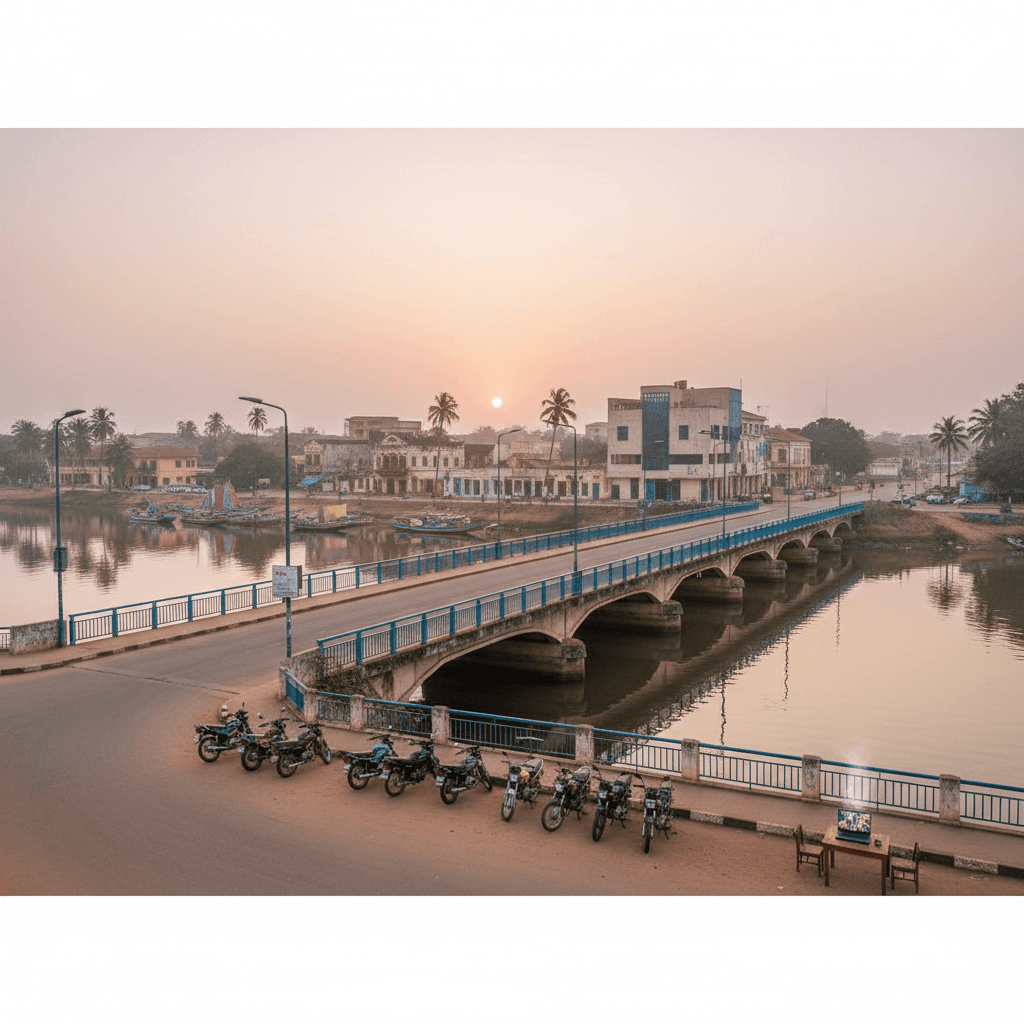
Cotonou
🇧🇯 Benin
Cotonou isn't glamorous. It's loud, it's sticky with humidity that clings to you from the moment you step off the plane and the traffic is, honestly, some of the most chaotic you'll encounter anywhere in West Africa. Zemidjans weave between lanes that don't really exist, horns blare constantly and the smell of exhaust mixes with grilled fish from roadside stalls in a way that's oddly intoxicating after a few days.
What keeps people here is harder to explain. There's a tolerance to the city, a social ease that comes from over 40 ethnic groups coexisting alongside Voodoo shrines, Catholic churches and mosques, sometimes on the same block. It doesn't feel performative, it feels like the actual texture of daily life.
The city runs on port money, NGO budgets and trade, so you'll find yourself surrounded by a mix of aid workers, local entrepreneurs and the occasional adventurous nomad who stumbled onto this place and decided to stay. Expats tend to cluster in Haie Vive, where the bars, decent restaurants and relative walkability make it the path of least resistance, most nomads land there first and never really leave.
Costs are low by any measure. A solo traveler can live reasonably well on $800 a month, street food runs $1 to $5 and a 1-bedroom in a central neighborhood won't break $236. That said, the infrastructure will test your patience, power cuts happen without warning, roads flood badly from June through July and internet speeds are unreliable enough that you shouldn't plan any mission-critical video calls without a backup SIM.
The beach is close, the people are genuinely warm and the cultural weight of this place, turns out, is unlike anything else in the region. Ouidah is an hour away and carries the full history of the transatlantic slave trade in a way that's sobering and important. That context shapes Cotonou too, you feel it.
It's not a polished nomad destination with co-living spaces and oat milk lattes. It's a real city doing real things and if you can handle the friction, it gives back something most places can't.
Cotonou is, honestly, one of the more affordable cities you'll find on the West African coast. A solo nomad living reasonably well spends around $800 to $1,000 a month and you can push that down to $600 if you're eating street food, sharing a flat and hopping zemidjans everywhere. That's not roughing it, that's just living like most expats actually do here.
Rent is where your money goes furthest. A one-bedroom in Haie Vive or Fidjrossè runs $120 to $240 a month and a proper three-bedroom villa in Cocotiers with a pool and a guard sits around $430. Agla is the budget call, studios around $140, though the infrastructure there's basic and petty theft is a real concern.
Food costs almost nothing if you eat where locals eat. Grilled fish and rice at a spot like Chez Maman Benin will set you back $1 to $3, the smell of charcoal and palm oil hitting you before you even see the grill. Mid-range meals at somewhere like La Marine run $5 to $10, a proper sit-down dinner for two at an upscale spot costs $30 or more.
- Budget tier ($600-$900/month): Shared housing in Agla or Aïbatin, street food daily, zemidjan rides everywhere
- Mid-range ($900-$1,500/month): A 1BR in Fidjrossè, mixed dining, Gozem for most transport
- Comfortable ($1,500+/month): Villa in Cocotiers, private driver, international school fees if you've got kids
Transport is cheap, weirdly cheap. Gozem rides across the city cost $2 to $5, zemidjans are $1 but you're taking your chances without a helmet most of the time. Budget roughly $87 a month if you're using Gozem as your main option.
Coworking at Areolis runs about $140 a month for a hot desk, which is fair for what you get. Groceries from local markets are a fraction of what you'd pay at the expat supermarkets, so most long-term nomads shop both depending on what they need.
The cost of living here is genuinely low. The trade-off is unreliable power, slow internet peaks and heat that doesn't quit, so factor that into your expectations before you book a one-way ticket.
Where you land in Cotonou shapes your entire experience. The city's neighborhoods are, honestly, more different from each other than the map suggests, so choosing wrong means a frustrating few months of bad commutes and overpriced rent.
Nomads
Haie Vive is the default choice and there's a reason for that. It's walkable, it's got the densest concentration of cafes and restaurants and you'll find other nomads without trying too hard. Rent for a studio runs $119 to $236 a month, bars like Times Bar are a short walk away and Gozem pickups are constant. The downside: traffic noise is relentless, the housing stock is aging and the streets smell like exhaust by 8am. Still, most nomads find it the easiest place to land, especially for the first month.
For coworking, Areolis charges around 82,500 CFA per month for a hot desk, it's not glamorous but the WiFi holds up better than most apartments. MTN 4G gets you 10 to 25 Mbps on a good day, turns out that's enough for calls and async work, just don't count on it during peak evening hours.
Expats and Long-Term Residents
Cocotiers is where expats on longer contracts tend to settle, newer villas with pools and security guards, rents around $430 for a three-bedroom. It's quieter and more comfortable, though you'll need a driver or reliable Gozem access because walking anywhere useful isn't really an option. The isolation gets to people after a while, frankly.
Fidjrossè-Plage attracts expats who want the beach close enough to actually use it. Calmer than Haie Vive, residential and you can hear the Atlantic from the right streets. Rents sit higher than Agla but lower than Cocotiers.
Families
Fidjrossè and Cocotiers are the family picks, both have space, guards and proximity to international schools. Cocotiers especially has the infrastructure for it, though the commute into the city center can be genuinely maddening during rain season when roads flood.
Budget Travelers and Solo Nomads
Agla is cheap. Studios go for around $140 a month, services are nearby and it works fine for solo travelers watching costs. Infrastructure is basic, petty theft is a real concern and it's not somewhere to walk alone after dark, keep that in mind before committing.
Connectivity in Cotonou is, honestly, a mixed bag. MTN 4G is the dominant network and delivers 10,25 Mbps in central areas like Haie Vive and Cocotiers, which is fine for video calls and async work, but speeds crater during peak hours and power cuts can knock out your connection entirely with zero warning.
Most nomads grab an MTN or Moov SIM at the airport. Around $10 gets you a starter pack, data bundles run roughly $5 for 10GB and they're genuinely cheap compared to most African cities. Buy a backup eSIM through Airalo before you arrive, because there will be days when the local network just doesn't cooperate and you'll need it for a deadline.
Coworking is still developing here. It's not Bangkok. But a couple of options exist:
- Areolis: Verify current operational status and pricing with recent nomad community sources before publication.
- The Hub: Verify current operational status with recent visitor reports or local contacts.
Café working is possible, it just takes some trial and error. Pura Vida is the go-to recommendation from the expat crowd, decent free WiFi and a relaxed atmosphere without the chaos of street noise bleeding in. La Marine works in a pinch. That said, don't count on café WiFi for anything that can't afford to drop.
Power cuts are, turns out, the bigger problem than internet speed itself. Load shedding happens and when the generator kicks on at a café or coworking space, you'll lose two to five minutes of connectivity while everything resets. A fully charged laptop and a power bank aren't optional here, they're standard kit.
The nomad community organizes loosely through the Facebook group "Cotonou Digital Nomads" and expat networks like InterNations and Benin Expats. Meetups happen, weirdly often around Haie Vive bars rather than coworking spaces, but that's where the useful local knowledge actually gets shared.
Bottom line: Cotonou works for remote work if you build in redundancy. One SIM card and one WiFi source won't cut it.
Cotonou is, honestly, pretty safe by West African standards, but that doesn't mean you can be careless. Petty theft is the main issue: pickpockets work the crowds around Dantokpa Market and the beach areas near the port and they're good at it. Don't walk alone after dark in unfamiliar neighborhoods, keep your phone off the table at street-side restaurants and you'll avoid most problems.
The U.S. and UK both issue Level 2 advisories for Benin, which is standard caution territory. The northern border regions near Burkina Faso carry a genuine terrorism risk, so skip those entirely. Cotonou itself stays calm, there's a visible police presence around the port and major intersections, though response times are unpredictable if something actually goes wrong.
Emergency numbers to save before you land:
- Police: 117
- Fire/Ambulance: 118
Healthcare is functional for routine stuff, not reassuring for anything serious. Verify current operational status and pricing with recent expat community sources; the staff at private facilities generally speak French with varying English. CNHU is the main public hospital but it's understaffed and underfunded, most nomads avoid it unless there's no other option.
For anything beyond a stomach bug or minor injury, medical evacuation is the real answer, which means travel insurance with evac coverage isn't optional, it's the whole point. AXA and SafetyWing both cover this, though SafetyWing's evac limits are lower so read the fine print before you commit.
Pharmacies are everywhere and well-stocked for basics. Malaria prophylaxis is a real consideration here, Cotonou sits in a high-transmission zone, so talk to a travel medicine doctor before you arrive and bring a full course of treatment. Mosquitoes are relentless after dark, especially near standing water during rainy season when the streets flood and the humidity just clings to everything.
Yellow fever vaccination is required for entry. Bring your card, they do check it. Hepatitis A and typhoid shots are also worth getting before you go, street food is delicious but the hygiene standards vary wildly from stall to stall.
Cotonou doesn't have a subway, a tram or anything resembling a reliable bus network. What it does have is zemidjans and Gozem and honestly, that covers most of what you'll need.
Zemidjans are the moto-taxis that swarm every intersection, identifiable by their yellow shirts and the constant, low-level honking that defines the city's soundtrack. They're cheap, around $1 a ride, they weave through gridlock that would otherwise eat 45 minutes of your day, but helmets are rarely offered and the driving is, frankly, aggressive. Most long-term expats use them occasionally and wince every time. Budget nomads use them daily and stop thinking about it.
Gozem is the smarter call for anything beyond a short hop. It's an app-based ride service, similar to Uber, with both moto and car options, fixed pricing and a driver you can track. Short rides run $2 to $5, airport transfers around $10, it's not the cheapest option but it removes the roadside negotiation entirely. Expats in Haie Vive use it constantly, it's become the default for anyone who values their time over saving a dollar.
Walking is realistic in Haie Vive, where restaurants, pharmacies and coworking spaces cluster within a few blocks of each other. Elsewhere, the sidewalks are unpredictable at best, flooded at worst during the June to October rainy season, so don't count on it.
- Zemidjans: ~$1 per ride; fast through traffic, no helmet, negotiate before you get on
- Gozem (car): $2 to $5 short rides, $10 airport; app-based, fixed price, reliable
- Gozem (moto): slightly cheaper than car, still tracked and priced upfront
- Benin Taxi app: an alternative for airport transfers, worth having as a backup
- Private driver: $300 to $500 per month for daily use; turns out it's common among families and senior expats
Scooter and bike rentals are scarce, don't build your life around finding one. Gas sits around $1.15 per liter if you do end up with wheels.
Traffic peaks hard between 7 and 9am and again after 5pm, the exhaust smell is real, the heat makes it worse. Leave early or wait it out.
French is the official language and the one you'll actually need. English gets you surprisingly far in NGO circles and some international businesses, but on the street, at Dantokpa market, in a zemidjan negotiation? It won't help you much. Most locals don't speak it and expecting them to is, honestly, a fast way to get overcharged or ignored.
The city's linguistic reality is more layered than just French, though. Fon is the dominant local language and you'll hear it constantly, woven into conversations, market haggling and the calls of vendors whose street food smells like charred fish and palm oil. Yoruba shows up too, especially near the Nigerian border trade crowd. You don't need either to get by, but knowing a few words earns you genuine warmth from locals who aren't used to visitors making the effort.
A handful of phrases will carry you far:
- "Bonjour" , greet everyone, always, before asking anything
- "Combien?" , how much; you'll use this dozens of times a day
- "C'est trop cher" , that's too expensive; useful at markets
- "Merci beaucoup" , thank you very much
- "Je ne comprends pas" , I don't understand
Download Google Translate's offline French pack before you land, it's non-negotiable for navigating anything administrative. The Fon pack exists too and works well enough for basic exchanges, turns out locals find it genuinely amusing when you attempt it. Don't skip the offline download; mobile data is patchy enough that relying on a live connection mid-conversation will leave you stranded.
One thing that trips people up: communication style here is indirect and warm, there's a whole social ritual before any transaction or request. Launching straight into "how much is this?" without a greeting first reads as rude and frankly, you'll notice the difference in how people respond. Ask about someone's family, smile, take a beat. It sounds small, it changes everything.
In business or coworking settings like Areolis or The Hub, French is the working language, though younger professionals often mix in some English. Written communication for apartments, contracts or anything official? French only. Bring a translation app and patience in roughly equal measure.
Cotonou is hot. Not "pack a light jacket" hot, but the kind of thick, clinging humidity that hits you the moment you step off the plane and doesn't really let go. Temperatures hover around 31°C year-round, so the real question isn't whether it's warm, it's how much rain you're willing to deal with.
The city runs on two rainy seasons and the first one, peaking in June, is honestly brutal. June alone can dump over 320mm of rain across 18 days, which sounds manageable until you see what it does to the roads. Streets flood fast, zemidjans stall out and the smell of waterlogged red dirt mixes with exhaust in a way that's hard to forget. July follows close behind and expats who've been through it tend to just plan around those two months entirely.
October brings a shorter second rainy season, around 133mm, which is, turns out, far more tolerable. It rains, it clears, life moves on. Most nomads who arrive in October barely complain about it.
December through March is the sweet spot. January averages just 14mm of rain across roughly one day, the air is drier, the harmattan wind blows in from the Sahara carrying a faint gritty dust and you can actually sit outside at Le Beach or Pura Vida without your clothes soaking through. It's still warm, don't expect a break from the heat, but it's the version of Cotonou that makes people want to stay longer than planned.
- Best months: December, January, February, March
- Shoulder season: November and April, wetter but workable
- Avoid if possible: June and July, flooding is genuinely disruptive
- Year-round reality: 30-31°C highs regardless of season
If your trip is flexible, aim for January or February, the city's at its most functional and the beaches near Fidjrossè are actually enjoyable. April works fine too, it's getting muggier but flights and accommodation are cheaper, the crowds are thinner. Just don't book a non-refundable June stay thinking the rain won't affect your plans, it will.
Get a SIM card at the airport before you leave arrivals. Seriously, don't wait. Both MTN and Moov have desks there, starter packs run about $10 and a 10GB data bundle costs roughly $5. MTN's 4G is, honestly, the more reliable of the two in central Cotonou, though speeds drop during peak hours and you'll want a backup plan for video calls.
Banking takes patience. BOA and Ecobank are the main options for expats, but opening an account requires your passport, proof of residence and sometimes a letter from an employer or sponsor, so don't expect to walk in and sort it same-day. Most locals use Mobile Money (MTN Momo) for everything from groceries to rent payments and you'll find it genuinely easier to adopt early rather than fight the system.
For apartments, Airbnb works fine for the first week or two while you get your bearings. Long-term, most expats go through local agents or word of mouth in the Facebook groups "Cotonou Digital Nomads" and "Benin Expats." Haie Vive is the easiest neighborhood to land in as a newcomer, it's walkable, there are decent restaurants nearby and you won't feel completely isolated. Budget nomads head to Agla for studios around $140 a month, the infrastructure is basic but it gets the job done.
Getting around is straightforward once you stop being nervous about it. Gozem is the Uber equivalent here, short rides cost $2 to $5 and the app is easy to use. Zemidjans (moto-taxis) are cheaper at around $1 a ride, but helmet use is, weirdly, entirely optional for the driver and often skipped. Your call on that one.
A few customs that'll save you awkward moments:
- Greetings matter: Ask about someone's family before getting to business. Skipping this reads as rude, not efficient.
- Right hand only: Use it for handshakes, giving money, passing things.
- Time: "African time" is real, build buffer into any meeting or appointment.
- Dress: Modest clothing is appreciated, especially outside expat-heavy areas.
Day trips are easy. Ouidah is about 40 minutes west and turns out to be one of the most historically dense places in West Africa, the Route des Esclaves alone is worth the trip. Porto-Novo, Benin's actual capital, is closer and has good museums. Both are reachable by Gozem or shared bush taxi for next to nothing.
Need visa and immigration info for Benin?
🇧🇯 View Benin Country GuideHidden Gem
Worth the effort