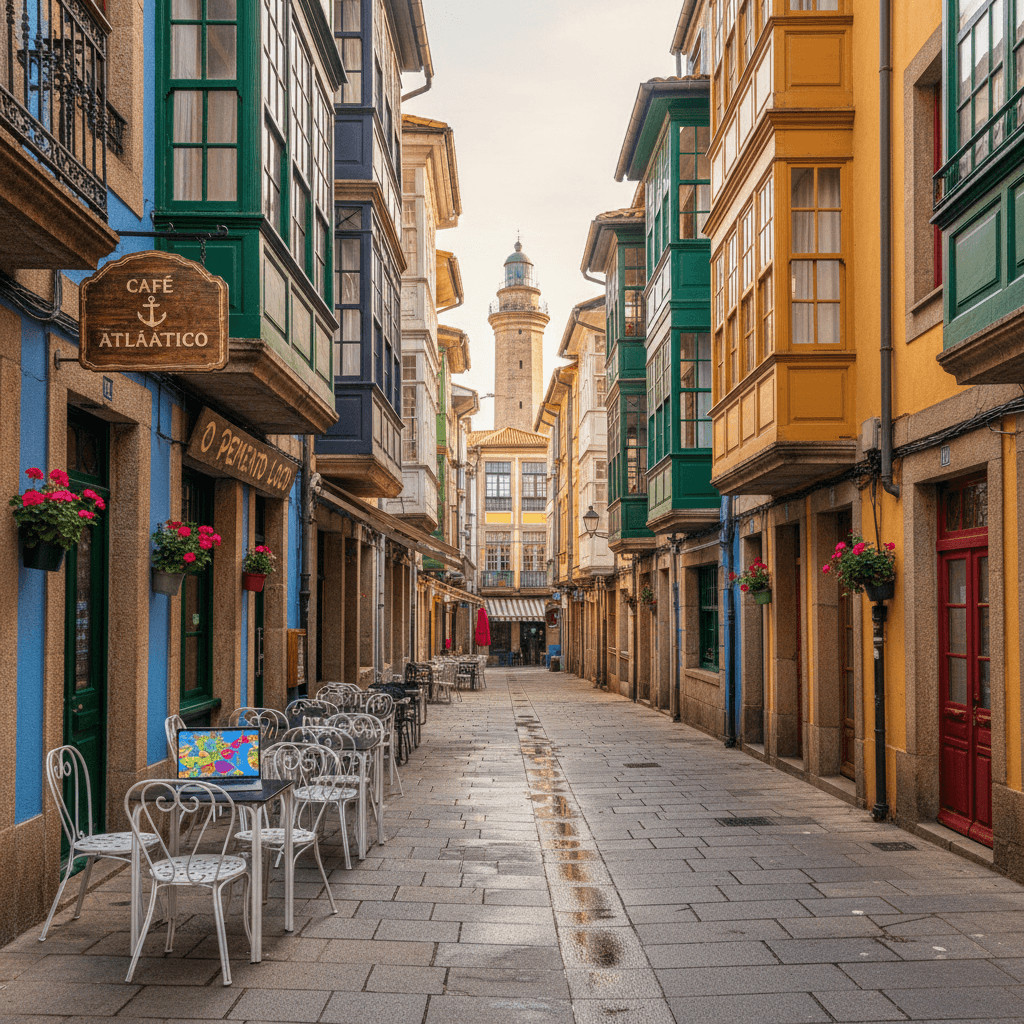
Coruña
🇪🇸 Spain
A Coruña feels calmer than most Spanish coastal cities and that’s the point. You get a real working city, not a glossy beach town, with sea spray on the promenade, gulls squawking over the harbor and a pace that stays stubbornly human.
It’s the kind of place where you can finish work, walk the 13-kilometer seaside path, then eat grilled fish while the wind pushes salt into your coffee. The city’s Galician identity gives it a different texture from Madrid or Barcelona, more Celtic edge than flamenco gloss, more granite and rain than heat and noise.
Weather sets the tone. Summers are mild, winters are wet and the damp can hang around for days, so don’t come expecting endless terrace season. Still, the climate is easier than southern Spain in August and the green hills, beaches and tidy public spaces make daily life feel less strained.
Not cheap. Not expensive either. For one person, a normal month lands around $1,352, with shared or outskirts housing keeping things manageable, while a center studio can run around $721 and a decent dinner for two usually sits near $51.
- Budget: $1,000 to $1,300, shared housing, public transport, cheap eats
- Mid-range: $1,400 to $1,800, 1BR outside the center, coworking, better restaurants
- Comfortable: $2,000+, central apartment, taxis, upscale dining
The nomad scene exists, but it’s small. That’s the tradeoff, honestly, fewer meetups, fewer English speakers outside touristy streets and less of that easy social churn you get in Lisbon or Valencia, though the upside is that the city doesn’t feel saturated with remote workers chasing the same brunch spot.
Best areas: Ciudad Vieja for walkability and old stone streets, Ensanche for practical central living, Riazor and Orzán for beach access, Monte Alto for food and late nights and Agra de Orzán if you want lower rents and a more mixed local feel. The center is safest and simplest, though apartments go fast.
- Work life: Fiber is solid in many places, with coworking like WeKCo and DEYSERCO for steady desks and meeting rooms
- Getting around: Buses are reliable, the city is walkable and the airport is only about 7 km away
- Safety: Very good overall, petty theft can still happen, so don’t leave a laptop on a café chair and wander off
For many people, that’s the real appeal. You’re trading hype for sea air, seafood, rain and a quieter routine that, weirdly, can feel richer than a bigger expat hub once you settle in.
A Coruña isn’t cheap in the bargain-basement sense, but it’s cheaper than Madrid, Barcelona or most Spanish beach cities that get swamped with tourists. A solo budget usually lands around $1,352 a month with rent included and that number makes sense once you start paying for a normal life, groceries, transit, maybe a coworking desk and the odd coffee while rain taps on the window.
For most nomads, the city feels fair. Rent takes the biggest bite, then food, then the small stuff that sneaks up on you, like bus rides, a second coffee or a beer after work and honestly those extras add up faster here than people expect.
Typical monthly budget
- Budget: $1,000 to $1,300, shared housing, cheap eats, public transport
- Mid-range: $1,400 to $1,800, one-bedroom outside the center, mid-range restaurants, coworking
- Comfortable: $2,000+, central apartment, nicer dinners, more rideshares
What rent looks like
- Studio or 1BR in the center: about $721
- Studio or 1BR outside the center: about $544
- 3BR in the center: about $1,225
Food is reasonable if you eat like locals do, with coffee around $2, beer about $5 and street food or fast food usually sitting in the $9 to $16 range. A mid-range dinner for two runs roughly $51, which, surprisingly, feels decent once you’ve paid for seafood, bread and a drink or two near the waterfront.
Transport is straightforward and cheap. A monthly bus pass is about €19.80 (approximately $21) and the city’s buses are reliable enough that most people don’t bother with a car, especially if they live near Ensanche, Ciudad Vieja or Riazor and can walk most places anyway.
Good-value neighborhoods
- Ensanche: central, practical, best for everyday living
- Agra de Orzán: cheaper, multicultural, denser
- Riazor/Orzán: beach access, more wind, higher demand
- Ciudad Vieja: charming but pricier
Coworking is another line item to watch. Hot desks start around $127 a month and places like WeKCo and DEYSERCO are decent if you need proper WiFi and a place where the chairs don’t wreck your back by lunch. If you just need a laptop-friendly café, the coffee scene works, though the internet can be patchy in some spots and the room gets noisy fast when the rain starts.
Overall, A Coruña sits in that sweet spot where you can live well without burning cash, but you still need a realistic budget, because the city’s calm pace doesn’t make bills disappear, it just makes them easier to stomach.
For nomads
Riazor and Orzán are the easy pick if you want beach access and a quick commute to cafés or coworking spots, though the wind can slap you in the face on the promenade and the winter rain gets old fast. The area feels lively without being chaotic and honestly, that balance is why a lot of remote workers end up here.
Expect 1BR rents around $721 in the center or closer to $544 farther out, so the city still feels affordable compared with Madrid or Barcelona. The internet is decent, not heroic, with fiber in coworking spaces like WeKCo and DEYSERCO, where natural light and quiet desks beat trying to work in a noisy café with clinking cups and espresso steam everywhere.
For expats
Ensanche is the safe default. It’s central, practical and full of normal life, not postcard scenery, so you get grocery runs, decent apartments and easier bus connections without the tourist spillover of Ciudad Vieja.
Monte Alto works better if you want personality and food nearby, with seafood joints, late bars and that smell of grilled octopus drifting out onto the street, though the nightlife can get loud, especially on weekends. English is patchy outside the center, so you’ll use Spanish or a translator app more than you expect and that can feel tiring at first.
For families
Agra de Orzán makes sense if price matters. It’s denser and less polished, but the rents are gentler, the neighborhood feels lived-in and you’re still close enough to schools, buses and everyday shops that you won’t spend half your life in transit.
Riazor also works for families who want the sea on their doorstep and long walks when the weather behaves, which, surprisingly, it does in summer. The tradeoff is wind, salt air and a bit more noise, but kids usually love the beach access and parents usually like the easy routine.
For solo travelers
Ciudad Vieja is the prettiest base and the most walkable, with Plaza de María Pita, narrow lanes and enough bars and tapas spots to keep you busy for a few days. It’s pricier than other areas and some of it feels built for visitors, so don’t expect deep local life on every corner.
If you want a better long-stay fit, I’d choose Monte Alto or Ensanche. Both are safer bets for day-to-day living, both keep you close to buses and restaurants and both feel less like a stage set, which matters once the novelty wears off.
A Coruña’s internet is decent, not glamorous. In apartments and cafés you’ll usually see 27 to 50 Mbps and fiber in coworking spaces can hit 1 Gbps, so video calls are fine if you’re not sharing a weak café line with three laptop campers and a steaming cortado. Honestly, the bigger issue is the weather than the bandwidth, because rainy days send everyone inside and the city gets a little louder, with chair scrapes, espresso machines hissing and keyboards tapping all at once.
The coworking scene, turns out, is small but workable. You won’t find the same choice you get in Lisbon or Barcelona and that’s the tradeoff, but the places that do exist are practical, bright and usually calmer than chain cafés on the paseo.
Best Coworking Options
- WeKCo: Good natural light, hot desks and meeting rooms, so it suits people who need a proper workday and not just a table by the window.
- DEYSERCO: More office-like, with private offices and flexible passes available; it is best to verify current rates directly with them as prices vary.
- COWOCO: A solid backup when WeKCo is full and frankly that happens, because the scene here isn’t huge.
Cafés can work, though they’re hit or miss. Some have stable Wi-Fi and enough plug sockets, others are all marble tables and terrible acoustics, so you’ll hear spoons clinking, rain ticking on the glass and someone’s loud voice bouncing off the walls. If you want a SIM instead, Movistar and Lobster are the easy picks and eSIMs are common enough that you won’t have to beg in a store.
What Nomads Actually Pay
- Hot desk: Typically charged per day (around €15) or in 4-hour blocks (around €10).
- SIM: Roughly €10 to €20 monthly, depending on data.
- Free Wi-Fi: City Wi-Fi exists, though it’s better for messaging than serious work.
Most nomads end up mixing places, one coworking day for calls, then café hopping or working from home when the rain is drumming on the windows and the Atlantic wind feels like it’s coming through the walls. That rhythm suits Coruña, because the city’s relaxed pace is real, but the smaller expat scene means you’ve got to make your own routine instead of expecting meetups every night.
If you want the simplest setup, rent an apartment in Ensanche or near Riazor, get a decent mobile plan and keep one coworking membership as your backup. Cheap? Sort of. Reliable? Usually, yes.
A Coruña feels safe in the way a good neighborhood feels safe, not in a glossy brochure way. You’ll still hear the usual city noise, scooters, the clack of heels on wet pavement and the odd late-night shout near Orzán, but violent crime’s rare and most nomads move around without thinking twice.
Crime is low and that’s the main reason solo travelers, women and LGBTQ+ visitors tend to relax here faster than in bigger Spanish cities. Pickpocketing can happen, though, especially in busy bars, bus stops and around the beach strip when the weather turns and everyone crowds indoors.
What feels safe and what doesn’t
- Centro and Ensanche: Easy to walk, well lit and generally calm at night.
- Riazor and Orzán: Fine by day, a bit rowdier after dark, especially around bars.
- Ciudad Vieja: Lovely, quiet and usually fine, though some streets get empty late.
- Agra de Orzán: Lived-in and busy, but keep an eye on your bag in crowded spots.
There aren’t major no-go zones, which is honestly a relief, but common sense still matters. Don’t leave a phone on a café table, don’t flash a laptop on a terrace and don’t assume a beach bag will stay put while you swim, because petty theft is the main annoyance here, not bigger trouble.
Healthcare is straightforward. CHUAC, the main university hospital complex, handles serious cases and has a solid reputation, while pharmacies are everywhere and usually easy to spot by the green cross, even on damp evenings when the air smells like salt and wet stone.
Getting help
- Emergency number: 112 for ambulance, police or fire.
- Hospitals: CHUAC for larger issues, private clinics for faster non-emergency visits.
- Pharmacies: Common across the city, with rotating late-night service.
- Health access: Good for residents, simpler if you’ve got private insurance or EU coverage.
If you need care, expect decent standards and paperwork that can feel a bit old-school, which, surprisingly, is less annoying than it sounds because staff usually know what they’re doing. For everyday stuff, a pharmacy visit often solves the problem fast and for anything serious, locals don’t hesitate to use CHUAC.
My take, frankly, is that A Coruña’s safety record is one of its best selling points. It’s not flawless, but it’s calm, walkable and easy to trust and that matters when you’re living somewhere long enough to notice the little things, like how quiet the streets get after rain.
A Coruña is easy to get around and honestly, that’s one of the nicest things about living here. The city feels compact, the seafront promenade does a lot of the heavy lifting and you can walk from one neighborhood to another without feeling like you’ve signed up for a commute. Rainy days are the annoying part, though, because wet pavement, salty wind and a hood pulled tight can make even a short errand feel longer.
The bus network is the main workhorse. Red buses cover the city well, a monthly Millennium Card costs about €19.80 (or up to €19.80 for standard fares) and the App Coruña app gives you real-time timing so you’re not standing there staring at the curb with everyone else. Buses are clean and usually reliable, but they can feel slow when traffic piles up around Ensanche and the center and yes, people still squeeze on with backpacks and shopping bags like it’s nothing.
Walking: Best for the center, the waterfront and beach areas, because the city is flat enough to make daily life painless.
Buses: Best for cross-town trips, airport runs and wet weather days when you don’t want to arrive soaked.
Bikes and e-bikes: Good for the promenade and short rides, though the wind can be mean, weirdly mean, along the coast.
Useful options
- Uber: Handy for late nights, bad weather or when you’re hauling luggage.
- BiciCoruña: The city bike system, useful for casual rides if you’re comfortable sharing lanes.
- Millennium card: Good if you’ll ride often, because tapping in is simpler than buying tickets every time.
- Ok Zona Ebike: A decent rental option for steeper or windier stretches and frankly, less sweaty.
The airport is close, about 7 km from the center, so getting there isn’t a drama. A taxi or bus usually runs around €16, which, surprisingly, feels fair for an airport transfer in Spain. If you’re staying in Ciudad Vieja or Ensanche, you can often leave pretty late and still make a flight without sprinting through terminals.
Most nomads and expats stick to walking, then use buses for the annoying bits. That mix works here because the city is safe, the streets are readable and the sea air makes walking tolerable even when the sky is doing its usual damp Galician thing.
A Coruña feels easier than Madrid or Barcelona, but the language gap still bites. Spanish runs the show, Galician is everywhere on signs and in casual speech and English only gets you so far in the center before people switch back and keep moving.
That can be charming, honestly or deeply annoying when you’re trying to sort a repair, a medical issue or a landlord message on WhatsApp. In touristy pockets like Ciudad Vieja and around the beach promenade, staff usually cope in basic English, but outside those areas, don’t expect much hand-holding.
Useful bits to know:
- Ola means hello.
- Grazas means thanks in Galician.
- Por favor works just fine.
- Como estás? is how are you?
People here appreciate the effort, even if your accent is messy. Say a few words in Spanish or Galician, smile, then keep it simple, because most everyday interactions move fast and nobody wants a performance at the pharmacy counter.
For digital nomads, Google Translate is the app to keep open, weirdly enough it handles Galician better than a lot of travelers expect and it saves you when a menu gets cryptic or a plumber starts firing off local vocabulary you’ve never heard before.
How communication feels on the ground
- Centers and tourist zones: Some English, enough for basic service.
- Local neighborhoods: Mostly Spanish and Galician, with patchy English.
- Best strategy: Learn a few phrases, then use translation apps.
- WhatsApp: People use it constantly for rentals, appointments and quick fixes.
WhatsApp is the real language of logistics here, not email and frankly you’ll move faster if you answer quickly, keep your messages short and use simple Spanish. Landlords, clinics and even some coworking spaces prefer it, which sounds casual until you realize half your life is being arranged in chat threads.
The upside is that nobody makes a big show of your mistakes and the downside is that A Coruña can feel a bit isolating if you arrive expecting a big English-speaking nomad bubble. The city’s slower pace is lovely, but the communication culture is still local first, so patience helps more than fluency at the start.
A Coruña’s weather is mild, but it’s rarely generous. Summers sit around 19 to 21°C, winters hover near 10 to 14°C and the real story is rain, wind and a damp chill that gets into your clothes if you’re out near the promenade too long.
Best time to visit? June through September, no question. July and August are the driest months, with about 25 mm of rain in July and the city feels easiest then, with long evenings, sea air and enough sun to make the beaches at Riazor and Orzán actually tempting.
Skip November through February if you can. It’s wet, gray and often blustery, with November and January bringing the kind of rain that drums on windows and leaves sidewalks slick and honestly, the cold here feels sharper than the numbers suggest because of the humidity.
Month-by-month feel
- January: Cool, wet and quiet, around 10°C highs, with 172 mm of rain.
- July: Mild and pleasant, around 19°C highs, with just 25 mm of rain.
- November: Darker and damper, around 13°C highs, with 122 mm of rain.
If you’re coming as a digital nomad, late spring is a smart compromise. May and June usually give you decent weather without peak tourist noise and you’ll still get a city that feels walkable, open and workable, instead of the soggy, wind-whipped version locals grit through in winter.
Bring layers. Seriously.
The ocean changes everything here, so a sunny morning can flip into cold spray and a gritty breeze by afternoon, especially along the 13 km seaside path, where the smell of salt, seaweed and coffee from the kiosks hangs in the air, which, surprisingly, can be lovely even when the sky looks threatening.
Best time by traveler type
- Beach lovers: June to September, when the water and light are at their best.
- Remote workers: May, June and September, because it’s calmer and still fairly dry.
- Budget travelers: November to February, though you’ll pay for it in weather.
One more thing, the city doesn’t stop for rain. Cafes stay busy, buses keep running and the pace stays relaxed, so if you don’t mind a hood up and wet shoes now and then, A Coruña works year-round, but summer is when it stops feeling like a dare.
A Coruña is easy to live in if you want sea air, decent infrastructure and fewer crowds than Madrid or Barcelona, but the rain gets old fast. The city feels safe, walkable and a bit sleepy, so if you need constant networking events and English at every turn, this can feel isolating, honestly.
Budget: a solo nomad usually lands around $1,352 a month with rent and that climbs quickly if you want a central flat, regular cafés and coworking. Not cheap. Still, compared with Spain’s bigger coastal cities, it can feel manageable if you keep expectations realistic.
Money and housing
- Studio or 1BR in the center: about $721 a month.
- Studio or 1BR outside the center: about $544 a month.
- Coworking hot desk: around $127 a month.
- Monthly transport pass: about $37.
- Meals: street food $9 to $16, coffee about $2, beer about $5.
Idealista is where most people start apartment hunting, then the real work begins, because WhatsApp viewings are standard and landlords often move at their own pace. The bureaucracy isn’t dramatic, just annoying and a lot of places still prefer a local-style conversation over neat online forms.
Where to base yourself
- Ciudad Vieja: pretty and walkable, but pricier.
- Ensanche: central, practical, easier for day-to-day living.
- Riazor and Orzán: best for beach access, though wind can bite hard.
- Monte Alto: good food, more local energy, a bit noisier at night.
For internet, fibre is usually solid in coworking spaces like WeKCo or DEYSERCO and café WiFi is fine when it works, which, surprisingly, is often enough for light remote work. SIM cards from Movistar or Orange are easy to sort out in-store and eSIM options like Lobster save you a headache if you want to land and get online immediately.
Transport: the buses are reliable, App Coruña helps with timings and the Millennium Card keeps costs down. You can walk a lot here, but the wind off the bay can make a short trip feel much longer, weirdly.
Local habits worth knowing
- People greet with two kisses.
- Lunch can run late and shops still close for siesta in some areas.
- Try queimada if someone offers it, but don’t expect a subtle drink.
- Spanish helps, Galician helps too and English won’t get you far outside the center.
For quick escapes, the Tower of Hercules is an easy half-day and Santiago de Compostela is close enough for a simple bus or train trip. If the weather turns miserable and it often does, lean into seafood lunches, a long walk on the promenade and an early night while the rain taps on the windows.
Need visa and immigration info for Spain?
🇪🇸 View Spain Country GuideEasy Landing
Settle in, no stress