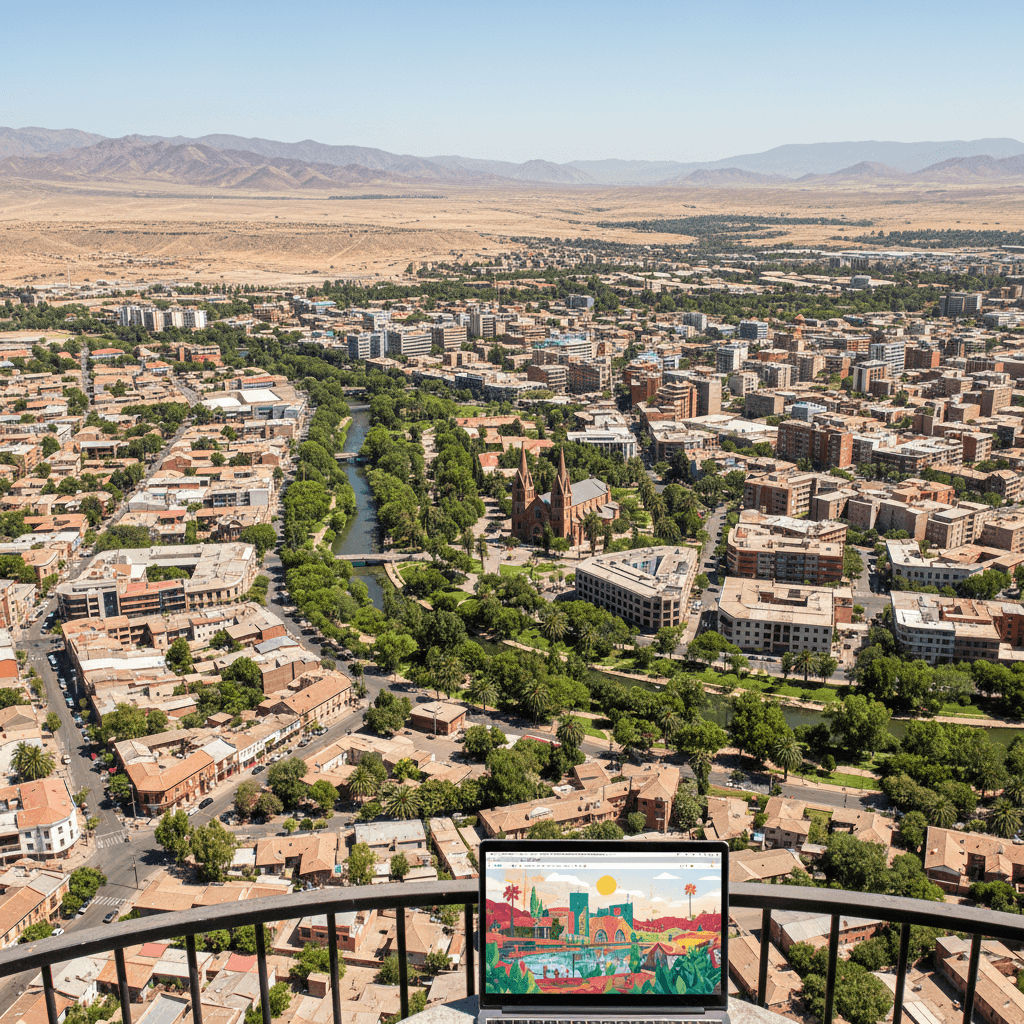
Copiapó
🇨🇱 Chile
The Desert Pulse
Copiapó isn't your typical digital nomad hotspot, and that’s exactly why it’s starting to land on the radar of travelers tired of the crowded cafes in Santiago. Located in the heart of the Atacama, this is a city defined by its mining roots and a rugged, desert-paced lifestyle. It feels utilitarian at first glance, but if you stick around, you’ll find a quiet beauty in its arid landscape and the slow, deliberate way of life that locals embrace.
The vibe here is undeniably low-key. You won't find a high-energy nightlife scene or a sleek district of glass-walled coworking spaces. Instead, you get a city that serves as a gateway to some of the most surreal natural sights in Chile. Expats often describe it as "bonita y particular," meaning beautiful in its own specific, dusty way. It’s a place for the nature-focused remote worker who prefers a morning trek through desert senderos (trails) over a fancy brunch.
The Nomad Reality Check
Living here means trading urban convenience for raw exploration. Most nomads find that Copiapó works best as a short-term base for a few weeks rather than a long-term home. While the internet is surprisingly fast and reliable across Chile, the infrastructure for remote work in the city is still catching up. You'll likely be working from your rental or a handful of quiet cafes in the center rather than a dedicated hub.
There is a distinct lack of pretension here. You’ll be rubbing shoulders with mining engineers and local artists who specialize in barro (mud) techniques. While some travelers might dismiss the city as "fome" (boring) because of its lack of traditional entertainment, others find the silence and the proximity to the coast deeply inspiring. It’s the kind of place where you can grind through a project for four days and then disappear to the turquoise waters of Bahía Inglesa for a long weekend.
What It Costs
Your budget will go significantly further here than in the capital. While Chile as a whole averages around $1,200 per month for nomads, Copiapó sits comfortably on the lower end of that scale. Local average salaries hover around $1000-$1100, so if you're earning in USD or Euros, you'll live quite well.
- Budget Tier: $800 per month. This covers a room in a shared house, plenty of street food like $3 empanadas, and using the local bus system.
- Mid-range Tier: $1,200 per month. This gets you a private 1-bedroom apartment in the center (usually $300 to $500), regular dining at local spots, and a few guided desert excursions.
- Comfortable Tier: $1,800+ per month. At this level, you’re looking at a modern apartment, frequent trips to the beach, and the ability to book private tours to the high-altitude lagoons.
The Emotional Landscape
Being in Copiapó feels like being on the edge of the world. There’s a specific stillness that comes with a desert climate; the air is dry, the sun is relentless, and the stars at night are some of the clearest you’ll ever see. It can feel isolating if you aren't prepared for it, but for the right person, that isolation is a feature, not a bug. It’s a place to reset, focus on a big project, and remember what it’s like to be surrounded by nature that hasn't been manicured for tourists.
You’ll need at least a basic grasp of Spanish to get by comfortably. English isn't widely spoken outside of specific tour operators, but the locals are generally patient. The social scene revolves around shared experiences like hiking or visiting local workshops. If you're looking for a "digital nomad community" with organized meetups, you won't find it here. You’ll have to build your own by chatting with people on the trails or at the local markets.
The Bottom Line on Your Budget
Copiapó is noticeably more affordable than the coastal nomad hubs of Valparaíso or the high energy streets of Santiago. While the national average for a comfortable nomad lifestyle in Chile hovers around US$1,200 per month, you can easily shave a few hundred dollars off that in this desert outpost. Local salaries average about US$600, so if you're earning in dollars or euros, your purchasing power goes a long way here.
Most travelers find that US$1,200 covers a private one bedroom apartment, a mix of cooking at home and eating out, and a few weekend trips to the coast. If you're on a tighter budget, US$800 is doable if you opt for shared housing and stick to the local street food scene. For those who want the best the city has to offer, including frequent excursions to the turquoise waters of Bahía Inglesa, plan for US$1,800 or more.
Monthly Cost Breakdown
- Budget Tier: US$800
- Housing: US$250 (Shared room or modest studio)
- Food: US$200 (Mostly groceries and street empanadas)
- Transport & Extras: US$50
- Mid-Range Tier: US$1,200
- Housing: US$400 (Private 1BR in the city center)
- Food: US$300 (Mix of cafes and mid-range dining)
- Coworking & Tech: US$150 (Cafe spend and mobile data)
- Comfortable Tier: US$1,800+
- Housing: US$600 (Upscale apartment or modern build)
- Food: US$500 (Regular dining out and drinks)
- Excursions: US$200 (Guided desert treks and beach trips)
Housing and Neighborhoods
Rent is your biggest variable. A studio or one bedroom in a central area usually runs between US$300 and US$500. You won't find many sleek, modern high rises here; instead, expect functional, basic apartments. Most nomads stick to the Centro area because it's walkable and keeps you close to the bus terminals and the few cafes that offer decent WiFi. It can get a bit dusty, but it beats being stranded in the industrial mining zones on the outskirts.
If you're looking for a more relaxed vibe, some expats look toward the coast near Bahía Inglesa. It's about a 40 minute drive from the city. You'll pay a premium for the ocean views and the "vacation" feel, but keep in mind you'll be far from urban services and reliable high speed landlines. For long term stays, check local platforms like Yapo.cl or Facebook Marketplace, though Airbnb is the safest bet for shorter stints.
Eating and Drinking
The food scene is unpretentious and heavy on local flavors. You can grab a massive empanada or street snack for US$3 to US$5. A typical lunch at a mid-range spot will set you back about US$10 to US$15. While upscale dining is rare, there are a few local favorites where you can find "gotitas" (local treats) and solid Chilean plates for around US$20. Groceries are affordable, especially if you buy seasonal produce at the local markets rather than the big supermarkets.
Getting Around and Connectivity
Public buses are the way to go for daily errands, costing roughly US$0.50 per ride. Uber is hit or miss, so many locals rely on informal taxis or colectivos. If you're heading to the airport, expect to pay between US$10 and US$20 for the 20 minute trip.
Since there aren't dedicated coworking spaces in Copiapó yet, your "office" will likely be a local cafe or the public library. Budget about US$5 a day for coffee and snacks to secure a seat. For data, skip the physical SIM card hunt and grab an eSIM from Holafly or Jetpac before you land. Chile's mobile networks are surprisingly fast, even in the desert, and it's often more reliable than hotel WiFi.
For Solo Travelers and Short-Term Nomads: El Centro
If you are landing in Copiapó for a few weeks of desert exploration, the Centro is your best bet. It is the most walkable part of an otherwise spread out city. Staying here puts you within striking distance of the main plazas, local pharmacies, and the few cafes where you can actually get a decent signal to check emails. It is a bit dusty and the architecture leans toward functional mining town chic, but it is the only area where you won't feel isolated without a car.
- The Vibe: Busy during the day with locals heading to the markets, but quiet and a bit dark at night. Expect a gritty, authentic Chilean experience rather than a polished tourist hub.
- Housing: You will mostly find basic apartments or local guesthouses. Expect to pay between $300 and $500 for a private studio.
- Nomad Logistics: There are no formal coworking spaces here. Most nomads settle into local cafes or the public library. Keep an eye out for spots serving gotitas (local sweets) to fuel your work sessions.
For Expats and Long-Term Remote Workers: Bahía Inglesa
Technically a 30 to 45 minute drive from the city center, Bahía Inglesa is where most expats and remote workers actually want to be. It is a coastal village known for white sands and turquoise water that looks more like the Caribbean than northern Chile. While Copiapó handles the business, Bahía Inglesa handles the lifestyle. It is much more expensive than the city, but the trade-off is a relaxed, beach-town atmosphere that feels significantly safer and more scenic.
- The Vibe: Chilled out, breezy, and focused on the outdoors. It is perfect if your "office" is a laptop on a terrace overlooking the Pacific.
- Housing: Prices jump here, especially in the high season from December to February. A comfortable house or modern apartment can easily run $600 to $900 per month.
- The Catch: You are isolated. There are no major supermarkets or high-speed infrastructure hubs out here. You will need to head into Copiapó for banking or major supply runs.
For Nature-Focused Travelers: The Eastern Outskirts
For those who are in the Atacama specifically for the senderos (trails) and trekking, look toward the residential areas on the eastern edge of the city. These neighborhoods provide the quickest access to the desert foothills. You will be closer to local artists who work with barro (mud) and eco-lodges that occasionally host wine tastings. It is a quiet existence that suits someone who wants to hike every morning before the desert heat peaks.
- The Vibe: Residential and quiet. You will see more cacti than people, and the stars at night are incredible due to the lower light pollution.
- Transport: You will likely need to rely on local buses or apps like Uber, though service can be spotty. A ride into the center usually costs around $5 to $10.
- Safety: Stick to the established residential pockets. Some of the more industrial mining zones on the outskirts can feel unwelcoming or poorly lit after dark.
Areas to Approach with Caution
Travelers generally recommend avoiding the heavy industrial and mining zones on the southern fringes of the city for long-term stays. These areas are built for utility, not comfort. They lack green spaces, have high truck traffic, and don't offer the amenities or safety levels that a visitor needs. While the $250 to $300 rent prices might look tempting, the lack of walkability and services usually makes them a poor choice for anyone without their own vehicle and a deep knowledge of the local area.
Connectivity in the Atacama
Chile consistently ranks as one of the fastest countries in the world for fixed broadband, and while Copiapó is a desert outpost, it benefits from that national infrastructure. You'll find that fiber optic connections are common in newer apartment rentals and mid-range hotels. Most nomads report speeds that easily handle video calls and heavy uploads, though the reliability can dip during the occasional desert windstorm.
Mobile data is your best friend here. The coverage is surprisingly resilient even as you head toward the outskirts. To stay connected without the hassle of local contracts, travelers recommend using an eSIM from Holafly or Jetpac. If you prefer a physical SIM, Entel and WOM are the top choices for reliability in the Atacama region. You can pick these up at the airport or small kiosks in the Centro for around $5 to $10, then top up via their respective apps.
The Coworking Situation
If you are looking for a sleek, glass-walled coworking hub with ergonomic chairs and networking mixers, you won't find it here yet. Copiapó doesn't have dedicated nomad-specific coworking spaces in the traditional sense. Most remote workers in town are either mining consultants or slow-travelers who set up shop in their own rentals.
For a change of scenery, your best bet is to adopt the "cafe office" lifestyle. The local culture is laid back, and as long as you're ordering coffee and empanadas, most owners don't mind you staying for a few hours. Expect to pay about $2 to $4 for a decent coffee. Some nomads have also used the local public libraries or community centers near the main plaza for a quiet, free place to sit, though the WiFi there can be irregular compared to a private connection.
Best Spots to Work
- Centro Cafes: The area around the Plaza de Armas has a handful of spots where you can find a corner table. Look for places with "WiFi" stickers in the window, but always have your hotspot ready as a backup.
- Eco-Lodges: If you're staying on the outskirts or near the desert trails, some eco-lodges cater to a more international crowd and provide dedicated work areas with decent connectivity.
- Bahía Inglesa: About 45 minutes away, this beach town has a few seasonal cafes where you can work with a view of the turquoise water, though the internet speeds here are generally slower than in the city center.
Practical Tips for Remote Work
Because there isn't a formal coworking scene, you'll need to be self-sufficient. Bring a high-quality power bank and a universal adapter. Chile uses Type C and L plugs, and the voltage is 220V. If your work requires total silence, the Centro can get surprisingly noisy with traffic and local commerce, so noise-canceling headphones are a must.
Since English isn't widely spoken outside of tourist-heavy spots, knowing a few phrases will help you negotiate a corner table or ask for the router password. Use "¿Cuál es la clave del WiFi?" (What is the WiFi password?) or "¿Tienen un enchufe?" (Do you have a power outlet?). Most locals are friendly and will try to accommodate you if the shop isn't at peak capacity during the lunch rush.
For those staying longer than a week, it's worth checking local Facebook groups like Digital Nomad Chile. While there isn't a specific Copiapó chapter, the national community is active and can often point you toward a specific cafe or a quiet library that just opened its doors.
Personal Safety and Street Smarts
Copiapó is generally a safe, low-key city where you can focus on the desert scenery without looking over your shoulder constantly. It doesn't have the high-pressure street crime of Santiago, but it's still a mining town with a rugged edge. Most travelers find the center perfectly walkable during the day, though things get quiet and a bit eerie once the sun goes down.
Stick to well-lit areas in the Centro and avoid wandering into the industrial outskirts or unlit residential zones near the mines at night. If you're heading out for a late dinner, use a local taxi or a ride-hailing app rather than walking long distances. While Uber can be sparse here, it's worth checking the app before you commit to a long walk in the dark. If you're heading out to the desert trails, always let someone know your route; the isolation of the Atacama is beautiful but unforgiving if you get turned around.
Healthcare Facilities and Services
Chile's healthcare system is one of the best in South America, but Copiapó's local facilities are more functional than fancy. For minor issues, you'll find pharmacies (farmacias) on almost every major corner in the downtown area. They're well-stocked and the pharmacists can often help with basic ailments or over-the-counter needs.
- Public Hospitals: These are available for emergencies but expect long wait times and basic amenities.
- Private Clínicas: Expats and nomads usually prefer private clinics for faster service and more English-speaking staff.
- Emergency Numbers: Standardize emergency numbers: 131 ambulance, 132 fire, 133 police.
For anything serious, most people end up flying to Santiago where the hospitals are world-class. Because of this, carrying comprehensive travel insurance is a non-negotiable. Make sure your policy covers medical evacuation just in case you need a quick trip to the capital.
Environmental Health and Wellness
The biggest health threats in Copiapó aren't viruses, they're the sun and the dust. The Atacama Desert has some of the highest UV radiation levels on the planet. You'll want to buy high-SPF sunscreen locally, wear a hat, and stay hydrated. The tap water is technically safe to drink in Chile, but the mineral content in this region is very high and can be hard on the stomach. Most nomads stick to bottled or filtered water to avoid "Atacama belly."
Air quality is generally good, though the proximity to mining operations means it can get dusty. If you have sensitive lungs or asthma, keep an eye on the dust levels during windy days. Food safety is high, and you can usually trust the street empanadas, but always look for stalls with a high turnover of local customers.
Emergency Readiness
Chile is a seismic country, and while Copiapó doesn't see major quakes every day, tremors are part of life. Most modern buildings are built to withstand them. If things start shaking, follow the "Drop, Cover, and Hold On" rule. If you're near the coast at Bahía Inglesa, pay attention to the marked tsunami evacuation routes (vías de evacuación) which are clearly signposted with yellow icons leading to higher ground.
- Police (Carabineros): 133
- Ambulance (SAMU): 131
- Fire (Bomberos): 132
Keep a digital copy of your passport and insurance info on your phone, and keep a small amount of Chilean Pesos (CLP) in cash. While cards are widely accepted, in a power outage or desert emergency, cash is the only thing that works.
Navigating the Desert Hub
Copiapó isn't exactly a playground for urban explorers, but it's a functional, straightforward city to navigate once you understand the local rhythm. It's compact enough that you won't spend half your day in traffic, though you'll definitely feel the desert dust on your shoes if you try to do everything on foot. Most nomads find that while the center is walkable, reaching the truly spectacular spots requires a bit more planning.
Public Transit and Microbuses
The backbone of local travel is the "micro" (small public bus). These are incredibly affordable, usually costing around $0.50 per ride. They cover the main arteries of the city and are the go-to for locals. You won't find a high-tech app to track them in real-time, so it’s best to ask your accommodation host or a local which number goes toward the Plaza de Armas.
For a slightly more comfortable but still shared experience, look for "colectivos." These are sedans that run fixed routes like a bus. They’re faster than the micros and only cost a fraction more. Just look for the signs on their roofs indicating their destination.
Ride-Hailing and Taxis
If you're used to the seamless Uber experience of Santiago, lower your expectations here. While Uber exists in Copiapó, drivers are sparse, and wait times can be frustratingly long. Expats often rely on local taxi "radiotaxis" instead. It’s a good idea to save a few local taxi numbers in your phone or use local apps like DiDi, which sometimes has better availability than Uber in smaller Chilean cities.
- Short taxi hop: Expect to pay $3 to $5 for trips within the city center.
- Airport Transfer: Desierto de Atacama Airport (CPO) is about 20 minutes away. A private taxi will run you $15 to $20, while shared shuttles are often available for around $10.
Getting to the Coast
You can't stay in Copiapó without visiting Bahía Inglesa. Since it's about 45 minutes away, you have two main options. Most budget-conscious travelers take the regular Pullman or TurBus coaches from the terminal for about $5. If you want more freedom to explore the turquoise waters on your own schedule, renting a car for a day is the way to go, though it'll cost you closer to $50 plus gas.
Walking and Cycling
The city center is relatively flat and easy to walk, especially around the main plazas where you'll find the most life. However, Copiapó isn't particularly bike-friendly in terms of dedicated lanes. If you want to cycle, save it for the "senderos" (trails) on the outskirts. Local tour operators like Ibón often include bike rentals or transport as part of their desert trekking packages, which is much safer than trying to commute through industrial traffic on two wheels.
Practical Transport Tips
- Connectivity: Download offline maps on Google Maps. While 4G coverage from providers like Entel or WOM is generally excellent in town, it drops off fast once you head into the dunes.
- Safety: Stick to registered taxis or ride-hailing apps at night. The outskirts can be poorly lit and are largely industrial.
- Cash is King: While many shops take cards, keep small change and 1,000 or 2,000 peso notes handy for micros and colectivos, as drivers rarely have change for large bills.
The Chilean Spanish Experience
In Copiapó, Spanish is the undisputed king of conversation. Unlike the tourist bubbles of Santiago or San Pedro de Atacama, this is a working mining city where the local dialect flows fast and thick. You won't find many English speakers outside of high end hotels or specialized tour operators. If you're planning to stay for more than a few days, having a solid grasp of the basics isn't just helpful, it's a survival requirement for everything from ordering empanadas to negotiating a rental on Yapo.cl.
Chilean Spanish is famous for its unique speed and slang, often called Chilenismos. Locals tend to drop the "s" at the end of words and use "po" as a conversational filler for almost everything. You'll hear "Sépalo" or "Ya po" constantly. If someone calls a place fome, they're saying it's boring, a common critique travelers have of Copiapó's quiet nightlife. On the flip side, if they describe the desert as bonita y particular, they're inviting you to appreciate the rugged, unique beauty of the Atacama.
Staying Connected
While the city feels remote, the digital infrastructure is surprisingly modern. Chile consistently ranks as having some of the fastest internet in South America. Most nomads find that mobile data is more reliable than hotel WiFi for video calls. Expats recommend skipping the physical SIM card hunt at the airport and opting for an eSIM through Holafly or Jetpac before you land. If you prefer a local provider, Entel and WOM offer the best coverage in the desert region.
- Mobile Data: Expect 4G or 5G in the city center; coverage drops quickly once you head into the dunes or toward Bahía Inglesa.
- Public WiFi: Spotty at best. Some public plazas offer free connections, but they aren't secure or fast enough for serious work.
- Digital Nomad Apps: WhatsApp is the primary way to communicate with everyone from your landlord to the local artist workshops (talleres de barro). Google Translate with an offline Spanish pack is a lifesaver when technical mining terms start flying.
Key Phrases for Your Kit
Since English proficiency is moderate to low, carrying a few specific phrases will change how locals treat you. People here are generally helpful if they see you're trying to meet them halfway in their language.
- "¿Dónde está el coworking?" (Where is the coworking space?): Use this even though formal spaces are rare; it often leads locals to point you toward the best quiet cafes with "Internet rápido."
- "¿Tienen WiFi?" (Do you have WiFi?): The first question you'll ask at any cafe in the Centro.
- "La cuenta, por favor" (The check, please): Standard for wrapping up your meal. Remember that a 10% tip is the local norm.
Navigating Social Circles
Socializing in Copiapó happens in the gaps between work and nature. Since there isn't a massive nomad hub, most people meet through shared activities. Joining a desert trekking group or visiting local artist studios is the best way to practice your Spanish. Travelers often say that while the city lacks urban energy, the people are warm once you break the ice. Don't be surprised if a casual conversation about the weather turns into an invitation to a weekend asado (barbecue).
The Desert Rhythm
Copiapó sits in the heart of the Atacama, meaning you can expect a climate that is bone-dry and relentlessly sunny. It doesn't really have a rainy season; instead, you get a year-round arid environment where the sun is your constant companion. The air is crisp and clear, which is great for visibility during desert treks but means you'll need to stay on top of hydration and high-SPF sunscreen.
Most nomads find the summer months from December to February to be the peak time to visit. Daytime temperatures usually hover between 28°C and 32°C. While it gets hot, the lack of humidity makes it much more bearable than a tropical summer. This is also the best window if you plan on making the 45 minute drive to Bahía Inglesa to swap the desert dust for turquoise waters and white sand beaches.
Seasonal Shifts
Winter in the desert, running from June to August, is a different beast. While the days remain pleasant with highs around 18°C to 22°C, the mercury drops sharply once the sun goes down. Nighttime temperatures can hit a chilly 5°C, so if you're staying in local housing, make sure your rental has decent heating or plenty of heavy blankets. Desert houses aren't always built with insulation in mind.
The shoulder seasons of spring and autumn are generally mild, though travelers often mention that the spring months can get quite windy. These gusts can kick up a fair amount of dust in the city center, which might be a nuisance if you're trying to work from a cafe patio. If you prefer avoiding the crowds and the peak summer heat, October and November offer a sweet spot of warm days and manageable nights.
When to Plan Your Trip
- High Season (December to February): Expect the best beach weather and the most active social scene. Prices for short-term rentals might tick up slightly, but it's the prime time for outdoor expeditions.
- The Quiet Months (May to August): Perfect for those who prefer cooler hiking weather and don't mind layering up at night. The city feels more "local" and less focused on regional tourism.
- The Wildcard: Keep an eye on the Desierto Florido (Flowering Desert) phenomenon. It doesn't happen every year, but when rare rainfall hits the region, usually between September and November, the desert floor explodes into a carpet of wildflowers. It's a bucket-list event that brings photographers and nature lovers from all over Chile.
Practical Weather Tips
The "layers" rule is the gold standard here. Even on a hot day, a sudden shift in wind or the setting sun can make the temperature plummet by 15 degrees in an hour. Expats recommend always carrying a light jacket or hoodie, even if it feels like a scorcher at noon.
Because the region is so dry, you'll also notice the effects on your gear. Keep your laptop and camera lenses covered when you're out near the senderos (trails) to avoid fine desert silt getting into the electronics. Most nomads find that a simple dry bag or a well-sealed backpack is enough to keep the dust at bay during those full-day treks.
Connectivity and Tech Setup
While Chile boasts some of the fastest internet in South America, Copiapó requires a bit of DIY spirit. You won't find a dedicated WeWork or a sleek coworking hub here. Instead, most nomads set up shop in local cafes or libraries. Expect to pay about $2 for a coffee to secure a table for a few hours. If you need a reliable backup, grab an eSIM from Holafly or Jetpac before you land. For physical SIM cards, Entel and WOM offer the best coverage in the desert region; you can pick these up at the airport or small shops in the Centro.
Money and Budgeting
Copiapó is noticeably more affordable than Santiago or the coastal tourist traps. A comfortable monthly budget sits around $1,200, though solo travelers living frugally can get by on $800. Credit and debit cards are accepted at supermarkets and larger restaurants, but you'll want cash for street food and smaller shops. Use Wise or Revolut to avoid hefty bank fees at ATMs. When dining out, a 10% tip is standard and often included as a suggested "propina" on your bill.
- Budget Tier ($800/month): Shared housing for $250, street eats like empanadas for $3 to $5, and public transport.
- Mid-Range Tier ($1,200/month): Private one bedroom apartment for $400, a mix of cooking and dining out, plus occasional desert tours.
- Comfortable Tier ($1,800+/month): Modern rentals for $600, frequent trips to Bahía Inglesa, and private excursions.
Getting Around the Desert
The city center is relatively compact, but it's not the most walkable place due to the heat and dust. Public buses are the most reliable way to move, costing roughly $0.50 per ride. Uber is hit or miss here, so many locals rely on informal taxis or local transport apps. If you're heading to the Desierto de Atacama Airport (CPO), it's about a 20 minute drive from the center; expect to pay between $10 and $20 for a transfer. For beach days, buses to Bahía Inglesa run regularly and cost about $5.
Safety and Health
Copiapó is generally safe, but it's a mining town with a rugged edge. Stick to well lit areas in the Centro at night and avoid the industrial outskirts after dark. The biggest health risk isn't crime; it's the sun. The Atacama sun is brutal, so high SPF sunscreen and hydration are mandatory. Local pharmacies are plentiful for basic needs, but for anything serious, facilities are basic. Always carry travel insurance that covers medical evacuations if you're planning on deep desert trekking. In an emergency, dial 131 for an ambulance or 133 for the police.
Local Customs and Language
Don't expect much English here. While people in the tourism sector might speak a bit, you'll need basic Spanish to navigate daily life. Use apps like Google Translate with offline maps downloaded. Chileans are generally polite and appreciate a formal "hola" when entering a shop. If you're looking to socialize, skip the non existent nomad meetups and head to the desert. Most people meet through organized treks or local talleres (workshops) where artists work with barro (mud) and traditional techniques. It’s a slow paced culture, so embrace the "desert time" and don't expect things to happen in a hurry.
Need visa and immigration info for Chile?
🇨🇱 View Chile Country GuideHidden Gem
Worth the effort