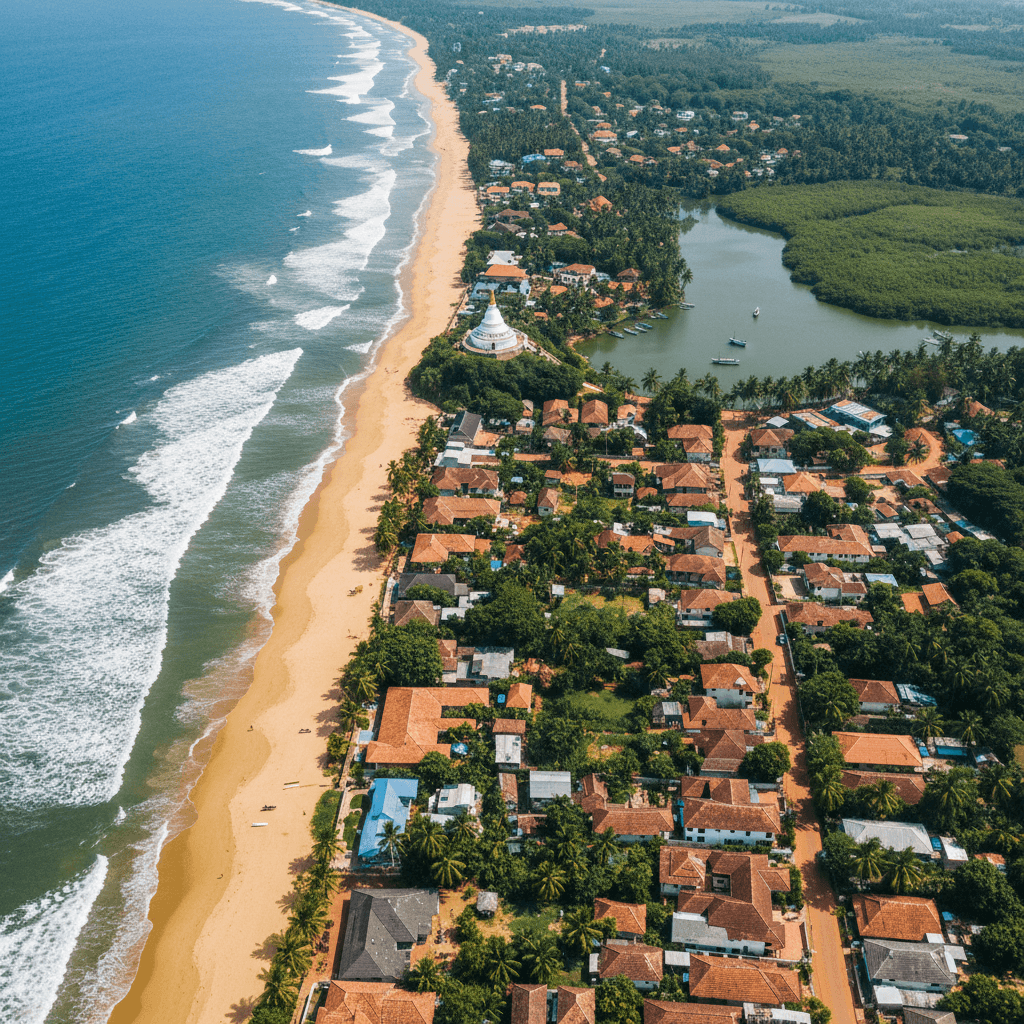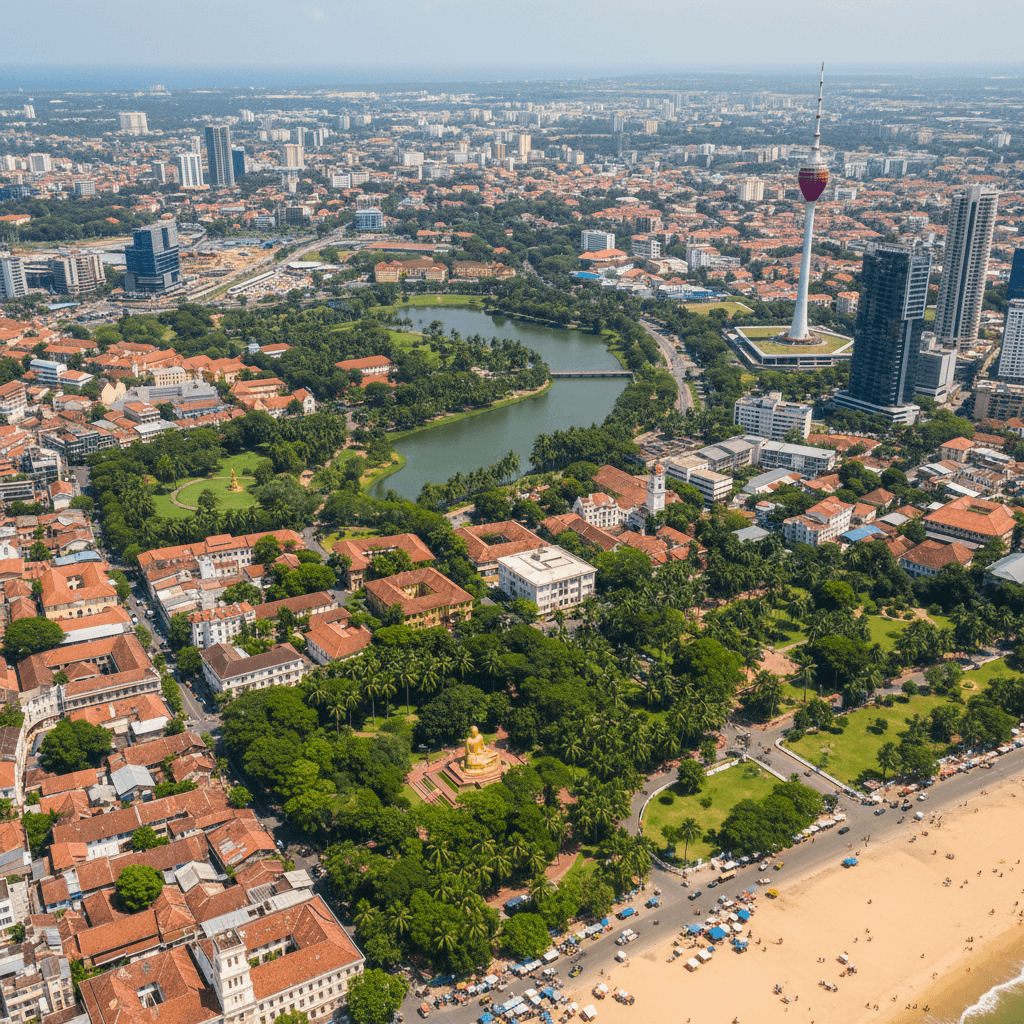
Colombo
🇱🇰 Sri Lanka
Colombo feels like three cities jammed together, colonial office blocks, noisy markets and a sleepy beach town that wakes up when the heat eases off. The air can smell like jasmine, diesel and fried kottu all at once and the traffic horn chorus gets old fast, honestly, but if you time your day right the city slows into something much more livable.
It’s not a polished nomad hub. That’s the point. You get low prices, friendly locals, decent coffee in the right neighborhoods and a growing remote-work scene, but you also get patchy internet outside good cafés, surprise power cuts now and then and air that can feel gritty by late afternoon.
What stands out most: the mix of British-era villas, Dutch canals, Buddhist temples, beach strips and street food stalls all sitting within a short tuk-tuk ride of each other. Weirdly, that jumble gives Colombo more personality than many Southeast Asian nomad stops that feel overbuilt for foreigners.
Budget reality
- Budget stay: $600 to $900 a month, if you’re doing hostels, street food and local transport.
- Mid-range: $1,000 to $1,800, with a private room, mixed dining and coworking.
- Comfortable: $2,000+, if you want an apartment, nicer restaurants and ride-hailing most days.
- Meals: $1 to $3 for kottu roti or rice and curry, $5 to $12 for mid-range spots.
- Rent: Around $400-600 citywide for furnished 1BR, though Cinnamon Gardens, Kollupitiya and Bambalapitiya climb much higher.
Cinnamon Gardens is the cleanest bet for nomads who want cafés, networking and tree-lined streets, while Bambalapitiya gives you sea air, a bit of noise and easier beach access, though traffic can crawl there like a bad joke. Kollupitiya is practical and central, Dehiwala and Rajagiriya are cheaper and frankly, if you’re watching your budget, inland areas make more sense than paying coastal premium rates.
Daily life: PickMe is the app most people end up using, coffee runs about $2 and a hot desk at a decent coworking space can cost around $277 a month. The upside is that Colombo can feel surprisingly easy between rush hours, with cold AC indoors, good hospitals and enough English spoken in expat-heavy areas to make errands less painful.
Still, the city asks for patience. The roads clog, tuk-tuk quotes drift upward if you look lost and the humidity sticks to your skin, so most long-term visitors settle into a rhythm, work early, eat late and leave the center before the evening crush turns every junction into a honking mess.
Colombo isn’t cheap in the way people expect Sri Lanka to be cheap. $1,000 to $1,800 a month is the sweet spot for most nomads who want a private room, a few cafe days and enough tuk-tuk rides to avoid melting on the pavement.
Stay lean and you can live on $600 to $900, but that usually means hostel or simple guesthouse living, street food and public transport, so don’t expect much space. Go more comfortable and the number jumps fast, because a decent apartment, regular rides and dinner in Kollupitiya add up quickly, honestly faster than you’d guess.
- Rent: A 1BR or studio runs about $294 citywide, with Cinnamon Gardens around $220 to $440 and expat-heavy pockets like Kollupitiya or Bambalapitiya often landing at $400 to $700.
- Cheaper areas: Dehiwala, Rajagiriya, Havelock and Narahenpita usually come in 20 to 30 percent lower, which, surprisingly, makes them better value if you don’t need to be in the center.
- Food: A street meal costs $1 to $3, mid-range restaurants sit around $5 to $12 and upscale places start near $15, with kottu roti and rice and curry everywhere.
- Coffee: Around $2 for a basic cup, though cafes in the nicer districts can push higher, especially if you’re ordering cold brew in air conditioning while the traffic horns go on outside.
- Transport: PickMe and Uber are usually $1 to $1.50 for about 5 km, airport transfers tend to hit $10 to $20 and scooters can be rented for $50 to $100 a month.
- Coworking: Hot desks can run about $100-200 a month, with places like Hatch Works and Spaces Works offering better Wi-Fi than most apartments, which is saying something.
That internet gap matters. Average home speeds can be patchy and when the power flickers or the connection drops, you’ll feel it, especially in older buildings with hot rooms, sticky air and the faint smell of exhaust drifting in from the road.
So where does the money go? Cinnamon Gardens feels polished and walkable, Bambalapitiya gives you beach access and food options and Kollupitiya is handy but noisy, while inland neighborhoods save cash if you can live with a longer ride and more honking.
My take is simple, spend on location if you’re here for a month or two, then cut costs on food and transport. Colombo can be very livable, just don’t pretend it’s dirt cheap once you factor in rent, rides and the occasional backup plan for bad Wi-Fi.
Colombo works best when you pick your base by lifestyle, not by map distance. The city looks compact on paper, then the traffic starts honking and everyone remembers why a 10 minute tuk ride can turn into 35. Still, some areas make life easier and some just make you curse in the heat.
For Nomads
Cinnamon Gardens is the cleanest bet if you want cafes, decent walkability and a steady stream of other remote workers. Rent stings, around $220 to $440 for a 1BR, but the leafy streets, embassy district feel and easier networking make it the default pick for people who want to stay a while, not just crash for a week.
- Best for: Coworking, meetups, café work
- Rent: Higher than average
- Vibe: Calm, expat-heavy, a little polished
Kollupitiya is more central and, frankly, more annoying. You get modern apartments, shopping, coworking access and faster access to the coast, but the air feels thicker here and the traffic noise never really stops. If you want convenience over serenity, it works.
For Expats
Bambalapitiya is the easy recommendation if you want beach access without feeling stranded. It’s lively, close to restaurants and the sea breeze helps when the humidity starts clinging to your skin, though the roads can be a mess at peak hours and prices aren’t exactly bargain basement.
- Best for: Solo expats, beach walks, dining out
- Rent: Often $400 to $700 for a 1BR
- Vibe: Social, coastal, busy
Dehiwala, Havelock and Narahenpita are better if you want to spend less and tolerate a slightly longer commute. You’ll find quieter streets, lower rents and fewer tourists, which, surprisingly, can feel like a relief after a few days in the center.
For Families
Families usually do better inland, where the streets are calmer and the apartments are bigger for the money. Narahenpita and parts of Dehiwala feel more practical than flashy and you’re less likely to deal with the constant beach-road chaos that makes evenings in the center feel oddly tiring.
- Best for: Schools, space, everyday routines
- Rent: Lower than Cinnamon Gardens or Kollupitiya
- Trade-off: Less nightlife, more commuting
If you’re staying long term, these areas make more sense than paying premium rent just to sit in traffic. The city’s nice side is easier to enjoy when you’re not hearing tuk-tuk horns outside your window at 7 a.m.
For Solo Travelers
Solo travelers should look hard at Bambalapitiya or Cinnamon Gardens, because both make it easy to meet people without feeling stuck in a party zone. Colombo’s streets can feel mellow one hour and chaotic the next, so being near cafes, restaurants and reliable PickMe rides matters more than saving a few dollars.
- Best for: Easy socializing, safe-ish late returns, simple logistics
- Skip: Deep outskirts if you don’t want long rides home
- Tip: Use PickMe, don’t haggle with every tuk tuk
Pettah is worth visiting in daylight for the markets, smells of spice and diesel and the whole sensory overload of it, but I wouldn’t base myself there. Pick a neighborhood with cafes, decent lighting and a short ride back, then enjoy the city without fighting it every day.
Colombo’s internet is decent in the places nomads actually use, but it’s not the kind of city where you can assume a café table equals a clean workday. Average speeds sit around 25-30 Mbps, which feels slow if you’re uploading heavy files, then coworking spaces jump way up, often past 300 Mbps, so the fix is usually simple, work somewhere built for it. Coffee shops do support laptop life, though the AC is sometimes blasting, the power sockets are fought over and the street noise, honking, scooter engines, kettle whistles, can get old fast.
Dialog has the best coverage for most people, especially if you’re moving around the city. Mobitel’s tourist packs are cheap, an easy pickup for short stays and eSIMs through Airalo or Nomad are handy if you want to land connected, honestly without dealing with airport kiosk chaos.
Best coworking spots
- Hatch Works: Best for meetups and networking, with weekly events and a day pass around LKR 2,000-2,500; check site for current monthly plans, so it’s social.
- Spaces Works: A solid hot desk option at about LKR 800 a day, good if you only need a few focused workdays.
- CoWork Sri Lanka: More affordable, though it’s out in Pannipitiya, so don’t pick it if you hate longer rides.
Where nomads actually settle
- Cinnamon Gardens: The safest bet for work and networking, with cafes, quieter streets and walkable pockets.
- Kollupitiya: Central and convenient, but busy, dusty and a bit draining if you’re sensitive to traffic fumes.
- Bambalapitiya: Good if you want the sea nearby and don’t mind some traffic.
- Dehiwala or Rajagiriya: Cheaper, less polished and better value if you’re staying longer.
Budget-wise, don’t expect Colombo to be dirt cheap once you add work habits. A hot desk can cost around $100-200 a month and a comfortable monthly setup with a private room, mixed dining and coworking usually lands between $1,000 and $1,800, which, surprisingly, still feels reasonable compared with many regional capitals. If the rain’s hammering the tin roofs and the humidity’s glued to your skin, a proper workspace starts looking less like a luxury and more like survival.
My take, skip random cafés for serious deadlines and book a coworking pass early. The city works best when you treat internet like a planned expense, because it usually is and when the power flickers or the Wi-Fi gets flaky, you’ll be glad you didn’t gamble on the cheapest seat in the room.
Colombo feels safe in the center, though you still need to keep your head up. The real annoyances are petty, tuk-tuk overcharges, road chaos and the occasional sketchy street after dark, not violent crime. Honestly, the traffic is the bigger threat, with buses cutting across lanes, horn blasts and scooters slipping through gaps that look too small to fit a cat.
Most nomads stay comfortable in Cinnamon Gardens, Kollupitiya and Bambalapitiya, where there’s more foot traffic, better lighting and easier access to cafés, pharmacies and hotels. Pettah is the place to be careful with at night and I’d skip wandering around there late unless you know exactly where you’re going, because the streets get tense, noisy and oddly deserted once the market energy dies down.
Medical care is decent. Durdans and other private hospitals handle routine and urgent care well and you’ll find pharmacies everywhere, so grabbing antibiotics, bandages or stomach meds isn’t hard. The heat and humidity, weirdly, do more day-to-day damage than crime, so expect dehydration, sunburn and the usual traveler stomach issues if you’re living on kottu, spice and iced coffee.
- Emergency numbers: Police 118 or 119.
- Ambulance: 110.
- Best safety app habit: Use PickMe for rides, then compare the fare before you accept, because tuk-tuk pricing can drift fast.
- Common risk: Road accidents, especially if you’re crossing wide roads near rush hour.
If you’re out late, stick to rideshare instead of haggling on the curb, since that’s when overcharging gets annoying and the streets feel louder, smellier and less predictable. PickMe usually works best, Uber is fine in the city core and frankly, a few extra rupees beats standing under a flickering streetlight while exhaust hangs in the air.
For healthcare, keep a small stash of basics, sunblock, rehydration salts, painkillers and any prescription meds you depend on. The city’s private clinics are fine for quick fixes, but if you need specialist care, book ahead, bring cash or a card that works locally and don’t assume every clinic will move quickly, because paperwork can be slow and the waiting rooms get warm fast.
Colombo is easiest when you keep your expectations loose and your routes flexible. The city sounds like horns, tuk-tuk engines and the odd train horn near the coast and the heat sits on your skin the second you step outside. Not walkable everywhere.
For daily movement, PickMe is the app most people end up using, because it covers bikes, tuk-tuks and sedans better than Uber, which is still around but feels more limited in Colombo. A short ride usually lands around $1 to $1.50 for 5 km, airport transfers often run $10 to $20 and honestly, that beats haggling with street tuk-tuks when you're tired and sweaty.
Public buses are cheap, loud and crowded, with that diesel smell hanging in the air, so they're fine if you're patient and don't mind being squeezed between school kids and office workers. Trains are good for day trips, especially down to Galle and scooter rentals run about $50 to $100 a month if you want more control, though traffic can be chaotic and the road rules feel loose.
Best Areas for Moving Around
- Cinnamon Gardens: Walkable, leafy and calm, with enough cafes and coworking nearby that you won't need a car every day.
- Bambalapitiya: Handy for beach access and food runs, though traffic gets ugly fast around peak hours.
- Kollupitiya: Central and practical, but noisy, polluted and frankly a bit stressful if you're stuck in it all day.
- Dehiwala: Cheaper and quieter, though you'll spend more time in transit if you're heading into the center often.
Most nomads keep their base in Cinnamon Gardens or Bambalapitiya, then use ride-hailing for everything else, because parking is a headache and the roads turn messy around rush hour. If you're staying near a coworking spot like Hatch Works or Spaces Works, you can shave off a lot of daily friction, which, surprisingly, matters more than rent once the humidity starts climbing.
Air pollution and traffic are the real downsides here. Don't plan a day around a four-kilometre trip, because Colombo can chew up time in a way that feels absurd and the wet-season roads get slick fast when the rain starts hammering down on tin roofs and bus shelters.
English gets you far in Colombo, especially in Cinnamon Gardens, Kollupitiya and Bambalapitiya, so most nomads don’t struggle day to day. Sinhala and Tamil are the main local languages, though and you’ll hear both in markets, taxis and admin offices, along with a lot of honking, roadside calls and shopkeepers chatting over the noise.
Speak a little and people warm up fast. “Ayubowan” works as a greeting, “Stuti” means thanks and even a messy attempt usually gets a smile, which, surprisingly, makes the whole exchange smoother. Honestly, locals appreciate the effort more than perfect grammar.
English: Widely used in business, hotels, coworking spaces and tourist-heavy neighborhoods, but don’t expect every driver or street vendor to be fluent. Local phrases: A few Sinhala words go a long way and they’re handy when your taxi app glitches or you’re ordering kottu under a fan that’s barely moving the hot air around.
Language apps help, but they won’t fix a bad signal or a rushed conversation at a bus stand. That said, Sri Lanka English Dictionary is useful for quick checks and if you’re staying a while, keep a note on your phone with names, addresses and your landlord’s number in plain English and Sinhala if possible.
- Best places for English: Coworking spaces, expat cafes, hotels and most offices in central Colombo.
- Where it gets patchier: Local buses, smaller family-run shops and neighborhoods farther inland.
- Best tactic: Speak slowly, keep sentences short and confirm prices before you get in the tuk-tuk.
- Useful apps: A dictionary app, translation app and offline maps, because mobile data can be flaky at the worst moments.
Communication in Colombo is usually friendly, but it isn’t always tidy. Drivers may overquote if you look lost and tuk-tuk bargaining is part of daily life, so don’t be shy about asking twice, then walking away if the number feels off.
Body language matters too. Remove your shoes when entering homes and temples, use your right hand for greetings or paying where possible and keep your tone calm, even when the traffic outside sounds like a metal storm. People notice that stuff.
Best advice: Learn the basics, use English where it works and don’t pretend you understood if you didn’t. A quick “can you repeat that?” saves time and in Colombo, that’s usually better than guessing.
Colombo is hot all year, plain and simple. Daytime temperatures sit around 28 to 30°C, but the humidity makes it feel closer to 33 to 36°C, so your shirt sticks to you the second you step outside and the air smells like exhaust, sea salt and kottu being chopped on a hot griddle.
January to April is the sweet spot. Rain drops off a bit, the skies stay clearer and you can actually walk around Cinnamon Gardens or Bambalapitiya without getting drenched by a sudden downpour, though the sun still hits hard and the traffic still honks like it has something personal against you.
May to September is the rougher stretch. The southwest monsoon brings heavy rain, sticky afternoons and the kind of grey skies that make a beach plan feel optimistic at best and honestly, if you hate damp clothes and soggy tuk-tuk seats, this is the season to avoid.
October and November can be messy too, with sharp bursts of rain that arrive fast, hammer rooftops, then leave puddles steaming in the heat. December settles down a bit, but the city can still feel wet and sulky. Not ideal.
Best time by traveler type
- For first-timers: January to April, less rain, easier sightseeing and better day trips to Galle or the coast.
- For beach time: January to March, the sea is usually calmer and Bambalapitiya feels more usable.
- For lower crowds: May to July, but expect rain, muddy shoes and more time indoors at a cafe or coworking space.
- For remote work: Any month works if you’re fine with AC and backup data, because internet is, honestly, more of a neighborhood issue than a season issue.
If you’re staying longer, plan around the weather instead of fighting it. Book a place with solid AC, check for backup power if you can and pick a neighborhood that suits the season, Cinnamon Gardens for calmer streets, Kollupitiya for convenience or Dehiwala if you want to save a bit and don’t mind being farther out.
My take? Come in the dry months if you can. Colombo in the rain has its own charm, wet palms, street drains gurgling, jasmine on the breeze, but the city’s traffic, humidity and sudden downpours get old quickly and you’ll appreciate every dry afternoon you can get.
Colombo is friendly, messy and a little loud. The first thing you notice is the honking, then the diesel smell, then the humidity that sticks to your shirt before breakfast. It’s safe in the central neighborhoods, but the traffic can be maddening and tuk-tuk drivers will try their luck if you look distracted.
For most nomads, the sweet spot is somewhere between convenience and sanity. Cinnamon Gardens is the polished choice, Bambalapitiya gives you beach access and a bit more energy and Kollupitiya keeps you close to coworking spots, though it also means more heat, more noise and more exhaust in your face when you step outside.
Money
- Budget stay: $600 to $900 a month, if you’re doing hostels, street food and local transport.
- Mid-range: $1,000 to $1,800, which covers a private room, mixed dining and a coworking pass.
- Comfortable: $2,000+, if you want an apartment, nicer restaurants and private rides.
- Rent: A 1BR or studio usually runs about $294 citywide, with Cinnamon Gardens around $220 to $440 and expat-heavy areas like Kollupitiya often higher.
- Food: Street kottu or rice and curry can be $1 to $3, a decent sit-down meal is $5 to $12 and coffee is usually around $2.
PickMe is the app most people actually use and honestly, it’s the one to get working on day one because local cards make life easier for rides and airport runs. Uber exists, but it’s more limited, so don’t count on it for everything.
For SIMs, Dialog is the safe bet, especially if you want decent coverage without fiddling around. You can grab one at the airport or just use an eSIM if you’d rather get online before you even leave baggage claim. Turned out, that saves a headache.
Practical Bits
- Internet: Coworking spaces can hit 300 Mbps or more, while cafes are fine for calls if you don’t mind the AC and espresso machine noise.
- Coworking: Hatch Works, Spaces Works and CoWork Sri Lanka are the names people keep mentioning.
- Cash and cards: Keep some cash handy, but use a local card or Wise for smoother day-to-day payments.
- Housing: Facebook groups are still where many apartments get found and direct negotiation usually gets you a better rate.
Day trips are easy. Galle is the classic one and the train is cheap enough that you can treat the ride like part of the outing, not just transport, while beach runs south are a good antidote to Colombo’s concrete and traffic fumes.
For manners, keep it simple, remove your shoes in homes and temples, use your right hand and say “Ayubowan” and “Stuti” if you want people to warm up fast. Small effort, big payoff.
Need visa and immigration info for Sri Lanka?
🇱🇰 View Sri Lanka Country GuideEasy Landing
Settle in, no stress
Monthly Budget Estimates
More cities in Sri Lanka
Negombo
🇱🇰 Sri Lanka
Hikkaduwa
🇱🇰 Sri Lanka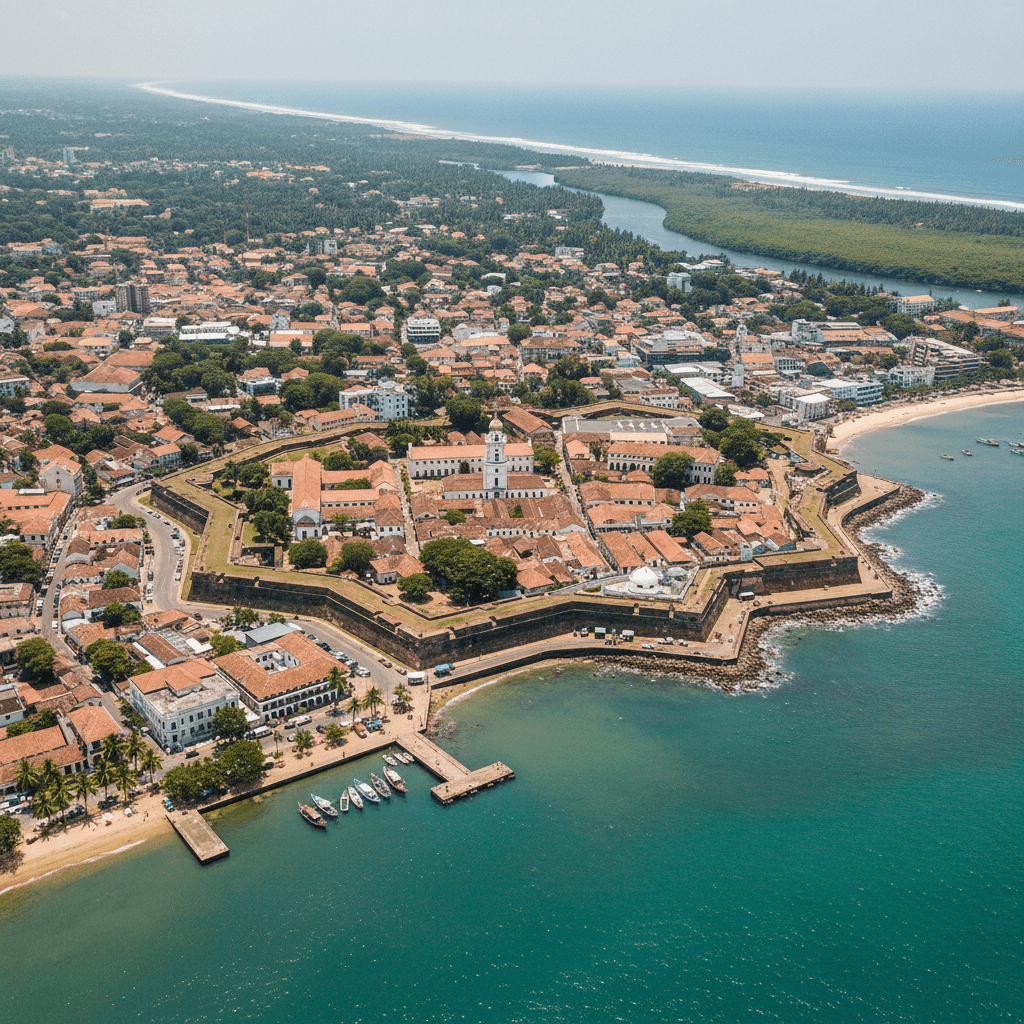
Galle
🇱🇰 Sri Lanka