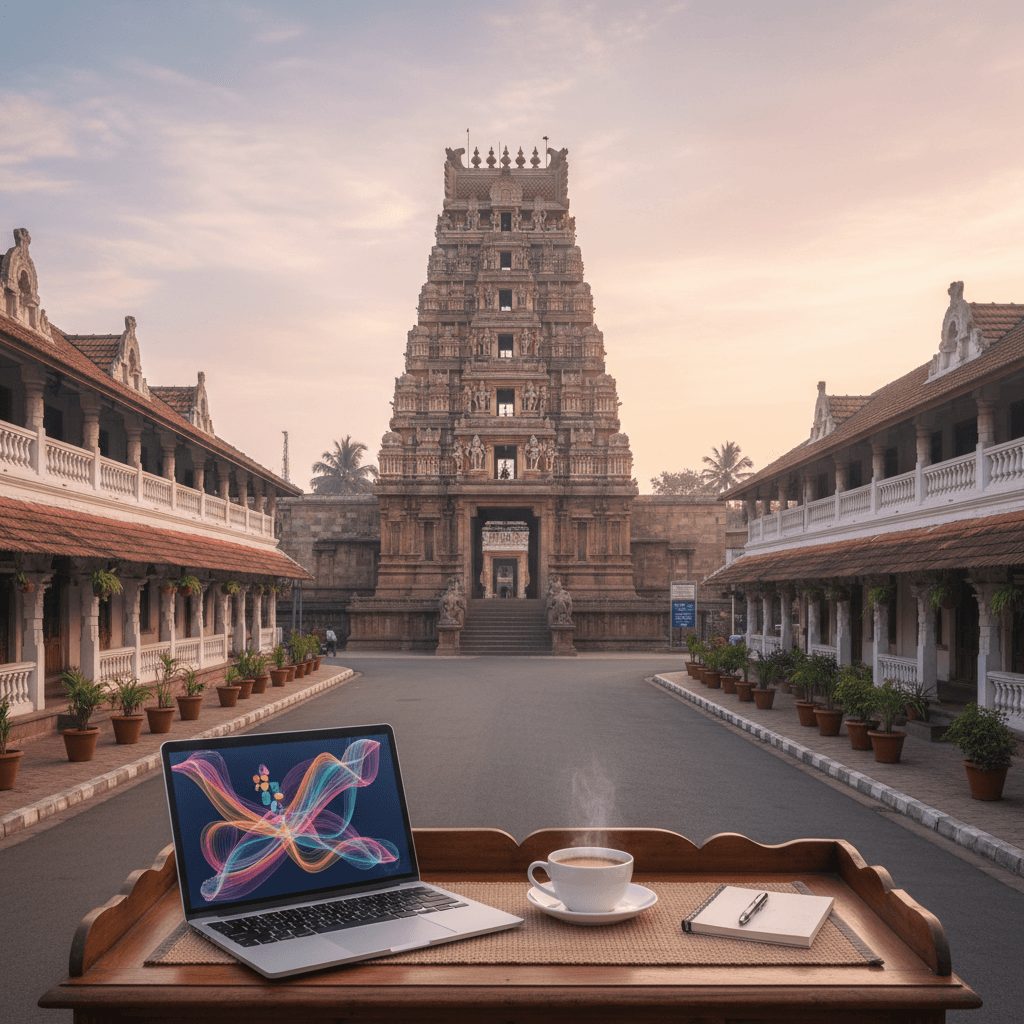
Coimbatore
🇮🇳 India
Coimbatore feels practical before it feels pretty. It’s Tamil, industrial and slightly dusty around the edges, with temple bells, textile mills and scooters honking through streets that move at a steady, workable pace. Not sleepy. Not frantic.
Most nomads land here for the basics and honestly, that’s the appeal: affordable rent, decent internet and a city that doesn’t chew through your budget just to exist. A one-bedroom in RS Puram can run around ₹10,500, Peelamedu is usually easier on the wallet and coworking starts near ₹4,050 a month, which feels fair until you compare it with the limited nightlife and the occasional afternoon of grimy air.
What it feels like
- Daily pace: Slower than Bengaluru, busier than a small town.
- Air: Often dry, sometimes gritty and AQI spikes can make a walk feel irritating.
- Sound: Constant horns, call-and-response shop chatter, temple announcements, ceiling fans whirring in cafes.
- Food scent: Filter coffee, jasmine, frying oil and exhaust all mix together.
The city’s personality comes through in the neighborhoods. RS Puram is the polished pick, with better cafes, safer-feeling streets and enough foot traffic that you won’t feel stranded after dark. Saibaba Colony is calmer and greener, Peelamedu works well if you want airport access and IT parks nearby and Gandhipuram is where the energy gets rougher, louder, cheaper and more useful if you’re chasing buses or street food.
That mix matters. Coimbatore isn’t trying to be trendy, which turns out to be a relief, because the city gives you textile heritage, a strong Tamil social rhythm and enough modern comfort to work without drama, then sends you up to Ooty or Valparai when the heat starts pressing down on your shoulders.
Good fit if you want
- Budget control: Monthly costs for one person are around $500-$800 and even a comfortable setup stays lower than in bigger Indian tech hubs.
- Reliable work setup: Average WiFi runs about 54 Mbps, with Airtel and Jio making it easy to get a solid mobile backup.
- Low-key social life: Cafes, temple routines, board game meetups and the occasional expat dinner, but don’t expect wild weekends.
- Easy escapes: Hill stations are close enough for a proper reset.
My take? Coimbatore works best for people who like a city with edges. It’s safe, practical and cheaper than it should be, but it can also feel a bit brown around the margins, especially in summer, when the heat sits on your skin and the traffic just keeps grinding.
Source 1 | Source 2
Coimbatore isn’t expensive, but it isn’t dirt cheap either. A solo nomad can live comfortably here on about $331 a month before any lifestyle creep and once you start mixing in cafes, ride-hailing and the occasional nice dinner, the number climbs fast. Not fancy. Just practical.
For a one-bedroom in RS Puram, expect around ₹10,500 a month, while the outer areas can drop closer to ₹6,500, which, honestly, is where the real savings show up. Food is cheap in the way South Indian cities can be cheap, a street-food meal runs about ₹100, a mid-range dinner for two is around ₹900 and a proper upscale night out costs more than you'd think once the service tax and extras start stacking up.
Typical monthly budgets
- Budget: $400 to $600, shared room, buses, lots of canteen food, very little room for random spending.
- Mid-range: $700 to $1,000, a decent 1BR in Peelamedu, café lunches, Ola rides and the odd coworking day.
- Comfortable: $1,200+, premium 1BR in RS Puram, coworking, nicer restaurants, less price-checking every bill.
Transport stays manageable, though the traffic can be maddening at peak hours, with buses around $0.22 a ride and monthly passes near $10.60. Autos and taxis are still affordable for short hops and an airport transfer by Ola usually lands somewhere around ₹500 to ₹800, which beats haggling with a driver while the horn noise rattles your head.
Coworking is reasonable too, with hot desks starting around ₹4,050 a month and bigger names like Regus in Avarampalayam charging more for a polished setup. Internet is solid for India, average WiFi clocks around 54 Mbps and unlimited 50 Mbps plans can run under $8 a month, so working from home usually isn’t the problem, the power bill and occasional heat are.
Neighborhood costs
- RS Puram: Best for café life and convenience, but rent gets pricey fast.
- Saibaba Colony: Quiet, green, family-friendly and usually easier on the wallet.
- Peelamedu: Handy for the airport and IT parks, with more affordable studios.
- Gandhipuram: Cheap eats and transport access, noisy and crowded, so don’t expect peace.
My take? If you want Coimbatore to feel easy, live slightly outside the center and spend on good food and occasional rides instead of paying RS Puram rent just for the address. The city’s cheap enough to breathe, but not so cheap that you can be careless and that’s probably why it works for so many nomads.
Nomads
RS Puram is the default pick and honestly, it earns it. You get the best cafe concentration, easy access to the CBD, safer streets and enough apartment stock that you’re not stuck in a grimy landlord maze, though rents jump fast once you want a clean 1BR.
Peelamedu is the smarter budget play if you care more about airport runs, IT parks and lower rent than polished streets, weirdly it can feel more practical than central Coimbatore once you start doing daily errands by Ola. Expect traffic, engine noise and the usual roadside dust, but the day-to-day convenience is solid.
- RS Puram: Best for cafes, walkability and a social nomad base.
- Peelamedu: Best for affordable studios and airport access.
- Coworking: Hot desks start around ₹4,050 a month, with Regus Avarampalayam at the pricier end.
Expats
Saibaba Colony is the calm, sensible choice. Streets feel safer, there are parks and schools nearby and the neighborhood has that lived-in, family-first rhythm, with temple bells, scooter horns and jasmine drifting through the evenings.
RS Puram works if you want more polished housing, better dining and quicker access to social life, but you’ll pay for it and the rent jump can sting if you’ve been converting everything into rupees. The area’s also one of the few where you can live fairly comfortably without feeling cut off from the city’s better restaurants and shops.
- Saibaba Colony: Best for safety, quieter streets and long stays.
- RS Puram: Best for cafes, shopping and higher-end apartments.
- Typical rent: About ₹10,500 for a central 1BR, more in premium pockets.
Families
Saibaba Colony is the easy recommendation, because it’s green, calmer and less chaotic than the core commercial areas. Kids can move around a bit more comfortably and you’re not dealing with the constant bus-horn churn you get near Gandhipuram, which, frankly, gets old fast.
Vadavalli is worth a look if you want more peace and a bit of breathing room, though it’s less convenient for frequent city-center trips. Families usually like the lower noise, the stronger residential feel and the fact that you’re still close enough to hospitals and schools without living in the middle of the mess.
- Saibaba Colony: Best overall for family life.
- Vadavalli: Best for quieter residential living.
- Healthcare: Royal Care, NG Hospital and Karpagam are all useful anchors.
Solo Travelers
Stay in Gandhipuram if you want cheap rooms, nonstop bus connections and street food within walking distance, but don’t expect peace. It’s loud, crowded and smells like frying oil, exhaust and rain on hot concrete after a storm, so it’s useful rather than lovely.
If you’ve got a bigger budget, RS Puram is the better solo base because it’s easier to meet people over coffee, get around at night and avoid the worst of the city’s chaos. Most travelers skip the noisy center after a night or two, then end up back in RS Puram or Peelamedu anyway.
- Gandhipuram: Best for budget stays and transit.
- RS Puram: Best for safer evenings and cafe time.
- Peelamedu: Good middle ground if you’re flying in and out.
Coimbatore’s internet is, honestly, better than a lot of people expect. In most central neighborhoods, you’ll get stable broadband, decent upload speeds and fewer random blackouts than you’d find in smaller Indian cities, though power cuts still happen and mobile data can wobble during heavy rain or peak traffic hours.
For nomads, that means you can work from a flat in RS Puram or Peelamedu without sweating every Zoom call. The average WiFi speed is around 13 Mbps, which is enough for video meetings, cloud work and the usual browser-heavy routine and unlimited plans around 50 Mbps can run roughly $7.61 a month, which is cheap enough that you won’t resent paying for a backup line.
Best coworking bets
- Regus, Avarampalayam: The most polished option, hot desks around ₹13,000-15,000 a month, with private offices costing more and the setup is clean, quiet and corporate enough if you need a serious workday.
- Local coworking spaces: Smaller spaces around the city run roughly ₹4,050 to ₹14,590 a month, usually with WiFi, meeting rooms and AC that’ll save you from the afternoon heat.
- Cafes: Plenty will let you sit for hours if you keep ordering, though the music, grinder noise and chair scraping can get annoying after a while.
RS Puram is the easiest area for cafe work, with better coffee, walkable streets and enough foot traffic that you don’t feel stranded after sunset. Peelamedu is the practical pick if you want airport access and IT park convenience, while Gandhipuram is cheaper but loud, chaotic and frankly not where you want to sit with a laptop all day.
Most nomads do fine with a Jio or Airtel SIM as backup, especially because 5G plans are affordable and easy to buy at the airport or in any neighborhood mobile shop. The signal is usually solid in town, then drops the second you head out toward hillier edges or get stuck in a concrete-heavy block, which, surprisingly, still happens in newer apartments.
If you’re staying a month or longer, aim for a flat with fiber internet, a backup hotspot and a generator if possible. That combo matters. The city’s work setup is decent, but when the power flickers and the street outside is full of honking buses, temple calls and the smell of frying oil drifting in from the corner stall, you’ll be glad you planned ahead.
Coimbatore feels pretty safe by Indian city standards, especially in RS Puram and Saibaba Colony, where you’ll see more families, cleaner streets and less late-night chaos. It isn’t sleepy, though. Traffic honks, scooter engines and roadside tea stalls keep the city moving and if you’re out late, stick to main roads and skip dark shortcuts.
Most solo travelers get by fine with normal street smarts, modest dress and a little awareness around busier junctions like Gandhipuram. Scams do pop up, usually in the dull, transactional way cities do, overcharged autos, fuzzy “special” fares or people offering help you didn’t ask for, so keep rides on Ola or Uber and agree on prices before you get in.
Where to stay if safety matters
- RS Puram: One of the safest-feeling areas, good cafes, steady foot traffic and easier late-evening movement.
- Saibaba Colony: Quiet, family-heavy and low on street drama, though it’s less convenient for spontaneous nightlife.
- Peelamedu: Handy for airport access and IT parks, but traffic can be annoying, honestly, especially at peak hours.
Healthcare is solid. Royal Care Super Speciality, NG Hospital and Karpagam Hospital are the names most expats and long-stay visitors mention first and several are empanelled for major insurance schemes, which, surprisingly, makes paperwork a little less painful if you need treatment. Pharmacies are easy to find and emergency services use 108, so save that number before you need it.
The city’s air can be rough, weirdly rough on some days and if you’ve got asthma or sinus issues, that’s the bigger day-to-day health problem than crime. Summers are hot, the humidity clings to your skin and when monsoon rain hits tin roofs at night, it can be soothing, then suddenly the streets flood and everything smells like wet dust and exhaust.
- Emergency: Dial 108 for ambulances.
- Pharmacies: Common across central neighborhoods, usually open late enough for basic meds.
- Best habit: Carry water, sunscreen and a mask on bad AQI days.
If you’re staying longer, pick housing with decent ventilation and a backup water source, because power cuts and dusty air are more annoying than dangerous, but they do wear you down. Night walks are fine in well-lit pockets, still, don’t wander into empty lanes just to save five minutes, that’s how small problems become stupid ones.
Coimbatore is easy to get around if you don’t expect Chennai or Bengaluru levels of chaos. The roads still honk, scooters still weave and buses still lurch around corners, but the city moves at a steadier pace and that makes daily travel less draining than in bigger metros.
Ride-hailing works well. Ola and Uber are the simplest choice for most trips, especially from Coimbatore Airport, where pickup is right outside arrivals. Airport rides into town usually run about ₹500 to ₹800 and for short hops, autos and taxis are still cheap enough that you won’t feel cheated every single time.
Budget-friendly, but not painless. Public buses cost around ₹10-20 per ride (~$0.12-0.24); monthly passes around ₹1000 (~$12), which sounds great until you’re standing under a hot bus stand roof with diesel fumes and a crowd pressing in around you. Autos are handy for mid-distance trips, though drivers sometimes quote higher fares to newcomers, so ask the price first and don’t be shy about walking away.
Best Ways to Move Around
- Ola/Uber: Best for airport runs, late evenings and cross-town trips, especially when you don’t want to bargain in the heat.
- City buses: Cheapest option, useful if you’re on a tight budget, though they can be packed and slow in traffic.
- Autos: Good for short distances, but agree on the fare before you get in.
- Bike and scooter rentals: Handy for flexible errands, especially if you’re staying near Peelamedu or RS Puram.
RS Puram is the easiest area to live in. It’s walkable in parts, the pavements are better than most of the city and you can actually hop between cafés, pharmacies and shops without planning your whole day around transport. Peelamedu is practical if you’re near the airport or IT parks, though traffic there can be maddening at peak hours and Gandhipuram is central but noisy, crowded and full of bus fumes.
For day-to-day life, most nomads end up using a mix of walking, autos and app rides, because the city’s size makes that realistic. The heat can hit you hard in the afternoon, the air sometimes feels gritty and after a long day in traffic, even a short ride back to your place feels like a win.
Language & Communication
Tamil is the default here and you’ll hear it everywhere, in tea stalls, apartment lobbies, temples and on the kind of crowded streets where scooters buzz past and someone’s ringtone cuts through the honking. English is widely understood in RS Puram, Peelamedu and most business settings, so you can get by without Tamil, but the moment you step into a smaller shop or deal with a landlord, a few local words help a lot.
Vanakkam means hello and Nandri means thank you, which, surprisingly, goes a long way. People usually warm up fast if you make even a small effort and honestly, that matters more than perfect grammar, because Coimbatore can feel formal at first, then suddenly quite friendly once someone knows you’re trying.
Google Translate is handy for signs, bills and quick back-and-forths, but don’t rely on it for anything important, especially if you’re talking rent, delivery instructions or hospital details. The city’s English is practical rather than polished, with a mix of Tamil-accented English and the occasional Tamil word dropped into the middle of an English sentence, which can throw you off for a second.
How People Communicate
- In cafes and coworking spaces: English is usually fine, especially at places around RS Puram, Peelamedu and Lakshmi Mills.
- With drivers and shopkeepers: Short English works, though simple Tamil greetings make things smoother and less awkward.
- On calls and apps: WhatsApp is king and most local coordination happens there, not by email.
- For everyday help: PhonePe, GPay and UPI payments are common, so screenshotting payments is smart when receipts get messy.
The city’s pace affects communication too. People usually don’t rush you, but they also won’t always spell things out, so ask twice if directions matter and don’t assume a vague “near the temple” is good enough. Traffic noise, pressure cookers hissing from open kitchens and the smell of filter coffee in the morning make the whole place feel lived-in, not staged for visitors.
For expats and digital nomads, the sweet spot is simple, use English for most things, learn a dozen Tamil words and keep your messages direct. That’s the real formula. If you’re polite, patient and a little informal, Coimbatore responds well, if you’re overly formal or overly loud, people tend to shut down fast.
Coimbatore doesn’t do dramatic seasons, it runs on heat, dust and a few months of decent relief. Daytime temperatures sit roughly between 19 and 36°C through the year and the city feels best when the mornings are cool, the evenings smell faintly of jasmine and exhaust and you can actually walk a few blocks without sweating through your shirt.
Best window: October to March. That’s when most nomads breathe easiest, because the weather is drier, the skies stay clearer and you’re not dealing with the sticky, heavy air that hangs around in summer. Honestly, this is the time to book if you want to work from cafés in RS Puram, take weekend drives toward Ooty or just sit through a power cut without cursing the heat.
Summer, roughly April to June, is the bad patch. It gets brutally hot, with highs around 35 to 36°C and the heat sits on the skin like a wet blanket, then the afternoon traffic starts honking harder and the roads feel even more tiring. The monsoon from July to September cools things down a bit, but it brings mess too, with sudden rain, flooded patches in low-lying areas and that damp smell that gets into clothes and bags.
Season-by-season
- October to March: Best overall, dry, comfortable and easiest for walking, café work and day trips.
- April to June: Hottest stretch, afternoon heat can be miserable, plan indoor work and late outings.
- July to September: Rainy and humid, some weeks are fine, then a storm dumps water and the streets turn slick.
If you’re choosing neighborhoods around the weather, RS Puram and Saibaba Colony feel easiest for day-to-day life because you’ve got cafés, decent roads and less chaos than Gandhipuram, which gets noisy and hot fast. Peelamedu works if you want airport access and don’t mind traffic, though the summer glare there can be annoying, frankly, when you’re waiting for an auto at noon.
Pack light cotton clothes, a small umbrella and good sandals, because your shoes will pick up dust in dry months and splashback in the rains. Air quality can also dip, weirdly enough, even when the sky looks clear, so if you’re sensitive, keep an eye on the AQI and don’t be shy about staying inside on bad days.
My take: come between November and February if you can. The city still has heat, sure, but it’s manageable and you’ll actually enjoy the food stalls, temple evenings and train or road trips to the hills instead of just melting in place.
Coimbatore feels practical first, polished second. The city runs on textile money, temple routines and office traffic, so you’ll get honking buses, chai steam, exhaust and the odd whiff of jasmine outside a shrine, then a quiet evening that arrives earlier than it does in Bengaluru.
Budget-wise, it’s kinder than most Indian tech cities. A solo month can land around $331 all in, with basic rent, food, buses and internet, though a nicer setup in RS Puram or Peelamedu pushes things up fast. Street food starts near ₹100 and a decent mid-range dinner for two is about ₹900, which, honestly, is where the city still feels good value.
- Budget: $400 to $600, shared room, buses, street food.
- Mid-range: $700 to $1,000, 1BR in Peelamedu, Ola rides, cafe lunches.
- Comfortable: $1,200+, RS Puram apartment, coworking, better dining.
For neighborhoods, RS Puram is the easy pick if you want cafes, cleaner streets and a social crowd, though rent can sting. Saibaba Colony feels calmer and greener, Peelamedu makes sense if you want airport access and IT parks and Gandhipuram is loud, crowded and useful if you like being in the middle of everything.
Where to base yourself
- RS Puram: Best for nomads who want cafes, walkability and a safer feel.
- Saibaba Colony: Good for longer stays, families and quieter evenings.
- Peelamedu: Handy for airport runs and office life, traffic is the trade-off.
- Gandhipuram: Cheap, central, noisy and often jammed.
Internet is, surprisingly, solid enough for remote work, average speeds sit around 54 Mbps and Airtel or Jio SIMs are easy to buy at the airport or in town. Coworking starts around ₹4,050 a month for a hot desk, with places like Regus Avarampalayam charging more for a polished setup and cafés will usually let you sit with a laptop if you keep ordering.
Safety is decent by Indian city standards, especially in RS Puram and Saibaba Colony, still, don’t wander down dark lanes half asleep after dinner. Healthcare is straightforward, with good private hospitals like Royal Care and NG nearby, pharmacies everywhere and 108 for emergencies, which, weirdly, is one of the more efficient systems here.
Use GPay or PhonePe, carry cash for small vendors and don’t waste time hunting for ATMs, there are plenty. Apartments are easiest to find through Housing.com or NoBroker and if you need a break, day trips to Pollachi, Valparai or Ooty are the move, because Coimbatore can feel flat after a while and the hills fix that fast.
Customs are simple. Take off your shoes in homes and temples, eat with your right hand when you can and assume vegetarian food will be the default, not the exception.
Need visa and immigration info for India?
🇮🇳 View India Country GuideEasy Landing
Settle in, no stress