Cluj-Napoca
🇷🇴 Romania
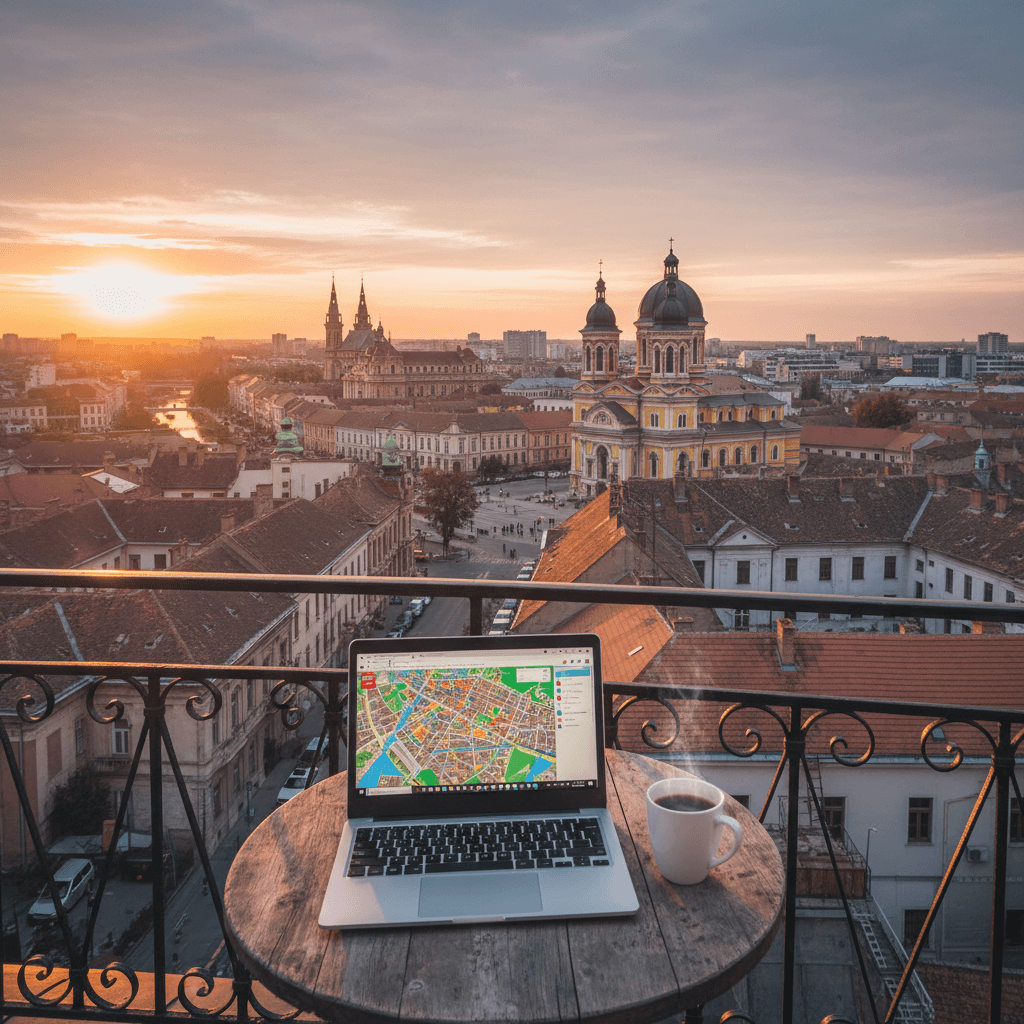
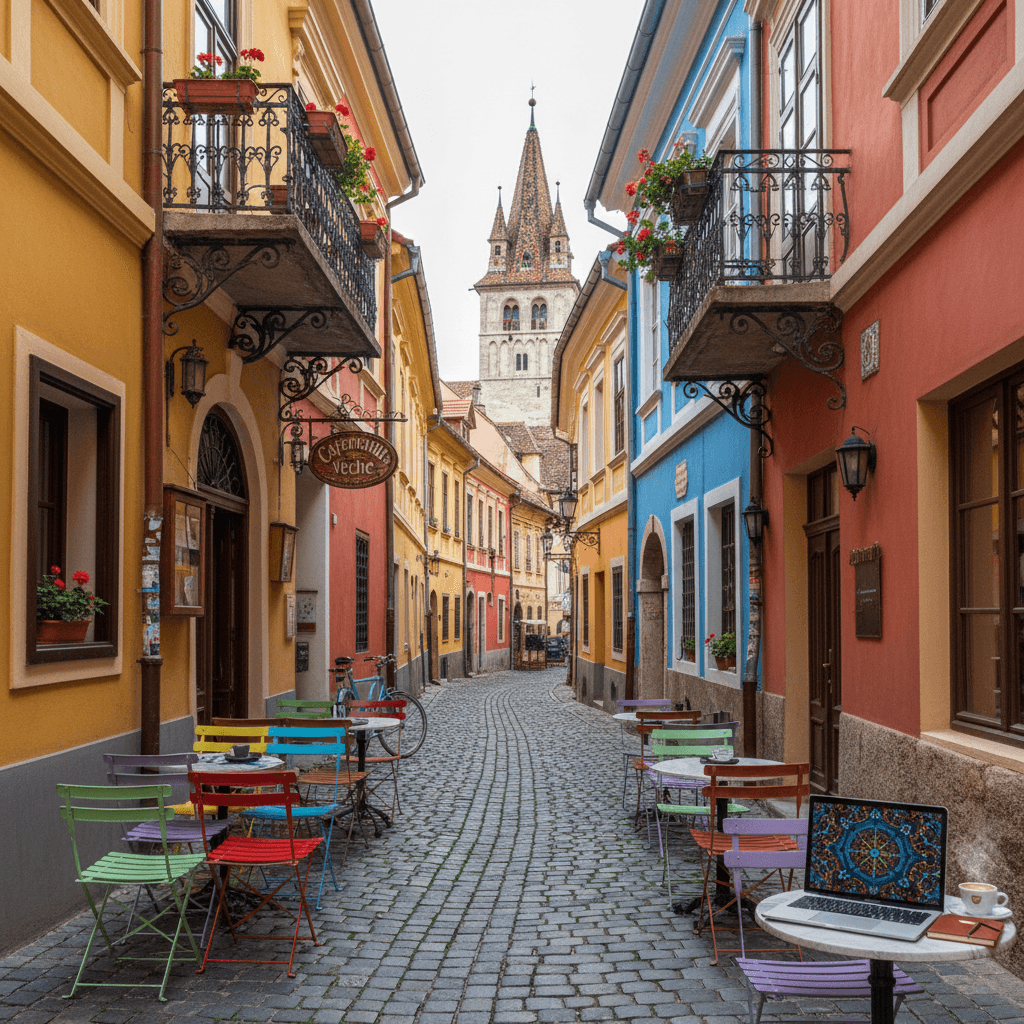
Cluj-Napoca is, honestly, a city that sneaks up on you. You arrive expecting a mid-sized Eastern European town and find something that feels genuinely alive, a place where university students argue philosophy in courtyards, startup founders take espresso breaks at noon and the smell of fresh kürtőskalács drifts past Roman ruins on the same block.
They call it the "Silicon Valley of Romania," which sounds like marketing until you actually get here and see it. The tech scene is real, the coworking spaces are packed and the English fluency among anyone under 35 is, turns out, high enough that you'll rarely feel lost. That said, don't expect a polished expat bubble. Cluj still has rough edges and that's partly what makes it interesting.
The vibe sits somewhere between intellectual and unpretentious. Piața Unirii anchors the center, all stone facades and café terraces and on warm evenings the whole square hums with conversation and the faint thud of bass from a bar around the corner. Winters are a different story. January is grey, cold and occasionally miserable, the kind of cold that seeps through your jacket while you're waiting for a tram that's running ten minutes late.
Most nomads land in Centru first and it makes sense. Everything's walkable, the cafés have reliable WiFi and you can go from a morning work session to a rooftop bar in about four minutes. Expats who stay longer tend to migrate toward Andrei Mureșanu, it's quieter, greener and your downstairs neighbor isn't a club.
What separates Cluj from Bucharest, Kraków or Tbilisi is the scale. It's small enough that you'll start recognizing faces within a week, big enough that there's always something happening. The electronic music festivals draw serious crowds from across Europe, the food scene punches above its weight and the day trips, Turda Salt Mine, the village of Rimetea, are genuinely worth the effort.
The frustrations are real too. Bureaucracy moves slowly, direct flights are limited and apartment hunting on OLX.ro without Romanian is an exercise in patience. But most people who come for a month end up staying three, that's not an accident, it's just what Cluj does.
Cluj isn't cheap by Romanian standards, but it's still genuinely affordable compared to Western Europe and most nomads find the math works out well once they're actually here. A single person spending carefully can get by on around 3,000 to 4,000 RON a month (roughly $650 to $870 USD) before rent, covering groceries, local transport and the occasional meal out.
Rent is, honestly, the biggest variable. A studio in Centru runs 1,650 to 2,400 RON a month, a one-bedroom closer to 2,000 to 3,200 RON and you'll feel every leu of that if you're in a newer building near Piața Unirii. Pull back to Andrei Mureșanu or Europa and you'll drop several hundred RON without losing much comfort, the trade-off is more bus rides and fewer walkable coffee shops.
Food costs are where Cluj, turns out, really earns its reputation. A street lunch of sarmale or a grilled plate runs 35 to 50 RON, you can eat well without thinking about it. A sit-down dinner for two at a mid-range spot lands around 180 to 255 RON, upscale climbs past 400 RON, but that's a special occasion number, not a daily reality.
- Budget tier (3,000 to 4,000 RON/month): Shared housing, home cooking most nights, CTP monthly pass at 109 RON, minimal extras
- Mid-range (4,000 to 6,000 RON/month): One-bedroom outside center, coworking a few days a week, regular dining out, a gym membership
- Comfortable (7,000+ RON/month): City center apartment, upscale restaurants, fitness, taxis instead of buses
Transport is cheap. Full stop. The CTP monthly pass covers buses, trams and trolleybuses across the city for 109 RON, Bolt and Uber fill the gaps for late nights or bad weather at 20 to 40 RON for most cross-city rides. A Digi or Orange SIM with 10GB or more runs around 39 RON a month, broadband at home is roughly 44 RON with speeds that are, weirdly, often faster than what you'd get in a major Western capital.
The honest bottom line: a nomad living comfortably but not extravagantly, with a decent apartment and a social life, is looking at 5,500 to 7,000 RON a month all in. That's a fair deal for what Cluj actually delivers.
Cluj's neighborhoods are pretty distinct from each other, so where you land matters a lot. Pick wrong and you'll spend half your time commuting to the parts of the city that actually have life in them.
For Digital Nomads: Centru
This is the obvious choice and honestly, it earns that reputation. Centru puts you within walking distance of the best cafes, coworking spots and the kind of street-level energy that makes working remotely feel less like isolation. You'll smell fresh pastry from the bakeries on Eroilor Avenue before you've even decided where to open your laptop.
Rent runs higher, 1,650 to 2,400 RON for a studio and the weekend noise from nearby bars bleeds into Saturday mornings. Still, most nomads find the tradeoff completely worth it, especially since English is easy to get by with among the younger crowd and cafe staff.
- Best for: Walkability, cafe culture, nightlife access
- Rent (studio): 1,650,2,400 RON/month
- Watch out for: Street noise on weekends, higher prices than anywhere else in the city
For Expats: Andrei Mureșanu
Quieter, greener and weirdly charming in a way that takes a few weeks to appreciate. Andrei Mureșanu is where expats tend to settle once they've done their time in Centru and want actual trees and low traffic. It's a short Bolt ride from the center, it's not a different world.
- Best for: Long-term living, peace, green streets
- Rent (1BR): 2,000,3,200 RON/month
- Watch out for: You'll need apps or a bike for most errands
For Families: Europa and Bună Ziua
Modern apartment blocks, parking that actually exists and schools nearby make these southern districts the practical pick for families. Less atmosphere, turns out, isn't always a bad thing when you've got kids to get to school by 8am.
- Best for: Schools, space, modern infrastructure
- Rent (1BR): 2,000,2,500 RON/month outside center
- Watch out for: Nightlife is basically nonexistent
Skip: Pata Rât and Someșeni Outskirts
Someșeni has affordable rents, but the outskirts require caution after dark and Pata Rât is frankly a non-starter for anyone not specifically based there for a reason. Neither area has the amenities to justify the savings.
Cluj's internet infrastructure is, honestly, one of its strongest selling points. Speeds typically land between 60 and 300 Mbps on fixed broadband and most cafes and coworking spaces keep up comfortably, so video calls and large uploads aren't the headache they are in other Eastern European cities. Fixed broadband runs around 44 RON a month, which is almost offensively cheap.
The coworking scene is smaller than Bucharest's but tighter, turns out and most nomads prefer it that way. Spaces listed through workin.space give you the clearest picture of what's available: flexible hot desks typically run 1200 RON a month or more, with dedicated desks costing a bit more. Spacesworks handles the more polished, serviced-office end of things if you need a proper address or meeting rooms that don't smell like someone's kitchen.
Cafes are genuinely workable here. The Centru neighborhood has a solid cluster of them and the culture around laptops at tables is relaxed, nobody's going to hover over you after 90 minutes. Wifi is usually fast enough, though you'll hit the occasional dead spot, don't count on cafe internet for anything mission-critical without a backup.
That backup should be a local SIM. Orange, Vodafone and Digi all offer plans starting around 39 RON for 10GB or more and you can pick one up at any of their storefronts within a day of arriving. Digi is, weirdly, the cheapest and often the fastest for data, expats recommend grabbing one even if you've got a roaming plan.
- Typical broadband speed: 60 to 300 Mbps
- Fixed broadband cost: ~44 RON/month
- Coworking (hot desk): 1200+ RON/month
- Local SIM with data: from ~39 RON
- Main providers: Orange, Vodafone, Digi
One honest caveat: coworking options are limited compared to a major capital, so if you need a huge variety of spaces or 24-hour access, you'll feel the ceiling quickly. Cluj works best for nomads who don't mind settling into one or two spots, it's that kind of city anyway and the infrastructure absolutely supports serious remote work once you've found your rhythm.
Cluj is, honestly, one of the safer mid-sized cities in Eastern Europe. The center scores around 78 out of 100 on safety indices, violent crime is rare and most nomads and expats walk home from bars at 2am without a second thought. That said, a few spots deserve real caution: Pata Rât on the outskirts, Muncii Boulevard late at night and the Someșeni area after dark aren't places you want to be wandering alone, especially if you don't know the city yet.
Petty theft happens, it's a city. Keep your bag in front of you on crowded trams, don't leave a laptop visible in a parked car and you'll be fine. The bigger annoyance, turns out, is the occasional aggressive drunk near the main square on weekend nights, though it rarely escalates beyond loud posturing.
Healthcare is where Cluj genuinely surprises people. The Regional Emergency Hospital (Spitalul Clinic Județean de Urgență) is the main public facility and it's competent, though the waiting rooms are chaotic, understaffed and smell like every public hospital you've ever avoided. For anything non-emergency, expats almost universally skip the public system and pay out of pocket at private clinics. Medicover and Regina Maria both have Cluj locations, English-speaking doctors and appointments that actually happen on time. A GP consultation runs roughly 200 to 400 RON, specialist visits a bit more.
Pharmacies are everywhere. Seriously, everywhere. Catena and Sensiblu chains dot every major street, they're open late and pharmacists here will give you real advice rather than just pointing at a shelf. For minor issues, most nomads skip the doctor entirely and just talk to the pharmacist, which works more often than it probably should.
- Emergency number: 112 (police, ambulance, fire)
- Public hospital: Regional Emergency Hospital, free with EHIC card for EU citizens
- Private clinics: Medicover, Regina Maria; GP visits 200 to 400 RON
- Pharmacies: Catena, Sensiblu; widespread, late hours
- Areas to avoid at night: Pata Rât, Muncii Boulevard, Someșeni
Travel insurance is worth carrying, not because Cluj is dangerous, but because navigating Romanian public healthcare paperwork without Romanian is its own special kind of misery.
Cluj's center is, honestly, one of the more walkable city cores in Eastern Europe, compact enough that you can cross it on foot in under 20 minutes. Most nomads staying in Centru don't bother with transport at all during the week, they just walk everywhere. That changes fast once you're based further out.
For everything beyond walking distance, CTP runs the bus, tram and trolleybus network and it's genuinely reliable by Romanian standards. A single ride costs 3.5 RON, a monthly pass runs 108-258 RON, which is absurdly cheap when you do the math. Tap-to-pay works at most validators, though the machines can be temperamental, keep a few coins handy just in case.
Ride-hailing is where Cluj gets comfortable. Uber, Bolt and Clever Taxi all operate here, airport runs typically land between 20 and 40 RON depending on traffic and time of day, turns out Bolt tends to be the cheapest option most of the time. Drivers are generally fine, the cars are clean and wait times in the center rarely stretch past five minutes.
Cycling is possible, Nextbike has docking stations scattered around the city, but Cluj's hills and the occasional aggressive driver make it a fair-weather hobby rather than a daily commute strategy. Expats recommend it for leisure on weekends, not for hauling a laptop across town in November.
Renting a car is worth considering if you're planning day trips, the Turda Salt Mine and Rimetea are both under an hour away and public connections are awkward. Parking in Centru, though, is a genuine headache, the streets are narrow, spots are scarce and the fines are real.
- Single CTP ride: 3.5 RON
- Monthly transit pass: 108-258 RON depending on lines and registration
- Airport transfer (Uber/Bolt): 20 to 40 RON
- Nextbike: Available city-wide, best for casual use
- Ride-hailing apps: Uber, Bolt, Clever Taxi
The honest summary: if you're in Centru, you'll barely need transport at all, the city's small enough that your legs handle most of it. Anywhere else, Bolt is your best friend, the CTP pass is your budget backup and a rental car is only worth the stress if you're leaving the city limits.
Romanian is the official language and you'll hear it everywhere, from the market vendors at Piața Unirii to the tram announcements on the CTP network. Hungarian is spoken too, particularly among older residents, a holdover from Transylvania's layered history. Don't stress about either, though.
Cluj's tech scene and university crowd mean English proficiency is, honestly, higher here than almost anywhere else in Romania. Most people under 40 in the center will switch to English without hesitation and in neighborhoods like Centru, you can get through an entire day without needing a word of Romanian. Coworking spaces, cafes and most restaurants have English menus and English-speaking staff, it's basically the default in those settings.
That said, venture outside the center and things shift. Older locals in Someșeni or the outer residential blocks may not speak much English and pharmacies, government offices and landlords on OLX can get tricky fast. Google Translate handles most of it, turns out the camera translation feature is genuinely useful for menus and street signs written in older fonts.
A handful of Romanian phrases will get you surprisingly far and locals genuinely appreciate the effort, even a clumsy attempt at pronunciation tends to land warmly.
- Bună / Bună ziua: Hello / Good day (use the longer version in formal settings)
- Mulțumesc: Thank you
- Cât costă?: How much does it cost?
- Un / O, vă rog: One, please (useful for ordering at counters)
- Nu înțeleg: I don't understand
- Vorbiți engleză?: Do you speak English?
For longer stays, the Tandem app has an active Cluj community, frankly one of the better ones in Eastern Europe for a city this size and it's a solid way to meet locals while picking up the language. WhatsApp is how everyone communicates here, so get comfortable with it early.
Bureaucratic interactions, like registering an address or dealing with utilities, are weirdly resistant to English even in 2025. Bring a Romanian-speaking friend or hire a local fixer for anything official. That's not pessimism, that's just the reality.
Cluj gets four proper seasons and they're not all equally pleasant. Summers are warm and genuinely enjoyable, winters are cold and grey in a way that wears on you after a few weeks and spring and autumn are, honestly, the sweet spots most long-term visitors don't hear enough about.
July sits around 27°C, which is comfortable rather than punishing. You'll get the occasional thunderstorm rolling in fast off the hills, that particular smell of rain hitting dry pavement, then it's gone and the evening cools down nicely. Outdoor terraces fill up, festivals run back to back and the city feels alive in a way that's hard to replicate in other months.
January drops to around -3°C, sometimes colder and the wind through Unirii Square has a bite to it that catches you off guard. It's not brutal by Eastern European standards, it's still unpleasant if you weren't expecting it. Heating in older apartments can be inconsistent, turns out this is a common complaint among nomads who arrived in November thinking they'd tough it out.
May is the rainiest month, around 12 days of precipitation, though the rain tends to come in short bursts rather than all-day drizzle. February is the driest. Neither is a dealbreaker, but it's useful to know before you pack.
Best time to visit: May through September. Here's the breakdown by season:
- Spring (April to May): Mild, green and frankly underrated. The city shakes off winter, cafe terraces reopen and you're not competing with summer crowds yet.
- Summer (June to August): Peak festival season, Electric Castle draws tens of thousands in July, the energy is high and the days are long.
- Autumn (September to October): Cooler, quieter and weirdly beautiful with the tree-lined streets around Andrei Mureșanu turning orange. A strong second choice.
- Winter (November to March): Skip it unless you're here for the cost savings or a specific reason. The grey skies and short days aren't Cluj's best look.
One thing most travelers don't factor in: Cluj's festival calendar should drive your timing as much as the weather does. Electric Castle, TIFF film festival and Untold all land between June and August, accommodation prices spike accordingly, book early or arrive before June.
Get a local SIM card first thing. Orange and Vodafone both have stores in the center, starter kits run 20-40 RON and you'll get a usable data plan for around 39 RON a month with 10GB or more. Digi is the cheapest option, turns out, though coverage can be spottier outside the city core.
For banking, don't bother trying to set up a Romanian account unless you're staying long-term, the paperwork is, honestly, a headache that isn't worth it for a short stint. Revolut and N26 both work seamlessly here, ATMs are everywhere and most mid-range restaurants and shops accept cards without blinking.
Finding an apartment takes a little patience. OLX.ro and Imobiliare.ro are the main listing sites and most landlords in the center speak enough English to negotiate. Studios in Centru go for 1,650-2,400 RON a month, you'll pay less if you're willing to be in Andrei Mureșanu or Europa, which are quieter anyway.
Transport is easy and cheap. The CTP bus and tram network covers most of the city, a monthly pass is 108-258 RON and single rides are 3.5 RON. For late nights or awkward routes, Bolt and Uber are both active here, airport runs typically cost 20-40 RON depending on traffic.
A few social customs that'll save you an awkward moment:
- Tipping: 10% is standard at sit-down restaurants, don't skip it.
- Shoes indoors: Remove them when entering someone's home, it's expected, not optional.
- Greetings: "Bună ziua" during the day, "Bună" is fine among younger locals; "Mulțumesc" covers thank you in any situation.
- Language: English is widely spoken in the tech and university crowd, less so with older shopkeepers, Google Translate handles the gap fine.
Day trips are genuinely worth building into your schedule. Turda Salt Mine is about 30 minutes out and weirdly spectacular, Rimetea village is a short drive further and looks like it hasn't moved in 200 years. Most guesthouses and tour operators in Centru run organized trips if you don't want to rent a car.
Emergency number is 112. It works for police, ambulance and fire. Save it before you need it.
Need visa and immigration info for Romania?
🇷🇴 View Romania Country GuideNomad Haven
Your home away from home
Monthly Budget Estimates
More cities in Romania
Constanta
🇷🇴 Romania
Iași
🇷🇴 Romania
Bucharest
🇷🇴 Romania